ChatGPT
 Perplexity
 Claude
 Grok
Grok Google AI Mode
While Shopify offers built-in abandoned checkout emails, dedicated Shopify abandoned cart recovery apps provide far more targeting, personalization, and conversion opportunities.
Why trust this list? I'm Türkü Şimşek, a content marketing specialist at Popupsmart. Popupsmart is our product, so it's listed first, and I say where the other apps do a job it doesn't: Popupsmart doesn't send email or SMS. Every app's rating and free plan come from its Shopify App Store listing, read on 10 October 2026, and so do the other seven apps' prices. I didn't install and test all eight, so I don't claim recovery results for any of them, and there are no affiliate links in this post.
Best Shopify Abandoned Cart Apps Compared
If you're short on time, here's a quick comparison of the best Shopify abandoned cart apps covered in this guide. The order isn't a ranking: Popupsmart comes first because it's ours, then the apps that win shoppers back after they leave (SMS, email, push), the email and SMS platforms, and a second popup tool.
| App | Best For | Recovery Channels | Free Plan | Starting Price | Shopify App Store Rating |
|---|---|---|---|---|---|
| Popupsmart | Popup-based cart recovery and lead capture | Popups; leads go to your email or SMS tool | Yes (5,000 pageviews) | $39/mo (Basic) | 4.6 (49 reviews) |
| Recart | SMS-first cart recovery | SMS, popups | Free to install (no platform fee) | $299/mo (Starter) | 4.7 (487 reviews) |
| Cartly Abandoned Cart Recovery | Dedicated abandoned cart recovery | Email, web push | Yes (100 recovery emails) | $14.99/mo | 4.8 (251 reviews) |
| Brevo PushOwl | Push notification recovery | Web push, email, SMS | Yes, but cart recovery starts on Plus | $19/mo | 4.8 (2,297 reviews) |
| Omnisend | Multi-channel ecommerce marketing | Email, SMS, web push | Yes (250 contacts) | $16/mo | 4.7 (3,187 reviews) |
| Klaviyo | Advanced customer journeys | Email, SMS, WhatsApp, push | Yes (250 contacts, 150 SMS credits) | $15/mo (SMS), $20/mo (email) | 4.7 (3,365 reviews) |
| Privy | Email, SMS and popups in one app | Email, SMS, popups | No (15-day trial) | $24/mo (popups only) | 4.5 (4,205 reviews) |
| OptiMonk | Exit-intent and behavioral targeting | Popups, on-site messages | Yes (10,000 pageviews) | $29/mo | 4.8 (457 reviews) |
Ratings, review counts, free plans and prices read from each app's Shopify App Store listing on 10 October 2026, except Popupsmart's prices, which are its web plans. Free plans count different units (pageviews, contacts, emails), so compare them at your own traffic and list size.
Of course, the "best" Shopify abandoned cart app depends on your recovery strategy. If your goal is preventing abandonment before it happens, popup-focused tools often make the most sense. If you're focused on recovering visitors after they've left, email, SMS, and push notification platforms usually provide stronger post-abandonment workflows.
And if you're running a larger store, a platform that combines multiple recovery channels gives each shopper more than one way back. First comes what these apps do, then each app in detail.
Which Shopify app recovers the most abandoned carts?
No app on this list publishes a recovery rate you can compare with another's. Each vendor counts a "recovered" order its own way (Recart's listing, for one, describes click-only, 7-day-click attribution), so the right pick depends on your channel and your list size, not on a headline percentage:
- If shoppers reach checkout and type an email, any email app can follow up, and so can Shopify's own abandoned checkout email. Klaviyo and Omnisend add segmentation and multi-step flows.
- If you hold phone numbers with SMS consent, an SMS app (Recart, Klaviyo, Privy, Omnisend or Brevo PushOwl) adds a second channel.
- If shoppers leave from the cart page, before checkout, there's no address to write to yet. A cart-page popup (Popupsmart or OptiMonk) that asks for an email or phone number, or makes an offer, comes first.
What Are Shopify Abandoned Cart Apps?
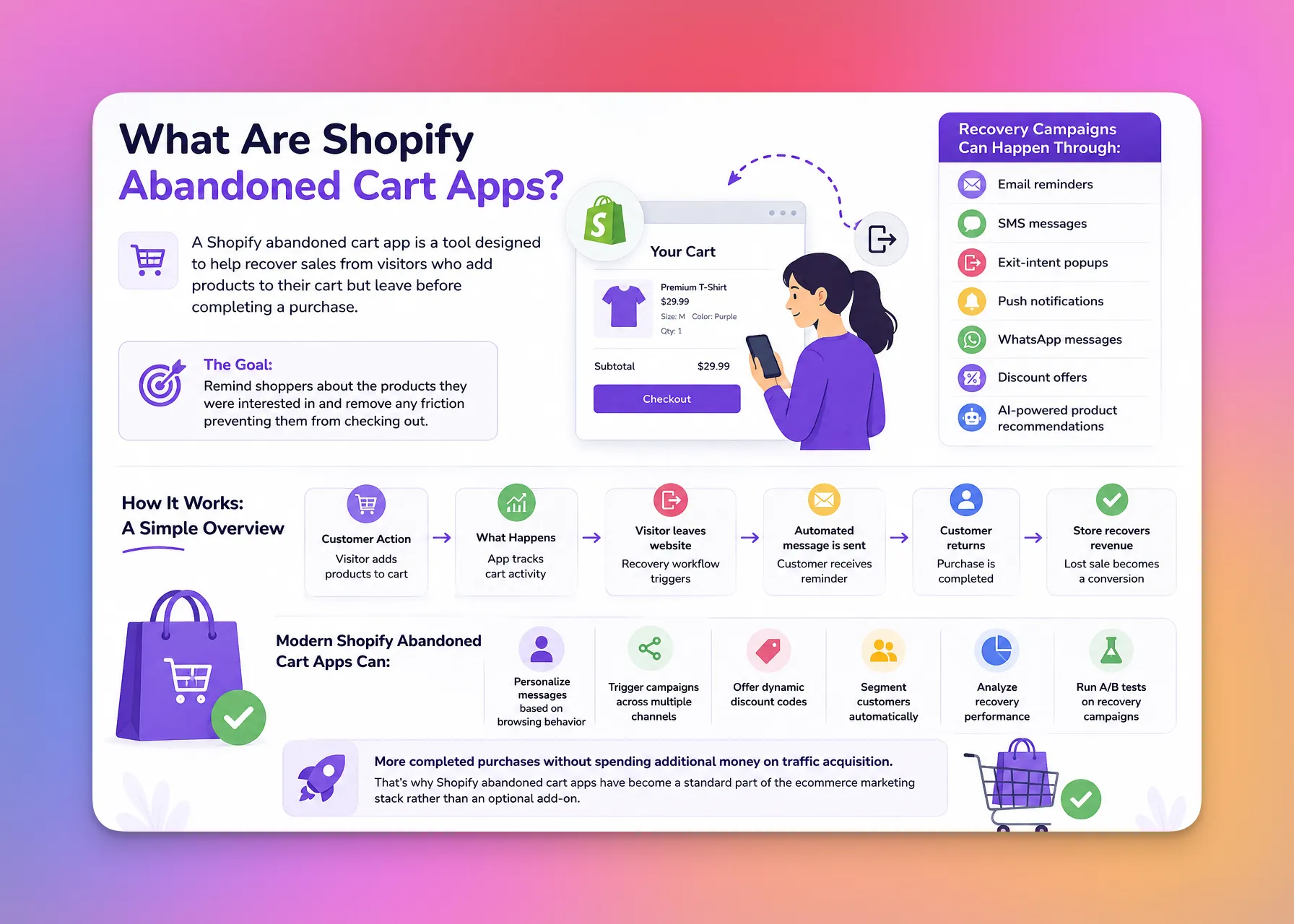
A Shopify abandoned cart app is a tool designed to help recover sales from visitors who add products to their cart but leave before completing a purchase.
And trust me, this happens a lot.
Someone discovers your store, browses a few products, adds something to their cart, gets distracted by a text message, opens another tab to compare prices, or simply decides to "come back later." More often than not, later never comes.
That's where Shopify abandoned cart recovery apps step in.
Instead of letting those potential customers disappear forever, these tools automatically reach out and encourage them to return. Depending on the app, recovery campaigns can happen through:
- Email reminders
- SMS messages
- Exit-intent popups
- Push notifications
- WhatsApp messages
- Discount offers
- AI-powered product recommendations
The goal is simple: remind shoppers about the products they were interested in and remove any friction preventing them from checking out.
Here's a simple overview:
| Customer Action | What Happens |
|---|---|
| Visitor adds products to cart | App tracks cart activity |
| Visitor leaves website | Recovery workflow triggers |
| Automated message is sent | Customer receives reminder |
| Customer returns | Purchase is completed |
| Store recovers revenue | Lost sale becomes a conversion |
Many store owners underestimate how much revenue is sitting inside abandoned carts. They focus heavily on acquiring new traffic while ignoring visitors who have already shown purchase intent.
That's why I'd put cart recovery near the top of any list of ecommerce optimizations.
The best Shopify abandoned cart app doesn't just send a generic "You forgot something" email, either. Modern solutions can:
- Personalize messages based on browsing behavior
- Trigger campaigns across multiple channels
- Offer dynamic discount codes
- Segment customers automatically
- Analyze recovery performance
- Run A/B tests on recovery campaigns
Some platforms even combine lead capture and cart recovery into one system, helping stores engage visitors before abandonment happens in the first place.
The result? More completed purchases without spending additional money on traffic acquisition. And that's exactly why Shopify abandoned cart apps have become a standard part of the ecommerce marketing stack rather than an optional add-on.
Why Cart Abandonment Is a Major Revenue Leak for Shopify Stores
If there is one ecommerce metric that consistently frustrates store owners, it's cart abandonment. The reason is simple: these aren't random visitors. They've already discovered your products. They've already shown interest. They've already taken action by adding items to their cart.
Yet somehow, the sale never happens.
I think that's what makes cart abandonment so painful compared to other conversion problems. You're not losing cold traffic. You're losing people who were already halfway through the buying process. And the numbers are hard to ignore: Baymard Institute puts the average documented online cart abandonment rate at 70.22%, based on 50 studies (list updated 22 September 2025). Our cart abandonment statistics collect more of those figures.
To put that into perspective:
| Out of 100 Potential Buyers | Result |
|---|---|
| 100 add products to cart | Initial buying intent |
| 70 leave without purchasing | Lost revenue opportunity |
| 30 complete checkout | Actual sales |
Now imagine your store generates 500 abandoned carts per month. Even if only 10% of them came back, that's 50 orders you'd otherwise lose. That's the whole case for a recovery app.
Why Do Shoppers Abandon Their Carts?
Most people assume shoppers leave because they aren't interested. In reality, that's rarely the full story.
Common abandonment reasons include:
- Unexpected shipping costs
- Mandatory account creation
- Complicated checkout processes
- Security concerns
- Slow delivery estimates
- Price comparison shopping
- Simply getting distracted
What's interesting is that many of these reasons are temporary. A customer who leaves today may still want the product tomorrow. A shopper who compares prices may decide your store actually offers the best value. Someone distracted by work, family, or a phone call might forget to complete their order.
That's why recovery campaigns work so well. You're not always convincing people to buy. Often, you're simply reminding them to finish something they already intended to do.
The Hidden Cost of Ignoring Abandoned Carts
Many Shopify merchants focus heavily on acquiring more traffic. They invest in:
- SEO
- Google Ads
- Facebook Ads
- Influencer campaigns
- Content marketing
And while those channels are important, acquiring new visitors is often much more expensive than recovering existing ones.
Think about it this way. If you spend money bringing a visitor to your store, getting them to browse products, and convincing them to add items to their cart, you've already completed most of the hard work. Letting that visitor disappear without any follow-up is like walking away from a conversation right before someone says "yes."
That's why I'd look at abandoned cart recovery before raising ad spend. These cart abandonment popup examples show what the on-site side of it looks like.
Why Shopify's Native Recovery Features Aren't Always Enough
Shopify does include built-in abandoned checkout recovery functionality. For some stores, that may be enough. But it only reaches part of your abandoners. The Shopify Help Center counts a checkout as abandoned when it's left incomplete for more than ten minutes "even though the customer has provided their email information", and a checkout with only a phone number can't get a recovery email. Setting it up is covered in our guide to Shopify cart abandonment emails.
And as your business grows, you'll likely want features such as:
- Multi-channel recovery campaigns
- SMS reminders
- Exit-intent popups
- Behavioral targeting
- AI-powered recommendations
- Advanced segmentation
- Recovery analytics
- Conversion tracking
This is where dedicated Shopify abandoned cart apps start to separate themselves. Rather than relying on a single recovery email, they create multiple opportunities to bring customers back and complete their purchase.
And when you're competing for attention in crowded inboxes and busy social feeds, those additional touchpoints can make a significant difference. So how do you tell which Shopify abandoned cart app is worth installing? Start with the features that matter most.
What Makes a Great Shopify Abandoned Cart App?
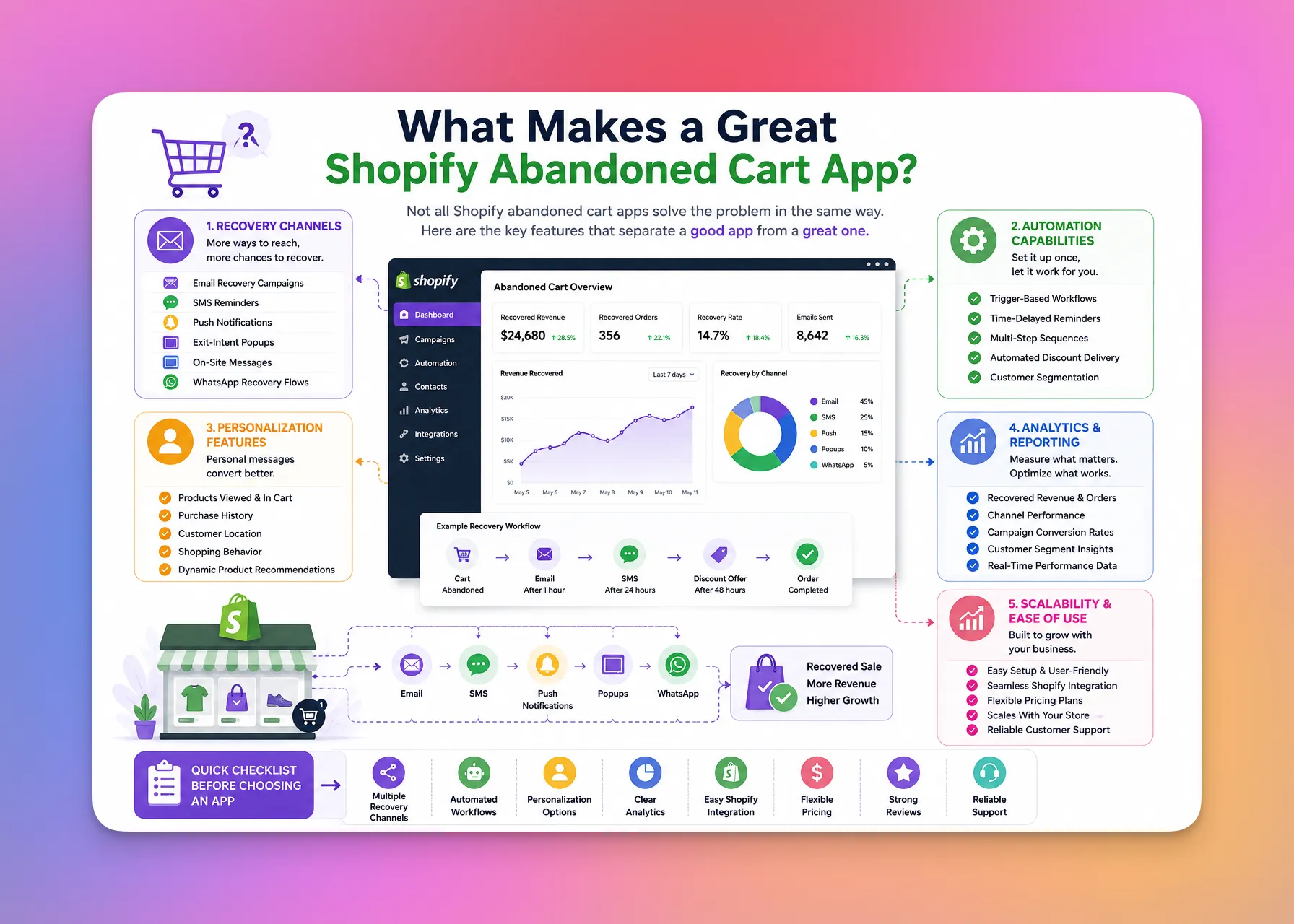
Not all Shopify abandoned cart apps solve the problem in the same way. Some focus almost entirely on email recovery. Others specialize in popups, SMS, push notifications, or advanced customer journeys. A few try to combine everything into a single platform.
So before comparing tools, it's worth understanding what actually separates a good Shopify abandoned cart app from a great one. When evaluating Shopify abandoned cart recovery apps, these are the factors I pay the most attention to.
Recovery Channels
The first thing I look at is how many ways the app can reconnect with visitors. A single recovery email can work. Multiple recovery channels usually work better.
Today's shoppers jump between devices, inboxes, social apps, and browsers constantly. Relying on one communication method means you're limiting your recovery opportunities. The strongest platforms typically support combinations of:
- Email recovery campaigns
- SMS reminders
- Push notifications
- Exit-intent popups
- On-site messages
- WhatsApp recovery flows
Here's a quick comparison:
| Recovery Channel | Why It Matters |
|---|---|
| Most common abandoned cart recovery method | |
| SMS | High open rates and immediate visibility |
| Popups | Can prevent abandonment before it happens |
| Push Notifications | Reach visitors even after they leave |
| Useful for highly engaged audiences |
Combining channels gives a shopper who ignores one message another way back, which is why I'd rather see two channels than one polished email.
Automation Capabilities
Nobody wants to manually follow up with every abandoned cart. A quality Shopify abandoned cart app should automate the entire recovery process. That includes:
- Trigger-based workflows
- Time-delayed reminders
- Automated discount delivery
- Customer segmentation
- Multi-step recovery sequences
For example, a workflow might look like this:
- Customer abandons cart
- Email reminder sent after 1 hour
- SMS reminder sent after 24 hours
- Discount offer sent after 48 hours
- Customer returns and purchases
Once configured, the system runs continuously in the background. That's one of the reasons cart recovery automation is worth the setup time.
Personalization Features
Generic messages are easy to ignore. Personalized messages are much harder.
The best abandoned cart app Shopify merchants can choose should allow personalized communication based on:
- Products viewed
- Cart contents
- Purchase history
- Customer location
- Shopping behavior
Instead of saying:
"You left something behind."
A personalized campaign might say:
"Your black leather backpack is still waiting in your cart."
That small difference can significantly improve engagement.
Analytics and Reporting
If you're spending time and money on recovery campaigns, you need visibility into what's actually working. Good reporting should answer questions like:
- How many carts were recovered?
- How much revenue was generated?
- Which recovery channel performs best?
- What messages drive the highest conversions?
- Which customer segments recover most often?
Without data, optimization becomes guesswork. And I generally try to avoid guessing when revenue is involved.
Ease of Setup
This is one feature that often gets overlooked. Some Shopify abandoned cart recovery apps offer impressive functionality but require extensive configuration before they become useful. Others can be installed and running within an hour.
Neither approach is inherently better. It depends on your goals. If you're running a small or medium-sized store, simplicity may be more valuable than endless customization. If you're managing a larger ecommerce operation, advanced controls may justify the additional setup time.
Pricing and Scalability
Finally, I always look at whether the app can grow alongside the business. Questions I typically ask include:
- Is there a free plan?
- How quickly do costs increase?
- Are recovery features limited by plan?
- Can the platform handle larger traffic volumes?
- Does it integrate with existing marketing tools?
An app that looks affordable today may become surprisingly expensive once your store starts scaling. That's why it's important to consider long-term value rather than just entry-level pricing.
Quick Checklist Before Choosing an App
Before installing any Shopify abandoned cart app, I recommend looking for:
- Multiple recovery channels
- Automated workflows
- Personalization options
- Clear analytics and reporting
- Easy Shopify integration
- Flexible pricing
- Strong user reviews
- Reliable customer support
These criteria separate useful tools from apps that only send basic reminder emails. With them in hand, here are the eight apps.
1. Popupsmart
Many Shopify abandoned cart apps focus on recovering visitors after they've already left your store. Popupsmart takes a different approach by helping merchants reduce abandonment before it happens through targeted popups and on-site campaigns. It's listed on the Shopify App Store as Popupsmart: Email & SMS Popup.
For stores looking to improve conversions without building complex recovery workflows, it's one of the most practical solutions available.
| Category | Details |
|---|---|
| Best for | Preventing cart abandonment before visitors leave |
| Recovery channels | Popups on cart and checkout pages, exit intent, embedded forms; leads go to your email or SMS tool |
| Shopify rating | ⭐ 4.6/5 from 49 reviews, read 10 October 2026 |
| Free plan | Yes: 5,000 pageviews a month, 1 live popup |
| Standout feature | Cart-page targeting and exit intent on every plan, the free one included |
Who Popupsmart is best for
I think one of the biggest mistakes Shopify merchants make is waiting until a visitor abandons their cart before taking action.
Popupsmart helps you engage shoppers while they're still on your website. You can trigger exit-intent popups, display discount offers, highlight free shipping thresholds, or collect email addresses and phone numbers before a visitor leaves. In many cases, preventing abandonment is easier than recovering it later. Popupsmart doesn't send email or SMS campaigns itself. It hands each lead to the tool that does, and phone numbers with SMS consent reach Klaviyo, Mailchimp and HubSpot. You can add Popupsmart to your Shopify store from the Shopify App Store.
For example, if someone is about to leave their cart page, a well-timed offer such as free shipping or a limited-time discount can be enough to complete the purchase.
One caveat from the same data, since exit intent is the trigger most guides lead with. Exit intent shows no statistically reliable advantage: popups on the most sensitive exit-intent setting converted 1.10% vs 0.78% without exit intent (median campaign), a gap that could be chance. I read that as a reason to put the popup on the cart page first and treat the exit trigger as a detail. Our breakdown of whether exit-intent popups work has the rest.
Every Popupsmart plan, the free one included, also has the Popupsmart AI agent, which builds a whole campaign (template, targeting and triggers, integrations) from a chat request and publishes it.
| Pros | Cons |
|---|---|
| Cart-page targeting and exit intent on every plan | Doesn't send email or SMS campaigns itself |
| Free plan available | Advanced automations require integrations |
| Easy to launch campaigns | Less focused on post-abandonment workflows |
| Helps grow email and SMS lists while reducing abandonment | A/B testing starts on the Advanced plan |
Popupsmart pricing
| Plan | Price | Pageviews | Websites |
|---|---|---|---|
| Free | $0 | 5K | 1 |
| Basic | $39/mo | 50K | 3 |
| Advanced | $69/mo | 100K | 5 |
| Pro | $99/mo | 250K | 7 |
| Expert | $159/mo | 500K | Unlimited |
Prices are Popupsmart's web plans with monthly billing, checked on Popupsmart's pricing page on 10 October 2026. Installed from the Shopify App Store, Popupsmart bills through Shopify, and the listing shows its own plan cards.
2. Recart
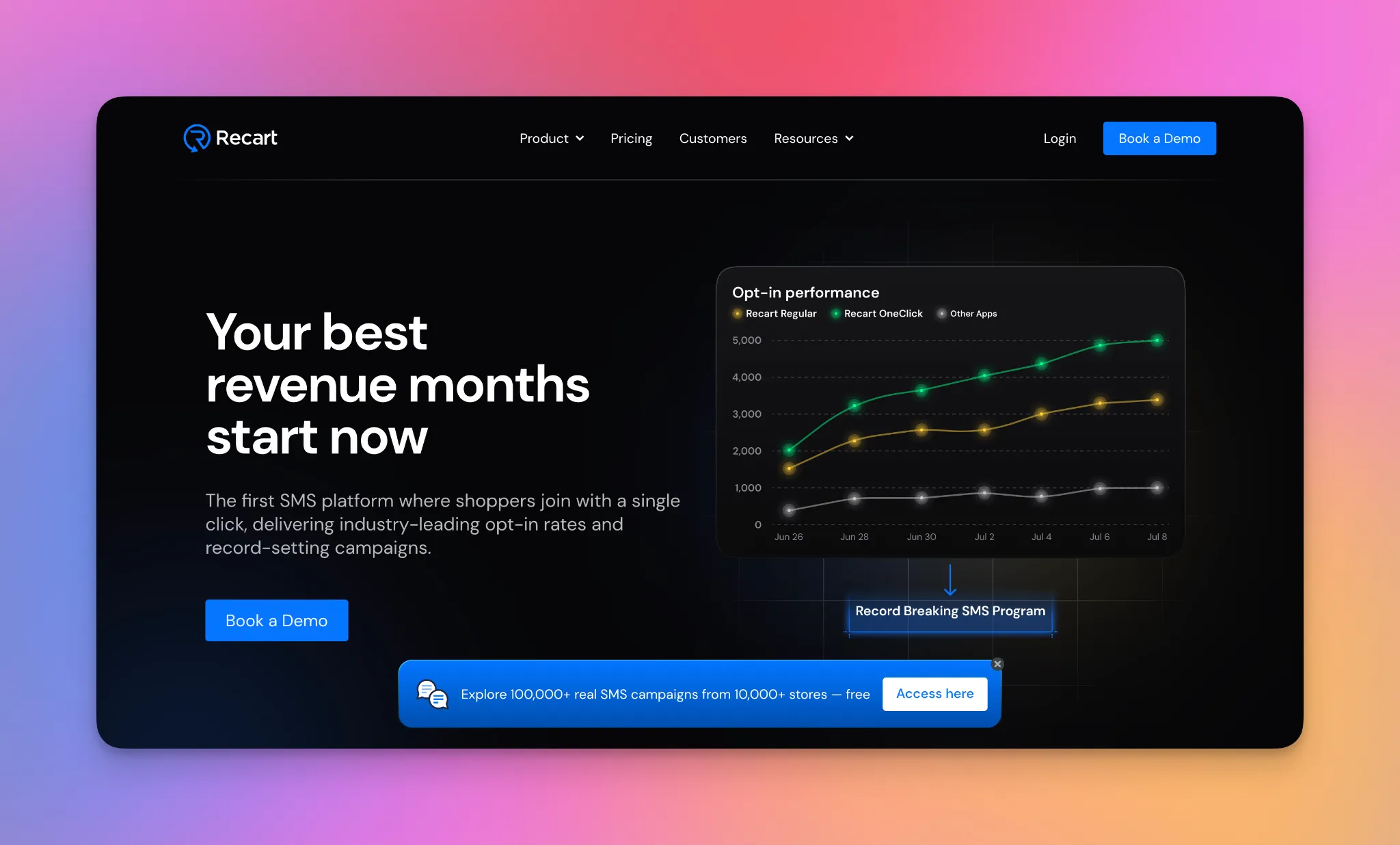
Recart is one of the few tools built primarily around abandoned cart recovery, now by text message: its Shopify App Store listing reads Recart: SMS & List Growth. Rather than offering dozens of unrelated marketing features, it focuses on bringing shoppers back through automated SMS campaigns.
| Category | Details |
|---|---|
| Best for | SMS-first cart recovery workflows |
| Recovery channels | SMS, with popups that capture phone numbers and emails |
| Shopify rating | ⭐ 4.7/5 from 487 reviews, read 10 October 2026 |
| Free plan | Yes, listed as "Free to Install" with no platform fees |
| Standout feature | A dedicated Customer Success Manager who runs your SMS program |
Who Recart is best for
Recart is designed specifically to recover lost revenue by text. Its listing describes automations that welcome subscribers, rescue abandoned carts and drive reorders, with a dedicated Customer Success Manager who plans, tests and manages the SMS program from day one.
This makes it a strong option for stores with significant traffic and high cart abandonment volumes.
| Pros | Cons |
|---|---|
| Built specifically for SMS cart recovery | Starter plan costs $299/month, the highest paid entry here |
| Strong SMS recovery features | Less useful if you don't plan to run SMS |
| Click-only, 7-day attribution for sales | |
| Fully managed service |
Recart pricing
| Plan | Price | What's included |
|---|---|---|
| Free to Install | $0 | No platform fees, unlimited contacts, list cleaning, custom popups, flows and automations, text campaign editor |
| Starter | $299/month | Cost previews before sending, click-only attribution, advanced segmentation, triggered reminders, 1:1 strategy and support, international texting; 7-day free trial |
Pricing verified on 10 October 2026 from Recart's Shopify App Store listing.
3. Cartly Abandoned Cart Recovery
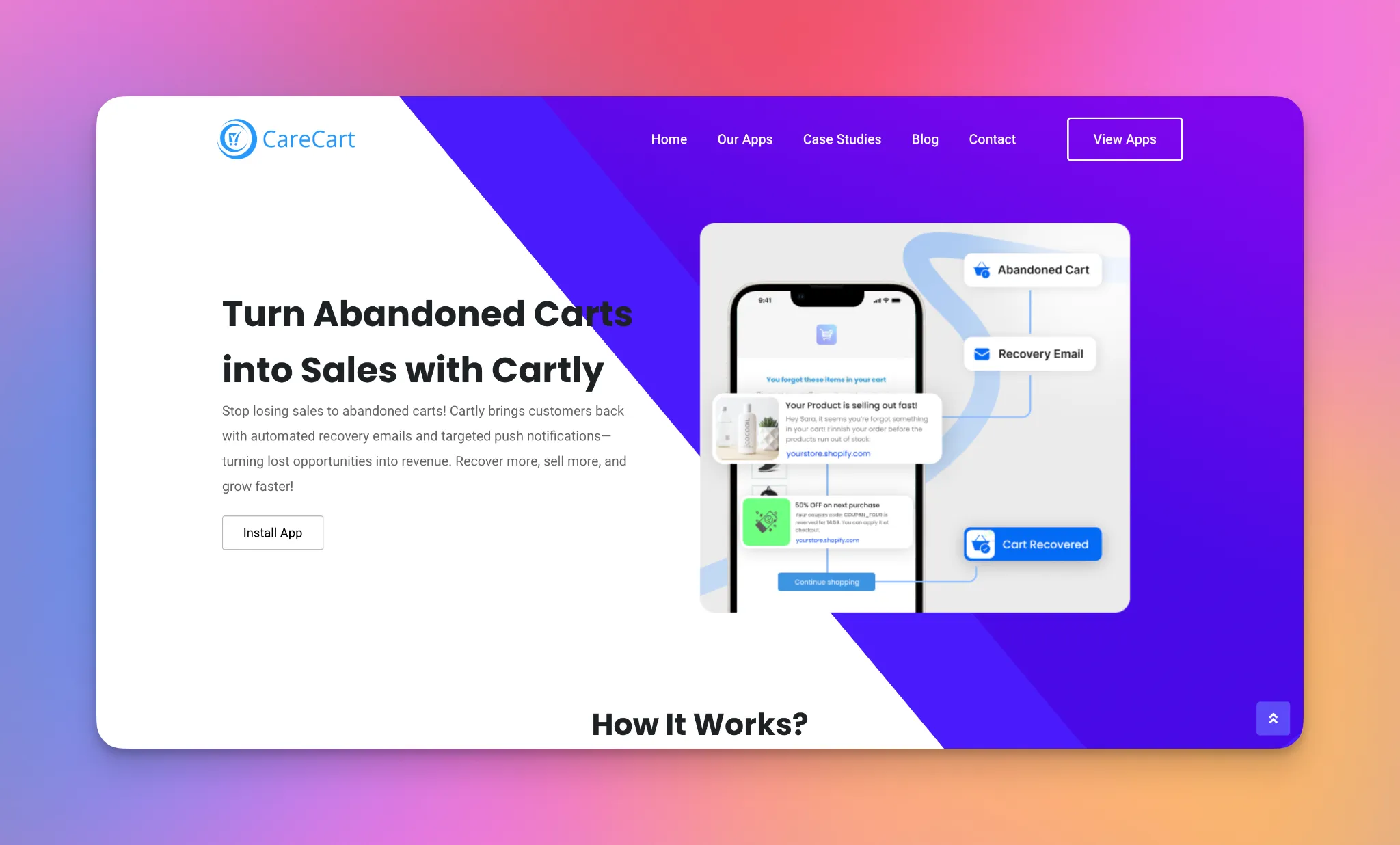
Cartly is a straightforward Shopify abandoned cart app that focuses on automated recovery emails, web push notifications and cart tracking. It's a good choice for merchants who want dedicated recovery functionality without investing in a larger marketing platform.
| Category | Details |
|---|---|
| Best for | Simple abandoned cart recovery |
| Recovery channels | Email, web push, email popup |
| Shopify rating | ⭐ 4.8/5 from 251 reviews, read 10 October 2026 |
| Free plan | Yes: 100 abandoned cart recovery emails |
| Standout feature | Automated recovery emails |
Who Cartly is best for
Not every store needs advanced customer journeys or multiple recovery channels. Cartly focuses on the fundamentals: tracking abandoned carts, sending automated reminders, and helping merchants recover lost sales with minimal setup.
| Pros | Cons |
|---|---|
| Beginner-friendly | No SMS recovery |
| Easy setup | Fewer advanced features |
| Pro plan at $14.99/month, the lowest paid plan here | Free plan caps recovery emails at 100 |
| Dedicated cart recovery focus |
Cartly pricing
| Plan | Price | What's included |
|---|---|---|
| Basic | Free | 100 abandoned cart recovery emails, unlimited email subscribers and push notifications, cart reminder, spin-to-win popup |
| Pro | $14.99/month or $129/year | Unlimited emails and carts; 7-day free trial |
Pricing verified on 10 October 2026 from Cartly's Shopify App Store listing.
4. Brevo PushOwl
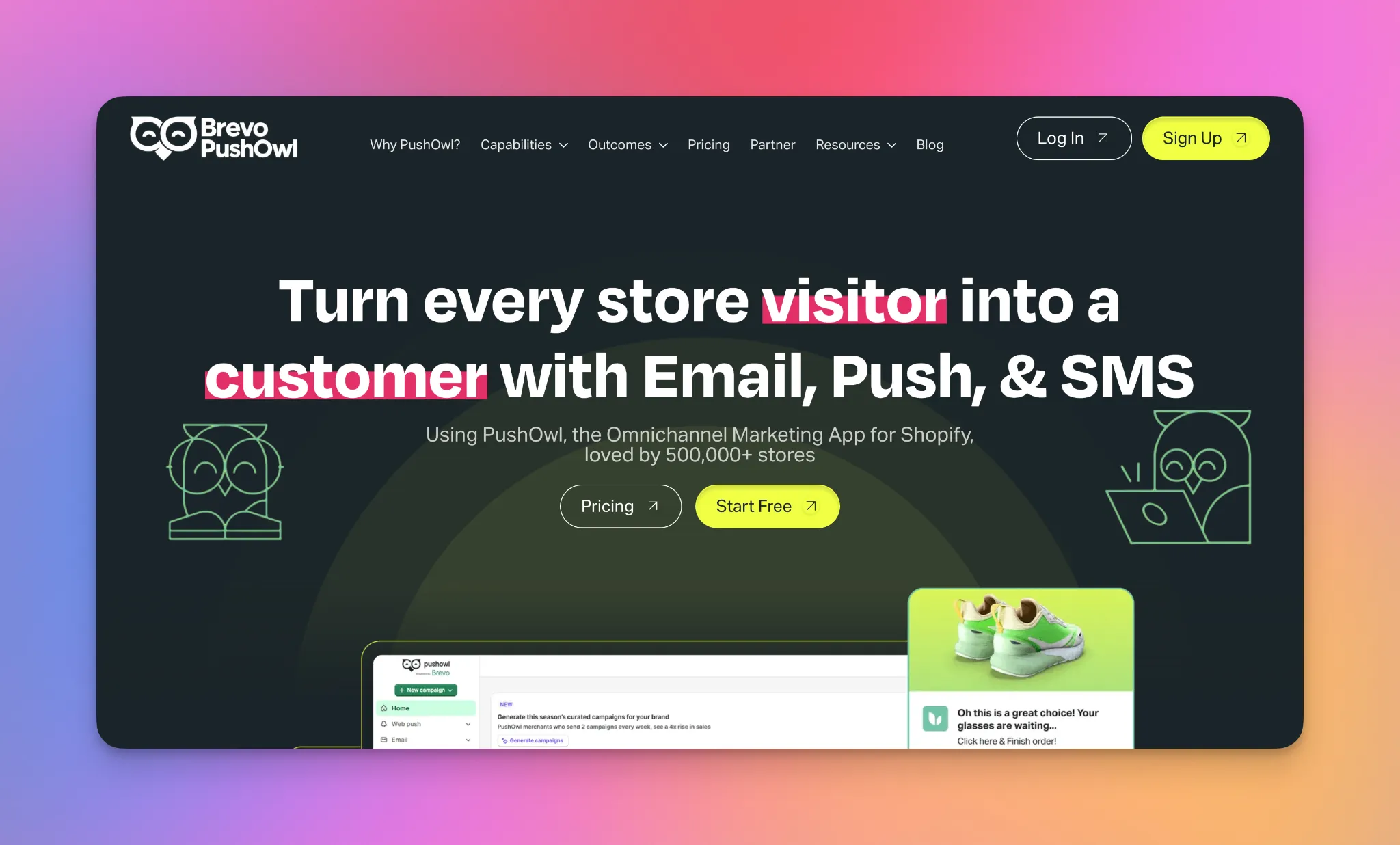
Brevo PushOwl, listed today as Brevo PushOwl: Email, Push, SMS, approaches Shopify cart recovery differently by focusing on browser push notifications instead of email alone, with Brevo's email and SMS tools in the same app. For merchants looking for an additional recovery channel, it adds one that doesn't depend on the inbox.
| Category | Details |
|---|---|
| Best for | Push notification recovery |
| Recovery channels | Web push, email, SMS |
| Shopify rating | ⭐ 4.8/5 from 2,297 reviews, read 10 October 2026 |
| Free plan | Yes, but abandoned cart automation starts on the Plus Bundle |
| Standout feature | Automated abandoned cart push notifications |
Who Brevo PushOwl is best for
Email inboxes are crowded. Push notifications allow stores to reach shoppers directly on their devices, often resulting in higher visibility than traditional recovery emails. This makes Brevo PushOwl a valuable complement to existing Shopify abandoned cart recovery apps.
| Pros | Cons |
|---|---|
| High notification visibility | Requires user opt-in |
| Fast implementation | Limited to push-enabled users |
| Free plan available | Cart recovery automation needs the Plus Bundle |
| Email, web push and SMS in one app |
Brevo PushOwl pricing
| Plan | Price | What's included |
|---|---|---|
| Basic Bundle | Free | 500 web push notifications a month, emails from 500 a month, unlimited subscribers, newsletters and popups |
| Plus Bundle | $19/month or $180/year | 10,000 web push notifications a month, the email and SMS marketing suite, abandoned cart recovery automation |
| Power Bundle | $79/month or $852/year | Browse abandonment, custom automation and segmentation, a dedicated account manager |
Pricing verified on 10 October 2026 from Brevo PushOwl's Shopify App Store listing.
5. Omnisend
Omnisend is one of the most popular ecommerce marketing platforms for Shopify merchants. While it offers much more than cart recovery, its abandoned cart automation workflows are among its strongest features.
| Category | Details |
|---|---|
| Best for | Multi-channel cart recovery |
| Recovery channels | Email, SMS, web push notifications |
| Shopify rating | ⭐ 4.7/5 from 3,187 reviews, read 10 October 2026 |
| Free plan | Yes: 250 contacts and 500 emails a month, abandoned cart emails included |
| Standout feature | Omnichannel recovery automation |
Who Omnisend is best for
One thing I like about Omnisend is that it allows merchants to combine multiple recovery channels inside a single workflow. Instead of sending just one abandoned cart email, you can build sequences that include email, SMS, and push notifications to maximize recovery opportunities.
| Pros | Cons |
|---|---|
| Multiple recovery channels | SMS is listed on the Pro plan, from $59/month |
| Ecommerce-focused automation | Can feel overwhelming initially |
| Free plan includes abandoned cart emails | Higher costs as contacts grow |
| Easy Shopify integration |
Omnisend pricing
| Plan | Price | What's included |
|---|---|---|
| Free | $0 | Email for up to 250 people, 500 emails a month, popups and forms, abandoned cart and welcome emails |
| Standard | From $16/month (500 contacts) | 6,000 emails a month, unlimited web push |
| Pro | From $59/month (2,500 contacts) | Unlimited emails, SMS from $0.007 a message |
Pricing verified on 10 October 2026 from Omnisend's Shopify App Store listing; both paid plans rise as your list grows.
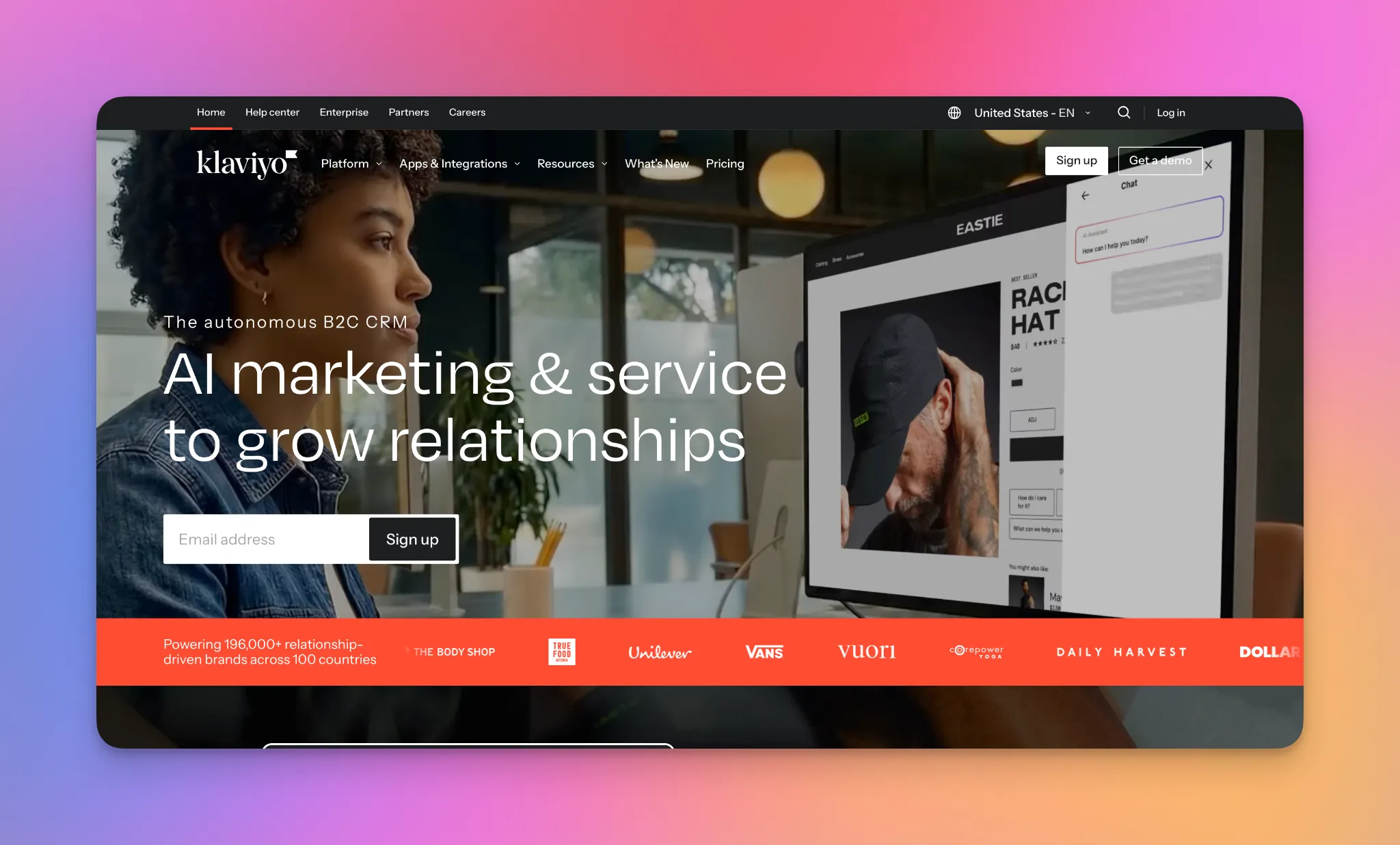
6. Klaviyo
Klaviyo is often the go-to choice for growing ecommerce brands that want advanced customer segmentation and highly personalized recovery campaigns.
| Category | Details |
|---|---|
| Best for | Advanced abandoned cart automation |
| Recovery channels | Email, SMS, WhatsApp, mobile push |
| Shopify rating | ⭐ 4.7/5 from 3,365 reviews, read 10 October 2026 |
| Free plan | Yes: email for up to 250 contacts, 150 SMS/MMS credits |
| Standout feature | Customer behavior-based personalization |
Who Klaviyo is best for
Klaviyo lets you trigger recovery messages based on cart value, browsing activity, purchase history, and customer behavior, making recovery emails feel much more relevant. New stores get a guided setup inside Shopify Admin: a sign-up form, a welcome email and an abandoned-checkout flow.
| Pros | Cons |
|---|---|
| Advanced segmentation | Steeper learning curve |
| Flexible automation builder | Email price rises with your contact count |
| Excellent reporting | More complex than basic recovery tools |
| Deep Shopify integration |
Klaviyo pricing
| Plan | Price | What's included |
|---|---|---|
| Free | $0 | Email for up to 250 contacts, up to 150 SMS/MMS credits |
| SMS | $15/month | Up to 1,250 SMS/MMS credits, carrier fees included |
| $20/month | 251 to 500 contacts, rising as you grow |
Pricing verified on 10 October 2026 from Klaviyo's Shopify App Store listing.
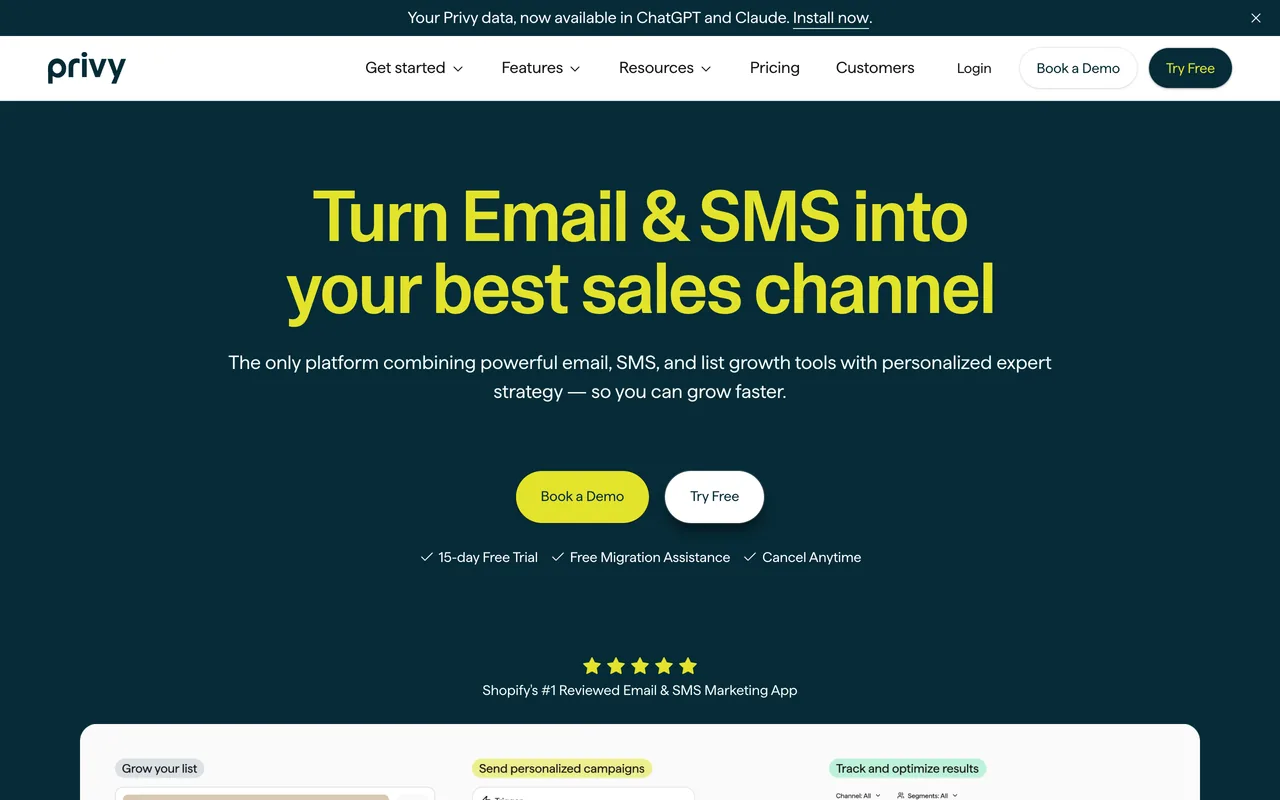
7. Privy
Privy combines popups, email marketing, SMS campaigns, and cart recovery features in a platform designed primarily for small and medium-sized ecommerce businesses. On the Shopify App Store it's listed as Privy, Email, SMS & Pop Ups.
| Category | Details |
|---|---|
| Best for | Small Shopify stores that want email, SMS and popups in one app |
| Recovery channels | Email, SMS, popups |
| Shopify rating | ⭐ 4.5/5 from 4,205 reviews, read 10 October 2026 |
| Free plan | No; 15-day free trial |
| Standout feature | Recovery tools combined with list growth |
Who Privy is best for
Privy does a good job of connecting lead generation and cart recovery. Merchants can collect visitor information through popups and then use that data to power abandoned cart recovery campaigns later. One catch: the $24 Pop Ups & Displays plan has no email or SMS, so recovery messages start on the $30 Email plan. Popupsmart vs Privy puts the two side by side, and our list of Privy alternatives covers the tools stores weigh against it.
| Pros | Cons |
|---|---|
| Beginner-friendly | No free plan, only a 15-day trial |
| Email, SMS and popups in one app | Popups-only plan has no email or SMS |
| Email and SMS plan from $45/month | Less scalable for large stores |
| Easy setup process |
Privy pricing
| Plan | Price | What's included |
|---|---|---|
| Pop Ups & Displays | From $24/month | Up to 10,000 monthly pageviews; no email or SMS |
| $30/month | Up to 1,500 email contacts | |
| Email and SMS | $45/month | Up to 1,500 email contacts and 1,250 SMS credits |
Pricing verified on 10 October 2026 from Privy's Shopify App Store listing; the 15-day trial and the popups-only plan's lack of email and SMS are from Privy's pricing page and help center, read 26 September 2026.
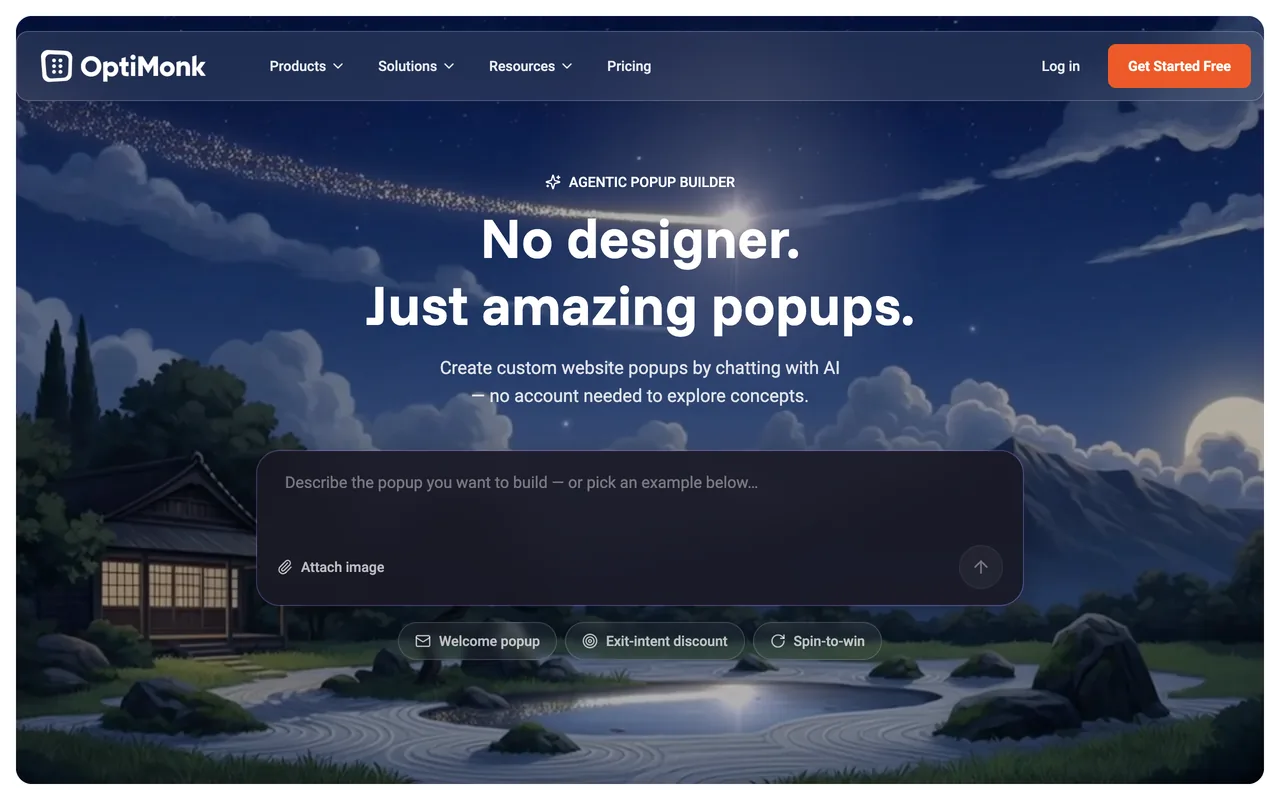
8. OptiMonk
OptiMonk focuses heavily on conversion optimization and behavioral targeting. While it isn't a dedicated Shopify abandoned cart app, it can reduce cart abandonment through personalized on-site experiences. Its listing, OptiMonk: AI Popup Builder, now leads with an AI agent that builds custom popups from a chat and suggests targeting and A/B tests.
| Category | Details |
|---|---|
| Best for | Exit-intent and behavioral targeting |
| Recovery channels | Popups, on-site messaging |
| Shopify rating | ⭐ 4.8/5 from 457 reviews, read 10 October 2026 |
| Free plan | Yes: 10,000 pageviews a month, 1 domain |
| Standout feature | AI agent that builds personalized popups from a chat |
Who OptiMonk is best for
Like Popupsmart, OptiMonk helps merchants intervene before shoppers leave. You can create personalized offers, product recommendations, and exit-intent campaigns that encourage visitors to complete their purchase instead of abandoning their cart. Popupsmart vs OptiMonk compares the two plan by plan, and our OptiMonk alternatives list covers the rest of the field.
| Pros | Cons |
|---|---|
| Strong behavioral targeting | Less focused on post-abandonment recovery |
| Easy A/B testing | Requires optimization for best results |
| Free plan available | Doesn't send SMS; it collects numbers for your SMS tool |
| Conversion-focused features |
OptiMonk pricing
| Plan | Price | What's included |
|---|---|---|
| Free | $0 | 10,000 pageviews a month, 1 domain, all features, unlimited campaigns |
| Essential | $29/month or $228/year | 20,000 pageviews, 2 domains, unbranded |
| Growth | $99/month or $828/year | 100,000 pageviews, 4 domains |
| Premium | $249/month or $2,148/year | 500,000 pageviews, 10 domains, a key account manager |
Pricing verified on 10 October 2026 from OptiMonk's Shopify App Store listing.
Best SMS apps for Shopify abandoned cart recovery
The best Shopify SMS app for abandoned cart recovery on this list is Recart if you want SMS run for you, and Klaviyo, Privy or Omnisend if you want texts and emails in one flow. Five of the eight apps send recovery texts. Cartly doesn't, and Popupsmart and OptiMonk collect the phone number for an SMS tool rather than sending the message.
| App | Sends SMS? | SMS on the listing, 10 October 2026 |
|---|---|---|
| Recart | Yes, SMS-first and managed | Free to Install (no platform fees); Starter $299/month |
| Klaviyo | Yes | 150 free SMS/MMS credits; SMS plan $15/month for 1,250 credits |
| Privy | Yes ("cart saver texts") | Email and SMS plan $45/month with 1,250 SMS credits |
| Omnisend | Yes | Pro plan lists SMS from $0.007 a message |
| Brevo PushOwl | Yes | SMS suite on the $19/month Plus Bundle |
| Cartly | No | Email and web push only |
| Popupsmart | No, it collects the number | Passes phone numbers and SMS consent to Klaviyo, Mailchimp and HubSpot |
| OptiMonk | No, it collects the number | Works with Attentive, Postscript and Klaviyo |
An SMS app can only text shoppers who gave you a number and their consent. So the popup still matters in an SMS setup: a cart-page popup that offers free shipping or a code in exchange for a phone number fills the list your SMS app works from. In Popupsmart's 2026 benchmark, the share of popup leads that include a phone number rose from 21.3% (2024) to 26.3% (2025) to 33.5% (2026) (all leads pooled); much of that comes from a few high-volume accounts that collect phone numbers, while most lead-collecting campaigns collect email only.
How to Choose the Right Shopify Abandoned Cart App
After reviewing these Shopify abandoned cart apps, you may have noticed that they don't all solve the same problem. Some tools focus on preventing abandonment before it happens. Others specialize in recovering shoppers after they've already left. A few try to handle both.
That's why I don't think there's a single "best" Shopify abandoned cart app for every store. The right choice depends on your traffic, budget, and recovery strategy. Here's a quick guide:
| If You Want To... | Consider... |
|---|---|
| Prevent cart abandonment before visitors leave | Popupsmart, OptiMonk |
| Recover abandoned carts through SMS | Recart, Klaviyo, Privy |
| Use push notifications for recovery | Brevo PushOwl |
| Build advanced customer journeys | Klaviyo |
| Keep things simple and affordable | Cartly |
| Combine email, SMS, and automation | Omnisend |
| Grow your email list while recovering carts | Popupsmart, Privy |
| Start on a free plan | Omnisend, Cartly, Klaviyo, Popupsmart |
For more popup tools with an exit trigger, see our roundup of Shopify exit intent popup apps.
For Small Shopify Stores
If you're just getting started, I usually recommend choosing a solution that's easy to launch and doesn't require a large monthly investment. Apps like Popupsmart, Cartly, and Omnisend have free plans that can help you recover lost sales without adding unnecessary complexity to your marketing stack.
For Growing Ecommerce Brands
As traffic increases, multi-channel recovery becomes more important. At this stage, platforms like Omnisend and Recart start to make more sense because they allow you to engage shoppers through email, SMS, and additional recovery channels.
For Advanced Marketing Teams
Larger stores often need deeper segmentation, automation, and reporting. That's where Klaviyo stands out. Its ability to create highly personalized abandoned cart workflows makes it one of the strongest options for scaling ecommerce brands.
A Quick Tip Before You Install Anything
It's tempting to install a Shopify abandoned cart app and start tweaking automation settings right away. But before doing that, ask yourself one question:
Are visitors abandoning their carts, or are they abandoning your store?
If shoppers leave because of unexpected shipping costs, unclear return policies, slow-loading pages, or a confusing checkout process, even the best Shopify abandoned cart recovery app can only do so much.
The strongest results usually come from combining:
- A smooth checkout experience
- Clear pricing and shipping information
- Strategic on-site messaging
- Automated recovery campaigns
Recovery tools work best when they're supporting a good shopping experience rather than trying to fix a broken one.
Common Mistakes When Using Shopify Abandoned Cart Recovery Apps
Installing an app is easy. Using it effectively is where most stores struggle. These four mistakes are the common ones.
Sending Only One Recovery Email
Many merchants activate a single recovery email and assume the job is done. The reality is that shoppers often need multiple touchpoints before they return. A simple recovery sequence might include:
- A reminder email after 1 hour
- A second reminder after 24 hours
- A discount incentive after 48 hours
Multiple touchpoints generally outperform a one-email strategy.
Offering Discounts Too Quickly
Discounts can recover sales, but they can also train customers to wait for coupons. I usually recommend testing standard reminder campaigns before introducing discounts. You may find that many shoppers simply needed a reminder rather than a price reduction.
Ignoring Mobile Users
Many Shopify shoppers browse and check out on their phones. If your popups, forms, or recovery emails aren't optimized for mobile users, you're potentially losing a significant portion of recoverable revenue. Always test recovery campaigns on both desktop and mobile; our guide to mobile popup design covers size, close buttons and timing.
Focusing Only on Recovery
This is probably the biggest mistake of all. Many merchants obsess over recovering abandoned carts while ignoring the reasons shoppers leave in the first place.
Sometimes the best cart recovery strategy is:
- Faster page speeds
- Better product descriptions
- Transparent shipping costs
- Simpler checkout flows
- Stronger trust signals
The less abandonment you create, the less recovery you'll need later.
Conclusion
Cart abandonment is one of the biggest challenges Shopify merchants face, but it's also one of the easiest opportunities to recover lost revenue.
The right Shopify abandoned cart app can help you reconnect with interested shoppers, automate recovery campaigns, and turn missed opportunities into completed purchases. Whether you prefer email, SMS reminders, push notifications, or on-site engagement, there are plenty of strong Shopify abandoned cart recovery apps available today.
That said, I think the most effective strategy isn't always about recovering visitors after they've left. In many cases, preventing abandonment before it happens is the better first step, because Shopify's own recovery email can't reach a shopper who never typed an email address.
That's why tools like Popupsmart stand out. By using exit-intent popups, personalized offers, and targeted campaigns, Shopify merchants can engage shoppers at the exact moment they're considering leaving and encourage them to complete their purchase before abandoning their cart.
Start Recovering More Shopify Sales with Popupsmart
If you're looking for a simple way to reduce cart abandonment, recover more revenue, and increase conversions, Popupsmart's free plan is worth exploring.
With exit-intent technology, customizable popup campaigns, and a free plan to get started, it gives Shopify store owners the tools they need to recover more revenue without adding complexity to their workflow.
Try Popupsmart today and see how many abandoned carts you can prevent before they become lost sales.
FAQs About Shopify Abandoned Cart Apps
What is the best abandoned cart app for Shopify?
It depends on the channel you recover through. To stop abandonment before visitors leave, popup tools like Popupsmart and OptiMonk collect an email or phone number on the cart page. For recovery after they leave, Klaviyo and Omnisend run email and SMS flows, Recart specializes in SMS, and Brevo PushOwl adds web push. No app publishes a recovery rate you can compare across vendors.
Does Shopify have abandoned cart recovery?
Yes. Shopify can send abandoned checkout emails automatically once you turn them on, but only to shoppers who reached checkout and entered an email address; a checkout with only a phone number gets no recovery email. Dedicated Shopify abandoned cart apps add SMS recovery, push notifications, behavioral targeting, analytics and multi-step workflows, and popups can collect a contact before checkout.
Are Shopify abandoned cart apps worth it?
In most cases, yes. Since abandoned carts represent shoppers who have already shown purchase intent, recovering even a small percentage of them can generate meaningful additional revenue. Many Shopify abandoned cart recovery apps automate the process, making them a relatively low-effort way to improve conversions. Seven of the eight apps on this list have a free plan, so you can test one before paying, though Brevo PushOwl keeps cart recovery for its $19 Plus plan.
Which Shopify app is best for SMS abandoned cart recovery?
Recart is the most SMS-focused app on this list, with a managed service and a $299 a month Starter plan. Klaviyo (SMS from $15 a month for 1,250 credits), Privy ($45 a month Email and SMS plan), Omnisend and Brevo PushOwl send recovery texts alongside email. Every one of them needs phone numbers with SMS consent first, which a cart-page popup can collect.
What is the best free Shopify abandoned cart app?
Omnisend's free plan includes abandoned cart emails for up to 250 contacts, Cartly's free plan sends 100 recovery emails, and Klaviyo's covers 250 email contacts plus 150 SMS credits. Popupsmart's free plan runs one live popup on 5,000 pageviews to collect contacts before shoppers leave. Seven of the eight apps here have a free plan; Privy is the exception.
What is a good abandoned cart recovery rate?
There's no reliable benchmark to aim for. None of the apps here publishes a recovery rate you can compare with another's, and each counts a recovered order its own way, for example only after a click within a set number of days. Track your own rate (recovered orders divided by abandoned checkouts) month over month, and compare channels inside one app rather than vendor claims.
You might also like: