How to add a popup to Progress Sitefinity
 By Mert Özeren
To add a popup to Progress Sitefinity, paste Popupsmart's embed code into a new Script manager entry under Administration, then Settings, and add Popupsmart's domain to Trusted sources so Sitefinity's Content Security Policy lets it load. Popupsmart then builds, targets and publishes every popup from its dashboard, with no template edit.


Setup at a glance
- Runs on
- Progress Sitefinity CMS
- Where the code goes
Administration → Settings → Script manager- Add-on
- No add-on needed


Before you start
Adding a popup to Sitefinity takes three things:
- A Sitefinity backend account with access to Administration → Settings. That is usually an administrator's account.
- A free Popupsmart account. The free plan covers one website and one live popup, so you can finish this guide without paying.
- The address your visitors use for the site, which Popupsmart verifies after the install.
How to add a popup to Progress Sitefinity
The embed code goes into the Script manager, which adds it to every page of the sites you choose. Then you let Popupsmart through Sitefinity's Content Security Policy.
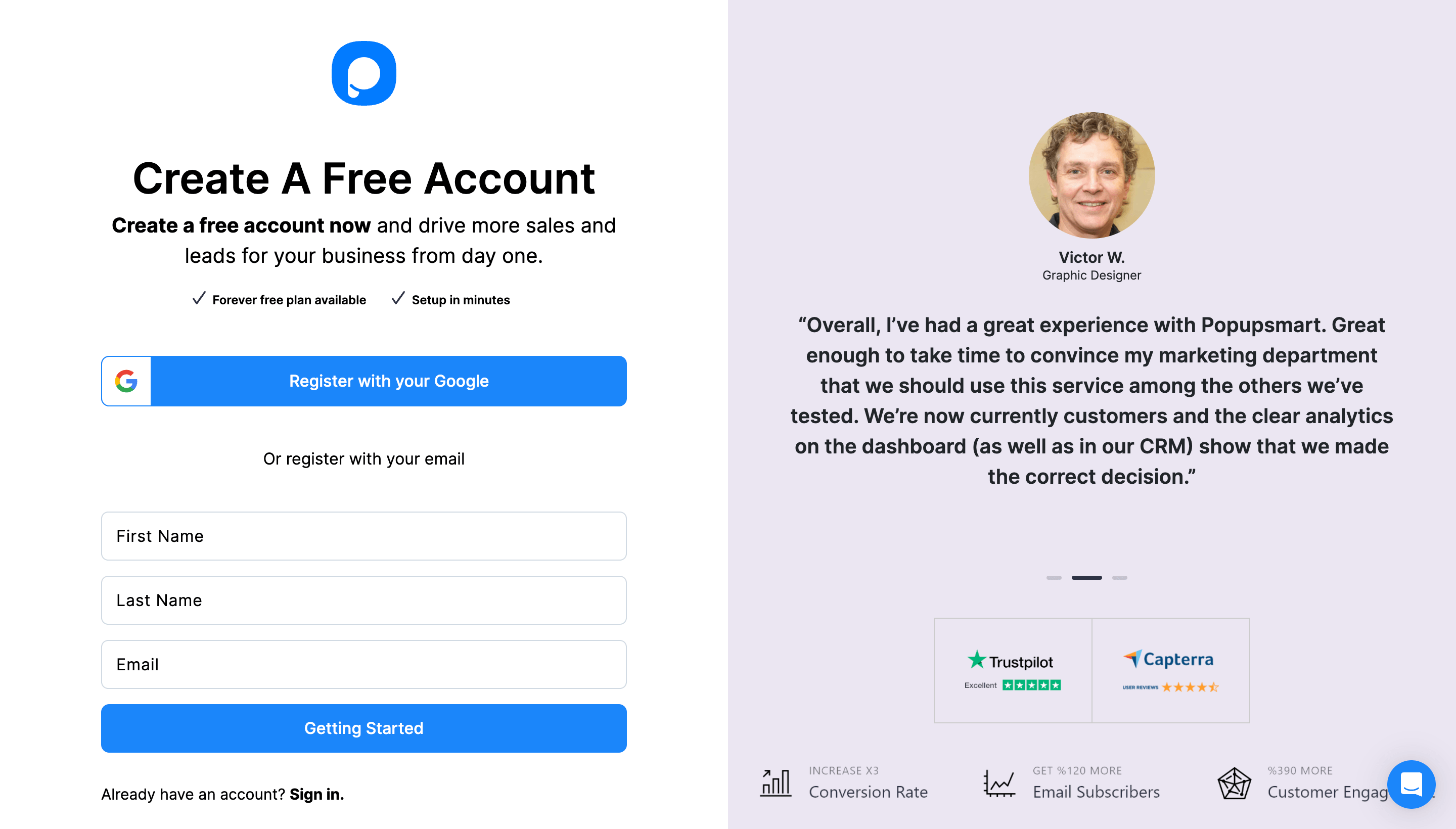
Step 1: Create your Popupsmart account
Create a free Popupsmart account, or sign in to the one you have.
Step 2: Copy your embed code
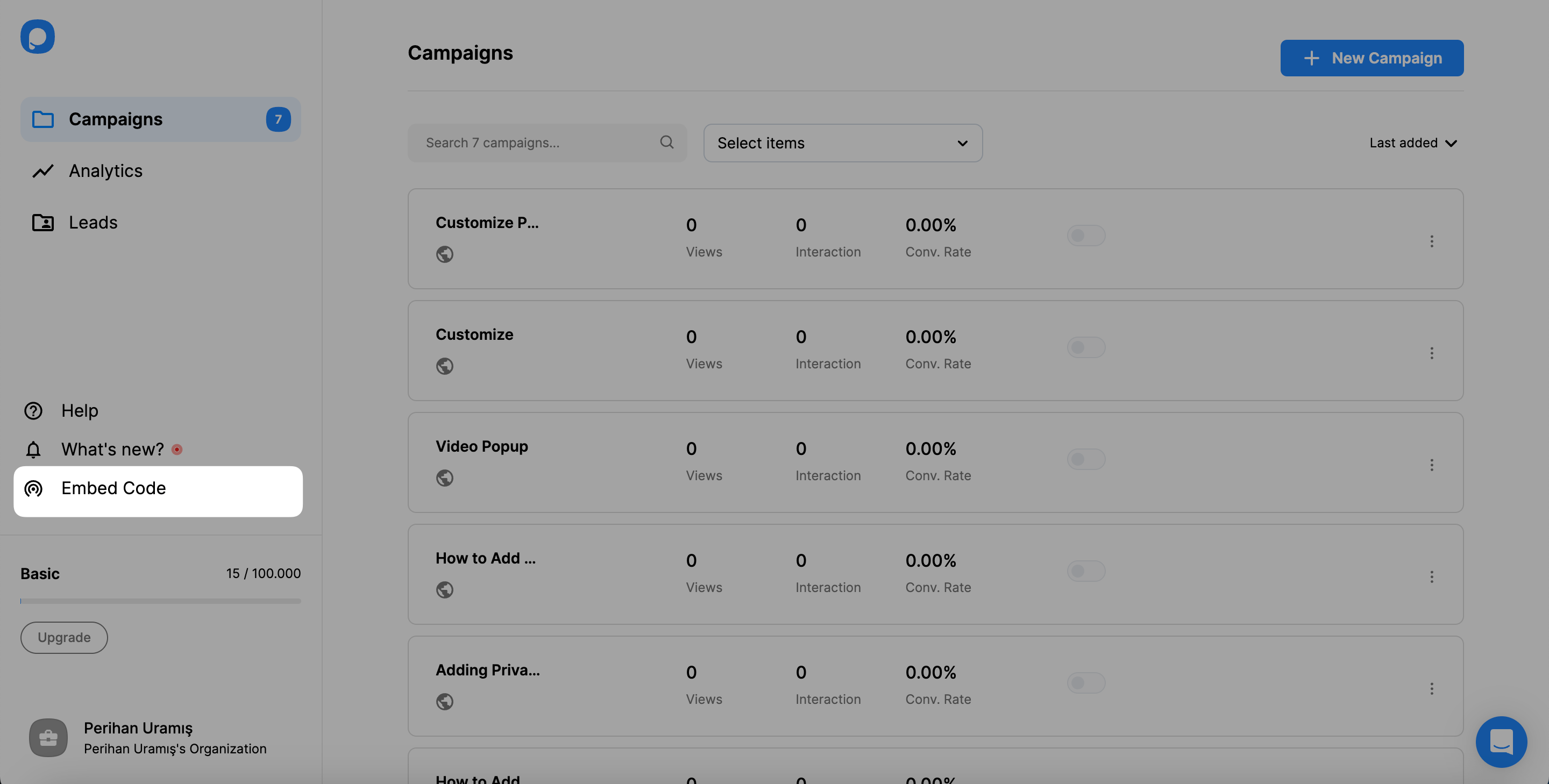
Click Embed Code in the left-hand menu of the dashboard.
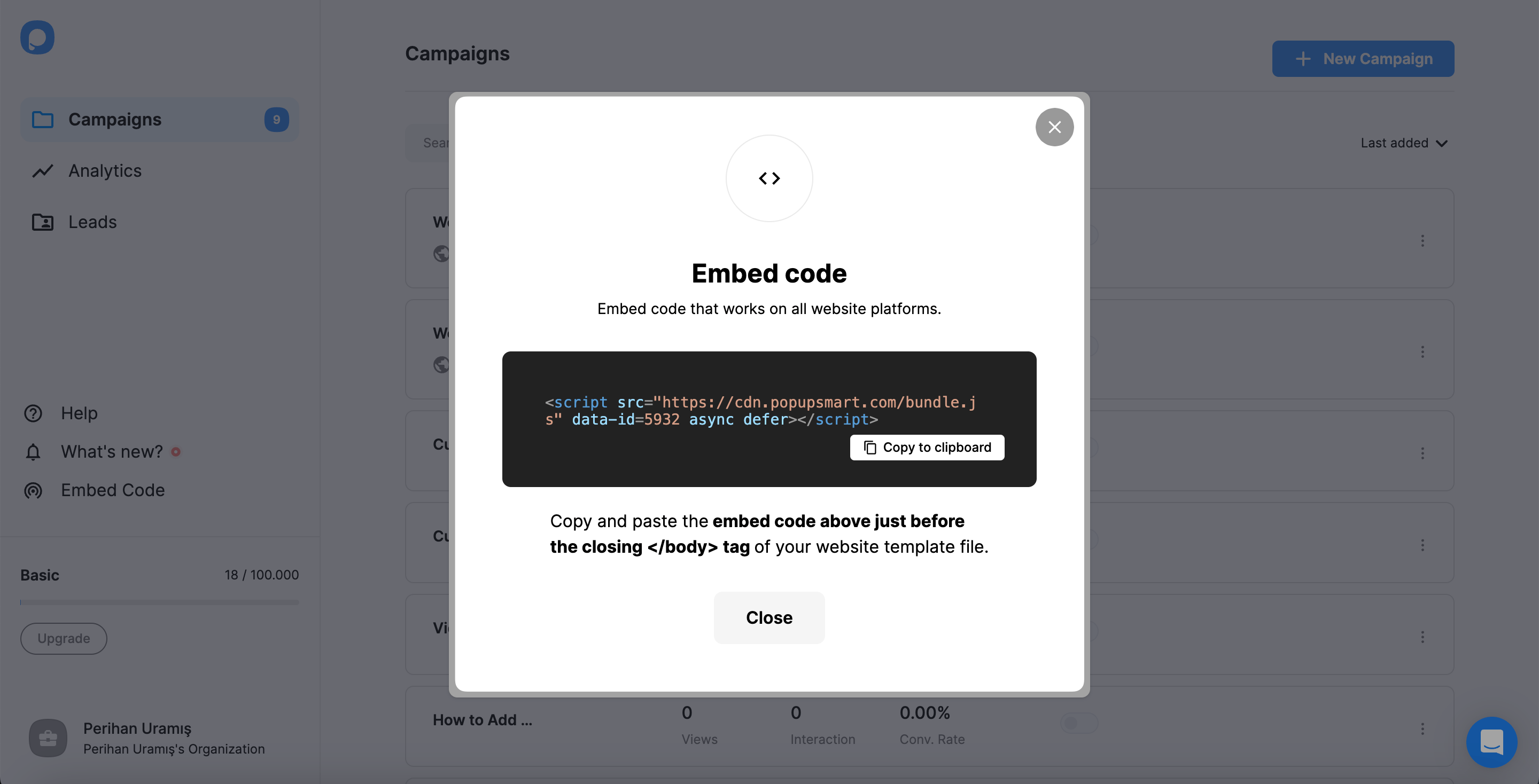
A window shows your code. Click Copy to clipboard. The code is one line, <script src="https://cdn.popupsmart.com/bundle.js" data-id="…" async defer></script>, and the data-id belongs to your account.
Step 3: Open the Script manager in Sitefinity
In the Sitefinity backend, open Administration and click Settings.
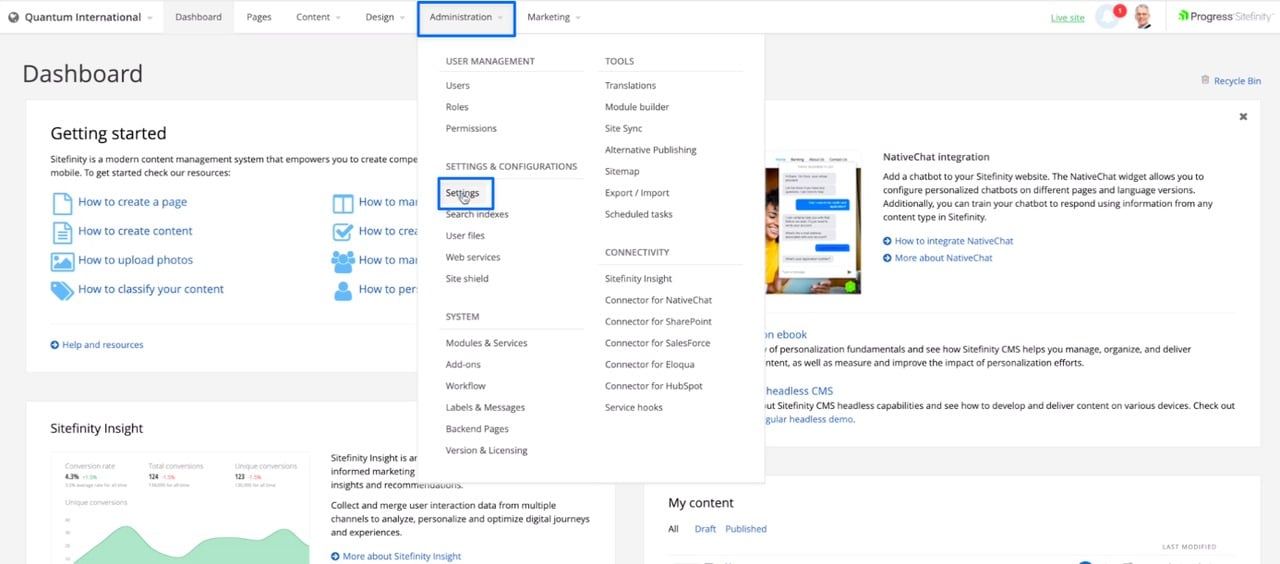
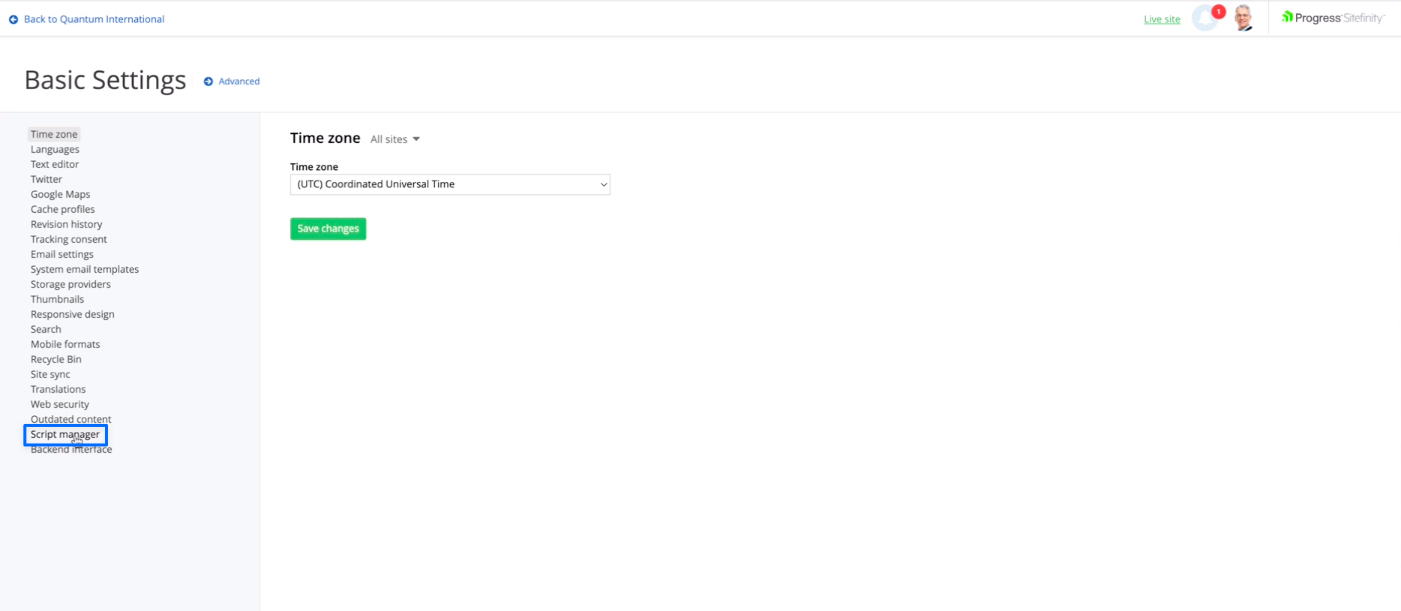
On the Basic Settings page, click Script manager in the list on the left.
Step 4: Add the embed code as a script
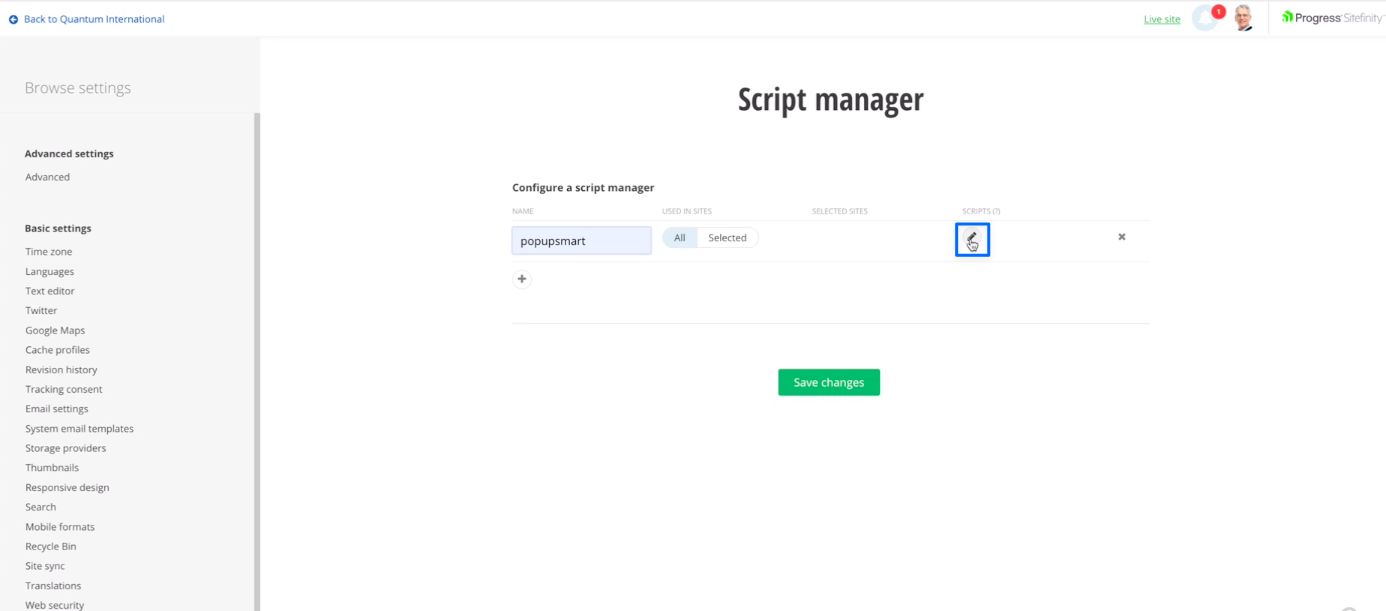
Click the + sign and give the entry a name, such as popupsmart. Leave Used in sites on All, or choose Selected to limit it to some of your sites. Then click the Edit (pencil) icon under Scripts.
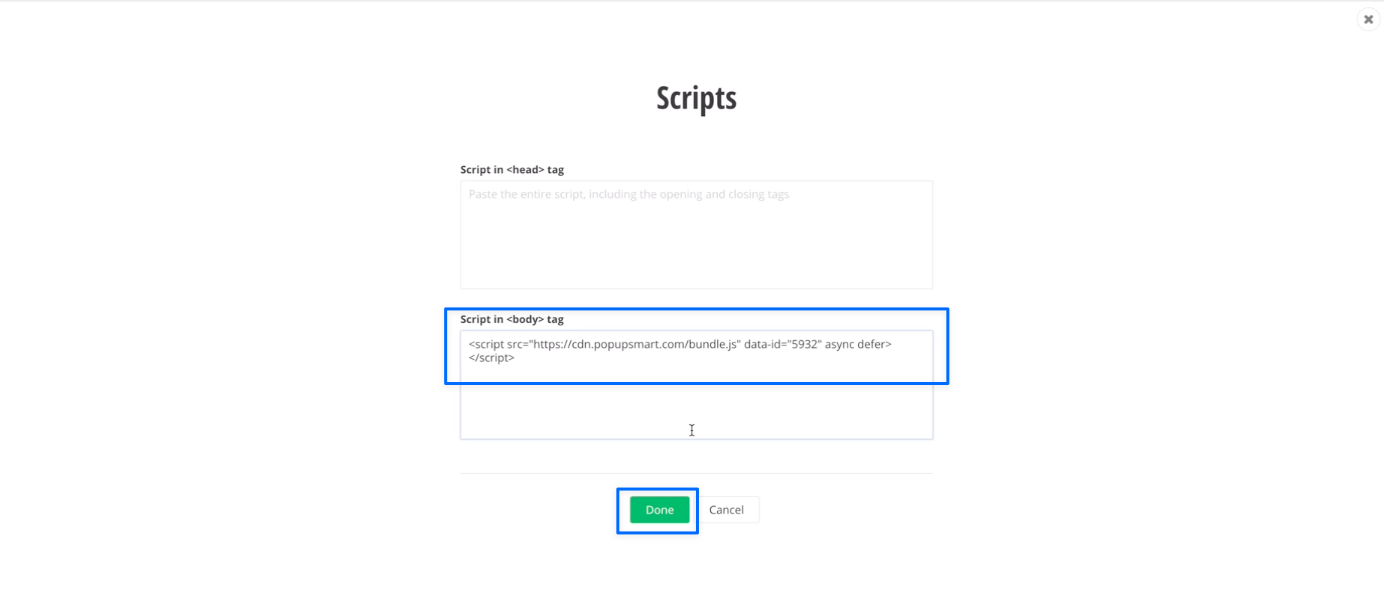
Paste your embed code into Script in <body> tag and click Done. Sitefinity places body scripts at the start of the body; the code loads asynchronously, so the page doesn't wait for it there.
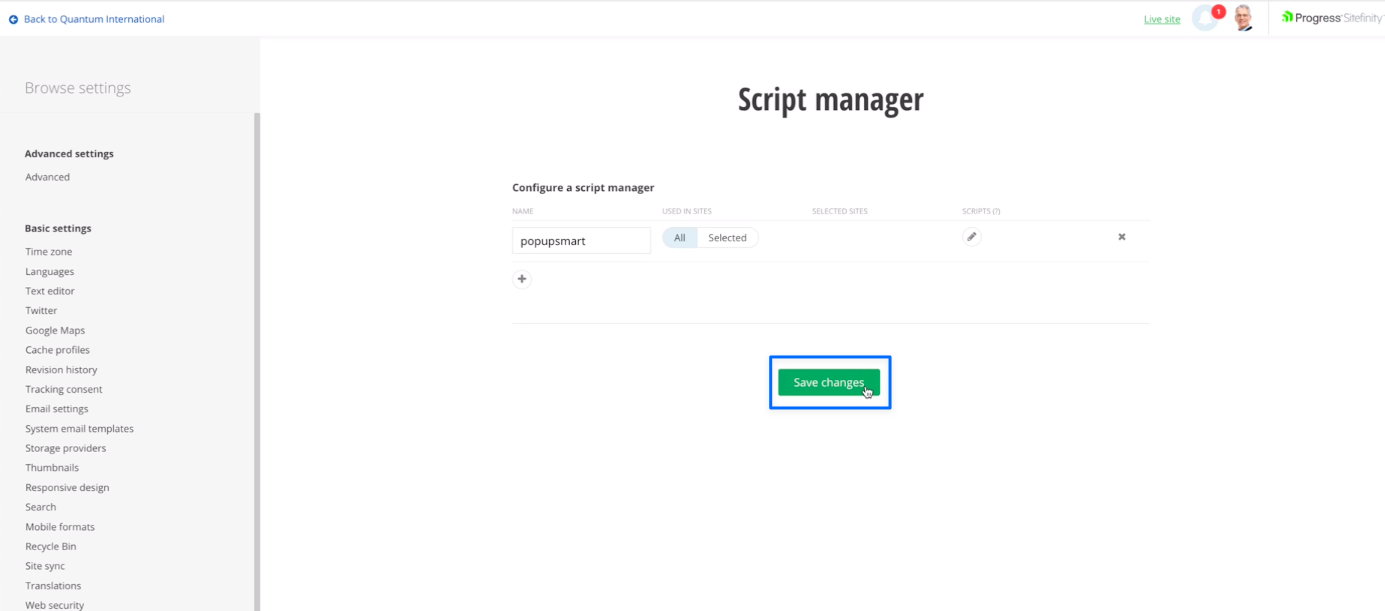
Back in the Script manager, click Save changes. Done only closes the window; the script isn't saved until you do this.
Step 5: Allow Popupsmart in Trusted sources
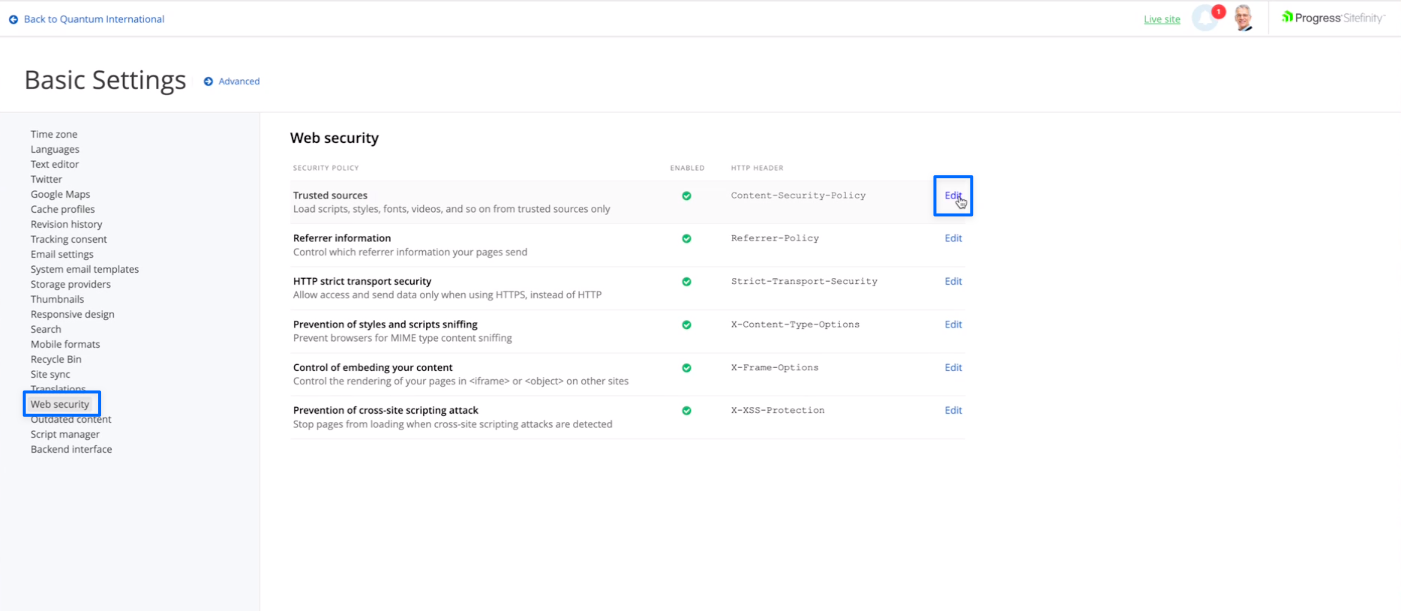
In the same settings list, click Web security, then Edit next to Trusted sources.
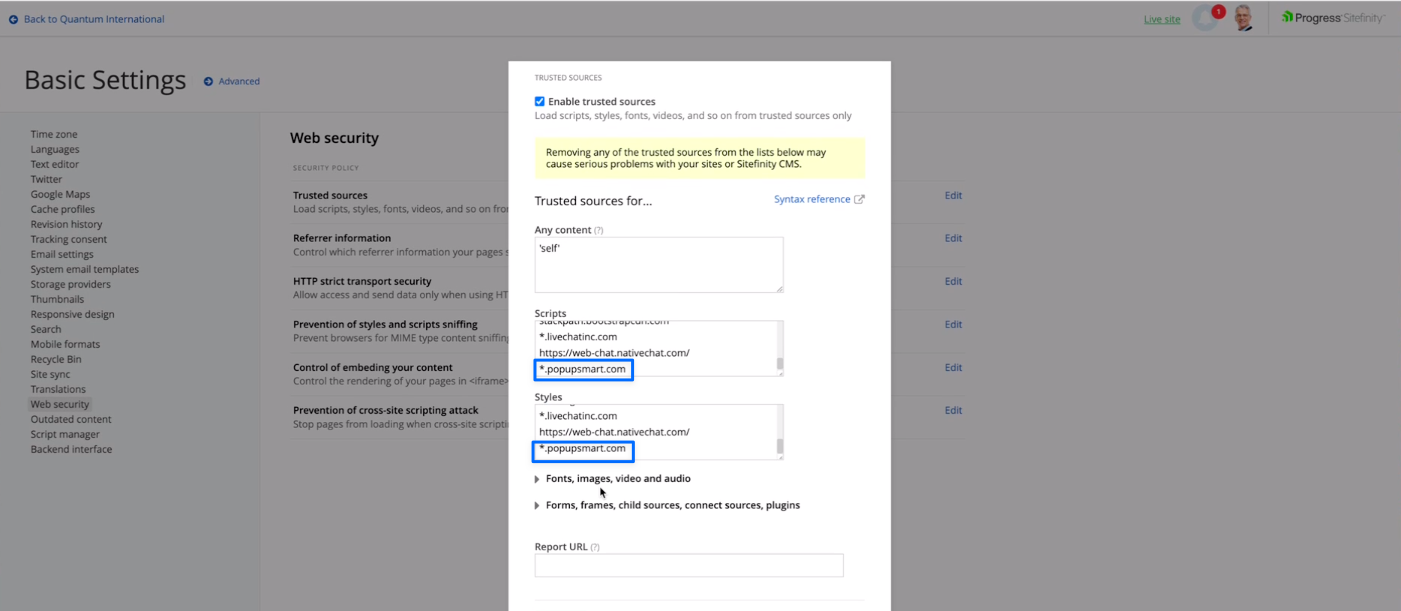
Add *.popupsmart.com on a new line in Scripts and Styles. Then expand Fonts, images, video and audio and Forms, frames, child sources, connect sources, plugins, and add it to each list there, including Connect sources. Save the dialog.
If Enable trusted sources is turned off on your site, you can skip this step.
Step 6: Add and verify your website
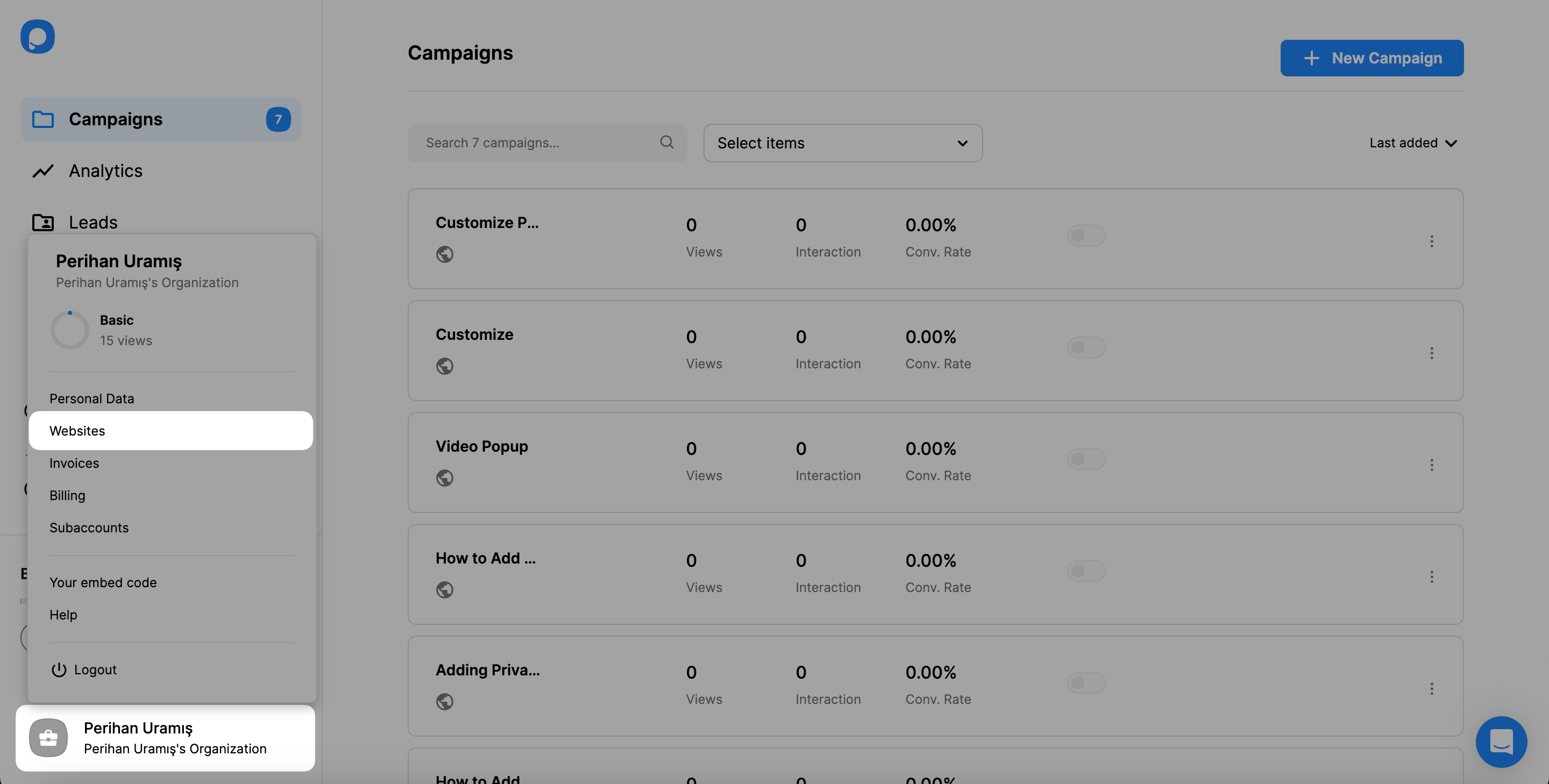
Back in Popupsmart, open the profile menu at the bottom left and click Websites.
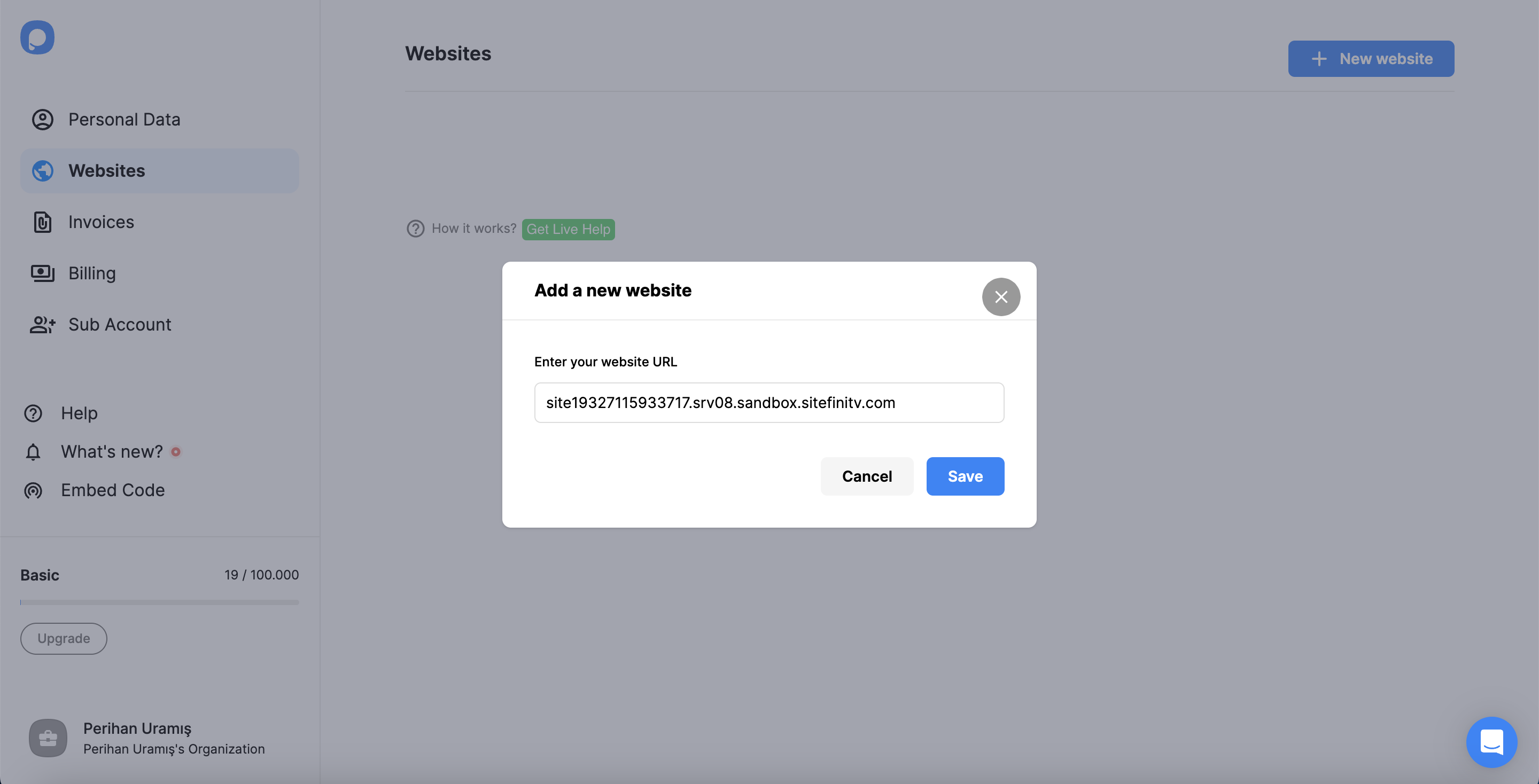
Click New website, enter your Sitefinity site's address in the Add a new website window and click Save.
The site should show as Verified.

If it shows as Unverified, click Unverified, then Verify website, and go back to the dashboard and click Refresh. The guide to verifying your website covers the other cases.
Step 7: Create your popup
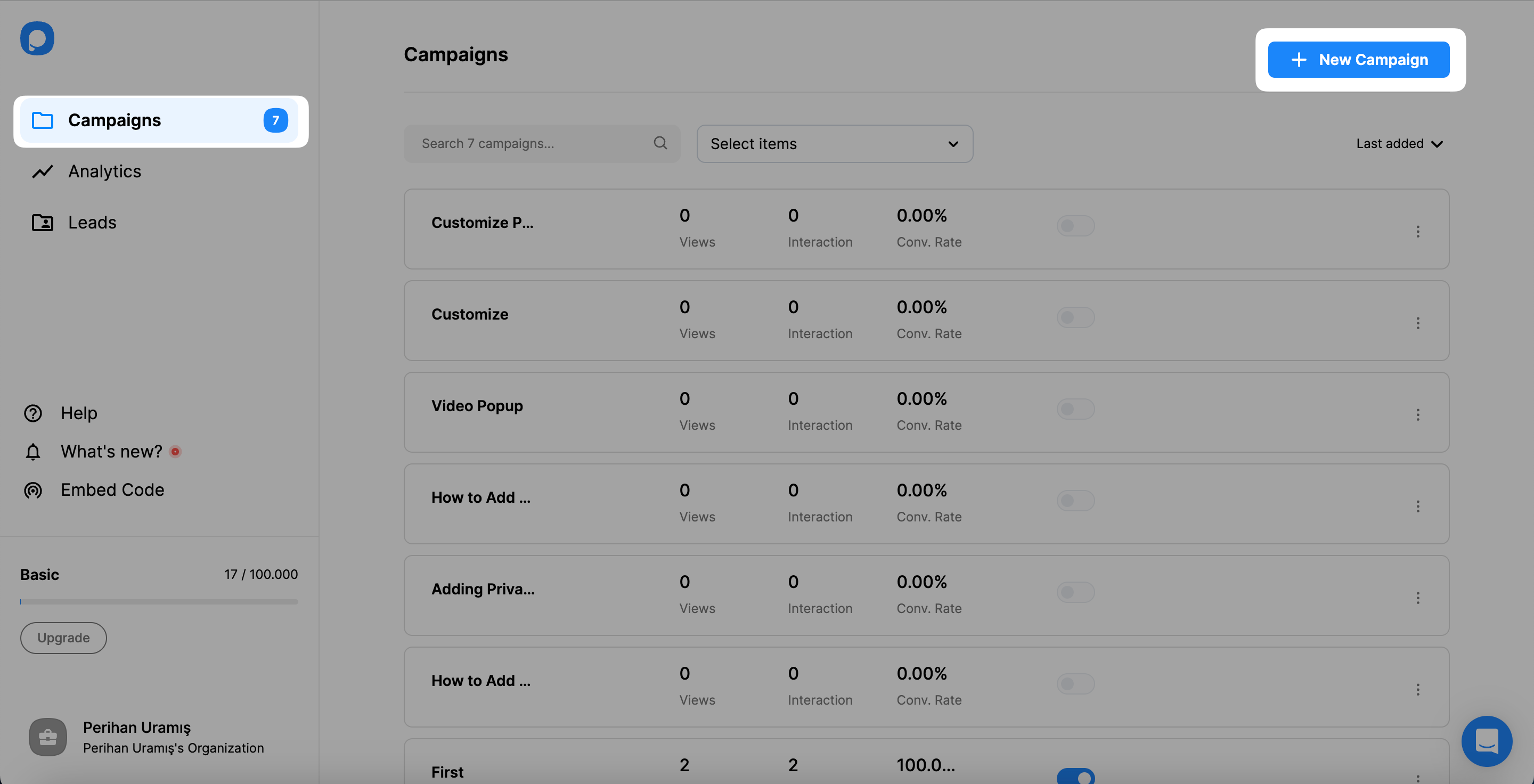
Click New Campaign, choose your Sitefinity website and pick a template. Change its copy, colours and form fields to match your site, and save.
Step 8: Publish and check the popup on your site
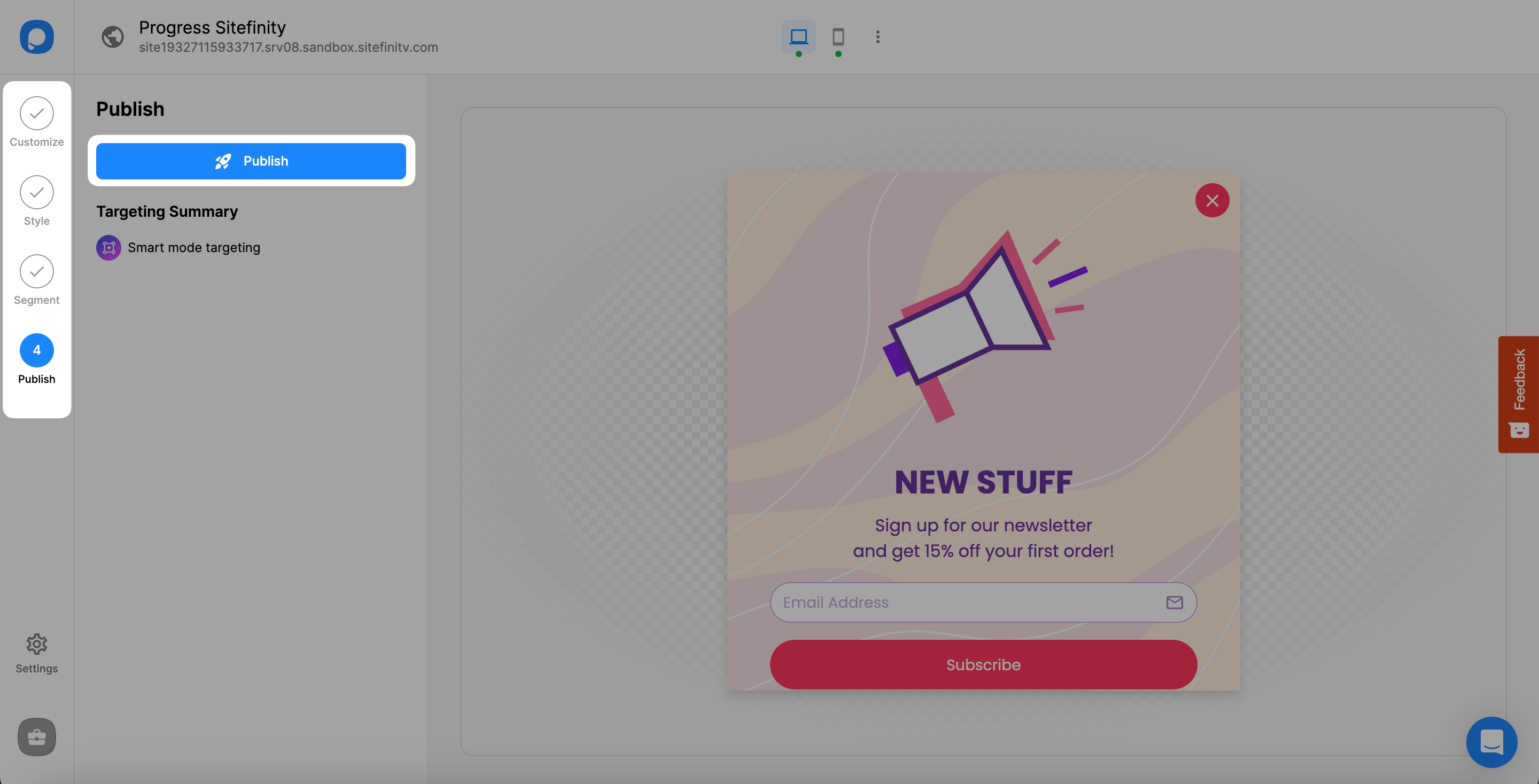
Go to the builder's Publish step and click Publish. Then open your site in a private window; the popup appears when its trigger fires.
Does Sitefinity have a built-in popup?
No. As of September 2026, Sitefinity's list of built-in MVC widgets runs from content and navigation to search, login and email-campaign subscription forms, and none of them is a popup or modal. Sitefinity's Forms module collects submissions on a page, and a developer can build a widget that opens a form in a modal. If one fixed form is what you need, that keeps everything inside Sitefinity.
What that approach leaves to development is the rest of a popup: exit intent and scroll triggers, frequency rules, audience targeting and delivery to an email tool. Popupsmart covers those from a dashboard, so after the one Script manager entry, marketers build and change popups without a release.
How do you show a popup only on some Sitefinity pages?
A Sitefinity popup reaches only the pages you pick when the script stays on every page and each campaign carries its own targeting in the builder's Segment step. URL targeting limits a popup to addresses that contain or match what you set, such as /products. If you run several sites from one Sitefinity instance, the Script manager's Used in sites setting decides which of them load the code at all.
According to Sitefinity's Script manager documentation, a page's properties also have an Enable script manager checkbox that turns the scripts off for that page. I'd leave it ticked everywhere and choose pages in Popupsmart, so a popup can move without a page edit.
Pick the moment along with the page. In Popupsmart's 2026 benchmark, popups that wait before appearing convert 0.83% against 0.61% for popups shown the instant the page loads (median campaign), a lean rather than a proven gap, and exit intent shows no statistically reliable advantage. When a popup fires is worth deciding on purpose.
Popup ideas for a Sitefinity site
A Sitefinity popup works best when it matches the job of the page it sits on:
- Webinar or event registrations: B2B lead generation popups.
- Callback requests on service pages: popups that increase phone calls.
- Newsletter signups on news and insight pages: the email popup guide.
Send your Sitefinity popup leads to your email tool
Popupsmart sends every email address and phone number a popup collects to the tool you already use. You connect it in the campaign's Integration section. The HubSpot popup guide and the Mailchimp popup guide walk through a connection; the help center lists 19 destinations, and a webhook, Zapier or Make covers a tool that isn't one of them.
Does a popup slow down a Sitefinity site?
A Popupsmart popup doesn't hold up a Sitefinity page: the embed code loads asynchronously (async defer), so the browser keeps building your page while it fetches Popupsmart. One thing to expect: whenever you add, edit or delete a Script manager entry, Sitefinity invalidates the output page cache for the affected sites, so pages can load more slowly until the cache is rebuilt.
Popup not showing on Sitefinity? Check these
- Trusted sources blocks the script. Open your browser's developer console on a page. A Content Security Policy error that names popupsmart.com means a list in Step 5 is missing the domain.
- The Script manager wasn't saved. Clicking Done closes the Scripts window; the entry is saved only when you click Save changes.
- The script isn't used in this site or page. If Used in sites is set to Selected, check that this site is ticked, and check that the page's Enable script manager box is on.
- The website isn't verified, or the address doesn't match. Add the address your visitors use; a sandbox or staging address is a different site to Popupsmart, and so is
www.example.comversusexample.com. - The code is on the page twice. If a page template also contains the embed code, remove one copy.
- The trigger hasn't fired yet. An exit-intent or scroll trigger waits for the visitor to leave or scroll; test in a private window and behave like a visitor.
Sitefinity popup FAQ
Is there a free way to add a popup to Sitefinity?
Yes. Popupsmart's free plan is permanent, not a trial: one website, one live popup and 5,000 pageviews a month, with Popupsmart branding. It is enough to install the code and run your first popup on a Sitefinity site.
The Popupsmart pricing page compares it with the paid plans.
Do I need design or coding skills to create Sitefinity popups?
No. You paste one line of code into Sitefinity's Script manager once. The popup itself starts from a ready-made template that you change in Popupsmart's visual editor.
Why does Sitefinity need Popupsmart in its trusted sources?
When Trusted sources is enabled, Sitefinity sends a Content-Security-Policy header that tells the browser to load scripts, styles and other files only from the domains it lists. Popupsmart's domain has to be on that list, or the browser blocks the popup.
Can I create a popup contact form for a Sitefinity site?
Yes. Add email, name, phone or other form fields to any popup in the drag-and-drop editor. Submissions appear under Leads in Popupsmart and can be sent on to your email or CRM tool.
How long does it take to add a popup to Sitefinity?
The Sitefinity side is one Script manager entry and one Trusted sources update; the rest is building the popup. Among people who published a campaign in the 90 days to 16 September 2026, the median time from signup to the first published campaign was 32.5 minutes, and 287 of 332 published within a day, according to Popupsmart's own product data. That figure covers every platform, not Sitefinity alone.
Will Sitefinity popups work on mobile?
Yes. Popups are responsive, the builder has a desktop and a mobile preview, and device targeting can show a popup on mobile only or on desktop only.