ChatGPT
 Perplexity
 Claude
 Grok
Grok Google AI Mode
Email is still one of the best lead channels I’ve used on Shopify stores, and Mailchimp is often the tool teams start with. It’s capable and easy enough to connect. One part still trips people up, though: adding a Mailchimp popup to Shopify the right way.
If Mailchimp is already your email provider, a store popup doesn't have to be complicated. You need to understand two things:
- How Mailchimp's Shopify app puts the popup on your store
- When a more flexible setup makes sense
This guide covers the practical options:
- Connecting your store with the Mailchimp app and its app embed, the way Mailchimp documents it today
- Fixing a Mailchimp popup that doesn't show
- Using a popup builder like Popupsmart when you want stronger targeting and higher conversion control
Insert Mailchimp Pop-up Code to Shopify
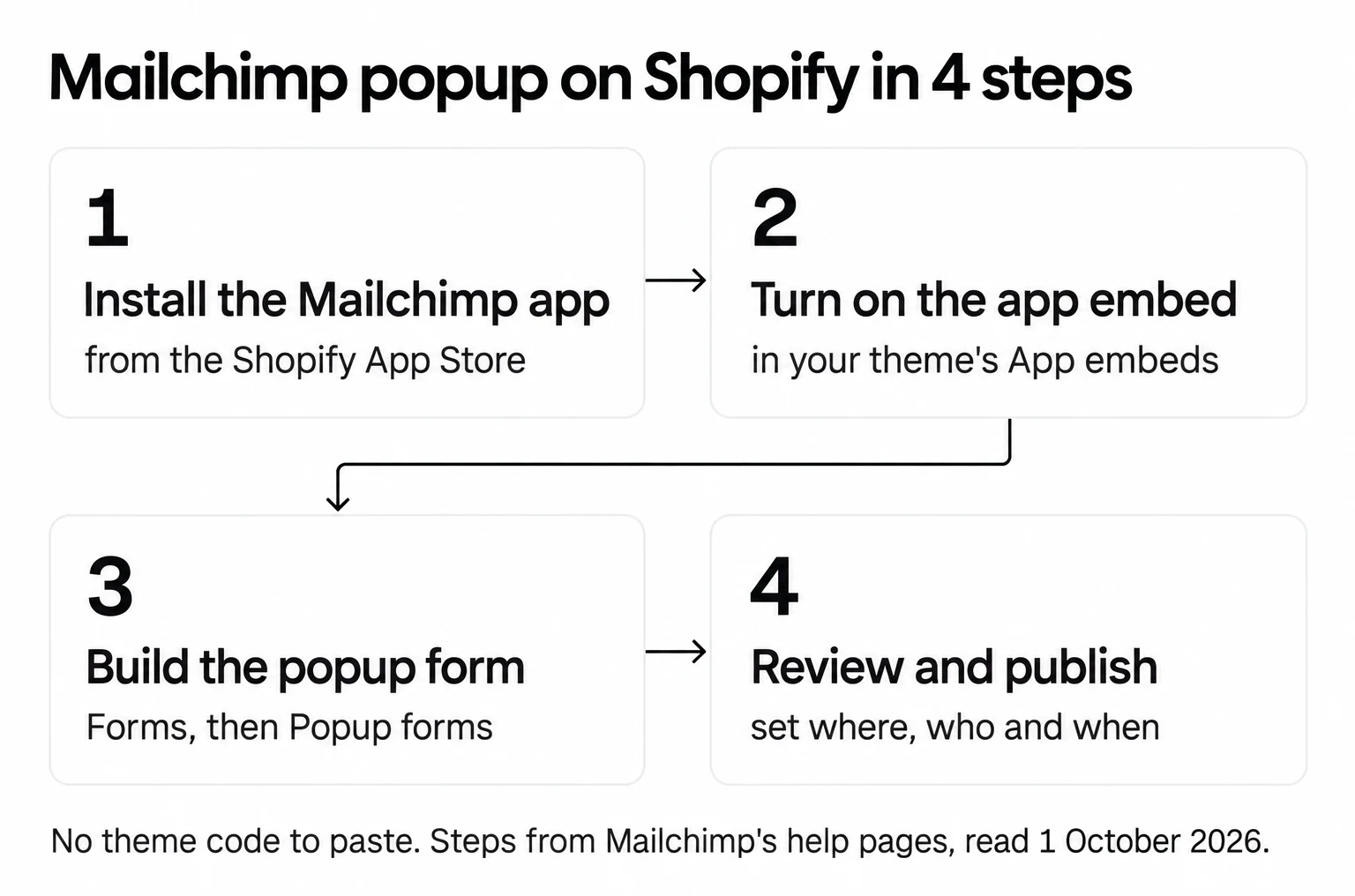
You no longer insert Mailchimp's pop-up code into Shopify by hand. The Mailchimp Email SMS Marketing app adds the popup through a theme app embed, and Mailchimp's guide to creating a popup form says a connected site or Shopify store is needed before a popup form can be turned on. The code snippet still exists, but only for sites you connect manually.
Set up well, a Mailchimp popup turns high-intent visitors into subscribers. That gives you a channel you own and can sell through over time, without leaning entirely on paid traffic.
Over the past 13 years building growth strategies for eCommerce brands, I’ve watched small integration decisions decide how fast an email list grows. The popup is one of them, when it’s done correctly.
Shopify is also where popups tend to earn their keep. In Popupsmart's 2026 popup benchmark, popups on Shopify stores convert at 1.07% vs 0.66% on WordPress sites (median campaign), and 35% of popup campaigns on Shopify stores ask for an email or phone number, against 25% on WordPress sites. A clean Mailchimp and Shopify popup setup is how you get your share of that.
Below, I go step by step from installing the app to publishing the form, with practical advice on popup timing, trigger selection and mobile responsiveness along the way.
One note from experience first: don’t skip device testing. I’ve seen well-designed newsletter popups underperform because nobody checked them on a phone. Some of those brands were losing subscribers and had no idea. Catch it early.
The first job happens inside Mailchimp: connecting your store.
Connect your Shopify store to Mailchimp
To connect your store in Mailchimp, follow the steps below. The Mailchimp and Shopify screenshots are from December 2025 and still match the flow Mailchimp's help pages describe on 1 October 2026.
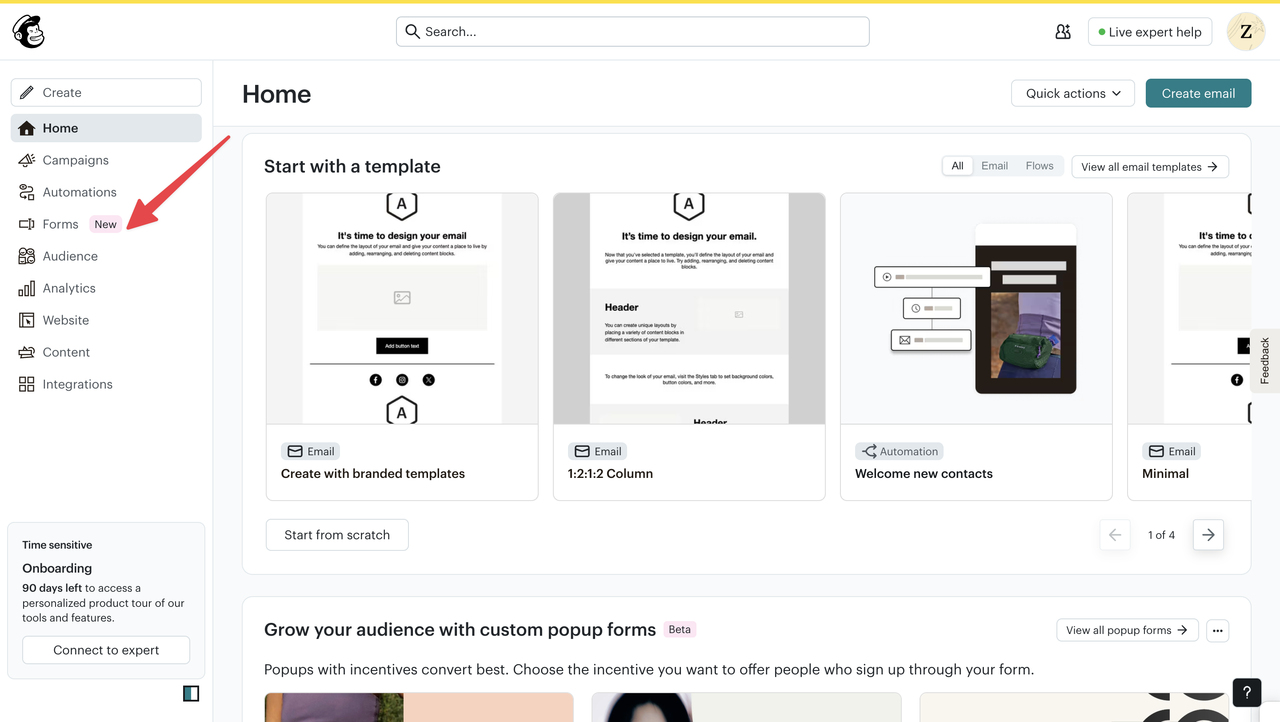
1. Log in to your Mailchimp account, then click Forms from the left-hand menu.
2. Open Popup forms. Click the Create popup form button in the top-right corner to start creating your popup, or use the Connect site option to link your store first.
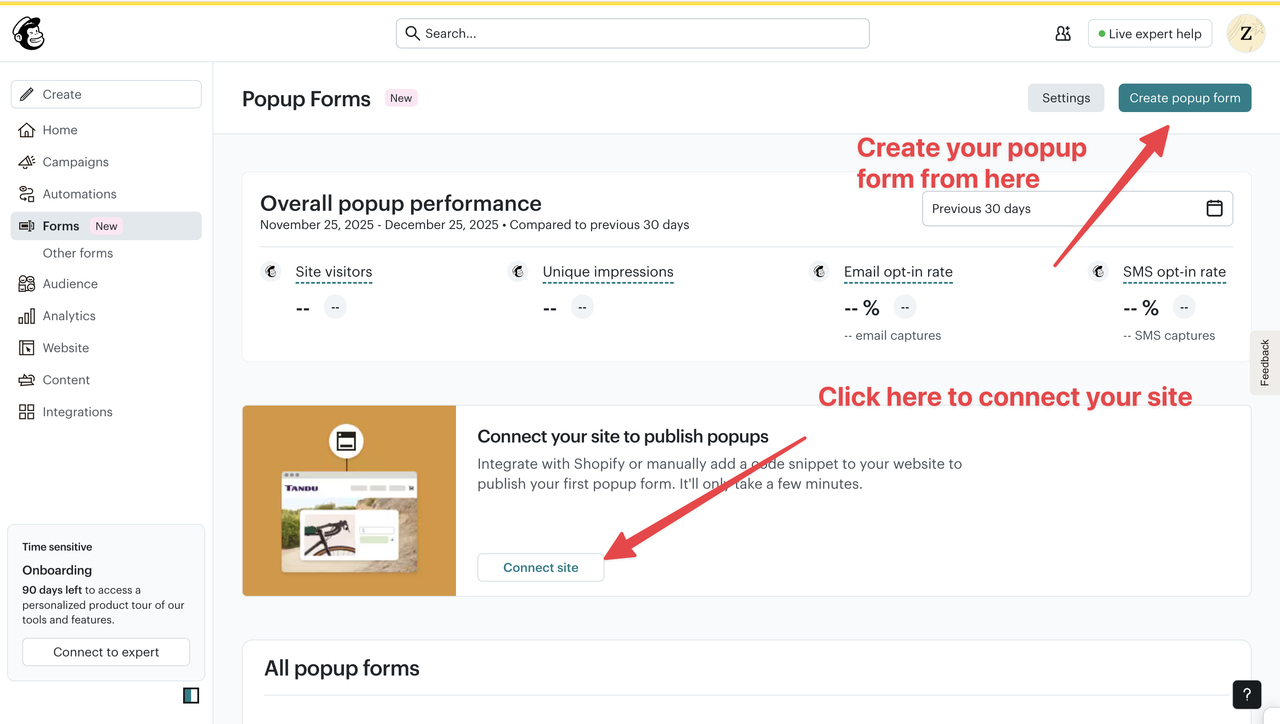
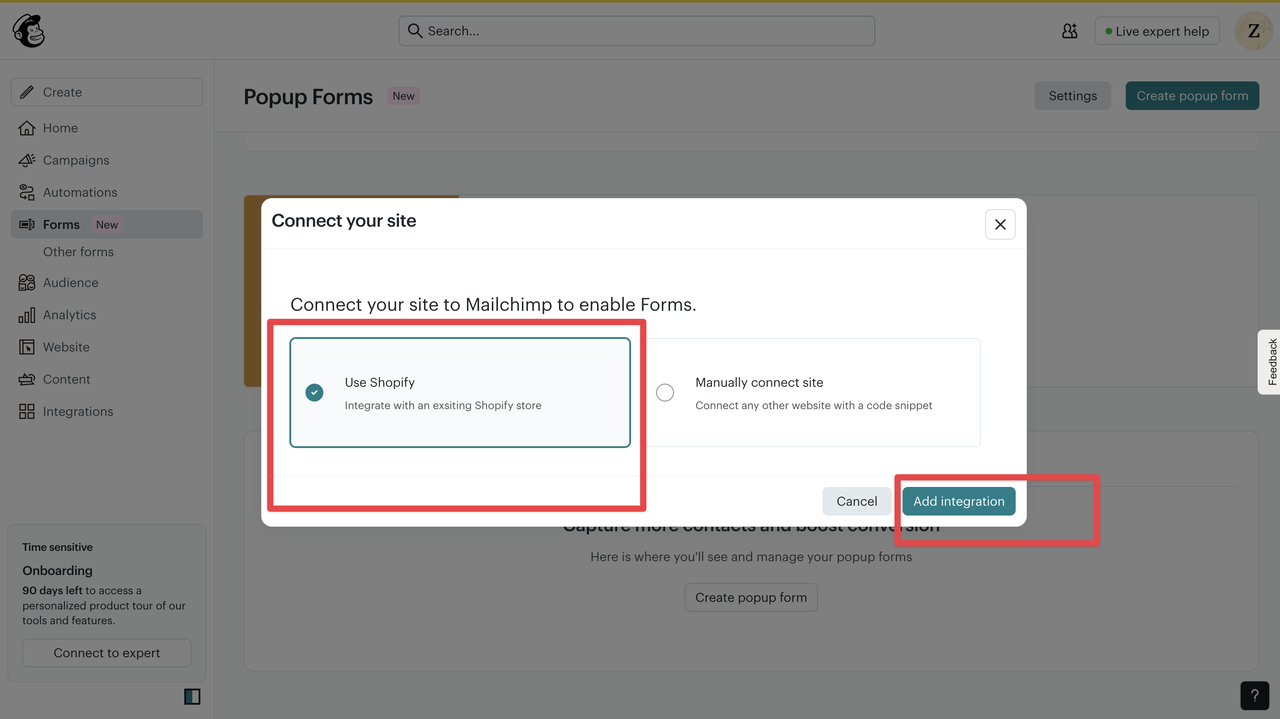
3. Under the Connect your site using Shopify section, choose Use Shopify and click Add Integration. (Manually connect site is the code-snippet route for stores that aren't on Shopify.)
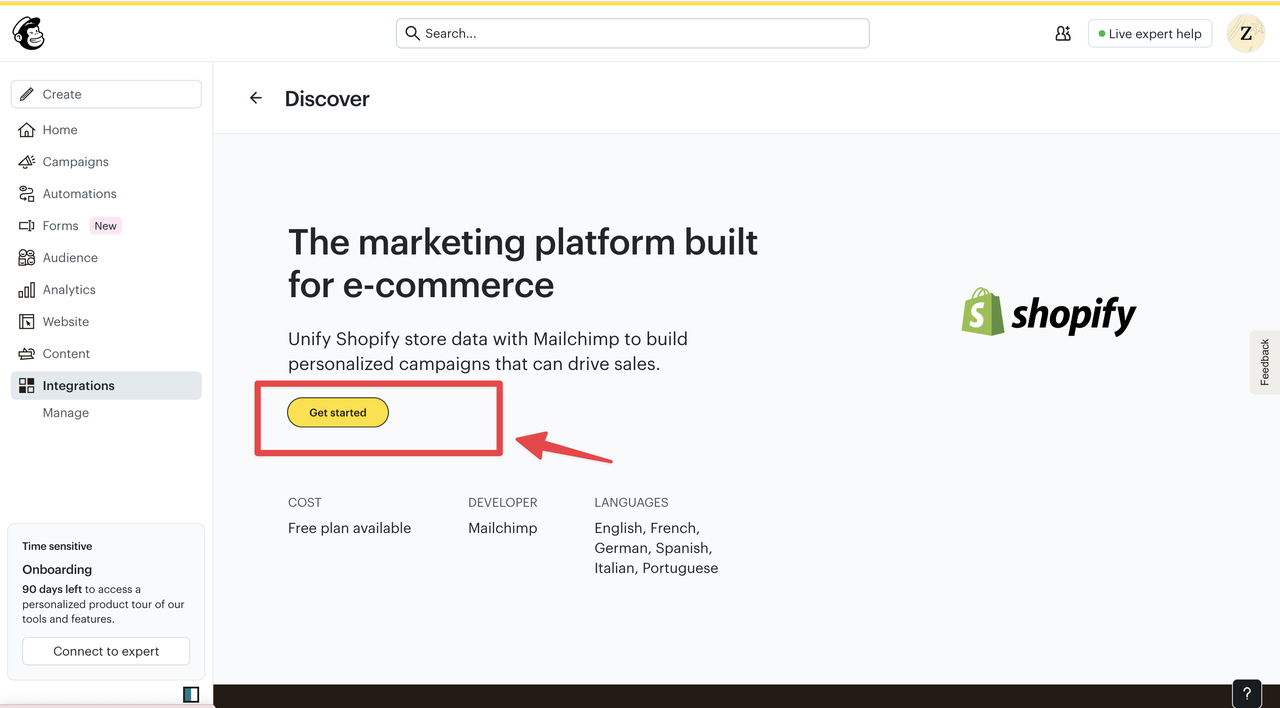
4. In the integration window that appears, click Get Started.
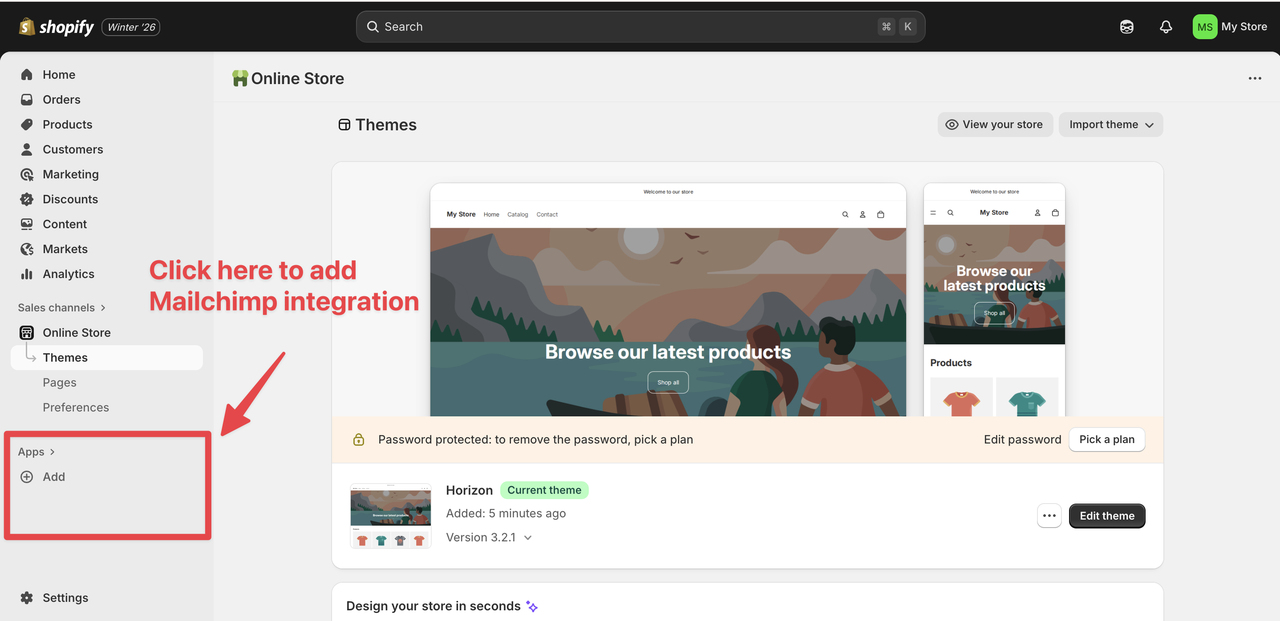
5. You’ll be redirected to your Shopify dashboard. Go to the Apps section on the left-hand side and click the plus (+) icon.
6. Select the Mailchimp app and click Install to add it to your Shopify store.
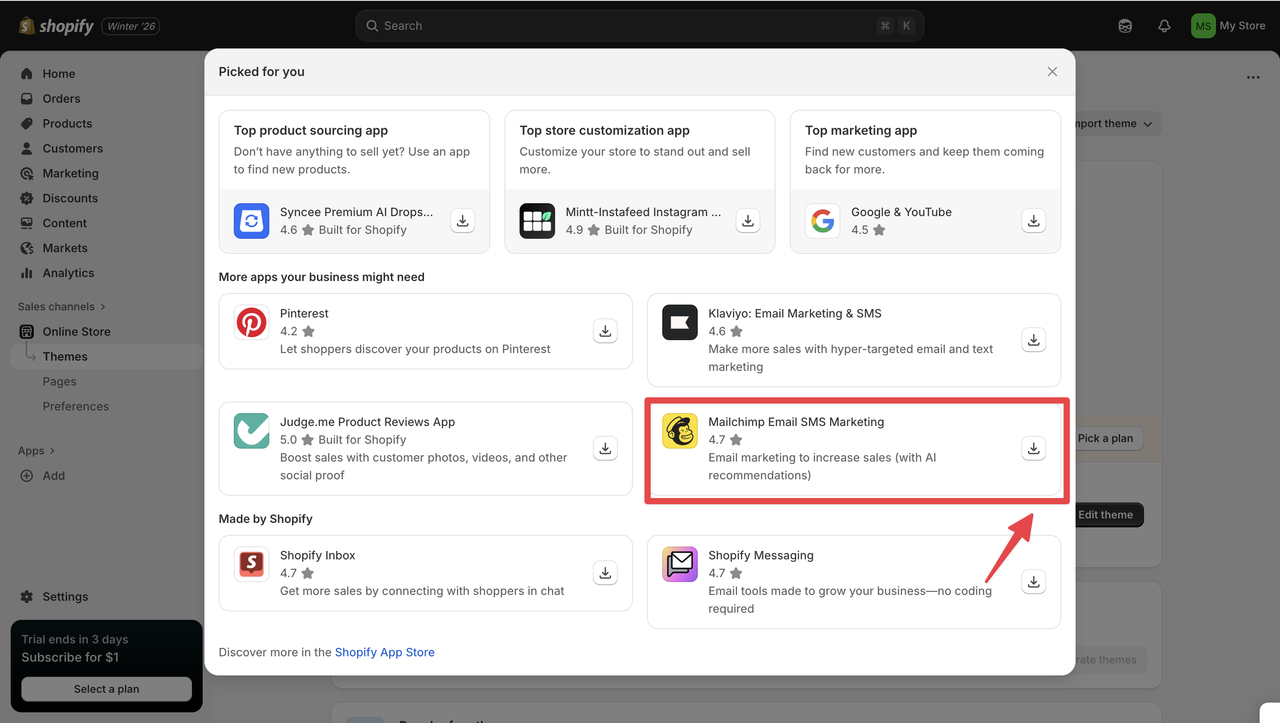
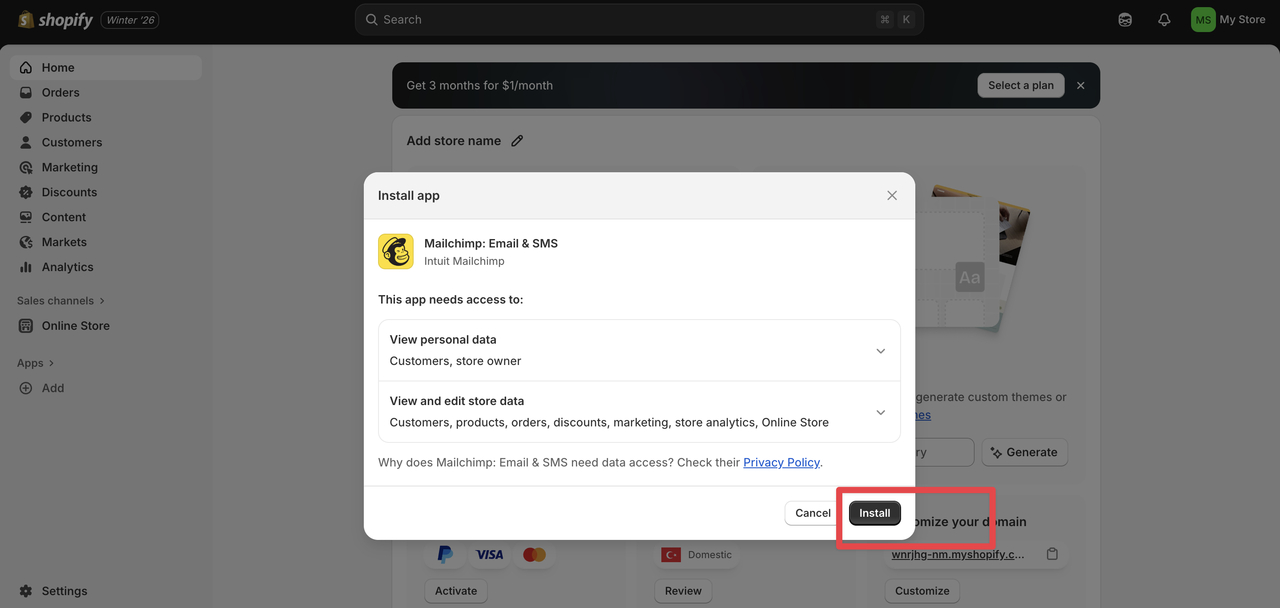
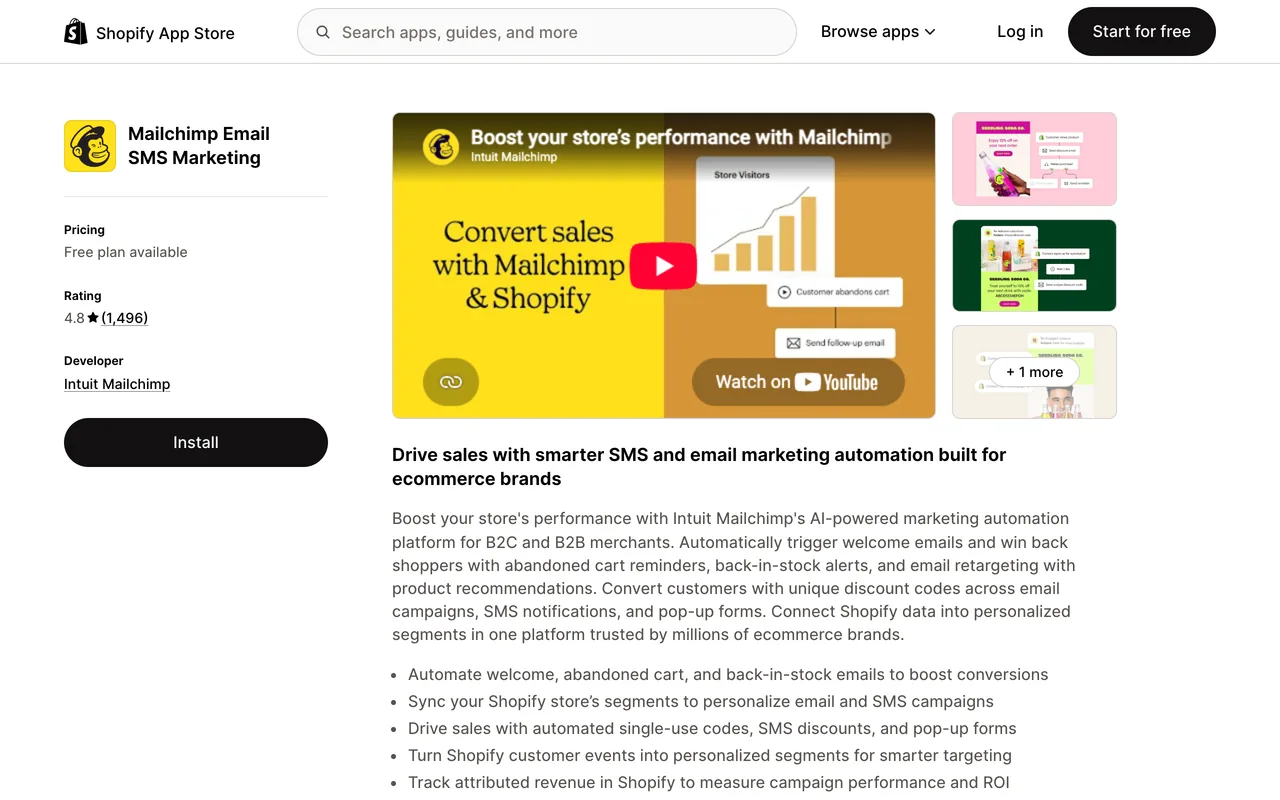
The app is listed as Mailchimp Email SMS Marketing by Intuit Mailchimp. On 1 October 2026 its Shopify App Store listing showed 4.8 out of 5 from 1,496 reviews, a free plan, and paid plans from $13 a month.
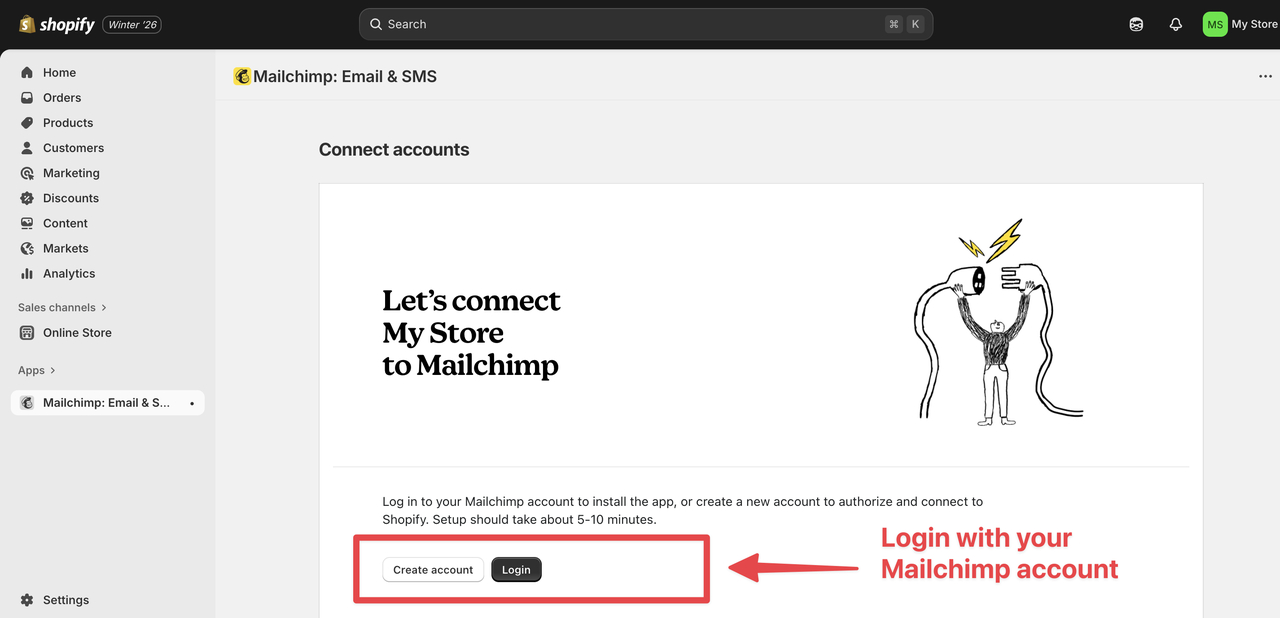
7. Sign in with your Mailchimp account to authorize the connection.
8. Choose the audience to link, confirm which contact types to sync, map any fields you need, then click Sync now. According to Mailchimp's Shopify connection guide, the app sends your Shopify customer and order data to Mailchimp, and it asks you to pause existing welcome automations before you connect.
9. Turn on the app embed. When the banner appears, enable it; then open Online Store → Themes → Customize, click the App embeds icon in the sidebar, switch on the Mailchimp embed and click Save. Mailchimp's guide says the app embed is what turns on site tracking and popup forms. I don't have a current screenshot of this admin screen, so follow the menu names above.
header.liquid. On Shopify the app embed replaces it. If an old snippet from the Connected Sites days is still in your theme, remove it once the embed is on, so the store loads Mailchimp one way only.What happened to the old code steps? Earlier versions of this guide had you log in to Shopify, open Edit code, paste the site code before </header> in header.liquid, and then click Check connection on Mailchimp's Connected Sites page. Mailchimp's current Shopify flow has no such step, so I removed those steps and their screenshots. If you connect a store manually instead, Mailchimp gives you a snippet to paste between the <head> tags (or add through Google Tag Manager) and a Check connection button; for theme editing help, check Shopify's own theme code editing tutorial.
Create and publish the Mailchimp popup form
With the store connected, the form itself is built in Mailchimp. Mailchimp's guide lists these steps:
- Click Forms, then Popup forms, and click Create popup form.
- On the Offer page, pick the incentive you'll give for signing up and click Continue.
- On the Template page, choose a template and click Apply.
- On the Setup page, name the form, choose your audience, and collect email addresses, phone numbers or both. Then click Create form; nothing is saved if you leave before that.
- Design the form, then click Save and review and work through the checklist: Where should it show?, Who should see your form?, When should it show? (time delay, inactivity, scroll or exit intent), What should it look like? and the optional advanced settings.
- Click Publish or schedule, then Publish now, or schedule a start and stop date.
Once published, the form shows on your store through the app embed. If you offer an incentive, the discount matters more than its size: in our benchmark, signup popups that offer a discount code convert 1.46% vs 0.75% for signup popups without one. The discount popup guide covers how to word the offer.
That's the Mailchimp popup on Shopify. Next comes optimization. Mailchimp's popup form guide covers geotargeting and A/B tests, and its Shopify connection guide covers what syncs.
Then watch how the popup performs. Timing is the setting people change first, so know what the data says before you tune it: popups that wait before appearing convert 0.83% vs 0.61% for popups shown the instant the page loads (median campaign), a lean rather than a rule. If you want test ideas, HubSpot's A/B testing examples are a good list, and they've shaped how I approach integrations too.
Troubleshooting Common Mailchimp Popup Issues on Shopify
You can follow every step and still end up with a popup that misbehaves. I’ve run into each of these while helping clients with Mailchimp and Shopify integrations. The cause is usually technical, not strategic, and most of them are quick to find once you know where to look.
Popup not showing at all
If your popup isn’t appearing, theme conflicts are the most common cause. Outdated Shopify themes or custom scripts can prevent Mailchimp’s code from loading correctly. In setups I’ve audited, the issue is often as simple as incorrect placement.
On Shopify today, placement means the app embed: the Mailchimp embed has to be switched on in App embeds for the theme that is live, and the form has to be published, not saved as a draft. On a manual connection, make sure your Mailchimp embed code is added before the closing </head> tag in theme.liquid. If it’s placed elsewhere, the popup script may never initialize.
The popup stopped after a theme change
Shopify's help on apps in your theme notes that apps you set up in one theme aren't active by default after you change your published theme. If the popup vanished after a redesign or a theme update, open the new theme's App embeds and turn the Mailchimp embed on again.
JavaScript or mobile issues
Another frequent blocker is JavaScript errors. Browsers, especially on mobile, are less forgiving when scripts conflict. Always test your popup on both desktop and mobile devices; I’ve seen popups work perfectly on desktop while silently failing on phones due to viewport or CSS issues.
A few quick checks that often resolve this:
- Clear your browser cache to avoid loading outdated scripts
- Open your browser’s developer console and look for JavaScript errors
- Test in incognito mode to simulate a first-time visitor
Mailchimp configuration problems
Sometimes the problem is on Mailchimp's side. Double-check that the store connected in Mailchimp is the Shopify store you're testing, and that the form's Where should it show? step includes the pages you're on. On a manual connection, if the script is inactive or outdated, regenerate it and paste it again. I’ve fixed multiple broken setups this way after Mailchimp updates invalidated older scripts.
Also review your popup timing rules. If triggers are too restrictive, visitors may never see the popup. You don't need a long delay: in Popupsmart's benchmark, the exact delay length (0-5 seconds vs 21-60 seconds) makes no measurable difference to conversion.
GDPR and consent-related blockers
If your popup includes GDPR consent fields, make sure they aren’t hidden by CSS conflicts. One store I worked with had a consent checkbox technically present, but invisible, so submissions failed silently. Make it visible, then submit a test signup to confirm it reaches your audience.
Quick isolation checklist
When issues persist, isolate the problem before changing tools:
- Temporarily disable other popup or script-heavy Shopify apps
- Verify the Mailchimp app embed is on in the live theme (or, on a manual connection, the snippet sits in
theme.liquid) - Preview the store on desktop and mobile
- Check Mailchimp audience and automation settings
These glitches matter more than they seem. A popup that never fires collects nothing, however good the offer is.
When troubleshooting becomes a recurring problem
If you keep fixing the same conflicts, stop patching and rethink the setup. Dedicated popup builders like Popupsmart are built to avoid many of these issues. With no-code installation, a Shopify app and behavior-based targeting, troubleshooting becomes the exception.
You keep Mailchimp. It stays the email engine, and a purpose-built tool takes over popup delivery.
Taking Your Mailchimp Popup Setup Further with Popupsmart
Mailchimp's popup form has grown up since this guide was first written. It now has triggers, visitor targeting, geolocation and A/B tests, and it comes with the Mailchimp app you already installed. If one popup on one store covers the job, it's a sensible place to start.
Where it stops is Shopify itself. With Popupsmart you can build a more flexible popup for your Shopify store instead, one that targets on your store's own data and still sends every signup to Mailchimp. Good UX defaults come built in. The steps are below.
You don’t have to rely only on Mailchimp’s built-in popups. In many cases, you probably shouldn’t.
Over 13 years of helping eCommerce brands grow, I’ve seen the same pattern again and again: native popup tools often fall short on targeting, flexibility, and real conversion control. A dedicated popup builder like Popupsmart closes that gap.
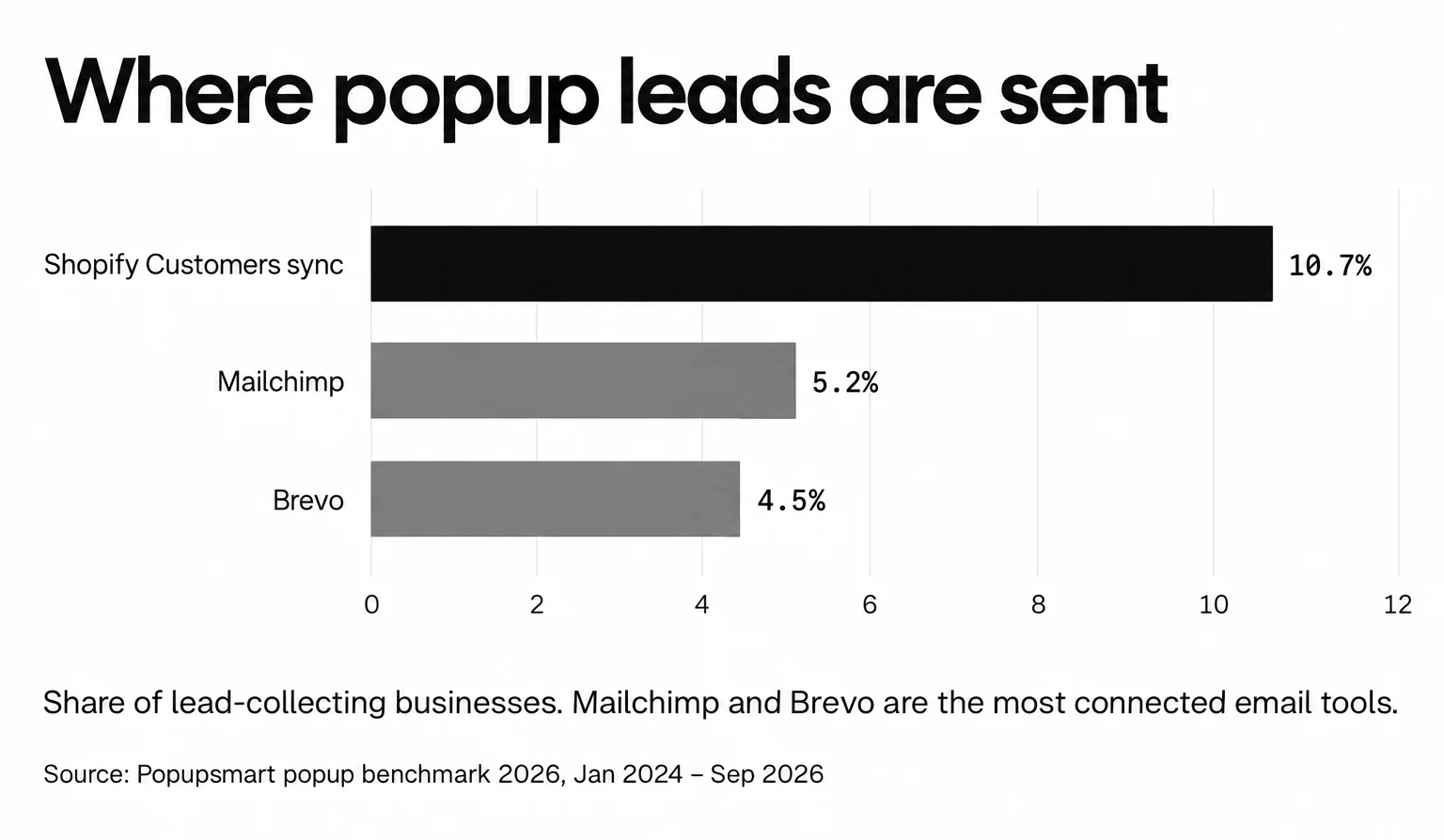
Popupsmart’s integrations include a direct Mailchimp connection, so newsletter signups sync without workarounds. Mailchimp stays your email engine, and you get much more control over how and when popups appear on your Shopify store. Mailchimp is one of the most used connections in our data: among external integrations, Mailchimp (5.2% of lead-collecting businesses) and Brevo (4.5%) are the most connected email tools; the Shopify Customers sync is used by 10.7%.
What changes in practice? Instead of showing the same generic popup to every visitor, you can create popups that respond to behavior and context.
Popupsmart is designed around that idea. The setup is no-code, so you can launch quickly even if you’re not technical. And the features are there for conversion, with design polish second.
The capabilities that matter most here:
- Easy design customization without touching code
- Fully responsive popups optimized for mobile traffic
- Exit-intent, scroll, inactivity and time-on-page triggers to capture intent
- Device-based and geo-targeted targeting for relevance
- Returning-visitor logic and display frequency to avoid repetitive messaging
- Shopify data targeting: cart products, cart total, customer tags, logged-in visitors and purchase history
Connecting Popupsmart to Mailchimp doesn't need Mailchimp's site connection at all. You connect your Mailchimp account via API inside the Popupsmart dashboard, pick the audience and match the fields. After that, subscriber data syncs on its own. No manual exports, no fragile embed hacks. You also get A/B testing (from the Advanced plan) and consent checkboxes, which are easy to overlook and matter more as you grow. The full setup, including where to find the API key, is on the Mailchimp popup integration page.
Two questions to ask about your current setup:
- Are your popups mobile-friendly, on a real phone?
- Do they adapt based on user behavior, traffic source, or device?
If either answer is no, you’re probably losing signups. I’ve advised hundreds of brands on this, and the ones that get these fundamentals right keep doing better than the ones that don’t. For the email side of the strategy, Shopify's email guide is worth a read.
Popupsmart’s templates are ready to use out of the box, for industries from fashion to SaaS. Pair them with Mailchimp’s email automation and you have a setup you can keep running without rebuilding it.
Why Use a Popup Builder Instead of Mailchimp’s Native Popups?
Mailchimp’s built-in popups are easy to set up, and they now cover the basic triggers. The difference is what they can see on a Shopify store and where the leads can go. Here is how the two compare on the points a Shopify store owner asks about, from each product's own help pages:
| Mailchimp popup form | Popupsmart | |
|---|---|---|
| How it gets on Shopify | Mailchimp Email SMS Marketing app plus its theme app embed | Popupsmart's Shopify app, no theme code |
| Triggers | Time delay, inactivity, scroll, exit intent | Time on page, inactivity, scroll, exit intent, page visits, on click |
| Who sees it | Target pages, visitor targeting, traffic source, geolocation | URL, device, traffic source, location, new or returning visitors, plus Shopify data such as cart total and customer tags |
| Where leads go | Your Mailchimp audience | Mailchimp, Klaviyo, HubSpot, Shopify Customers and more |
| Price | Comes with your Mailchimp account; the app lists a free plan and paid plans from $13 a month (1 October 2026) | Free plan with 5K pageviews a month; paid plans from $39 a month |
With a dedicated popup tool like Popupsmart, you can:
- Control popup timing and triggers
- Segment visitors based on behavior, device and Shopify data
- Optimize popups for mobile traffic
- Sync subscribers directly to Mailchimp without custom code
The popup then appears at the right moment for each visitor. If you're still choosing an app, the comparison of Shopify popup apps lists the options with their prices.
Step 1: Install Popupsmart on Your Shopify Store
Start by installing Popupsmart from the Shopify App Store.
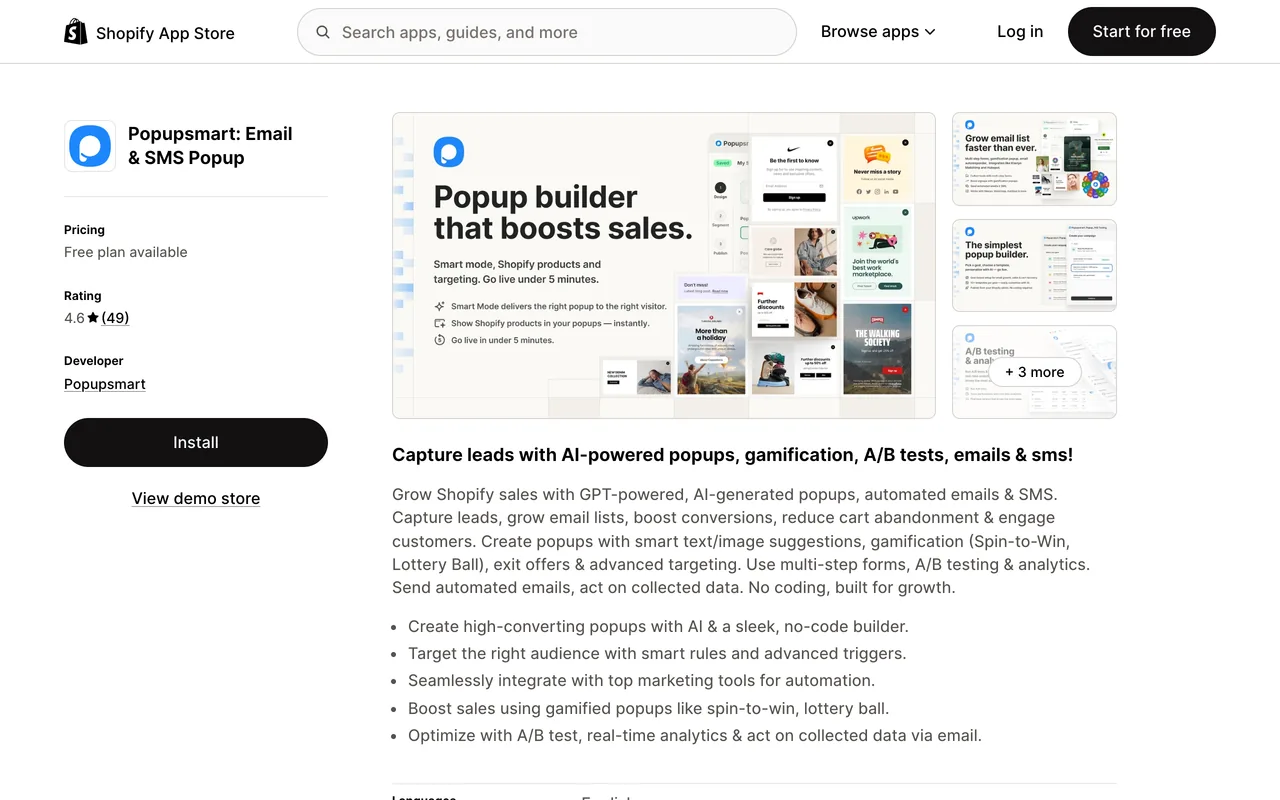
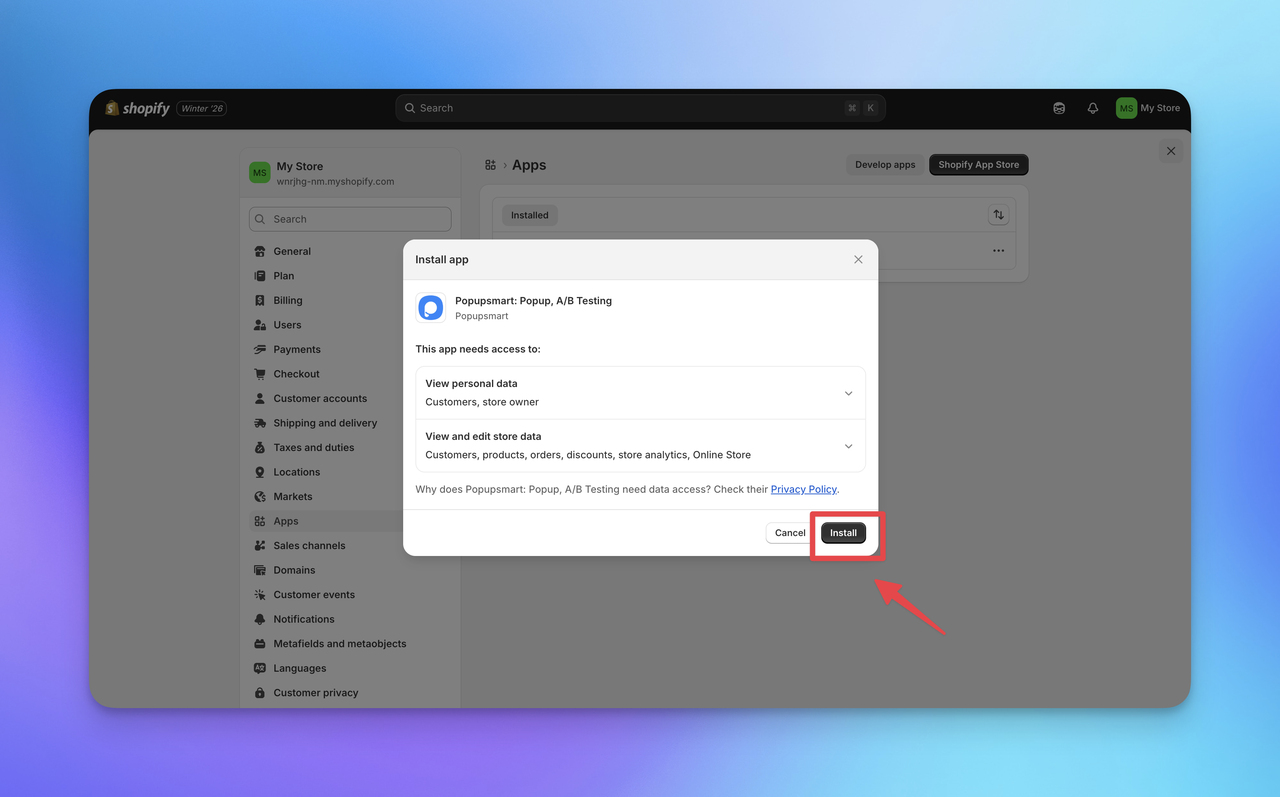
Once installed:
- Approve the required permissions
- Popupsmart creates your account and connects it to your Shopify store
- Your store's fonts and colors are imported, and no manual code insertion is needed
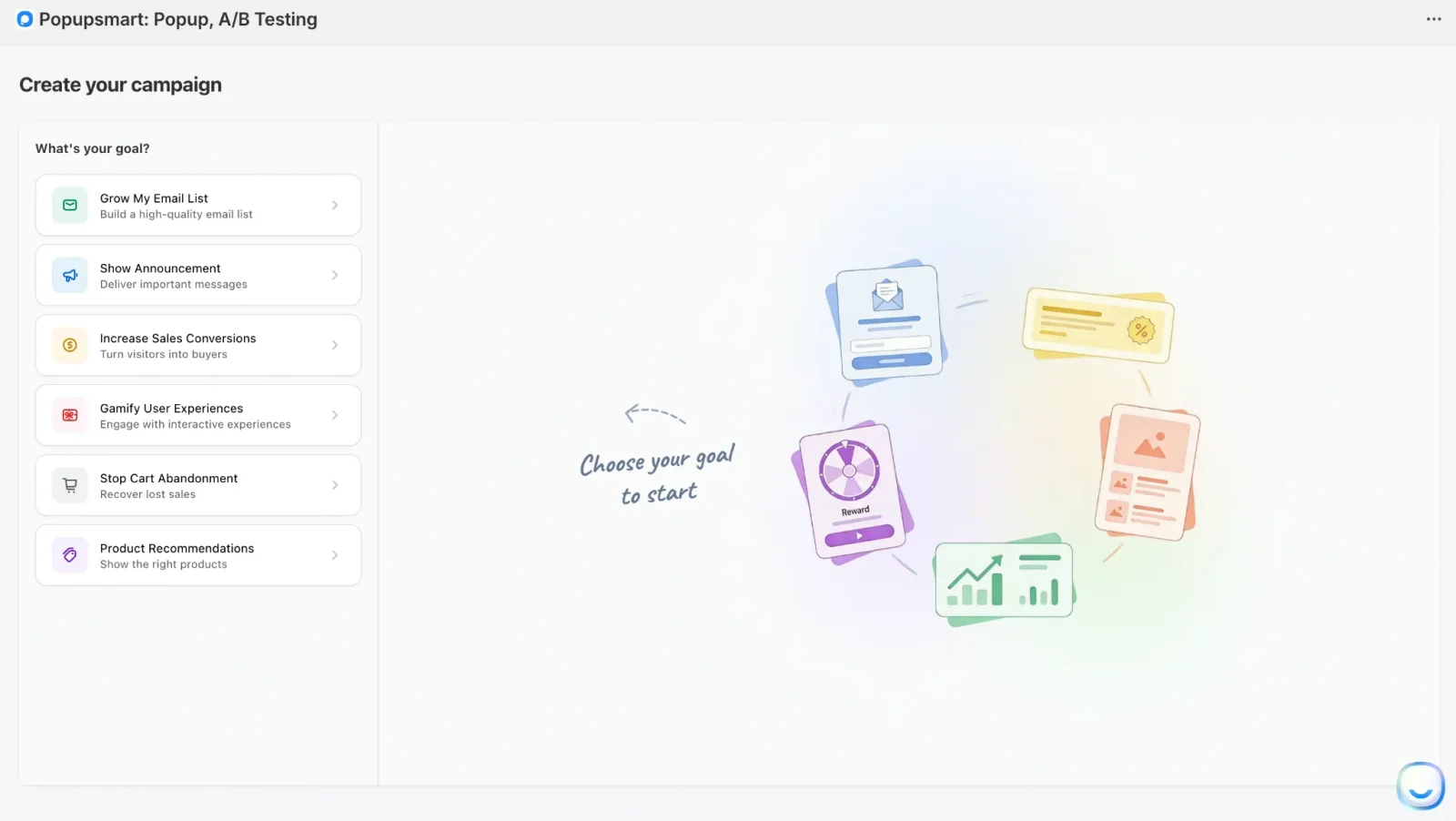
After installation, you land on the Overview page. Click Create first campaign and choose a goal; for Mailchimp list building, pick Grow My Email List, then a sub-goal such as collecting emails with a coupon.
If you'd rather describe the campaign than click through it, Popupsmart's AI agent in the app builds a whole campaign from a chat request, template, targeting and integrations included, and publishes it, on every plan.
Step 2: Choose a Popup Template
Select a popup template based on your goal. For Mailchimp list building, common choices include:
- Newsletter signup popups
- Spin-to-Win (gamified popups)
- Exit-intent lead capture popups
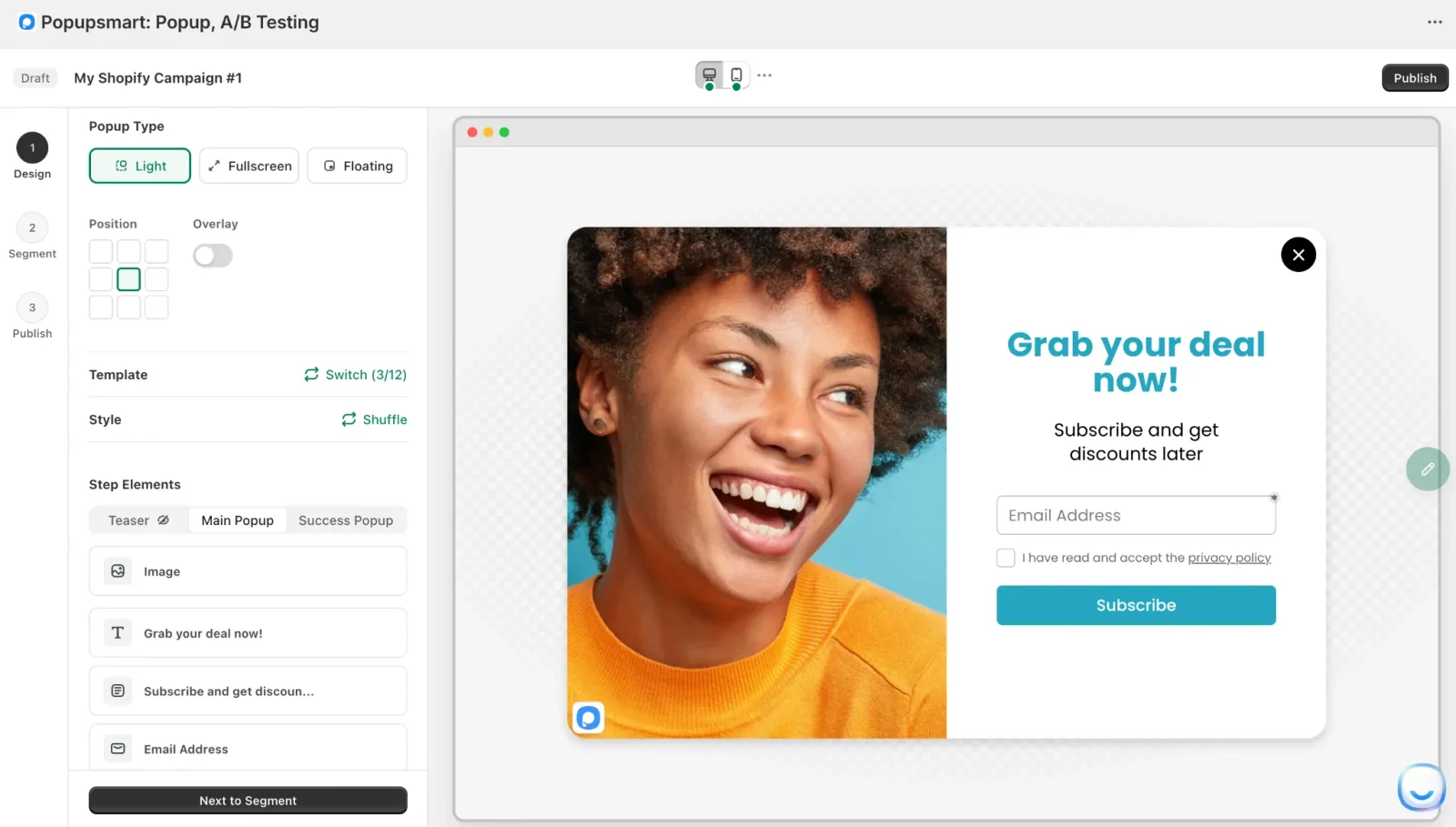
Selecting a template is required before moving forward, as Popupsmart enables customization and integrations at the campaign level. In the Design step you can switch between templates, shuffle styles, and pick the popup type: Light, Fullscreen or Floating. For more starting points, browse the popup templates.
One thing most spin-to-win pitches leave out: spin-to-win gets far more clicks (7.33% vs 1.87% of displays, median campaign; the spin itself counts as a click), but it does not collect measurably more email or phone leads than a plain signup popup.
Step 3: Connect Mailchimp to Popupsmart
Now it’s time to connect Mailchimp. In Popupsmart's Shopify app this happens in the Publish step.
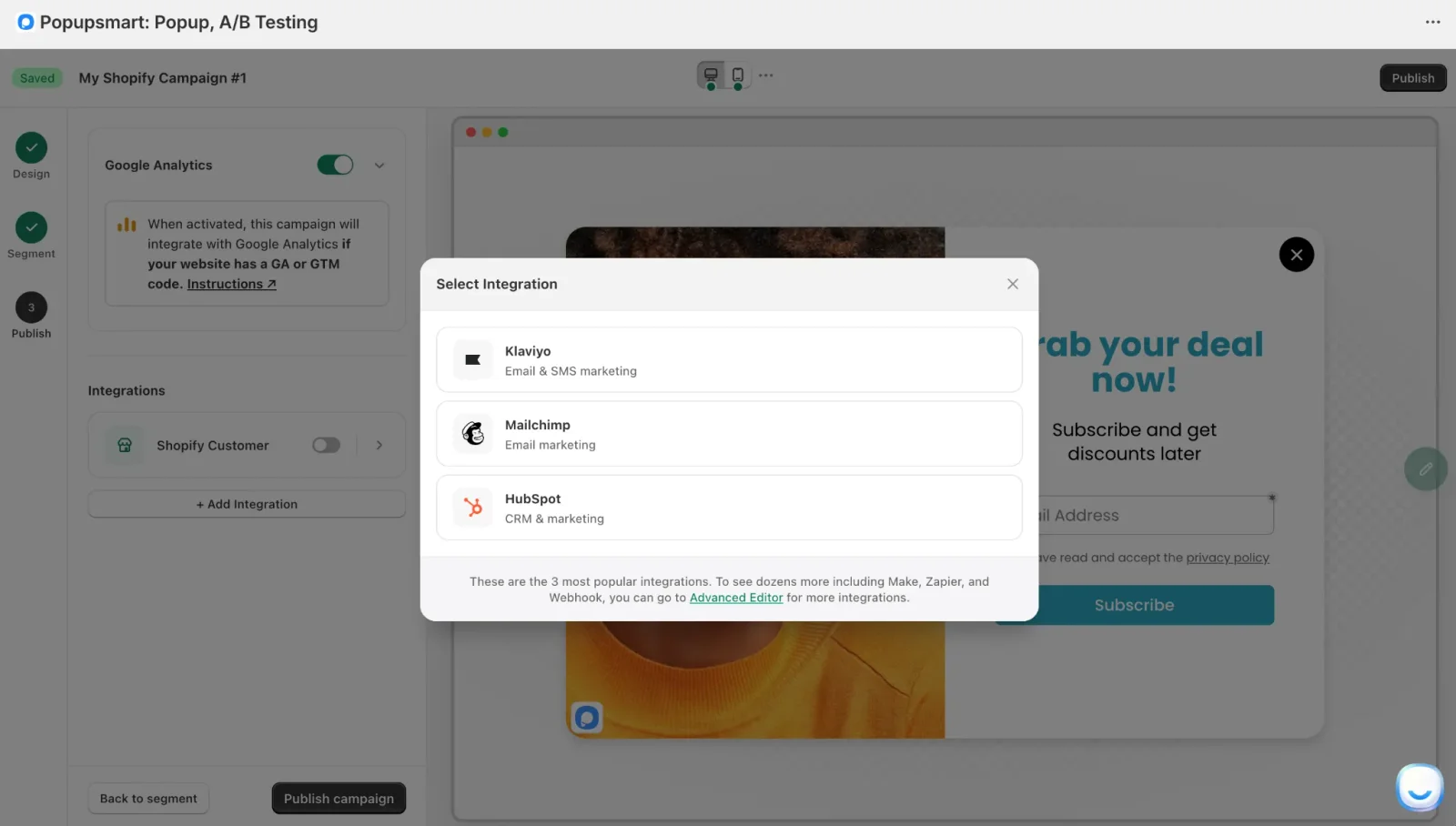
Inside your popup campaign:
- Go to the Publish step and find Integrations
- Click Add Integration
- Select Mailchimp
- Connect your Mailchimp account via API
- Choose the audience (list) where subscribers should be added
- Map email and optional fields
Once connected, every popup signup goes to Mailchimp automatically. The same screen has a Shopify Customer toggle that sends each signup to your Shopify customer list as well, and more destinations, such as Brevo, ActiveCampaign, Zapier and webhooks, sit in the Advanced Editor.
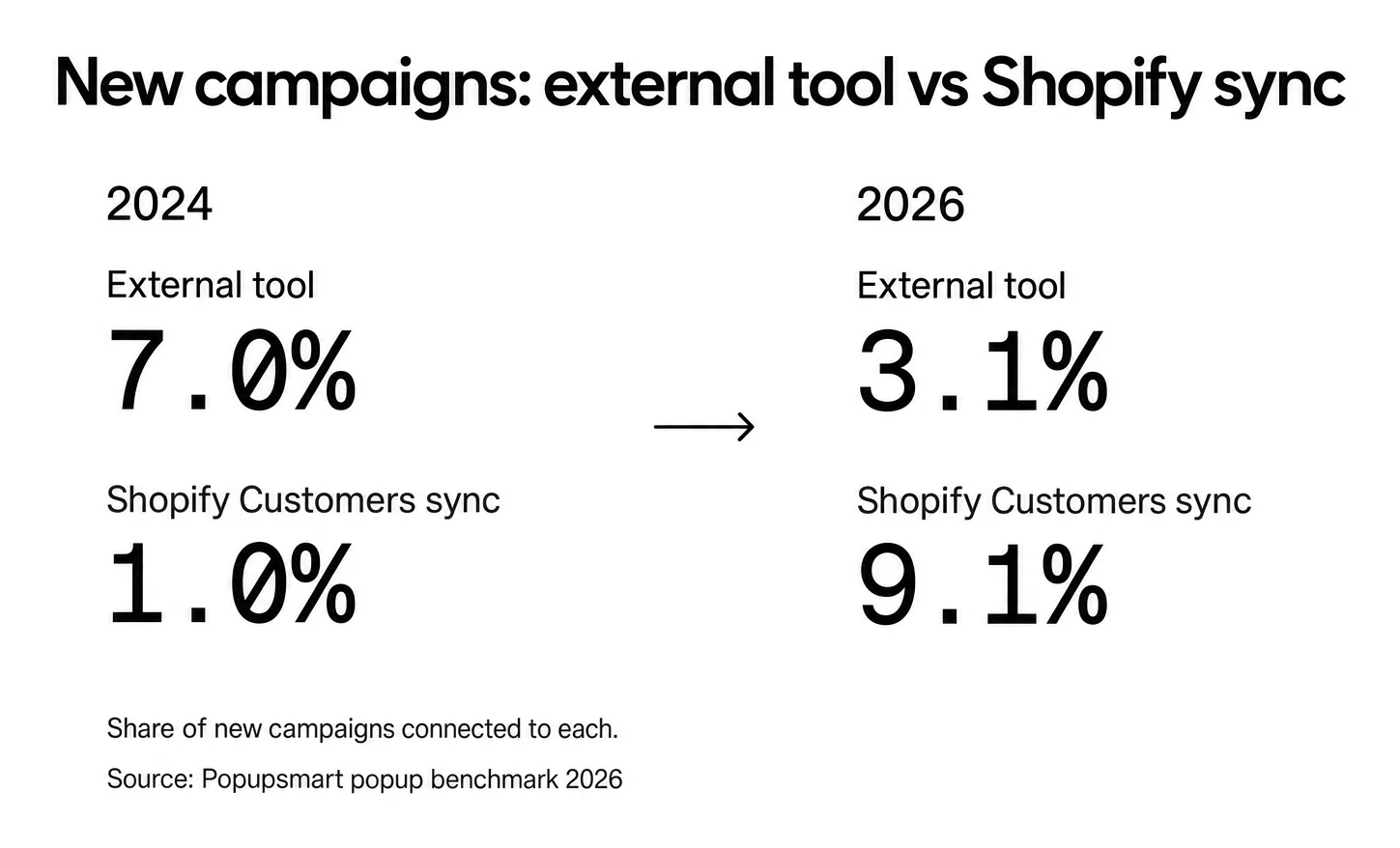
Store owners are using that toggle more: the share of new campaigns connected to an external tool fell from 7.0% in 2024 to 3.1% in 2026, while native Shopify Customers sync rose from 1.0% to 9.1%. If you already run Mailchimp's Shopify app, both routes can end in Mailchimp; test one signup to see which fields arrive before you rely on it.
Step 4: Customize Your Mailchimp Popup
Customize the popup's appearance in the Design step.
Here you can:
- Match colors and fonts to your Shopify theme
- Edit copy to align with your brand voice
- Optimize layout for mobile users
If you want to add or remove elements, build a multi-step form or style it further, click the pencil icon to open the Advanced Editor. If you’re using a gamified popup like Spin-to-Win, you can also define reward types and probabilities to encourage engagement without hurting margins. For more signup-popup ideas built for Shopify, see the Shopify newsletter popup guide.
Step 5: Set Targeting, Triggers, and Frequency
This is where Popupsmart and Mailchimp's native popups differ most.
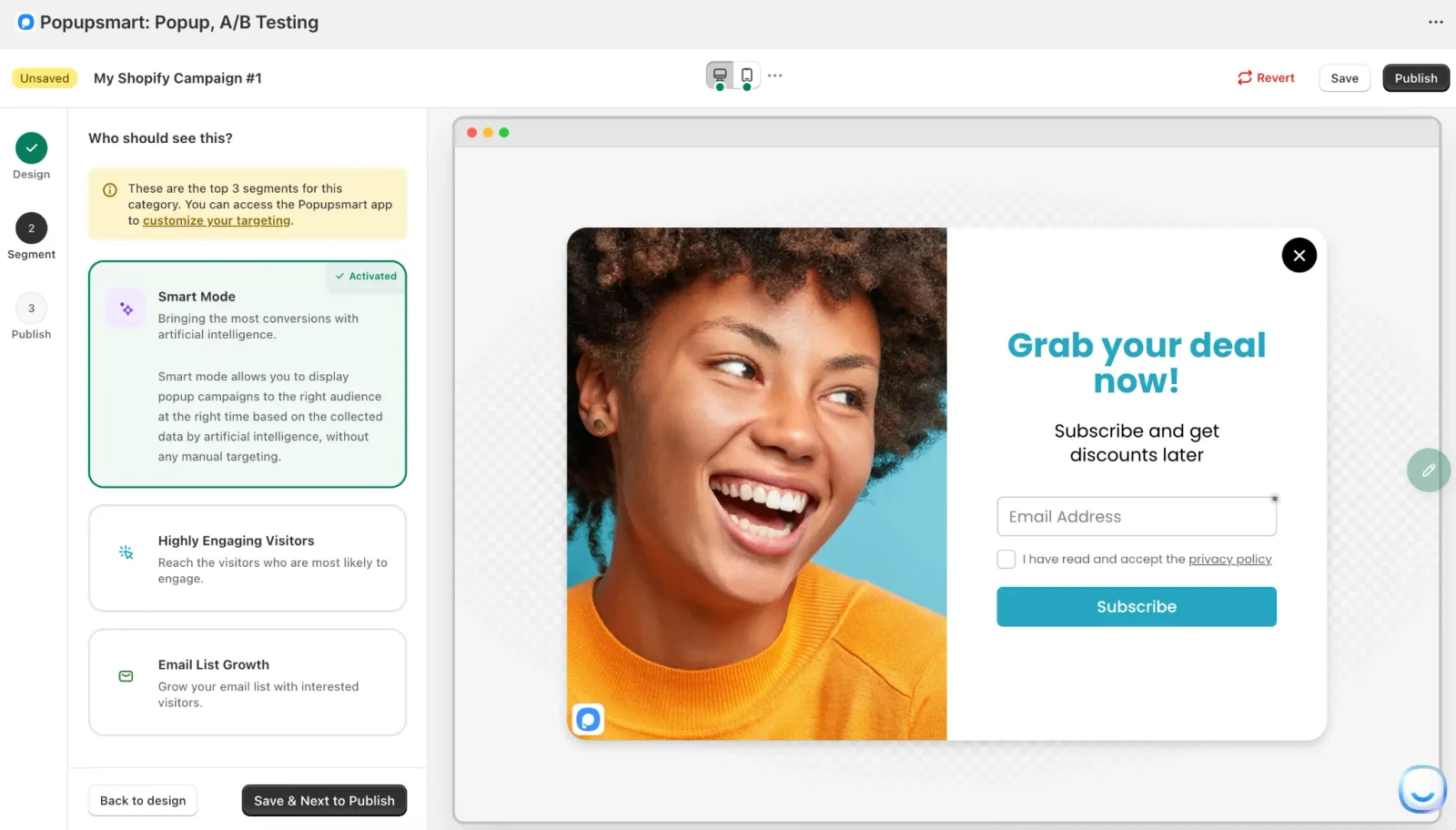
Inside the Segment step, you can pick Smart Mode, which uses AI to decide who sees the popup and when, or one of the preset segments for your goal. In the Advanced Editor's targeting settings, you can control:
- Audience: show the popup to new or returning visitors, desktop or mobile users
- User Behavior: trigger the popup based on time delay, exit intent, scroll, or page type
- Shopify data: cart products, cart total, customer tags and purchase history
- Frequency Settings: limit how often the popup is shown and stop displaying it after user action
Used well, they keep the popup helpful instead of intrusive.
Step 6: Test and Publish
Before going live:
- Trigger the popup yourself
- Submit a test email
- Confirm the subscriber appears in Mailchimp
- Check that automations are triggered correctly
Then click Publish campaign. After that, watch the numbers and adjust timing or targeting in small steps. Small changes can move opt-in rates, so change one thing at a time.
That covers both routes for a Mailchimp popup on Shopify: Mailchimp's own app and app embed, or a popup builder that sends its leads to Mailchimp. Popupsmart sits on top of those basics and gives you more control over who sees the popup and when. Running WordPress as well? The Mailchimp popup guide for WordPress covers that side.
Pick the route that matches what you need today. You can grow the list, and the revenue that comes with it, without rebuilding your funnel over and over. I’ve seen it work many times.
FAQs
1. How do I add a Mailchimp popup to Shopify?
Install the Mailchimp Email SMS Marketing app from the Shopify App Store, log in to Mailchimp and sync your audience, turn on the Mailchimp app embed in your theme's App embeds, then build the popup under Forms → Popup forms in Mailchimp and publish it. No code goes into your theme files.
2. Why is my Mailchimp popup not showing on Shopify?
This usually happens due to the Mailchimp app embed being off in the live theme, JavaScript conflicts, strict popup triggers, or conflicts with other Shopify apps. Also check that the form is published and that no old Mailchimp snippet is left in the theme.
3. Can I use a popup builder instead of Mailchimp’s native popups?
Yes. Many stores use tools like Popupsmart and connect them to Mailchimp for better targeting and flexibility.
4. Where should I place the Mailchimp popup code?
On Shopify, nowhere: Mailchimp's help pages (read 1 October 2026) connect a Shopify store through the app and its app embed. The code snippet is for sites you connect manually, where it goes between the <head> tags or into Google Tag Manager.
5. Do Mailchimp popups work on mobile?
Yes, but you must test them. Mobile issues often come from CSS conflicts, viewport settings, or hidden consent fields.
6. What’s the best popup timing for higher signups?
In Popupsmart's 2026 benchmark, popups that wait before appearing convert 0.83% vs 0.61% for popups shown the instant the page loads (median campaign), a lean rather than a rule, and the exact delay length makes no measurable difference.
7. Why did my Mailchimp popup stop after I changed my Shopify theme?
Shopify's help notes that apps you set up in one theme aren't active by default after you change your published theme. Open the new theme's App embeds and turn the Mailchimp embed on again.
What changed in this post
Every Mailchimp step re-checked against Mailchimp's help pages and the Shopify App Store listing on 1 October 2026. Shopify stores now connect through the Mailchimp app's theme app embed, so the steps that pasted site code into header.liquid and clicked Check connection on the Connected Sites page were removed, with their six screenshots. Added the sync and app-embed steps, Mailchimp's popup form steps, a theme-change fix, and Popupsmart's current Shopify app flow with March 2026 screenshots. Unsourced figures (a signup-study multiple, client results and a conversion range) were replaced with statements from Popupsmart's 2026 benchmark, and the Zapier mention was dropped because the guide has no Zapier steps.