How to add a popup to GoDaddy Website Builder
 By Mert Özeren
GoDaddy doesn't publish an image size for its pop-up box, and Popupsmart doesn't document one either. GoDaddy's media guidelines recommend a maximum width of 1920px for a desktop image widget, and uploading close to the size the image will show. To add a popup that collects emails, paste Popupsmart's embed code into a GoDaddy HTML section.
GoDaddy's own pop-up box is an announcement with an image and a button, without a form.


Setup at a glance
- Runs on
- GoDaddy
- Where the code goes
Edit Website → Add Section → HTML → Custom Code- Add-on
- No app needed

What image size should a GoDaddy pop-up use?
GoDaddy publishes no image size for its pop-up box: GoDaddy's pop-up box guide says to upload an image or edit the default one in Content Creator, and gives no dimensions. The nearest official numbers are in GoDaddy's Media Guidelines and Specifications, published in its Website Builder and eStore help center, and none of them mention pop-ups.
| What GoDaddy documents | Value |
|---|---|
| Pop-up box image size | Not published |
| Maximum width for an image widget on desktop | 1920px, or only slightly larger |
| Common sizes for a full-width desktop image | 1600×900, 1280×720 or 1280×960 px |
| File size limit | 50MB per image |
| Image formats | PNG, JPG, JPEG, GIF, SVG, ICO and WebP |
| How images are served | Optimized to the device and the size shown, in WebP |
The same guidelines say to upload an image close to the largest size it will appear. They note that an upload is never enlarged, so a small image can look pixelated when it's shown bigger, and that a very large one needs more optimization, which can affect quality. My advice is to treat 1920px as a ceiling, not a target: a pop-up image only needs to be as wide as the box shows it. The guidelines also warn that an image whose aspect ratio differs from its space may look cut off, and that a 16:9 image can look small on a phone.
Popupsmart doesn't set a pixel size for popup images either. In Popupsmart an image is an element you place and size in the editor, which has a desktop and a mobile view, so you can check both before you publish. The popup design best practices guide covers designing for a phone first.
Before you start
You need three things, and a developer isn't one of them:
- A GoDaddy account with a Website Builder site you can edit.
- A free Popupsmart account. The free plan covers one website and one live popup, so you can finish this guide without paying.
- The address your visitors use for the site, which Popupsmart verifies after the install.
How to add a popup to GoDaddy Website Builder
A GoDaddy popup from Popupsmart needs the embed code in an HTML section on each page where it should run, because GoDaddy has no site-wide code setting. After that you build, change and publish popups in Popupsmart without opening the GoDaddy editor again.
Step 1: Copy your embed code
Sign in to Popupsmart and click Embed code in the left sidebar.
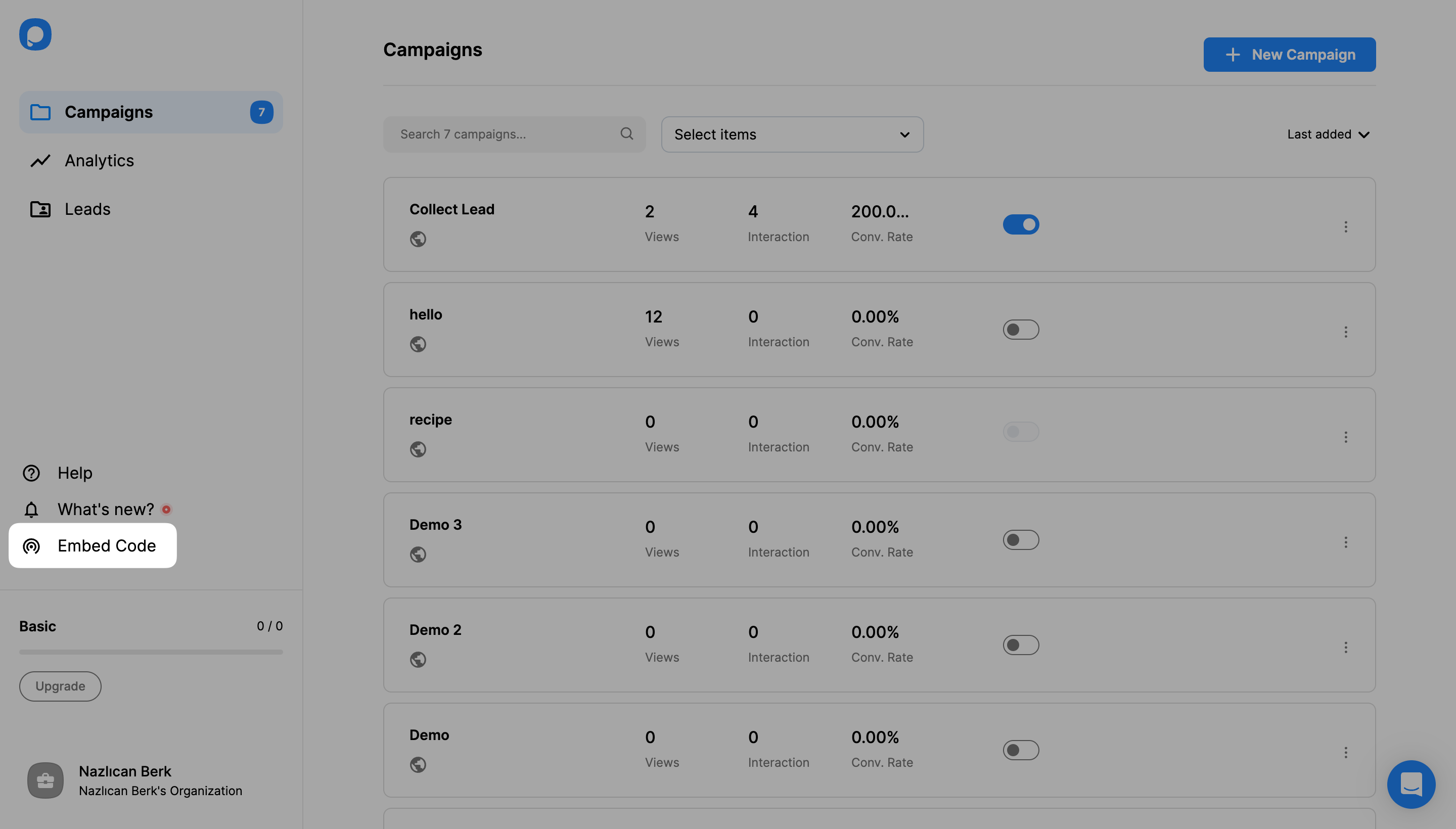
Copy the code to your clipboard. It is one line, <script src="https://cdn.popupsmart.com/bundle.js" data-id="…" async defer></script>, and the data-id belongs to your account.
Step 2: Open your site in the GoDaddy editor
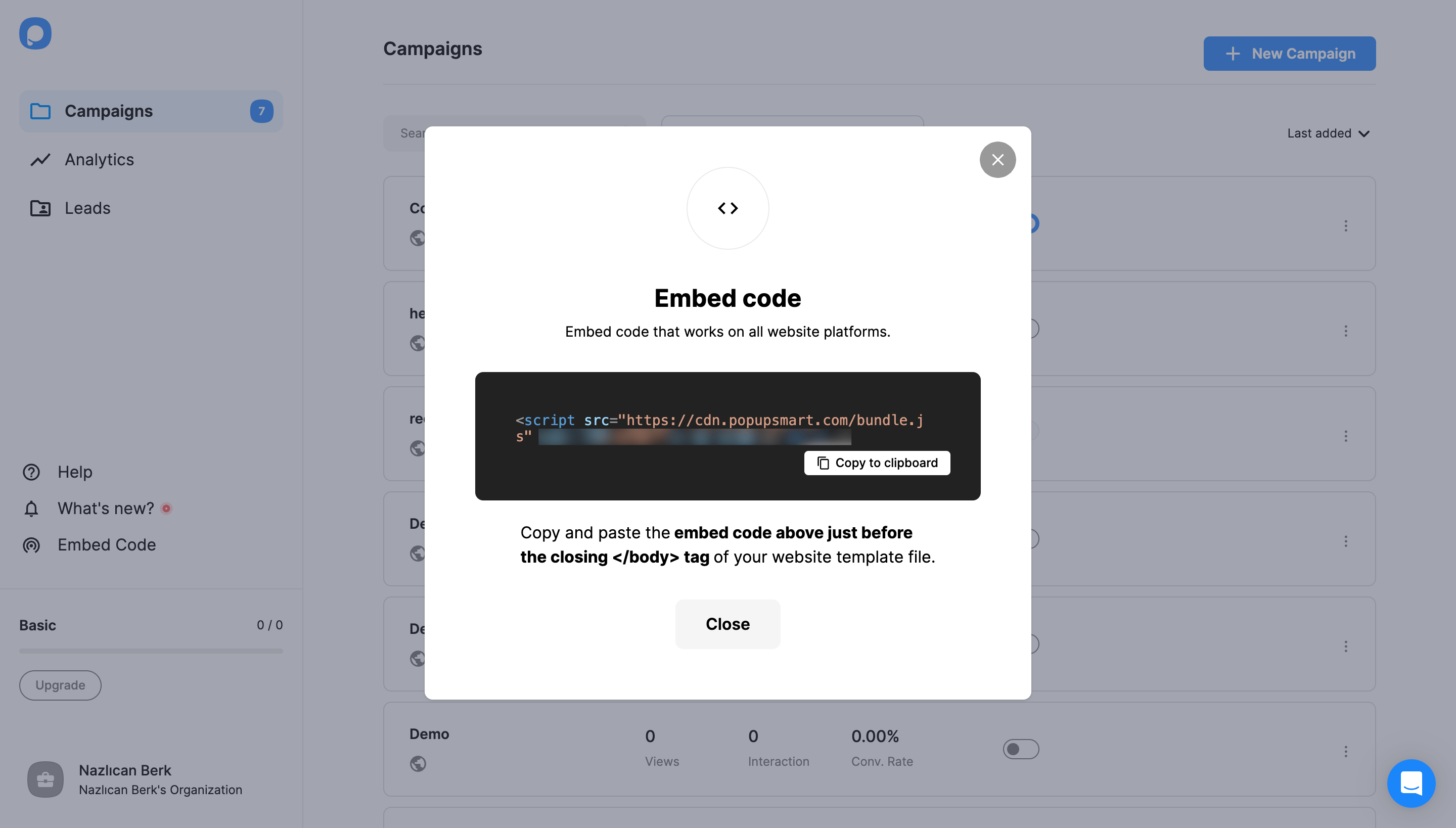
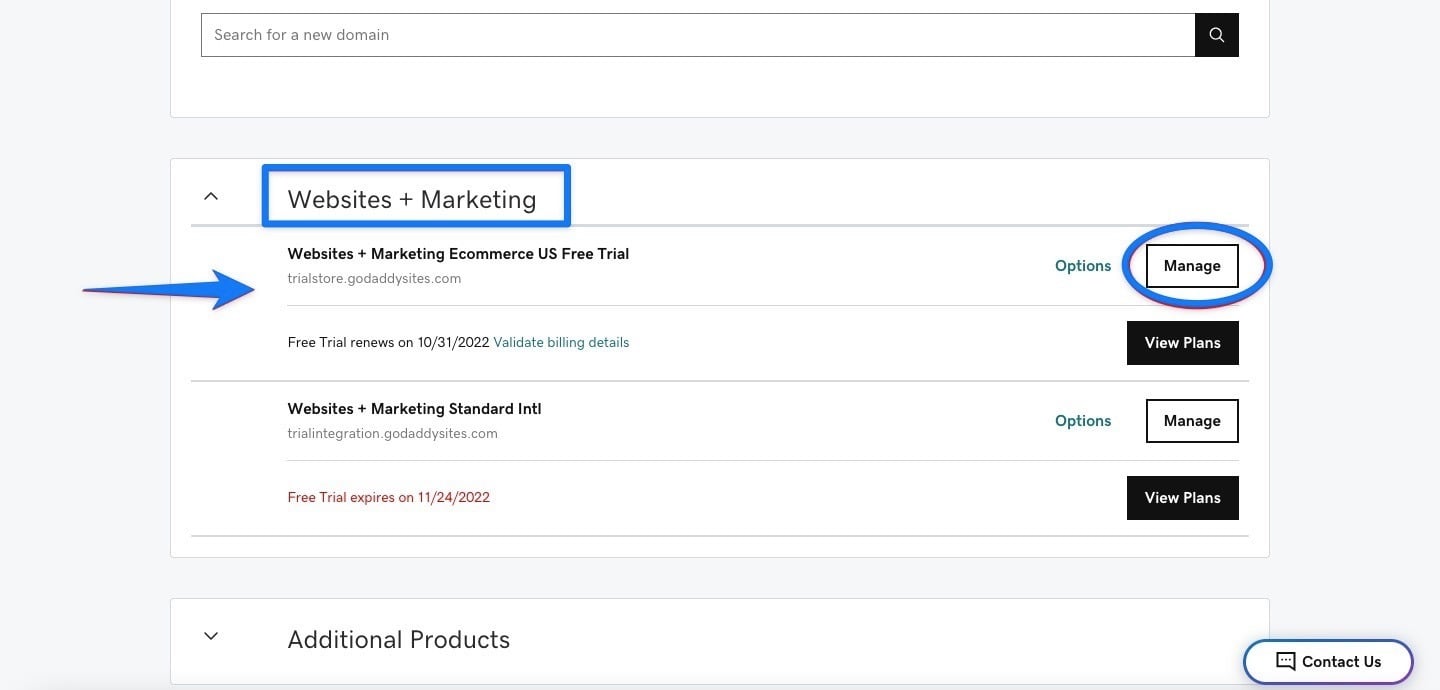
Sign in to GoDaddy, open the profile menu at the top right and click My Products.
Scroll down to Websites + Marketing and click Manage next to your site.
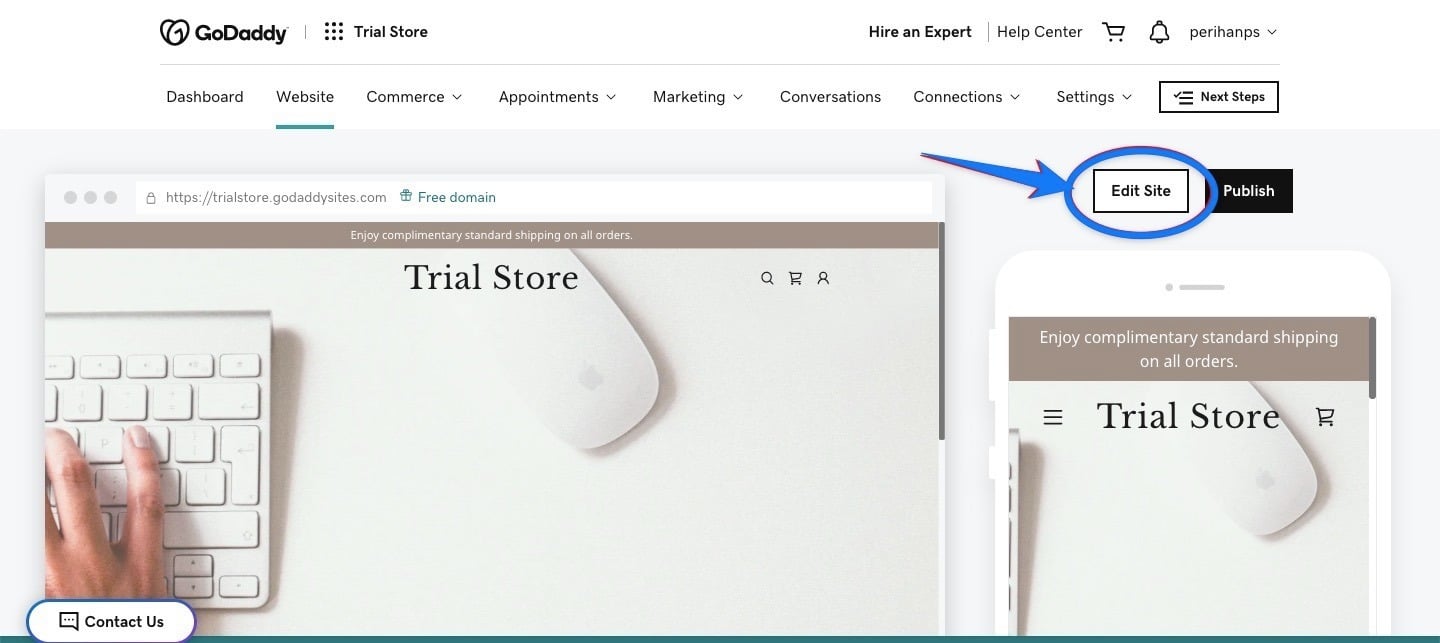
Click Edit Site. GoDaddy's own help now calls this button Edit Website.
Step 3: Add an HTML section
In the editor, go to the page where the popup should run and scroll to the spot for the new section. Just above the footer keeps it out of the way.
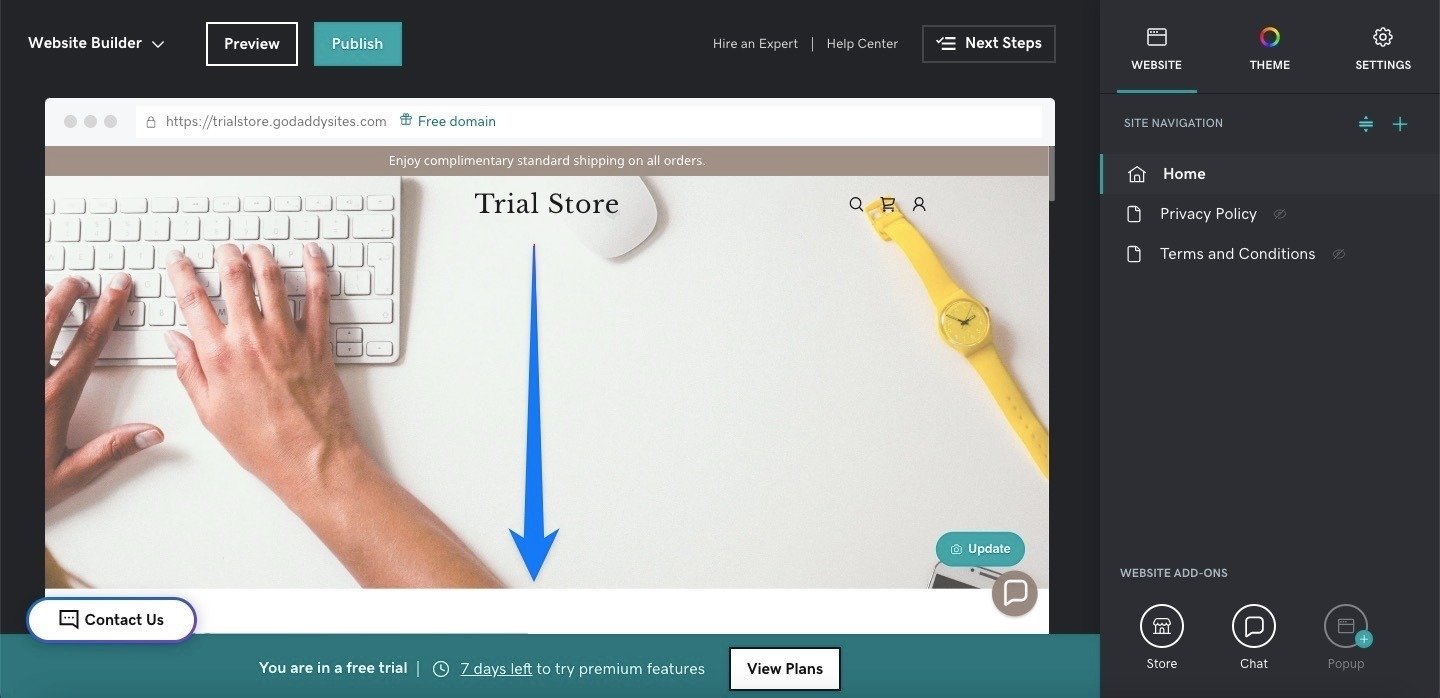
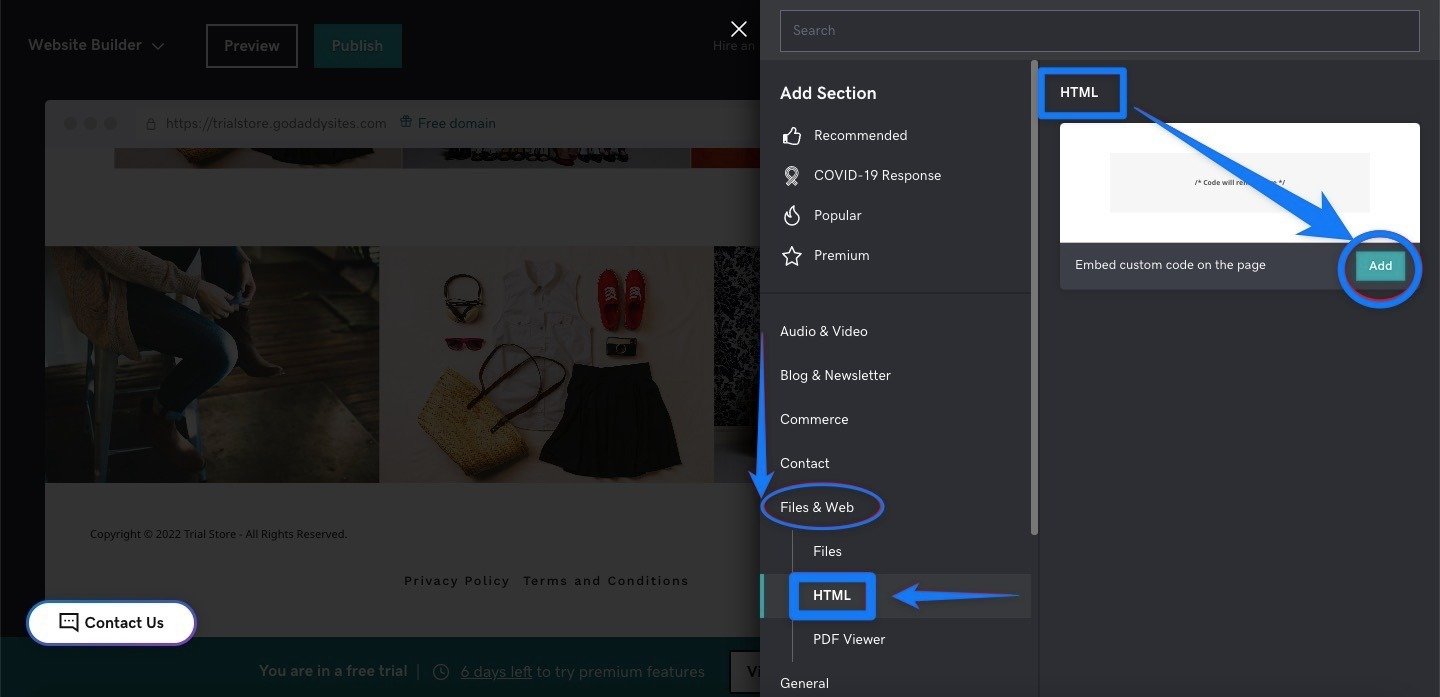
Click the + button there to add a section.
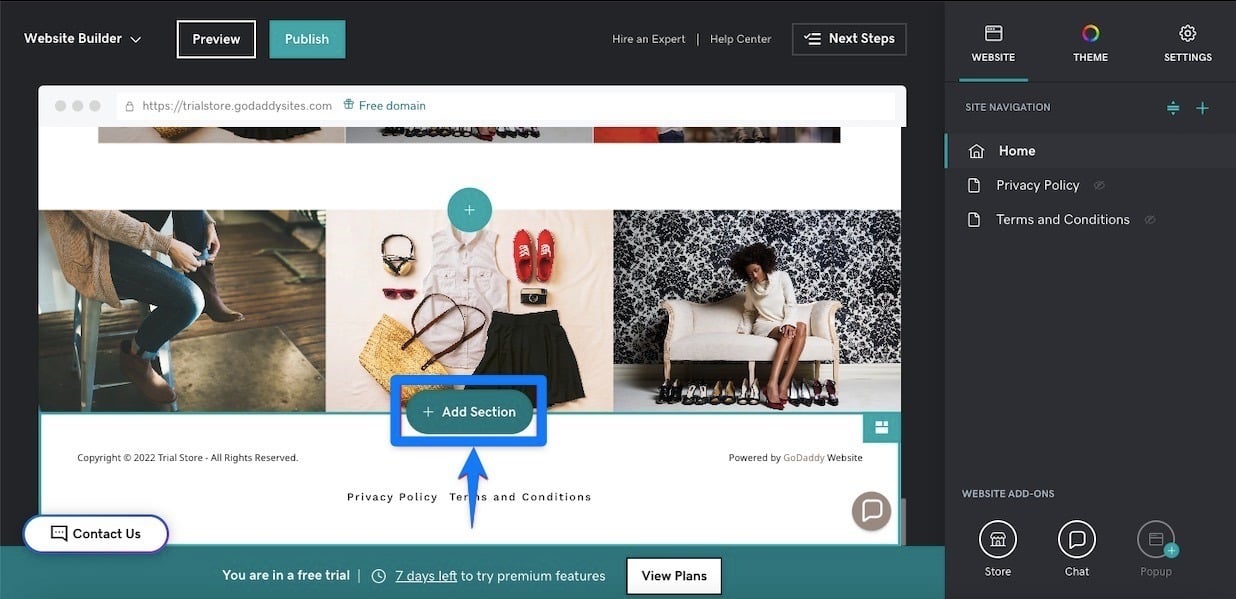
Under Files & Web, click HTML, then Add on the section that reads "Embed custom code on the page". You can also search the section list for HTML.
Step 4: Paste the code and publish your GoDaddy site
The HTML section's settings open on the right, with a Custom Code field.
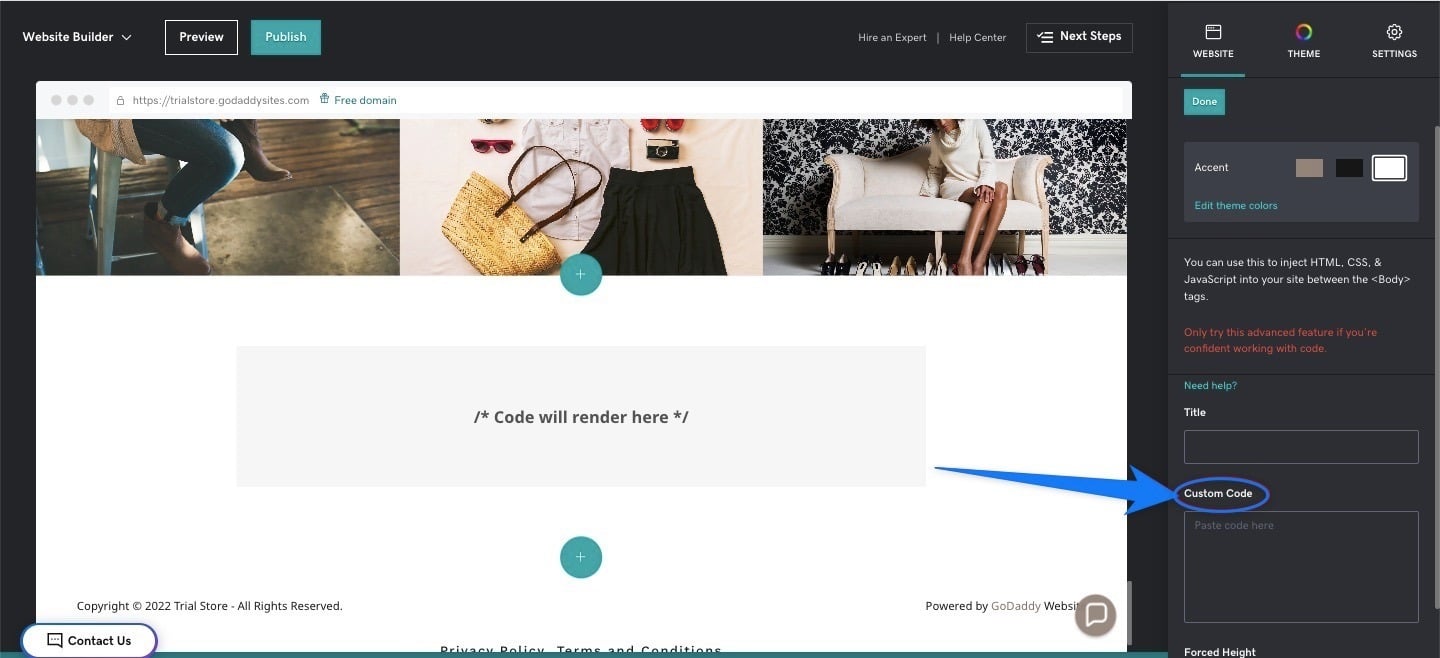
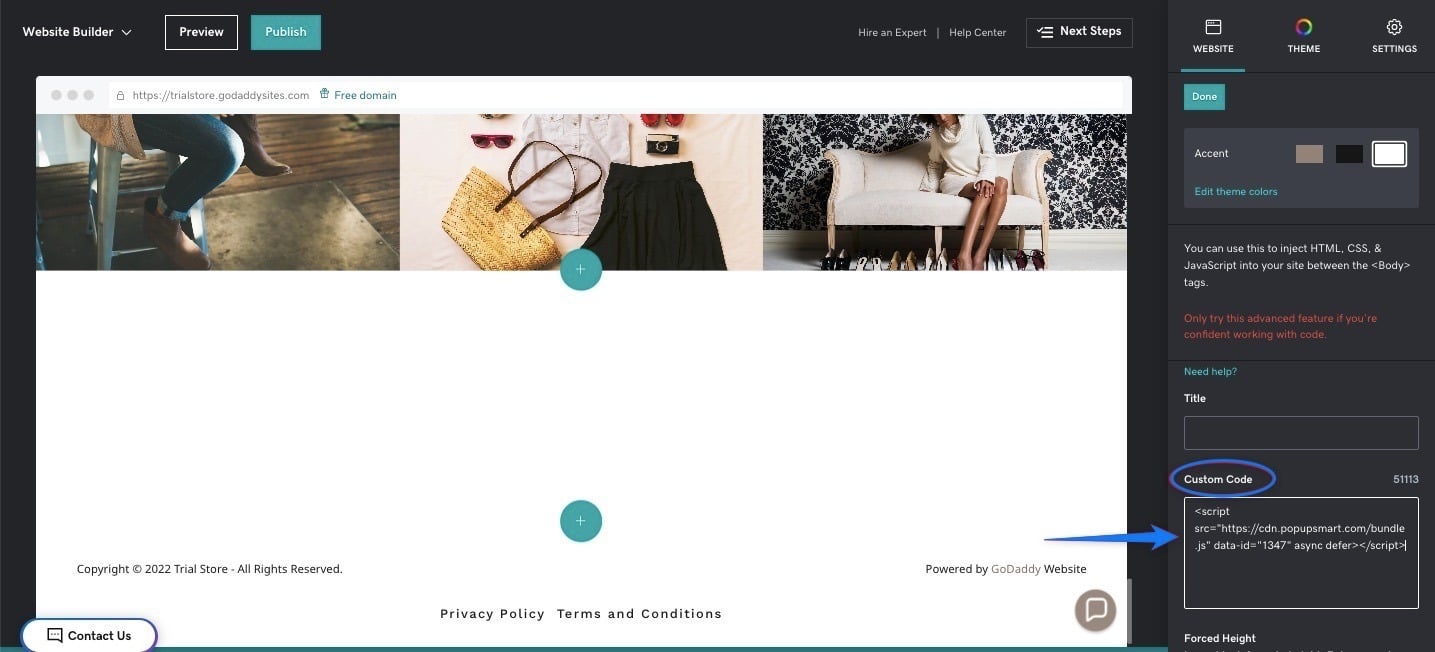
Paste the embed code into Custom Code and leave Forced Height blank, which GoDaddy treats as auto-height; GoDaddy's custom code guide says a height of 0 pixels is equivalent to deleting the section. The title, accent and alignment settings don't matter for a script. GoDaddy saves your changes as you go, but visitors see them only after you click Publish.
Step 5: Add and verify your website
Back in Popupsmart, hover over the profile icon and click Websites.
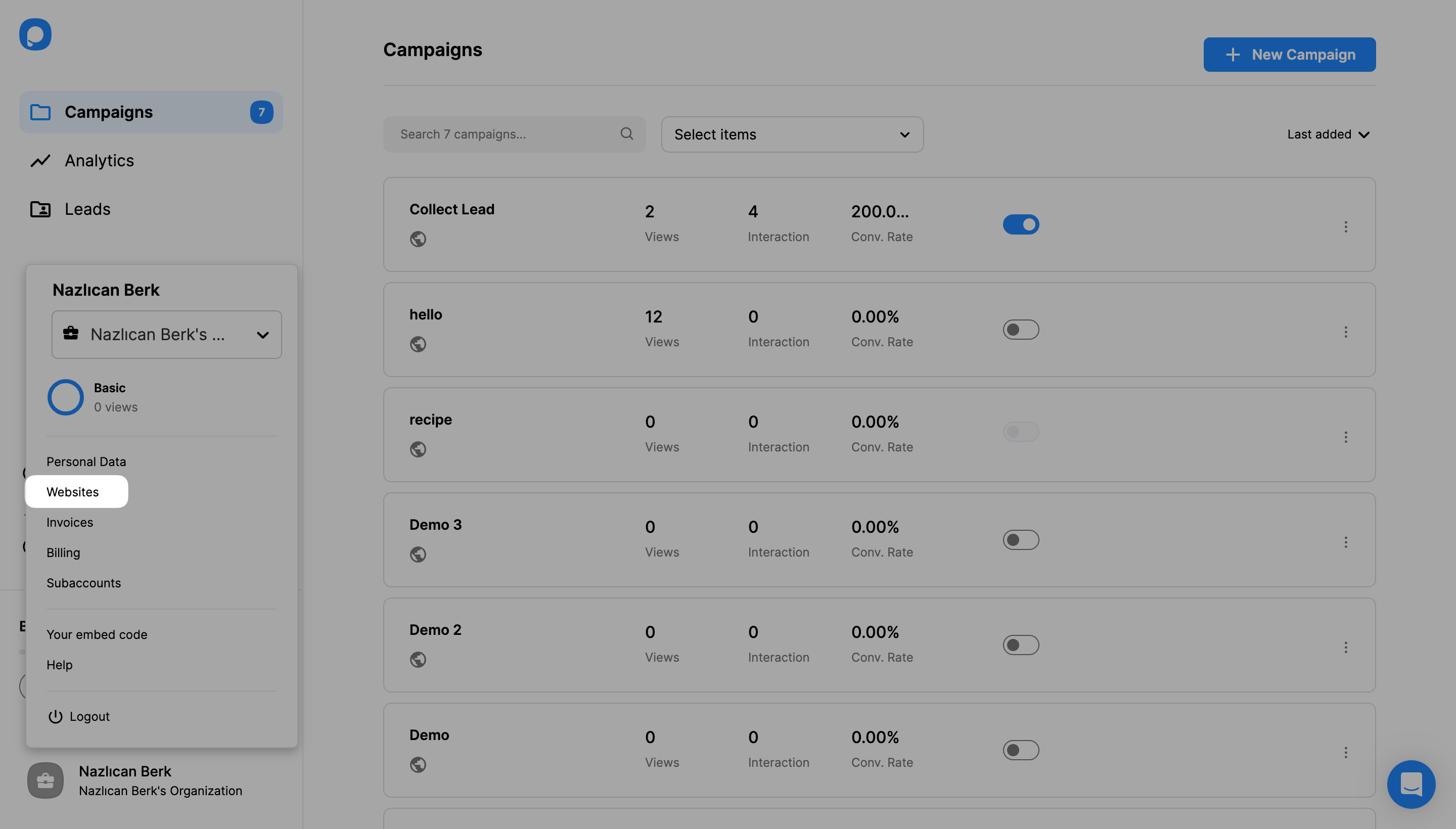
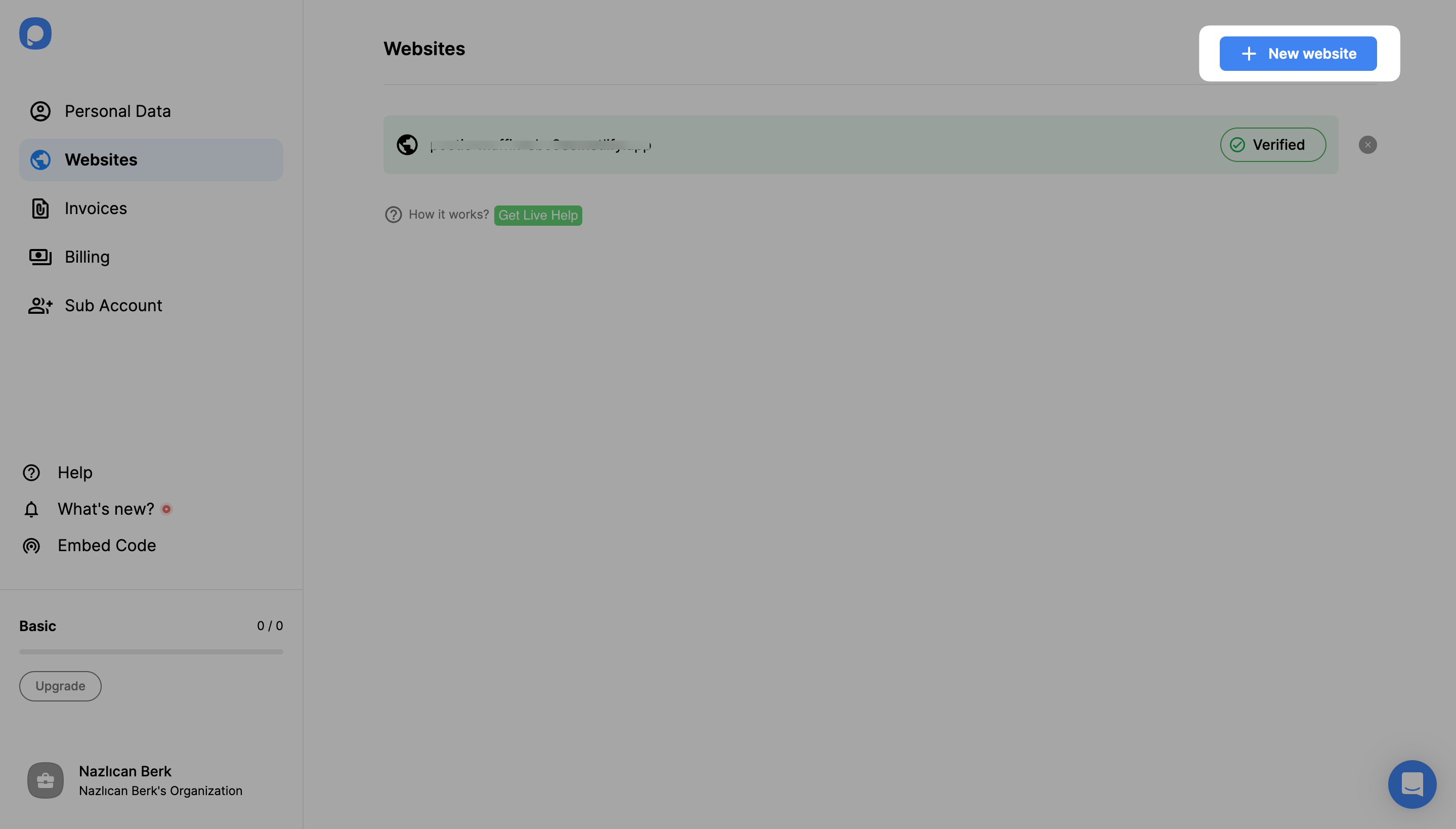
Click + New Website.
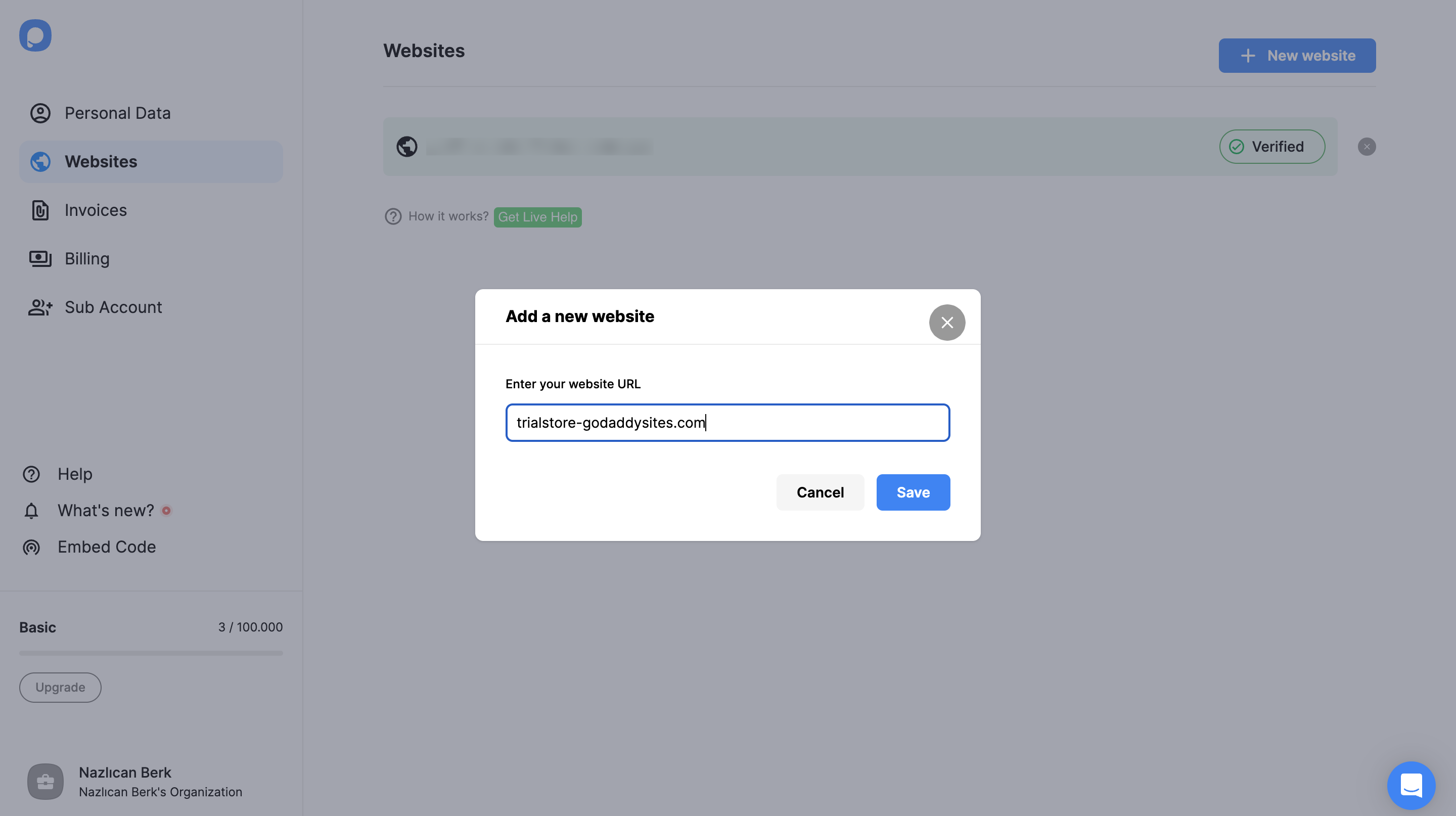
Enter your site's address and click Save.
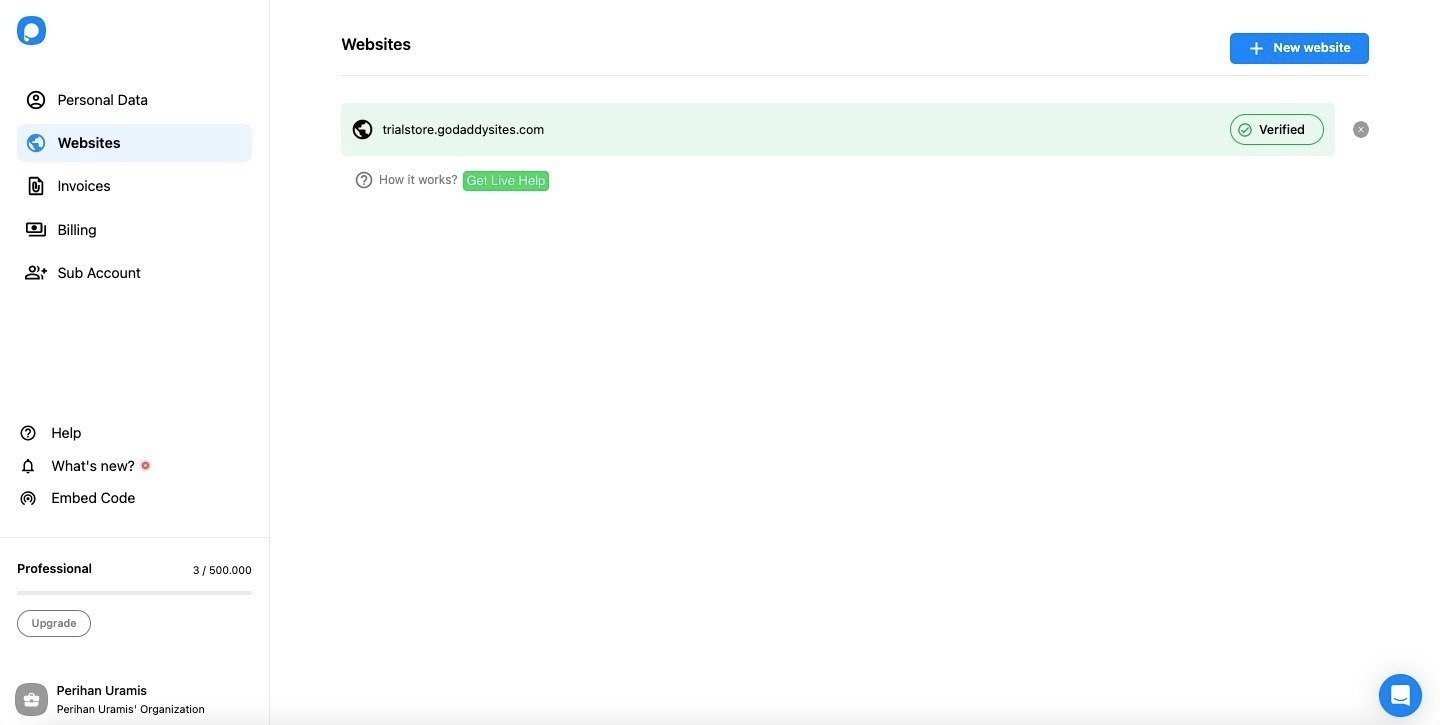
If the site shows as Unverified, click Unverified, then Verify website, and go back to the dashboard and click Refresh. The guide to verifying your website covers the other cases.
Step 6: Create your popup
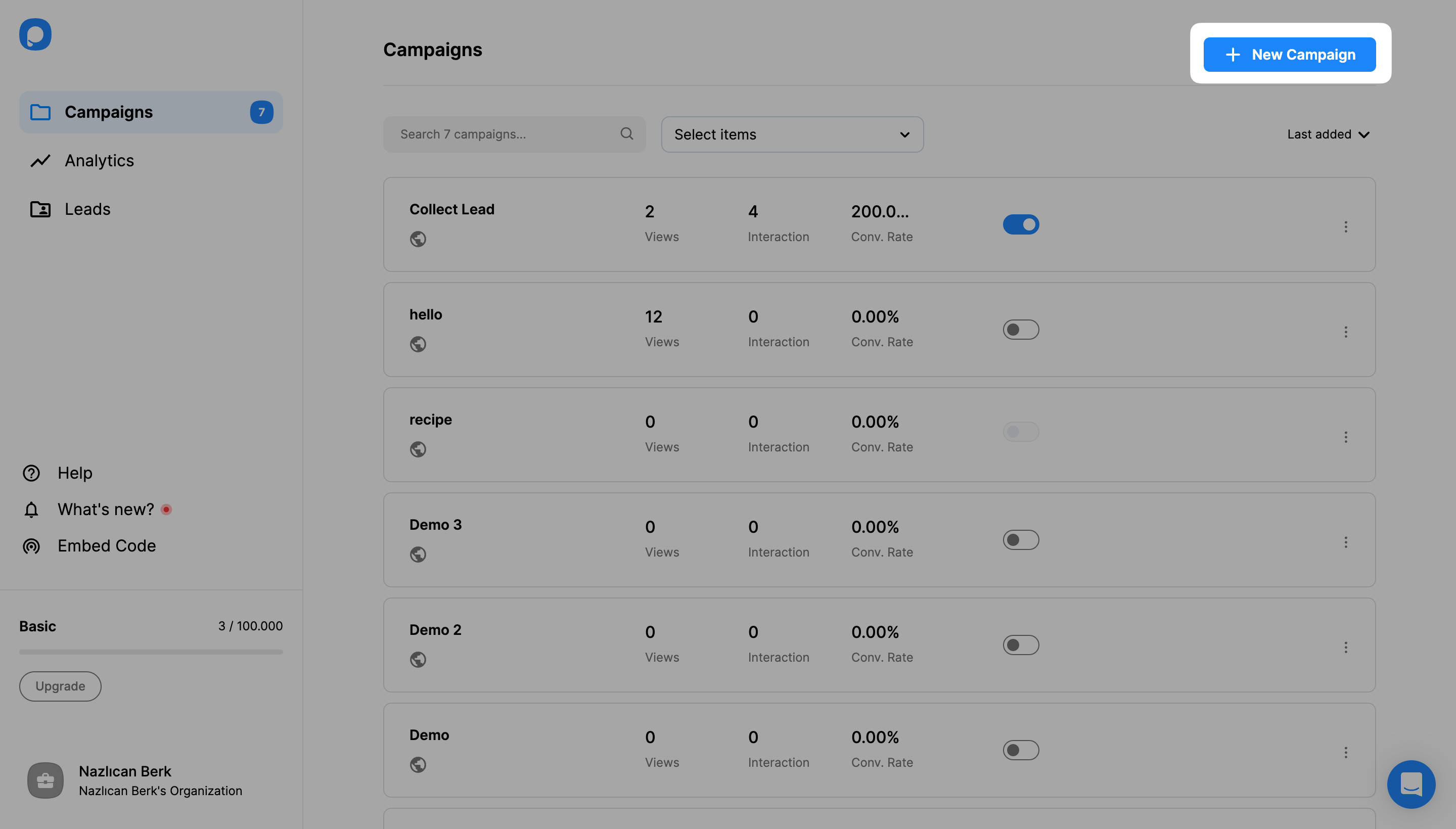
On the dashboard or the Campaigns page, click + New Campaign.
Name the campaign, choose your GoDaddy site in the Select a domain dropdown and click Save.

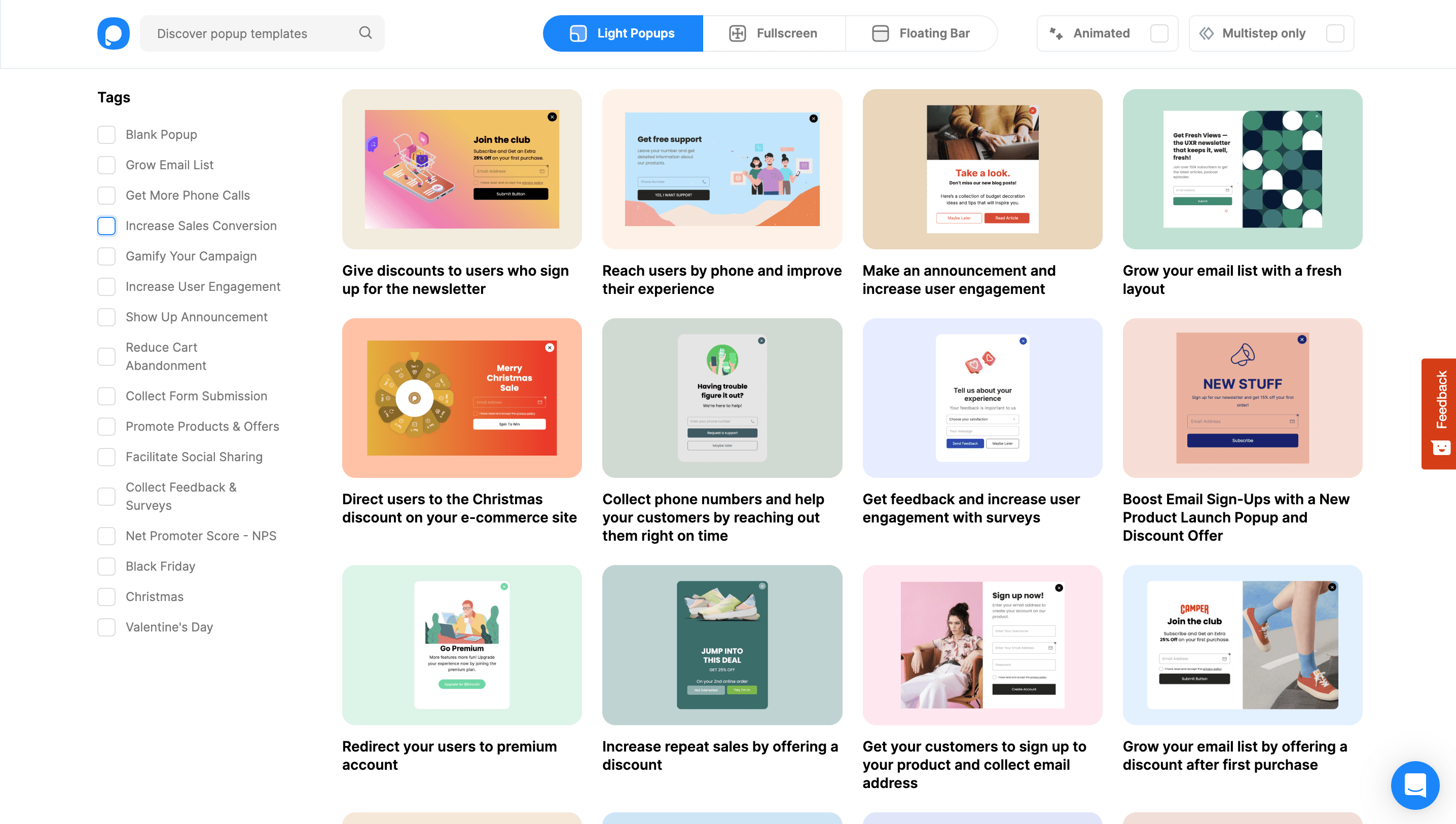
Pick a template, or start from a blank one, and change its copy, colours and form fields in the editor.
Step 7: Publish and check the popup on your site
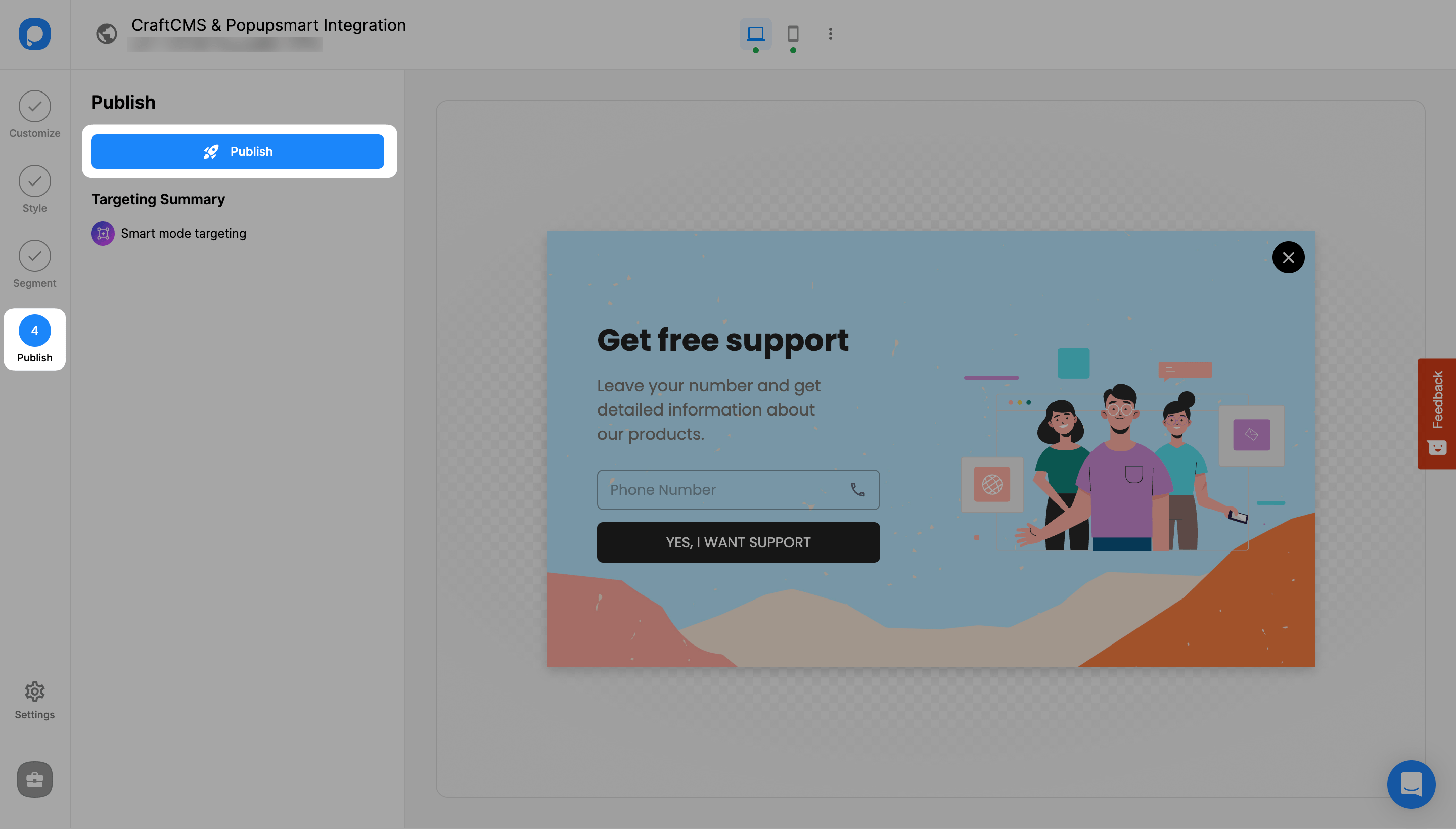
Click Publish in the left-hand panel.
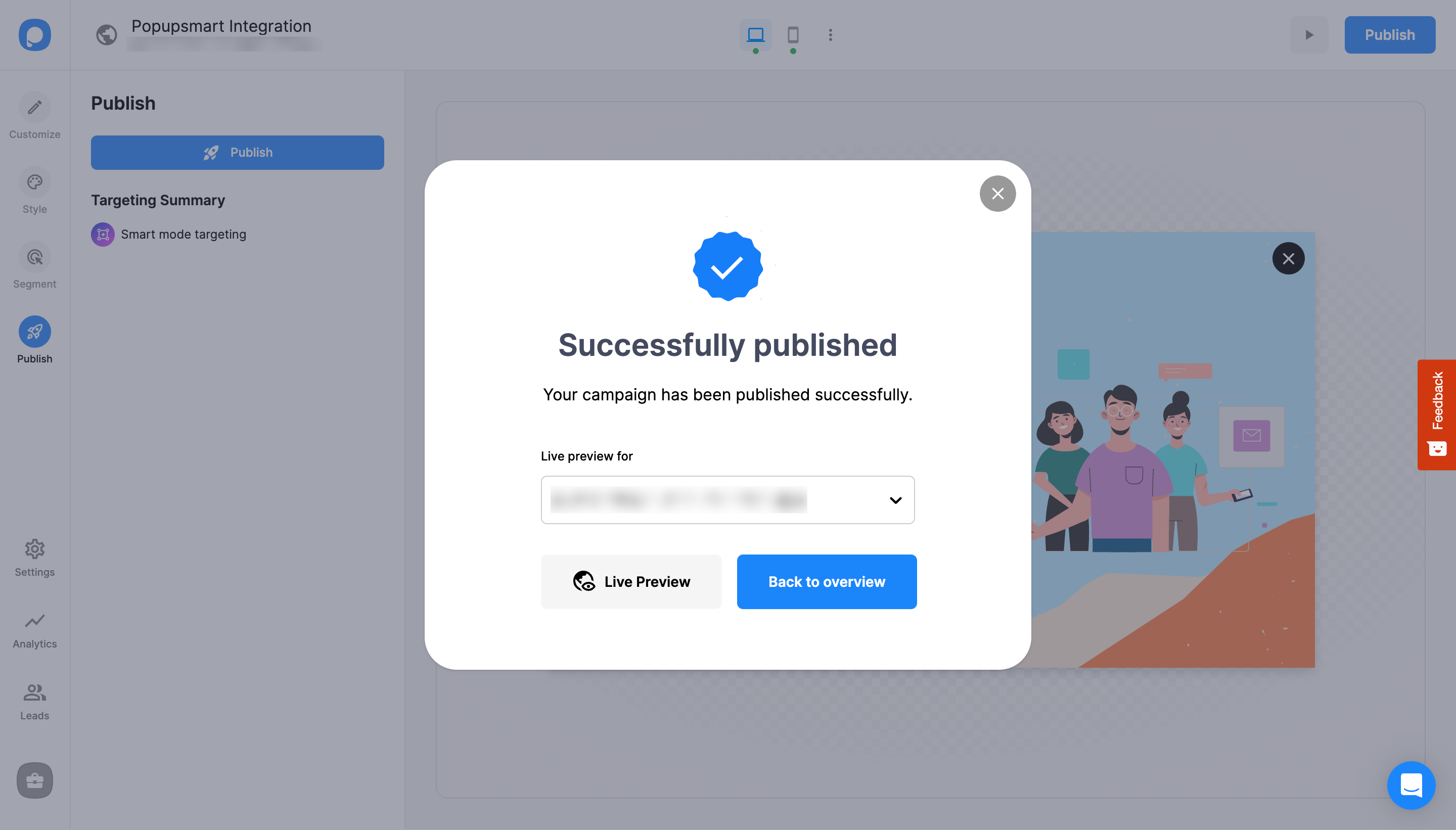
Popupsmart confirms that the campaign has been published.
Then open the page with the HTML section in a private window. The popup appears when its trigger fires.
Does GoDaddy have a built-in pop-up?
Yes. GoDaddy Website Builder has a pop-up box for announcements: GoDaddy's help center describes it as the first thing visitors see when they land on your site, with an image, a title, a description and an optional action button. As of September 2026, you open it from Website at the top of the editor, then Popup in the shortcuts at the bottom.
| GoDaddy's pop-up box | Popupsmart | |
|---|---|---|
| Where you build it | Website, then Popup, in the GoDaddy editor | Popupsmart's editor, from templates |
| What it holds | An image, a title, a description and an optional action button | Templates with form fields, buttons and images |
| Collecting leads | No form in GoDaddy's guide; the button links to a page section, a URL, a phone number, an email address or a product category, or takes payments | Email and phone fields, sent to the 19 destinations the help center lists |
| When it shows | When a visitor lands, with an optional delay | Exit intent, scroll depth or time on page |
| Which pages | Not documented | URL and device rules on each campaign |
| After a visitor closes it | Hidden for the next 24 hours | Display frequency settings on each campaign |
| Price | Part of the Websites + Marketing editor | Free plan: one website, one live popup, 5,000 pageviews a month; paid plans from $39 a month |
The pop-up box is enough for one announcement with a button, such as new opening hours or a sale that links to a product category. Popupsmart earns its install when the popup has to collect emails or phone numbers, open on exit intent or after a scroll, show only on some pages, or run on more than one website from the same account.
How do you show a popup only on some GoDaddy pages?
On GoDaddy the code works page by page: a popup can only run on a page that has the HTML section. To keep a popup on one page, add the section to that page only. To cover more of the site, add the section to every page, then choose the pages in Popupsmart with a targeting rule on each campaign, such as "the URL contains /services" or "the visitor is about to leave". My advice is to add the section to every page once and do the page choice in Popupsmart, so moving a popup later doesn't mean editing GoDaddy pages again.
Pages are half of the rule; timing is the other half. In Popupsmart's 2026 benchmark, popups that wait before appearing convert 0.83% against 0.61% for popups shown the instant the page loads (median campaign), a lean rather than a proven gap, and exit intent shows no statistically reliable advantage. When a popup fires is worth deciding on purpose, so choose the trigger when you choose the pages.
Popup ideas for a GoDaddy site
Start from the job the page has:
- Calls from mobile visitors: popups that increase phone calls.
- Callback requests on service pages: popups that increase phone calls.
- Newsletter signups on the blog: the email popup guide.
- A last offer for visitors about to leave: exit-intent popup examples.
Send your GoDaddy popup leads to your email tool
Popupsmart can send every email address and phone number a popup collects to the tool you already use, so the leads don't sit in a spreadsheet. You connect it in the campaign's Integration section. The Mailchimp popup guide and the HubSpot popup guide walk through a connection; the help center lists 19 destinations, and a webhook, Zapier or Make covers a tool that isn't one of them.
Does a popup slow down a GoDaddy site?
A Popupsmart popup doesn't hold up your GoDaddy pages: the embed code loads asynchronously (async defer), so the browser finishes building your page before it fetches Popupsmart. Nothing else changes on your site: the HTML section holds one script tag, and deleting the section removes it.
Popup not showing on GoDaddy? Check these
- The page has no HTML section. The code runs only on pages where you added it; see Step 3.
- The section's height is 0. GoDaddy says a height of 0 pixels is equivalent to deleting the section, and its troubleshooting guide suggests a higher value, such as 40 pixels, when an HTML section doesn't appear. Clear Forced Height, or set it to 40.
- The GoDaddy site isn't published. The editor saves your changes, but visitors see them only after you click Publish in GoDaddy.
- The website isn't verified. A campaign runs only on a verified website; see Step 5.
- The address doesn't match. If you connected your own domain, add that domain in Popupsmart, not the godaddysites.com address.
- The trigger hasn't fired yet. An exit-intent or scroll trigger waits for the visitor to leave or scroll; test in a private window and behave like a visitor.
- GoDaddy runs the section in a frame. GoDaddy's troubleshooting guide notes that code in an HTML section is placed inside an iframe, which can limit what a script does on the rest of the page. If the popup still doesn't appear after the checks above, contact Popupsmart support with your site's address.
GoDaddy popup FAQ
Is there a free way to add a popup to a GoDaddy website?
Yes. Popupsmart's free plan is permanent, not a trial: one website, one live popup and 5,000 pageviews a month, with Popupsmart branding. It is enough to install the code and run your first popup on a GoDaddy Website Builder site.
The Popupsmart pricing page compares it with the paid plans.
How do I choose a popup builder for my online store?
Ask four questions: does it run on your store's platform, does it send leads to the email tool you already use, does it have the triggers you need, such as exit intent, and how does its price grow with your traffic. Popupsmart runs on GoDaddy through an HTML section, sends leads to the 19 destinations its help center lists, and prices its plans by pageviews, starting with a permanent free plan.
Will the popup show on every page of my GoDaddy site?
Only on pages that have the HTML section with the embed code. GoDaddy Website Builder has no site-wide code setting, so add the section to each page where a popup should be able to run.
Can GoDaddy's pop-up box collect email addresses?
Not according to GoDaddy's guide, which lists an image, a title, a description and an action button, but no form field. The button can link to a page section, a URL, a phone number, an email address or a product category, or take payments. To collect emails in a popup, add a popup tool such as Popupsmart through an HTML section.
Do Popupsmart popups work on mobile?
Yes. The same embed code loads on phones and desktops. The Popupsmart editor has a desktop and a mobile view, and device targeting lets you choose which devices a campaign shows on.