
130 FOMO Subject Line Examples to Inspire Your Email Marketing

 ChatGPT
 Perplexity
 Claude
 Grok
Grok Google AI Mode
Tips for FOMO email subject lines: use urgent trigger verbs, scarcity, personalization, social proof, and numbers/countdowns; avoid all caps, spammy punctuation, and misleading words. Includes many examples for events, launches, flash sales, early access, giveaways, and win-backs.
Table of contents (21)
Your subscriber opens their inbox, scans 40 unread emails in about four seconds, and decides which ones live and which ones die. Your subject line is the whole pitch. FOMO subject lines win that four-second scan because they tap a feeling people can't easily ignore: the worry that everyone else is already in on something good.
FOMO subject lines use fear of missing out, the anxiety that a rewarding experience is happening without you, to pull email opens through urgency, scarcity, social proof, and exclusivity. They work because 47% of recipients decide whether to open based on the subject line alone, making the first line the single biggest lever on open rates for marketing teams.
I've been writing marketing content since 2013, and across the email campaigns I've helped shape at Popupsmart, the pattern holds: the subject line carries more weight than the email body for getting the open. This guide collects 130 FOMO subject line examples grouped into seven categories, plus real teardowns from brands like Slack, Samsung, and National Geographic, the psychology behind why they work, the mistakes that get you flagged as spam, and how to measure whether your FOMO emails actually move the numbers.
What Is FOMO in Email Marketing?
FOMO in email marketing is the practice of writing copy that triggers a subscriber's fear of missing out, a limited deal, an exclusive event, a product everyone else is already buying, so they open and act before the window closes. The feeling is real and measurable. According to Gitnux FOMO research, 60% of people alter their plans because of FOMO, and the same data shows FOMO increases spending by 20%.
In an inbox, that translates into a behavioral shortcut. When a subject line signals scarcity ("Only a few left") or social proof ("Join thousands of satisfied customers"), the reader's brain treats the email as time-sensitive and worth a click. The four FOMO levers you'll see across every example below are urgency (a deadline), scarcity (limited quantity), social proof (others are already in), and exclusivity (this is for a select group).
FOMO isn't a gimmick reserved for flash sales, either. It shows up in B2B SaaS onboarding emails, webinar invites, early-access announcements, and win-back campaigns. The mechanics are the same whether you sell sneakers or software: name something valuable, attach a reason it won't last, and let the reader's loss aversion do the rest. If you want a fuller picture of how FOMO plays out across full email bodies and not just subject lines, our FOMO marketing email examples break down complete campaigns.
Why Should You Use FOMO Subject Lines in 2026?
You should use FOMO subject lines because they directly attack the metric that decides everything downstream: the open. No open means no click, no conversion, no revenue, no matter how good the offer inside is. And email remains the channel where that effort pays back hardest.
According to DigitalApplied's 2026 email marketing data, email marketing delivers an average return of $36 to $42 per dollar spent in 2026, far ahead of paid search ($2), social advertising ($2.80), and display ads ($1.35). When the channel economics are that strong, squeezing a few extra points out of your open rate compounds fast.
Here's what FOMO subject lines do well:
• They lift opens with a single phrase: Adding one well-placed urgent phrase can increase open rates by up to 22%, according to HeroThemes' subject line analysis. That's a meaningful jump for a one-word edit.
• They cut through inbox noise: The average subscriber gets dozens of promotional emails a day. A subject line that signals "this expires" earns attention that a flat "Our latest newsletter" never will.
• They create a clear reason to act now: Most emails fail because they give the reader permission to deal with it later. FOMO removes "later" as an option.
• They work across the funnel: Event invites, product launches, abandoned carts, win-back, the FOMO lever adapts to almost any campaign type.
The catch: FOMO only works if you have a list to send to. A clever subject line is wasted on an empty inbox. This is where on-site capture matters. We use Popupsmart popups and sticky bars to turn site visitors into subscribers before any FOMO email ever goes out, exit-intent popups, scroll-triggered signup bars, and the more targeted that capture is, the warmer the list that receives your urgency-driven sends.
How Do You Write Effective FOMO Subject Lines?
You write effective FOMO subject lines by pairing a real reason to act now with a specific, honest benefit, then keeping it short enough to survive a mobile inbox. The line below it has to deliver, fake urgency is the fastest way to lose a subscriber's trust. Personalization sharpens the effect: according to Mailmend's subject line research, Campaign Monitor data shows personalized subject lines increase open rates by 26%.
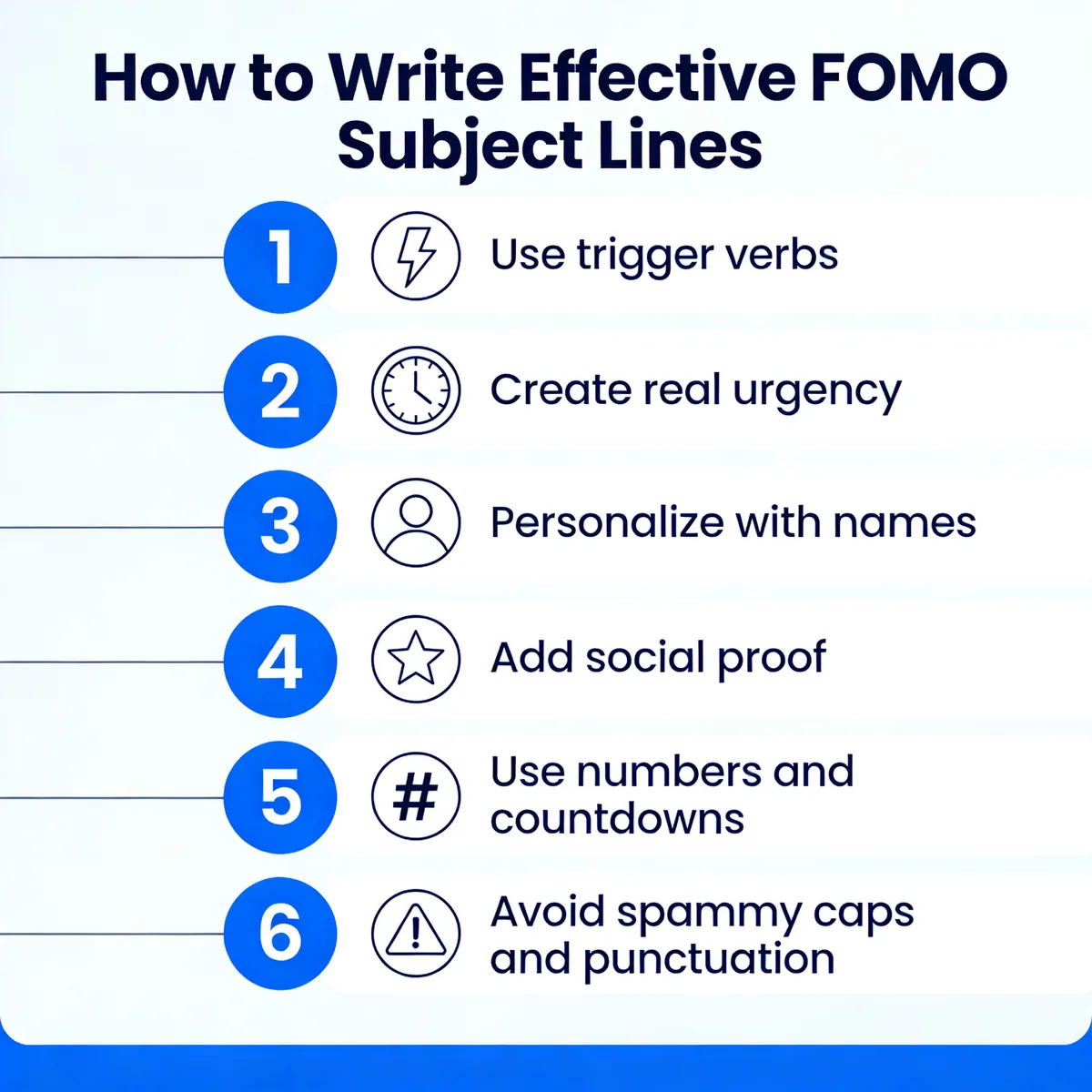
The anatomy of a FOMO subject line
Here are the tactics that consistently work:
1. Use trigger verbs. Start with power verbs that create urgency and excitement. These do a lot of work in very little space, our roundup of best trigger word examples goes deeper on this.
• Don't miss it
• Grab your discount now
• Seize the opportunity
• Jump into savings
2. Create a genuine sense of urgency. Emphasize limited time or limited stock, but only when it's true. Our explainer on building a real sense of urgency covers the difference between earned and manufactured pressure.
• Limited stock available
• Just a few remaining!
• Only a few left!
• Almost sold out!
3. Personalize the line. Use the recipient's name or reference past purchases. A name signals the email was meant for them, not blasted to a list.
• [Name], we've got something special just for you
4. Lean on social proof. Include customer counts, testimonials, or review snippets. If others already chose this, the reader feels safer choosing it too.
• Join thousands of satisfied customers
5. Use numbers and countdowns. Numbers make subject lines more eye-catching and let you highlight discounts or time sensitivity at a glance. Worth noting on length, according to Amra & Elma's subject line statistics, subject lines between 61 and 70 characters tend to have the highest open rates, averaging 32.1%.
• 50% off everything ends tonight!
• Get $20 off your next purchase
6. Skip all caps, excessive punctuation, and overlong lines. They read as spammy and can trip filters. These are what NOT to do:
• AMAZING SUPER SALE - 90% OFF - TODAY ONLY!!! 🔥🔥
• HURRY! 🏃🏃 FINAL CHANCE TO WIN A LUXURIOUS DREAM VACATION!!!!
• 💣💣 FREE GIFTS - OPEN THIS EMAIL NOW TO DISCOVER AMAZING OFFERS YOU CAN'T REFUSE!
7. Avoid spammy or misleading words. A few words look harmless but damage your reputation and credibility:
• Free: "Free trial" may sound tempting but often requires a credit card or a subscription that gets charged later.
• Guaranteed: "Guaranteed confirmation" or "Guaranteed delivery" can mislead, since plenty of factors sit outside your control.
• Final warning: "Last warning: last chance to take advantage of this discount" backfires if you'll likely offer the same deal again next month.
130 FOMO Subject Line Examples by Category
These 130 FOMO subject line examples are grouped into seven categories, event announcements, product launches, flash sales, early access, social proof, giveaways, and win-back, so you can jump straight to the campaign type you're working on. Each category opens with one or two real brand teardowns, then a ready-to-use list you can adapt with your own product names, percentages, and deadlines.
A quick note on how I chose these: every brand example here is a real email I pulled from actual inboxes, and the ready-to-use lines are templates I've either written or adapted for live campaigns. The bracketed placeholders, [Event Name], [Product Name], [x%], are meant to be swapped, not sent as-is. Treat this as a swipe file, not a script.
FOMO Subject Lines for Event Announcements
Event subject lines work when they make registration feel like a decision with a clock on it. Seats are finite, dates are fixed, and that built-in scarcity does most of the persuading for you.
Maze's FOMO subject line for event announcements:
"Have you registered for Disco Conf yet?"
Why it works: The question format creates urgency by implying the reader is behind. "Yet" quietly suggests everyone else has already signed up. It's social proof and a nudge in seven words.
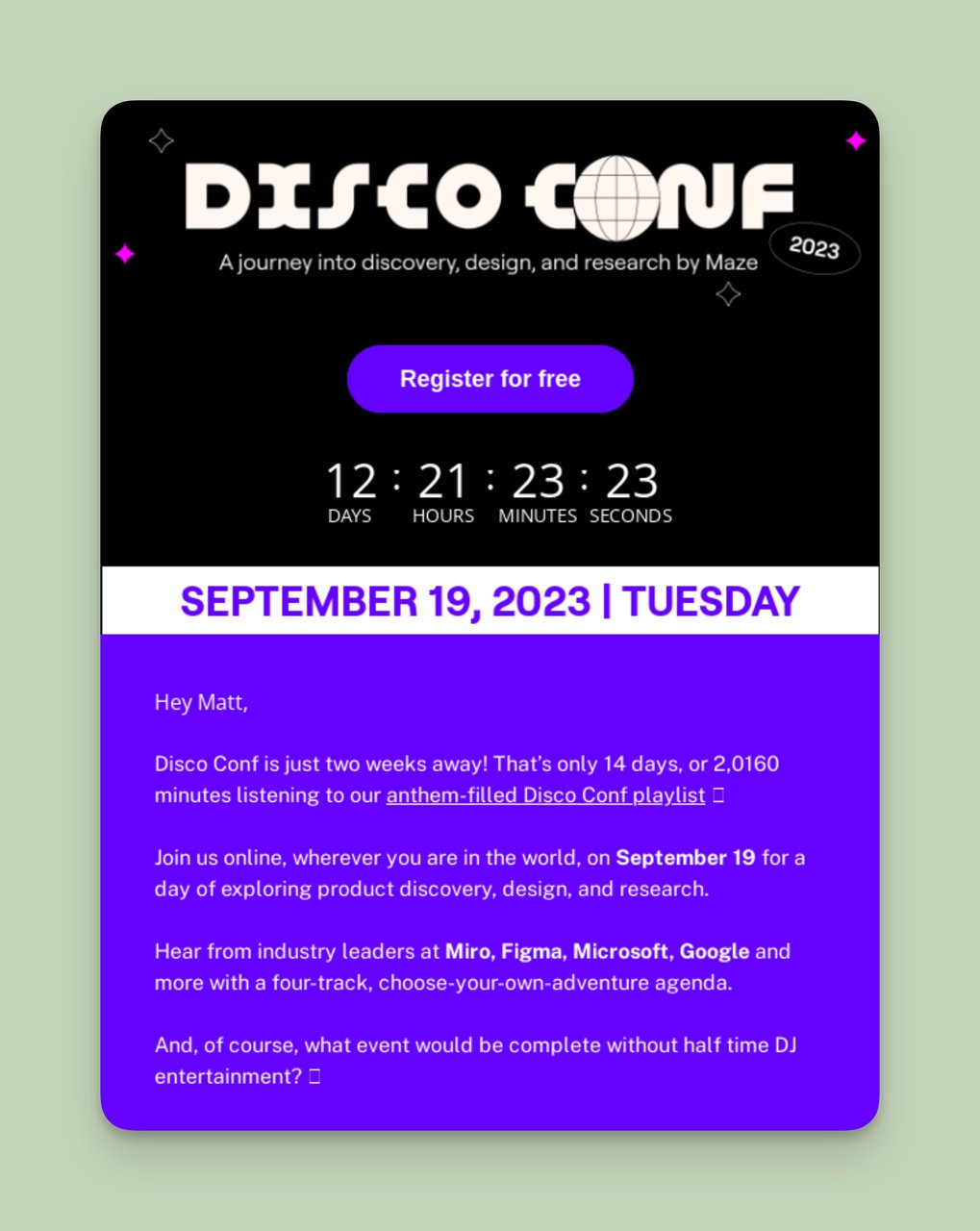
Maze uses a question to imply the reader is falling behind
Slack's FOMO subject line for event announcements:
"Why you won't want to miss Slack Tour"
Why it works: Instead of leading with the event, Slack leads with the consequence of skipping it. "Won't want to miss" frames non-attendance as the loss, and "why" creates a curiosity gap the reader has to open the email to close.
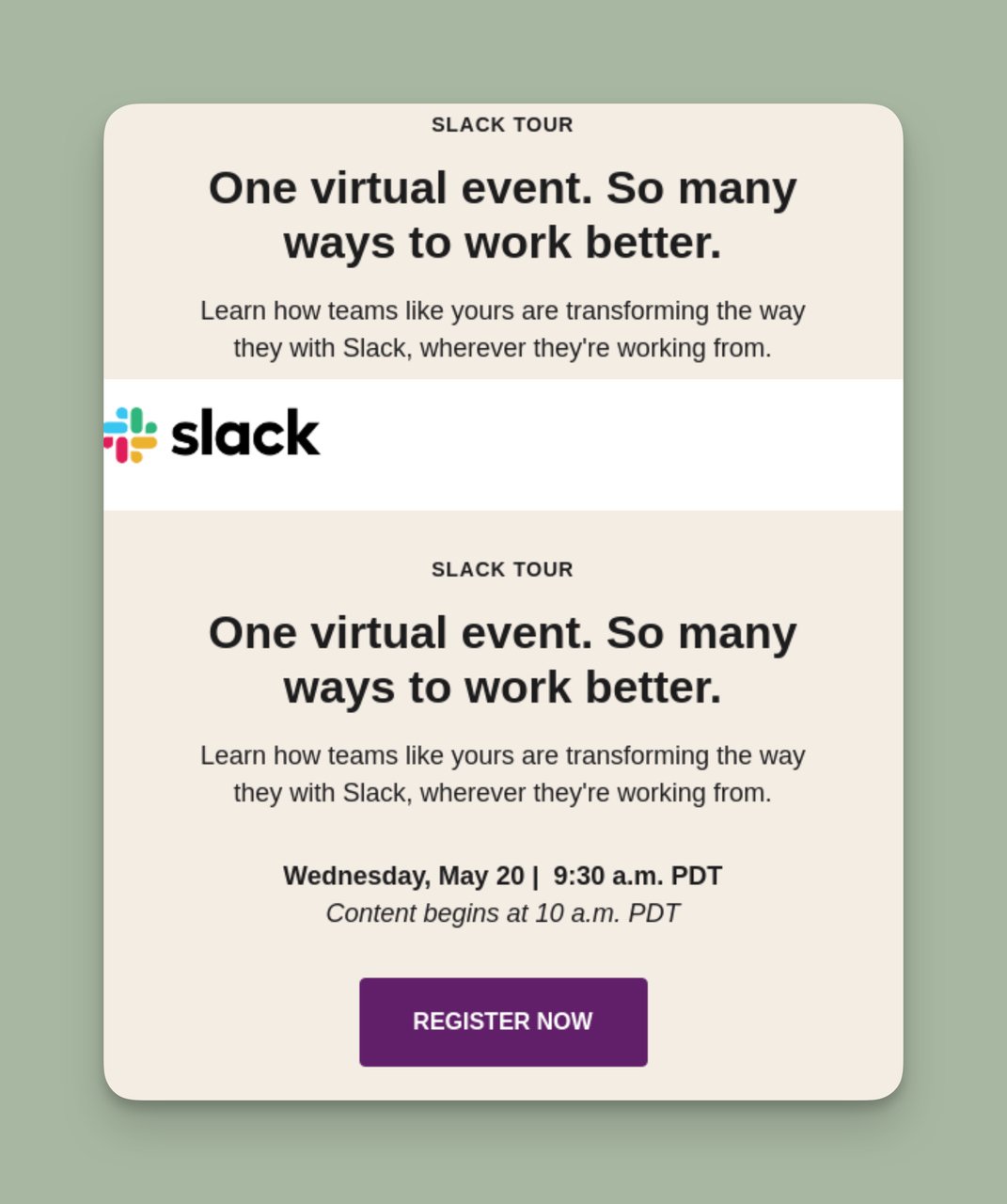
Slack frames skipping the event as the real loss
Ready-to-use FOMO subject lines for event announcements:
• Be part of something big: Join us at [Event Name]
• Limited seats left! Secure your spot at [Event Name]
• Countdown to [Event Name]: Are you in?
• Ready for an epic night? We're waiting at [Event Name]
• Mark your calendar for the [Event Name]
• The event we've all been waiting for…
• The excitement is loading – See you at [Event Name]
• Experience [Event Name] live – RSVP before it's too late!
• Join the party: [x%] of last year's attendees can't wait for round two!
• See why our event sold out quickly - secure your spot now!
• Don't miss [Event Name] of the year - [x%] of industry leaders are attending!
• Get ready for an unforgettable experience
• Last year was great; this year will be epic - join us!
FOMO Subject Lines for Product Launches
Launch subject lines convert when they make the reader feel like an insider, someone who gets to see the new thing before the crowd. The lever here is "be first," not "buy now."
Samsung's FOMO subject line for product launch:
"The smartphone everyone's talking about."
Why it works: One word, "everyone," does the heavy lifting. It implies a conversation already in progress, and the reader isn't part of it yet. That's social proof reframed as exclusion, and it makes opening the email feel like catching up.
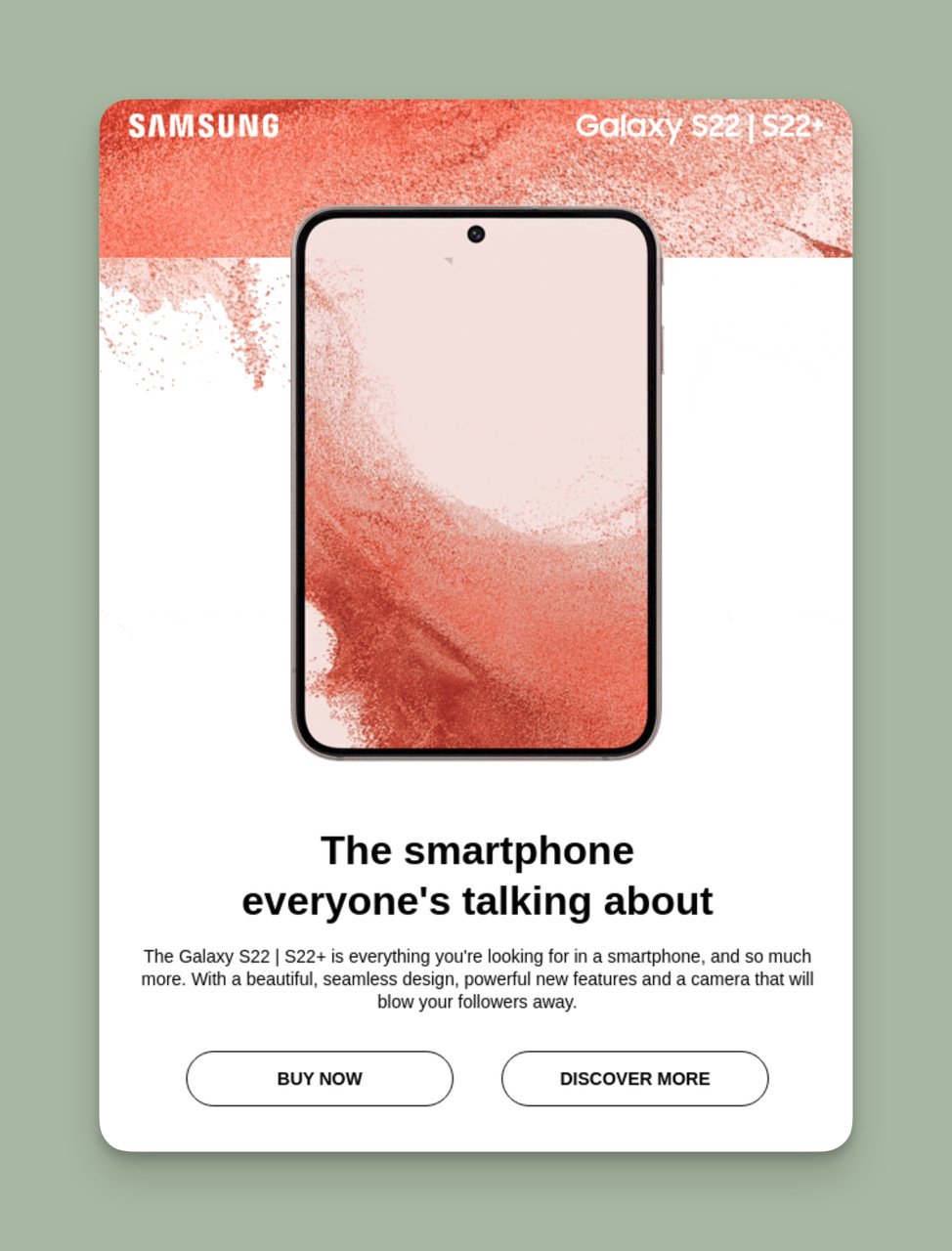
Samsung implies a conversation the reader isn't in yet
On Running's FOMO subject line for product launch:
"☁ Be fast, the new Cloudboom Echo just dropped."
Why it works: "Just dropped" borrows sneaker-culture language that signals limited supply, while "be fast" turns the open itself into a race. Unlike Samsung's social-proof angle, this one runs purely on speed and scarcity.
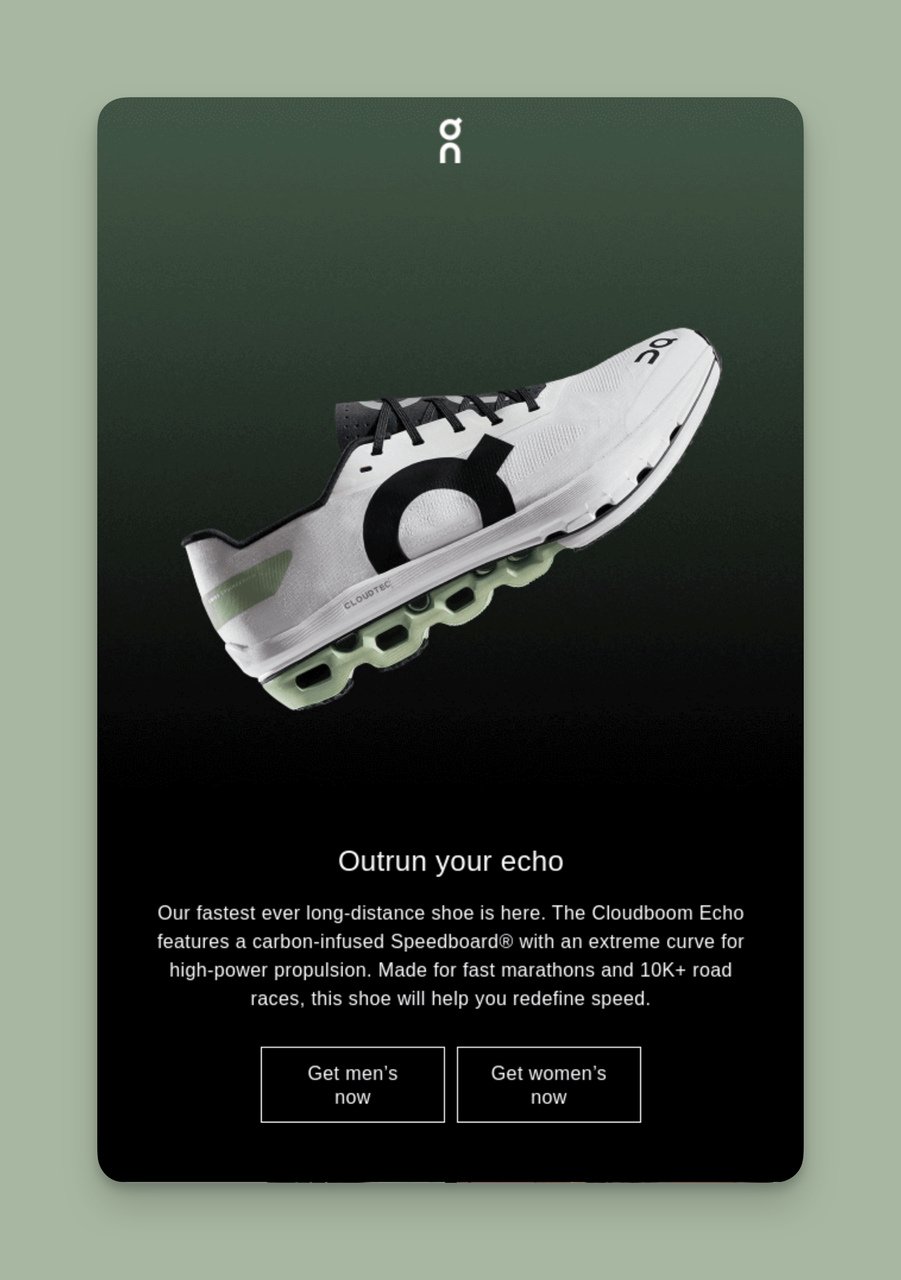
On Running runs on speed and limited-drop language
Ready-to-use FOMO subject lines for product launch:
• Get ready for something unique: Our highly-anticipated product launch is here
• What would you do with [Product Name]? It's here now!
• The wait is over: [Product Name] is here
• Exciting new product launch - Get 20% off
• Something new is coming… Get a sneak peek.
• Say hello to [Product Name]: Prepare to be amazed
• It's here! [Product Name] is ready for you
• Hello there! Want to try something new?
• Be among the chosen few to experience our game-changing product first.
• Introducing the must-have product - get it before everyone else!
• Join our product launch VIP list!
• Save the date for a product launch like no other
• The countdown is on! Presale for [Product Name] is open.
FOMO Subject Lines for Flash Sales
Flash sale subject lines live or die on the clock. The discount matters, but the deadline is what makes the reader open now instead of bookmarking it for never.
National Geographic's FOMO subject line for flash sales:
"Black Friday Extended – Geno 2.0 for only $49.95 | Save up to 70% on Nat Geo gifts!"
Why it works: This flash sale line stacks a hard number ($49.95), a percentage (70%), and three urgency words (Black Friday, Extended, Save). It's specific enough to feel real rather than vague-sale spam.
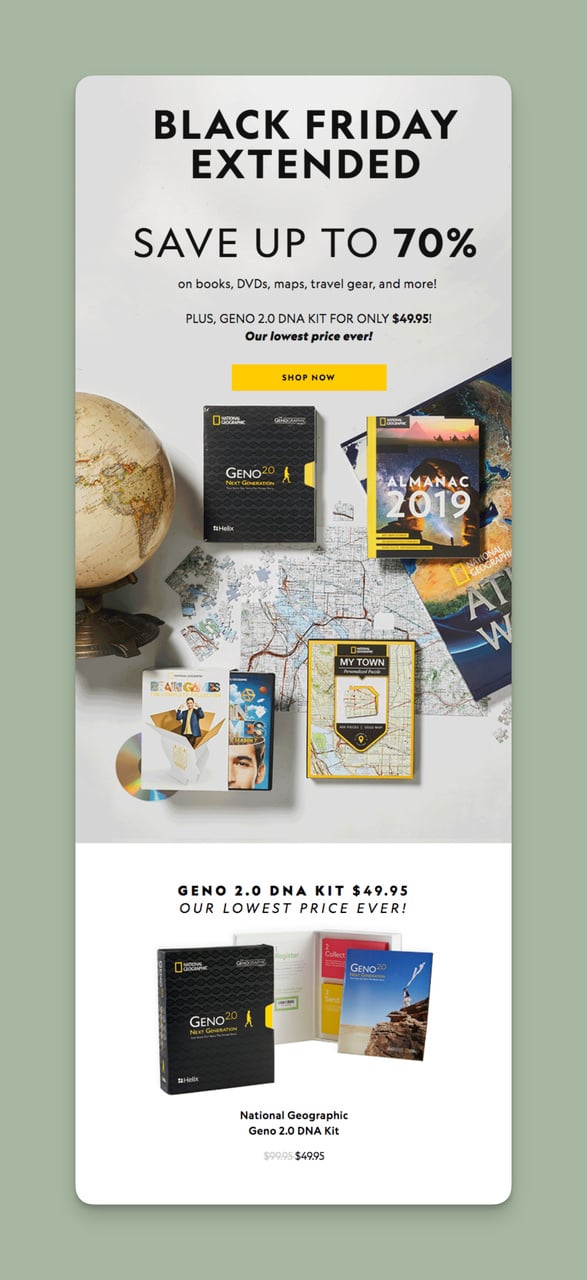
National Geographic stacks a price, a percentage, and urgency words
Columbia's FOMO subject line for flash sales:
"FLASH SALE: 50% off select footwear starts now!"
Why it works: The all-caps "FLASH SALE" plus "starts now" creates immediate urgency around a clear 50% discount. That said, this one comes with a caveat: as covered earlier, leaning on caps can push you toward the spam folder. Use the energy, skip the shouting.
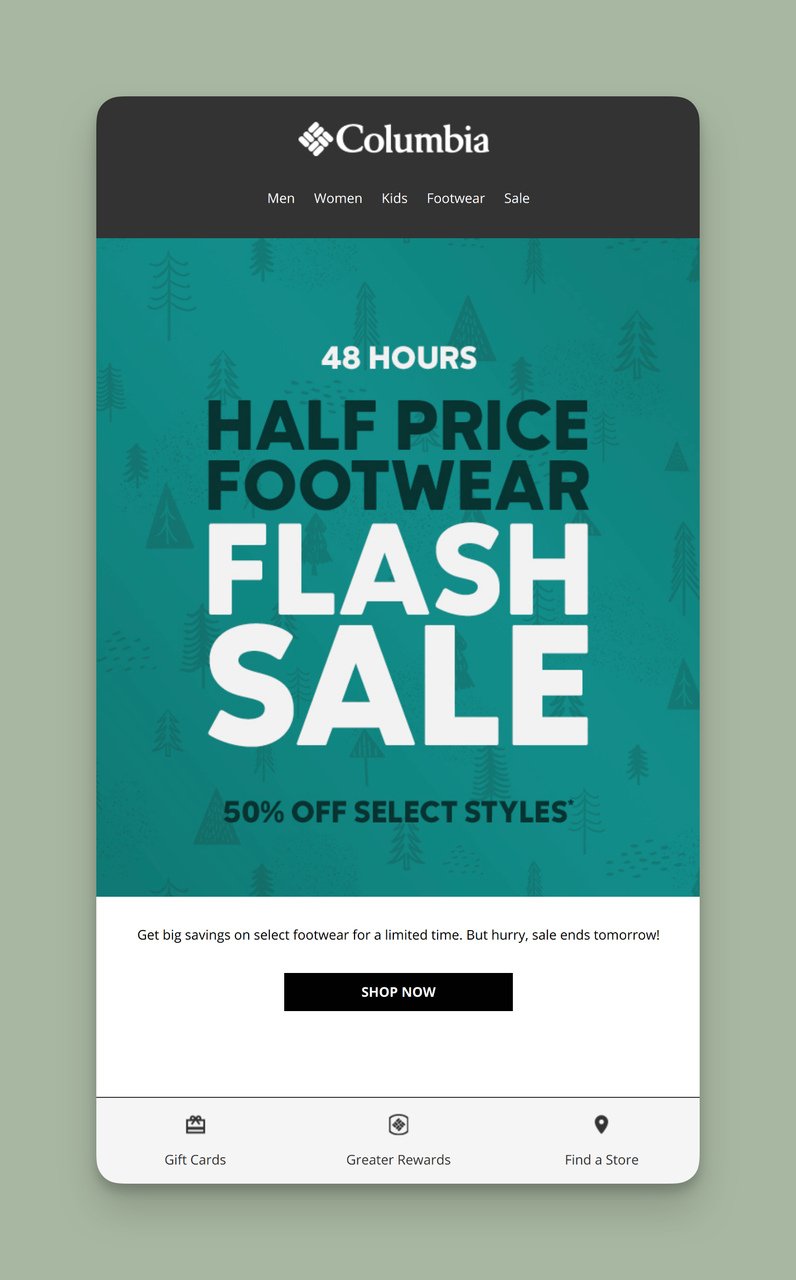
Columbia's caps grab attention but risk spam filters
Ready-to-use FOMO subject lines for flash sale:
• Come and get it! Our flash sale is going on now
• Ready, Set, Shop: Flash sale is live!
• The flash sale rush is on!
• Quick, it's here: flash sale savings
• Blink and it's gone
• Incredible prices for a limited time. Don't miss out!
• Need a reason to get excited? Here's our flash sale!
• Hurry! Exclusive flash sale is ending soon!
• Grab your favorites at a discount in our flash sale!
• A flash sale is coming up today. Act fast!
• Time to start the perfect weekend with our flash sale!
• Kickstart your week with our flash sale!
• Flash sale coming! Pick up your favorites.
• Who doesn't love a good flash sale?
• Hours left to grab your flash sale deals
FOMO Subject Lines for Early Access
Early access subject lines work on exclusivity, not discounts. The reader isn't being offered a deal so much as a status: you're in the group that gets things first.
LOFT's FOMO subject line for early access:
"Want first dibs AND an extra 10% off?"
Why it works: It pairs status ("first dibs") with a tangible incentive ("extra 10% off"). The question format makes the reader answer in their head, and the obvious answer is yes, which makes opening the email feel like the natural next step.
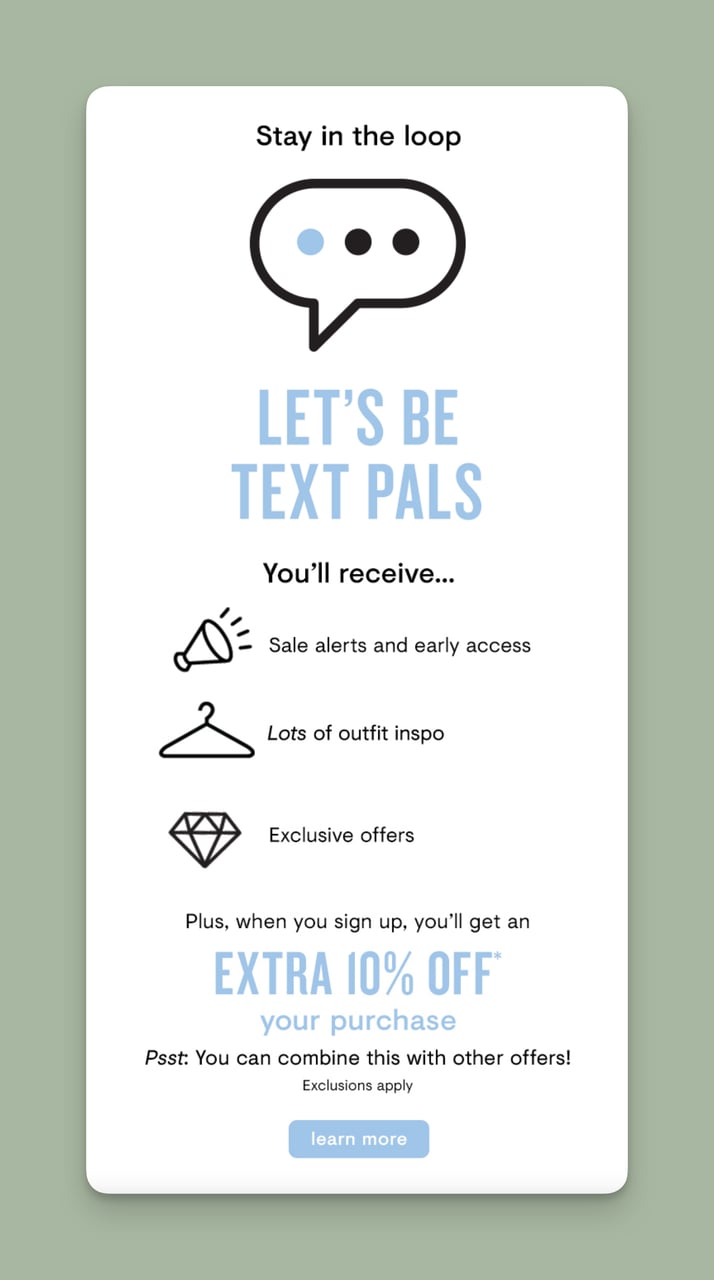
LOFT pairs status with a concrete incentive
InVision's FOMO subject line for early access:
"Reminder: Your early access to InVision Studio starts now"
Why it works: "Reminder" implies the reader already has something they might be forgetting, and "your" makes the access feel owned, not offered. For B2B SaaS, this framing converts well because it treats access as an account benefit rather than a promo.
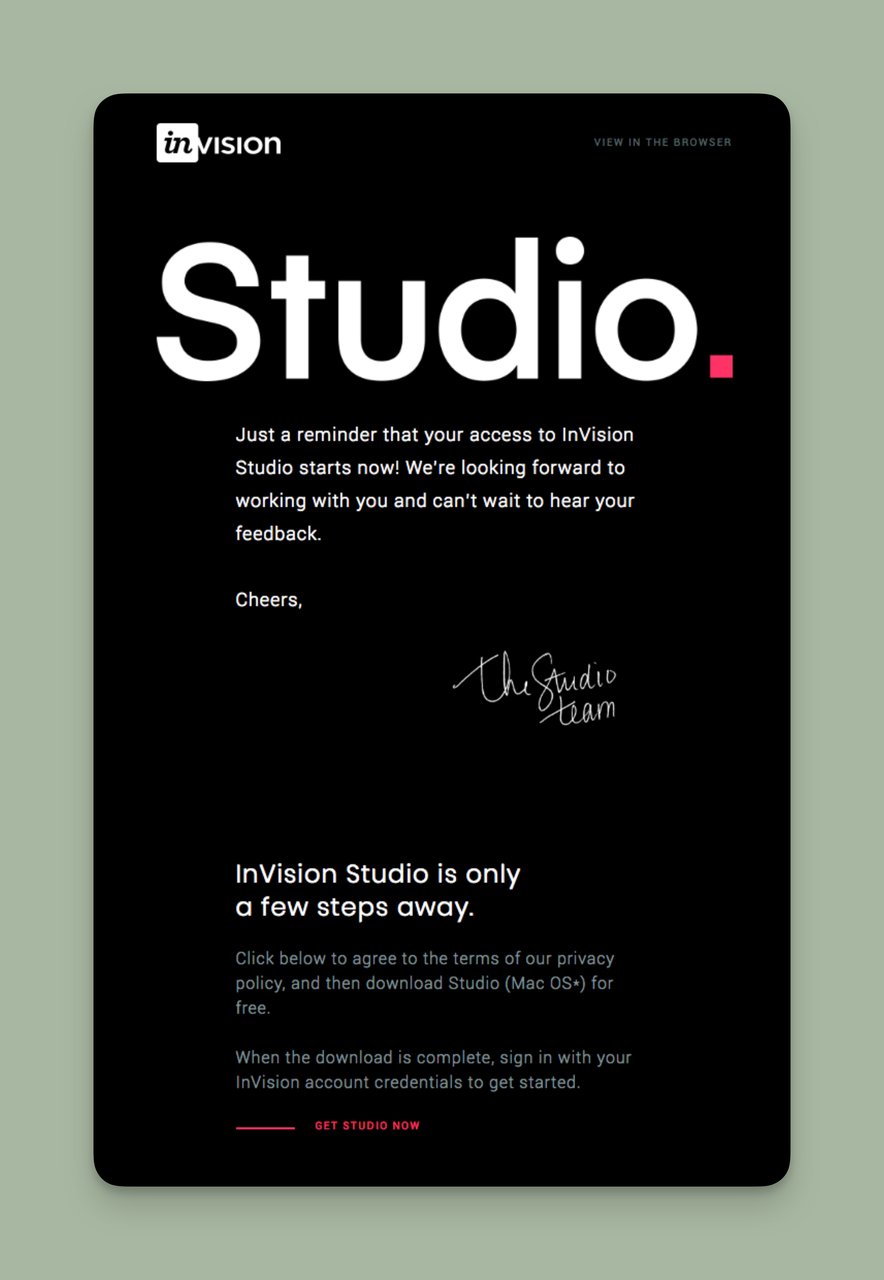
InVision frames access as something the reader already owns
Ready-to-use FOMO subject lines for early access:
• Be the first to know: Early access to our latest release!
• Sssh, catch the early bird discount while everyone sleeps 💤
• Grab before everyone else: Early access inside!
• Tick tock! ⏰ Early bird discounts are here, but not for long
• Get in early and save big: $50 off inside
• Early bird catch the savings - Secure yours today
• Be first in line, be first in savings
• Calling all early birds – Exclusive preview inside!
• Hey, guess what? Early Access is now live!
• Ready for some exclusive deals? Early Access awaits!
• Don't wait to be first in line for early access!
• Surprise! Your early access privileges have started!
• Don't be left behind: Early access starts soon
• First come, first serve: Enjoy early access benefits
• Hurry, your early access won't last long
• VIP pass: Early access to our unique selection
• Act before the crowd: Early access starts now!
FOMO Subject Lines for Social Proof
Social proof subject lines reduce the risk of opening by showing the reader they'd be joining a crowd, not taking a gamble. Numbers, testimonials, and customer counts do the convincing.
Skillshare's FOMO subject line for social proof:
"50% Off: 'A phenomenal place for learning and community'"
Why it works: Skillshare leads with a 50% discount to grab attention, then immediately backs it with a real customer quote. The testimonial increases brand credibility so the offer reads as trustworthy rather than desperate.
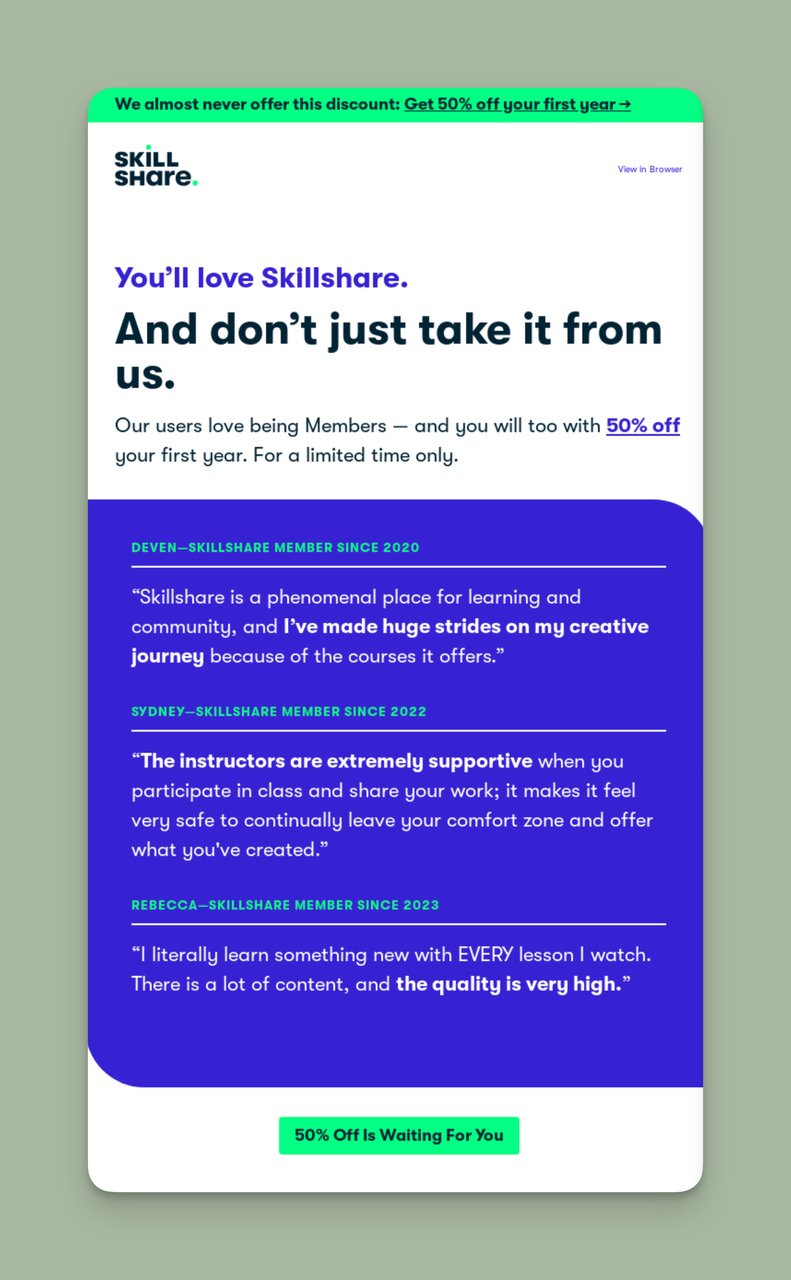
Skillshare backs its discount with a real customer quote
italki's FOMO subject line for social proof:
"Don't just take our word. Hear their stories with italki."
Why it works: Unlike Skillshare's discount-first approach, italki leads purely with curiosity and credibility. "Their stories" promises specific, human evidence, and "don't just take our word" preempts the reader's skepticism before they feel it.
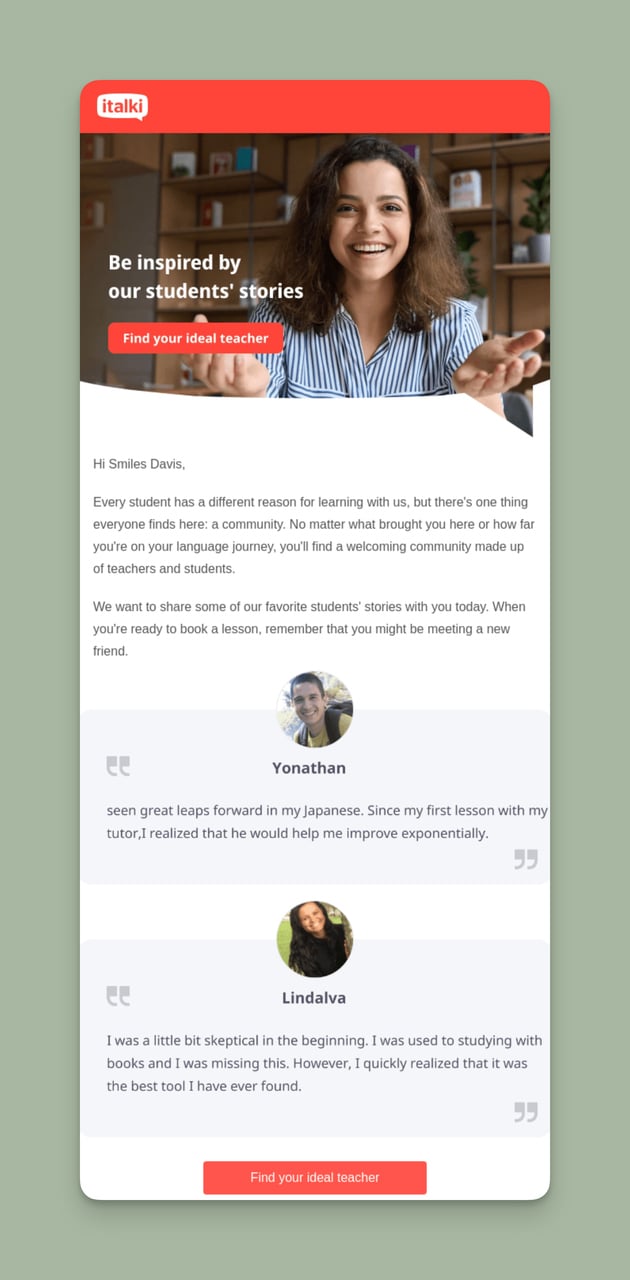
italki leads with curiosity and preempts skepticism
Ready-to-use FOMO subject lines for social proof:
• See what others are loving - social proof inside!
• What's hot right now? Social proof knows
• Real people, real praise: social proof is in
• Take tips from our happy customers
• See what others are raving about: Social proof you can't ignore!
• You are invited to join our Happy Shoppers Club!
• [x] of our customers recommend us - Learn why
• Join our community of [number] satisfied customers - here's why!
• You're one step away from experiencing what [x%] of our clients already have.
• Discover the magic of our 5-star customer reviews
• Shop with confidence – Proven by our satisfied customers
• Thousands are already enjoying the benefits – you can too
• Want to be part of the success stories? Jump in right away!
FOMO Subject Lines for Giveaways
Giveaway subject lines combine two FOMO levers at once: a tempting prize and a closing entry window. The prize pulls attention, the deadline forces the click.
Otter.ai's FOMO subject line for giveaways:
"There's still time to win 1 year of Otter Business or $100"
Why it works: "Still time" signals the window is closing without saying "last chance," and naming the exact prize, a year of Otter Business or $100, makes the reward concrete instead of fuzzy. Specific prizes feel more winnable.
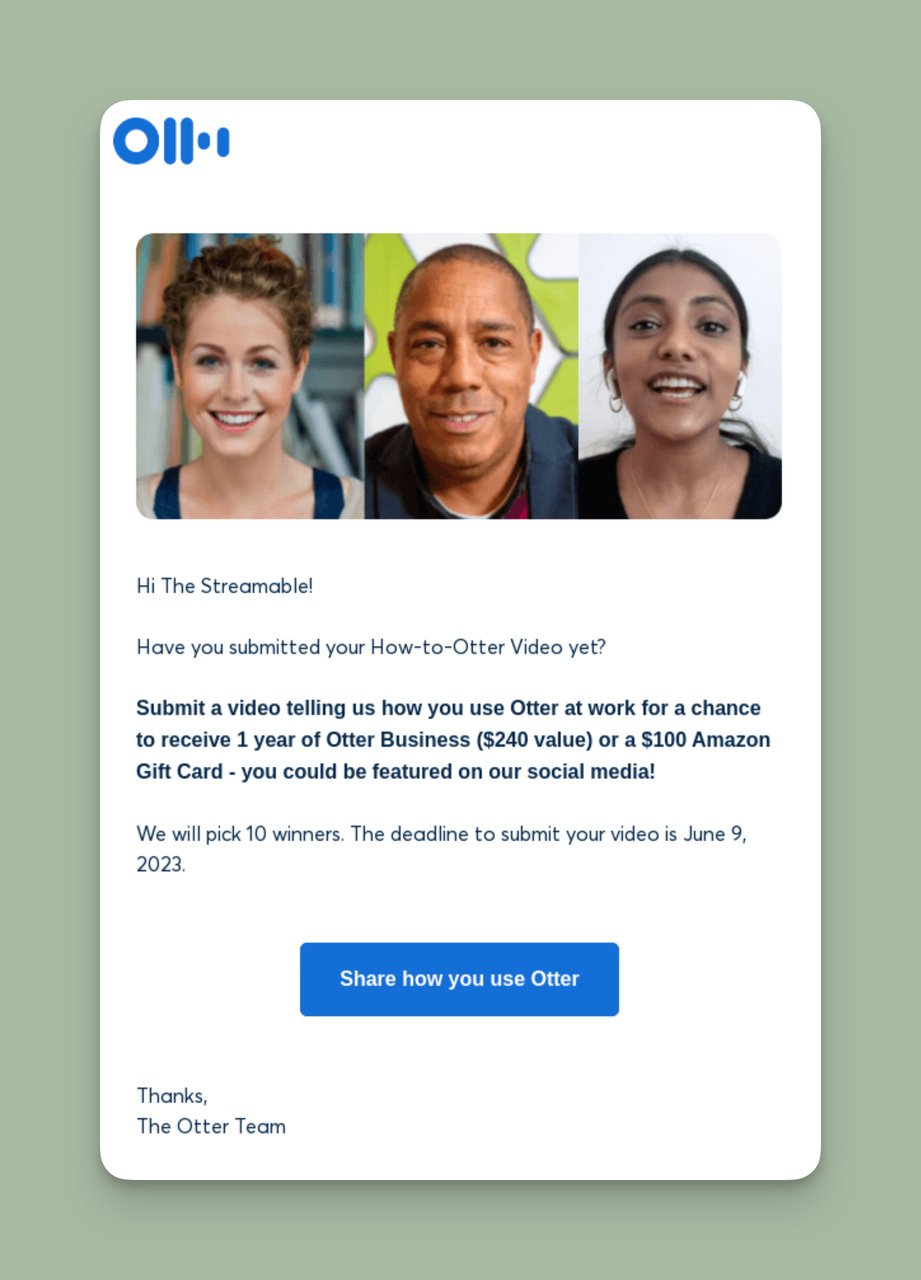
Otter.ai names the exact prize to make it feel winnable
Hume Supernatural's FOMO subject line for giveaways:
"Your chance to win a Supernatural prize pack"
Why it works: "Your chance" makes the opportunity feel personal and time-bound, and "prize pack" promises more than a single item. It's lighter on urgency than Otter's line but heavier on the appeal of the reward itself.
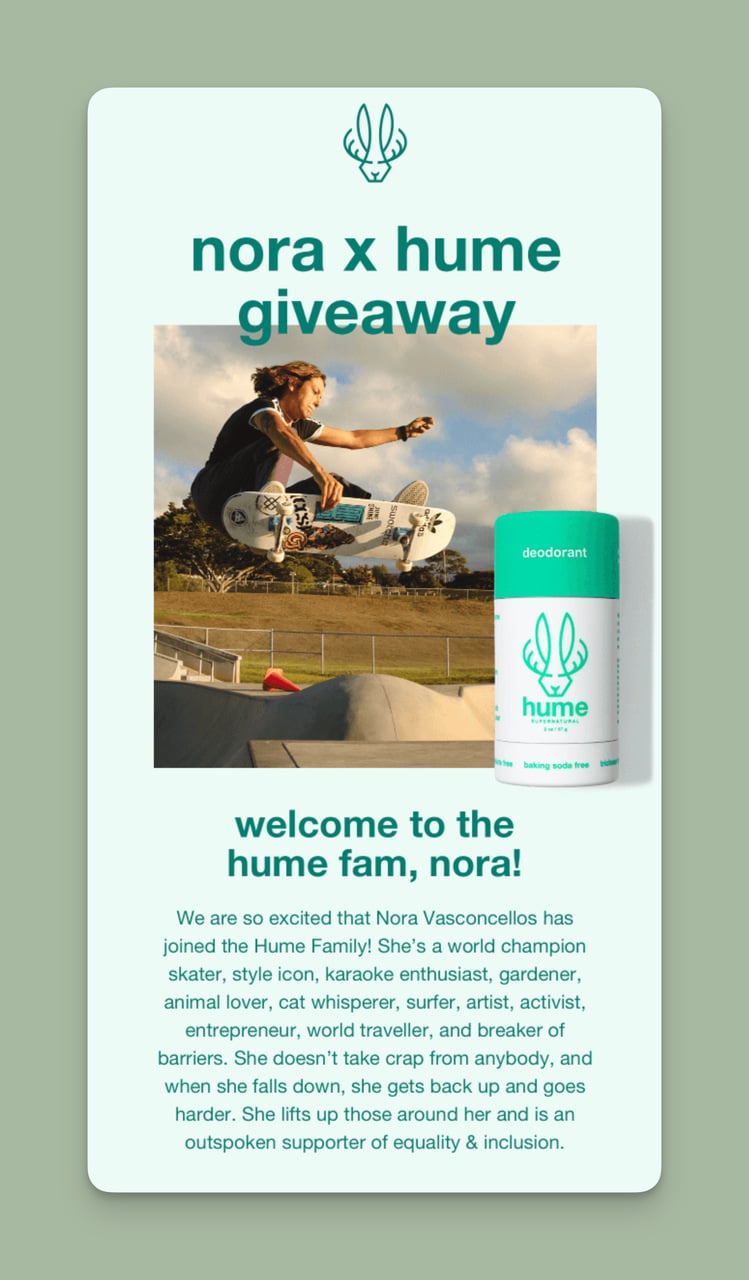
Hume Supernatural leans on the appeal of the prize pack
Ready-to-use FOMO subject lines for giveaways:
• Our friendship comes with benefits
• Ready to be a winner? Our giveaway is calling you
• We'd love to see you win – Enter our giveaway now!
• Our giveaway's nearing the finish line
• Ready, set, enter our giveaway today!
• You're one step away from a free prize!
• You're in luck! Enter our new giveaway today
• Exclusive giveaway for our loyal subscribers!
• Only a few hours left to enter and win big!
• Reminder: Enter the giveaway before it's too late!
• Hurry! Grab your chance to win now!
• VIP access to our exclusive giveaway
• Don't miss out on this incredible giveaway opportunity!
• Act fast: Limited spots available for our giveaway!
• Exclusive giveaway alert: Enter now or regret later!
FOMO Subject Lines for Win-Back Customers
Win-back subject lines work on a different kind of FOMO: not "everyone has this" but "look what you've been missing." The reader already left, so the line has to make returning feel like reclaiming something.
GoDaddy's FOMO subject line for win-back customers:
"You've still got time to save 30%"
Why it works: To win back lapsed customers, "you've still got time" frames the return as an open opportunity rather than a guilt trip, and the 30% discount gives a clear, concrete reason to re-engage.
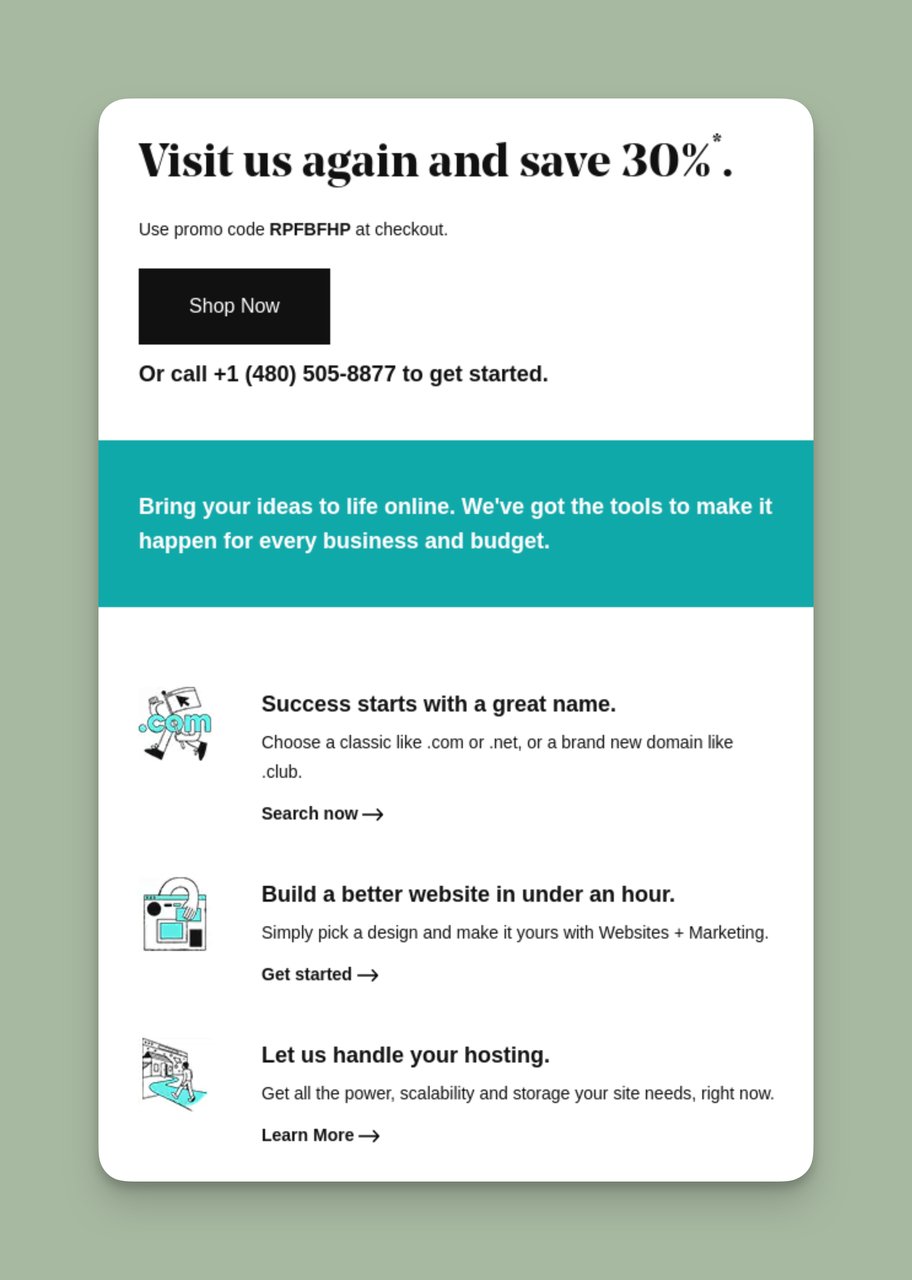
GoDaddy frames the return as an open opportunity
Asana's FOMO subject line for win-back customers:
"Since you've been gone…"
Why it works: Four words, one ellipsis, and a wide-open curiosity gap. It makes the reader wonder exactly what's changed since they left, and the only way to find out is to open. No discount, no pressure, just intrigue, which is why it's such a clean FOMO example.
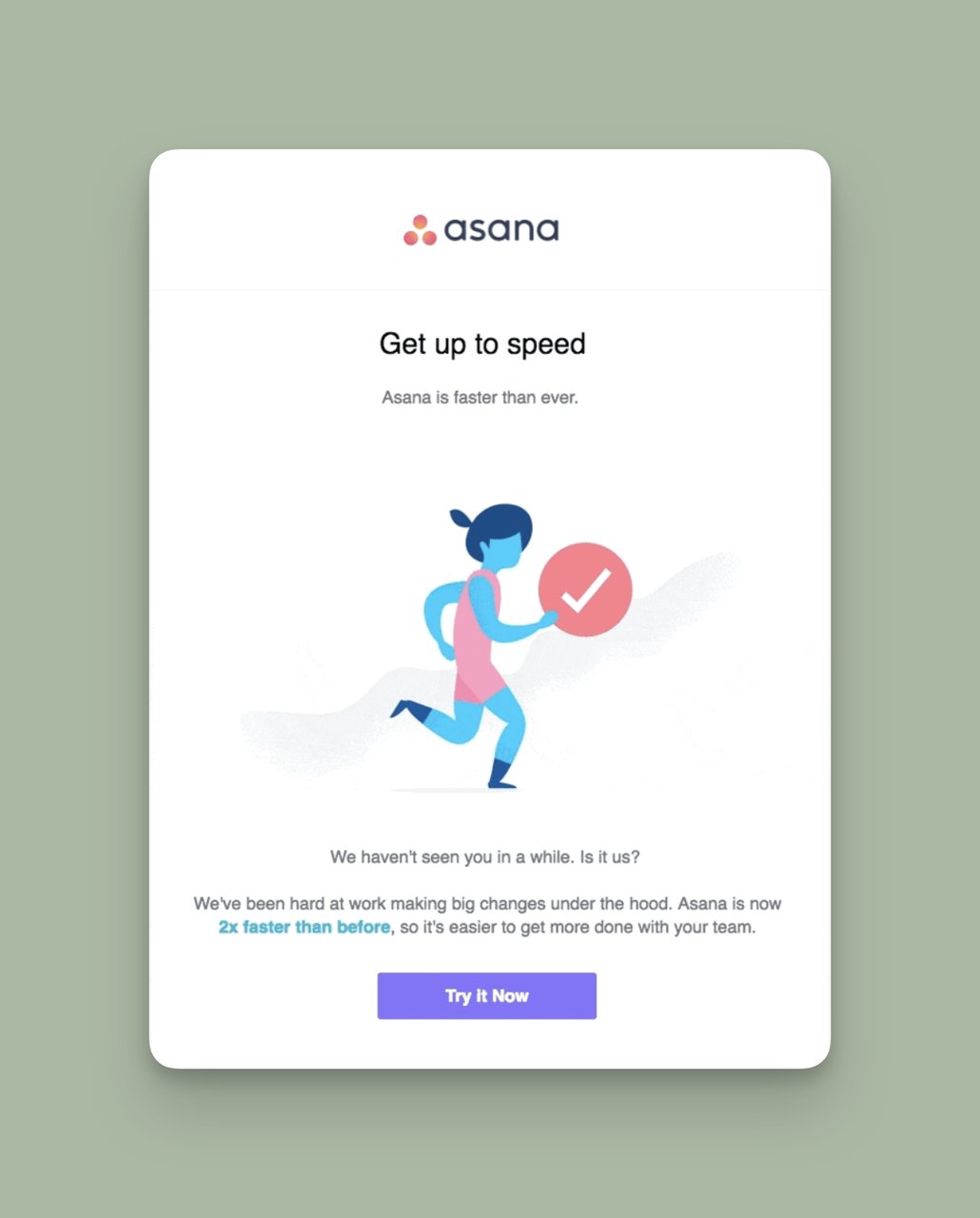
Asana opens a curiosity gap with just four words
Ready-to-use FOMO subject lines for win-back customers:
• Jump back in. Our new features await!
• Packed with innovations! We'd love to welcome you again
• Join the circle and catch what you missed
• Don't leave a good thing behind
• Come back and save [x%]!
• It's been a while! Enjoy [x%] off on us!
• Special comeback offer: [x%] off
• You're going to love these…
• Your shopping cart misses you - Discount inside!
• It's been too long, [Name]. Let's make up with [x%] off
• You're always welcome here; jump back in and save [x%] off
• They're back! Get your favorite items now.
• [Brand Name] deserves a second chance - here's why
What Are the Most Common Mistakes to Avoid in FOMO Emails?
The most common FOMO email mistakes are faking urgency, shouting in all caps, writing lines too long for mobile, and triggering spam filters with risky words. Each one trades a short-term open for long-term trust, and that's a bad deal. According to Prospeo's FOMO subject line research, 69% of recipients will report an email as spam based on the subject line alone, so the line that overpromises doesn't just get ignored, it gets you flagged.
Here's what to watch for:
• Faking urgency: "Last chance!" on a deal you'll run again next week. Subscribers notice the pattern fast, and once they do, every future deadline reads as fake. Only claim scarcity that's real.
• Shouting in all caps: "FINAL HOURS!!! 90% OFF!!!" looks like spam to both readers and filters. Caps and stacked exclamation points signal low quality. Let the offer carry the energy.
• Writing past the mobile cutoff: Most inboxes truncate subject lines on phones. If your urgency lives in word 12, mobile readers never see it. Front-load the hook.
• Using spam-trigger words carelessly: "Free," "guaranteed," "act now," and "100%" aren't banned, but stacking them raises your spam score. Use them sparingly and back them with real substance.
• Breaking the subject-line promise: If the subject says "50% off" and the email opens with a 10% coupon, you've taught the reader not to trust your next subject line. The line and the content must match.
• Overusing FOMO on every send: When every email is "urgent," none of them are. Reserve FOMO for moments with genuine scarcity and rotate in other angles for routine sends.
The fix for most of these is the same: be specific and be honest. A real deadline, a real number, and a real benefit will always outperform manufactured panic. If you want to see how urgency works in a tighter, higher-intent context, our roundup of abandoned cart subject lines shows FOMO applied where the reader already wants the product.
How Do You Measure the Success of FOMO Campaigns?
You measure FOMO campaign success by tracking open rate first, since that's the metric FOMO subject lines directly influence, then following the reader through to clicks, conversions, and spam complaints. A FOMO line that lifts opens but spikes unsubscribes isn't winning, it's borrowing.
For a benchmark to compare against: according to Sendtric's open rate data, the overall average email open rate in 2026 sits at 36.92%. If your FOMO sends consistently beat your own baseline and land near or above that average, the subject lines are doing their job.
The metrics worth watching:
• Open rate: The direct measure of subject line performance. Compare FOMO sends against your non-FOMO sends to isolate the lift.
• Click-through rate: Tells you whether the email body kept the promise the subject line made. High opens with low clicks means the subject oversold.
• Conversion rate: The number that pays the bills. Opens and clicks are proxies, conversions are the result.
• Unsubscribe and spam complaint rate: The warning lights. A rising complaint rate after a FOMO push means your urgency is reading as pressure.
• Revenue per email: Ties the whole campaign back to dollars, useful for deciding whether a FOMO angle is worth repeating.
The most reliable way to know what works is A/B testing, run a FOMO subject line against a straightforward one and let the open rate decide. And it's worth testing AI-assisted variants too: according to DigitalApplied's 2026 data, organizations using AI to generate and optimize subject lines see a 26% increase in open rates compared to manually written alternatives. Treat AI as a draft generator, then apply human judgment on tone and honesty before sending.
One more piece of the measurement picture sits upstream of the email itself: list quality. Open rates partly reflect how engaged your subscribers were when they signed up. We track which Popupsmart capture flows, exit-intent offers versus passive footer forms, produce subscribers who actually open later, because a smaller engaged list will beat a bigger cold one on every metric above.
Put These FOMO Subject Lines to Work
Across all 130 examples, the same pattern separates the lines that get opened from the lines that get deleted. The winners are specific (a real number, a real deadline), honest (the email delivers what the subject promised), and short enough to survive a mobile inbox. The losers fake urgency, shout in caps, or bury the hook past word ten.
FOMO stands for fear of missing out, but the goal was never to scare your subscribers. It's to get them genuinely excited about an opportunity they'd regret skipping. That's the sweet spot, real value framed with real urgency.
Pick the category that matches your next campaign, grab two or three ready-to-use lines, swap in your own products and percentages, and A/B test them against a plain subject line. Let your open rate tell you which framing your audience responds to. And before any of it ships, make sure you've got a list worth sending to, that's where on-site capture with Popupsmart popups and sticky bars turns site traffic into the subscribers your FOMO subject lines need.
Frequently Asked Questions
What is FOMO in email marketing?
FOMO in email marketing is copy that triggers a subscriber's fear of missing out, a limited deal, an exclusive event, or something everyone else is already doing, to drive opens and action. It works through four levers: urgency (a deadline), scarcity (limited quantity), social proof (others are in), and exclusivity (this is for a select group). The goal isn't to scare readers, it's to make a real opportunity feel time-sensitive enough to act on now.
How do you create urgency in subject lines?
Create urgency by attaching a specific, honest deadline or quantity to a clear benefit, then putting it early in the line so mobile readers see it. Use trigger verbs ("Grab," "Secure," "Don't miss"), real numbers ("Only 10 left," "Ends at midnight"), and countdown language. The key word is honest, manufactured urgency works once, then trains subscribers to ignore you. If the scarcity isn't real, don't claim it.
What are good FOMO words for emails?
Strong FOMO words include "last chance," "limited," "exclusive," "ends tonight," "almost gone," "only a few left," "first dibs," "before everyone else," and "still time." Pair them with specifics, a percentage, a date, a quantity, so they read as real rather than generic. Avoid stacking them or leaning on overused spam-adjacent terms like "free" and "guaranteed," which raise your spam score without adding credibility.
Why use FOMO in marketing?
FOMO works because loss aversion is a powerful behavioral driver, people act faster to avoid missing out than to gain something equivalent. In email specifically, it lifts the metric everything else depends on: the open. A single urgent phrase can raise open rates by up to 22%, and since email returns $36 to $42 per dollar spent, small open-rate gains compound into real revenue.
How do you avoid spam filters with FOMO subject lines?
Avoid spam filters by skipping all caps, limiting exclamation points, and not stacking spam-trigger words like "free," "guaranteed," and "act now." Keep subject lines a natural length, match the subject to the email content, and maintain good list hygiene, sending to engaged subscribers who opted in. Filters weigh sender reputation heavily, so a clean list and honest subject lines protect you more than any single word choice.
In which industries are FOMO subject lines most effective?
FOMO subject lines work best in e-commerce and retail, where flash sales, limited stock, and limited-time offers are native to how the business runs. Hospitality and travel see strong results too, since bookings have natural deadlines and availability windows. The entertainment industry, concert tickets, screenings, event drops, also benefits heavily. That said, B2B SaaS can use FOMO effectively for webinars, early access, and win-back campaigns when the scarcity is genuine.
Keep building your email toolkit:
• 200+ B2B Email Subject Lines for Sales
• 100+ Call-to-Action (CTA) Examples That Convert in 2026
• 50+ Persuasive Words That Sell
How would you rate your experience with this article? 😊