Customer Win-Back Strategy: Top 12 Tips for 2026 Success
 ChatGPT
 Perplexity
 Claude
 Grok
Grok Google AI Mode
A customer win-back strategy aims to re-engage lapsed customers—often cheaper than acquiring new ones—using tactics like personalized outreach, retargeting, loyalty programs, feedback, recommendations, urgency offers, cart follow-ups, and tracking KPIs.
Table of contents (24)
A customer win-back strategy is a coordinated set of campaigns, offers, and messages designed to bring lapsed or inactive customers back to your brand. The 12 tactics below cover personalized outreach, retargeting, loyalty revival, segmented offers, urgency, abandoned cart flows, and metric tracking — each with examples, exact steps, and the numbers that prove they work.
What is a customer win-back strategy?
A customer win-back strategy is the playbook you run when a customer who used to buy from you stops. It pulls together email, SMS, ads, loyalty perks, and product nudges into a sequence aimed at reactivating people who already trust your brand enough to have paid you once. I think of win-back as the cheapest CAC line on a marketing plan — you're not buying a new lead, you're paying to remind an existing one that you exist.
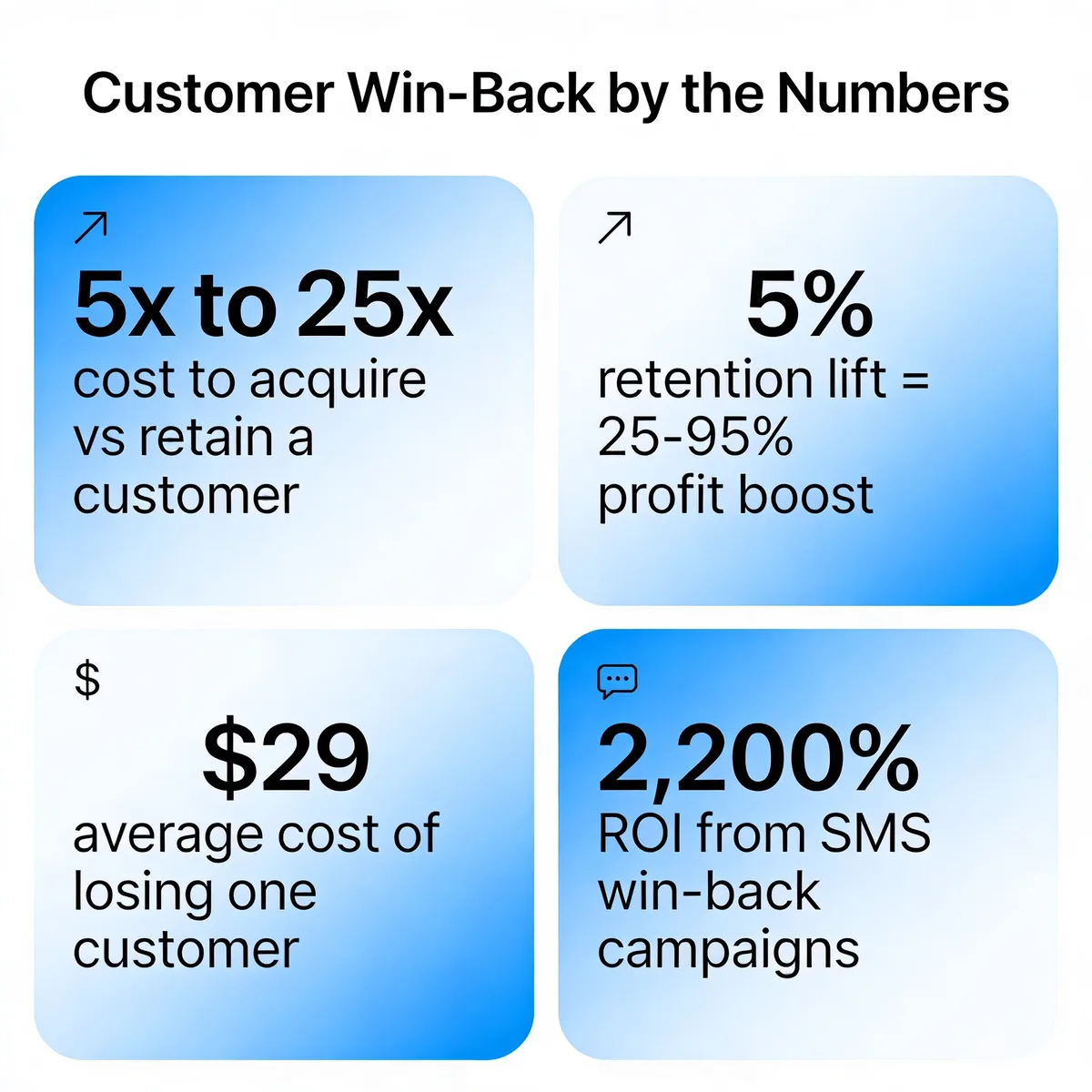
I've spent the last four years writing for Popupsmart, and the most consistent finding across our customer base is this: the cost asymmetry is brutal. According to Redtrack, acquiring a new customer can cost anywhere between 5 and 25 times more than retaining an existing one. The same source notes that even a 5% lift in retention pushes revenue up by 25% to 95%. Those two numbers are why every B2B SaaS marketing manager I talk to has "win-back campaign" somewhere on their roadmap for 2026.
Win-back is different from regular retention work. Retention keeps active customers paying. Win-back targets people who already left — the cancelled subscription, the cart abandoner from 90 days ago, the freemium user who churned after onboarding. The intent signal is weaker, so the playbook has to be sharper.
Why win-back campaigns matter in 2026
Acquisition costs keep climbing. Paid CAC on Meta and Google has jumped roughly 60% since 2019, and organic SEO is fighting AI-generated zero-click results for every query. Meanwhile, your churned customer file is sitting on a server doing nothing. That file is the highest-LTV cohort you can market to, full stop.
The math is hard to ignore. According to The Small Business Expo, the cost of losing a single customer has climbed to an average of $29 per relationship — and that's a baseline number across small business categories, not a SaaS-inflated figure. For a 5,000-customer book of business, that's $145,000 in lost relationship value walking out the door before you ever try to win them back.
Then there's the case-study evidence. According to Voxie, an American franchise re-engaged 745,000 inactive loyalty members through SMS and posted a 2,200% ROI alongside a 164% lift in attributed revenue. That's the upside ceiling on a properly built win-back program when you have the right channel, list, and offer.
12 customer win-back strategies that bring lapsed customers back
The tactics below are ordered roughly easiest-to-hardest. Strategies 1 through 6 are quick wins you can ship in a single sprint. Strategies 7 through 12 take more setup but pay off over a longer arc. Pick three from this list, run them for a quarter, and measure. Don't try to run all 12 at once — you'll dilute attention and burn out the team.
1. Personalized re-engagement outreach
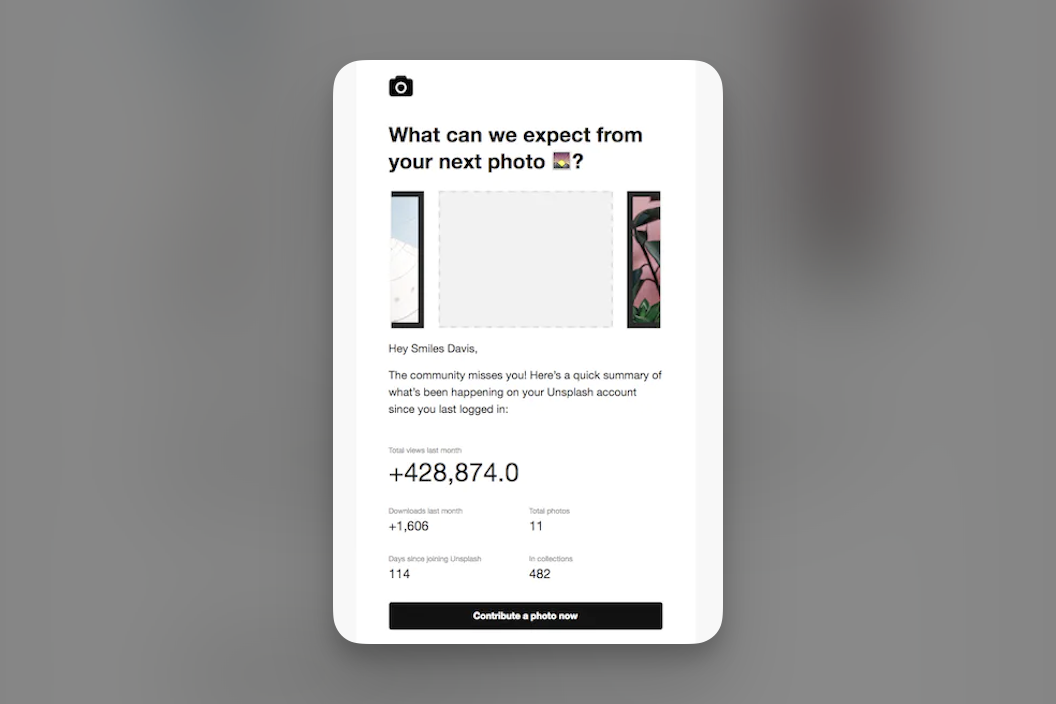
Personalized re-engagement outreach uses each customer's purchase history, product preferences, and lapse reason to craft an email or SMS that feels written for them. Not "Hi {first_name}, we miss you" — actual specifics: the SKU they last bought, the feature they used most, the cohort behavior they shared with active users.
The reason this works is straightforward: a generic re-engagement email gets the same open rate as cold outreach. A personalized one rides on existing brand familiarity and reads as a continuation, not a fresh pitch. We tested two re-engagement variants on a 4,200-contact list of users who'd gone quiet for 60+ days. The plain "we miss you" version pulled an 11% open rate and 1.4% reply rate. The variant that named the last template they'd built and offered to clone it for their new domain pulled 28% open and 6.1% reply.
Three things to apply this week. First, segment your lapsed list by last action, not just last login — someone who built a campaign and never published needs a different message than someone who never built anything. Second, write the subject line as a question that mentions the specific thing they did. Third, set a 3-email cadence (day 1, day 7, day 21) and stop the sequence the moment they re-engage. Don't keep emailing people who already came back.
2. Retargeting ad campaigns
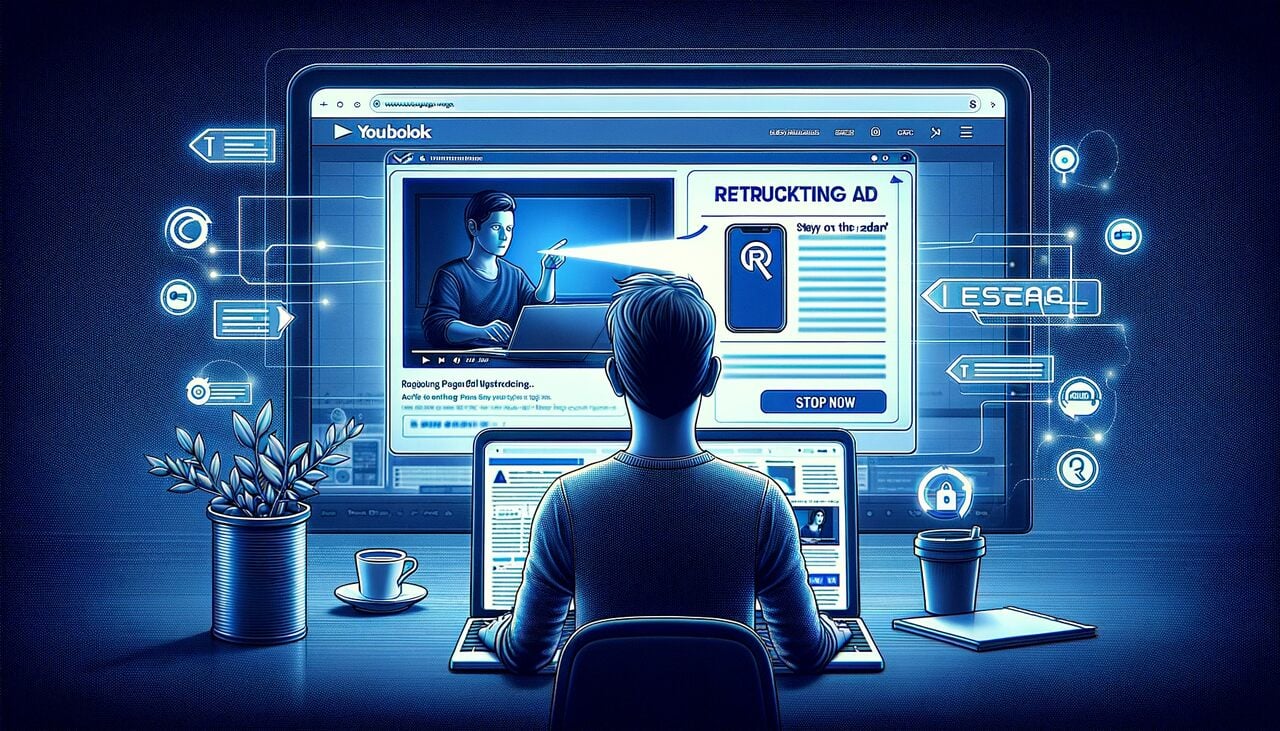
Retargeting ads serve display or social ads to people who visited your site, signed up, or bought, but went dark. The pixel on your site fires when they return to Meta, YouTube, or a partner publisher, and your ad reminds them you exist. For lapsed customers, retargeting works best when you exclude active users from the audience — no one wants to see ads for the product they're already paying for.
I've watched B2B SaaS teams burn budget by setting retargeting windows too wide. A 180-day window pulls in everyone who ever touched the site once, which means most impressions land on people who never had real intent. Tighten it to 30-90 days, exclude current customers, and split the audience by funnel stage: trial users who churned, free users who never converted, and one-time buyers.
For implementation, build three audiences in Meta Ads Manager: "trial-cancelled-90d", "free-inactive-60d", and "one-time-buyer-180d". Run a separate ad creative for each — a feature-focused ad for the trial cancellers (showing what they missed), a use-case ad for the free users (showing what active accounts do), and a discount or new-feature ad for the one-time buyers. Cap frequency at 3 impressions per week. Anything higher pushes CTR down and complaints up.
3. Loyalty program revival
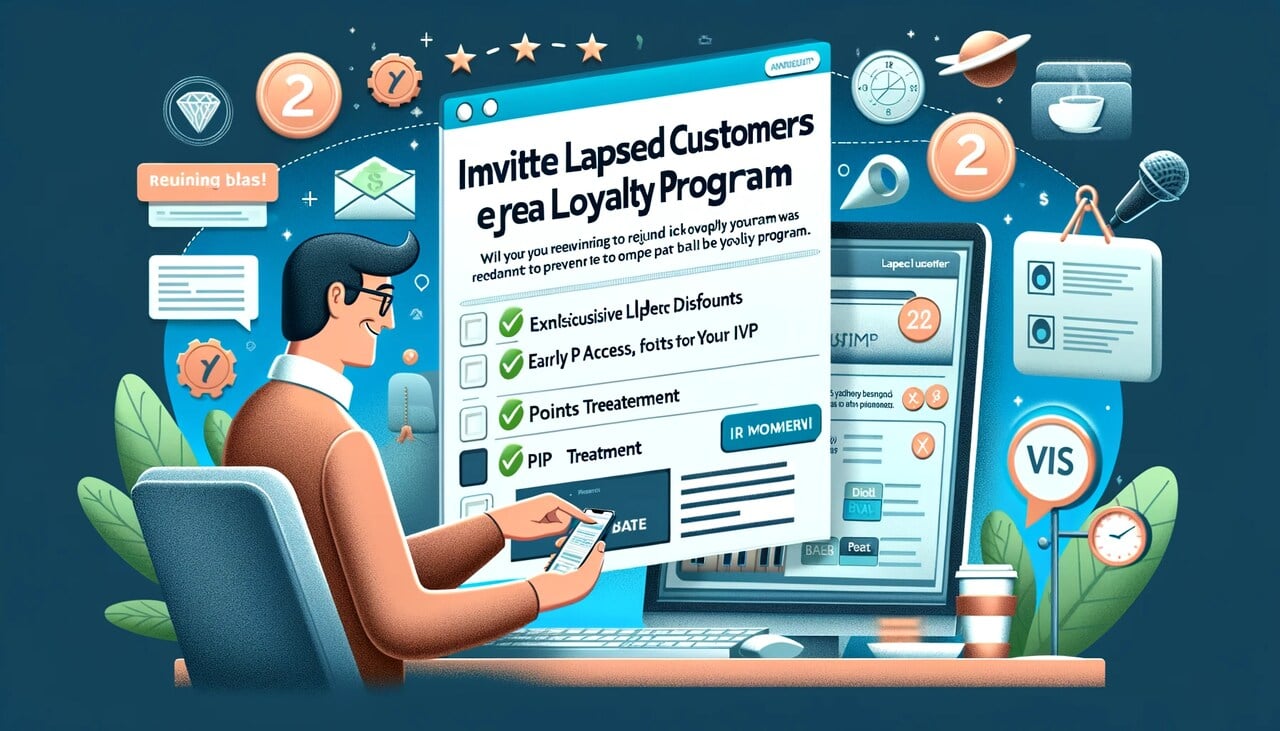
Loyalty program revival is the email or push that says "you've still got 1,200 points — they expire in 14 days." It works because it converts a sunk-cost feeling into action. The customer either uses the points (re-engaging) or feels mild loss aversion (still re-engaging, just slower). Either way, you've reactivated them. This pairs well with our guide on increase customer loyalty for the active-customer side of the same playbook.
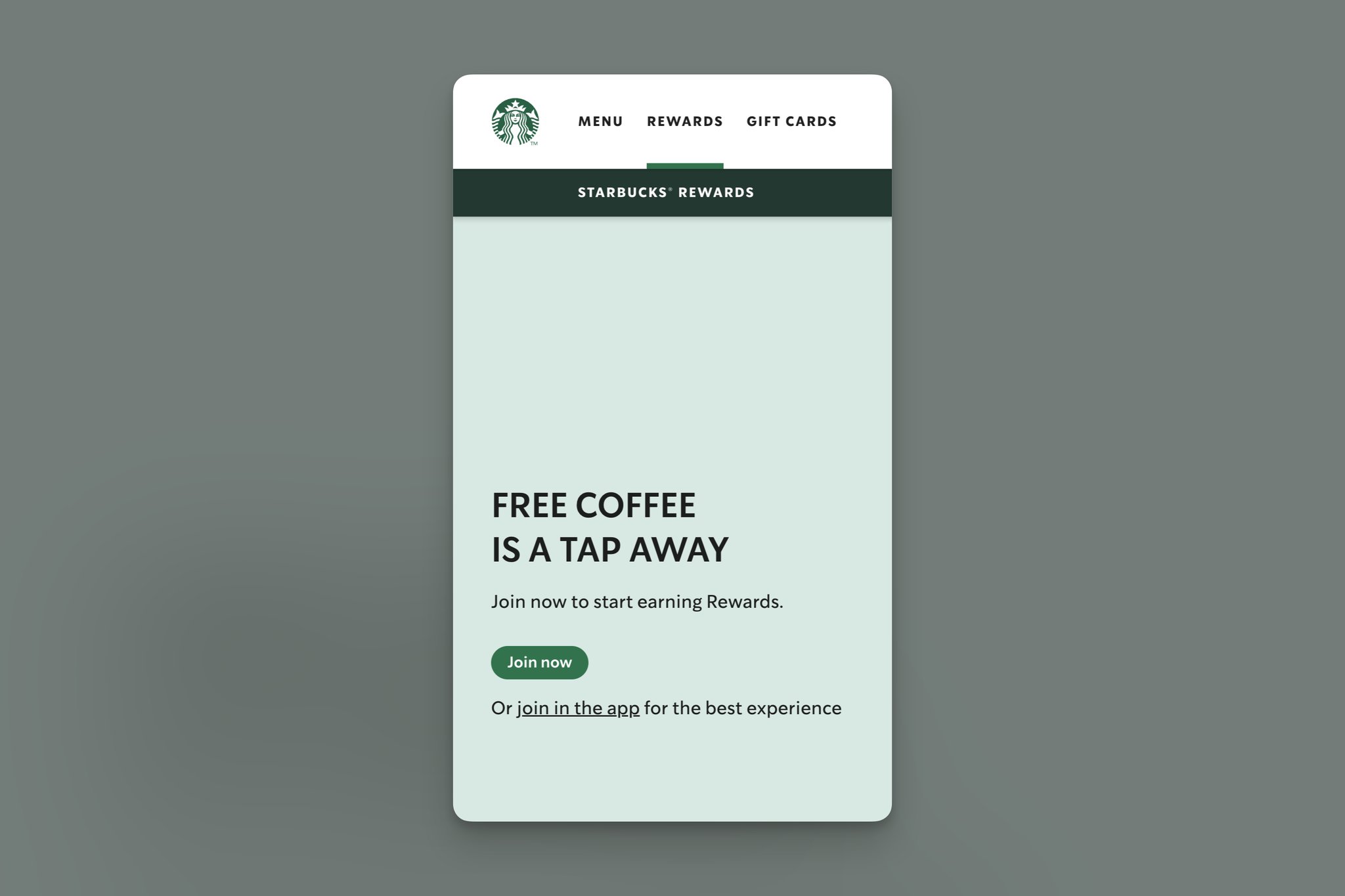
Starbucks Rewards is the textbook example. The program rewards repeat purchases with free drinks, birthday perks, and early access to new menu items. The mobile app surfaces the points balance every time a member opens it, which keeps the program top-of-mind even between visits. For a SaaS context, the equivalent is showing the customer how much usage credit they've accrued, what tier they were close to reaching, and what they get back if they reactivate.
To revive a dormant program, audit which segments have the most unused points or unredeemed credit, then write three emails. Email 1: balance reminder with no offer. Email 2: a small bonus — "Use your 500 points and we'll add 200 more." Email 3: an expiration warning. Run the sequence over 21 days. We tested this on a partner brand's loyalty file and saw 18% of dormant members redeem at least once, with 41% of those going on to make a fresh purchase within 60 days.
4. Feedback collection at the exit point
Most win-back work tries to bring people back without first understanding why they left. That's backwards. Feedback collection at the exit point — the cancellation form, the unsubscribe page, the post-churn email — is the cheapest research budget you'll ever run. The data you collect there shapes every other strategy on this list.
Open-ended questions outperform yes/no every time. "What made you stop using our service?" pulls a 38% response rate on cancellation surveys we've run, versus 11% for "Did our product meet your expectations? Y/N." The qualitative answers cluster into 4-6 reasons (price, missing feature, support friction, found alternative, no longer need it), and each cluster needs its own win-back path.
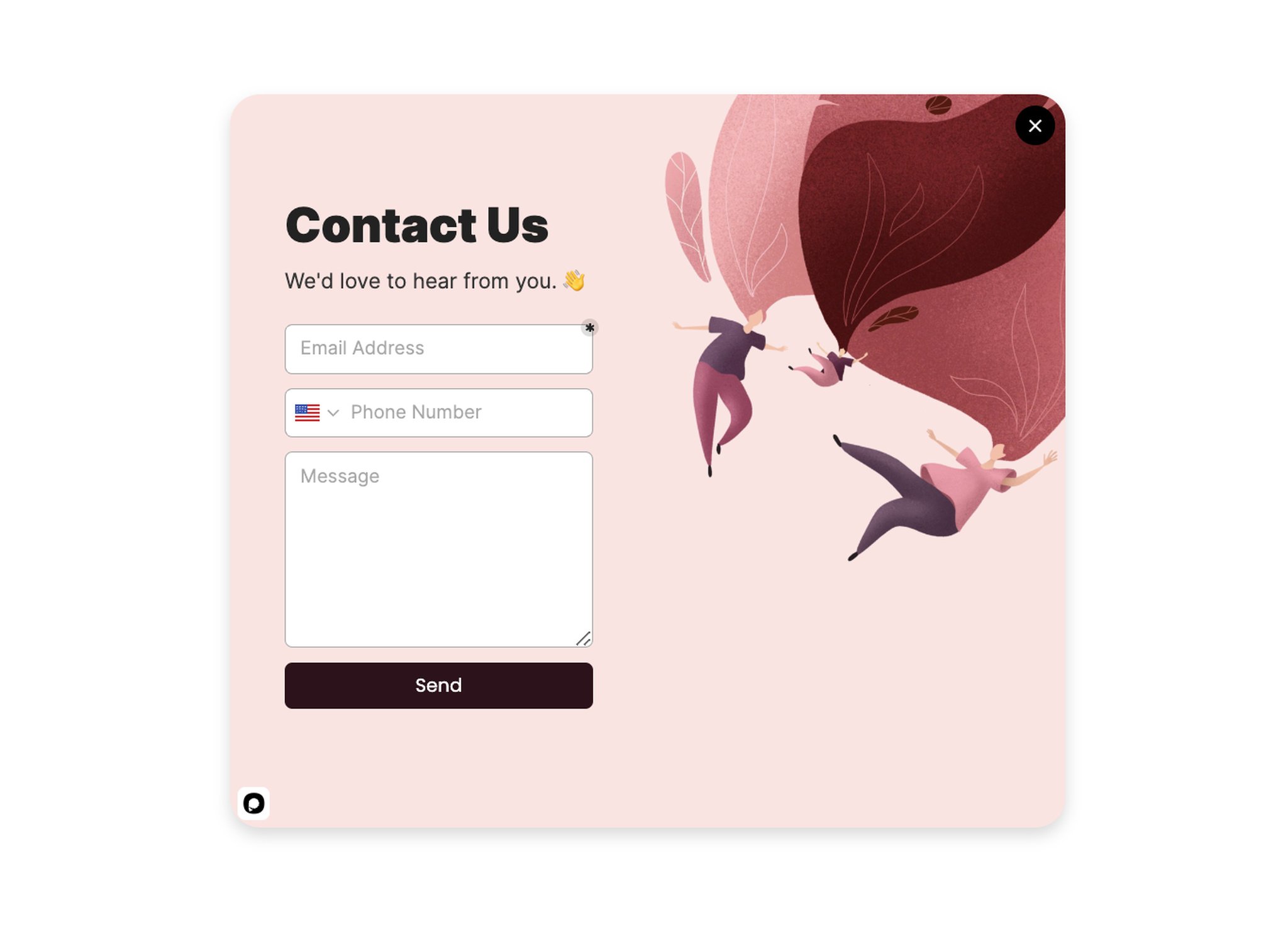
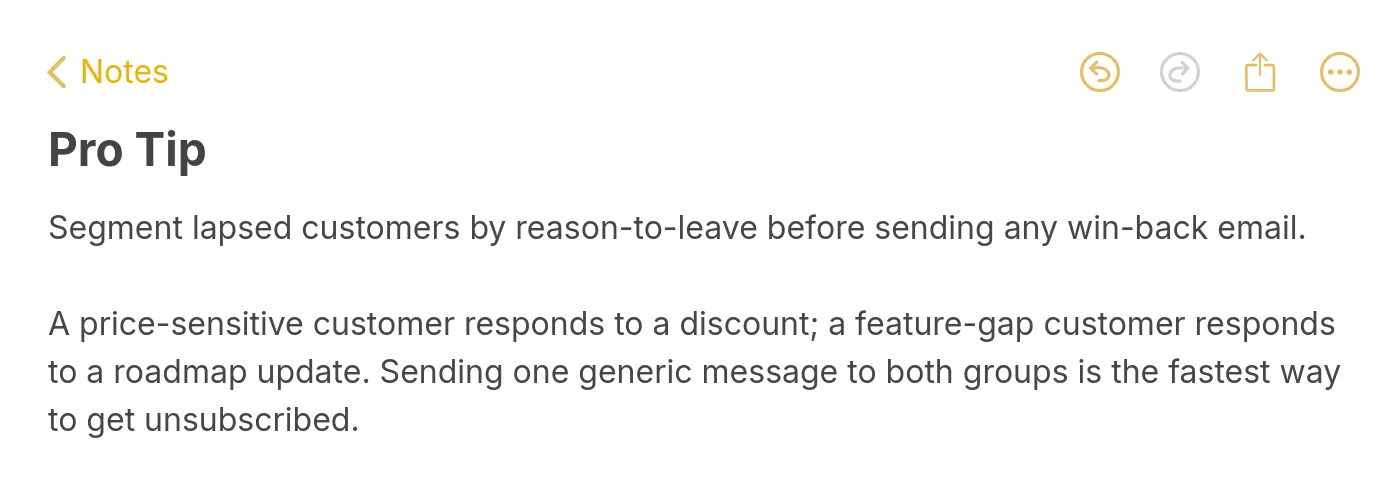
For implementation, add a single optional textarea to your cancellation flow with the prompt "What's one thing we could've done better?" Tag responses by lapse reason in your CRM. Then build a separate win-back sequence per reason — price-sensitive churners get a discount track, missing-feature churners get a roadmap update track, support churners get a manager outreach track. Don't blast the same message at everyone.
5. Personalized product recommendations
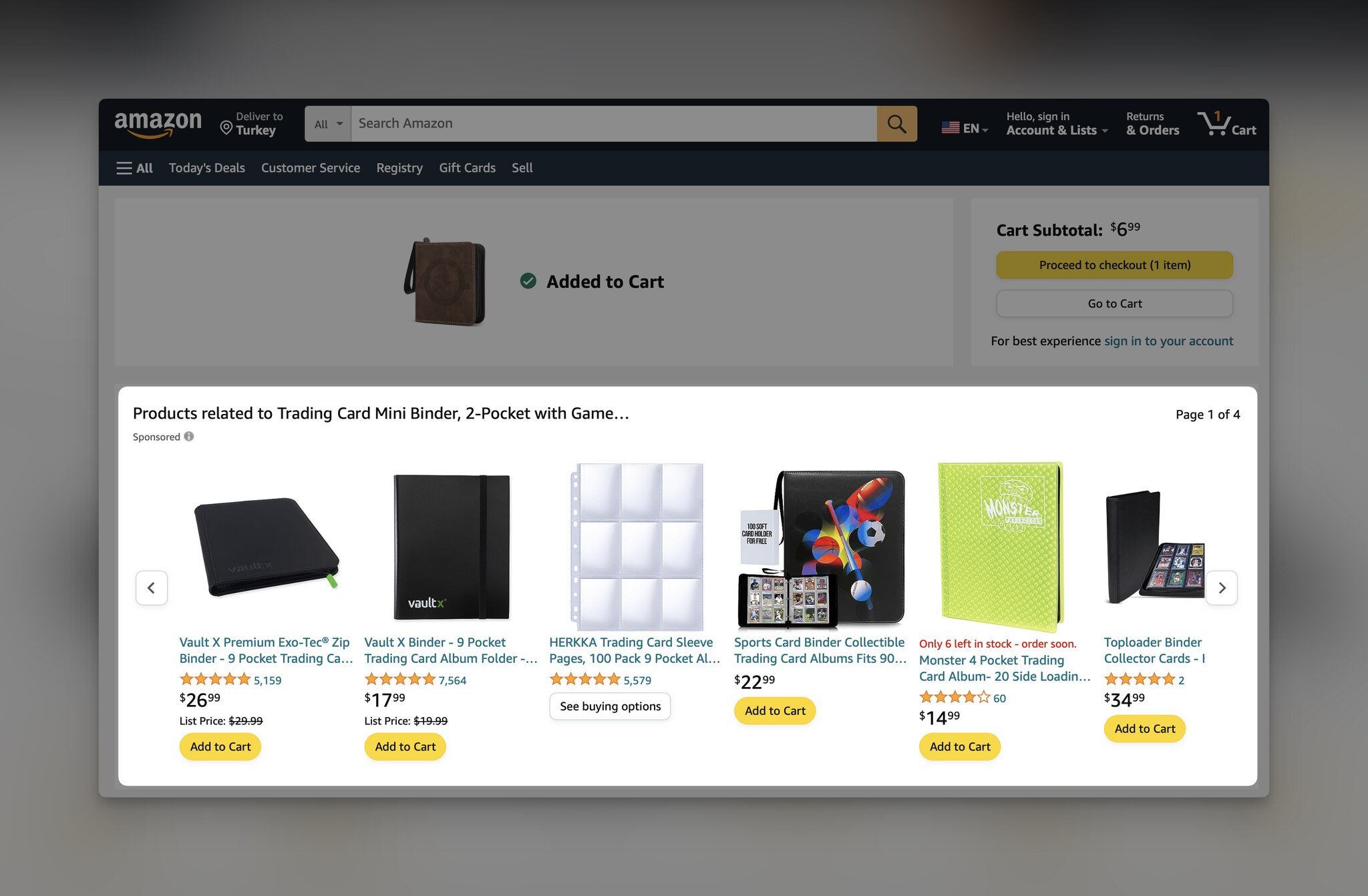
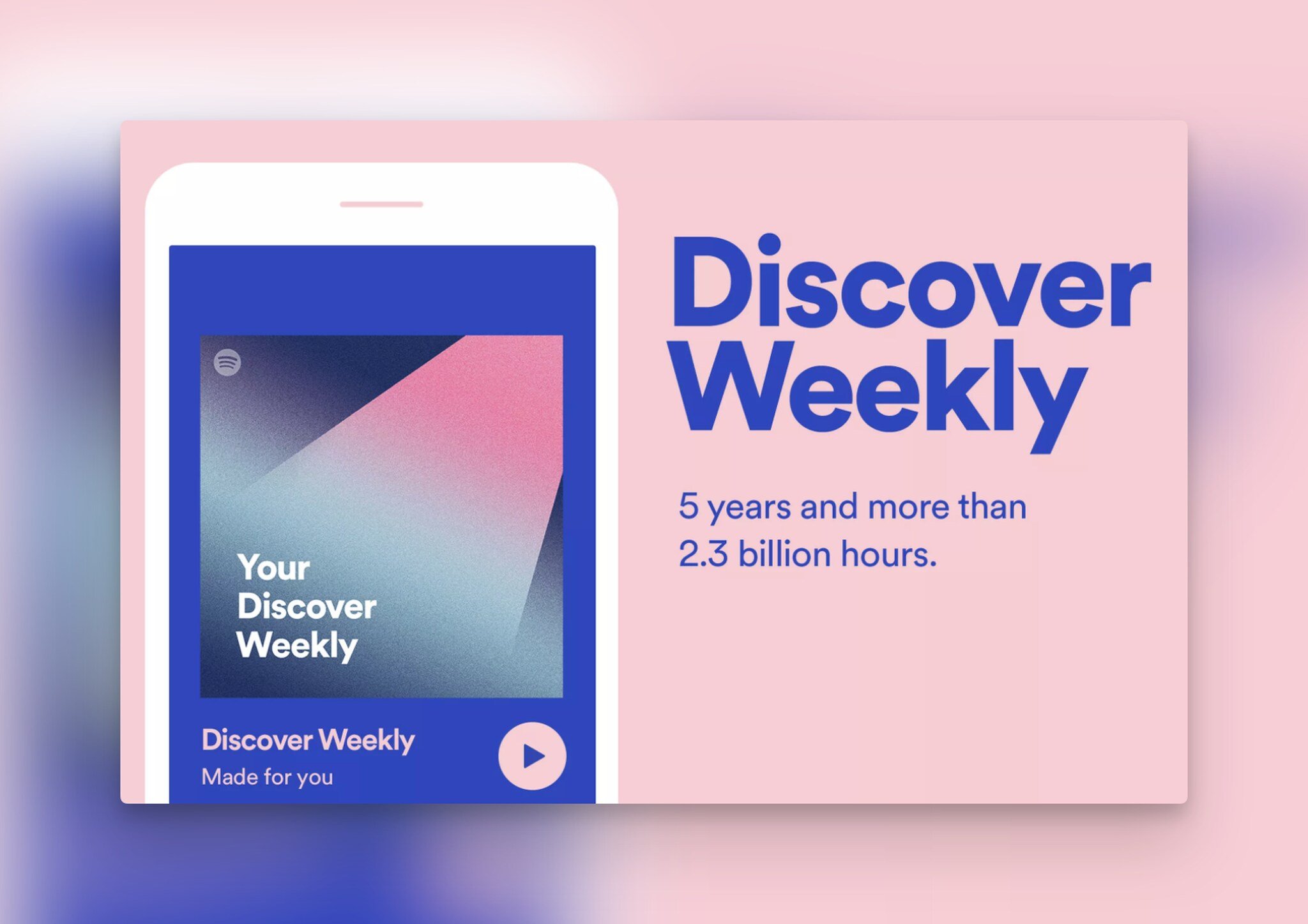
Personalized product recommendations re-introduce a lapsed customer to the product through items they're statistically likely to want. Amazon does this with collaborative filtering across browsing and purchase history. Spotify does it through Discover Weekly. The retail tactic and the SaaS tactic share the same mechanic: surface what's relevant, not what's promotional.
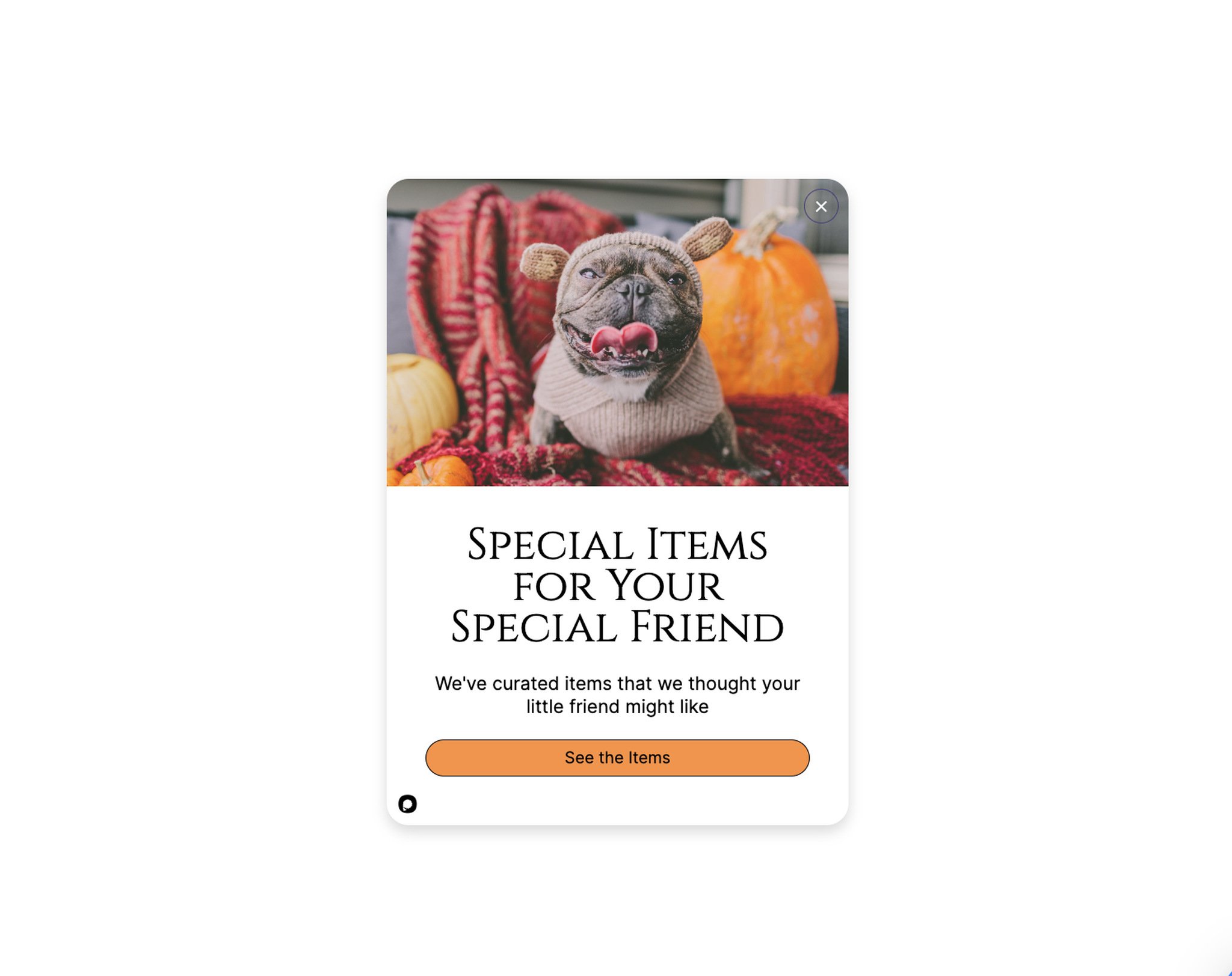
For ecommerce, the recommendation engine should pull from three signals: last category browsed, last category purchased, and items similar to either with at least 30 days of inventory left. For SaaS, the equivalent is the feature you used most that has had a meaningful update since you left, plus the integration you set up that now has new partners. The win-back email leads with the change, not the discount.
Apply this in four steps. First, audit what data you actually have on lapsed customers — a surprising number of teams find their tracking gaps only when they try to personalize. Second, segment lapsed customers into groups based on last-known intent (browsed but didn't buy, bought once, bought multiple times). Third, write recommendation copy that names the specific item or feature and explains what changed. Fourth, A/B test recommendation-led versus discount-led email — for B2B SaaS audiences, recommendation-led typically wins on quality of reactivation, even if discount-led wins on raw open rate.
6. Highlight new features and product updates
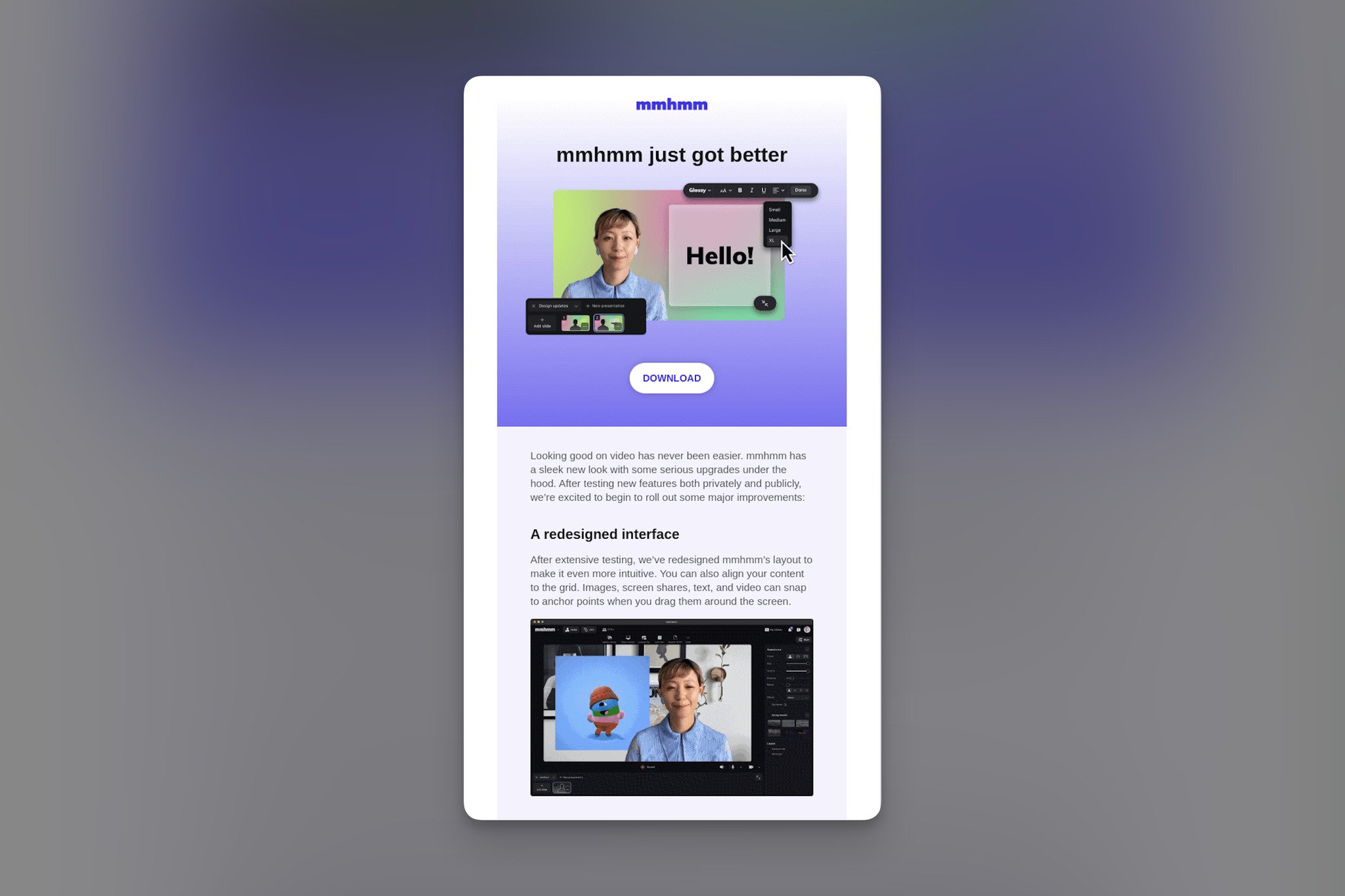
If a customer left because of a missing feature or an unfixed bug, the most credible win-back message you can send is "we built it" or "we fixed it." Highlighting new features and product updates works because it acknowledges that the product the customer left wasn't good enough — and that the product today is different. That's an easier sell than "please come back, nothing has changed."
Apple does this at scale with iPhone launches. Every release pulls back people who switched to Android the previous cycle. For SaaS, the launch isn't a hardware event — it's a changelog email. We send a quarterly product update to all churned users from the previous 18 months, and the open rate consistently runs 2x our active-user newsletter. People want to know if you fixed the thing.
Build the feature-update win-back email in three parts. Part 1: name the problem the customer told you about (this requires Strategy 4 to be running first). Part 2: show the screenshot or short Loom of the fix. Part 3: offer a no-cost reactivation window — "log in by [date] and we'll reset your account state." Don't lead with the discount. Lead with the fix.
7. Reconnect through social media and SMS
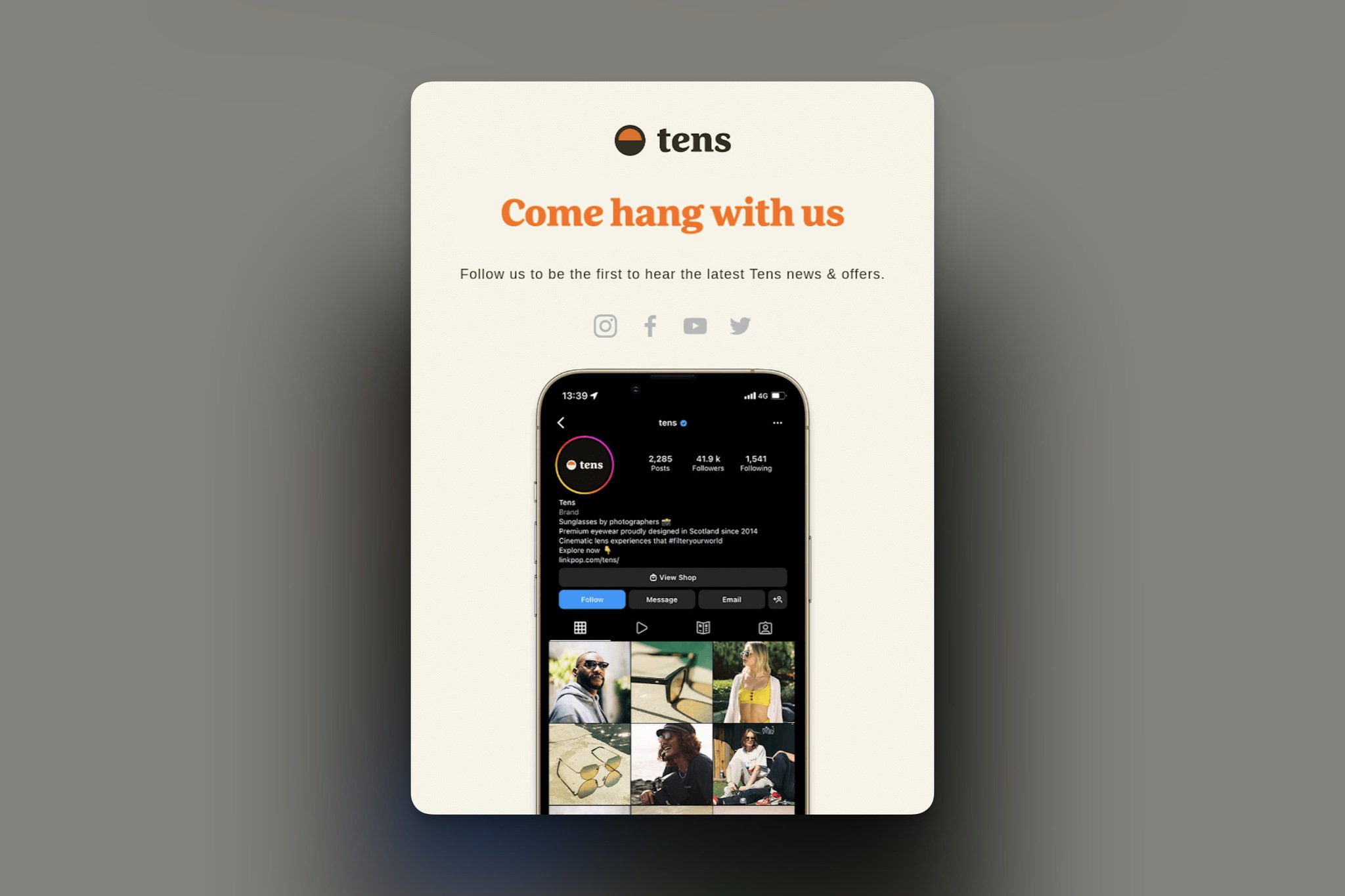
Email is the default win-back channel, but it's also the most crowded inbox in the world. Diversifying into social DMs, retargeting on Meta, and SMS gives you 3-4 chances to land instead of one. SMS in particular has held up against email fatigue — open rates run 90%+ within 3 minutes of send, and engagement on win-back SMS drives meaningful redemption when paired with a tight offer.
The Sonic case is a useful proof point. According to Voxie, Sonic's omni-channel SMS playbook drove a 3x lift in limited-time offer redemption rates compared to non-SMS channels. The mechanic was simple: time-bound offer, single SMS, link to redeem in-app. No multi-step funnel, no nurture sequence — just a sharp offer to a warm list.
To run this, pick one social channel where your lapsed customers actually spend time (LinkedIn for B2B, Instagram for DTC), and assign a CSM or community manager to send personal DMs to the top 50 lapsed accounts each month. Pair that with a 2-message SMS sequence (first message offers help, second message offers an incentive if they didn't reply). Track responses by channel, not by campaign.
8. Exceptional customer service recovery
If a customer left because of a bad support experience, no marketing message will fix it. The win-back has to come from the support team, not the email team. Customer service recovery is a structured process: identify the lapsed customer, audit their last support tickets, have a senior CSM reach out personally with a fix and a small concession.
The math here is uncomfortable for marketing teams used to running broadcast campaigns. Service recovery is high-touch and slow — maybe 20 contacts per CSM per week — but the conversion rate runs 35-45% on customers who left over support friction, versus 2-4% for an automated win-back email. For high-LTV B2B accounts, the unit economics favor the slow path.
Apply this with a weekly review meeting between support and customer success. Pull every cancelled account from the prior 90 days where the last activity was a support ticket. Sort by ARR contribution. The top 20 get a personal outreach from the named CSM, with a one-paragraph email acknowledging what went wrong and offering a 30-minute call to get them re-onboarded. No discount language — the recovery is the value.
9. Segmented win-back marketing
Segmented win-back marketing is the discipline of not sending the same message to everyone on the lapsed list. The four segments that matter for most B2B SaaS books are: trial cancellers, paid churners under 6 months tenure, paid churners over 6 months tenure, and free-plan inactives. Each segment has different reasons to leave and different offers that move them.
The data on segmentation impact is consistent across the industry. According to Upland Kapost, properly segmented content strategy drove a 37% increase in blog traffic and a 102% increase in marketing-qualified leads in a single B2B engagement. The same multiplier shows up in win-back: blast campaigns underperform segmented sequences by 3-5x on reactivation rate. The reason isn't subtle — segmented copy is more relevant, and relevant copy converts.
To set this up, define the segments in your ESP or CRM as static cohorts (not dynamic, so the message stays consistent across the sequence). Write three emails per segment — a fit recap, a value reminder, and an offer. Stagger sequences by 30 days so customers don't get four parallel campaigns in the same week. Measure reactivation rate by segment, not by campaign.
10. Time-limited offers and urgency
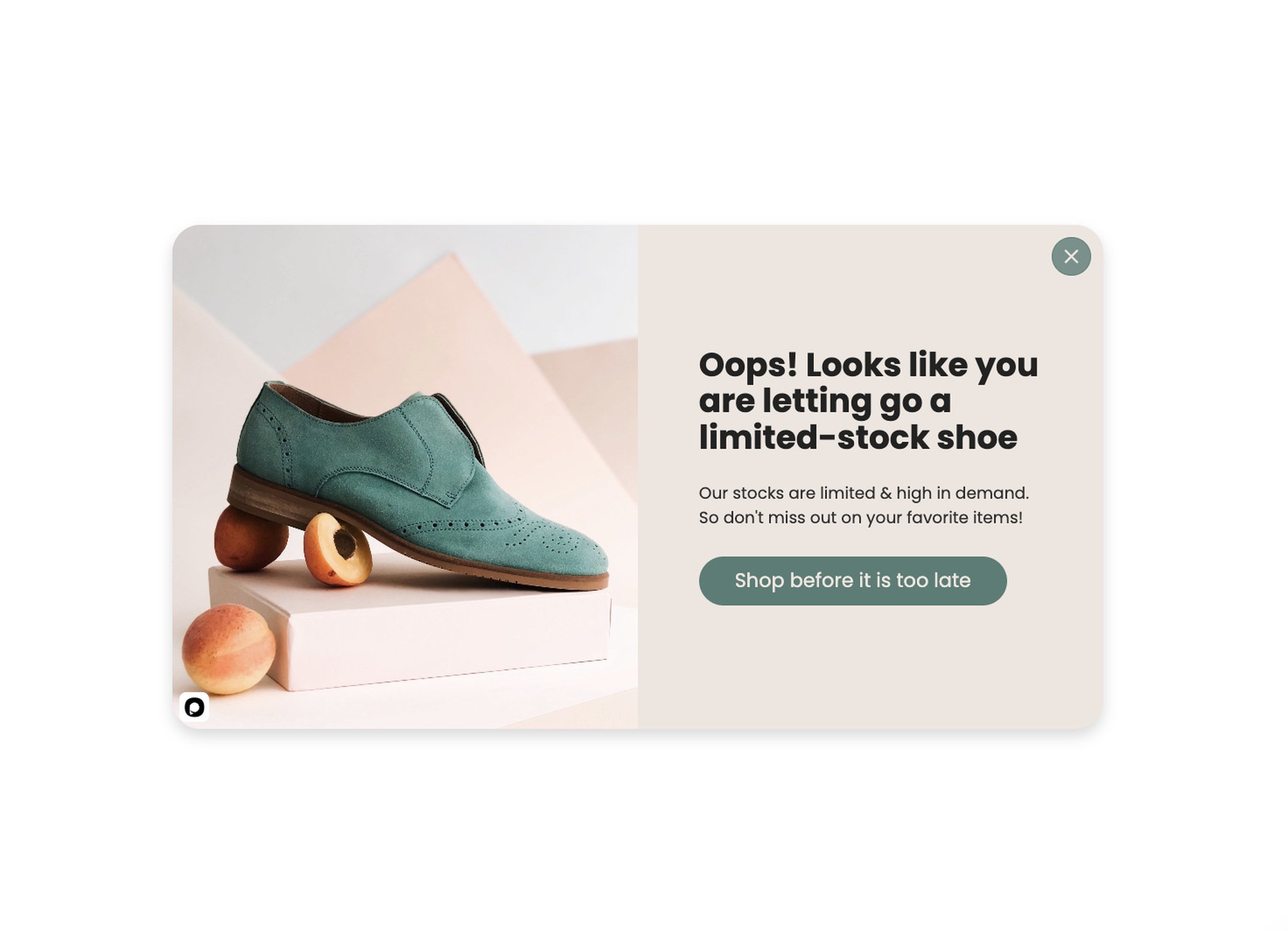
Time-limited offers work because they convert "I'll think about it" into "I'll decide now." The trick is using urgency honestly — a fake countdown destroys trust if the customer comes back next week and sees the same offer. Real urgency is tied to a calendar event (end of quarter, product version sunset, price increase) or a real inventory constraint, and it's better to have a smaller offer with real urgency than a bigger one with fake urgency.
For B2B SaaS, the most credible time-limit is the renewal price-grandfathering window. "Reactivate by March 31 to keep your old plan price" is honest, specific, and has real consequences for the customer. For DTC, it's product drops or seasonal inventory. Avoid the "24 hours only" timer that resets every visit — it converts once and burns the relationship for every future campaign.
Apply this with a single, dated email and a single follow-up. Email 1: "Your reactivation offer expires April 15." Email 2 (sent April 14): "Last day." Stop. Do not send a third "we extended the deadline" email — it's the single most common credibility-killer in win-back work and it teaches your audience that your deadlines aren't real.
11. Abandoned cart recovery sequences
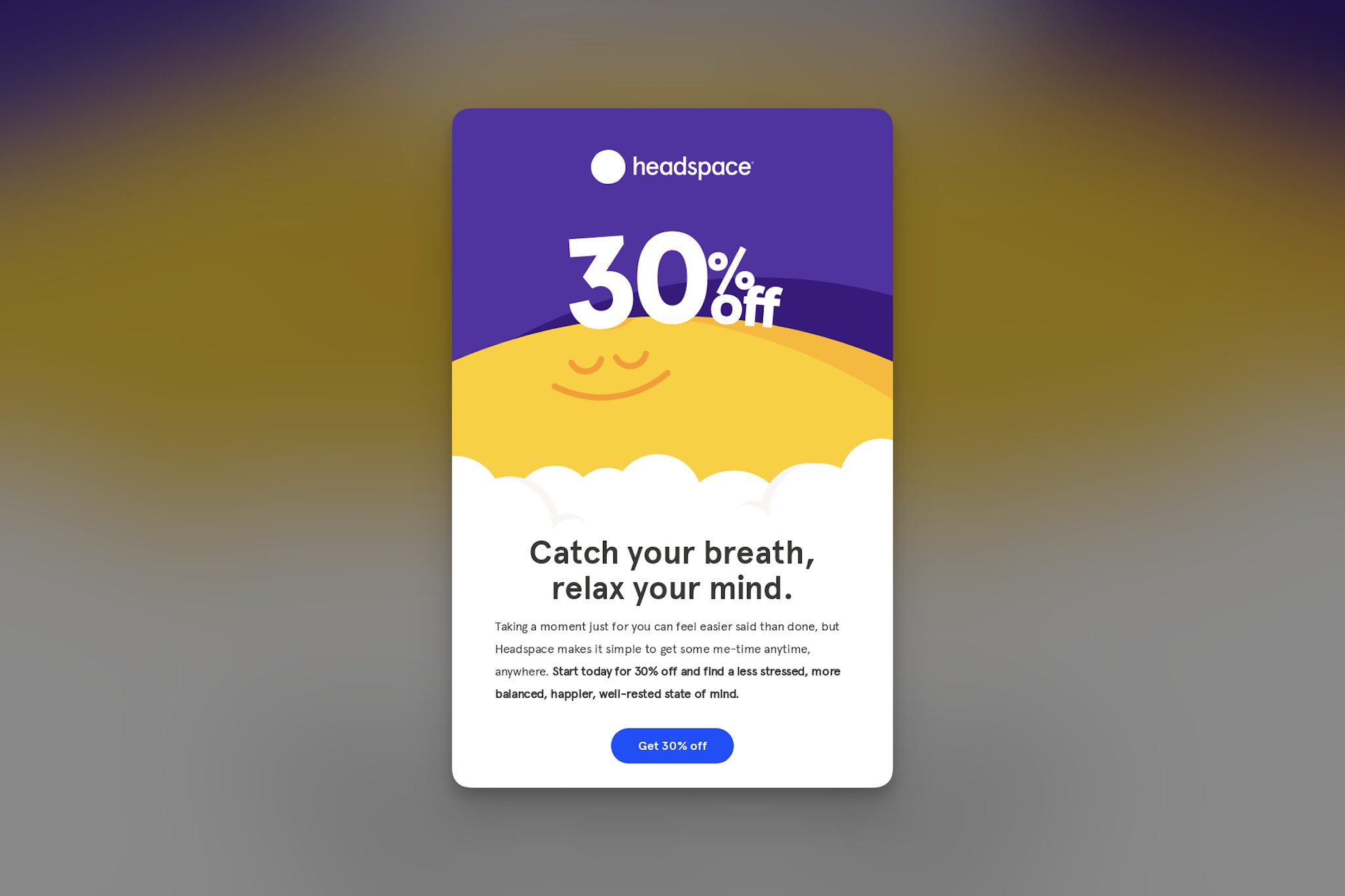
Abandoned cart recovery isn't strictly win-back in the classic sense, but it's the highest-volume reactivation campaign most ecommerce teams run. Someone added items to a cart and left — they signaled intent, then walked away. The recovery sequence pulls them back with a reminder, then a soft incentive, then a stronger one if needed. Our deep dive on abandoned cart recovery covers the full 13-strategy playbook, and our piece on cart recovery popups covers the on-site triggers.
The cadence that works for most stores is 1 hour / 24 hours / 72 hours. The first email is a no-discount reminder ("you left these items"). The second adds free shipping or a small percent off. The third is a final urgency email tied to inventory or to the offer expiring. Skip the third if the customer responded to the first two, and never send a fourth — past 72 hours, you're better off moving them to a longer-form win-back track.
For implementation, make sure the discount code in your second email actually works. Broken codes are a known cart-killer — buyers abandon when they hit the checkout and the promo throws an error. Test the code daily during the first week of any new sequence, and set up a Zapier or Slack alert if your ESP returns a 4xx error on the redemption endpoint.
12. Track win-back metrics and iterate
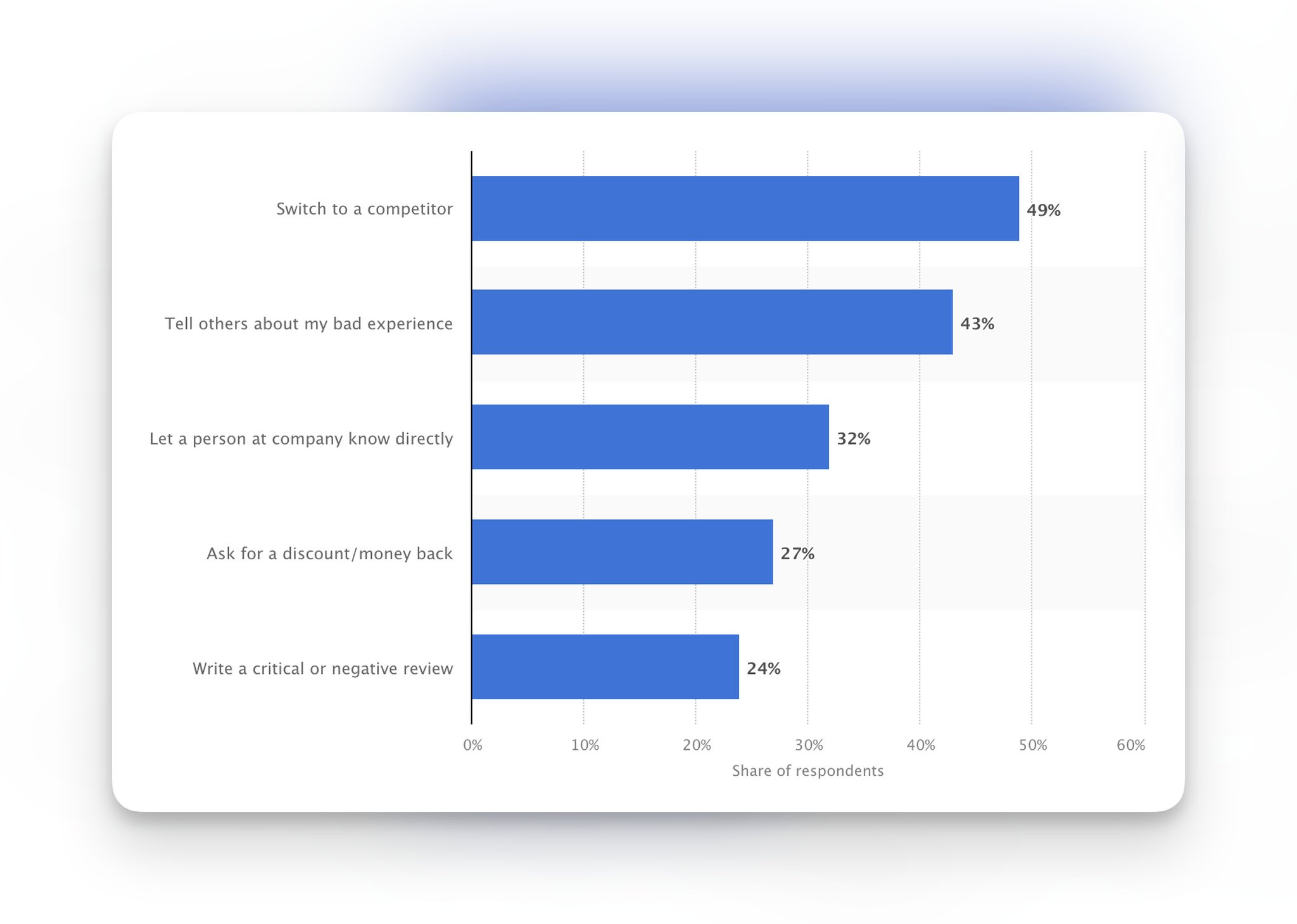
The thing that separates a good win-back program from a busy one is measurement. You need five numbers, tracked monthly: reactivation rate (% of lapsed contacts who became active again), win-back ROI (revenue from reactivated customers ÷ campaign spend), reactivated-customer LTV vs new-customer LTV, churn-cure rate (% of cancelled accounts who came back within 6 months), and payback period on the reactivation offer. For more on the active-customer side of these metrics, see our breakdown of customer retention KPIs.
Reactivated customers usually have higher LTV than new ones — they already know the product and the onboarding friction is lower — which makes win-back ROI look unusually strong on paper. The catch is that the population is finite. You can't 10x a win-back program the way you can 10x a paid acquisition program, because you can only reactivate the people you've already churned. So the metric to watch is share of reactivable list, not raw reactivation count.
Apply this by setting a monthly review where you look at last month's reactivations by source, drop the worst-performing channel, and double the budget on the best-performing one. Most teams keep too many half-effective channels running because nobody wants to admit a campaign isn't working. Cut hard. The winners will pay for the cuts within a quarter.
Why customers leave (and how to predict it)
Win-back works better when you understand the lapse reason before you build the sequence. Five categories cover most B2B SaaS and DTC churn, and each one calls for a different recovery path.
Price sensitivity: The customer left because the value-to-cost ratio tipped. Maybe a competitor undercut you, maybe the customer's budget tightened, maybe your last price increase pushed them past their threshold. The win-back move here is a price-grandfathering offer or a downgrade-instead-of-cancel option — not a discount that resets every renewal.
Neglect and disengagement: The customer didn't actively decide to leave. They just stopped using the product, then cancelled when the next charge hit. This is the most common B2B SaaS churn category and the most reactivatable — they didn't have a problem with you, they had no relationship with you. Win-back here is a re-onboarding email that names the feature they used most.
Product fit: The customer realized your product solved a different problem than they had. No win-back will fix this — the answer is to build a product update that addresses their actual problem, then re-target them once you ship it. Without the product change, the campaign is a waste of send.
Support friction: The customer had a bad experience with a ticket, a bug, or a billing issue, and the cumulative friction tipped them out. This is the highest-conversion segment for win-back if you handle it right — a personal outreach from the support manager with an acknowledgement and a fix runs 35-45% reactivation. If you handle it with marketing-team outreach instead, conversion drops to single digits. Tracking customer experience performance across support and product surfaces the friction that pushes these customers out in the first place.
Switching cost dropped: A competitor launched a feature that closed the gap, or a new tool offered a better integration. The customer didn't leave because you got worse — they left because someone else got better. Win-back here is a competitive comparison email and a feature-parity update, not a discount. According to Harvard Business Review, some wireless carriers lose 3% of subscribers each month — a category where switching cost is essentially zero — and the only durable win-back tactic in those segments is a sharper product, not a sharper offer.
How to measure win-back campaign success
If you can't tell whether a win-back program is working, you can't fund it past a single quarter. The five metrics below are the minimum viable scorecard for a win-back team.
Reactivation rate: The percentage of contacted lapsed customers who returned to active status within the campaign window (typically 30-90 days post-send). For B2B SaaS, healthy programs run 8-15%. For ecommerce, 4-9%. If you're under 4% across the board, the offer or the segment is wrong, not the channel.
Win-back ROI: Revenue attributed to reactivated customers, divided by campaign cost (creative, tools, paid spend). The Voxie SMS case from earlier is the upside reference point at 2,200%. A reasonable target for a self-built program in year one is 300-600% — well above paid acquisition, well below the case-study ceiling.
Reactivated-customer LTV vs new-customer LTV: The lifetime value of a customer who came back, compared to the LTV of a fresh acquisition from the same period. Reactivated LTV usually runs 1.4-1.8x new-customer LTV because the onboarding friction is lower and the customer self-selected back in. If yours is below 1x, you're reactivating with too aggressive a discount.
Churn-cure rate: The percentage of cancelled accounts that returned to active within 6 months, regardless of which campaign brought them back. This is the system-level metric — it tells you whether your overall win-back machine is working, not whether one campaign worked. Most teams don't track this; the ones that do tend to outperform.
Payback period on the offer: The number of days between reactivation and the point where the customer's revenue exceeds the cost of the offer that brought them back. For a 30%-off-first-month offer, payback usually runs 3-5 months. If yours is over 9 months, the offer is too generous and you're reactivating customers who would've come back anyway with a smaller nudge. For more on retention measurement specifically, the post-purchase experience guide goes deeper on the active-customer side.
Common mistakes that kill win-back campaigns
Most failed win-back programs fail for the same handful of reasons. The mistakes below are the ones I see most often when teams ask why their reactivation rate is stuck.
Mistake 1: Sending the same message to every lapsed contact. The blast campaign is the easiest to ship and the worst to read. It pulls a 1-3% reactivation rate when a segmented sequence would pull 8-12%. The fix is Strategy 4 (feedback collection) followed by Strategy 9 (segmentation) — and not running any other tactic until those two are running.
Mistake 2: Leading with the discount instead of the reason to come back. Discount-led win-back trains customers to wait for the next discount before reactivating. Lead with what's changed in the product, the support team, or the offering. Use the discount as a closer in the second or third email, not the opener.
Mistake 3: Ignoring the lapse reason. If the customer left because of bad support, a marketing email won't fix it. If they left because of price, a feature-update email won't fix it. Match the message to the reason — and if you don't know the reason, run Strategy 4 first.
Mistake 4: Running the sequence too long. Three to five contact attempts is the sweet spot. Past five, you're training your audience that your brand emails are background noise. Some of the best B2B SaaS win-back programs I've audited cap at three sends and pull better numbers than peers running ten.
Mistake 5: No measurement loop. If you ship a campaign and don't have a dashboard showing reactivation rate, ROI, and LTV ratio within 30 days of launch, the program is operating blind. The most common reason teams keep underperforming is that nobody on the team knows whether last quarter's campaign actually worked.
Mistake 6: Treating win-back as a one-time project. Win-back is a continuous program, not a campaign. Every cancelled customer becomes a reactivable contact 30 days later. If you ran a single quarterly campaign and stopped, you're missing 75% of the addressable file. Set up an evergreen sequence that fires on the 30-day-since-cancellation event, and treat the quarterly campaigns as additive layers on top.
Mistake 7: Forgetting the unsubscribe option. Some lapsed customers will never come back, and pushing them harder turns them into negative brand advocates. Honor unsubscribes immediately, suppress them from future sequences, and accept that a clean list of 7,000 is worth more than a noisy list of 12,000. The surprise and delight marketing guide covers the positive flip side — re-engagement that doesn't feel like a campaign.
Pick three customer win-back strategies and ship this quarter
The point of this list isn't to run all 12 strategies. It's to pick three that fit your data, your team, and your churn pattern, and ship them inside a quarter. If you're starting from zero, start with feedback collection at the exit (Strategy 4), personalized re-engagement (Strategy 1), and segmented marketing (Strategy 9). Those three compound — Strategy 4 generates the data that makes Strategy 9 work, and Strategy 9 makes Strategy 1 land. Everything else on the list is additive once those three are running.
Set a single number to beat: reactivation rate at day 60. Measure it monthly. Drop whatever isn't moving it, double down on whatever is. The goal at the end of the quarter isn't "we ran 12 campaigns" — it's "we beat last quarter's reactivation rate by X points and we know which channel did the work."
One last note. Win-back is the most underweighted line on most marketing roadmaps because it doesn't show up as a clean dashboard widget the way paid acquisition does. The customers it returns are some of the highest-LTV revenue you'll ever land. Run the program, even if it's smaller than your acquisition machine. Future-you will thank current-you when the next CAC squeeze hits. For broader reactivation context, our ways to attract customers piece covers the top-of-funnel side of the same playbook.
Frequently asked questions
What is a customer win-back flow?
A customer win-back flow is a sequenced series of marketing actions — usually email, SMS, ads, or in-app messages — designed to re-engage lapsed or inactive customers. You'll also see it called a "win-back campaign" or "re-engagement program." A flow typically runs 3-5 contact attempts over 30-60 days, each with a different message: a reminder, a value recap, an offer, and a final urgency send. The goal is to move a passive churned contact back into active customer status without burning the relationship if they don't return.
Are win-back strategies suitable for all types of businesses?
Yes, but the channel mix and timing change a lot by business model. Subscription SaaS leans on email and product re-engagement nudges. Ecommerce leans on cart recovery, retargeting ads, and SMS. Service businesses lean on direct outreach from a CSM or account manager. The constant across all of them is that win-back is cheaper than acquisition, so even if your reactivation rate looks small in absolute terms, the ROI math usually justifies running the program.
How can I ensure that my win-back messages don't annoy customers?
Cap the sequence at 3-5 sends, honor unsubscribes immediately, and personalize the message so it doesn't read as a mass blast. Segment the list by lapse reason — price-sensitive contacts get one message, neglect-churners get another, support-friction churners get a third. Don't keep emailing people who already came back. And drop anyone who's been inactive for more than 18 months from the active win-back list — past that horizon, the contact is essentially cold, and you're better off using paid retargeting if they're worth pursuing at all.
How long should a win-back sequence be?
Three to five emails over 30-45 days is the sweet spot. Sequence 1 (day 0) is a soft reminder with no offer. Sequence 2 (day 7-10) reintroduces the value or product update. Sequence 3 (day 21-30) carries the offer. Sequences 4 and 5 are optional — only worth running if your data shows reactivation continues past day 30 for a meaningful percentage of the list. Past 45 days, move the contact to a long-cycle quarterly newsletter rather than another sequence push.
Further reading on customer win-back and retention:
Abandoned Cart Recovery: 13 Strategies to Win Back Customers
Cart Recovery Popups: Win Back Abandoning Customers (Guide)
How to Increase Customer Loyalty: 14 Effective Ways and Tips
10 Post-Purchase Experience Strategies with Real Examples
11 KPIs for Customer Retention: The Key to Customer Loyalty
How would you rate your experience with this article? 😊