ChatGPT
 Perplexity
 Claude
 Grok
Grok Google AI Mode
If you run a WordPress site, this is the shortest way to add a Mailchimp popup to WordPress.
Once it's live, it collects leads you can email from Mailchimp. We re-checked every Mailchimp step below against Mailchimp's help center and the WordPress.org plugin directory on 10 October 2026.
Which Mailchimp options work on WordPress today?
Mailchimp gives a WordPress site four ways to collect subscribers, and only two of them are popups. According to Mailchimp's guide to signup forms in WordPress, the method depends on whether your site runs on WordPress.com or self-hosted WordPress.org.
| Option | What it adds to WordPress | A popup? | Where the leads go |
|---|---|---|---|
| Mailchimp popup form on a connected site | A popup built in Mailchimp, loaded by a code snippet in your site's header | Yes | One Mailchimp audience |
| Mailchimp for WooCommerce plugin | Store sync, with pop-up forms managed from Integration settings in Mailchimp | Yes, on WooCommerce stores | Mailchimp |
| Mailchimp List Subscribe Form plugin | A signup form as a block, widget or shortcode | No | Mailchimp |
| Mailchimp embedded form | Form HTML pasted into a post, page or text widget | No | Mailchimp |
| MC4WP with Boxzilla | An MC4WP form placed inside a Boxzilla popup box | Yes, with two plugins | Mailchimp |
| Popupsmart (plugin or embed code) | Popups built in Popupsmart and loaded on every page | Yes | Mailchimp, or another of the 19 destinations the help center lists |
WordPress.com sites use the Mailchimp block from the block inserter. Mailchimp's help says its signup forms can only be added on paid Business or eCommerce WordPress.com plans.
WooCommerce stores have a second route, the Mailchimp for WooCommerce plugin. The WooCommerce section below has the steps.
MC4WP is a separate plugin by Danny van Kooten, not Mailchimp's own. MC4WP: Mailchimp for WordPress builds forms (1,000,000+ active installs), and its author's Boxzilla shows one as a popup: the core plugin is free, and exit-intent and time-on-site triggers are paid add-ons.
Three ways to add a Mailchimp popup to WordPress
Every route ends with leads in a Mailchimp audience. The routes differ in where you build the popup and whether you paste any code:
| Way | Code to paste | Where you build it | Pick it when |
|---|---|---|---|
| Mailchimp's popup form | One snippet in every page's head, or a Google Tag Manager tag | Mailchimp, under Forms → Popup forms | Mailchimp is your only marketing tool and you can add a script once |
| A WordPress plugin | None | Mailchimp for WooCommerce on a store, or MC4WP with Boxzilla | You run WooCommerce, or want the form managed inside WordPress |
| A popup builder such as Popupsmart | None with its plugin; otherwise one embed code | Popupsmart, connected to Mailchimp with an API key | You run popups on more than one site, or may send leads to other tools later |
The Mailchimp route below takes eight steps and one snippet. The Popupsmart route takes eleven, and most of them are one-time setup.
Mailchimp popup plugins for WordPress, compared
Mailchimp's own plugins add a popup only on WooCommerce stores. Here are the plugins this guide covers, with the facts from each plugin's WordPress.org page, read on 10 October 2026:
| Plugin on WordPress.org | Does it make a popup? | Active installs | Rating | Price |
|---|---|---|---|---|
| Mailchimp List Subscribe Form (by Mailchimp) | No, a form block, widget or shortcode | 60,000+ | 2.6 out of 5 (77 ratings) | Free |
| Mailchimp for WooCommerce (by Mailchimp) | Yes, on WooCommerce stores: it shows Mailchimp's pop-up form | 200,000+ | 4.0 out of 5 (726 ratings) | Free |
| MC4WP: Mailchimp for WordPress | Not on its own; it builds the form | 1,000,000+ | 4.8 out of 5 (1,497 ratings) | Free; a Premium version is sold separately |
| Boxzilla | Yes, it shows an MC4WP form in a popup box | 20,000+ | 4.8 out of 5 (132 ratings) | Core free; exit-intent and time-on-site triggers are paid add-ons |
| Popupsmart | Yes, popups built in Popupsmart, with leads sent to Mailchimp | 600+ | One rating so far | Free plan; paid plans from $39 a month |
| WPCode | No, it adds Mailchimp's snippet to every page's head | 3,000,000+ | 4.9 out of 5 (1,902 ratings) | Free (WPCode Lite); WPCode Pro is paid |
What to Consider When Adding Mailchimp Popup to WordPress
Adding a Mailchimp popup to a WordPress site is easy. Getting it right takes a bit more thought.
Check these before you build:
- Decide who should see the popup. Think about your visitors' interest, timing and behavior on the site, and whether they're ready to sign up yet.
- Weigh the user experience. Ask whether the popup will make the visit worse before you publish it.
- Make it GDPR-compliant. Consent matters, so show a privacy notice and ask for it.
- Keep it on brand. A popup that has nothing to do with your brand identity and content looks out of place, so check the colors, fonts and images.
- Use A/B Testing to see which version fits your audience.
- Check every device you're aiming for. If the popup doesn't fit one, customize it or find another way to run the campaign on it.
- Watch the numbers. After a while, check your rates to see whether the campaign is working.
- Keep the content current, whether the popup shows an image or a line of text.
- Get the integration right. Connecting Mailchimp and WordPress is the point of this guide, and once it works, the rest goes smoothly.
The platform matters too. In Popupsmart's 2026 popup benchmark (28,674 campaigns, January 2024 to September 2026), popups on Shopify stores convert at 1.07% vs 0.66% on WordPress sites (median campaign). And 35% of popup campaigns on Shopify stores ask for an email or phone number, against 25% on WordPress sites.
How to Make a Mailchimp Popup on a WordPress Site
This part assumes your WordPress site is already live. If it isn't, set it up first: pick a theme, sort out the settings and publish it.
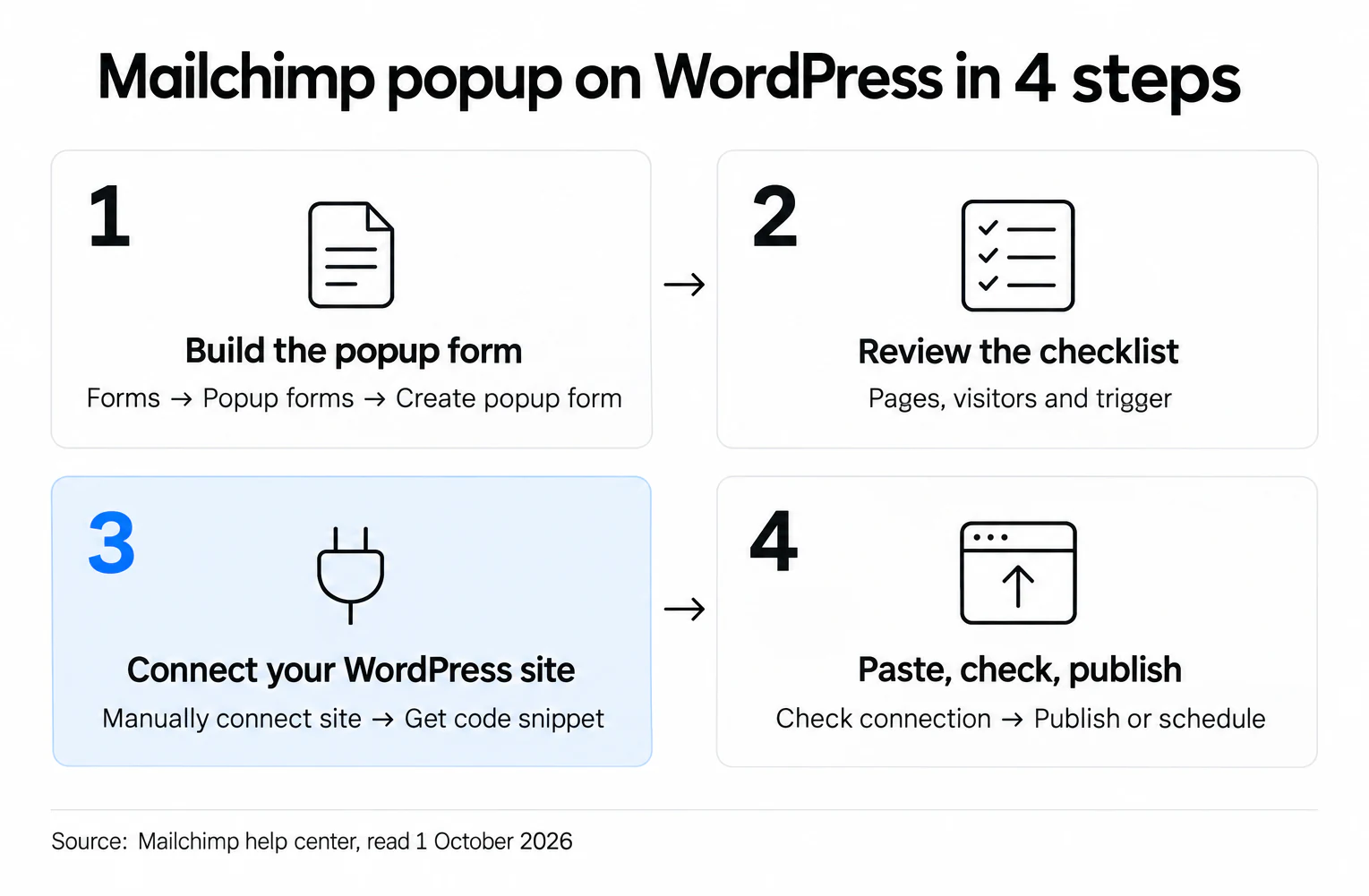
Then follow the steps below to add a Mailchimp popup to your WordPress site. The steps follow Mailchimp's guide to creating a popup form as we read it on 10 October 2026. Mailchimp's older route through Audience → Signup forms → Subscriber pop-up no longer appears there, and the old pop-up help page now redirects to the popup forms guide.
Step 1- Create a Mailchimp Account.
While creating your account, make sure you have an audience on Mailchimp to collect the leads from your popup.
As of 10 October 2026, Mailchimp's forms page says popup forms (still labelled beta) are available to Mailchimp marketing plan users, on web browsers only, at no additional cost at this time. Its plan comparison lists Pop-up Forms on all four plans, Free included, though a footnote there still calls availability "very limited".
Step 2- Click on "Forms" and "Popup forms" on the Left Sidebar.
You'll land on the Popup forms Overview page. Click Create popup form.
Step 3- Choose an Offer, a Template and Your Audience.
On the Offer page, select the incentive you'll use to get visitors to sign up, then click Continue. On the Template page, pick a template and click Apply.
On the Setup page, name the form, choose your audience, and pick what to collect: email addresses, phone numbers, or both. Click Create form. Mailchimp only texts those numbers after an approved SMS Marketing application.
Step 4- Design Your Popup, Then Click "Save and review."
This is where you customize the popup, so it's a good moment to look at popup design best practices before you connect your site.
The checklist that opens shows Mailchimp's defaults: all pages, new visitors only, and After 2 seconds on page on all devices. You can switch the trigger to inactivity, quick scroll or exit intent, and target by device.
Popupsmart's 2026 benchmark backs the new-visitor default. Popups targeted at new visitors only convert 1.13% vs 0.77% for popups shown to everyone. Before you switch to exit intent, read whether exit-intent popups work, from the same benchmark.
Step 5- Connect Your WordPress Site and Get the Code Snippet.
Under Where should it show?, click Resolve, then Add a site. Select Manually connect site, then click Manually connect.
Enter your website URL and choose the audience you want to work with. That's what lets Mailchimp collect leads from your WordPress site into your account.
Then click Get code snippet and copy the code.
Step 6- Now, Go to Your WordPress Admin Panel. Click "Appearance" and "Theme File Editor" on the Left Sidebar.
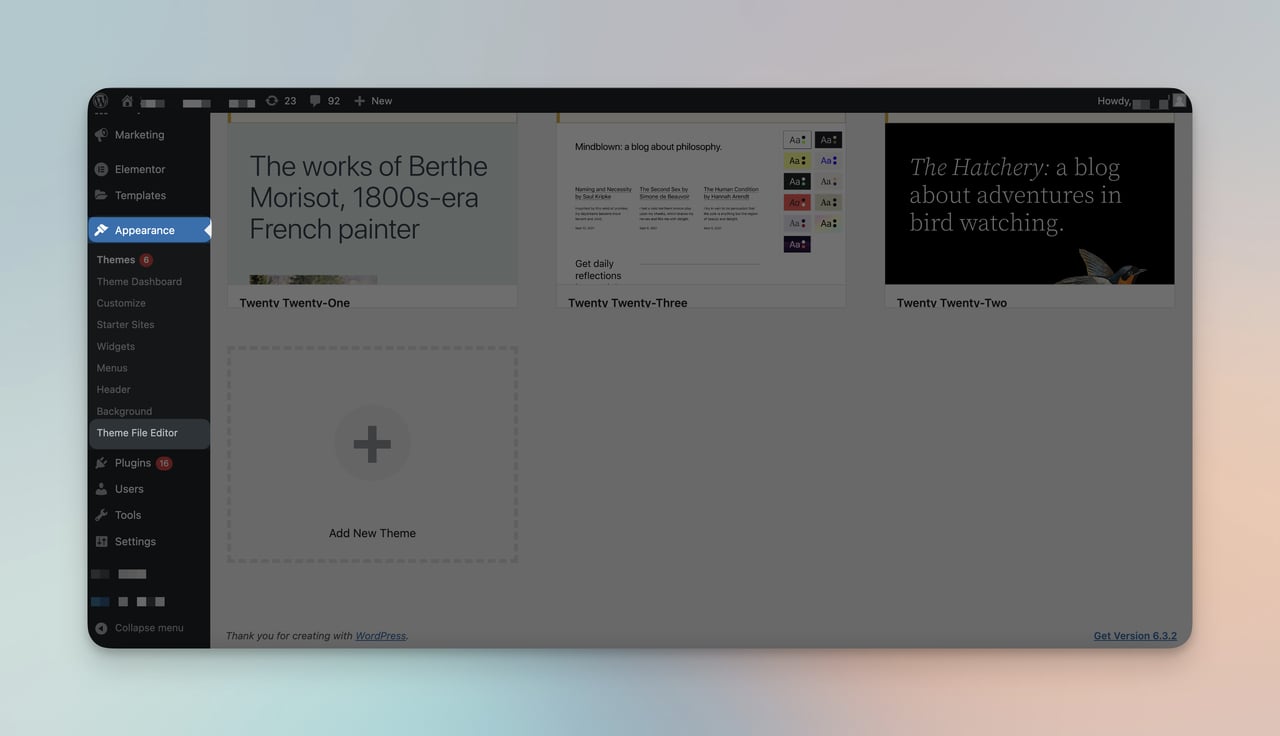
The Theme File Editor route works on classic themes. A block theme, the default in current WordPress, has no header.php, so use one of the two routes Mailchimp itself names or a plugin:
- Google Tag Manager: add the snippet as a tag, if your site already runs GTM.
- A header-scripts plugin: WPCode (3,000,000+ active installs on 10 October 2026) adds the code to every page's header without touching theme files.
- A post or page: Mailchimp's WordPress guide recommends pasting the code into a post or page, because theme areas don't always accept it. The popup then loads only on that page.
Step 7- Under the Theme Files on the Right Side, Find "Theme Header (header.php) File."
You need to paste your code just before the closing </head> tag. Do it in a child theme's header.php if you have one, so a theme update leaves it alone.
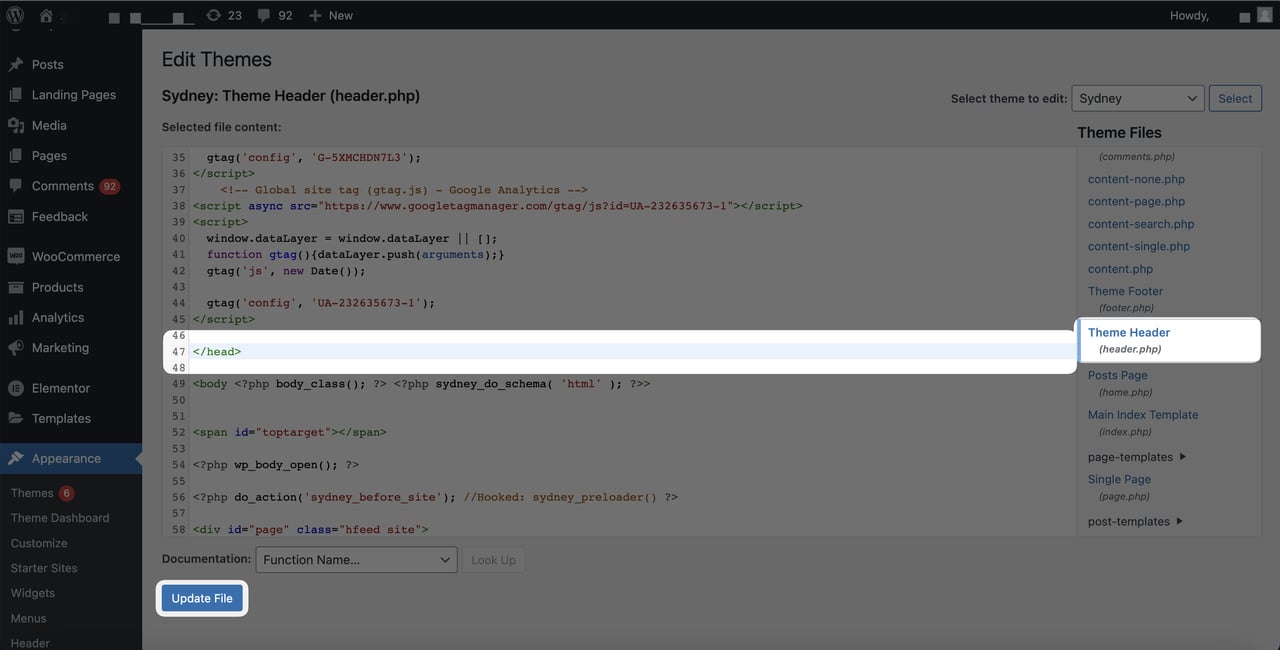
Then click Update File at the bottom of the page.
Step 8- That's All! It's Time to Check the Connection.
Go back to Mailchimp and click "Check connection" in the same modal.
If your connection is successful, click Save, then Publish or schedule. Publish now puts the form on your site at once; Schedule takes a start and stop date.
That's the whole setup.
Where to put the Mailchimp popup code in WordPress
Put the Mailchimp popup code where it loads on every page and survives theme updates: a header-scripts plugin such as WPCode, or a Google Tag Manager tag. Mailchimp's popup guide asks you to paste the snippet into your site's code or add it through Google Tag Manager, then run Check connection. WordPress gives you several places to do that:
| Where the code goes | Survives a theme update? | Popup can show on | You need |
|---|---|---|---|
| Parent theme's header.php, in Theme File Editor | No | Every page | A classic theme |
| Child theme's header.php | Yes | Every page | A child theme |
| A header-scripts plugin such as WPCode | Yes | Every page | One free plugin |
| Google Tag Manager | Yes | Every page that loads your GTM container | GTM already on the site |
| A Custom HTML block in one post or page | Yes | That page only | Nothing extra |
| Popupsmart instead of Mailchimp's form | No Mailchimp code to keep | The pages you target in Popupsmart | Popupsmart's plugin or embed code |
The parent theme is the trap. WordPress.org's Theme File Editor documentation says it plainly: "If you update the theme all of your changes will be lost. The best way to avoid this is through the use of a child theme." The snippet goes with the update, and the popup stops showing.
Block themes, the default in current WordPress, have no header.php at all. Use a header-scripts plugin or Google Tag Manager there.
Mailchimp's own WordPress guide leans the other way and recommends a post or page, "because WordPress elements like footers, navigation bars, headers, sidebars don't always support this type of embed code." That works, but only on the page that holds the code. For a popup across the whole site, the header-scripts plugin is the safer middle ground.
Mailchimp popup on WordPress not working? Check these first
A Mailchimp popup that doesn't appear on WordPress is almost always a connection, caching or visitor-rule problem, not a design one. Work down this list:
- Check connection fails. The snippet isn't in the page's header. View the page source and search for it; if it's missing, the theme file, plugin or GTM tag didn't save.
- It worked, then stopped. A theme update replaced
header.php. Move the code to a child theme or a header-scripts plugin. - The code is there, but nothing shows. Clear your caching plugin and any CDN cache so visitors get pages with the snippet. A cookie-consent tool that holds back marketing scripts until consent can delay it too.
- You've visited before. Test in a private window, or change Who should see it? to all visitors while you test.
- It shows on one page only. The snippet sits in a single post or page, the placement Mailchimp's WordPress guide recommends. Move it to a header-scripts plugin to cover the site.
- Wrong pages or dates. Check the target pages under Where should it show?, and the stop date under Scheduling on the form's details page.
- Two popups compete. Mailchimp's Advanced settings decide whether the form replaces other popups. Give each popup its own pages.
How to add a Mailchimp popup to WooCommerce
On a WooCommerce store, the Mailchimp for WooCommerce plugin connects the store to Mailchimp and can show Mailchimp's pop-up form without a snippet in your theme. Mailchimp's guide to Mailchimp for WooCommerce says pop-up forms require version 2.1.10 or later of the plugin, and that you create or manage them from Integration settings, on the WooCommerce page of Mailchimp's Integrations area. On 10 October 2026 the plugin was at version 6.3, with 200,000+ active installs and a rating of 4.0 out of 5 from 726 ratings on its WordPress.org page.
- Make sure WooCommerce is installed and active. Then go to Plugins → Add New, search for Mailchimp, and install and activate Mailchimp for WooCommerce.
- Click Connect Account, log in to Mailchimp and click Allow.
- Choose the Linked audience, decide how existing customers are imported, and click Sync now.
- In Mailchimp, click Integrations, then Manage, then WooCommerce. Under Integration settings, create or manage your pop-up forms.
Mailchimp's WordPress guide says that when a site is connected through its Integrations page, Mailchimp pushes the popup code to the site automatically once you publish. On a plain WordPress site you paste the snippet yourself.
Popupsmart's 2026 benchmark has a pointer on which store pages to use. Popups on cart and checkout pages convert 4.57% vs 1.07% on the home page (median campaign); blog pages convert 0.23%. Set the pages under Where should it show? in Mailchimp, or with page targeting in a popup builder. The WooCommerce popup guide shows Popupsmart's setup on a store, and the Mailchimp connection below is the same as on any WordPress site.
How to Add Mailchimp Popup to WordPress using Popupsmart
You can also build the popup in Popupsmart, install its WordPress plugin and send the leads to Mailchimp. It's another way to grow your email list from WordPress.
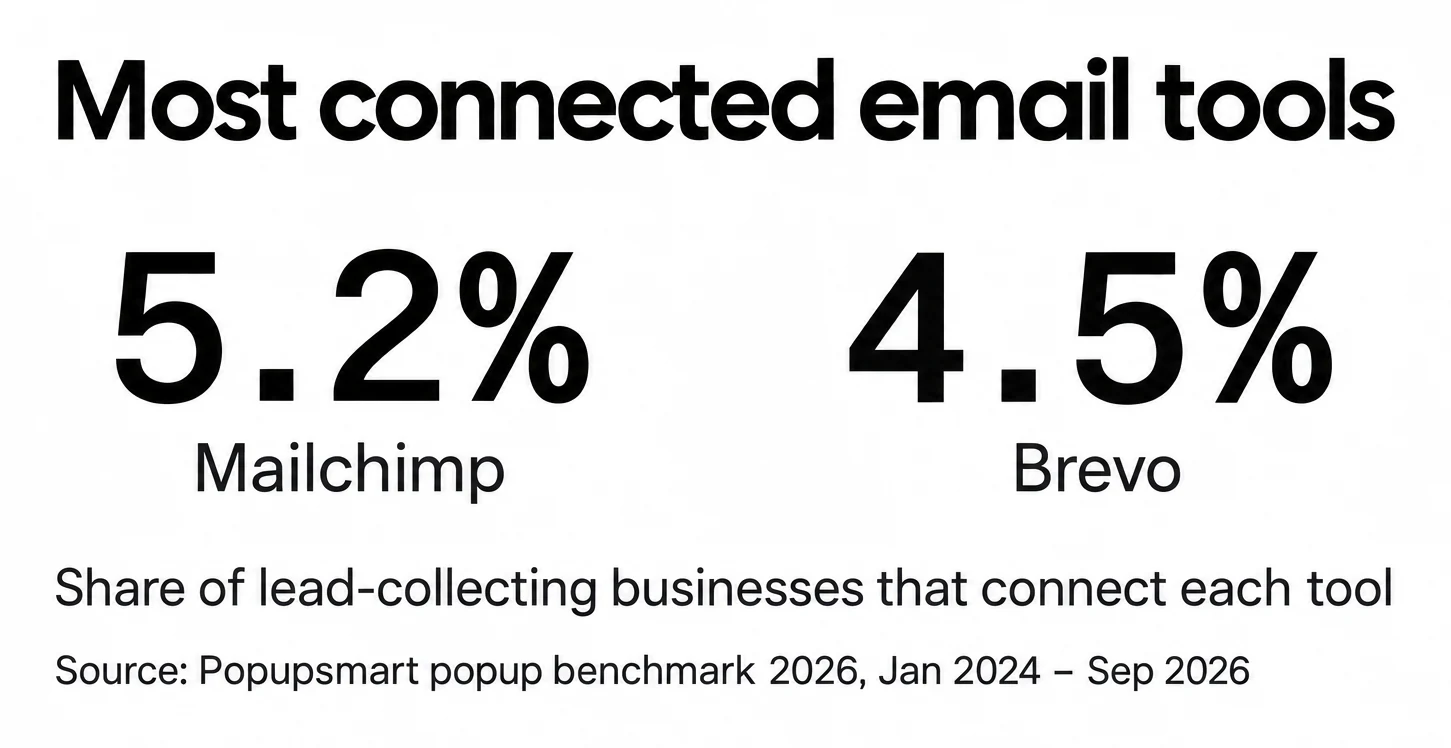
Mailchimp is one of the two email tools Popupsmart users connect most. In our 2026 benchmark, among external integrations, Mailchimp (5.2% of lead-collecting businesses) and Brevo (4.5%) are the most connected email tools; the Shopify Customers sync is used by 10.7%.
Popupsmart's free plan costs $0 and covers one website, one live popup and 5,000 pageviews a month, with the Mailchimp integration included. The Mailchimp popup integration guide compares Mailchimp's popup form with Popupsmart on every site type.
To add Popupsmart to your WordPress site:
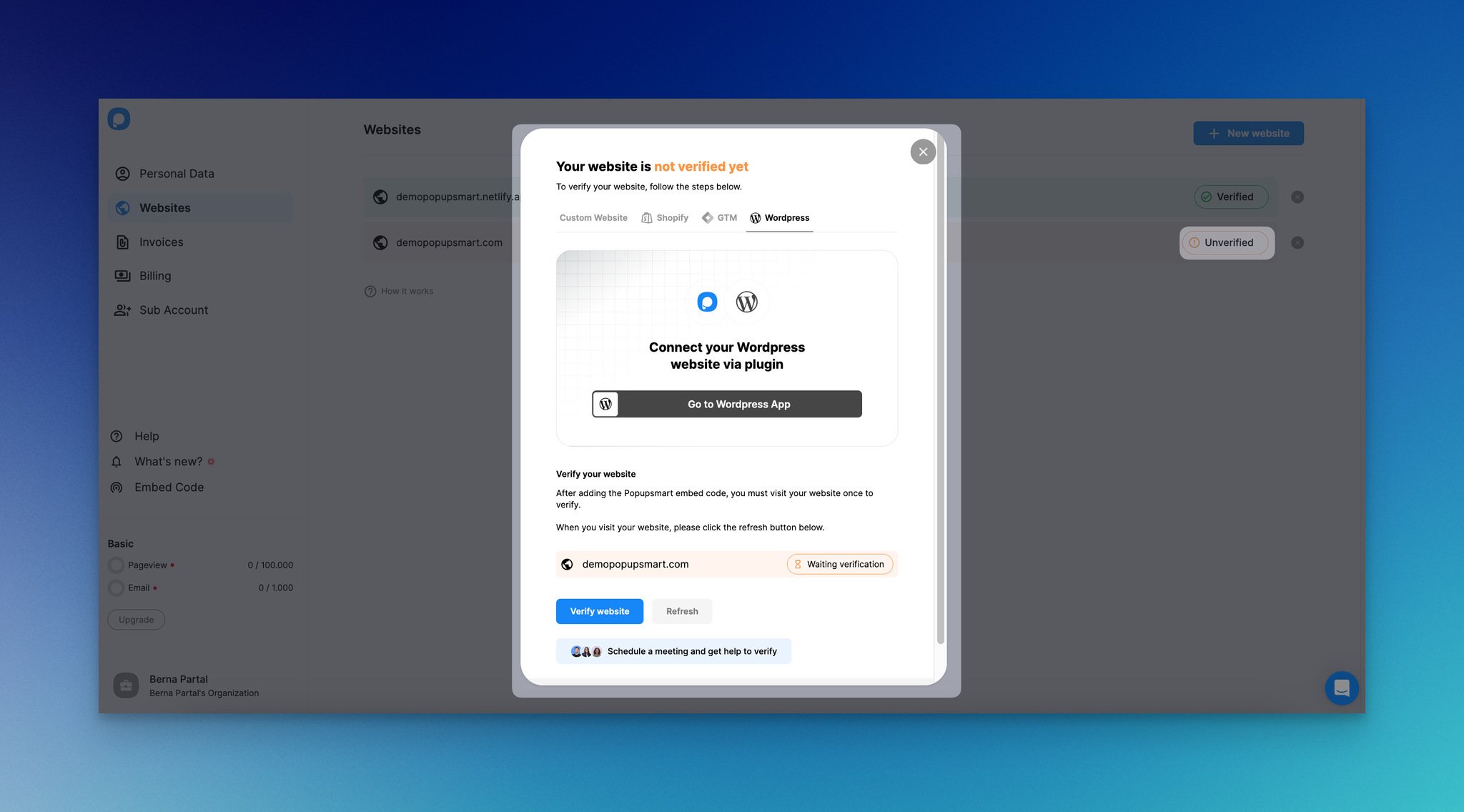
Step 1: Sign in to Popupsmart. Click on your account in the left menu. Then, locate the "Websites" option.
Add your website URL. Then, click the "Unverified" button next to it.
Once you add your website, you'll see the "Unverified" button. If you click on it, the verify modal will appear; choose the Wordpress tab, and it takes you to the Popupsmart WordPress plugin once you click "Go to WordPress App."
Step 2: Click "Download" and wait for popupsmart.zip to save to your device.
As of 10 October 2026, the plugin's WordPress.org page (version 2.0.1) notes that it hasn't been tested with the latest three major WordPress releases. If you'd rather not install it, paste Popupsmart's embed code into your theme instead, as the WordPress popup guide and how to create a popup in WordPress without a plugin show.
Go to your WordPress dashboard. Navigate to Plugins and click "Add New."
Step 3: Either upload popupsmart.zip using the "Upload Plugin" button and click Install Now, or find it in the search bar.
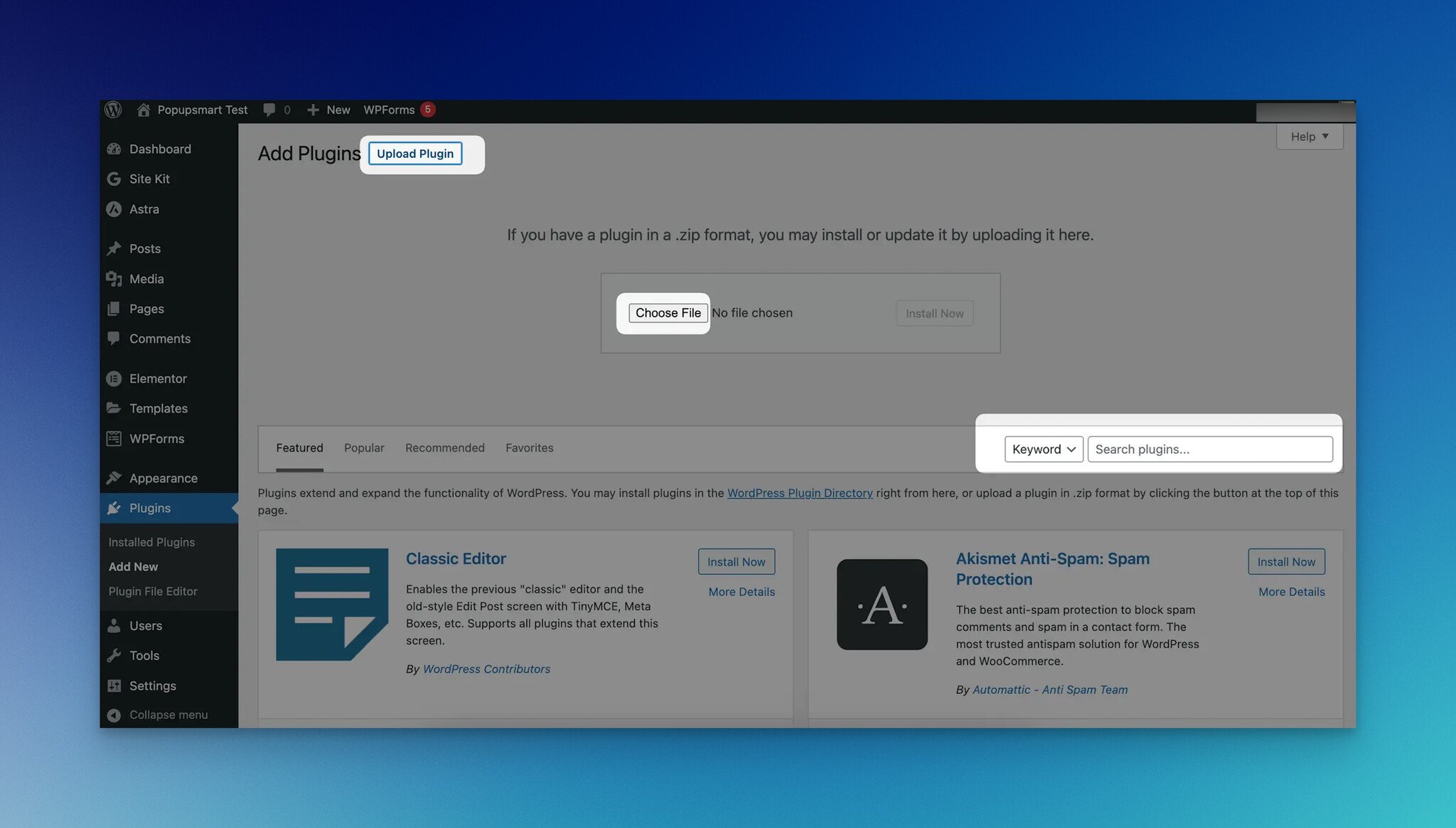
After installation, click "Activate Plugin" to proceed.
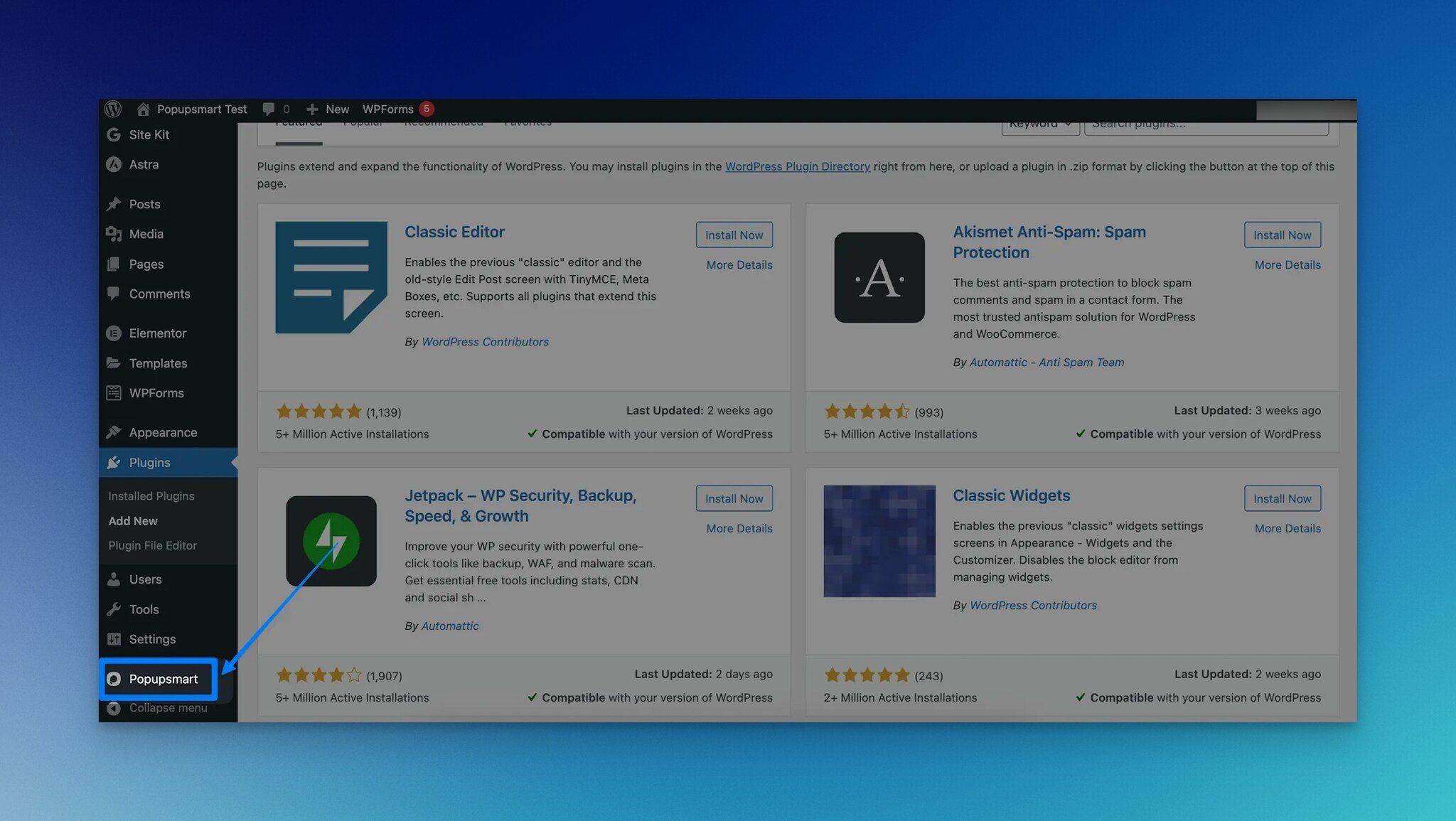
Step 4: Locate "Popupsmart" under Settings in the left menu.
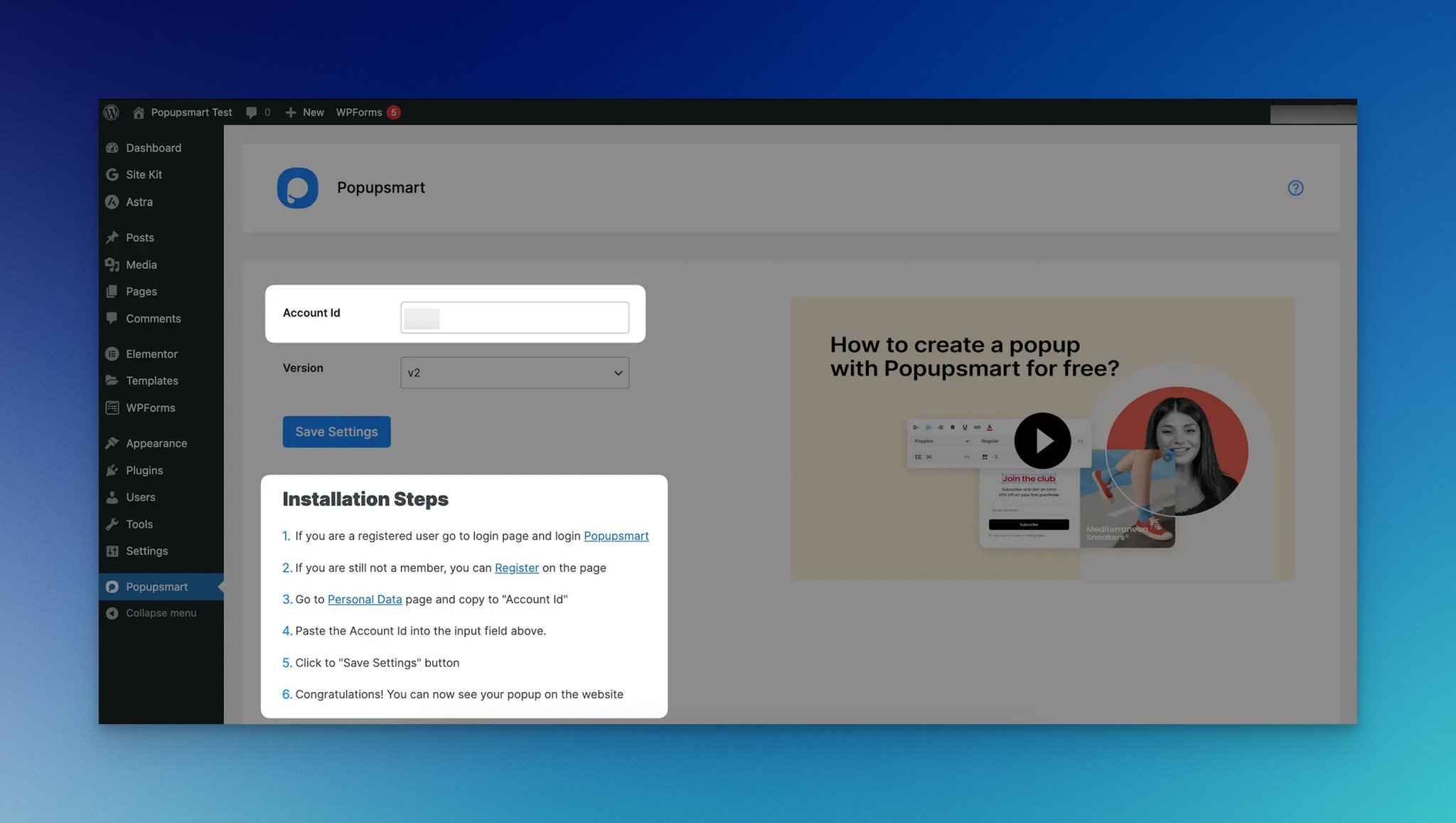
Step 5: On the displayed page, identify the "Account ID" field. Leave Version on v2.
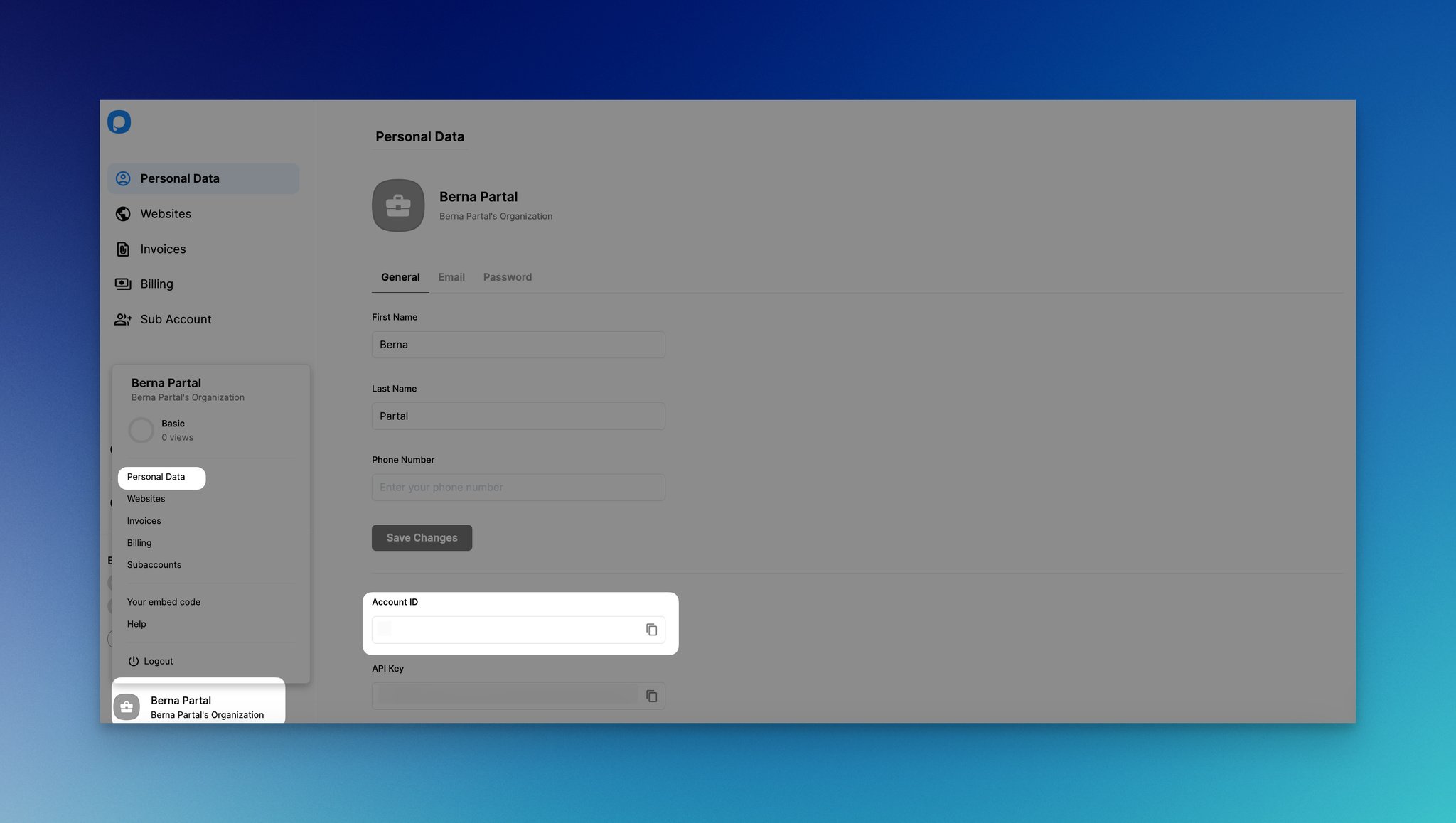
Step 6: Return to Popupsmart dashboard. Click on "Account" and go to "Personal Data." Copy the Account ID.
Paste the Account ID in the WordPress "Account ID" field, as shown before, and click Save Settings.
You can explore our documentation about WordPress popup for more details.
Step 7: Go to the "Campaigns" page & click "New Campaign" to create your popup campaign. Choose your WordPress website and a template.
Create your popup & customize it according to your goals & brand identity.
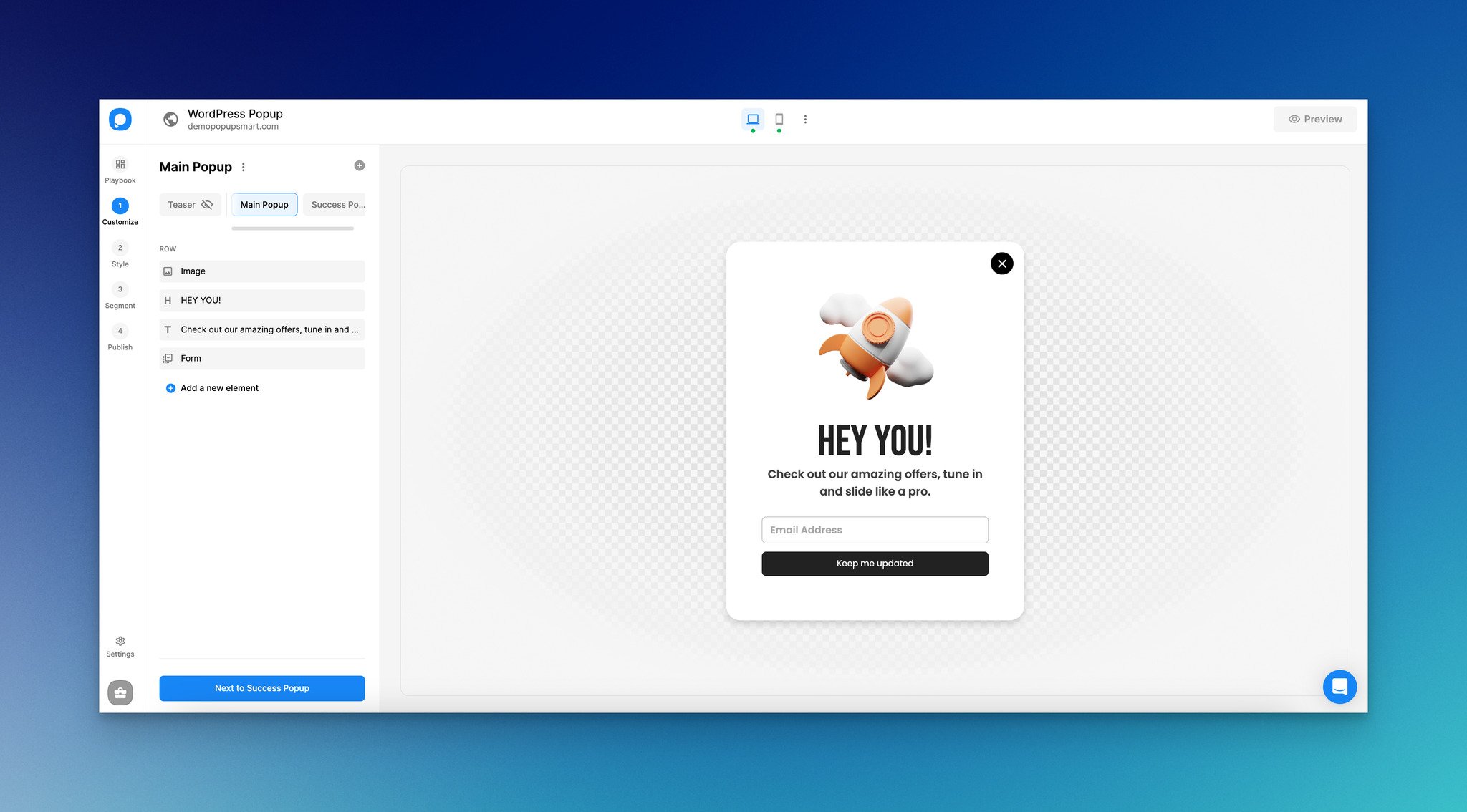
Step 8: Click on your campaign's form element and click the "Add integration" button.
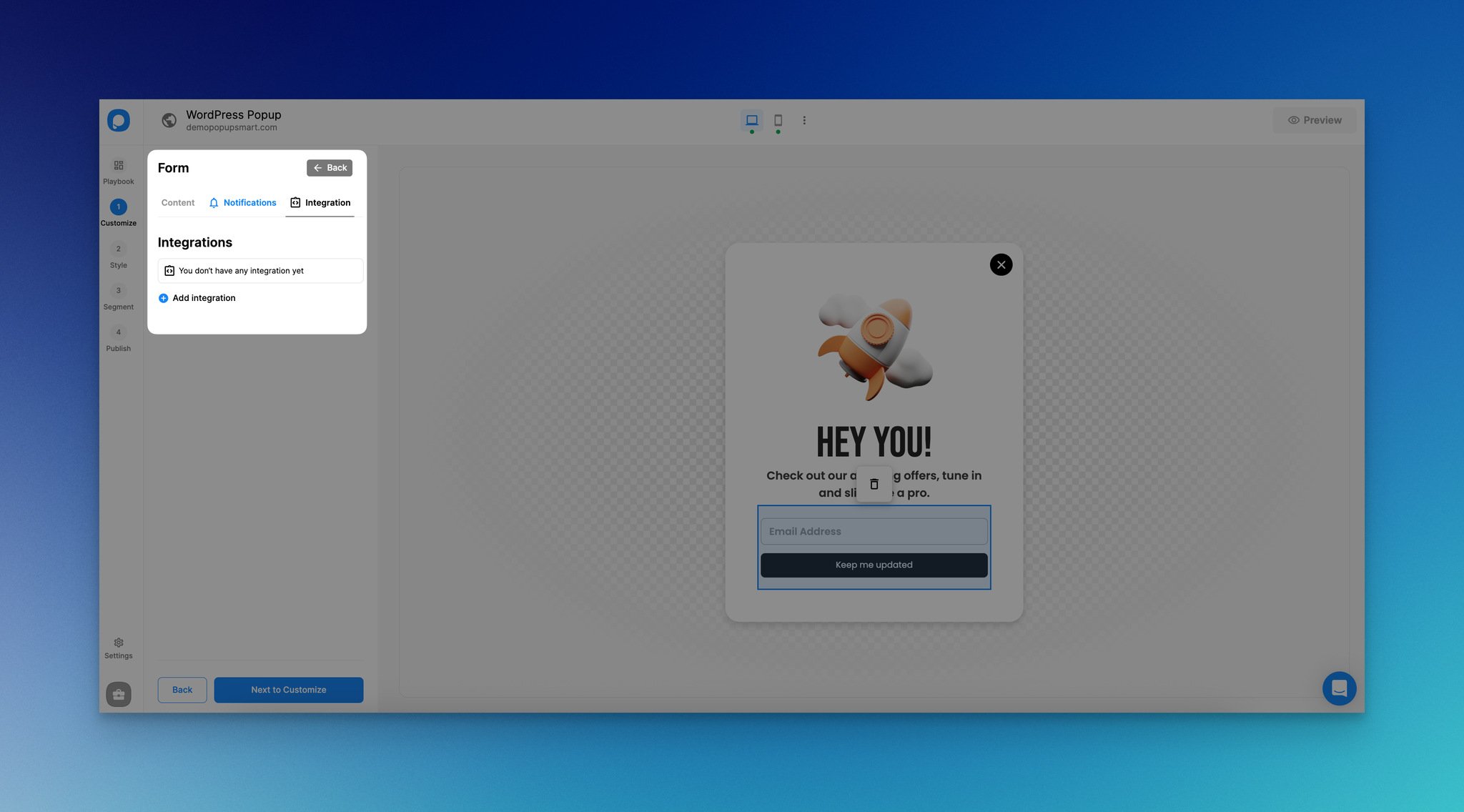
Then, select Mailchimp from the list and click the "Connect" button.
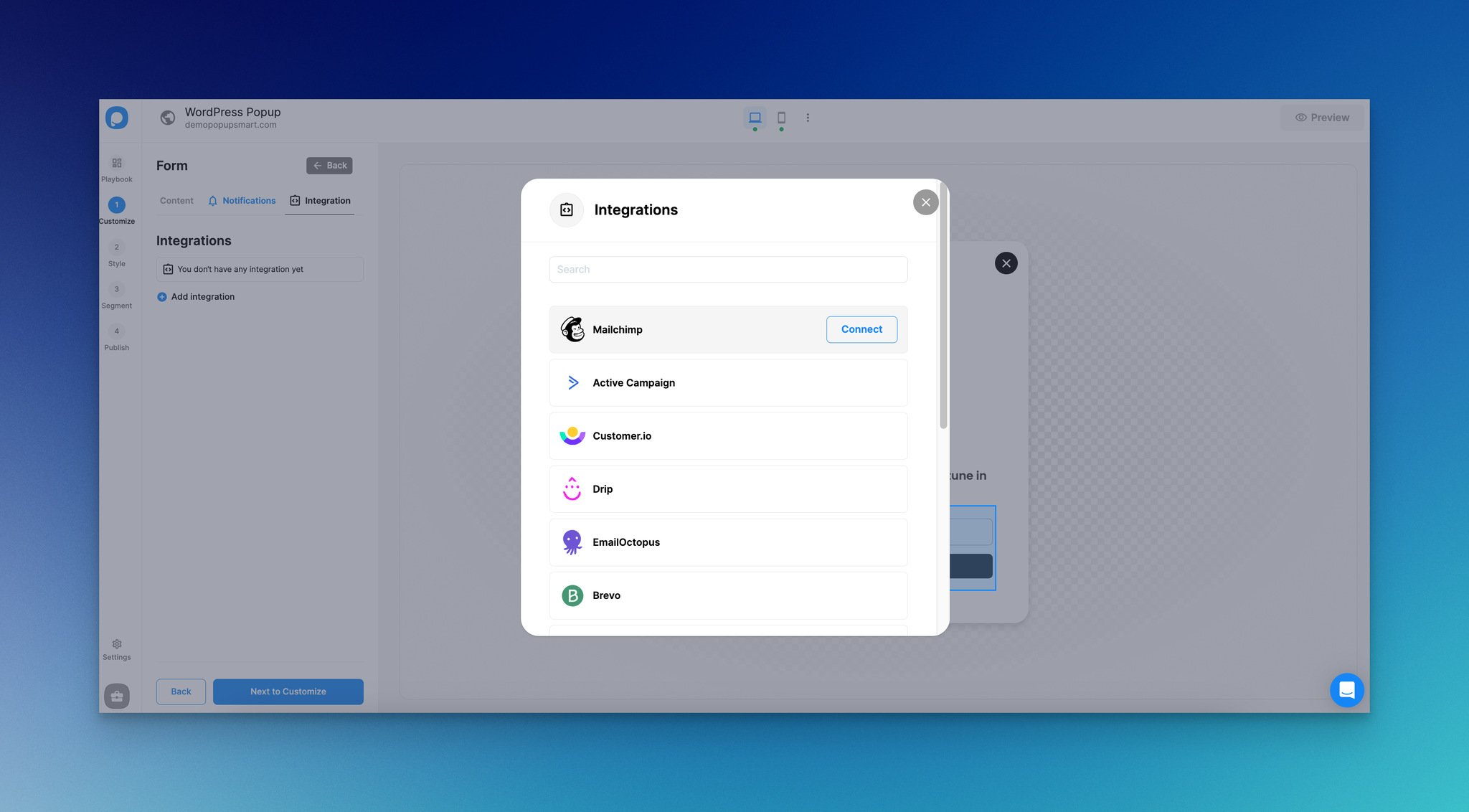
Step 9: Select a saved Mailchimp API from the dropdown, or click "Add new Mailchimp API."
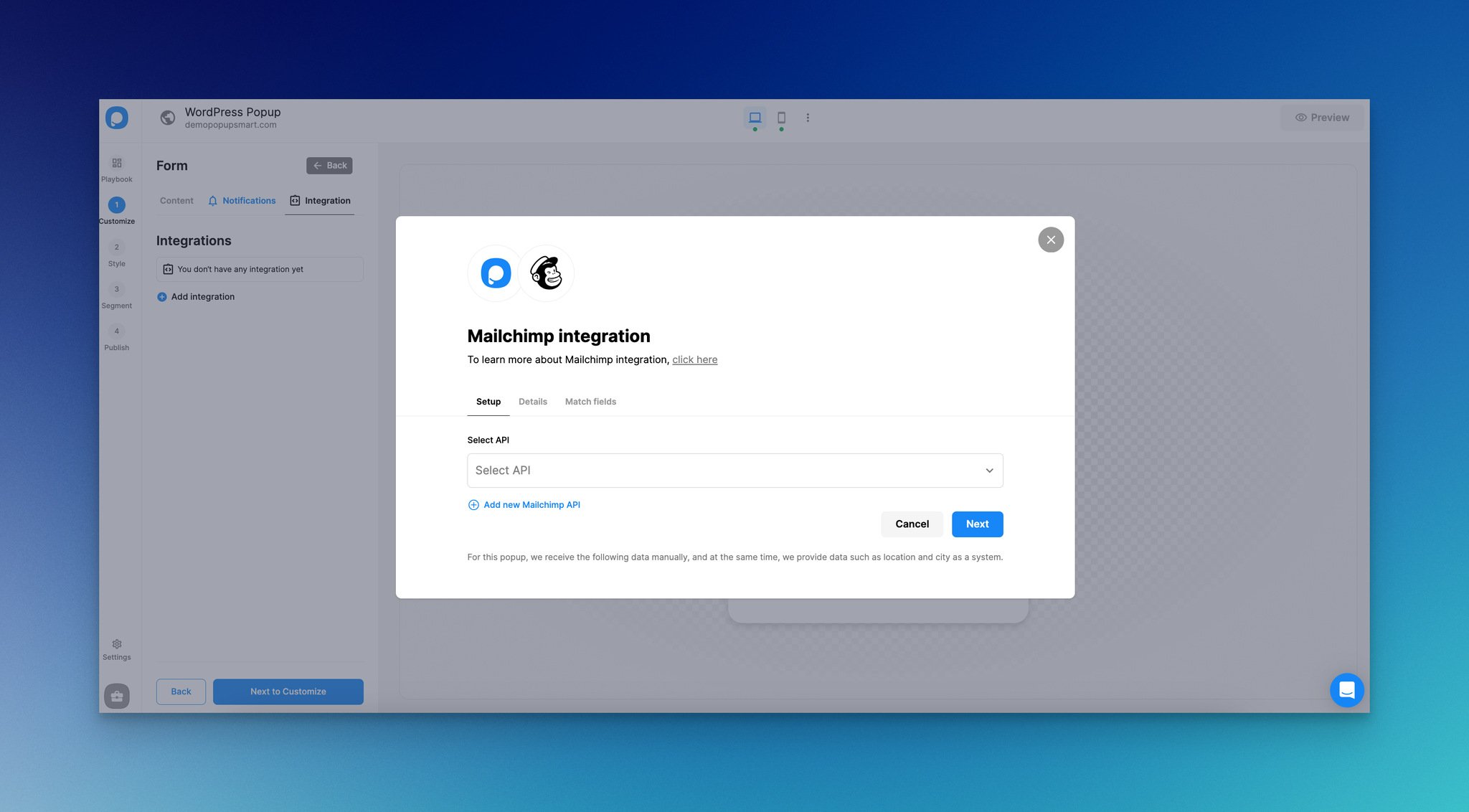
Step 10: Log in to your Mailchimp account, click your profile icon, and choose "Profile." Open the "Extras" drop-down and choose "API keys." Mailchimp's older screens called this menu Account & billing.
Step 11: In the Your API Keys section, click "Create A Key." Then, generate a name for your API key, such as "Popupsmart," and click Generate Key.
Your API key is ready. Go back to the Popupsmart dashboard and paste it into the "API Key" field.
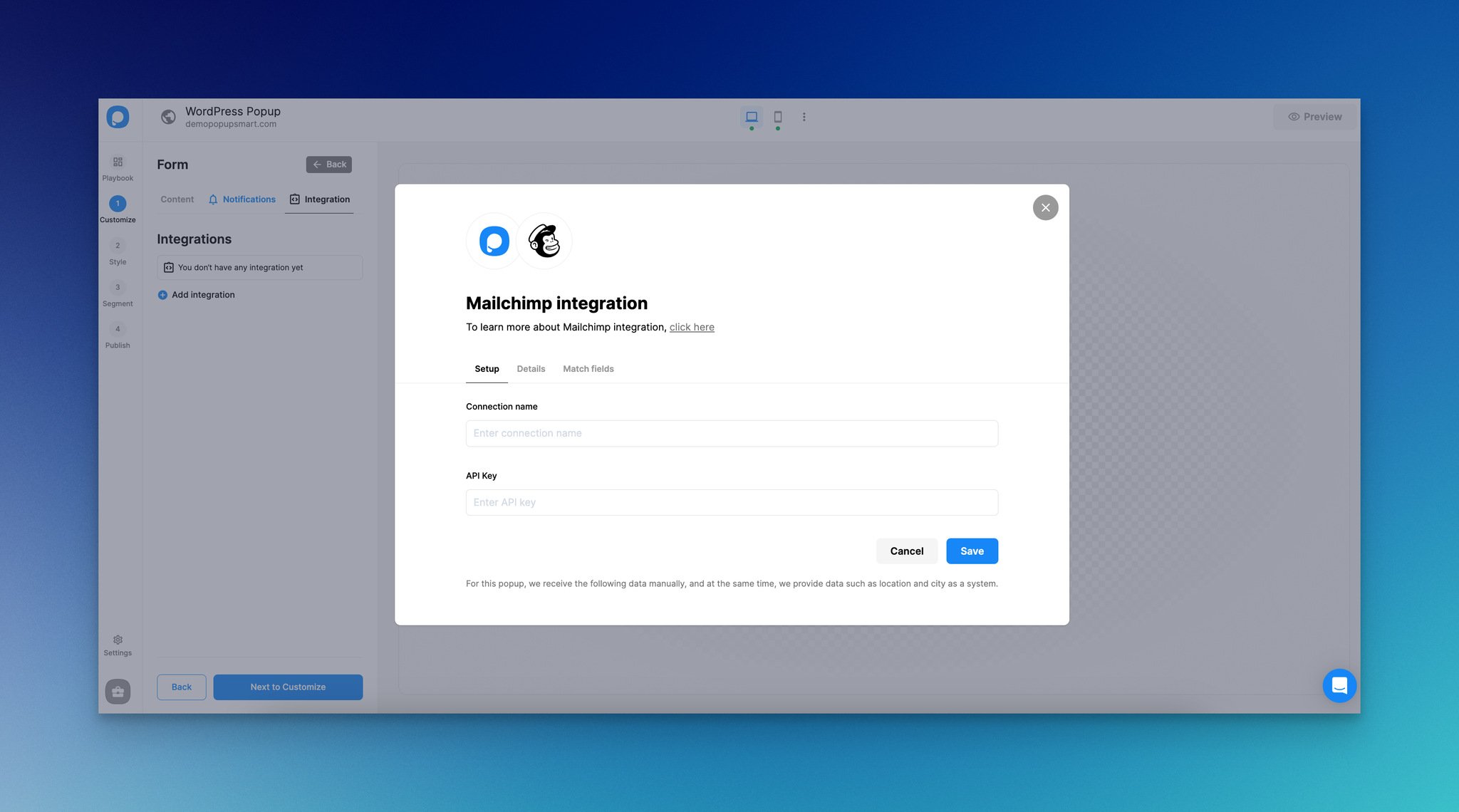
Then, select your list from the dropdown and map the fields you want to send. The options are Form Field, System Field, API Field and Static Field.
Phone numbers and SMS consent can reach Mailchimp too: match them to the Mailchimp fields you set for them in this Match fields step. Popupsmart collects them; it doesn't send email or SMS itself.
Save your settings and publish the popup. The integration status is on by default; you can adjust it by toggling on/off in the three-dot menu.
Your Popupsmart popup on WordPress now sends its leads to Mailchimp. Submit one test address before you share the page, then look for it in your Mailchimp audience.
The full walkthrough, with every Mailchimp screen: "How to Integrate Popupsmart with Mailchimp". Running a Shopify store as well? The same setup there is in how to add a Mailchimp popup to Shopify.
Top Benefits of Adding a Mailchimp Popup to WordPress Site
What changes once Mailchimp and WordPress are connected? You start building a list you can email, and that pays off in a few ways.
1. Better Engagement: A popup with a good offer gives visitors something to respond to on the page.
2. Strong Customer Relationship: Leads you email regularly get to know your brand. That's where a customer relationship starts.
3. Determined Marketing: A popup makes you pick one goal per campaign, which makes it easier to tell whether it's working.
4. Sharing and Caring: If you have a promotion worth sharing, the popup puts it in front of visitors and your Mailchimp list carries it further.
5. Retaining Customer: An exit-intent popup can give a visitor who's about to leave one more reason to stay.
6. Increasing Website Traffic: Subscribers come back when your emails give them a reason to, so every signup is a possible return visit.
7. Cost-Effective Solution: One popup can collect subscribers and announce an offer at the same time. Two birds, one stone.
8. Enhanced Conversion Rates: Get the targeting, design and analysis right and your conversion rate has room to grow. Keep your expectations realistic, though. For a sense of scale, the median lead-collecting popup campaign on a WordPress site in our benchmark converts 0.66% of its displays.
To Wrap Up
Eight steps in Mailchimp, one snippet in your header, and the popup is live on WordPress.
Then give it time. The impact shows up gradually, as sign-ups for your newsletter or blog start to come in and you adjust the offer, pages and trigger around them.
The steps are the easy part of adding a Mailchimp popup to your WordPress site. What the popup offers decides how much it collects.
Frequently Asked Questions
We have answered the most common questions about adding a Mailchimp popup to a WordPress site.
You can check them to have more knowledge during or after the process.
Where do I put the Mailchimp popup code in WordPress?
Put it in the head of every page, through a header-scripts plugin such as WPCode or a Google Tag Manager tag. Pasting it into your parent theme's header.php works until the theme updates, which replaces the file and removes the popup. Mailchimp's WordPress guide recommends a post or page instead, but then the popup loads only on that page.
Is there a Mailchimp popup plugin for WordPress?
Not for an ordinary WordPress site. Mailchimp List Subscribe Form, Mailchimp's own plugin on WordPress.org, adds a signup form as a block, widget or shortcode, not a popup. On a WooCommerce store, the Mailchimp for WooCommerce plugin can show Mailchimp's pop-up form. Elsewhere, pair MC4WP with Boxzilla, or use a popup builder such as Popupsmart that sends leads to Mailchimp.
Can I add a Mailchimp popup to WordPress for free?
Yes. As of 10 October 2026, Mailchimp's forms page says popup forms (still labelled beta) are available to Mailchimp marketing plan users at no additional cost at this time, and its plan comparison lists Pop-up Forms on the Free plan too. Popupsmart's free plan also connects a popup to Mailchimp: one website, one live popup and 5,000 pageviews a month.
Why is my Mailchimp popup not showing on WordPress?
Usually because the site isn't connected, the snippet isn't on the page, or you've already visited the site: Mailchimp's default shows the popup to new visitors only. Run Check connection in Mailchimp, clear your caching plugin, and open the page in a private window.
Is a Mailchimp popup form GDPR compliant?
It can be, but the setup is yours. Mailchimp's help says GDPR fields can't be enabled on pop-up forms, and its popup form is single opt-in by default. Its consent guide suggests stating what people sign up for, linking your privacy policy and, for explicit consent, adding a required checkbox that isn't pre-checked.
How do I add a Mailchimp popup to WooCommerce?
Install Mailchimp for WooCommerce from WordPress.org, connect your Mailchimp account and choose the audience to sync. Then, in Mailchimp, open Integrations, Manage, WooCommerce and use Integration settings to create or manage pop-up forms. Mailchimp says they need version 2.1.10 or later of the plugin. A popup builder with a WordPress plugin works on WooCommerce too.
Recommended Blog Posts
A Mailchimp popup takes a few minutes to set up. If your WordPress site needs more work after that, start with these: