
14 Best Giveaway Tools to Boost Your Marketing Strategy

 ChatGPT
 Perplexity
 Claude
 Grok
Grok Google AI Mode
Overview of 14 giveaway tools (free/paid) with key features, integrations, and pricing—e.g., Popupsmart, Gleam, RafflePress, Woobox, KickoffLabs—plus tips to choose based on goals, ease, customization, integrations, price, and analytics.
Table of contents (56)
Staying ahead is the key to success in digital marketing. If you want your giveaway campaigns to perform at their best, leveraging the top giveaway tools on the market is a great place to start.
By using giveaway tools, you can organize your campaigns more effectively, reach the right people at the right time, connect with a larger audience, and build stronger relationships with your visitors.
These tools also simplify campaign management, helping you save time and effort.
In this post, we’ll walk you through the core features and pricing details of the 14 best giveaway tools so you can choose the right one for your needs.
Let’s get started!
Discover the 14 Best Giveaway Tools to Maximize Your Campaign Impact
Choosing the right giveaway tool is crucial. We’ve compiled the top platforms you can use to create and manage high-performing campaigns.
Let’s explore 14 paid and free giveaway tools together and find the one that best fits your needs!
1. Popupsmart
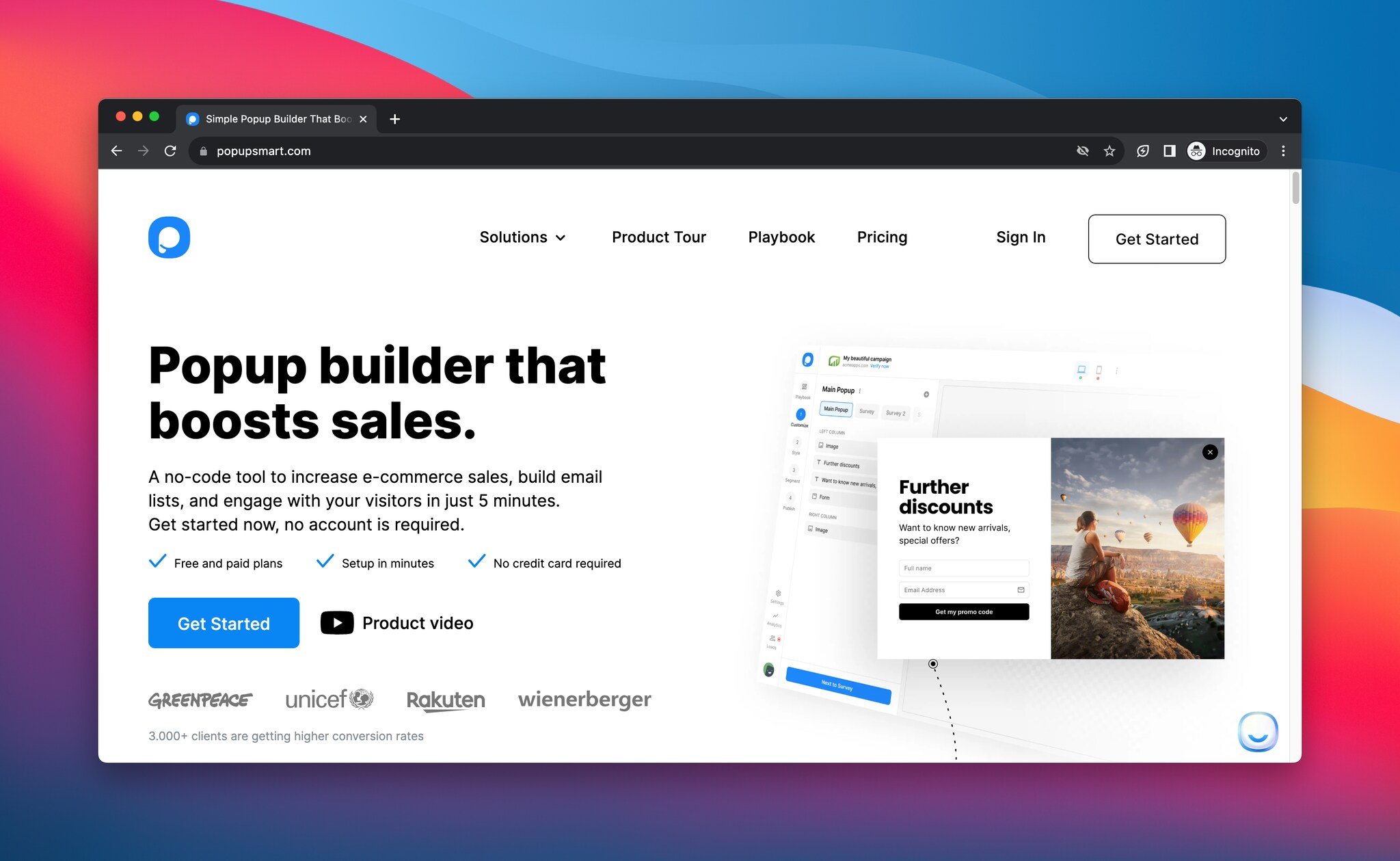
Popupsmart is a no-code popup builder you can use to create engaging and conversion-focused giveaway campaigns. With this tool, you can grow your email list, increase phone call requests, collect form submissions, promote products, make announcements, and support many other business goals.
Standout Features
- Choose from hundreds of ready-to-use popup templates or start from scratch. You can customize your giveaway popup with eye-catching images, Lottie animations, and a variety of form elements.
- Show your giveaway popup to the right audience at the right time with advanced targeting options such as: URL targeting, device type, browser language, site data targeting, HTML targeting, traffic source, and whether the visitor is new or returning.
- Want to gamify your campaign? Boost user engagement by using gamified popup types such as "spin the wheel" or "lottery ball game."
- Create interactive, multi-step giveaway campaigns with multi-step popup workflows.
- Enjoy seamless integrations with popular platforms including Mailchimp, ActiveCampaign, Customer.io, Drip, Email Octopus, Sendinblue, HubSpot, Klaviyo, MailerLite, SendGrid, Zapier, Make, and Webhook.
Pricing
- Free plan available, including 5,000 monthly pageviews, 1 popup, and 1 website.
- Basic plan starts at $32.5/month, offering 100,000 monthly pageviews.
- Pro plan starts at $82.5/month with 500,000 monthly pageviews.
- Expert plan is suitable for professionals needing 1 million pageviews, starting at $132.5/month, and includes unlimited popups and websites.
- If you exceed 1 million pageviews, you can request a custom pricing plan.
👉 Create Your Free Popup with Popupsmart!
2. Gleam
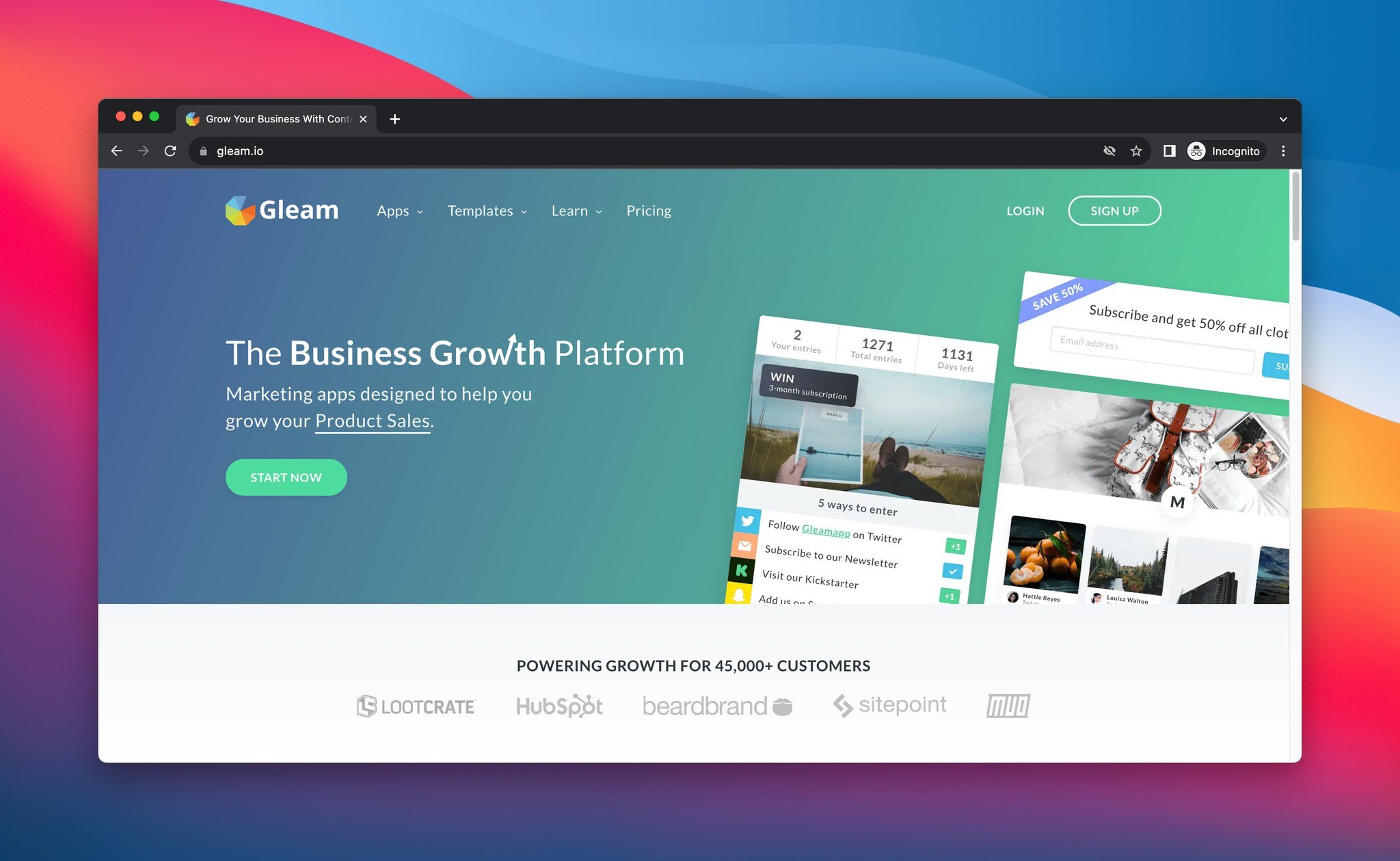
Gleam is a growth platform offering marketing applications for various needs. Its tools include Contests, Gallery, Rewards, and Capture.
Standout Features
- Verified social entries help reduce the steps required to participate in a giveaway.
- Built-in viral sharing enables users to refer friends for additional entries, helping your campaign reach a wider audience.
- With one-click entry, users can join contests after connecting their social accounts.
- The instant rewards system allows you to create rewards that unlock based on different action combinations. The widget can also be embedded anywhere.
- Integrates with 100+ marketing and social media apps, including Mailchimp, YouTube, Bitly, Facebook, Kickstarter, Shopify, Instagram, and more.
Pricing
The Full Package plan starts at $97/month, providing complete access to all Gleam apps.
Each app can also be purchased separately:
- Contests plan: from $10/month
- Rewards plan: from $29/month
- Gallery plan: from $29/month
- Capture plan: from $29/month
3. Wishpond
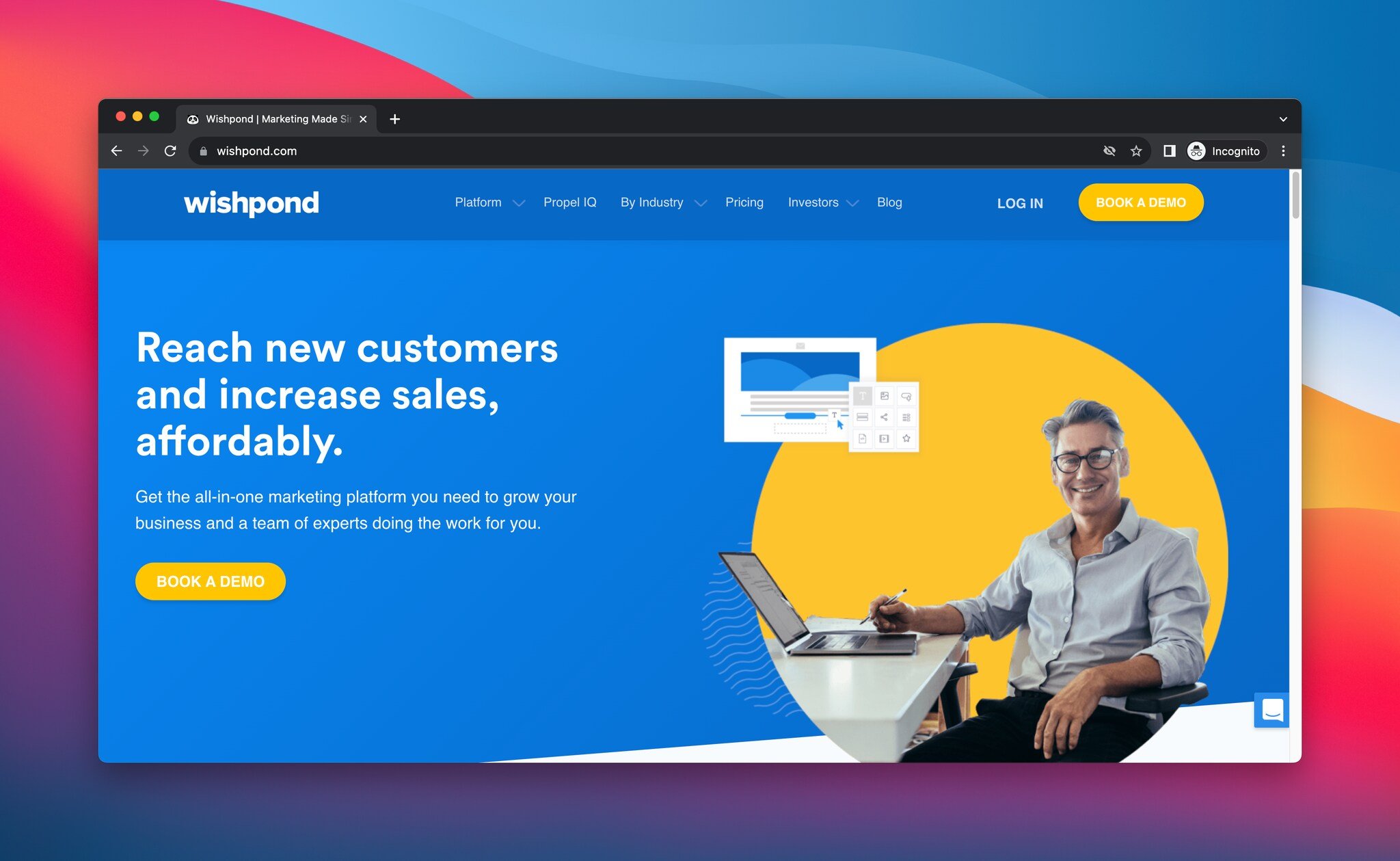
Wishpond is an all-in-one marketing platform designed to help you turn website visitors into leads.
Standout Features
- Includes 12 different contest types, such as Instagram hashtag giveaways, prize competitions, and photo contests.
- Offers analytics and reporting tools to monitor campaign performance in real time.
- You can choose from customizable templates or create your giveaway design from scratch.
- Supports advanced voting options and allows you to collect participant data.
- Easily set participation requirements, approve submissions, manage entries, and collect contact information.
Pricing
Pricing details are not publicly listed. You can contact the sales team to request a demo and learn more about their pricing plans.
4. SweepWidget
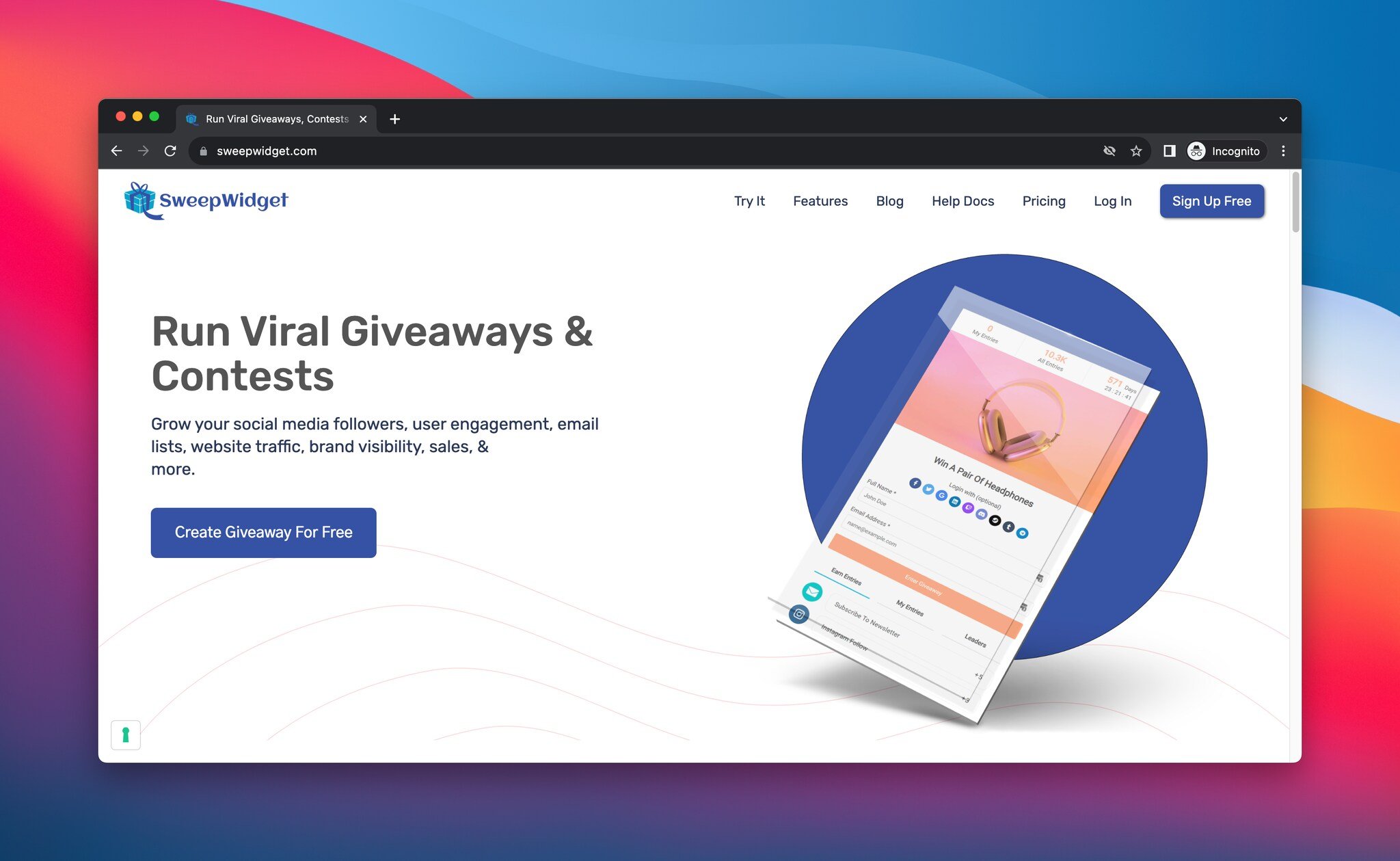
SweepWidget is a contest application that allows you to run giveaways, competitions, and reward-based campaigns. Using this tool, you can grow your followers, expand your email list, and increase website traffic.
Standout Features
- Create visually engaging giveaway campaigns with custom theming and styling options.
- Includes a drag-and-drop editor as well as custom CSS support.
- Available across 30+ social platforms and integrates with 20+ email CRM APIs.
- Boost engagement using instant coupons and rewards.
- Includes a leaderboard feature, bringing excitement to competitions by rewarding visitors with the most points, referrals, or completed actions.
Pricing
- Free plan includes unlimited contests, unlimited entries, embed support, random winner selection, and more.
- Pro plan starts at $29/month – includes 1 brand, 20+ social platforms, custom styling options, 20+ email integrations, friend referrals, and custom form fields.
- Business plan starts at $59/month – includes 2 brands, leaderboards, instant coupons, instant rewards, and Zapier integration.
- Premium plan starts at $109/month – includes 3 brands, unbranded campaigns, white labeling, custom CSS, email verification, and geo-restriction.
- Enterprise plan starts at $199/month – includes 5 brands, API access, custom SMTP, phone verification, unlimited winners, and a dedicated account specialist.
5. Vyper
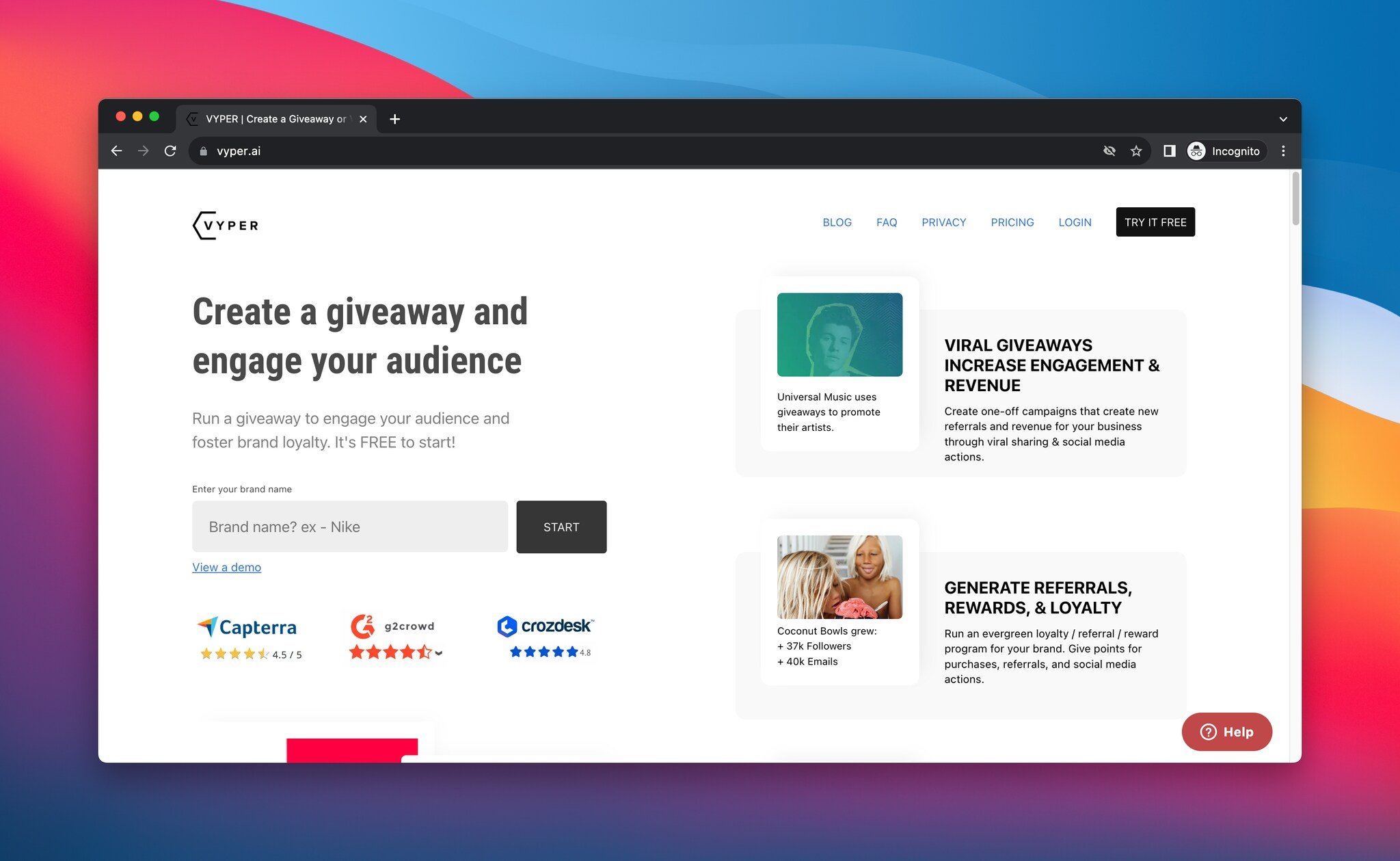
Vyper is a giveaway software that helps you create visually engaging and viral contests. With this tool, you can design mobile-friendly giveaway campaigns and boost participant engagement.
Standout Features
- Offers three display modes: landing page, embedded form, or widget.
- Features an easy-to-use and flexible builder to create fully branded campaigns tailored to your goals.
- Includes ready-to-use templates that you can customize.
- Integrates with popular email marketing providers such as Mailchimp, Klaviyo, AWeber, ConvertKit, Sendy, and Drip.
- Enables you to reach a wider audience with mobile-optimized giveaway campaigns.
Pricing
- Free trial available – you only pay once you're ready to launch your campaign.
- Enterprise plan starts at $75/month, including branding removal, custom domain or subdomain usage, up to 30,000 leads, and $30,000 revenue tracking.
- Agency plan starts at $150/month, offering all Enterprise features plus support for up to 120,000 leads, $120,000 revenue tracking, and 10 sub-accounts.
6. Woorise
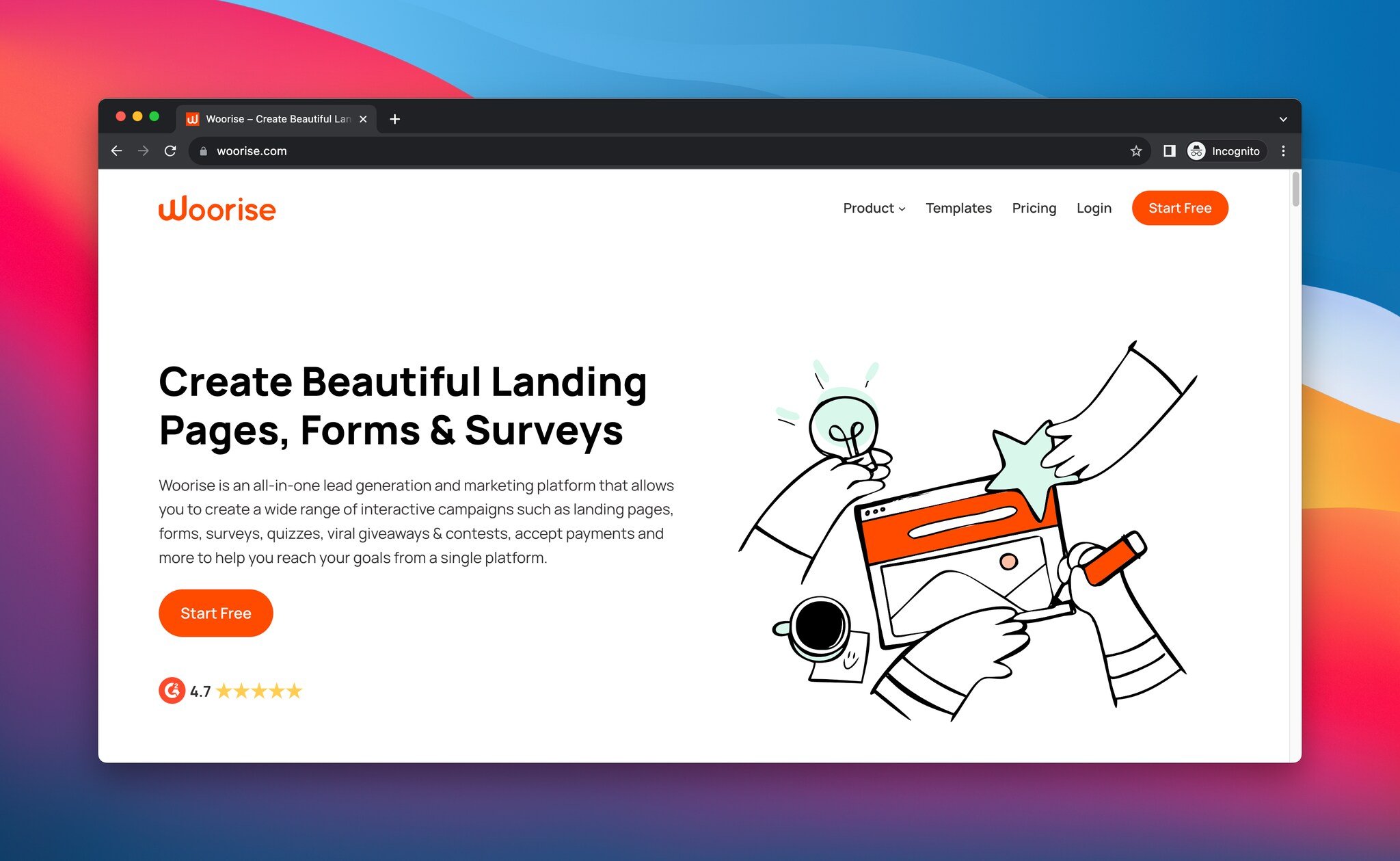
Woorise is an all-in-one marketing and lead generation platform offering solutions such as landing pages, forms, surveys, quizzes, giveaways, and payment collection. With hundreds of templates available, it makes campaign setup much easier.
Standout Features
- Grow your audience and reward loyal customers using various pre-built social actions, or create custom actions for different social platforms or websites.
- Use conditional logic with advanced combinations to build smarter giveaway campaigns.
- With the Viral Sharing feature, users can invite friends to participate, earning bonus entries for referrals – helping you increase participation rates.
- Select one or multiple winners with just one click, and use the Instant Win option to distribute rewards immediately.
- Apply filters to choose winners based on specific actions, and export entries if needed to manage winner selection.
Pricing
- Free plan includes unlimited campaigns, 200 entries/month, and email support.
- Basic plan starts at $23/month, offering unlimited campaigns, 2,000 entries, email & chat support, and no Woorise branding.
- Grow plan starts at $39/month, including unlimited campaigns, 5,000 entries, email & chat support, no Woorise branding, integrations, email notifications, and up to 5 team users.
- Pro plan starts at $79/month, including everything in the Grow plan plus 20,000 entries, up to 10 team users, file upload support, photo voting contests, and a custom domain.
7. RafflePress
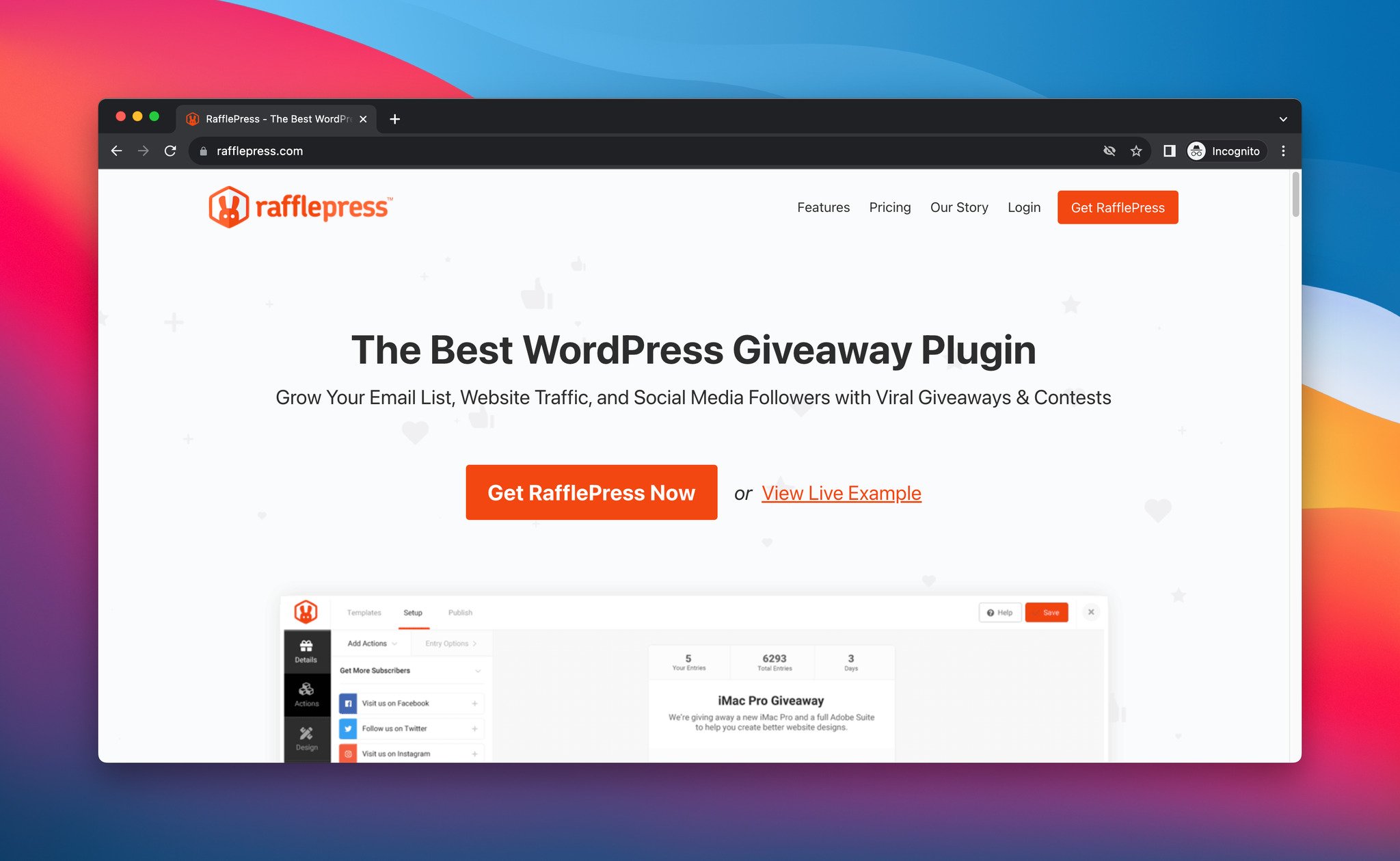
RafflePress is a WordPress giveaway and contest plugin designed to help you grow your email list, increase followers, and drive website traffic. It allows you to easily create giveaway campaigns directly on your WordPress site.
Standout Features
- A drag-and-drop builder makes the tool easy to use, even for complete beginners.
- Quickly build campaigns using pre-designed giveaway templates to boost subscriptions and engagement.
- One-click entry and fraud protection features help prevent abuse and ensure smoother campaign execution.
- Supports integrations with popular platforms such as ActiveCampaign, AWeber, Campaign Monitor, Drip, GetResponse, Zapier, Sendinblue, Sendy, Mailchimp, and more.
- Features advanced success tracking and retargeting capabilities to improve conversions and help you reach your goals.
Pricing
- Plus plan starts at $39.50/year – includes 1 site, scheduling, multiple prizes, email verification, notifications, prize image gallery, professional actions, entry export, and design options.
- Pro plan starts at $99.50/year – includes 3 sites, email integrations, surveys and question forms, required actions, repeat actions, redirecting completed entries, and image submission options.
- Growth plan starts at $199.50/year – includes 20 sites, refer-a-friend feature, entry reporting, Facebook login, giveaway landing pages, Zapier, and Webhooks.
- Ultimate plan is a one-time payment of $499.50 – includes unlimited sites, lifetime updates, lifetime support, and one-time payment.
8. ShortStack
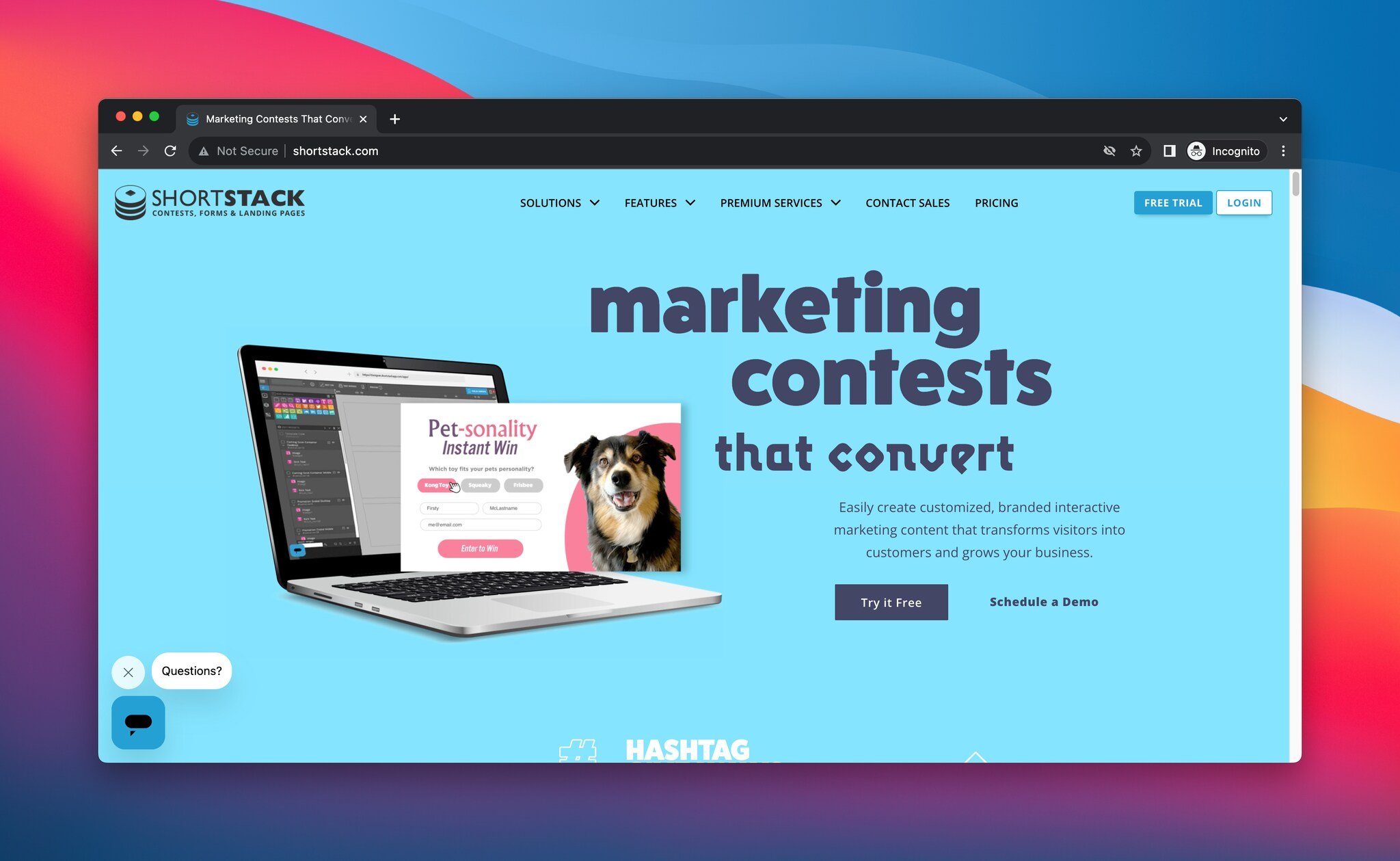
ShortStack is a giveaway tool you can use to create contests, promotions, and other interactive social media marketing campaigns.
Standout Features
- Offers over 60 ready-made templates, which you can easily customize based on your campaign goals.
- Provides maximum flexibility with customizable CSS, JavaScript & HTML, along with a visual builder and style panel to shape and optimize your campaigns.
- You can limit entries with email sign-up, Facebook login, or mobile login, and also restrict participation and voting frequency.
- Add verification steps like secret code requirements, reCaptcha to reduce fake entries, and even run invite-only private campaigns.
- Supports various contest and game formats, including photo, multi-photo, article, video, voting, refer-a-friend, spin-to-win, scratch-to-win, and comment-to-enter.
Pricing
- Free trial available.
- Business plan starts at $79/month, including 10,000 entry storage, unlimited pageviews, unlimited campaigns, and email.
- Pro plan starts at $199/month, including 50,000 entry storage, unlimited pageviews, unlimited campaigns, and email.
- Enterprise plan offers unlimited pageviews, unlimited campaigns, email, and custom entry storage limits. Contact sales for details.
9. Outgrow
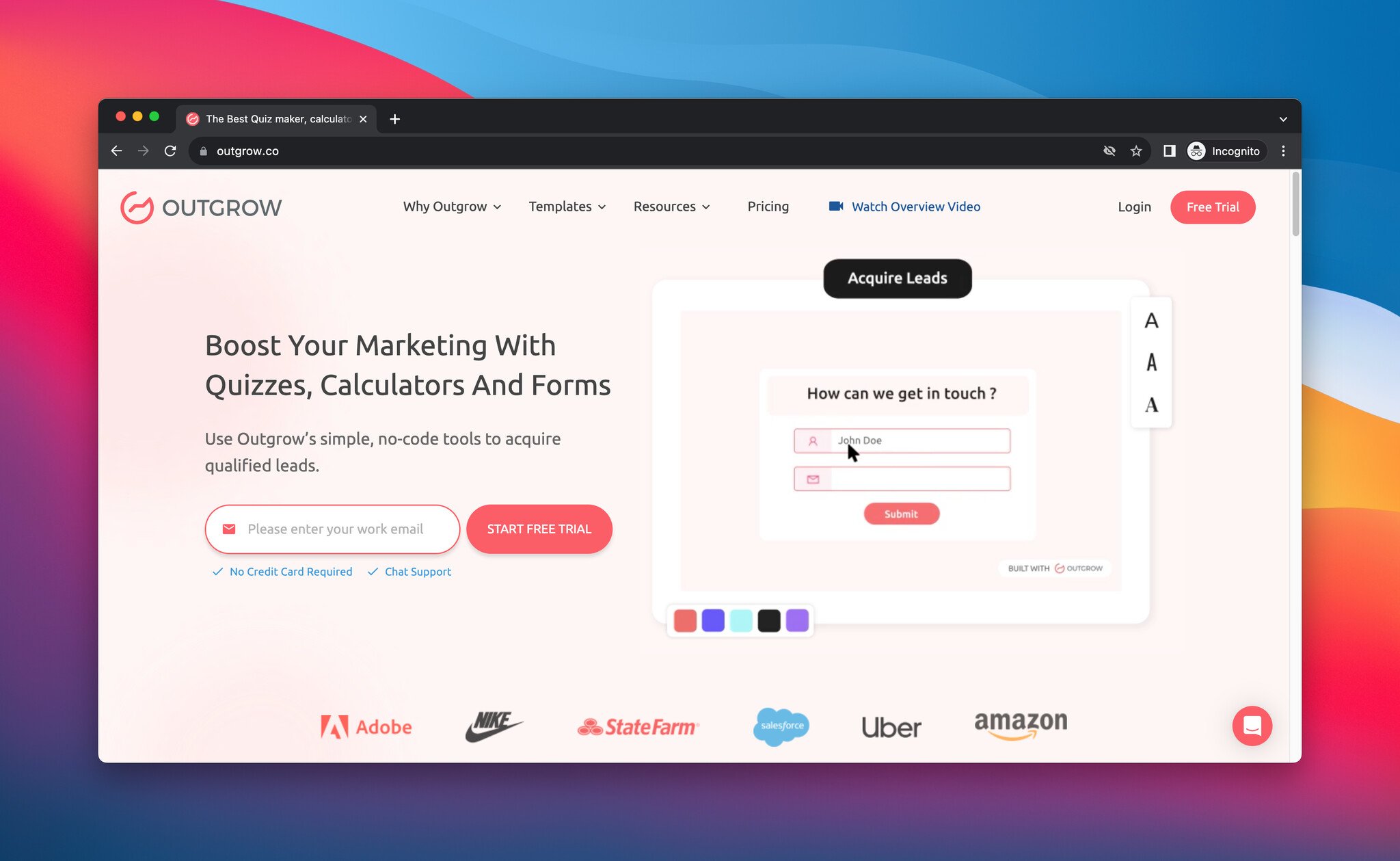
Outgrow is an interactive marketing tool that allows you to create quizzes, assessments, surveys, chatbots, product recommendations, calculators, and contests, helping you grow and engage your audience more effectively.
Standout Features
- Fully customizable to match your brand identity by adding your logo, colors, assets, fonts, and styling.
- Conditional messaging allows you to personalize quizzes and calculators by displaying tailored messages based on results.
- Includes Branching Logic, enabling unlimited branching for each question and logic routing to specific questions or outcomes.
- Can be embedded in multiple formats such as fullscreen, iframe, popup, or chatbot.
- Integrates with over 1,000 sales and marketing tools, including Mailchimp, HubSpot, Salesforce, Drip, ActiveCampaign, MailerLite, Emma, Marketo, and Google Sheets.
Pricing
- Free trial available.
- Freelancer plan starts at $14/month, including 5 content types, up to 3,000 leads per year, 5 content pieces, and 1 user.
- Freelancer Pro plan starts at $25/month, including 7 content types, up to 12,000 leads per year, 6 content pieces, and 1 user.
- Essentials plan starts at $95/month, including 8 content types, up to 90,000 leads per year, unlimited content pieces, and 3 users.
- Business plan starts at $600/month, offering all content types, up to 600,000 leads per year, unlimited content pieces, and 10 users.
10. Woobox
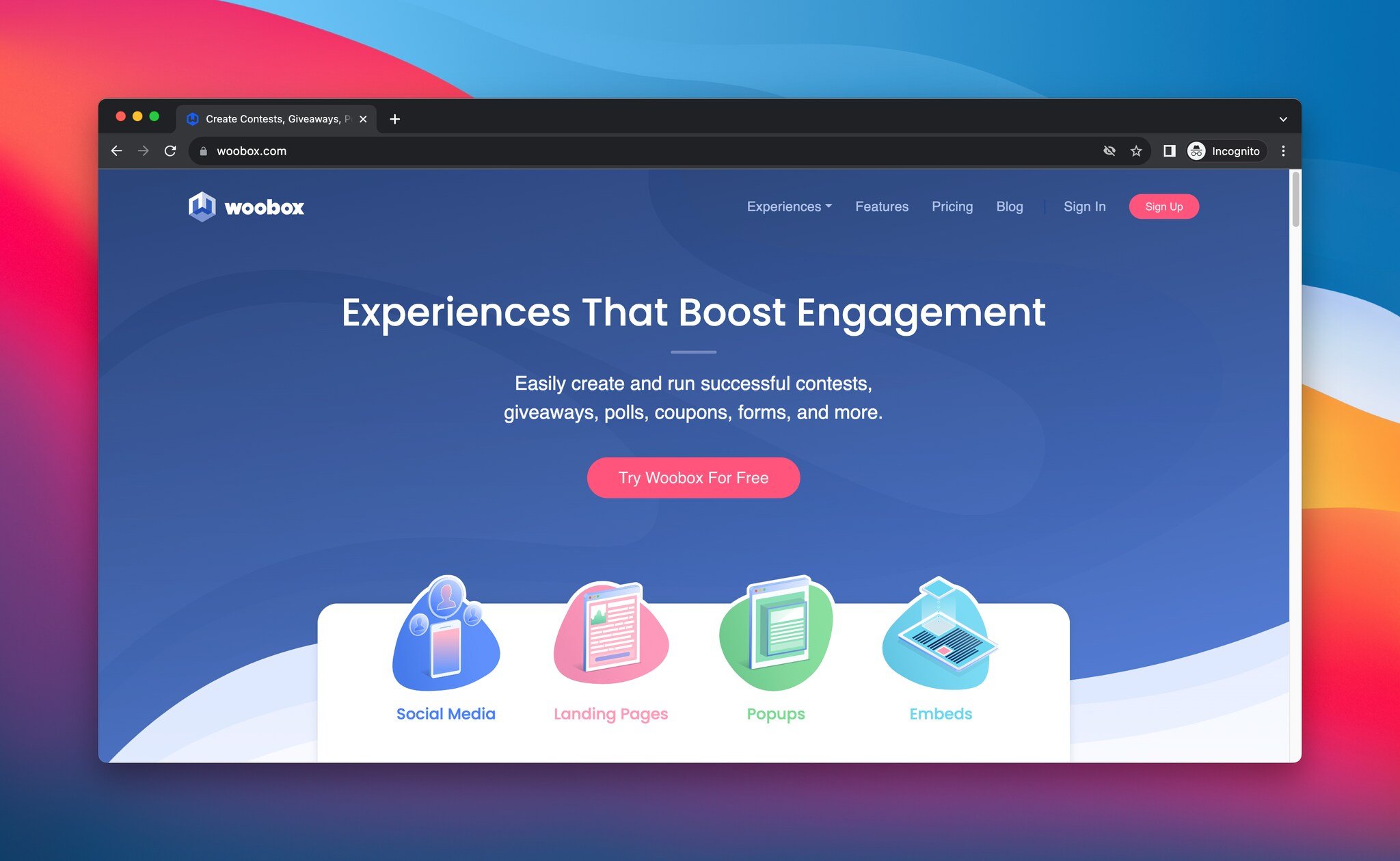
Woobox is one of the best free giveaway tools that allows users to create forms, contests, sweepstakes, and similar promotional campaigns. It supports social media campaigns, landing pages, popups, and embedded solutions, helping you reach your goals more effectively.
Standout Features
- Offers customizable templates to help you save time, while giving you full control over design and language.
- Allows you to randomly select winners for giveaways and review submissions in photo contests to streamline campaign management.
- Includes a landing page solution, which is useful for driving traffic from emails, ads, and social media posts.
- Integrates with 500+ tools, including Zapier and Mailchimp.
Pricing
- Free plan available, includes unlimited campaigns with up to 100 participants per month.
- Basic Plan starts at $37/month, including unlimited campaigns with up to 100 participants per month.
- Standard Plan starts at $32/month, offering unlimited participants and unlimited campaigns.
11. Easypromos
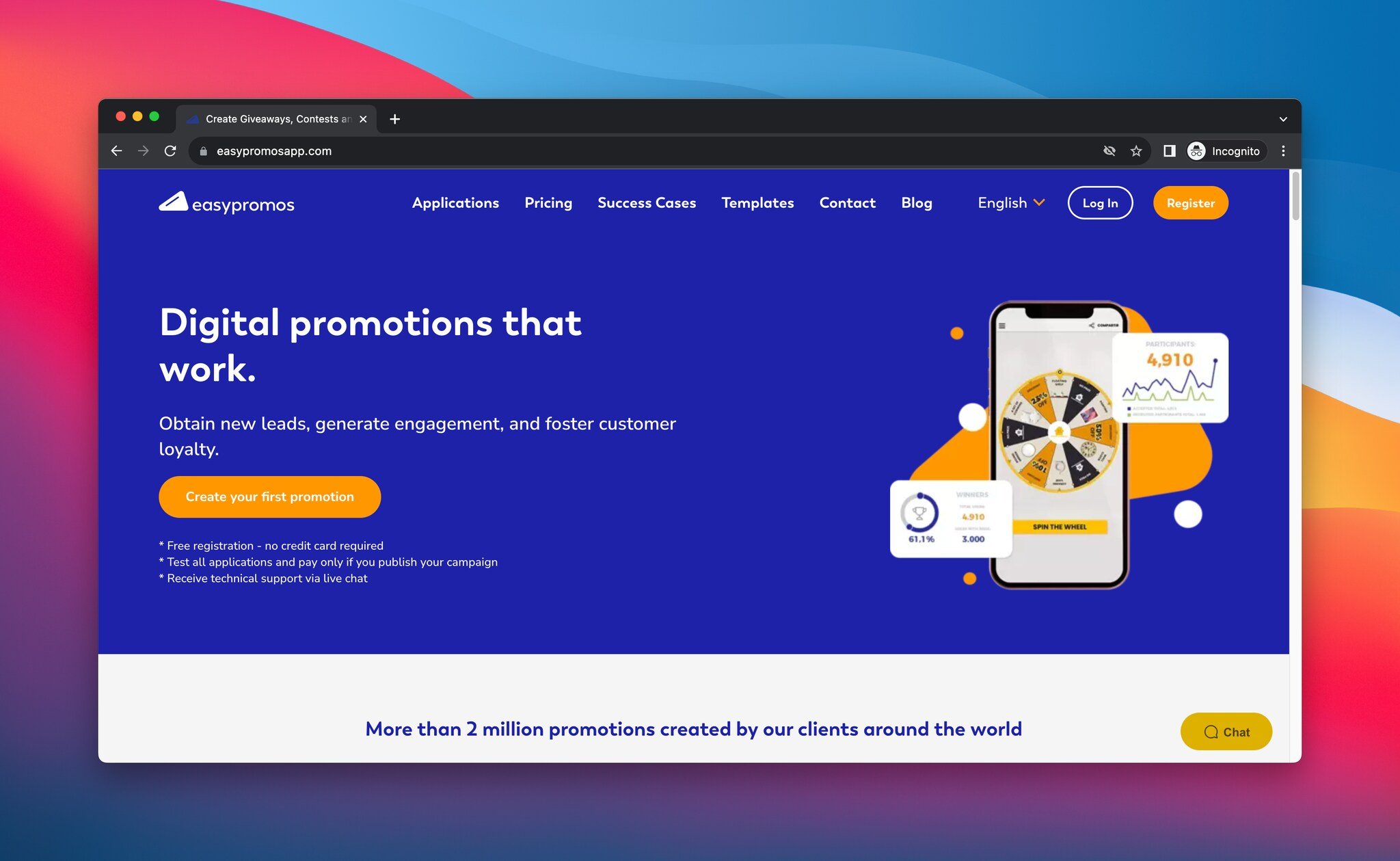
Easypromos is a platform designed for giveaways, contests, and promotional campaigns. Using this tool, you can grow your online community and reach your target audience more effectively.
Standout Features
- Offers a user-friendly design editor with multiple customization options.
- Beginner-friendly, requires no technical or coding experience, making it suitable even for complete non-developers.
- Supports various giveaway types, including entry form, Instagram, Instagram Story, Facebook, Twitter, multi-network, list-based, and event giveaways.
- In addition to giveaway applications, the platform also includes contests, games, quizzes, instant rewards, and multi-stage campaign setups.
- Includes gamification solutions, enabling interactive and highly engaging campaign experiences.
Pricing
- Basic plan starts at $29/month, includes Instagram & Facebook giveaways with up to 5,000 comments.
- Basic Pro plan starts at $49/month, includes Instagram, Facebook, Twitter, and multi-network giveaways with no comment limit.
- Premium plan starts at $199/month, includes photo and video contests, customizable games, prize wheels, discount and coupon management.
- White Label plan starts at $399/month, includes multi-stage campaigns, CSS customization, custom domain, multilingual support, and removal of Easypromos branding.
- Enterprise plan is built for larger organizations, offering an admin panel, multiple agents and roles, access to Auto Login API, dedicated customer support, and custom legal agreements, pricing available upon request.
12. KingSumo
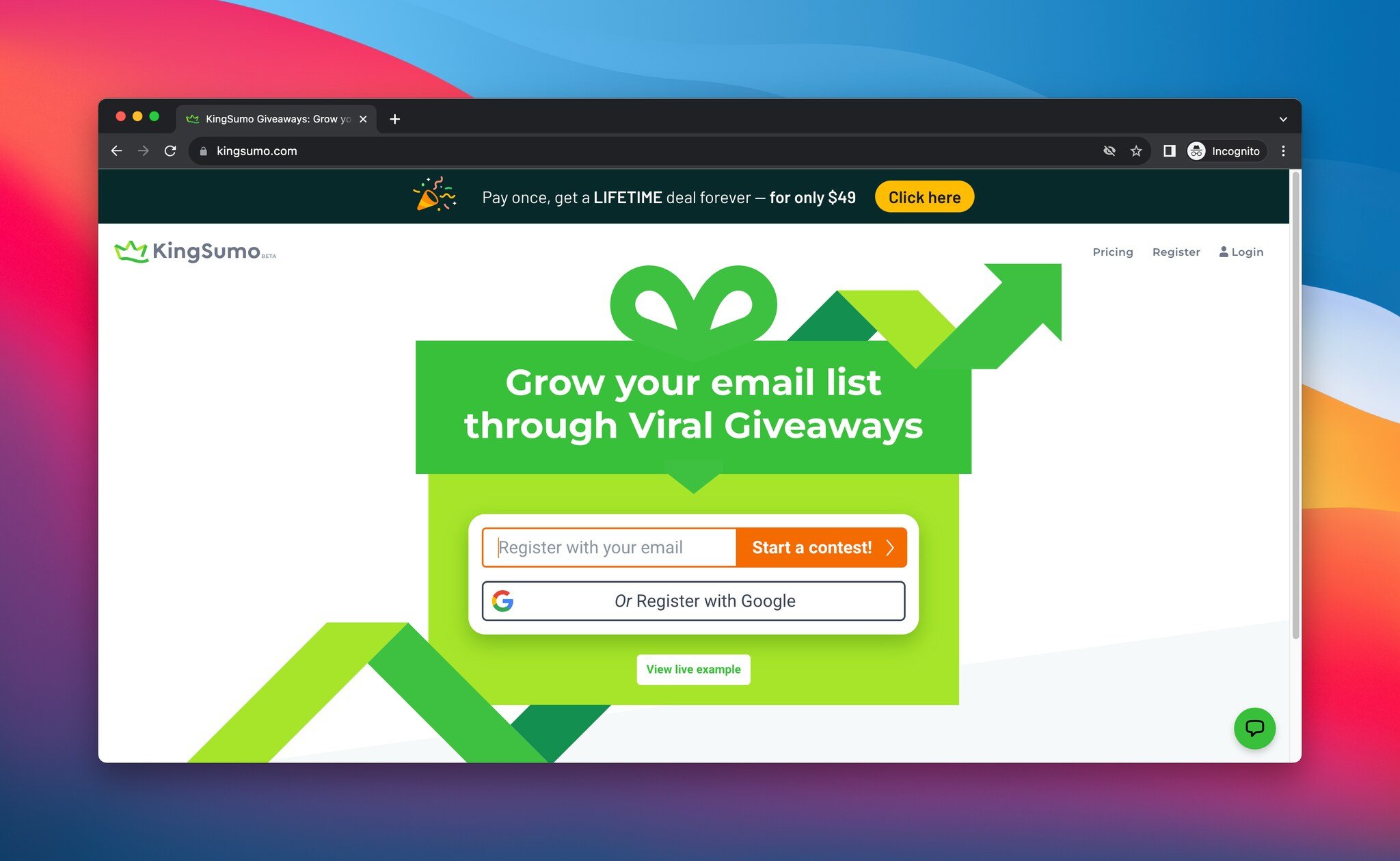
KingSumo is a giveaway tool that helps users grow their audience and expand their email lists through engaging giveaway campaigns.
Standout Features
- Supports custom branding, allowing you to align your campaigns with your brand identity and add your logo to the footer section.
- Includes Meta Pixel tracking, enabling you to monitor events such as
PageViewandCompleteRegistrationfor your giveaway campaigns. - Allows you to set custom rules and terms to run your campaigns properly and ensure compliance.
- Integrates with platforms such as SendFox, Zapier, Mailchimp, ConvertKit, and Klaviyo.
- You can define multiple prizes and winners to make your giveaways more engaging.
Pricing
- Free plan includes unlimited giveaways, bonus entry options, GDPR compliance, embed support for any website, automated reminder emails, and support for multiple prizes/winners.
- Lifetime Plan starts at a one-time payment of $49 and includes everything from the free plan plus customer support, custom branding, and Meta Pixel tracking.
13. Rafflecopter
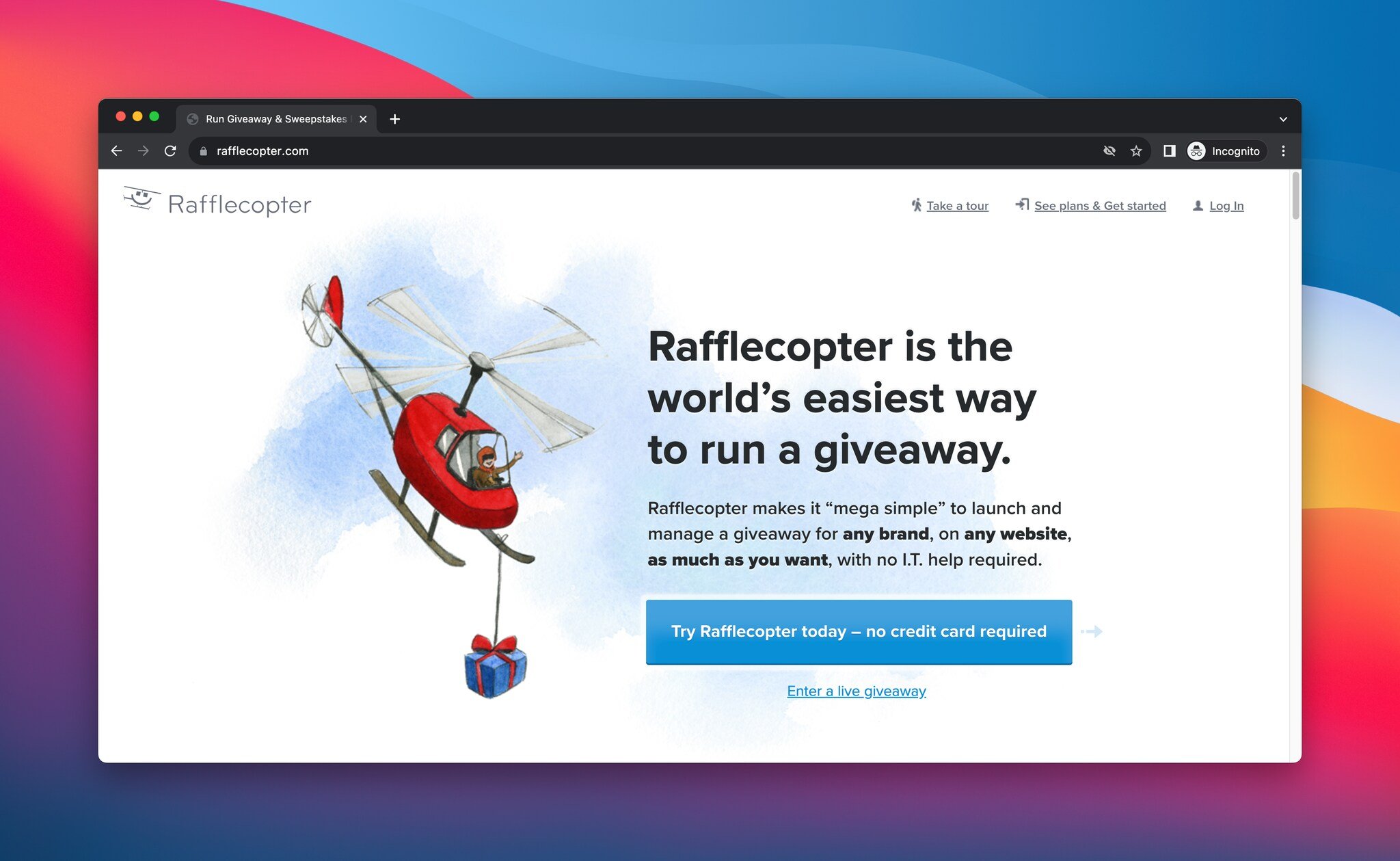
Rafflecopter is a giveaway tool that provides customizable branding and an advanced theme engine, helping you reach a wider audience through effective giveaway campaigns.
Standout Features
- Easily display your giveaway widget by copying and pasting the Rafflecopter code into your website.
- Giveaways are available in 6 different languages, allowing you to target audiences across multiple regions.
- Grow your community with multiple entry options based on different tasks, a free-entry option is also available.
- Random winner selection makes it simple to choose winners and contact them securely.
- Integrates with popular email marketing tools such as Constant Contact, Mailchimp, Campaign Monitor, GetResponse, and AWeber.
Pricing
- Free plan includes unlimited giveaways, unlimited entries, one-click random winner selection, embeddable entry form, and participant data export.
- Basic Plan starts at $13/month and includes everything from the free plan plus custom entry form design, prize image gallery, Pinterest entries, surveys, and priority support.
- Grow Plan starts at $43/month and includes everything in the Basic Plan plus one-click email list integration with Mailchimp, AWeber, Constant Contact, Campaign Monitor, and more.
- Premium Plan starts at $84/month and includes everything in the Grow Plan plus unlimited form themes, viral refer-a-friend entry, real-time analytics, branding removal, and white-labeled entry forms.
14. KickoffLabs
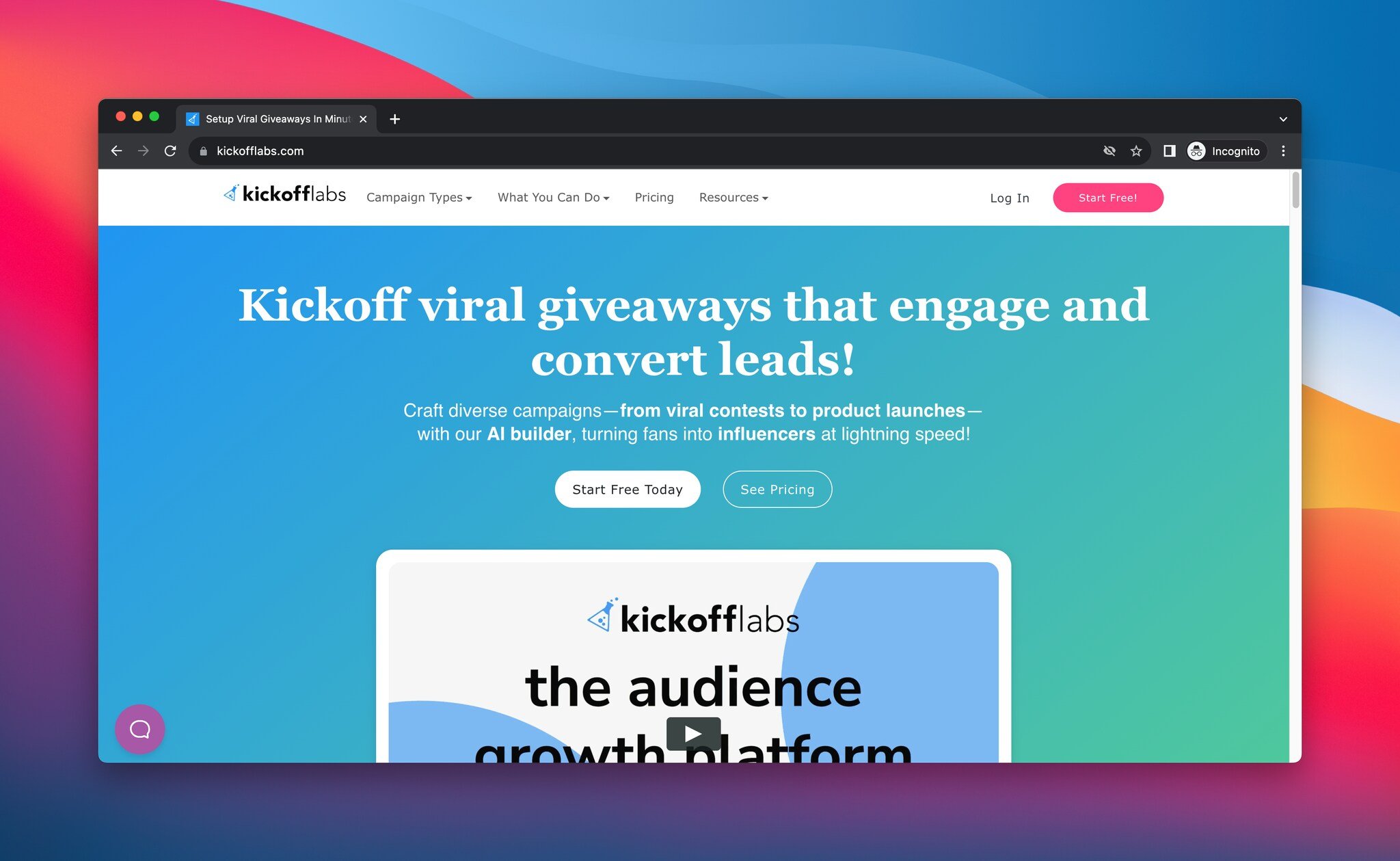
KickoffLabs is a giveaway tool packed with features such as landing pages, email and SMS campaigns, rewards, referral tracking, and fraud detection, helping you launch and manage high-impact giveaway campaigns.
Standout Features
- Includes over 45 customizable landing page templates that you can tailor to your campaign goals.
- Offers personalized giveaway greetings, making your campaigns feel more engaging and unique.
- Provides advanced fraud protection features to help prevent fake entries and maintain campaign integrity.
- Supports various campaign types including lotteries, product launch waitlists, milestone reward level giveaways, leaderboards, and Shopify giveaways.
Pricing
- Hobby plan starts at $19/month, including 2,000 unique visitors, unlimited campaigns, 1 brand, 1 custom domain, autoresponder emails, and advanced fraud prevention.
- Premium plan starts at $49/month, including 10,000 unique visitors, everything in the Hobby plan, plus branding options, free landing pages, reward-level emails, A/B testing, and more.
- Business plan starts at $99/month, including 50,000 unique visitors, 3 custom domains, 3 team members, removal of KickoffLabs branding, and additional features.
- Enterprise plan starts at $199/month, including 100,000 unique visitors, 5 brands, 5 custom domains, 5 team members, priority support, and more.
How to Choose the Right Giveaway Tool

Choosing the Right Giveaway Tool Can Be a Game-Changer
When there are so many options available, it’s important to consider several key factors to make the right decision. Here are some points to keep in mind when selecting your giveaway tool:
📌 Define your goals
Start by clearly identifying the main objective of your giveaway. Are you trying to increase website traffic, grow your email list, or boost social media engagement? Understanding your goals will help you choose a tool that aligns with your campaign purpose.
🧩 Ease of use
Choose a tool that is user-friendly, not only for you but also for participants. Complex tools can overwhelm users and make campaign management more difficult.
🔌 Integration capabilities
Make sure the tool integrates seamlessly with your existing marketing stack. Compatibility with email marketing platforms, CRM systems, and social media channels enables smoother lead management and follow-up.
🎨 Customization options
Evaluate how customizable the tool is. You should be able to design your giveaway to match your brand’s identity and create visually compelling campaigns that grab attention.
💰 Pricing
Understand the pricing structure. Free tools often come with limited features, while paid platforms may offer more advanced functionality. Consider both your budget and feature requirements before deciding.
📊 Analytics & reporting
Look for tools that offer detailed insights and performance tracking. Monitoring your giveaway in real time allows you to make data-driven decisions and optimize campaigns quickly.
Remember, there’s no one-size-fits-all solution when it comes to giveaway tools. The right choice depends on your marketing goals, budget, and preferences. By evaluating these factors carefully, you can make an informed decision and maximize your campaign’s impact.
Ready to Launch Your Next High-Converting Giveaway?
Choosing the right giveaway tool can significantly elevate your campaign performance. By considering the insights shared in this article, you can quickly identify the best platform for your needs.
Focus on building engaging and interactive giveaway campaigns to reach a wider audience and achieve your goals more efficiently. Offering exclusive rewards, incentives, and perks not only attracts new participants but also helps strengthen customer loyalty.
Now it’s your turn, explore the tools we’ve listed, create compelling giveaway experiences, and start turning engagement into growth! 🚀
FAQs

1. What Are Giveaway Tools and Why Should I Use Them?
Giveaway tools are software solutions designed to speed up and optimize giveaway processes. They are highly valuable for marketing campaigns as they save time, increase user engagement, generate qualified leads, and improve brand awareness.
2. Can Giveaway Tools Be Customized to Match My Brand Identity?
Yes, many giveaway tools offer customization options that allow you to tailor the visual appearance and overall experience to match your brand identity. This consistency helps strengthen brand recognition and trust among your audience.
3. Can Giveaway Tools Help Increase My Social Media Presence?
Absolutely. Giveaway tools typically include social sharing features that encourage participants to share the giveaway with their friends and followers. This form of organic promotion can significantly expand your reach on social media.
Before you go, check out these blog posts:
- 20 Giveaway Ideas for Small Businesses (and How to Win New Customers)
- Free Giveaway Email Templates for Loyal Customers
How would you rate your experience with this article? 😊