ChatGPT
 Perplexity
 Claude
 Grok
Grok Google AI Mode
Abandoned cart recovery is how e-commerce stores reclaim revenue from the 70% of shoppers who add items to their cart but never check out. These 13 strategies cover exit-intent popups, email sequences, checkout optimization, and retargeting, each with implementation steps and real-world results. Prioritized by effort and impact for stores on Shopify, WooCommerce, or any platform.
Summary of all 13 abandoned cart recovery strategies:
1. Exit-Intent Popups — Catch leaving visitors with a last-chance offer, recovering 3-10% of abandoners
2. Urgency and Scarcity Triggers — Countdown timers and low-stock alerts push hesitant buyers to act now
3. Free Shipping Thresholds — Remove the #1 reason shoppers abandon carts
4. Discount and Incentive Offers — Targeted coupons to price-sensitive abandoners
5. Product Bundles — Increase perceived value while raising average order value
6. Trust Badges at Checkout — Address security concerns that block 19% of buyers
7. Callback Request Forms — Give high-intent shoppers a direct line to your team
8. Personalized Follow-Up Emails — Automated sequences that recover 3-11% of abandoned carts monthly
9. Guest Checkout — Eliminate forced account creation, the second-biggest checkout friction point
10. Multiple Payment Options — Accept how your customers want to pay
11. Clear Refund and Return Policies — Reduce purchase anxiety before it causes abandonment
12. Money-Back Guarantees — Shift the risk from buyer to seller
13. Retargeting Ads — Bring abandoners back through display and social ads
What Is Abandoned Cart Recovery?
Abandoned cart recovery is a sales strategy where online stores use automation, UX improvements, and targeted messaging to convert incomplete checkouts into completed purchases. It works in two directions: reducing the reasons shoppers leave, and bringing back those who already did.
According to Baymard Institute's cart abandonment research, the average documented cart abandonment rate across 50 studies is 70.22%. That means roughly 7 out of every 10 shoppers who add something to their cart walk away without buying.
Why Do Shoppers Abandon Their Carts?
According to Sellers Commerce, 48% of shoppers abandon carts when shipping, taxes, or fees exceed expectations. Other top reasons include:
• Forced account creation — shoppers don't want to register just to buy one item
• Complex checkout flows — too many steps or confusing forms
• Payment security concerns — missing trust signals at the payment step
• Distraction or forgetfulness — they meant to come back but didn't
• Comparison shopping — they're checking prices elsewhere
Understanding these triggers is the first step. The 13 strategies below address each one directly.
1. Exit-Intent Popups: Catch Visitors Before They Leave
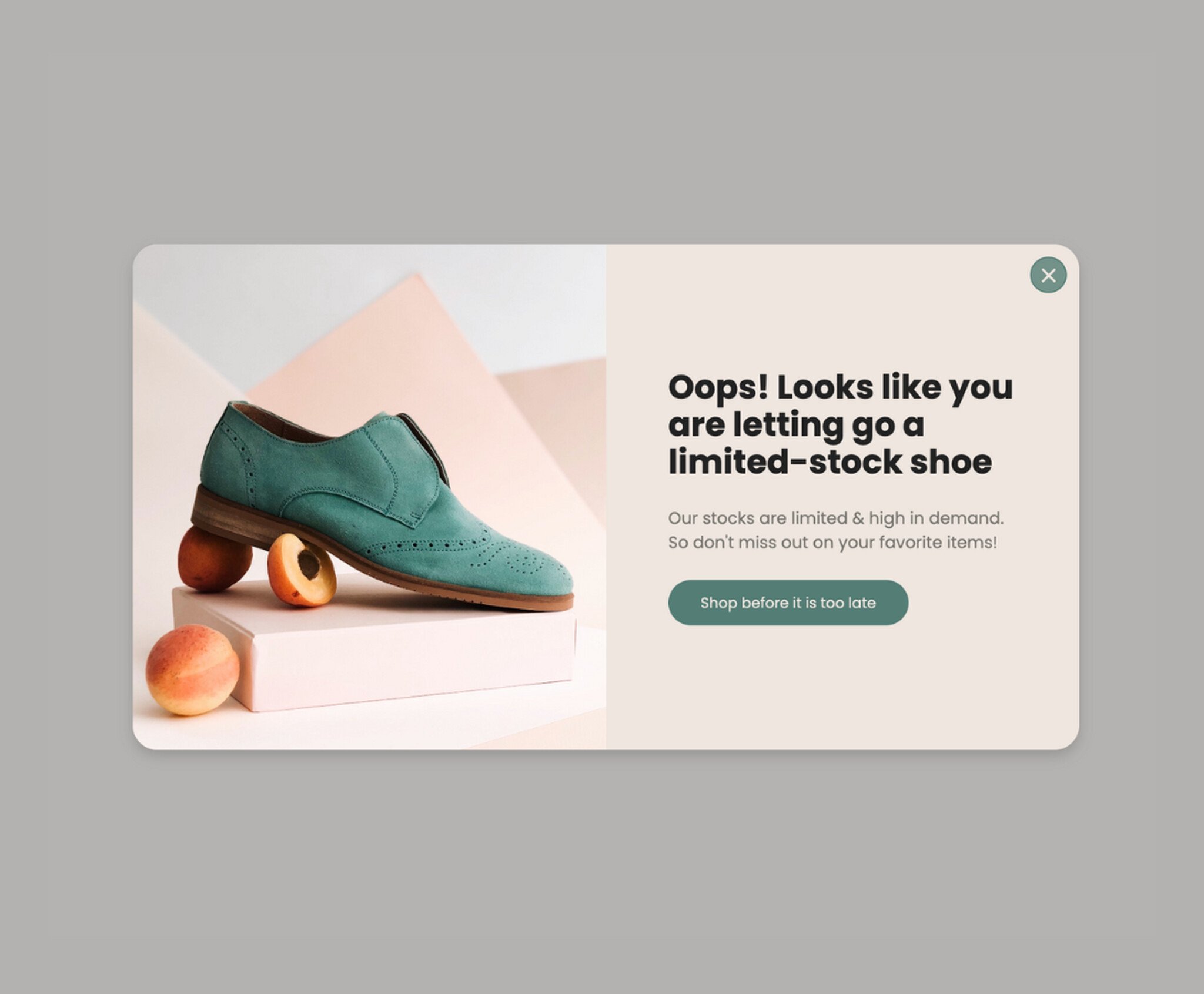
Exit-intent popups detect when a visitor's cursor moves toward the browser's close button or back navigation, then display a targeted message at the exact moment of abandonment. Unlike timed popups that interrupt browsing, exit-intent fires only when someone has already decided to leave. You're not interrupting engaged shoppers — you're catching people who were gone.
How to implement:
1. Set up an exit-intent campaign in Popupsmart's popup builder — the script loads async, so there's no page speed hit
2. Target cart and checkout pages only. Showing exit popups on every page dilutes their effectiveness
3. Offer something specific: free shipping, a 10% discount code, or a reminder that stock is limited. Generic "Don't leave!" messages convert poorly
4. Set frequency capping to 1 impression per visitor per 7 days. Repeated popups on every visit train shoppers to ignore them
5. A/B test your headline. We've seen "Your cart is waiting" outperform "Wait! Don't go!" by 22% in e-commerce campaigns because it feels less desperate
2. Urgency and Scarcity Triggers: Motivate Immediate Checkout
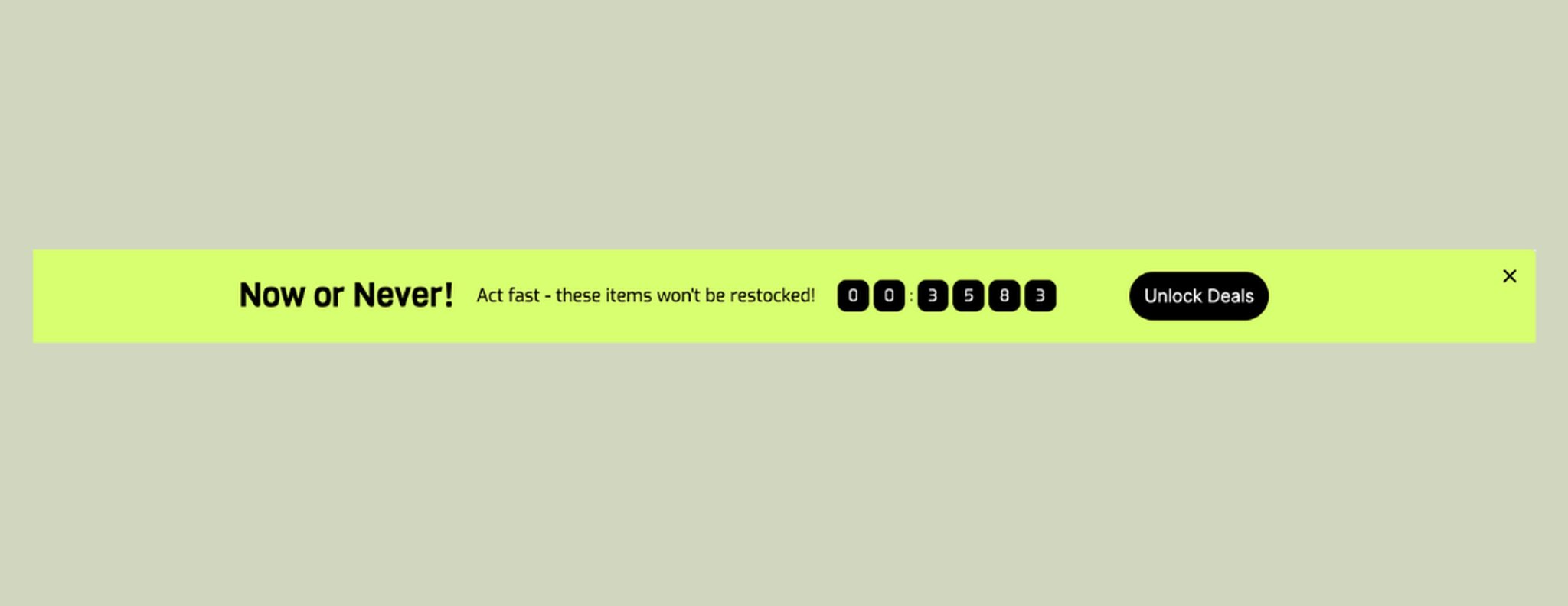
Urgency tactics use time pressure and stock scarcity to convert hesitation into action. Countdown timers, low-stock warnings, and limited-time pricing give shoppers a concrete reason to buy now instead of "later" (which usually means never).
How to implement:
1. Add a countdown timer to cart pages for limited-time promotions. Keep the deadline real — fake urgency erodes trust fast
2. Display "Only X left in stock" labels on product and cart pages when inventory drops below a threshold (e.g., fewer than 10 units)
3. Send a cart abandonment email with a time-limited discount that expires in 24-48 hours
4. Combine urgency with a exit-intent popup — show a "Your 15% discount expires in 30 minutes" message when someone tries to leave the cart page
Urgency works best when it's honest. Stores that use real inventory counts and genuine limited-time offers see 2-3x higher conversion rates on urgency campaigns compared to those using artificial scarcity, according to Contentsquare's cart abandonment guide. If you fake it and customers catch on, the trust damage outweighs any short-term gain.
3. Free Shipping Thresholds: Remove the Biggest Purchase Barrier
Unexpected shipping costs are the single biggest reason shoppers abandon carts. Offering free shipping — whether across the board or above a minimum order value — removes this friction point entirely and often increases average order value in the process.
How to implement:
1. Calculate your average order value (AOV), then set your free shipping threshold 15-20% above it. This nudges shoppers to add more items
2. Show a progress bar in the cart: "You're $12 away from free shipping!" This turns a cost concern into a gamification element
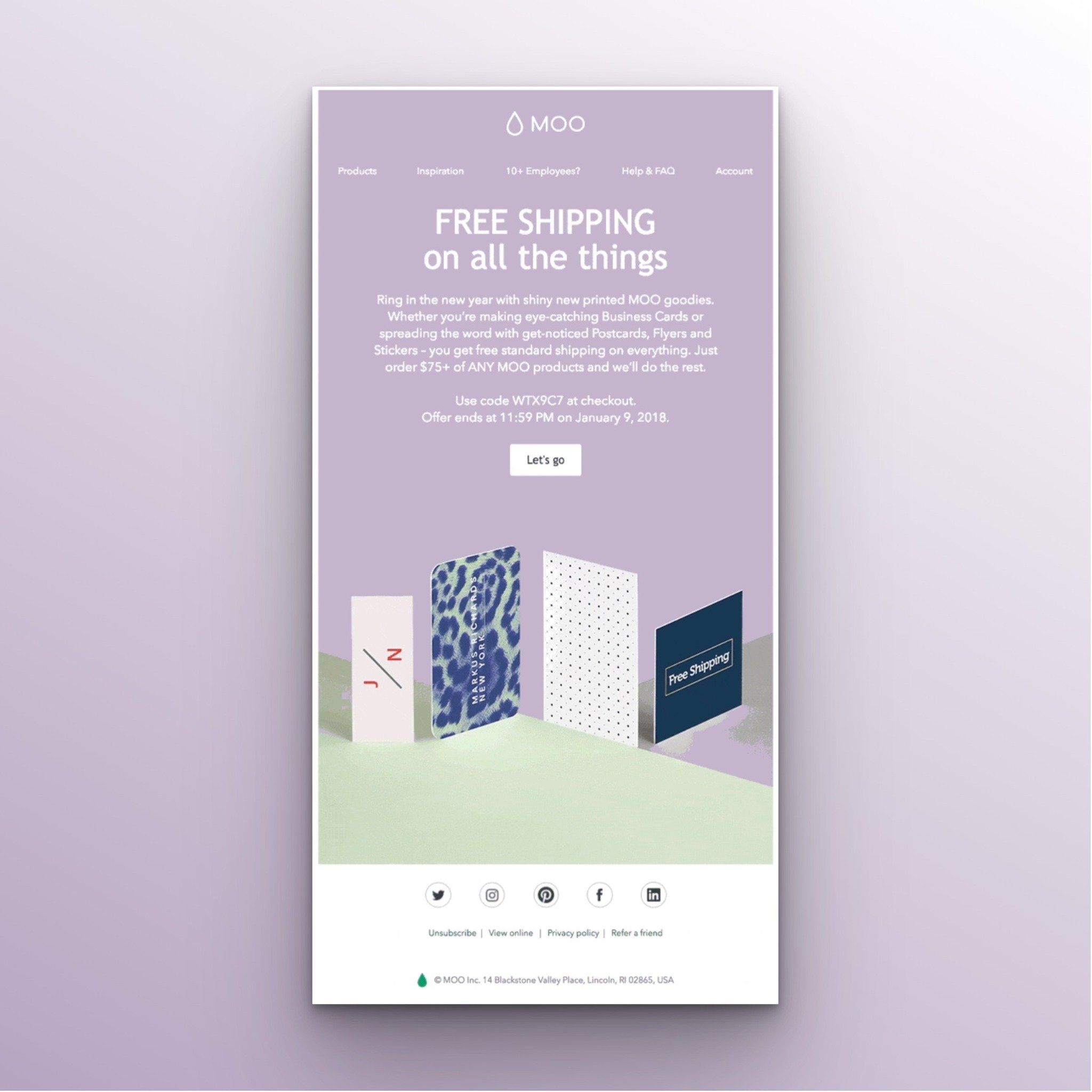
3. Announce free shipping promotions through email campaigns. The brand MOO sends "FREE SHIPPING on all the things" emails during promotional windows, which doubles as a cart recovery touchpoint
4. Display shipping costs on the product page, not just at checkout. Price surprises at the last step cause the most abandonment
According to Dynamic Yield's research, cart abandonment costs e-commerce brands $18 billion in lost sales annually, and shipping cost surprises drive a significant portion of those losses. Stores that switch to transparent shipping or free shipping thresholds typically see a 10-15% drop in cart abandonment within the first month.
4. Discount and Incentive Offers: Convert Price-Sensitive Abandoners
Targeted discounts address one of the most common abandonment reasons: price hesitation. A well-timed coupon code or incentive gives price-conscious shoppers the final push they need. The key is targeting, blanket discounts train everyone to wait for a deal, while targeted ones reward genuine purchase intent.
How to implement:
1. Reserve discount offers for the second or third recovery email, not the first. Leading with discounts conditions shoppers to always abandon and wait for a coupon
2. Offer first-time buyers a slightly higher discount (10-15%) than returning customers (5-10%). New customer acquisition has a higher lifetime value payoff
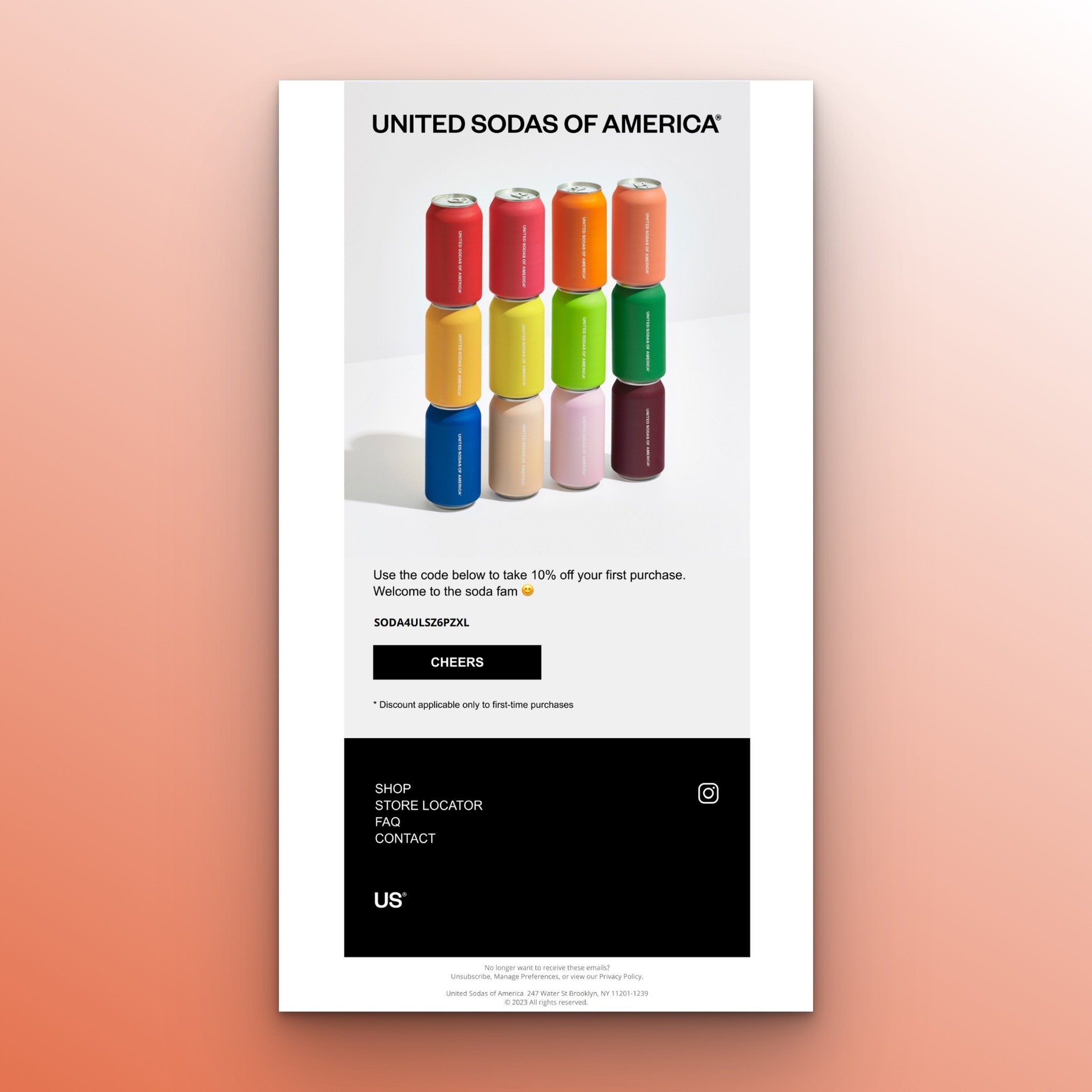
3. Make codes time-limited (24-48 hours) and single-use. United Sodas of America sends discount emails with a playful "Cheers" CTA that feels personal rather than transactional
4. Test percentage-off vs. dollar-off. For carts under $50, "$5 off" often outperforms "10% off" because the dollar amount feels more tangible
5. Product Bundles: Increase Value and Average Order Size
Product bundling groups complementary items at a combined price that's lower than buying each separately. For cart recovery, bundles shift the conversation from "should I buy this?" to "this deal is too good to pass up." They also increase your AOV, which offsets any margin you lose on the discount.
How to implement:
1. Identify your most-abandoned products, then pair them with frequently-bought-together items at a 10-20% bundle discount
2. Display bundle offers on the cart page as an upsell: "Add [complementary product] and save 15% on both"
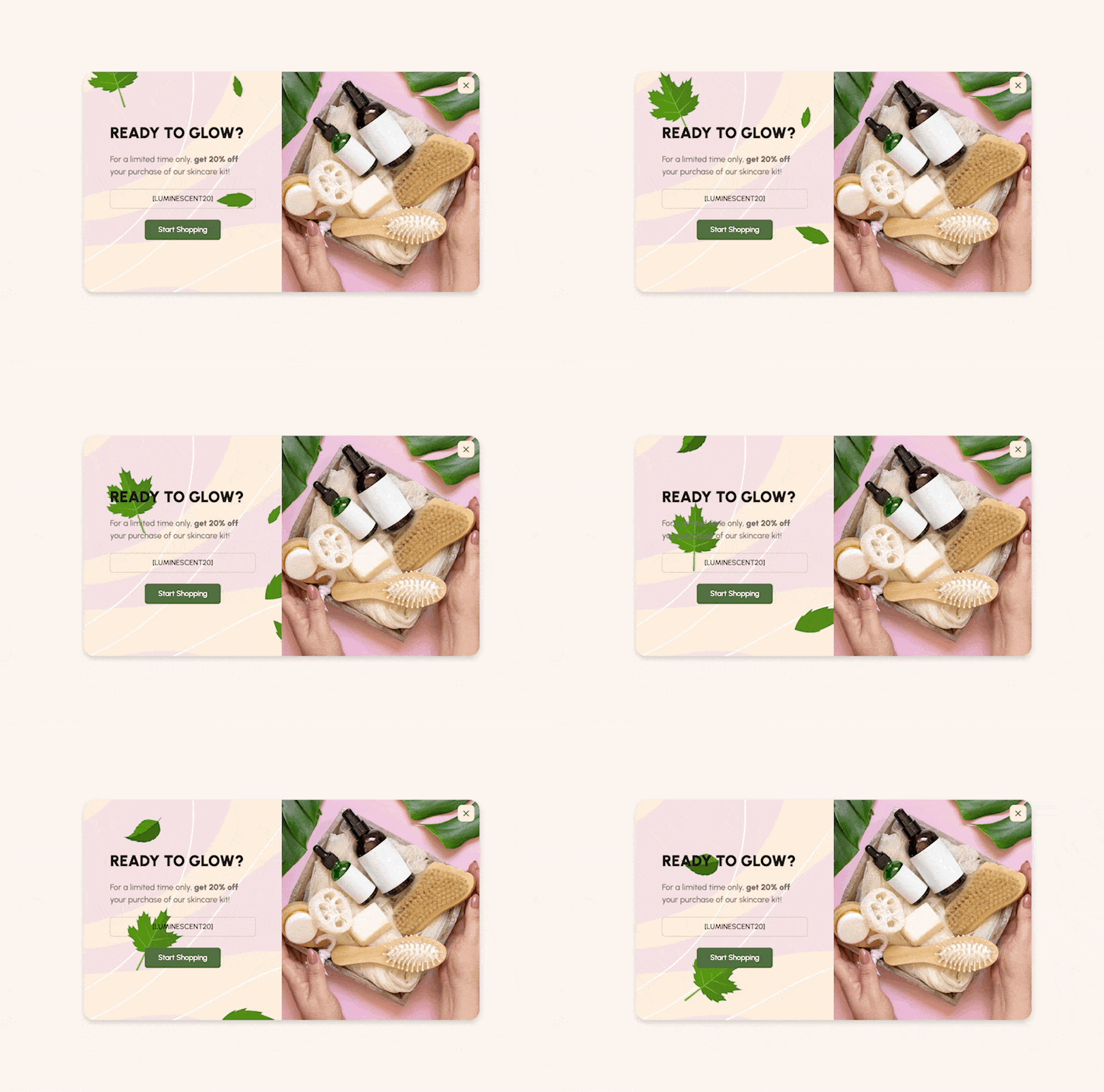
3. Use a product bundle popup to promote the offer before checkout. Clear imagery of all included items performs better than text-only descriptions
4. Test "build your own bundle" vs. curated bundles. Curated bundles convert faster because they reduce decision fatigue, but custom bundles generate higher AOV
Product bundles work especially well for stores with complementary product lines. Skincare, electronics accessories, and food/beverage brands tend to see the strongest results.
6. Trust Badges at Checkout: Address Security Concerns
Trust badges are visual indicators, SSL certificates, payment provider logos, satisfaction guarantees, and security seals, that reassure shoppers their payment information is safe. Online shoppers abandon carts because they don't trust the site with their credit card details.
How to implement:
1. Place trust badges directly next to or below the payment form — not in the footer where nobody looks during checkout
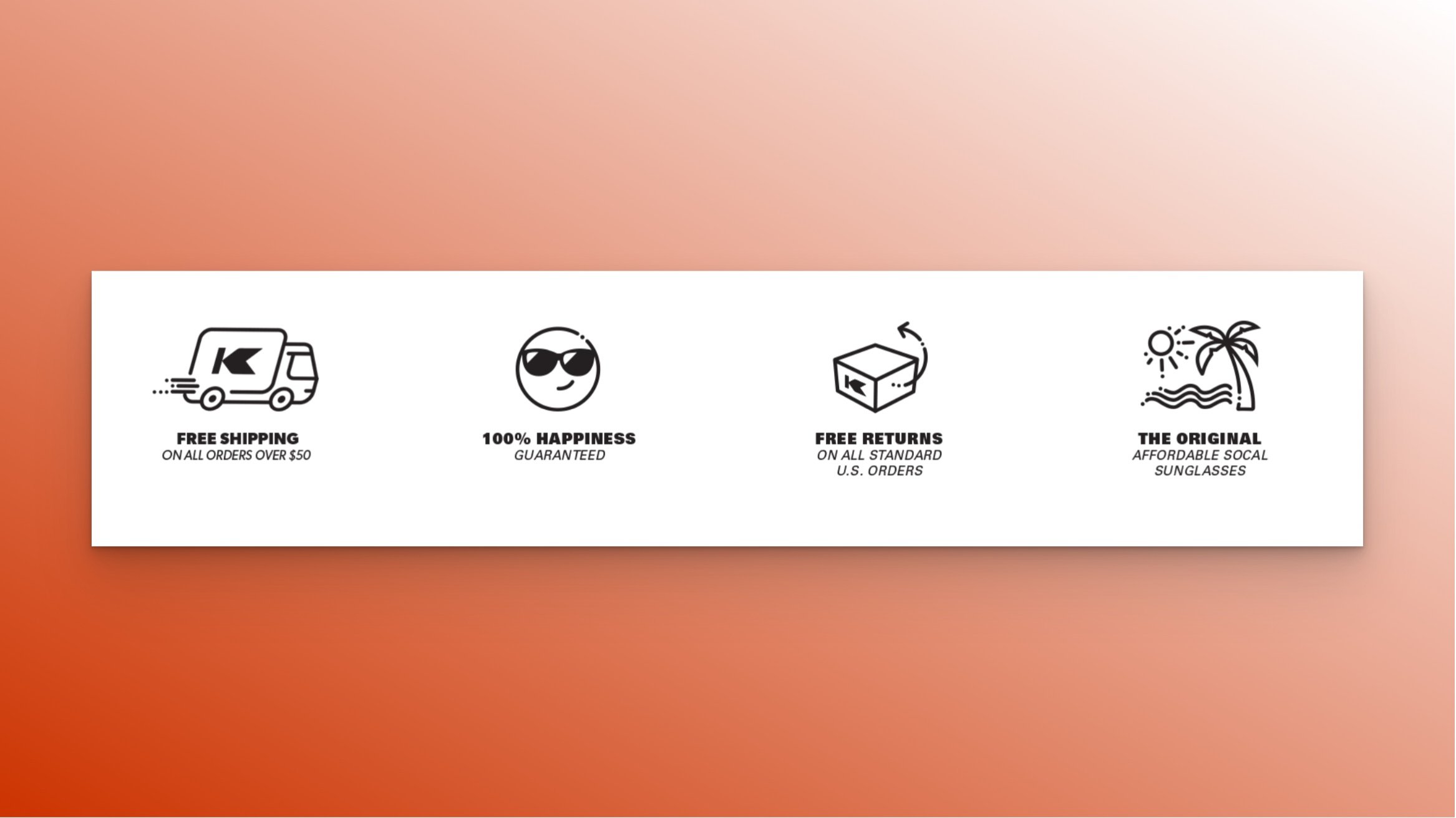
2. Display the logos of payment methods you accept (Visa, Mastercard, PayPal, Apple Pay). Knockaround displays free shipping, free returns, and "100% happiness guaranteed" badges on product pages
3. Add customer review scores near the checkout button. A "4.8/5 from 2,300 reviews" badge is more persuasive than a generic security seal
4. For higher-priced items ($100+), include a brief "Your payment is secured with 256-bit encryption" line near the form
According to BigCommerce's abandoned cart research, trust signals at checkout are among the most effective low-effort changes stores can make. Expect a 5-10% improvement in checkout completion rates, with the biggest lift on stores that previously showed no trust indicators at all.
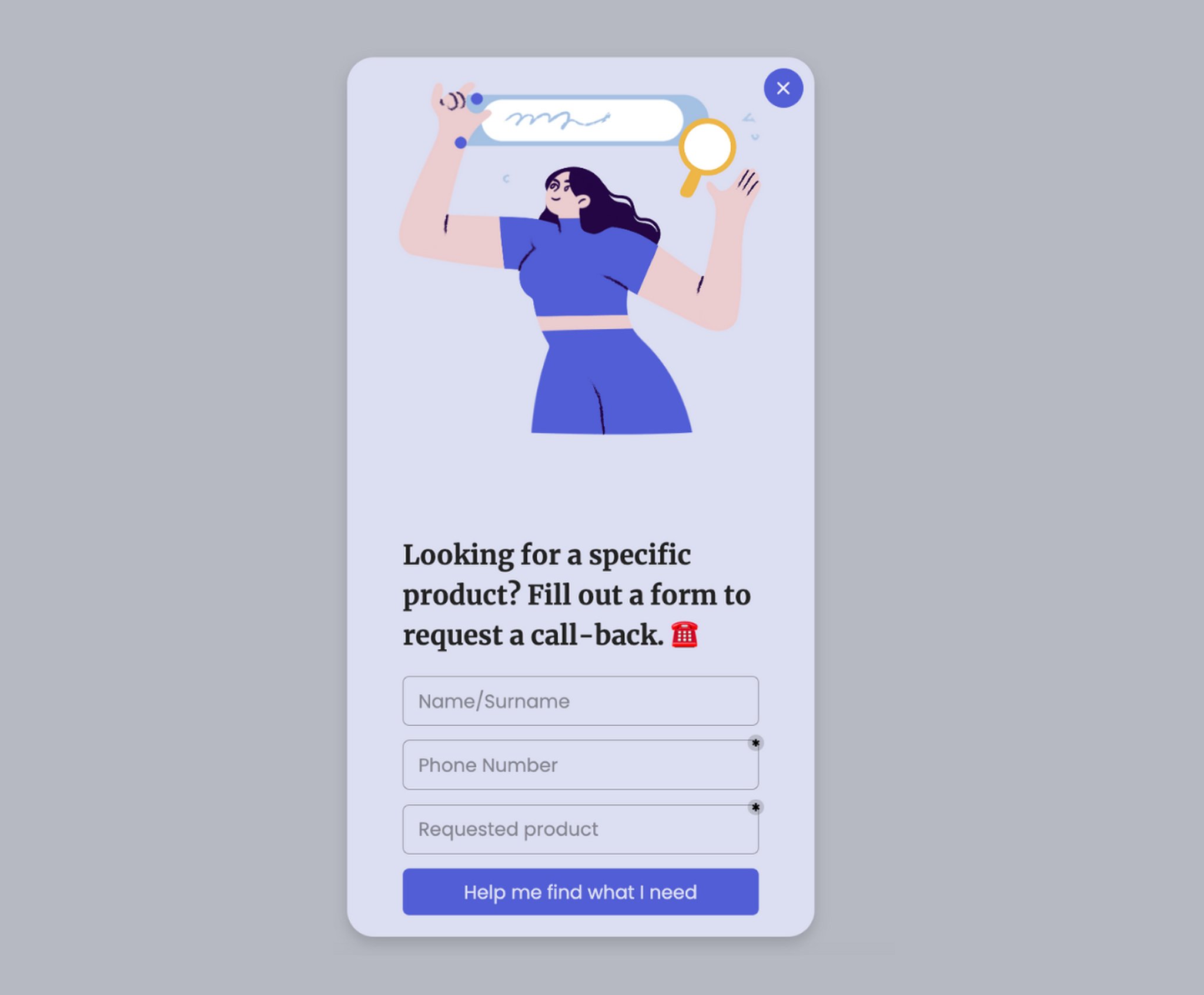
7. Callback Request Forms: Support High-Intent Shoppers Directly
Callback forms let shoppers request a phone call from your team, useful when they have questions about sizing, compatibility, or custom orders that a FAQ page can't answer. This strategy works best for higher-ticket products where customers need reassurance before spending.
How to implement:
1. Add a callback popup to product pages and the cart page with a headline like "Looking for a specific product?" or "Have questions before you buy?"
2. Keep the form to 2-3 fields maximum: name, phone number, and an optional notes field. Every extra field reduces submissions
3. Respond within 30 minutes during business hours. Speed matters — lead response rates drop dramatically after the first hour
4. Train your team to ask "What stopped you from checking out?" on the call. This gives you real abandonment data you can't get from analytics
8. Personalized Follow-Up Emails: Automate Your Recovery Sequence
Cart recovery emails are automated messages sent to shoppers who added items but didn't complete checkout. They're the backbone of most abandoned cart recovery programs because they scale without manual effort and work around the clock.
How to implement:
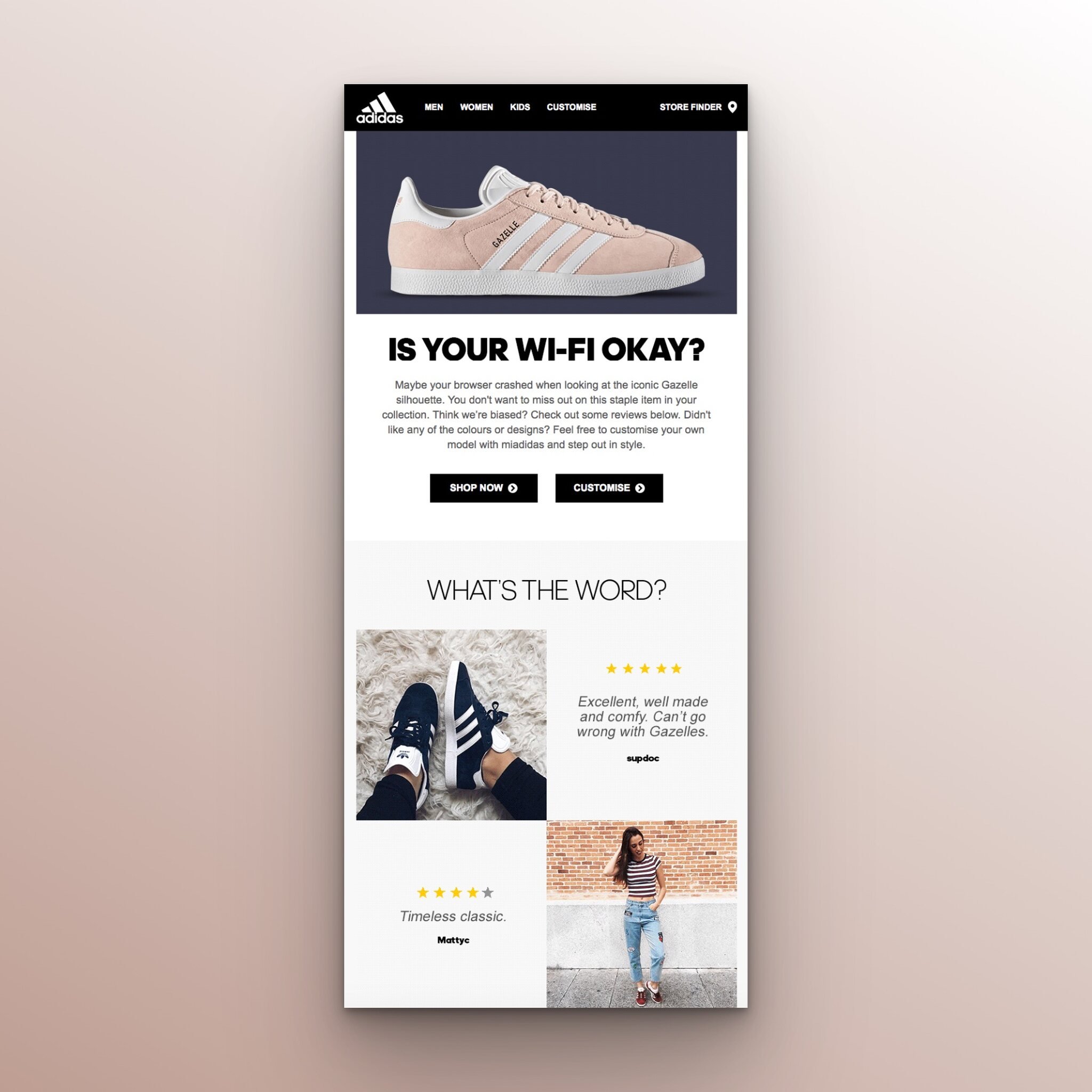
1. Set up a 3-email sequence. Email 1 (within 1 hour): simple reminder with cart contents. Email 2 (24 hours): address common objections. Email 3 (48-72 hours): offer an incentive
2. Include product images and prices in every email. Adidas opens their recovery email with "IS YOUR WI-FI OKAY?" — witty, personal, and it includes the exact products left behind
3. Write subject lines that avoid spam triggers. Check our 50+ abandoned cart subject lines guide for tested examples
4. For Shopify stores, enable the built-in abandoned checkout email, then layer on a dedicated email tool (Klaviyo, Mailchimp, or Omnisend) for the multi-step sequence
5. Don't overdo it. Three emails is the sweet spot. Beyond that, you risk unsubscribes and spam complaints
According to Email Vendor Selection, 68% of direct-to-consumer brands send at least one abandoned cart email. Ecommerce entrepreneur Andrew Youderian reported a recovery rate between 3% and 11% monthly using a three-stage email sequence (reminder, nudge, discount). Most stores can expect results in the 5-8% range.
9. Guest Checkout: Eliminate Forced Account Creation
Mandatory account creation is one of the top friction points at checkout. Many first-time buyers just want to place an order; not create a password, verify an email, and manage another login. Guest checkout lets them buy with minimal steps, and you can invite them to create an account after the purchase when they already trust you.
How to implement:
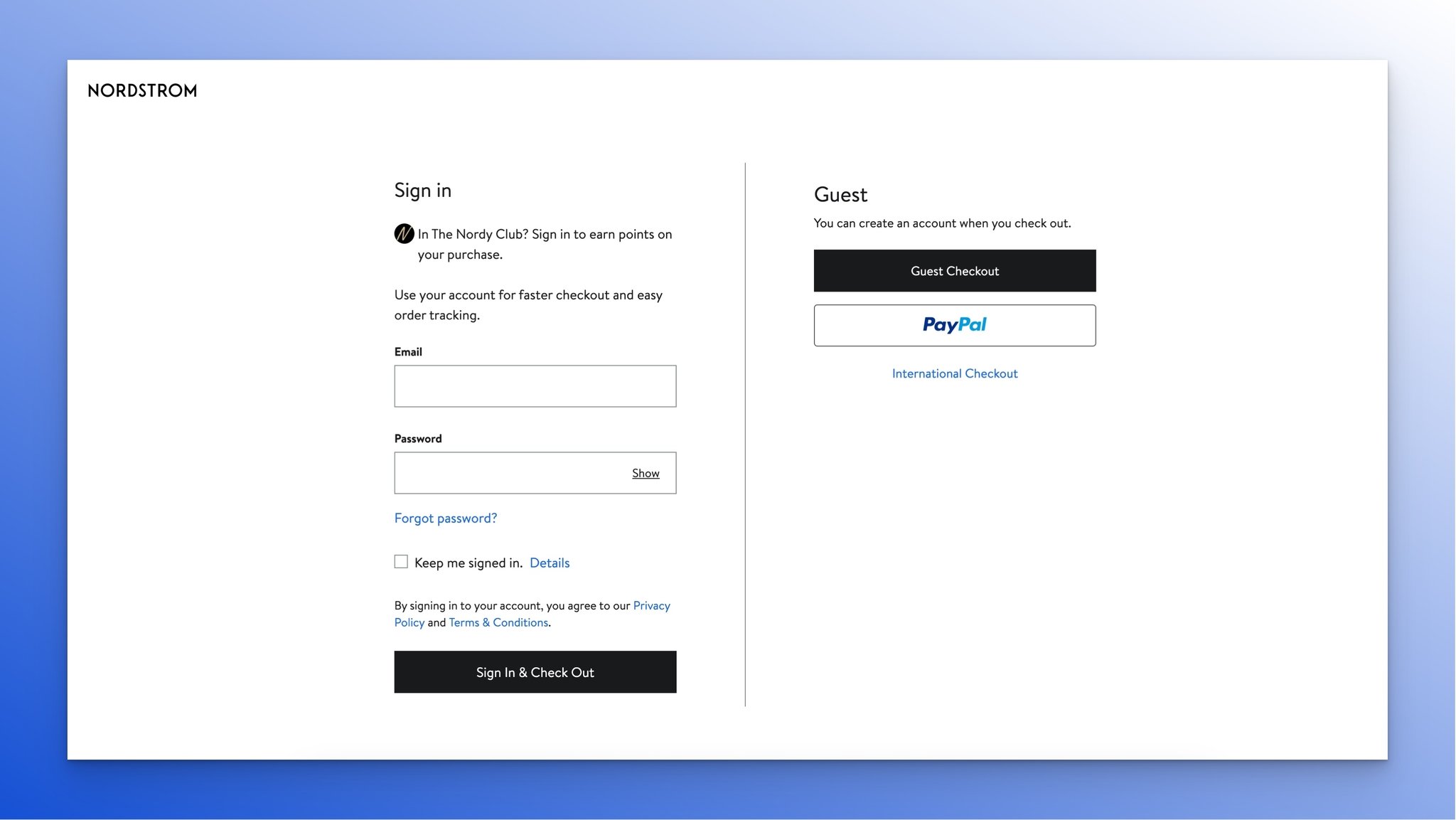
1. Make "Checkout as Guest" equally prominent as "Sign In" — don't bury it below the login form. Nordstrom gives both options equal visual weight on their checkout page
2. Only ask for information you actually need to ship the order: name, email, shipping address, payment. Skip the phone number unless you need it for delivery
3. After purchase, show a "Save your details for faster checkout next time?" prompt on the confirmation page. This converts 20-30% of guest buyers into registered accounts without the pre-purchase friction
Guest checkout is a high-impact, low-effort change. Stores that add it typically see a 10-15% reduction in checkout abandonment within the first month. For Shopify stores, guest checkout is available by default, make sure it hasn't been accidentally disabled in your settings.
10. Multiple Payment Options: Let Customers Pay Their Way
Payment preference varies by market, age group, and purchase size. If you only accept credit cards, you're losing shoppers who prefer PayPal, Apple Pay, Google Pay, or buy-now-pay-later services like Klarna and Afterpay. Each missing payment method is a potential abandonment trigger.
How to implement:
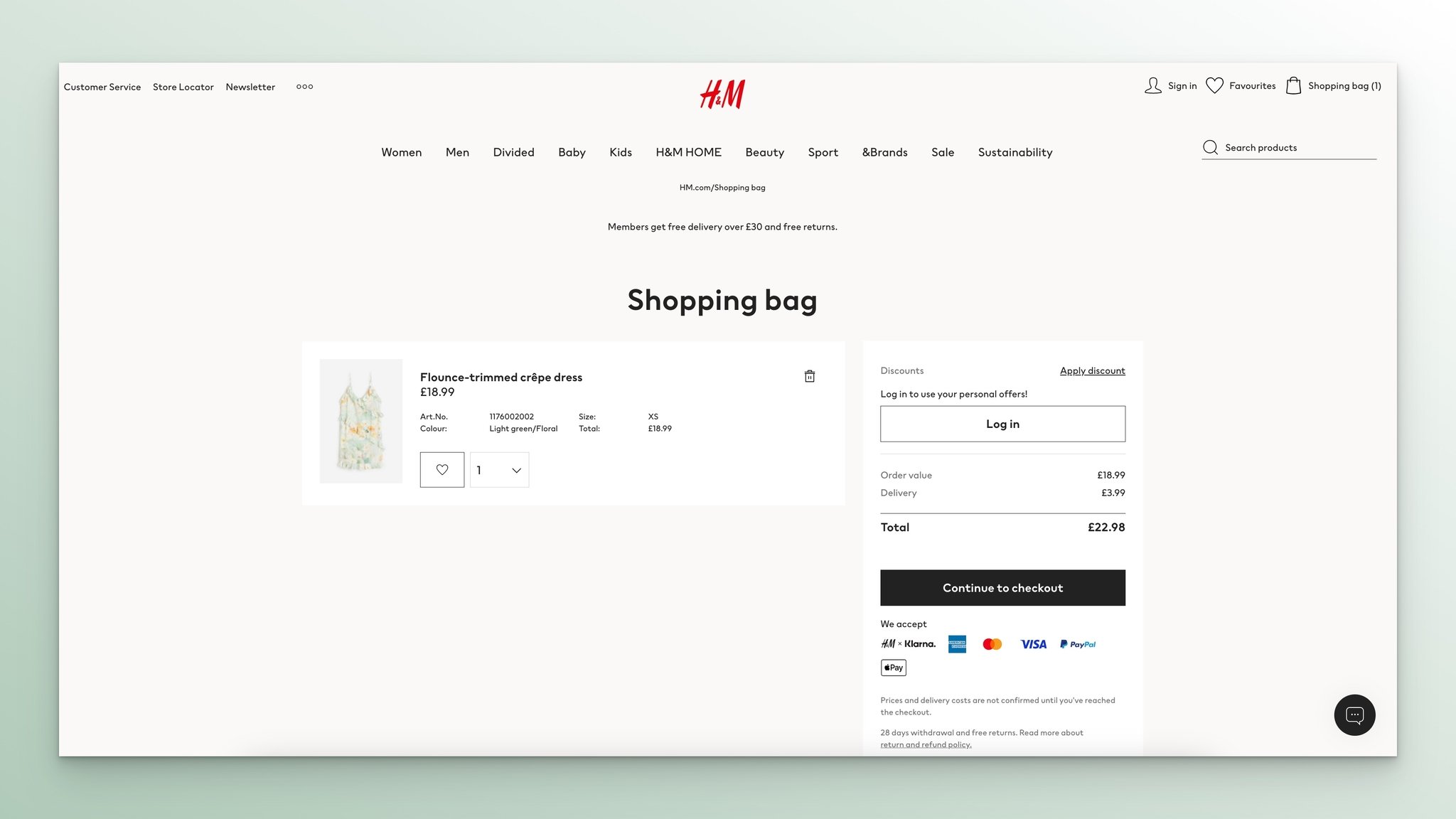
1. Audit your current payment options against your customer demographics. H&M displays all accepted payment methods on their checkout page, reducing uncertainty
2. Add at least one digital wallet (Apple Pay or Google Pay) and one BNPL option (Klarna, Afterpay, or Shop Pay Installments). These cover the two fastest-growing payment preferences
3. Show accepted payment icons on product pages and in the cart, not just at final checkout. Shoppers want to know before they start the process
4. For international stores, consider local payment methods (iDEAL for the Netherlands, Bancontact for Belgium, PIX for Brazil)
According to Checkout.com's 2026 payment trends report, digital wallets and BNPL options are growing at double-digit rates year over year. Stores that expand from credit-card-only to 3+ payment methods often see a 5-12% improvement in checkout conversion rates.
11. Clear Refund and Return Policies: Reduce Purchase Anxiety
Uncertainty about returns stops shoppers from completing purchases, especially for apparel, electronics, and anything they can't try in person first. A visible, easy-to-understand return policy reduces this hesitation before it becomes abandonment.
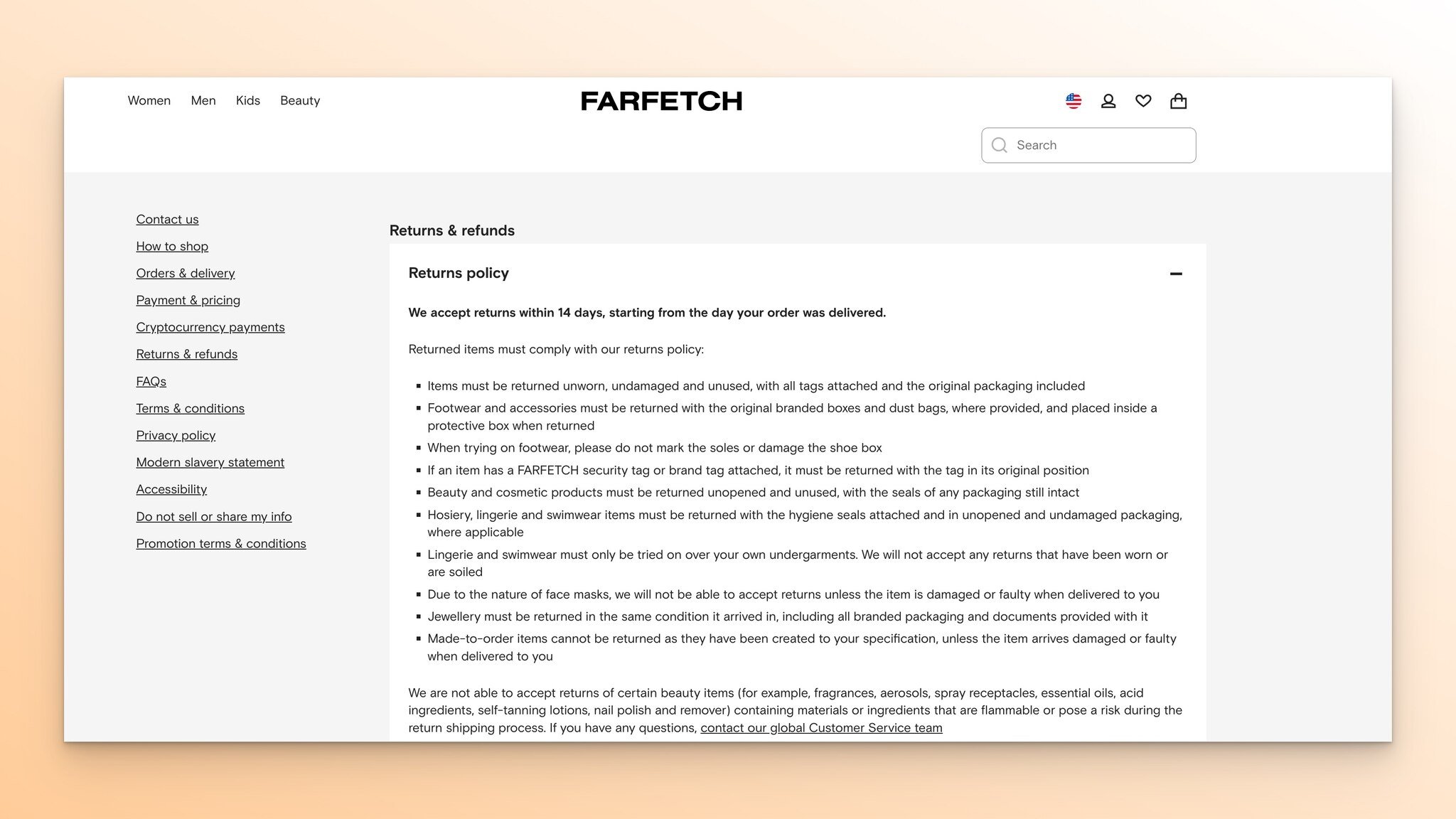
How to implement:
1. Summarize your return policy in one sentence on the product page: "Free returns within 30 days, no questions asked." Save the full legal version for a dedicated policy page
2. Add a return policy link on the cart page and checkout page. Farfetch makes their returns and exchange policy accessible from every step of the purchase flow
3. Be specific about the process: who pays return shipping, how long refunds take, and whether exchanges are an option. Vague policies create more anxiety than no policy at all
4. Consider extending your return window. Stores that move from 14 to 30 days typically see returns stay flat (people procrastinate returning too) while conversions increase
Return policy visibility has an outsized impact on first-time buyers. Repeat customers already know what to expect, but new visitors are taking a risk on an unfamiliar brand. Making returns easy and obvious can reduce first-purchase abandonment by 8-12%.
12. Money-Back Guarantees: Shift the Risk to You
A money-back guarantee goes beyond a standard return policy by explicitly promising a full refund if the customer isn't satisfied, no fine print. It shifts the entire purchase risk from the buyer to the seller, which is especially effective for premium products, subscriptions, and anything where the customer can't evaluate quality before buying.
How to implement:
1. State the guarantee clearly: "30-day money-back guarantee, if you're not satisfied, we'll refund every penny." Avoid legalistic language
2. Display the guarantee badge on product pages, cart pages, and next to the checkout button. Visibility matters more than the policy itself
3. For SaaS or subscription products, offer a no-questions-asked cancellation policy alongside the money-back guarantee
4. Track refund rates monthly. If your refund rate stays under 5%, the guarantee is paying for itself through increased conversions
According to Unific's abandoned cart case study, the average merchant recovers fewer than 15% of abandoned carts. Adding visible trust-building elements like money-back guarantees is one of the simplest ways to close that gap, particularly for stores where the average order value exceeds $75 and perceived risk is higher.
13. Retargeting Ads: Bring Abandoners Back Through Paid Channels
Retargeting ads show your products to people who visited your store but didn't buy, across platforms like Google Display Network, Facebook, Instagram, and TikTok. They work because the audience has already shown purchase intent. You're reminding them, not introducing yourself.
How to implement:
1. Install your Facebook Pixel and Google Ads remarketing tag before you start running retargeting. Without proper tracking, you can't segment audiences
2. Create a "cart abandoners" audience segment: visitors who viewed the cart page but didn't reach the order confirmation page. Exclude purchasers
3. Use dynamic product ads that show the exact items left in the cart. Generic brand ads convert 3-5x lower than product-specific retargeting
4. Set a 7-day frequency cap and a 30-day audience window. Retargeting beyond 30 days has diminishing returns as purchase intent fades
5. Layer in a discount on Day 3-5 for shoppers who still haven't converted. Start with a reminder, escalate to an incentive
Retargeting is the most effective paid channel for cart recovery because the audience is pre-qualified. Expect a 2-5x higher ROAS on retargeting campaigns compared to prospecting campaigns. The main risk is ad fatigue, monitor frequency metrics weekly and refresh creative every 2-3 weeks.
How to Prioritize Abandoned Cart Recovery Strategies
Not all 13 strategies need to launch at once. Here's how to prioritize based on your resources and where you are today:
| Priority | Strategy | Effort | Impact | Best For |
|---|---|---|---|---|
| 1 | Follow-up emails | Low | High | Every store — automate and forget |
| 2 | Exit-intent popups | Low | High | Stores with 5K+ monthly visits |
| 3 | Guest checkout | Low | High | Stores without it enabled |
| 4 | Free shipping threshold | Low | High | Stores with high shipping-related abandonment |
| 5 | Trust badges | Low | Medium | New or lesser-known brands |
| 6 | Clear return policy | Low | Medium | Apparel, electronics, high-AOV stores |
| 7 | Multiple payment options | Medium | Medium | International stores or younger demographics |
| 8 | Urgency triggers | Medium | Medium | Stores with genuine limited stock |
| 9 | Discount offers | Medium | Medium | Price-sensitive markets |
| 10 | Product bundles | Medium | Medium | Stores with complementary product lines |
| 11 | Money-back guarantee | Low | Medium | Premium or subscription products |
| 12 | Callback forms | High | High | High-ticket items with dedicated sales staff |
| 13 | Retargeting ads | High | High | Stores with ad budget and 10K+ monthly visits |
Start with the top four. They're low-effort, high-impact changes that most stores can implement in a single afternoon. Then layer on medium-effort strategies as you build your e-commerce optimization capabilities.
How to Measure Your Cart Recovery Results
Without tracking, you won't know which strategies are working. Here's what to monitor:
• Cart abandonment rate: (Carts created - Carts completed) / Carts created. Track weekly
• Recovery rate: Completed purchases from recovery touchpoints / Total abandoned carts. Aim for 5-15%
• Revenue recovered: Total revenue from recovered carts per month. This is your headline metric
• Email open and click rates: Benchmark against 40-45% open rate and 10-15% click rate for cart recovery emails
• Time to recovery: How long between abandonment and conversion. Most recoveries happen within 24 hours
A/B test one variable at a time. Change your email subject line, then measure for a week. Change your popup offer, then measure again. Stacking changes makes it impossible to attribute results. For deeper analytics on your conversion optimization efforts, track these metrics in a dedicated dashboard rather than checking them ad hoc.
Recover Lost Revenue Starting Today
Cart abandonment isn't going away. But with the right recovery strategies, you can turn a significant chunk of those lost sales into completed orders. Start with the three highest-ROI tactics: set up a cart recovery popup to catch abandoners in the moment, launch an automated email sequence to follow up within the hour, and enable guest checkout to remove the friction that drives buyers away.
These three changes alone can recover 5-15% of your abandoned carts, and you can implement all of them this week. From there, layer on the remaining strategies such as free shipping thresholds, trust badges, retargeting ads, as you build a complete abandonment recovery program that works at every stage of the customer journey.
Frequently Asked Questions
How Do You Recover an Abandoned Cart?
The most direct way to recover an abandoned cart is sending an automated email sequence within 1 hour of abandonment, followed by 1-2 reminder emails over the next 48 hours. Combine this with exit-intent popups on your cart page and retargeting ads on social media to capture shoppers who don't respond to email. Start with email recovery (low effort, high impact), then add popups and ads as your program matures.
Does Cart Abandonment Hurt Business?
Yes, directly. With average abandonment rates above 70%, most e-commerce stores lose more potential revenue to abandoned carts than they capture in sales. According to Statista, almost 80% of online shopping sessions end without a purchase. The good news: even recovering 5-10% of those carts through basic strategies like email and popups can make a meaningful difference in monthly revenue.
What Are the Best Tools for Abandoned Cart Recovery?
It depends on your platform. For popups and on-site recovery, Popupsmart's cart recovery popups work across Shopify, WooCommerce, and custom platforms. For email, Klaviyo and Omnisend are the most popular choices for e-commerce. Shopify has built-in abandoned checkout recovery, and WooCommerce has dedicated plugins for multi-step email sequences. Most stores need a combination: on-site popups to catch people before they leave, plus email for those who already left.
How Effective Are Email Reminders for Cart Recovery?
Cart recovery emails have some of the highest engagement rates in e-commerce marketing: 40-45% open rates and 10-15% click-through rates, well above standard promotional emails. A three-email sequence (reminder, nudge, incentive) typically recovers 3-11% of abandoned carts per month. The first email, sent within an hour, captures the most conversions. Timing, personalization, and including the actual cart contents all affect performance.
Why Do Customers Abandon Shopping Carts?
The top reasons are unexpected costs at checkout (shipping, taxes, fees), forced account creation, complicated checkout processes, payment security concerns, and simple distraction. Many shoppers also use carts as wish lists or for price comparison with no immediate purchase intent. Understanding which reasons affect your specific store — through analytics, surveys, or callback conversations — is how you choose which recovery strategies to prioritize.