
10 Best Picreel Alternatives for Smarter Lead Capture

 ChatGPT
 Perplexity
 Claude
 Grok
Grok Google AI Mode
This guide compares 10 Picreel alternatives for 2026, highlighting Popupsmart, OptinMonster, Privy, and others by ease of use, targeting, ecommerce fit, pricing, and lead capture strength.
Table of contents (26)
If Picreel no longer feels like the right fit, there are plenty of alternatives that can help you capture more leads, personalize onsite messaging, and build popups that feel more useful than disruptive. The best choice depends on what you care about most, whether that is easier setup, stronger targeting, better ecommerce features, or simply a cleaner day-to-day experience.

Over the last 3 years, I’ve worked closely with SEO and conversion-focused content, and I’ve seen how much the right popup tool can change the way a site performs. Some tools help you guide visitors naturally. Others just get in the way. In this guide, I’ll walk through the Picreel alternatives I’d actually consider in 2026, what makes them different, and which one I’d pick depending on the kind of website I’m trying to grow.
What Is Picreel?
Picreel is a popup and onsite lead generation tool built to help websites turn abandoning visitors into leads, subscribers, and customers. From the way the product is positioned, it’s clearly focused on conversion-driven popups rather than trying to be an all-in-one marketing platform. That matters. Sometimes a focused tool is exactly what a business needs.
That focused promise is also what makes Picreel easy to compare with other tools in the same category. On paper, it covers a lot of what most teams want from a popup builder. There’s lead capture, campaign targeting, testing, and reporting. For some businesses, that may already be enough. But for others, the real question is not whether Picreel works, it’s whether it feels like the best fit for the way they want to grow.
Sometimes the issue is flexibility. Sometimes it’s pricing. Sometimes it’s ecommerce depth, design freedom, or just how modern the whole experience feels when campaigns become a regular part of the workflow. That’s usually the point where comparing Picreel alternatives starts to feel less like curiosity and more like a smart next step.
Quick Facts About Picreel
| Category | Details |
|---|---|
| Best Known For | Exit-intent popups and lead capture campaigns |
| Core Positioning | A popup builder focused on recovering visitors, capturing leads, and improving conversions |
| Starting Price | Free plan available, with paid options for higher traffic and more advanced usage |
| Review Snapshot | Generally seen as a solid lead capture tool with positive user feedback |
| Standout Strength | Strong focus on popup-driven conversion recovery |
| Common Friction | May feel limited for teams that want more advanced ecommerce workflows, broader onsite messaging, or a more polished user experience |
What Picreel Includes
At a practical level, Picreel covers the features most people expect from a dedicated popup tool:
- exit-intent popups
- behavior-based triggers
- targeting and personalization
- A/B testing
- analytics and performance tracking
- templates for different campaign goals
- integrations with other marketing tools
That feature set gives Picreel a clear place in the market. It is not trying to do everything. It is trying to do one job well: help websites convert more of the traffic they already have. And honestly, that focus can be a strength. Clean positioning is often easier to trust than a platform that claims to solve every marketing problem at once.
Pricing Snapshot
Picreel offers a free plan for up to 5,000 visitors per month. Its paid pricing is commonly listed from $9.99/month for 10,000 visitors per month, and the structure appears to scale mainly with visitor volume. That makes the entry point approachable, but like many visitor-based tools, the more important question is how comfortable the pricing still feels as traffic grows.
Performance & Feedback
From a positioning standpoint, Picreel comes across as a practical lead capture tool with a fairly straightforward value proposition. The appeal is easy to understand:
- it focuses on conversion
- it gives teams a way to target abandoning visitors
- it avoids the “bloated platform” feeling some all-in-one tools create
Still, product categories like this are rarely judged on basic functionality alone. Most popup tools today can create popups, trigger them by behavior, and connect with email platforms. The real difference usually shows up in the experience around those features, things like usability, flexibility, ecommerce readiness, campaign depth, and how well the tool holds up as growth gets more serious.
Here’s the simplest way I’d frame it:
| Area | Where Picreel Looks Strong | Where Alternatives May Win |
|---|---|---|
| Ease of Use | Straightforward setup and focused functionality | Some competitors may feel cleaner or more modern |
| Core Features | Covers popup essentials like targeting, testing, and analytics | Other tools may offer deeper segmentation or campaign variety |
| Pricing Entry Point | Easy to try thanks to a free starting option | Scaling costs may feel better elsewhere depending on traffic |
| Overall Fit | Good match for popup-led lead capture | Less ideal if broader onsite messaging or advanced ecommerce features matter more |
My Take: Stripped down to its core, Picreel looks like a focused popup builder for businesses that want to capture leads and recover leaving visitors without committing to a huge marketing suite. That is a perfectly reasonable reason to choose it.
But it is also a perfectly reasonable reason to keep looking.
A focused tool raises a simple question: does it do the exact job well enough for what comes next? If the answer is yes, great. If not, that is where the search for a better Picreel alternative begins. And that’s really the point of this post, not to ask whether Picreel is bad, but to ask which tool might fit better for the kind of growth that actually matters 🚀
10 Best Picreel Alternatives in 2026
Not every tool on this list is trying to solve the exact same problem, and that’s exactly why comparing them side by side helps. Some feel more focused on popups and lead capture, some lean harder into ecommerce, and some make more sense for teams that want personalization, funnels, or broader onsite messaging. That difference matters. A lot.
Here’s the full comparison:
| Tool | Best For | Starting Price | G2 Rating | What Stands Out Most |
|---|---|---|---|---|
| Popupsmart | Fast lead capture and onsite conversion | Free plan, paid tiers available | ⭐ 4.5/5 | Clean setup and a very CRO-focused product |
| OptinMonster | Advanced targeting and campaign variety | From $7/month, billed annually | ⭐ 4.3/5 | Strong trigger logic and lots of campaign types |
| Wisepops | Teams that want popups plus richer onsite messaging | From $49/month | ⭐ 4.5/5 | More than popups, especially with feeds, bars, and targeting |
| Poptin | Small businesses that want value and flexibility | Free plan, paid from $25/month | ⭐ 4.8/5 | Strong feature set at a friendly entry point |
| Privy | Shopify and ecommerce brands | Free trial, paid from $30/month | ⭐ 4.6/5 | Built with ecommerce growth in mind |
| Sleeknote | Brands that care about targeting and polished onsite journeys | From €49/month | ⭐ 4.3/5 | A more premium feel for personalized campaigns |
| Hello Bar | Simple list growth and lightweight popups | Free plan, paid from $29/month annually | ⭐ 4.7/5 | Very approachable for straightforward lead gen |
| ConvertFlow | Funnel building, personalization, and testing | From $22/month | ⭐ 4.5/5 | Better fit when popups are just one part of the funnel |
| Justuno | Ecommerce brands that want segmentation depth | Free plan, paid from $39/month | ⭐ 4.3/5 | Strong targeting and retail-focused use cases |
| BDOW! (formerly Sumo) | Budget-conscious sites that want a familiar popup tool | Free plan, paid tiers available | — | Still recognizable, but more often compared on simplicity and price than innovation |
My take on the table: if the goal is straightforward lead capture with a lighter, cleaner experience, Popupsmart, Poptin, and Hello Bar stand out fastest. If stronger targeting or more advanced campaign logic matters more, OptinMonster, Wisepops, and Justuno become much more interesting. And if the popup itself is only one part of a bigger conversion flow, ConvertFlow starts to make a different kind of case 🚀
1. Popupsmart
Popupsmart is one of the strongest Picreel alternatives for teams that care about lead capture, faster campaign setup, and a cleaner onsite conversion workflow. What stands out here is how clear the product positioning feels from the start. This is a popup builder designed to help websites turn traffic into leads, sales, and actions without making setup feel heavier than it needs to.
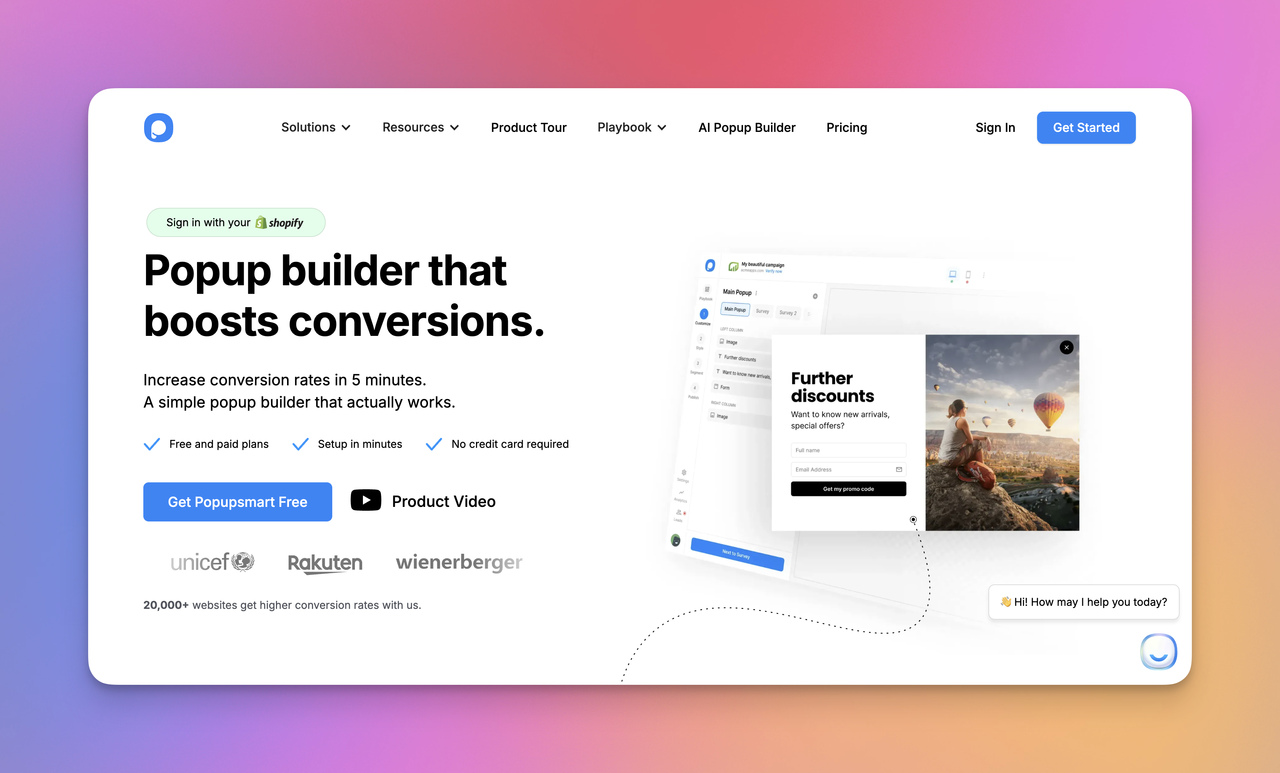
That part matters more than it sounds. A lot of popup tools can technically do the job, but not all of them feel equally smooth once campaigns become part of regular marketing work. Popupsmart feels built for teams that want to move quickly, launch offers without friction, and stay focused on conversions instead of getting buried in setup. That makes it especially appealing for lean teams, ecommerce brands, and marketers who want their popup software to feel practical, not tiring. ✨
| Category | Details |
|---|---|
| Why it stands out | Popupsmart stands out for speed, simplicity, and a conversion-focused workflow. Reviews and product pages consistently position it as a lightweight popup builder built for fast launch and practical lead capture. |
| Key features | Popups, bars, embedded campaigns, lead capture, cart-abandonment support, feedback collection, and campaign targeting. |
| Pricing snapshot | Popupsmart has a free tier, and G2 lists pricing editions from $0 to $132.50. |
| G2 rating | ⭐ 4.5/5 on G2. |
A few strengths stand out right away:
- fast setup with a no-code workflow
- strong focus on lead capture and onsite conversion
- free entry point for smaller teams
- a product experience that feels intentionally lightweight rather than bloated
A possible limitation is that teams looking for a broader all-in-one marketing suite may find Popupsmart more focused than expansive. Popupsmart has a free plan, and its paid plans start at $32.50 per year for Basic.
That is not really a drawback if lead capture is the priority, but it does shape who the best-fit user is.
Best for: Businesses that want faster lead capture, cleaner popups, and a conversion-focused tool without extra platform weight.
Compared with Picreel, Popupsmart feels easier to choose when speed, usability, and a more polished day-to-day workflow matter most. Picreel covers the essentials, but Popupsmart makes a stronger case when the goal is a lighter setup experience and a product that feels more directly tied to turning traffic into results.
There is also a difference in how the experience comes across. Picreel feels like a solid popup tool, but Popupsmart feels a bit more current in the way it frames the workflow: simple, conversion-oriented, and easier to deploy without technical drag. For teams that want to launch campaigns quickly, test offers, and keep the whole experience clean, Popupsmart feels like the more modern fit. 🚀
2. OptinMonster
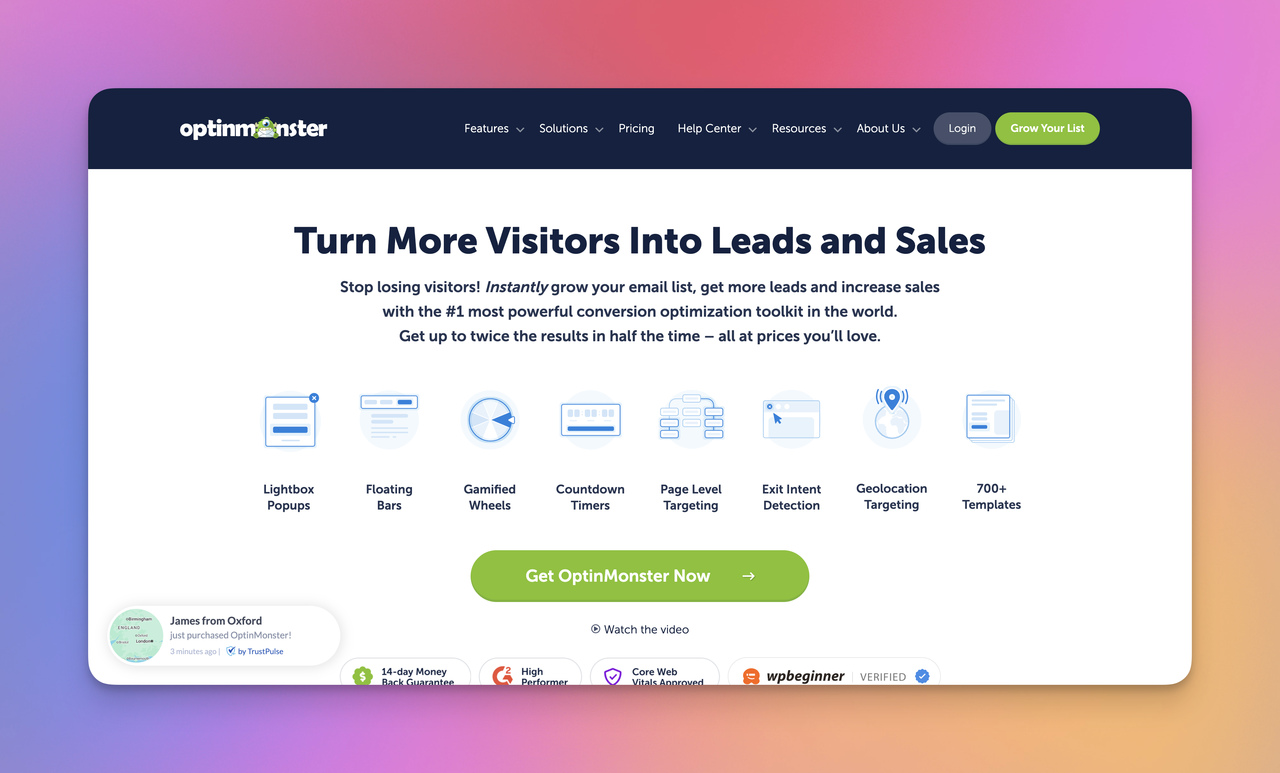
OptinMonster is one of the best-known names in this category, and for good reason. It is built for businesses that want more control over campaigns, more trigger options, and a wider range of popup types. Compared with simpler tools, it leans more into campaign depth and targeting logic. That makes it a strong Picreel alternative for teams that want more room to experiment.
OptinMonster starts at $7/month on annual billing for the Basic plan.
| Category | Details |
|---|---|
| Why it stands out | OptinMonster stands out for campaign variety and advanced targeting, while still being positioned as easy to use for marketers who want more control. |
| Key features | Popups, floating bars, slide-ins, fullscreen campaigns, inline forms, coupon wheels, and behavior-based targeting. |
| Pricing snapshot | G2’s pricing page shows a free tier and additional pricing editions for OptinMonster. |
| G2 rating | ⭐ 4.3/5 on G2. |
A few things make OptinMonster appealing:
- wide campaign variety
- stronger targeting options
- familiar name in the popup space
- good fit for teams that want more control
Best for: Marketers who want more campaign types and more advanced targeting than a basic popup builder usually offers.
Compared with Picreel, OptinMonster makes more sense when the priority is flexibility. Picreel covers the essentials well, but OptinMonster feels like the better pick for teams that want a broader set of campaign formats and more ways to fine-tune how, when, and to whom messages appear. That added depth will not matter to everyone. But when it does, it matters a lot. 🚀
3. Wisepops
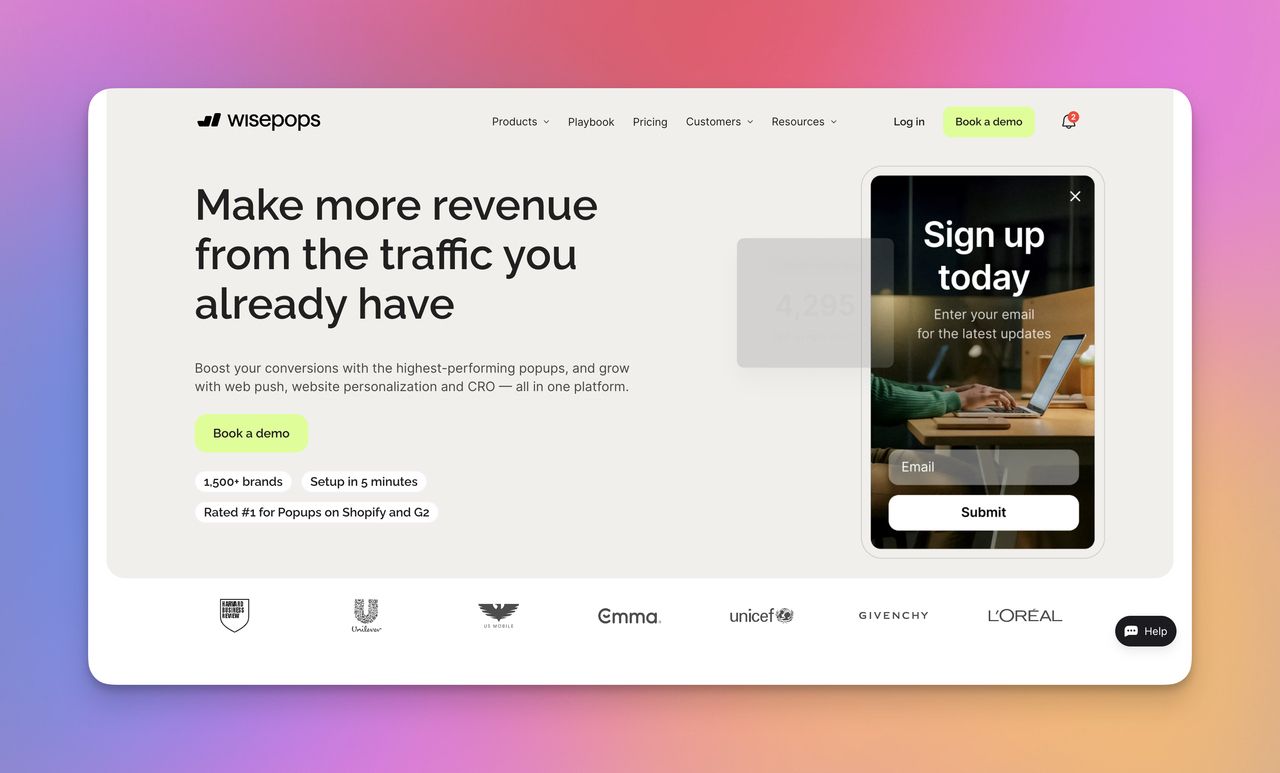
Wisepops is a strong Picreel alternative for teams that want more than standard popups. It moves a bit further into onsite messaging, which makes it appealing for brands that want campaigns to feel more like part of the website experience rather than a simple interruption. That broader feel is a big part of its appeal.
Wisepops starts at $49/month and includes a 14-day free trial.
| Category | Details |
|---|---|
| Why it stands out | Wisepops stands out for combining popups with richer onsite messaging and a more premium campaign experience. |
| Key features | Popups, bars, embeds, segmentation, targeting, analytics, and A/B testing. |
| Pricing snapshot | Wisepops pricing starts at $49/month, and it also offers a free 14-day trial. |
| G2 rating | ⭐ 4.5/5 on G2. |
A few things make Wisepops appealing:
- more polished onsite messaging
- strong campaign variety
- good fit for segmentation-heavy use cases
- a more premium feel overall
Best for: Brands that want popups, bars, and other onsite messages to work together in a more refined way.
Compared with Picreel, Wisepops feels like the better choice when the goal is not just lead capture but a more designed, more flexible onsite messaging strategy. Picreel is more straightforward, while Wisepops feels better suited for teams that want extra campaign depth and a more premium experience. 🙂
4. Poptin
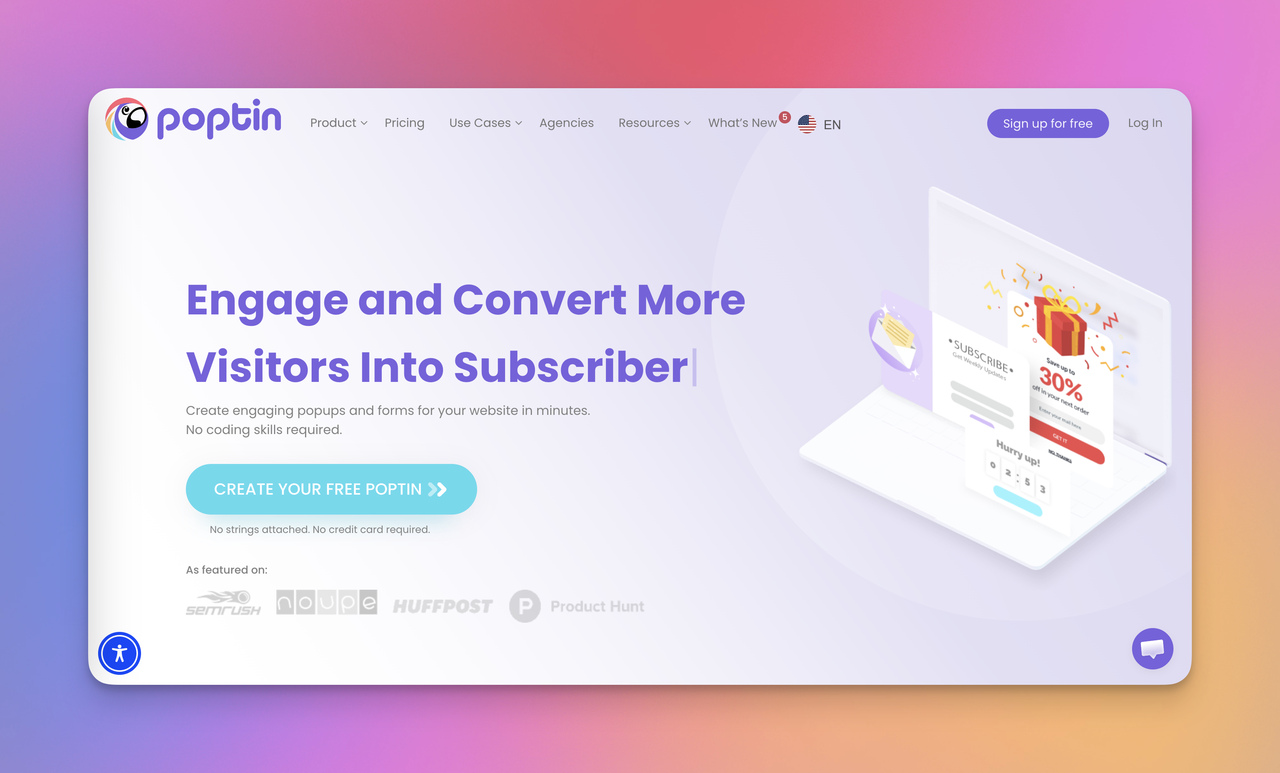
Poptin is a very practical Picreel alternative for small businesses that want a solid feature set without jumping straight into premium pricing. What makes it appealing is the balance: it covers the core popup use cases well, but still feels approachable for teams that do not want a heavy setup.
Poptin has a free plan, and its paid plans start at $25/month.
| Category | Details |
|---|---|
| Why it stands out | Poptin stands out for ease of use, strong value, and consistently positive user feedback. |
| Key features | Website popups, embedded forms, drag-and-drop editing, exit intent, time delay, scroll triggers, targeting, and analytics. |
| Pricing snapshot | Poptin has a free plan, and paid plans start at $25/month. |
| G2 rating | ⭐ 4.8/5 on G2. |
A few things make Poptin appealing:
- easy to set up
- strong value for smaller teams
- flexible targeting options
- very strong G2 rating
Best for: Small businesses that want a capable popup tool with good value and a low-friction learning curve.
Compared with Picreel, Poptin feels like the better choice when pricing flexibility and ease of use matter just as much as lead capture. Picreel is solid, but Poptin makes a stronger case for teams that want a broader sense of value at the entry level and a tool that users consistently describe as easy to work with. ✨
5. Privy
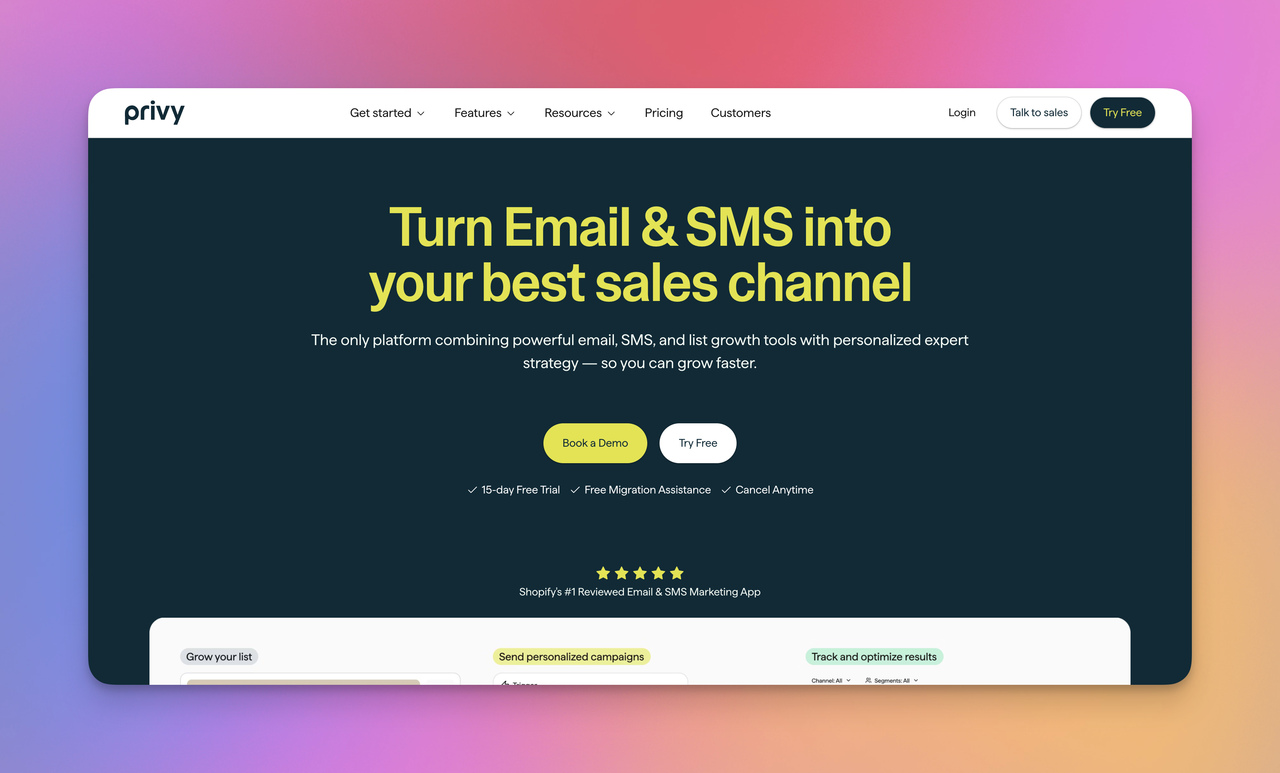
Privy is one of the clearest Picreel alternatives for ecommerce brands, especially Shopify stores. Its positioning is broader than just popups, but list growth is still a major part of the product, alongside email and SMS. That makes it appealing for stores that want lead capture tied more closely to revenue and retention, not just signups.
Privy starts at $30/month and includes 250 free SMS credits.
| Category | Details |
|---|---|
| Why it stands out | Privy stands out for ecommerce-focused list growth, plus email and SMS tools built around store growth. |
| Key features | Popups, flyouts, list-growth tools, email, SMS, and ecommerce-focused campaigns. |
| Pricing snapshot | Privy offers a 15-day free trial, and paid plans start around $25–$30/month depending on the plan and billing path. |
| G2 rating | ⭐ 4.6/5 on G2. |
A few things make Privy appealing:
- strong ecommerce fit
- good choice for Shopify brands
- combines list growth with retention tools
- easy-to-use reputation
Best for: Ecommerce businesses that want popups tied closely to email, SMS, and store growth.
Compared with Picreel, Privy makes more sense when popups are only one part of the growth system. Picreel is more focused on lead capture itself, while Privy is better suited for brands that want subscriber growth, email, and SMS working together in one ecommerce-oriented workflow. 📈
6. Sleeknote
Sleeknote is a strong Picreel alternative for brands that care about personalization and a more premium-feeling onsite experience. It goes beyond basic popups and leans into targeted messages that feel more connected to the customer journey, which is a big reason it keeps coming up in serious comparisons.
Sleeknote’s public entry pricing starts at €49 for the Lite plan.

| Category | Details |
|---|---|
| Why it stands out | Sleeknote stands out for personalized onsite messaging and a more polished, premium-feeling campaign experience. |
| Key features | Popups, forms, sidebars, slide-ins, gamification, targeting, and visitor-based personalization. |
| Pricing snapshot | Sleeknote uses visitor-based pricing. Plans shown publicly include Lite at €49, Basic at €59, and Plus at €95. |
| G2 rating | ⭐ 4.3/5 on G2. |
A few things make Sleeknote appealing:
- premium feel
- strong personalization angle
- more polished onsite journeys
- unlimited campaigns across plans
Best for: Brands that want more refined onsite messaging and are willing to pay for a more premium setup.
Compared with Picreel, Sleeknote makes more sense when the goal is a more polished brand experience. Picreel is more straightforward and practical, while Sleeknote feels better suited for teams that want onsite campaigns to look and feel more tailored across the customer journey. ✨
7. Hello Bar
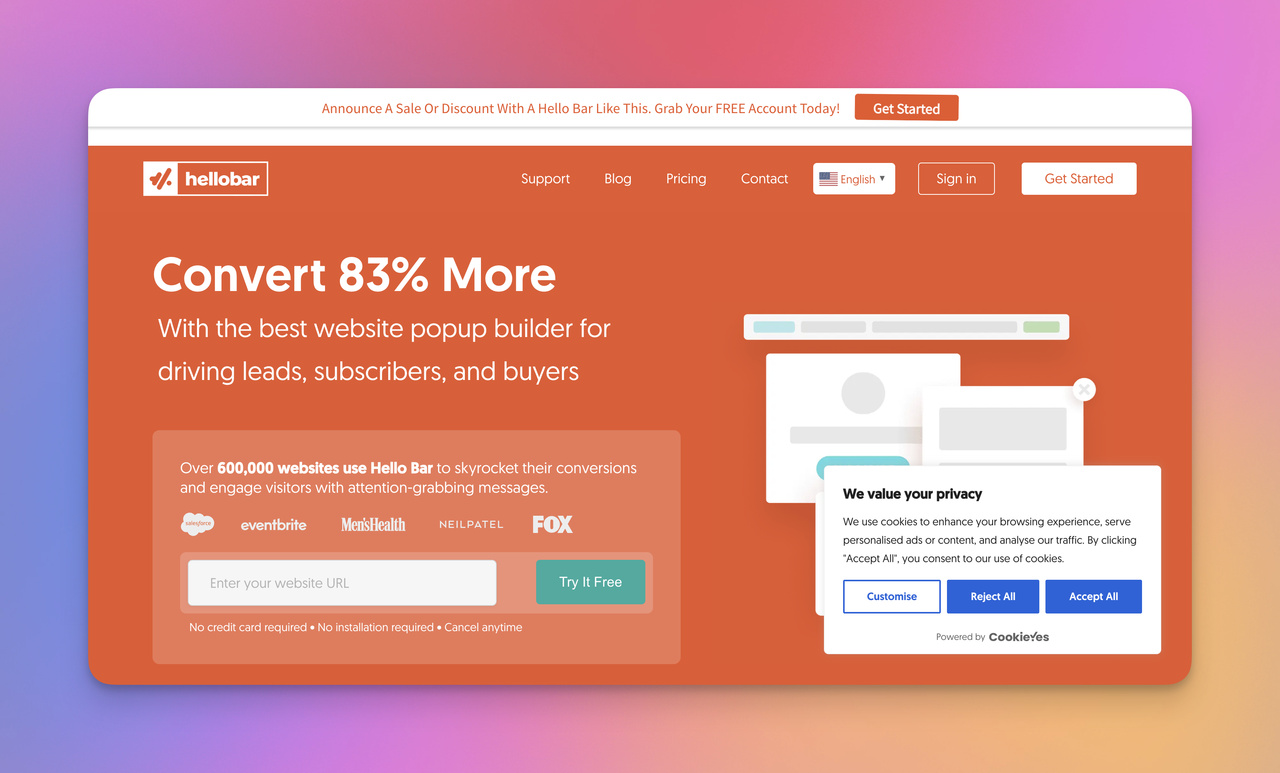
Hello Bar is a solid Picreel alternative for teams that want something simple, fast, and easy to manage. It does not try to overwhelm with complexity. That is part of the appeal. Reviews consistently highlight ease of use, simple integrations, and quick customization, which makes it a good fit for businesses that want to start capturing leads without a long setup process.
Hello Bar has a free Starter plan, and its paid plans start at $29/month billed annually.
| Category | Details |
|---|---|
| Why it stands out | Hello Bar stands out for simplicity, approachable setup, and a template-driven workflow that works well for straightforward lead capture. |
| Key features | Popups, bars, templates, lead capture, triggered campaigns, targeting, A/B testing, and analytics. |
| Pricing snapshot | Hello Bar has a free Starter plan, and paid plans start at $39/month billed annually for Growth. |
| G2 rating | ⭐ 4.6/5 on G2. |
A few things make Hello Bar appealing:
- easy to use
- quick to launch
- friendly for non-technical teams
- good for straightforward list growth
Best for: Businesses that want a lightweight popup tool without much setup friction.
Compared with Picreel, Hello Bar makes more sense when simplicity is the main priority. Picreel feels a bit more conversion-focused, while Hello Bar is easier to picture for teams that just want to put lead capture in place and move on. That lighter feel can be a real advantage.
8. ConvertFlow
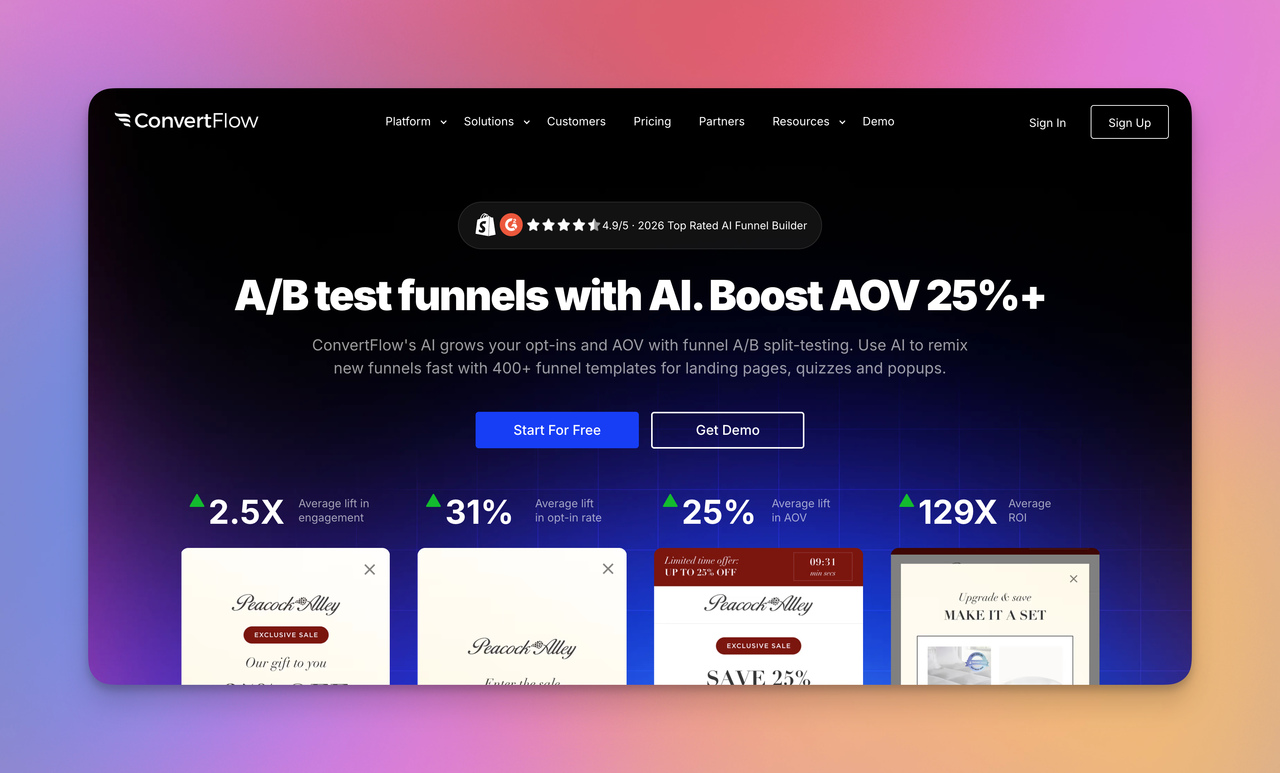
ConvertFlow is a more ambitious Picreel alternative. Instead of stopping at popups, it pushes further into funnels, quizzes, landing pages, personalization, and testing. That makes it especially interesting for marketers who see popups as one part of a broader conversion system rather than the whole strategy.
ConvertFlow’s public pricing starts at $99/month on its official pricing page, although G2 also shows older pricing from $22.
| Category | Details |
|---|---|
| Why it stands out | ConvertFlow stands out because it combines popups with funnel-building, landing pages, personalization, and testing. |
| Key features | Popups, forms, quizzes, landing pages, personalization, product recommendations, and funnel A/B testing. |
| Pricing snapshot | ConvertFlow pricing starts at $22/month, and a free trial is available. |
| G2 rating | ⭐ 4.5/5 on G2. |
A few things make ConvertFlow appealing:
- more than a popup tool
- strong fit for funnels and personalization
- good for testing different paths
- useful for ecommerce and lead gen alike
Best for: Teams that want popups to connect with a bigger funnel or personalization strategy.
Compared with Picreel, ConvertFlow is the better pick when lead capture is only one piece of the puzzle. Picreel is more focused and simpler. ConvertFlow is broader and more strategic. For marketers who want to shape journeys, not just trigger popups, that difference is pretty meaningful. 🚀
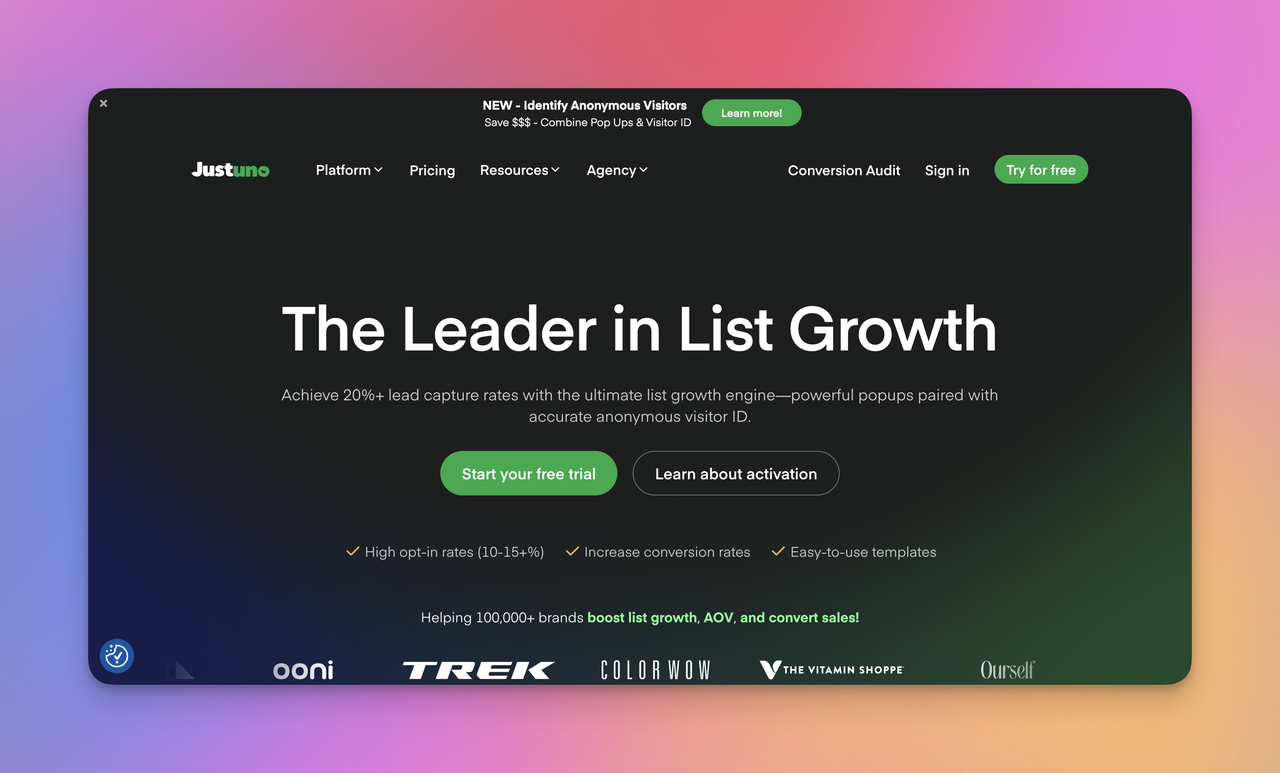
9. Justuno
Justuno is a strong Picreel alternative for ecommerce teams that care about segmentation, retail-focused targeting, and conversion journeys tied closely to shopping behavior. Its positioning is very retail-oriented, and its review pages lean heavily into list growth, sales-driving offers, banners, cart abandonment, and product recommendations.
Justuno has a free plan, and its paid plans start at $39/month.
| Category | Details |
|---|---|
| Why it stands out | Justuno stands out for ecommerce-specific targeting and shopper-focused messaging. |
| Key features | Lead capture, SMS and email offers, exit offers, cart-abandonment campaigns, banners, and product recommendations. |
| Pricing snapshot | Justuno has a free plan up to 2,000 monthly unique visitor sessions, and paid plans start at $39/month. |
| G2 rating | ⭐ 4.3/5 on G2. |
A few things make Justuno appealing:
- strong ecommerce focus
- better segmentation depth
- product recommendation support
- useful retail-specific use cases
Best for: Online stores that want popup campaigns tied closely to shopper behavior and sales outcomes.
Compared with Picreel, Justuno makes more sense for ecommerce teams that want more than general lead capture. Picreel feels more straightforward. Justuno feels more tailored to retail growth, especially when segmentation and product-driven messaging start to matter more. 📈
10. BDOW! (formerly Sumo)
BDOW! is the most familiar name here for people who remember Sumo. It still appeals to businesses that want a recognizable, budget-friendly tool for popups, list growth, and basic onsite conversion tasks. It is not usually the most modern-looking option in these comparisons, but it still earns attention because of brand familiarity and a lower-friction entry point. This is partly an inference based on current positioning and how the brand is presented now.
BDOW! offers a free plan, and its Pro plan starts at $49 per month.

| Category | Details |
|---|---|
| Why it stands out | BDOW! stands out mostly through brand familiarity and a simple entry point for popup and list-growth use cases. |
| Key features | Email opt-in forms, customizable design, visitor targeting, analytics, and paid-plan features such as A/B testing and deeper targeting. |
| Pricing snapshot | BDOW! has a free plan, and its paid pricing is shown on the site, though the layout is not as clear as most other tools on this list. |
| G2 rating | — |
A few things make BDOW! appealing:
- familiar legacy brand
- approachable for simpler use cases
- likely attractive for budget-minded teams
- easy to recognize in this category
Best for: Businesses that want a familiar, simpler popup or growth tool and do not need the most advanced experience. This is partly an inference from the available public information.
Compared with Picreel, BDOW! feels more like a familiarity play than a sophistication play. Picreel comes across as more directly focused on popup-led lead capture, while BDOW! is easier to think of as a recognizable option for simpler needs. If the goal is modern campaign control, I would generally lean elsewhere. 🙂
Why You Might Need Picreel Alternatives
Picreel can absolutely make sense for the right website. It covers the core job a lot of teams care about: catching visitors before they leave and giving them one more reason to stay, subscribe, or convert. That’s useful. But useful and best-fit are not always the same thing.
This is where comparison gets interesting.
When I look at popup tools, I’m not only asking whether they can launch a campaign. Almost all of them can. The better question is whether they make that process feel smooth, strategic, and worth building into a real growth workflow over time. That’s usually the point where people start looking at Picreel alternatives. 👀
Sometimes the issue is simplicity. A tool may technically work, but the day-to-day experience can still feel a little clunky once more campaigns get added. Sometimes it’s about design control. Sometimes it’s about ecommerce features, integrations, analytics, or targeting depth. And sometimes, honestly, it just comes down to wanting a tool that feels more modern and easier to enjoy using.
Here are some of the most common reasons a switch starts to make sense:
- a cleaner and more intuitive user experience
- more flexible popup design and campaign customization
- stronger targeting and segmentation options
- deeper ecommerce and Shopify support
- better pricing value as traffic grows
- more polished analytics and testing features
- broader onsite messaging options beyond basic popups
That doesn’t mean Picreel fails at these things. It means expectations rise fast in this category. Once popup campaigns become an active part of lead generation, even small friction points start to matter more.
Where friction usually starts
In my experience, people rarely look for alternatives because of one dramatic problem. It’s usually more gradual than that. A few small things start adding up:
| Area | What starts to feel limiting | Why it matters |
|---|---|---|
| User experience | The workflow may feel less smooth than newer tools | Small friction adds up when campaigns become frequent |
| Design flexibility | Templates and customization may not feel enough for every brand | Popups perform better when they feel aligned with the site |
| Targeting depth | Basic behavior targeting may not be enough for more segmented campaigns | Better targeting usually means better conversion quality |
| Ecommerce fit | Some teams want stronger store-focused use cases | Ecommerce brands often need deeper triggers and offer logic |
| Scalability | Entry-level value may feel different as needs grow | What works early may feel less efficient later |
That table really gets to the heart of it. Most teams don’t leave a tool because it is unusable. They leave because another option starts to look sharper, lighter, or better aligned with how they want to grow 📈
The bigger shift: from “popup tool” to “growth tool”
This is the part I find most interesting.
A few years ago, many businesses only wanted a popup tool that could collect emails and maybe show an exit-intent offer. That was enough. Now the standard is higher. A lot of teams want popup software to do more than appear on the screen. They want it to support list growth, sales recovery, segmentation, campaign testing, and customer journey improvements in a way that feels intentional.
That shift changes how alternatives are evaluated.
Now the question is less “Can this tool create popups?” and more:
- Does it help build better campaigns?
- Does it fit the brand experience?
- Does it support the kind of conversions that actually matter?
- Does it still feel like a good choice six months from now?
That’s why exploring Picreel competitors can be a smart move, even if Picreel itself is not a bad product. Looking at alternatives is not always a reaction to failure. Sometimes it’s just what happens when a business gets clearer about what it really needs 🙂
My take: If a website only needs a straightforward popup builder for basic lead capture, Picreel may still be enough. But if the goal is better campaign flexibility, a smoother workflow, stronger ecommerce support, or a more refined user experience, comparing other tools starts to feel very reasonable.
And once that door opens, there are some genuinely strong options worth looking at.
How I Chose These Picreel Alternatives
I did not build this list by asking which tools look the most similar on paper. That usually leads to weak recommendations. Instead, I looked for tools that solve the same core problem, capturing more value from existing traffic, but do it with clearer strengths, whether that means easier setup, better targeting, stronger ecommerce fit, or a smoother user experience.
That last point matters more than it seems. In popup software, feature lists can look almost identical. The real difference usually shows up in how easy a tool is to launch, how flexible it feels once campaigns grow, and whether it helps reduce friction instead of adding more of it. That is especially important for ecommerce brands, where cart abandonment still sits around 70% on average, so even small improvements in timing, targeting, and clarity can matter.
Here’s what I paid the most attention to:
- ease of use and setup speed
- popup and campaign variety
- targeting and segmentation depth
- ecommerce and Shopify relevance
- pricing at the entry level and as usage grows
- user satisfaction and overall reputation
- whether the product feels focused or overloaded
I also paid attention to something a little less measurable: product feel. Some tools look fine in a comparison chart but start to feel heavy once they become part of weekly marketing work. Others keep things simpler, which often makes them easier to adopt across small teams. That idea lines up with a well-known UX principle called progressive disclosure, where simpler interfaces surface what matters first instead of overwhelming people with everything at once.
Which Picreel Alternative Should You Choose?
The honest answer is that the best Picreel alternative depends on what matters most to you. There is no single winner for every business. Some tools are better for speed. Some are better for ecommerce. Some are better when you want more targeting control or a broader onsite messaging strategy.
If I had to simplify the shortlist, this is how I’d frame it:
| If you care most about... | I’d look at... | Why |
|---|---|---|
| Fast setup and clean lead capture | Popupsmart | Best fit for teams that want a lighter workflow and a strong CRO focus |
| Advanced targeting and campaign variety | OptinMonster | Better choice when flexibility and trigger depth matter most |
| Premium onsite messaging | Wisepops or Sleeknote | Stronger fit for brands that want more polished campaign experiences |
| Value for smaller teams | Poptin | A practical option when budget and usability both matter |
| Ecommerce and Shopify growth | Privy or Justuno | Better suited for stores that want popups tied closely to revenue workflows |
| Broader funnels and personalization | ConvertFlow | Stronger pick when popups are only one piece of the conversion system |
| Simple lead capture with minimal friction | Hello Bar | Easy to picture for straightforward list growth needs |
My own read is this: if the goal is simple, modern, conversion-focused lead capture, Popupsmart is the clearest option on the list. If the goal is more control and campaign depth, OptinMonster makes more sense. If the website is ecommerce-first, Privy and Justuno become much more compelling. And if the business wants popups to connect to a bigger funnel or personalization strategy, ConvertFlow is easier to justify.
So the right choice is less about “Which tool is best?” and more about “Which tool fits the way this website actually grows?” That is the question worth answering before making the switch.
Final Thoughts
The best Picreel alternative depends on what matters most to the business using it. Some tools are stronger for advanced targeting, some are better for ecommerce, and some make more sense for teams that just want a simpler setup and a cleaner daily workflow.
That is why this comparison matters. On paper, many popup tools look similar. In practice, the difference usually comes down to how easy they are to use, how well they support real campaigns, and how comfortable they feel as needs grow.
Looking across this list, Popupsmart stands out especially well for teams that want a more modern, conversion-focused experience. It feels like a strong fit for businesses that care about lead capture, speed, and ease of use without taking on extra platform weight.
If you want to see how that kind of setup works in practice, Popupsmart is a great place to start. Explore it, test a few campaigns, and see whether it feels like the right fit for your site. 🚀
Frequently Asked Questions
Which Picreel alternative is best for ecommerce?
Privy and Justuno are two of the strongest picks for ecommerce-focused brands. Both are more closely tied to store growth, shopper behavior, and revenue-focused workflows. Popupsmart can also be a strong option for ecommerce teams that want a lighter and more conversion-focused popup experience.
Which Picreel alternative is easiest to use?
If ease of use is the top priority, Popupsmart, Hello Bar, and Poptin are some of the easiest options to consider. They make more sense for teams that want to launch campaigns quickly without spending too much time on setup.
Are there free Picreel alternatives?
Yes. Some Picreel alternatives offer free plans or free trials. Popupsmart, Poptin, Hello Bar, and Justuno all provide a lower-friction way to try the product before moving to a paid plan.
Which Picreel alternative is best for advanced targeting?
Popupsmart is one of the strongest choices for advanced targeting and campaign variety. Wisepops and Justuno are also worth considering if more detailed segmentation and personalized campaign logic are important.
Is Popupsmart a good Picreel alternative?
Yes, especially for businesses that want a cleaner, more modern, and more conversion-focused experience. Popupsmart stands out when the goal is smarter lead capture, faster setup, and less platform weight in day-to-day use.
How would you rate your experience with this article? 😊