ChatGPT
 Perplexity
 Claude
 Grok
Grok Google AI Mode
I know how hectic the Black Friday season gets. Ads everywhere, discounts flying around, and every competitor shouting at the same shoppers. That's why I rely on Black Friday popups that get to the point fast and turn visitors into buyers.
You've probably started your promotions already. Still, a single popup shown at the right moment can be the difference between a casual visitor and a loyal customer, so I've collected my favorite Black Friday popup examples and real use cases to give you ideas for your own campaigns.
My bias: on Black Friday, bold beats safe. Fortune favors the brave, and it favors the store with a clear offer even more. Here are the popups I'd use this season.
| # | Use case | When to show it | Where it works best |
|---|---|---|---|
| 1 | Collect emails before Black Friday | October to mid-November | Home page and blog, new visitors |
| 2 | Reduce cart abandonment | Black Friday week | Cart and checkout pages |
| 3 | Drive traffic to the deals page | From the day the sale opens | Floating bar across the site |
| 4 | Limited-time offers | The sale window only | Product and collection pages |
| 5 | Presale popup | Early November | Returning visitors and your email list |
| 6 | Cross-sell and upsell | During the sale | Cart page |
| 7 | Welcome first-time visitors | During the sale | New visitors only |
| 8 | Gamified popups | During the sale | Home page, new visitors |
| 9 | Minimum purchase promotion | During the sale | Cart page |
| 10 | Social share | After the purchase | Thank-you page |
🎯 Make This Black Friday Your Most Profitable Yet
Black Friday is the weekend when seasonal traffic either turns into orders or leaves. If you're mapping out your campaign, every touchpoint has to pull its weight, from personalized emails to the Black Friday marketing strategies that get the clicks.
Popupsmart's no-code popup builder lets you launch Black Friday campaigns without waiting on a developer. Collect emails, recover abandoned carts or announce an exclusive offer: each one is a popup you can set up yourself.
➡️ You can easily start with these Black Friday popup templates.
🚀 How I've Seen Black Friday Popups Transform Sales
Black Friday is your best chance all year to turn casual browsers into loyal customers. This year, Black Friday falls on Friday, 27 November 2026, and Cyber Monday on Monday, 30 November, so your popups have one long weekend to do most of the work.
According to Drive Research's 2025 survey of more than 1,200 shoppers, nearly 1 in 4 Black Friday shoppers (24%) planned to spend $1,000 or more on holiday shopping, and 71% planned to shop online. That's a lot of buying intent landing on store websites, and it's worth capturing with smart e-commerce promotions.
You can use popups for presale teasers, cart saves and plenty in between. Good Black Friday popups lean on urgency, personalization, and clear value. Our own popup data backs the "clear value" part more than the other two.
Make them look like your brand, put the holiday offer up front, and test. You can start in Popupsmart's no-code builder today and see what works for your store.
What should your Black Friday popup offer? Our 2026 data
Most Black Friday popups are discount popups, so the offer is the first thing to get right. Here's what our benchmark of Popupsmart campaigns between January 2024 and September 2026 says about offers. Each rate is leads (a submission with an email address or phone number) divided by popup displays, for the median campaign.
| What the popup offers | Lead conversion rate (median campaign) | What it means for Black Friday |
|---|---|---|
| Signup popup with a discount code | 1.46% | A code in exchange for an email is the baseline Black Friday offer |
| Signup popup without a discount code | 0.75% | A plain "join our list" struggles when every store is giving something |
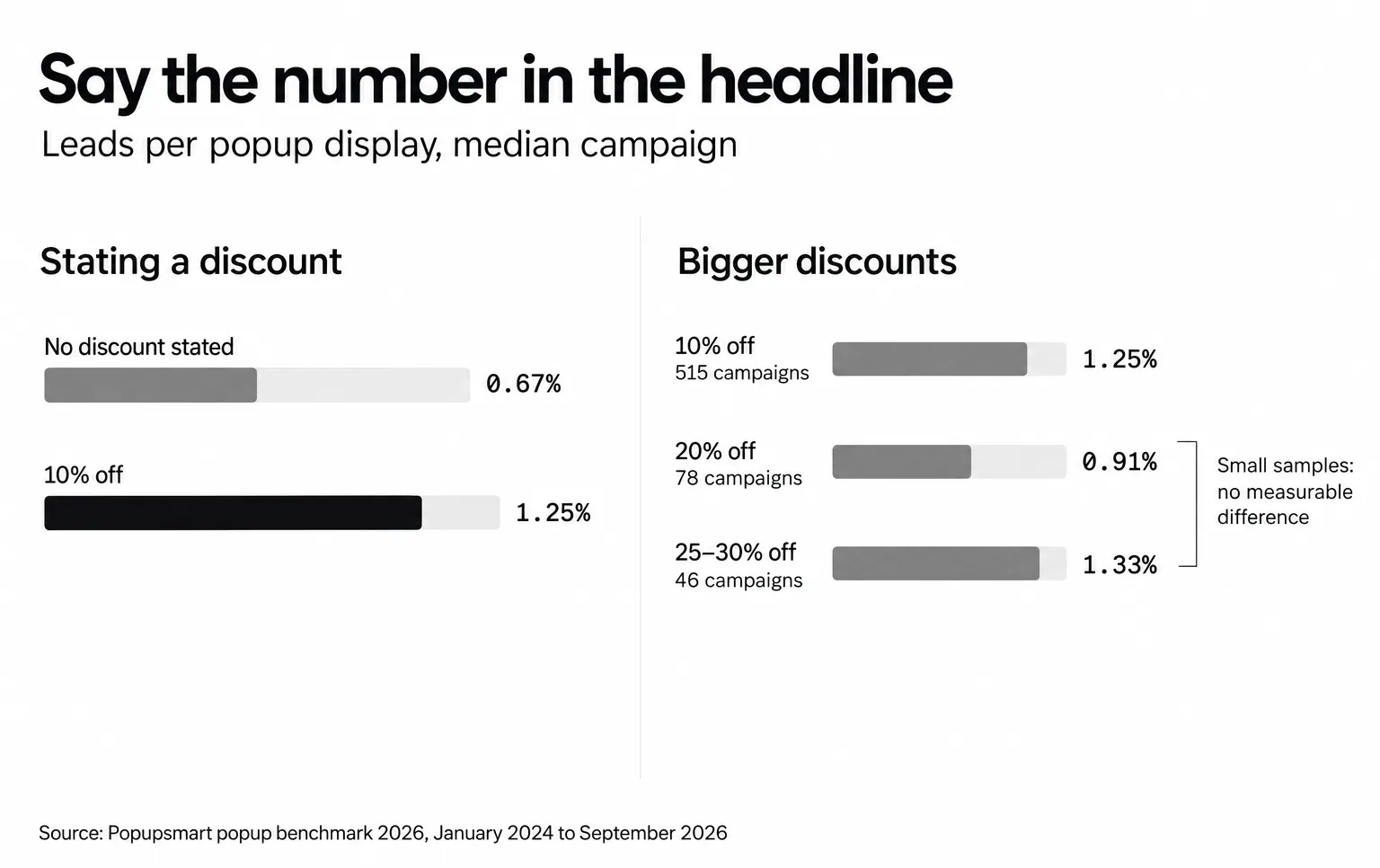
| Popup stating 10% off | 1.25% | Say the number in the headline |
| Popup stating no discount | 0.67% | |
| Popup stating 20% off | 0.91% | Small sample (78 campaigns) |
| Popup stating 25–30% off | 1.33% | Small sample (46 campaigns) |
Popups stating 10% off convert 1.25% vs 0.67% for popups that state no discount. Bigger discounts did not convert measurably better: 10% off converted 1.25%, 20% off 0.91% and 25-30% off 1.33%, but the larger-discount samples are small (78 and 46 campaigns), so the data cannot rule out a real difference either way.
I read that as good news for Black Friday: you don't have to win a discount war inside the popup. For more offer formats (codes, free shipping, tiered deals), see our discount popup examples.
ℹ️ Smart Ways to Use Black Friday Popups (Backed by Real Results)
Black Friday popups do more than announce discounts. They build anticipation in the weeks before the sale, grow your list, and keep converting during the weekend and even after it.
Here are ten ways to use them.
1. Collect Emails Before Black Friday
Black Friday is around the corner, and if you're not prepared, you'll miss sales. The best way to keep potential customers within reach is by collecting their email addresses before Black Friday.
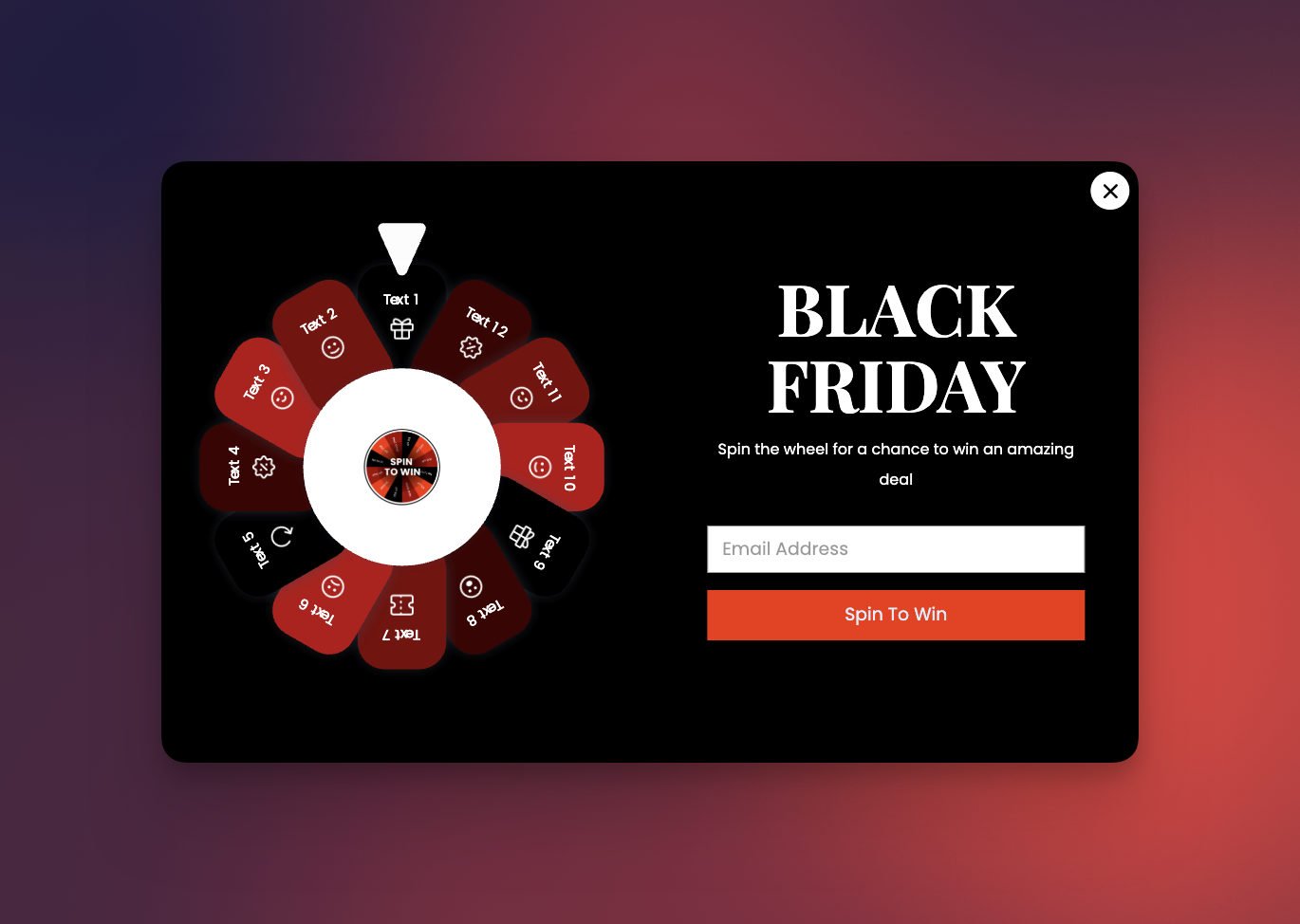
When someone enters their email address into your popup form, they are interested in receiving information from your store.
This is especially important during Black Friday since deals and promotions tend to be time-sensitive, so reaching out quickly can help increase conversions!
The list pays off twice. In our 2026 benchmark, visitors arriving from an email or SMS campaign convert on popups at 1.81% vs 0.74% for visitors from organic search, so the people you email about the sale are also the ones most likely to act on the popup they see when they arrive. If your SMS tool is part of the plan, ask for a phone number too: Popupsmart passes phone numbers and SMS consent to Klaviyo, Mailchimp and HubSpot, and your SMS tool sends the messages.
You can easily choose from Popupsmart's well-designed Black Friday popup templates in the popup template library and start creating email popups in just a few minutes.
2. Reduce Cart Abandonment
Cart abandonment is one of the biggest challenges for e-commerce brands, especially during high-traffic events like Black Friday, when every incomplete checkout means lost revenue.
According to Baymard Institute's cart abandonment statistics (last updated September 2025), the documented average cart abandonment rate is 70.22%, and 40% of US shoppers who abandon for a reason other than "just browsing" say extra costs such as shipping, taxes or fees were too high.
So why not use a well-timed Black Friday popup to offer free shipping or a last-minute discount, encouraging customers to complete their purchases successfully?
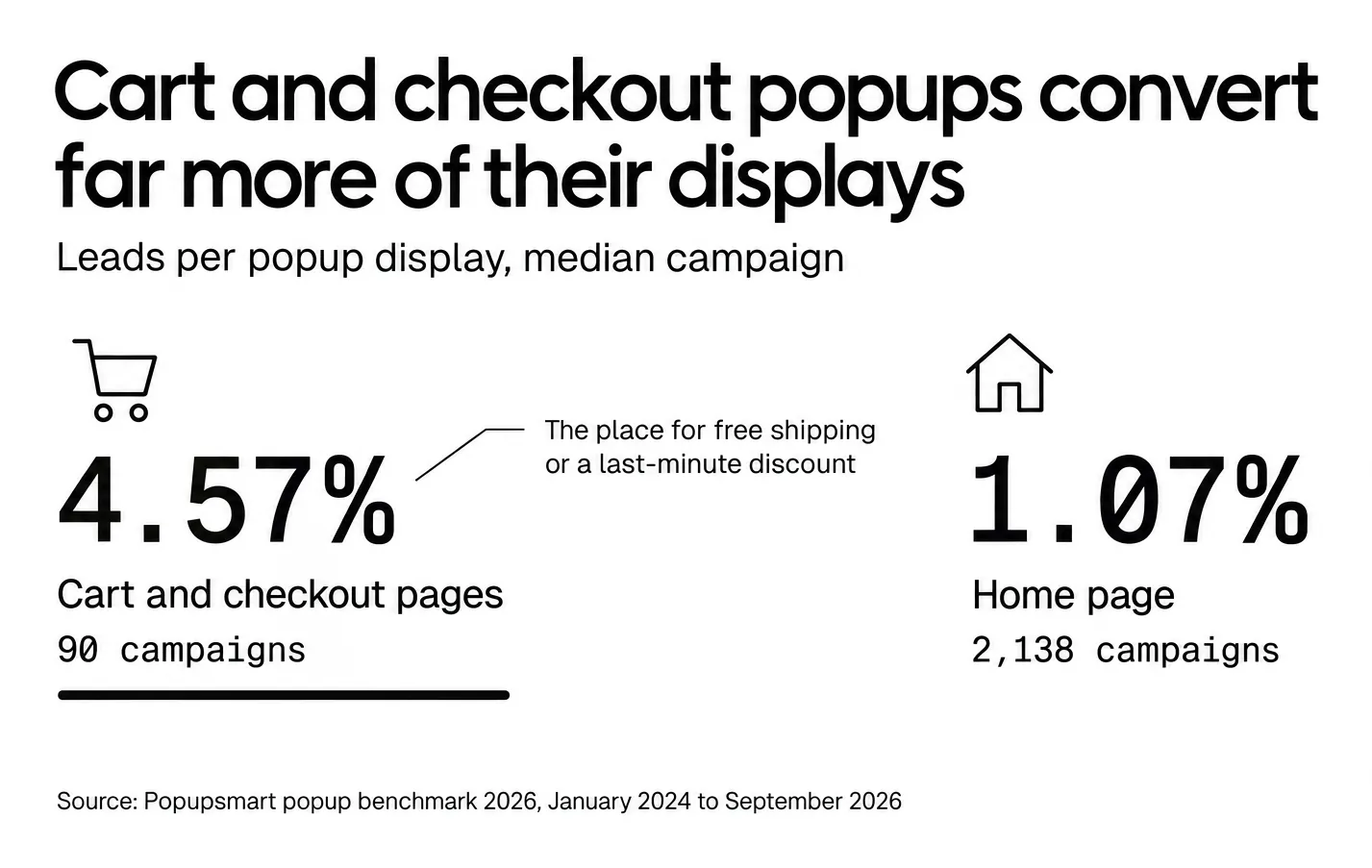
Placement matters more than the trigger here, and this is the part most Black Friday guides get wrong. In our 2026 benchmark, popups on cart and checkout pages convert 4.57% vs 1.07% on the home page (median campaign); blog pages convert 0.23%. Exit intent, by contrast, shows no statistically reliable advantage: popups on the most sensitive exit-intent setting converted 1.10% vs 0.78% without exit intent (median campaign), a gap that could be chance.
You can also use smart triggers and targeting to detect exit intent, personalize the message, and convert your customers before they leave.
If it is too long for your customers to continue the checkout process, you can show them relevant products based on their past purchases to encourage them to buy before they abandon their carts.
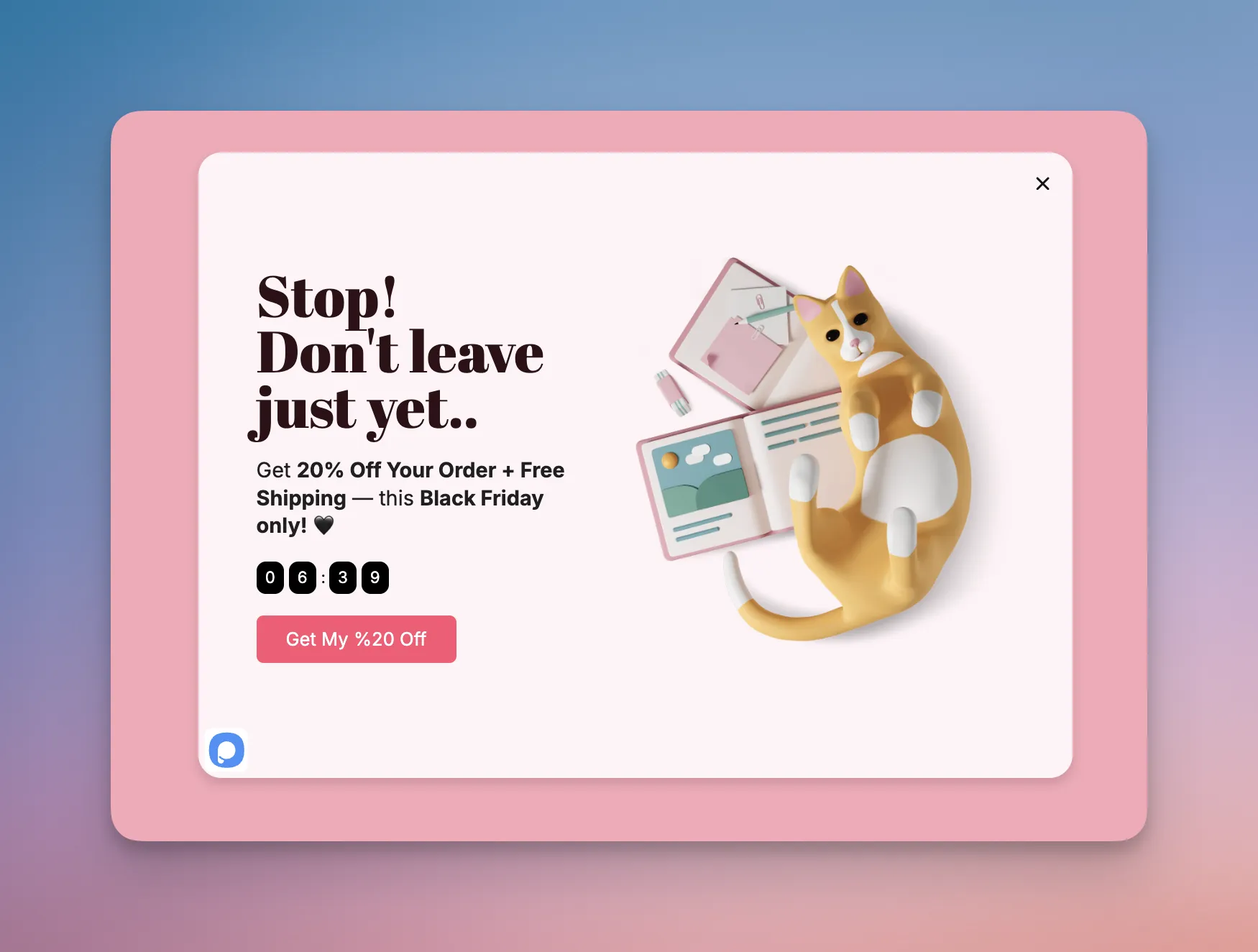
Here is an example of an exit-intent popup designed to reduce cart abandonment and recover potentially lost sales before customers exit your store:
3. Drive More Traffic to the Black Friday Deals Page
Traffic matters most during the Black Friday and Cyber Monday season, and getting it to the right page is the hard part. Many online retailers set up a separate page just for Black Friday deals.
Shoppers usually want to see every discount in one place, so send them to that deals page.
People who visit deal pages want the offers fast and without friction, so well-designed landing pages are essential.
You can use a floating bar Black Friday popup to drive traffic directly to your deals page:
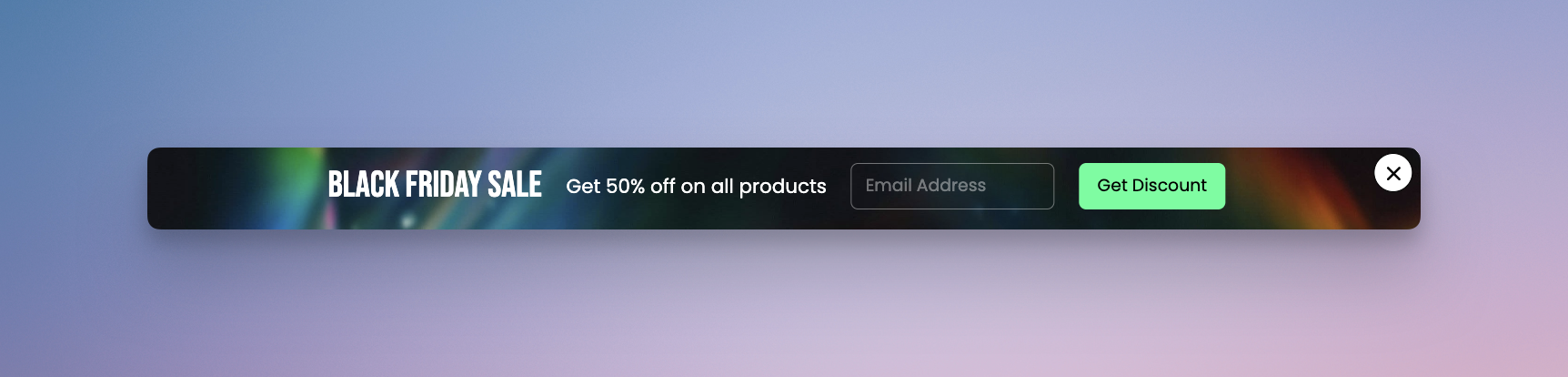
A floating bar stays out of the way while people browse, which is why it's the usual home for a sitewide sale message. Our announcement bar examples show more layouts you can adapt for the Black Friday weekend.
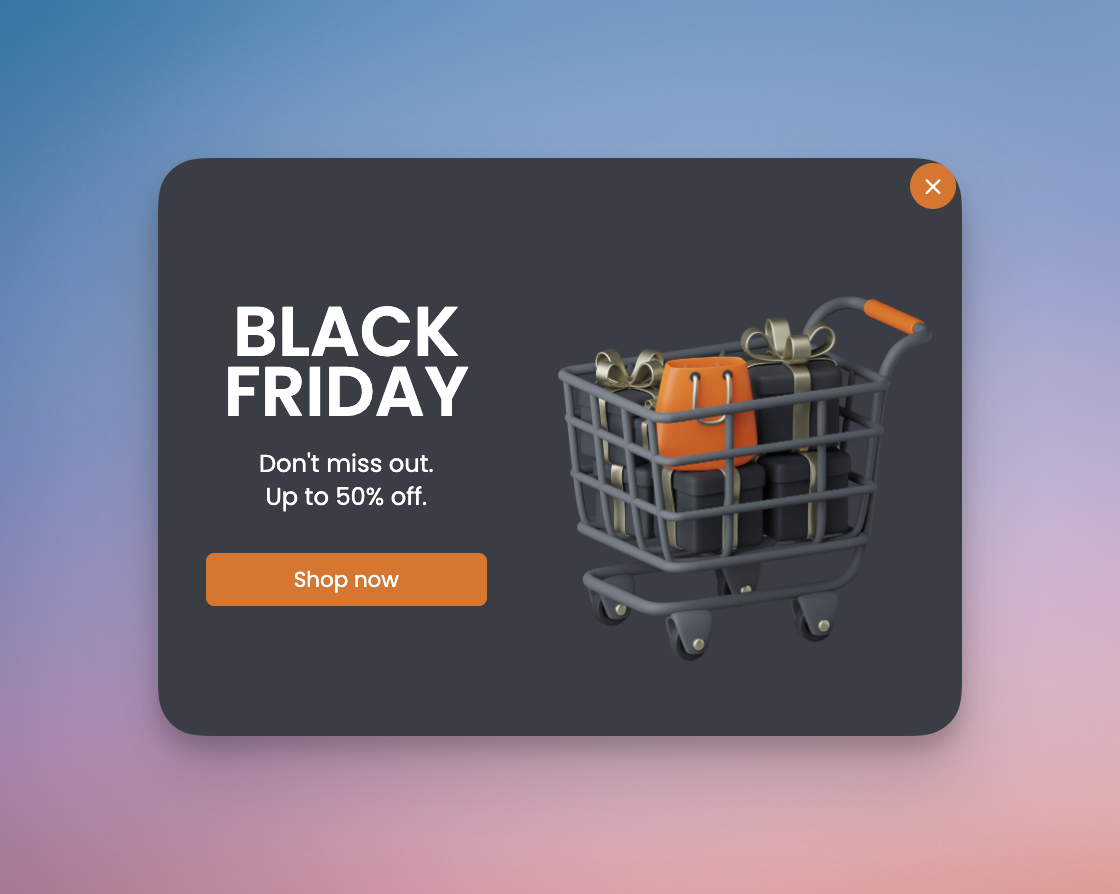
You can also use a fullscreen Black Friday popup:
4. Use Limited-Time Offers to Increase Sales
Limited-time offers raise sales because they lean on urgency and exclusivity, and Black Friday is when both feel most real to shoppers.
They create urgency, making customers feel rushed to buy because they know the offer will soon be gone. Using countdown timers in your Black Friday popups can emphasize this urgency even more and prompt faster decisions, as long as the deadline is real. Our countdown timer popup examples show how other stores set the clock.
They build anticipation. Someone who knows the item is gone in a few days is more likely to buy it now than to wait.
They encourage impulse buying, too. Nobody wants to be the person who missed the deal.
Baskimo, a Popupsmart customer, ran a weekly Friday discount as a floating bar with a countdown timer, scheduled with date targeting and shown after 30 seconds on the site. Its customer story reports 3,633 interactions from 11,285 views, a 32.19% rate. That's interactions on one campaign, not leads, so don't compare it with the lead rates above.
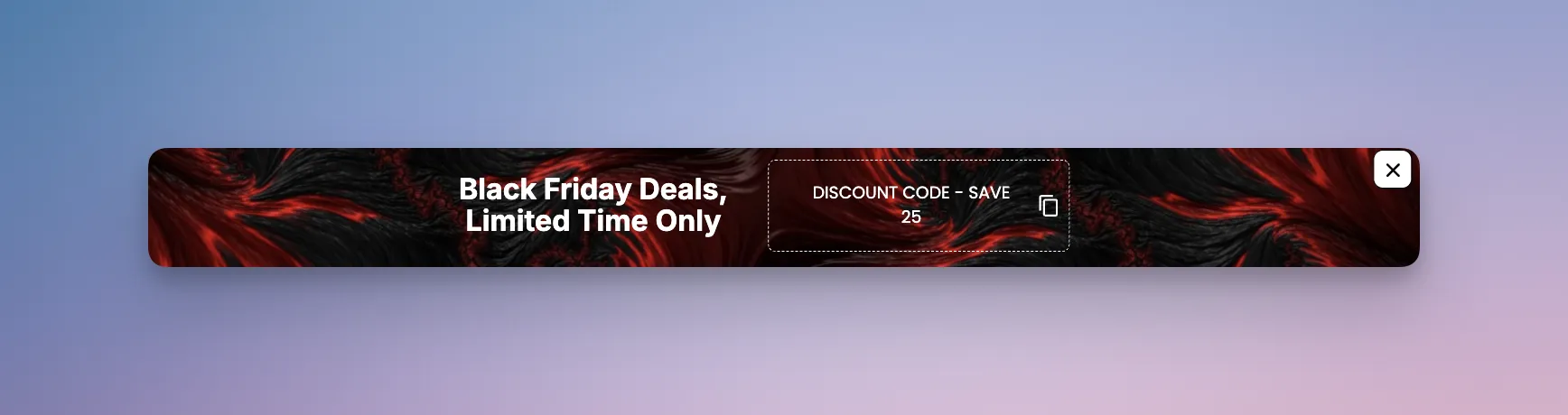
Here's a limited-time offer Black Friday popup:
5. Take Advantage of the Presale Popup
One of the best ways to build excitement before Black Friday is by running pre-Black Friday popups that promote early access deals or exclusive offers.
I've seen presales change how a brand's whole Black Friday goes. The early discount is the hook; the real work is warming up your audience so they look forward to the main event.
Presales get people interested in your products before they go live. They also help you build a qualified list of shoppers who are more likely to purchase once Black Friday officially begins, and even return afterward.
Rather than being lost in a crowded feed of ads, these presale popups let you capture attention early and establish a direct line with potential buyers.
You can also use a countdown timer in your presale popups to tell customers when your Black Friday sale will start. For 2026, that means counting down to Friday, 27 November, or to the hour your early-access window opens.
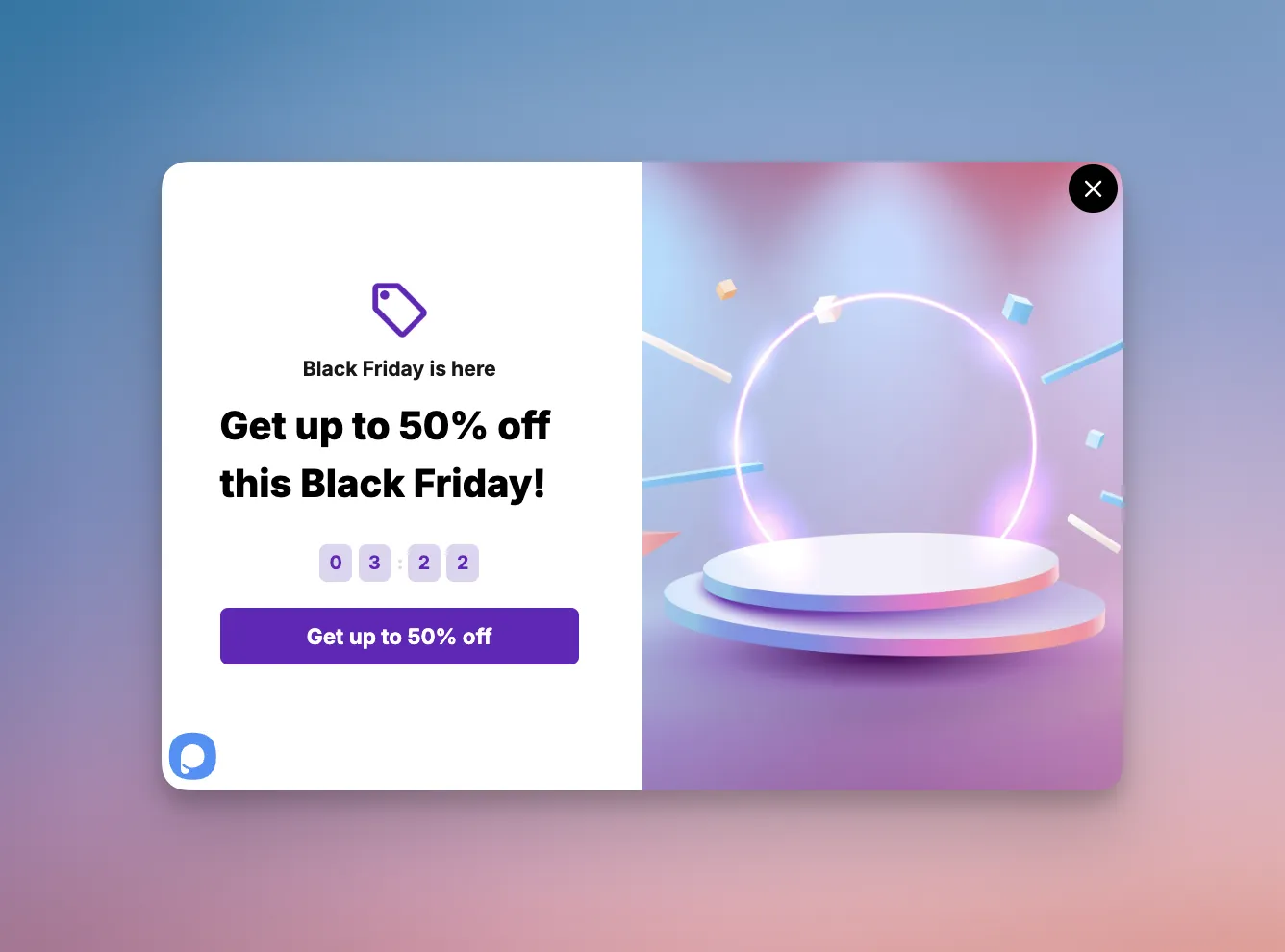
6. Utilize Cross-Sell and Upsell Popups
If you want to maximize your Black Friday sales, start on your own website. Showing upsell popups is one of the simplest ways to raise them.
I've seen plenty of brands miss easy sales because they showed the right offer at the wrong time. A good upsell helps your customers get more value from what they're already buying.
Offer something at a higher price point that's related to what's already in the cart, and many shoppers will take it.
Here is how it works:
When customers are almost done with their shopping carts, they are prompted with a popup that offers them to purchase more items in case they want to get something else or save some money on shipping costs.
Similarly, you can offer your visitors a product related to what they already have in their minds to make use of cross-selling. See the example below:
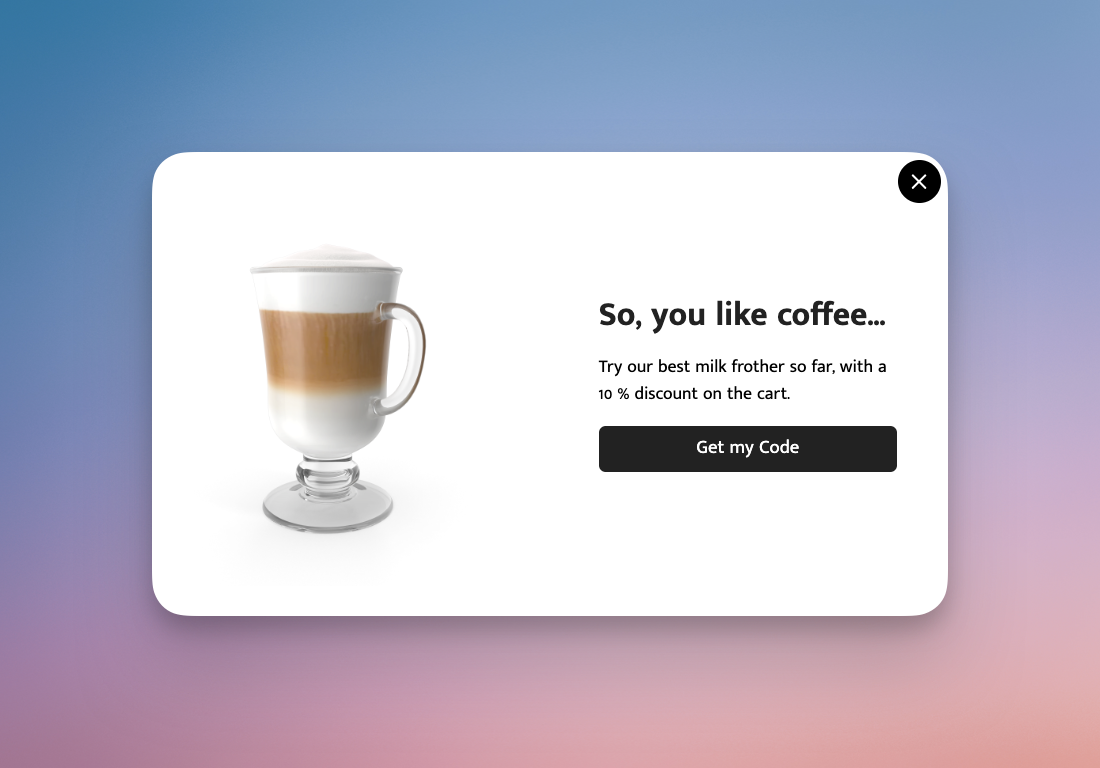
This way, you can sell out your stocks, increase average order value, and have high profits during the Black Friday season.
7. Welcome First-Time Visitors
First impressions matter, especially during Black Friday, when competition is fierce and shoppers are constantly comparing brands.
That's why first-time visitor popups are used by many businesses to increase customer loyalty and sales.
When someone lands on your website for the first time, the way you greet them can decide whether they stay and shop or bounce away. That's why I always recommend using first-time visitor popups to create a warm and engaging introduction.
These popups appear the moment a new visitor arrives. A short welcome message with a special Black Friday discount or a free gift can turn a curious browser into a first-time buyer on the spot.
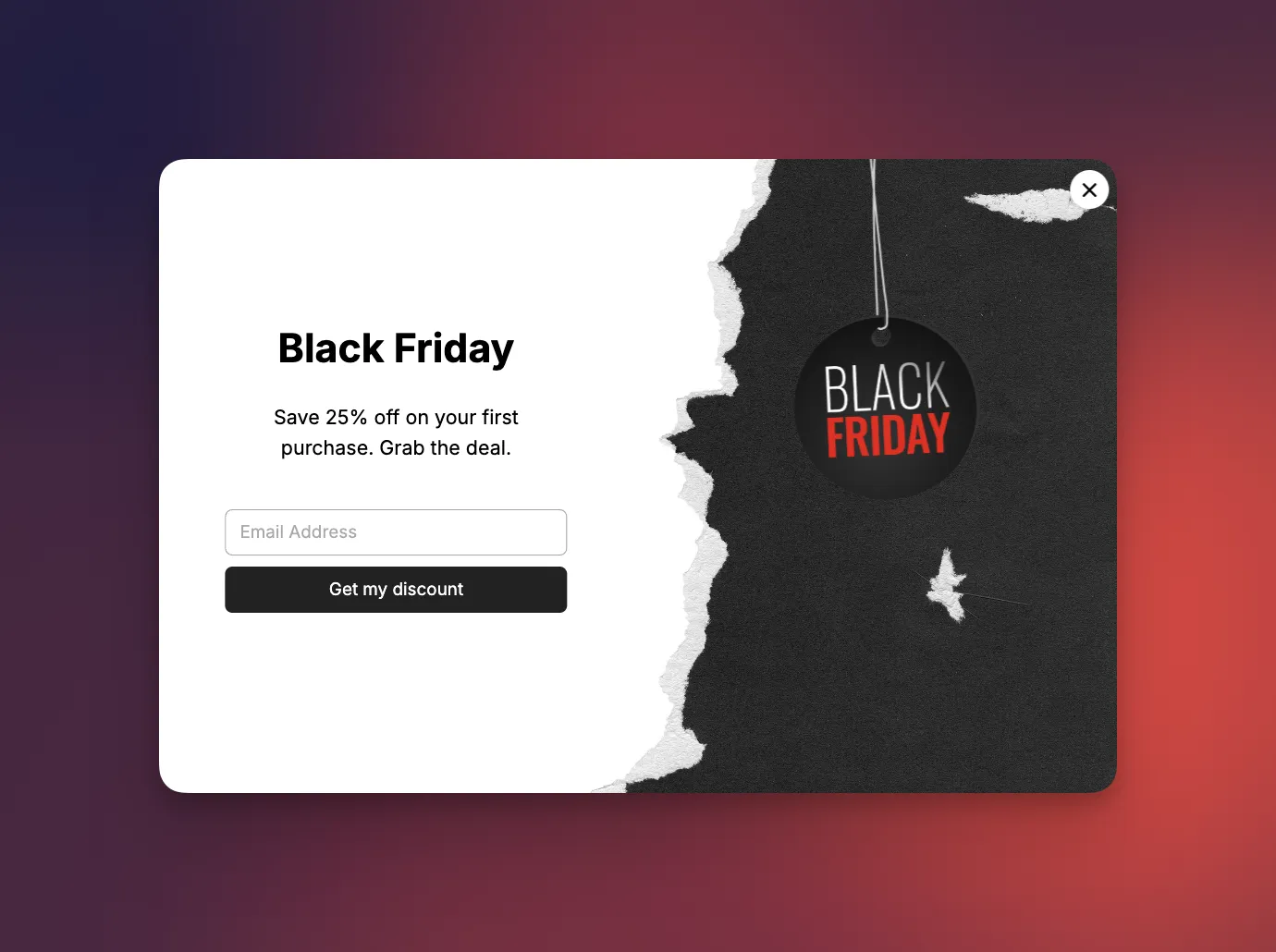
Targeting only new visitors is worth the extra rule. In our 2026 benchmark, popups targeted at new visitors only convert 1.13% vs 0.77% for popups shown to everyone.
Black Friday sales are the best for new shoppers to learn about your business. It's also great for building loyal relationships with them.
Offering them a discount or freebie is one way to encourage new customers and retain existing ones.
8. Increase Engagement with Gamified Popups
Using gamified popups for Black Friday sales makes the visit more fun.
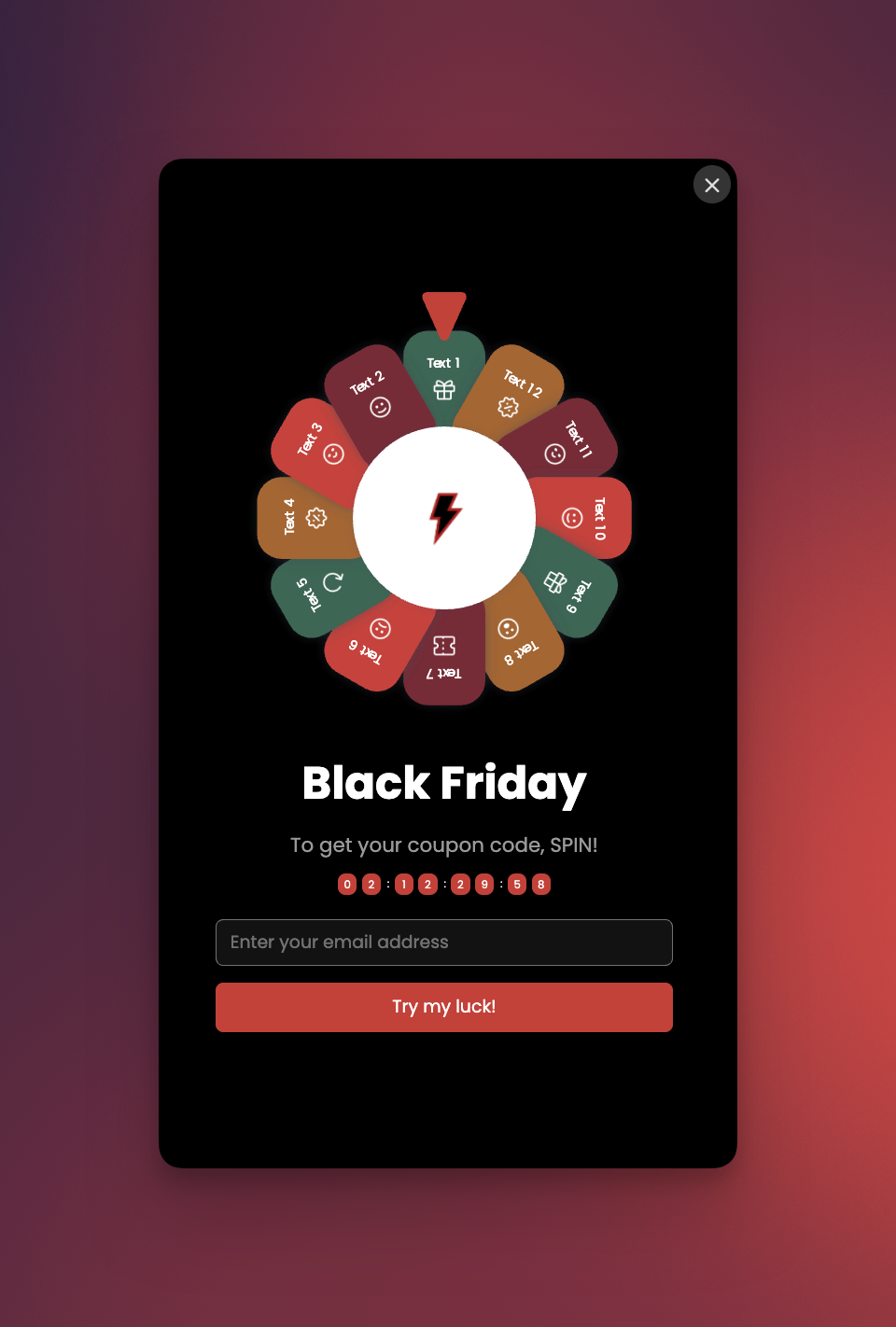
A game with a reward attached gets attention and keeps visitors on your site longer.
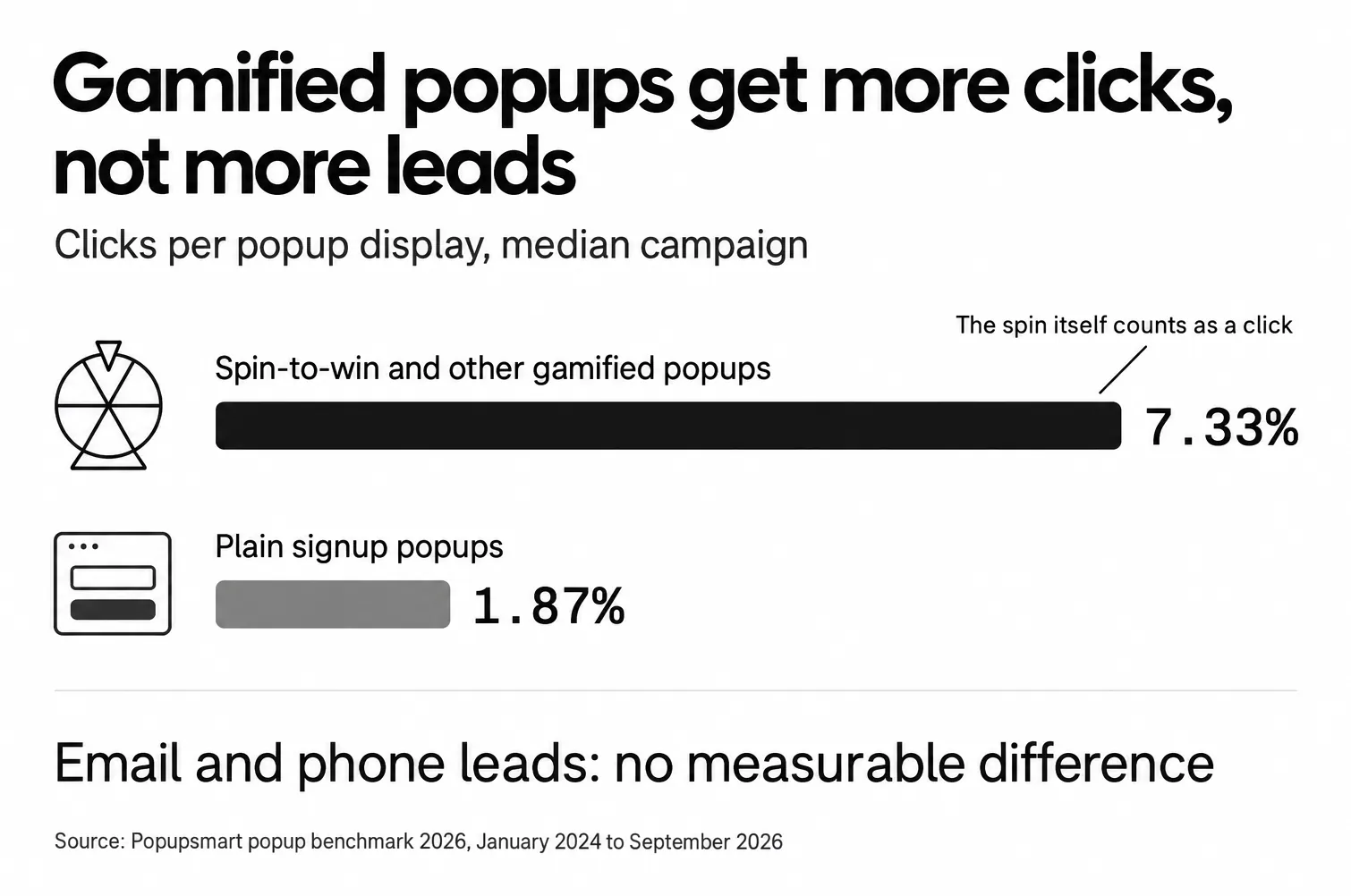
Be clear about what a game buys you, though. In our 2026 benchmark, spin-to-win and other gamified popups get far more clicks (7.33% vs 1.87% of displays, median campaign; the spin itself counts as a click), but do not collect measurably more email or phone leads than plain signup popups. Use a game when attention is the goal; for list growth, the offer does the heavy lifting. Our guide to spin-to-win wheel popups covers when a wheel pays off.
You can use this by creating a popup that invites users to play a simple game in exchange for a discount code.
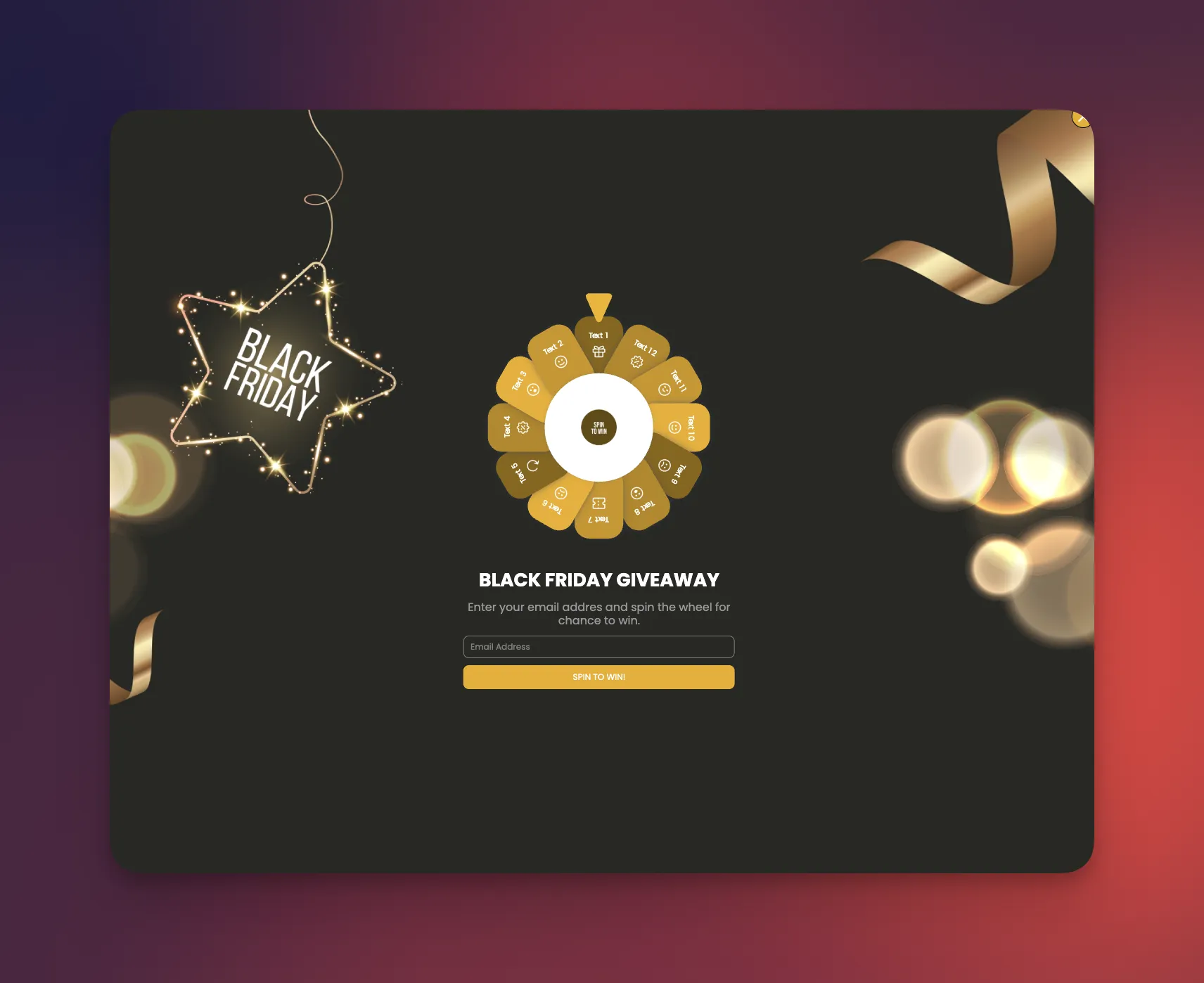
Or you can offer them a chance to win exciting rewards like gift cards or free shipping by completing a short survey or participating in a giveaway contest.
In this case, you can choose a multistep popup to increase engagement and get attention.
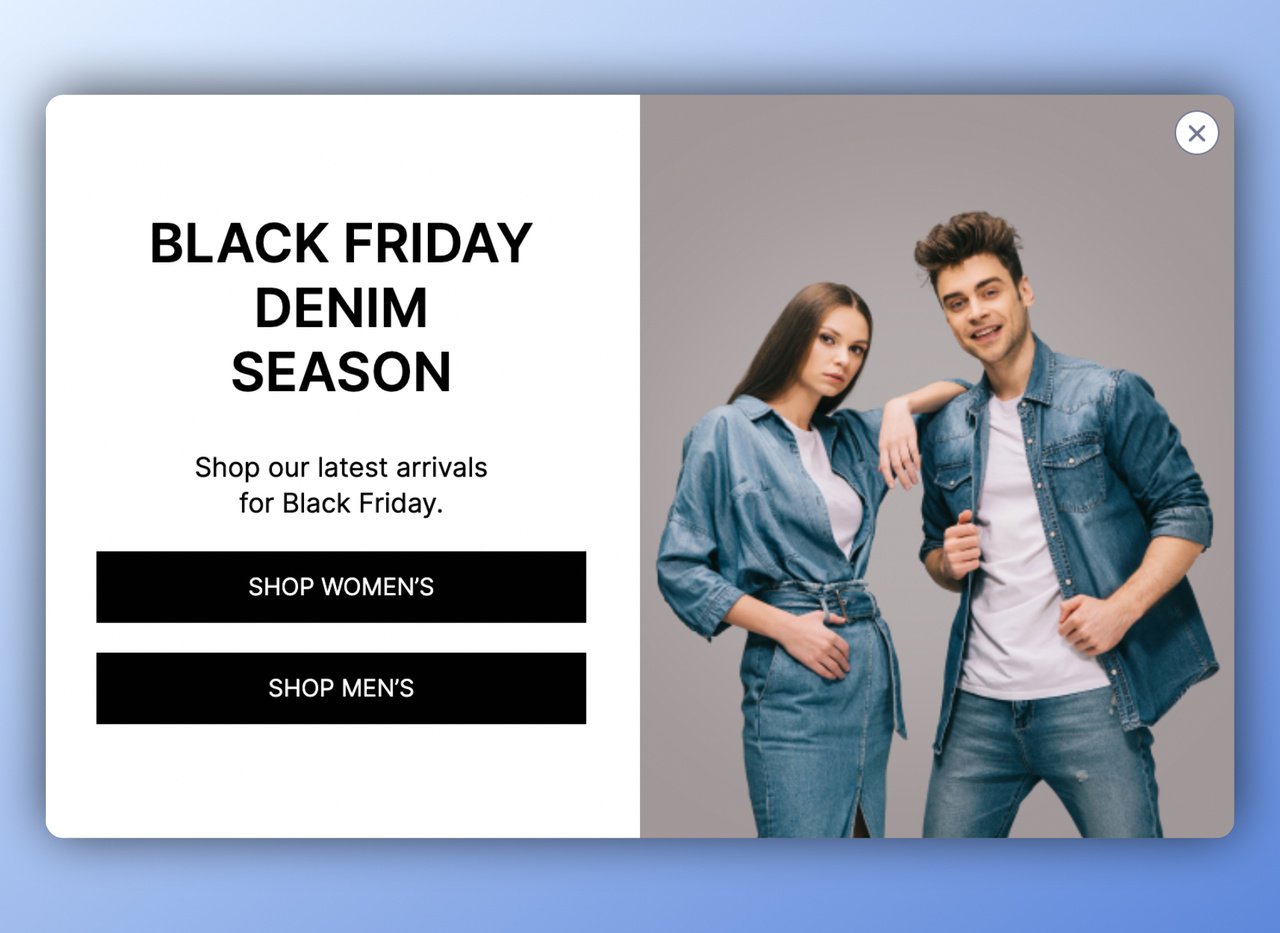
Multistep popups help you direct visitors to the desired page easily. As the first step doesn't include any action but a click, engagement rate is very high with multistep popups like this example. Keep your expectations on leads realistic: in our 2026 benchmark, multi-step forms show no measurable conversion advantage over single-step forms once step-1 clicks without contact details are excluded.
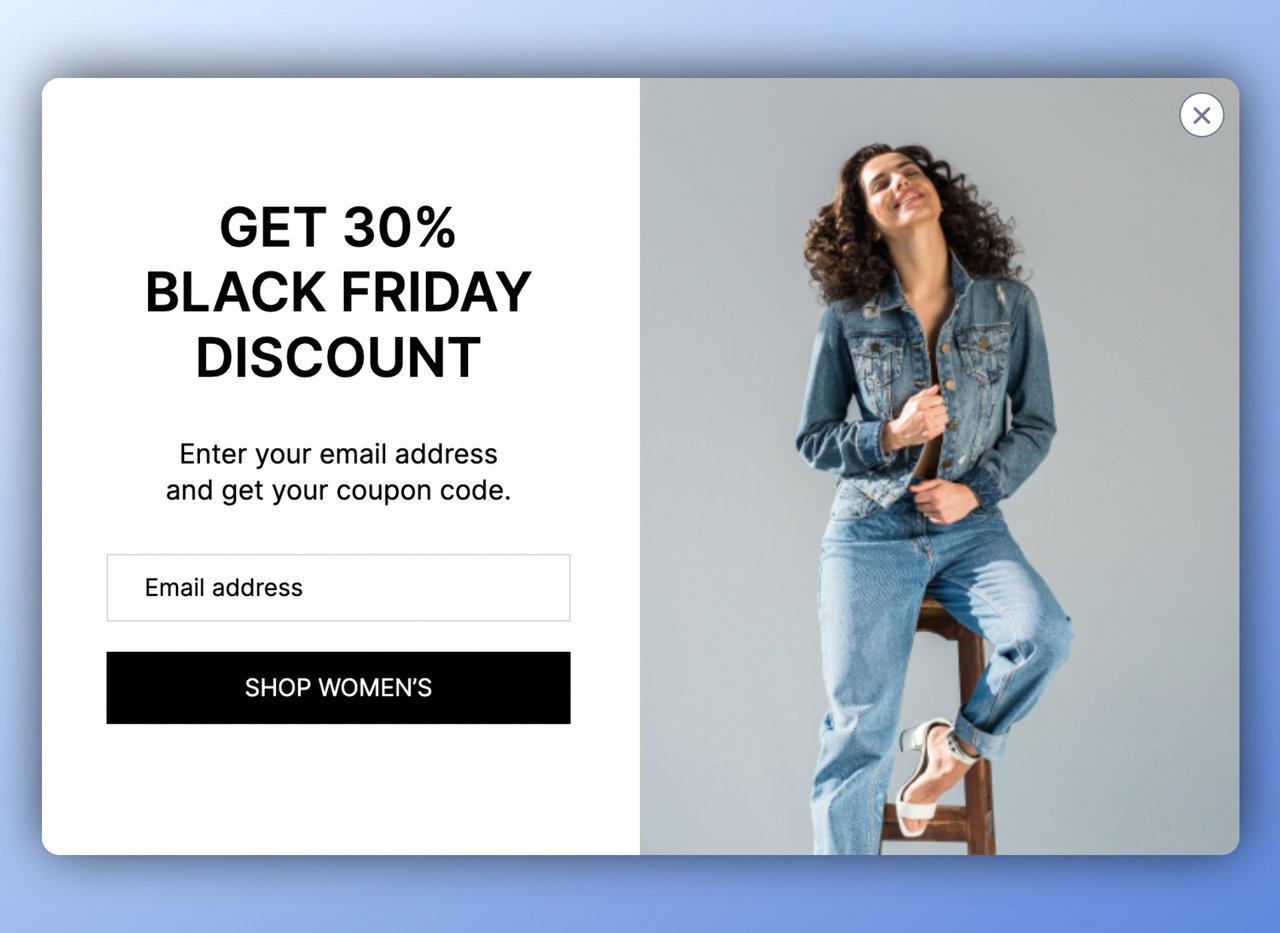
Once the visitor takes an action, it is a great opportunity to offer an incentive to collect data using your popup and increase their likelihood of purchase thanks to your offer. This is what we call a win-win popup!
9. Offer a Minimum Purchase Promotion
Black Friday is the biggest shopping day of the year, but it's also one of the most competitive. You need to offer customers an incentive to buy from you to stand out.
One of the most effective ways to do this is by offering a minimum purchase requirement for Black Friday promotions.
This way, customers have no choice but to make a larger order with you to claim their discount.
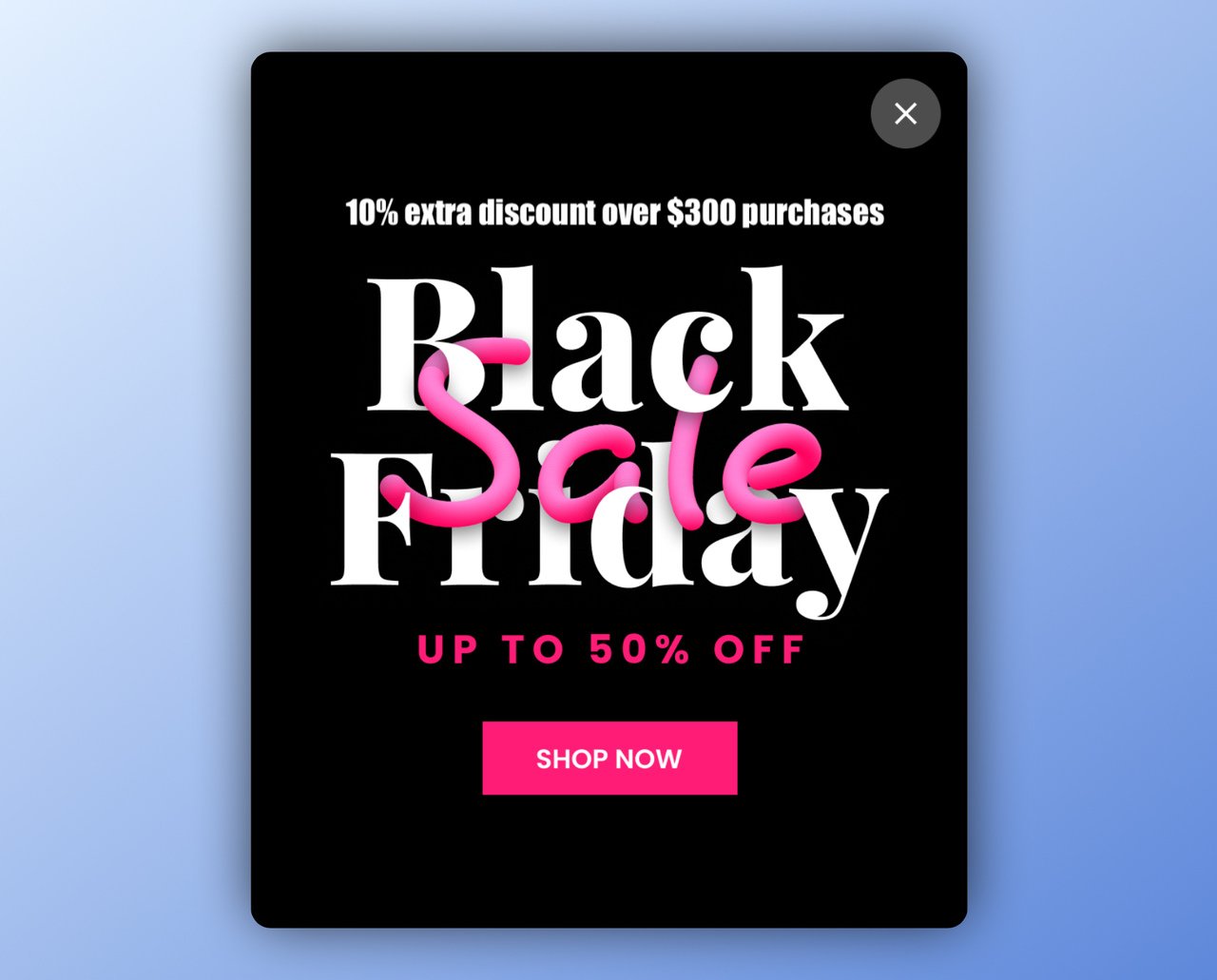
A minimum purchase requirement for Black Friday promotions works because:
- It increases average order value. A discount that only unlocks above a set spend gives customers a reason to add one more item, and your average order value (AOV) goes up over time.
- It encourages repeat orders. Customers who used your promotion and had a good experience are more likely to come back and buy from your store again.
Plus, offering discounts on repeat orders helps reduce customer churn and increase long-term profits for any e-commerce business.
10. Encourage Social Share
People love sharing good deals, so why not reward them with something extra?
Ask your customers to share your Black Friday deals for an incentive. You can also take advantage of UGC marketing by starting a social media campaign such as #BF(your brand's name)madness.
Let your customers know using a popup that you will choose three of the best images shared under this hashtag and give them a Black Friday special.
People like taking part in this kind of thing, and every share sends a little more traffic to your site.
It helps brand awareness as well as sales, the same way influencer marketing or user-generated content does. So how will your customers find out about the contest?
With a popup like this one:
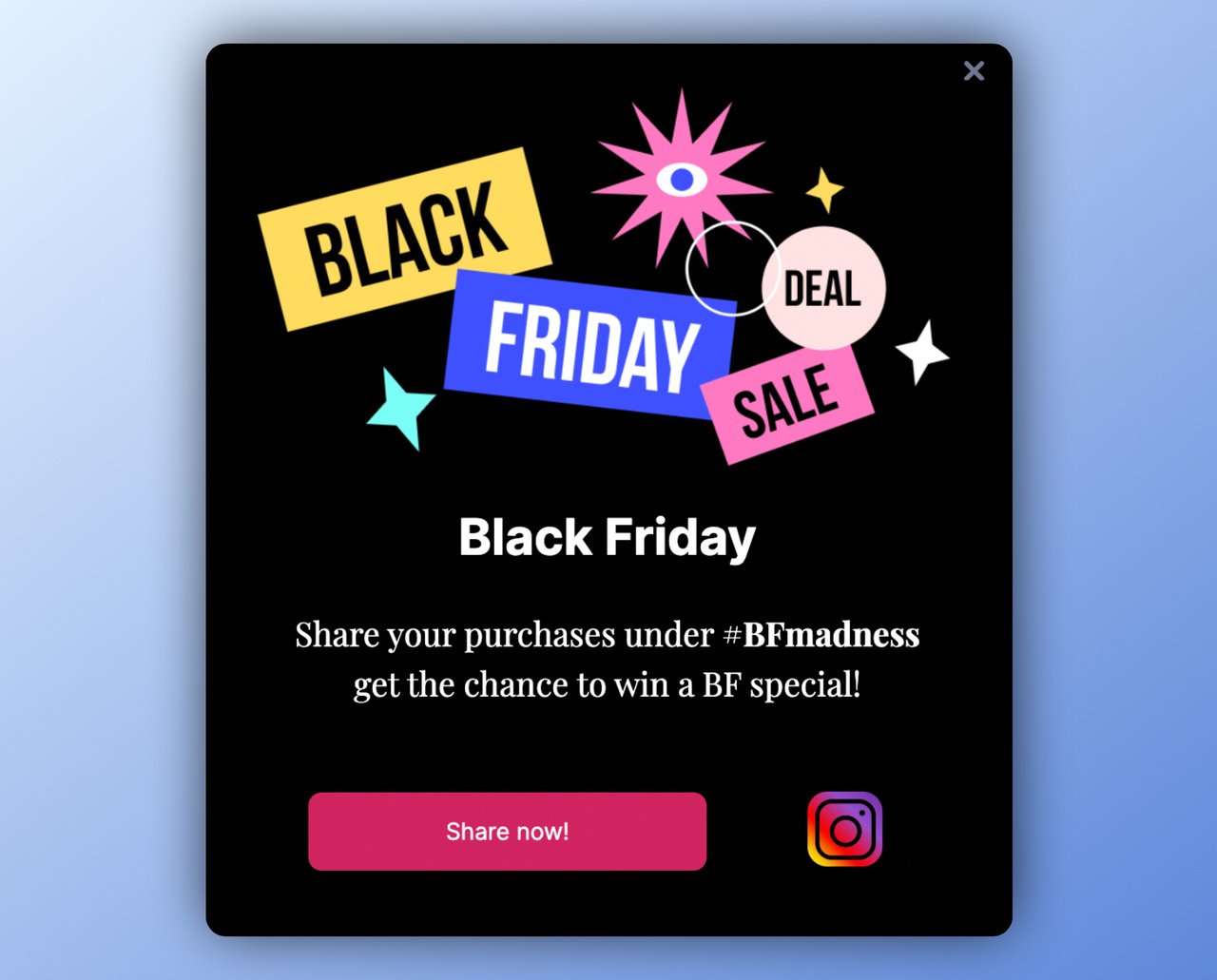
Depending on your target audience and goals, you can use such a campaign for any social media channel.
When to launch your Black Friday popups in 2026
Timing is where most Black Friday popups go wrong: they appear too late to build a list and stay up too long after the sale. Here's a simple calendar for 2026.
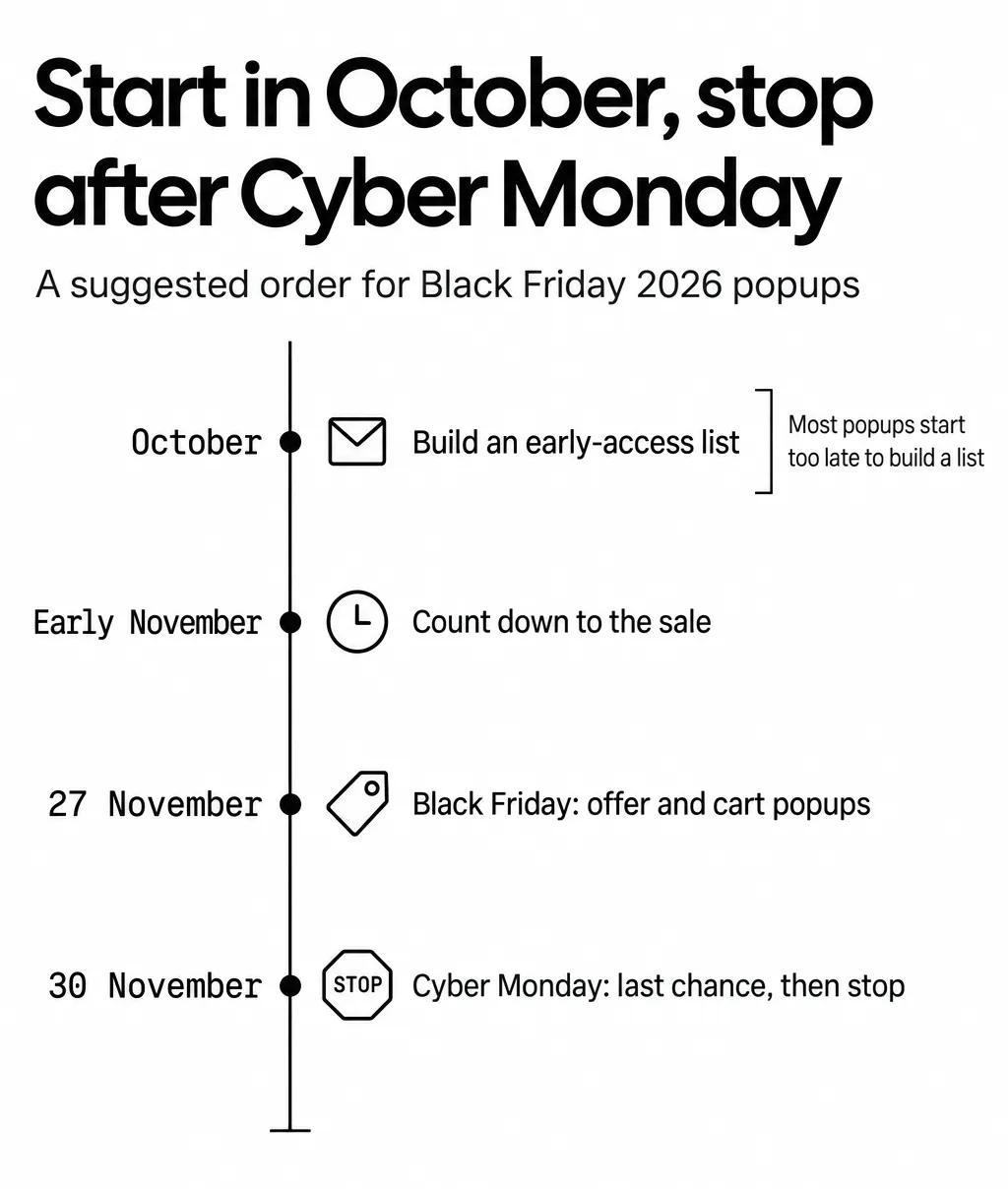
- October: build an early-access list. Run the email capture popup from use case 1, promising first access to the sale.
- Early November: count down to the sale. Switch to the presale popup from use case 5, with a timer that ends when the sale opens.
- 27 November, Black Friday: offer and cart popups. Run the discount, the deals-page bar and the cart-page offers.
- 30 November, Cyber Monday: last chance, then stop. Run one last-chance message, then turn the Black Friday popups off so returning visitors don't meet an expired offer.
The popup's words matter too. In English popups, first-person buttons ("Send my code") convert 1.18% vs 0.80% for neutral wording (median campaign), so "Get my Black Friday code" is a better button than "Submit". For more wording ideas, see our call-to-action examples.
Before You Leave…
Black Friday rewards the stores that plan. Pick two or three of the use cases above, put them on the calendar, and cap how often each one shows.
It's the weekend to grow your online sales and generate many new leads, and the examples above should give you a head start.
If you'd rather describe the campaign than build it, the Popupsmart AI agent builds a whole campaign (template, targeting and triggers, integrations) from a chat request and publishes it, on every plan, the free plan included. Popupsmart's free plan costs $0 and covers 5K pageviews a month.
What are some of your favorite ways to advertise for Black Friday?
Frequently Asked Questions
1. What Makes a Popup Successful?
The key to a successful popup is to make it look like part of the site and not an interruption. If you can get people to click, then you can sell them something.
Make sure your popup stands out from the rest of your site so that users don't miss it, but also make sure that it doesn't stand out too much so that users don't feel like they are being bombarded by ads.
Use high-quality images that will catch people's eyes. If possible, use actual photos of products you're selling instead of generic stock photos.
Include a direct call-to-action (CTA). Your CTA should be clear and easy for people to understand what they need to do next, like "Buy Now" or "Subscribe Now".
Use the right wording in your popup. Make sure that the opt-in form includes fields relevant to what you're offering and it's easy to understand and navigate through.
2. Why is Black Friday Good for Businesses?
Black Friday is a big event for businesses. It's the day when most people go out or online, and spend money on gifts for their loved ones.
This means that stores make a lot of money on Black Friday, which can be used to expand their businesses and improve service quality.
In fact, many businesses use Black Friday as an opportunity to launch new products or services. For example, some companies might offer discounts on merchandise that they sell online during this time of year.
If you own a business and want to attract more customers, then you should consider launching a Black Friday campaign too!
3. What is the Best Time to Start Marketing for Black Friday?
Black Friday 2026 falls on 27 November and Cyber Monday on 30 November, so start in October.
The earlier you start marketing for Black Friday, the more time you'll have for engagement before the big day rolls around.
Use October to grow an early-access list, early November to tease the sale with a countdown, and Black Friday week for the offer itself.
The sooner people see your ads and posts about Black Friday deals, the better chance they have at remembering them on Black Friday itself.
4. When is Black Friday 2026?
Black Friday 2026 is Friday, 27 November, the day after Thanksgiving in the United States. Cyber Monday follows on Monday, 30 November. Most stores run their Black Friday popups across the whole weekend and turn them off after Cyber Monday.
5. Do discount popups convert better on Black Friday?
In Popupsmart's 2026 benchmark, signup popups that offer a discount code convert 1.46% vs 0.75% for signup popups without one, and popups stating 10% off convert 1.25% vs 0.67% for popups that state no discount. Bigger discounts did not convert measurably better, though the larger-discount samples are small.
6. Should I use exit intent for Black Friday popups?
Use it as a courtesy, not as a conversion trick. In Popupsmart's 2026 benchmark, exit intent shows no statistically reliable advantage: popups on the most sensitive exit-intent setting converted 1.10% vs 0.78% without exit intent (median campaign), a gap that could be chance. Where the popup appears matters more: popups on cart and checkout pages convert 4.57% vs 1.07% on the home page.
7. How often should a Black Friday popup show to the same visitor?
Cap it at two views a week. In Popupsmart's 2026 benchmark, the first two times a visitor sees a popup in a week convert at similar rates (1.33% and 1.22% of displays, pooled); from the third view conversion falls, and from the sixth view it is 0.41%.