
What is Behavioral Marketing and How to Use It Effectively

 ChatGPT
 Perplexity
 Claude
 Grok
Grok Google AI Mode
Behavioral marketing uses customer actions to deliver more relevant messages. Common strategies include cart recovery, retargeting, recommendations, and behavior-based segmentation across many industries.
Behavioral marketing is a marketing approach that uses real customer actions, like pages viewed, products clicked, emails opened, or carts abandoned, to deliver more relevant messages, offers, and experiences. I see it as the difference between guessing what people want and responding to what they already showed you.
I’m going to walk through what behavioral marketing is, how a behavioral marketing strategy works, which behavioral marketing strategies are actually worth trying, and a few behavioral marketing examples that make the whole thing feel practical instead of theoretical. Let’s get into it. 👇
What Is Behavioral Marketing?
At its core, behavioral marketing means adjusting your marketing based on what people actually do.
Not what you assume they want. Not what broad demographics suggest. Not what worked for everyone five years ago.
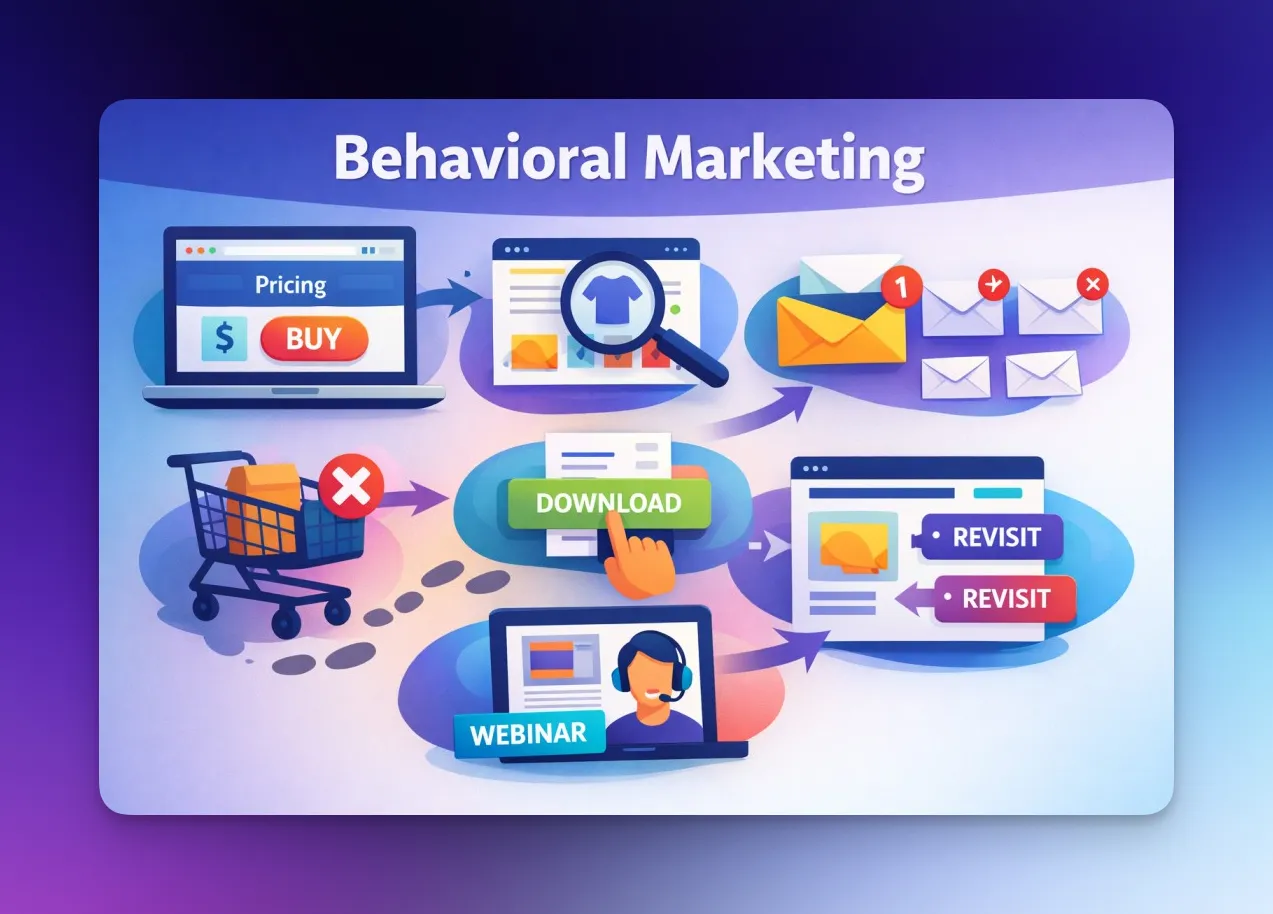
I’m talking about actions like these:
- visiting a pricing page
- clicking on a product category more than once
- opening one email but ignoring the next three
- adding an item to cart and leaving
- returning to the same product page several times
- downloading a guide or signing up for a webinar
Those actions tell a story. A good behavioral marketing strategy listens to that story and responds with something timely and useful.
What behavioral marketing means in simple terms
I like to explain it this way:
| Approach | What it focuses on | Example |
|---|---|---|
| Traditional targeting | Who the person is | “Show this campaign to women aged 25–34.” |
| Behavioral marketing | What the person does | “Show this offer to visitors who viewed the product twice but didn’t buy.” |
That shift is huge.
Because behavior usually says more than static profile data ever could. Someone might fit your target audience on paper and still have zero buying intent. Another person might never match your “ideal customer” profile, but they’ve clicked through your product pages three times this week and opened every email you sent. I know who I’d pay attention to.
How Behavioral Marketing Differs From Traditional Marketing
Traditional marketing often starts with audience assumptions. Behavioral marketing starts with signals.
That’s one of the reasons I find it so effective. It helps you move from broad messaging to context-aware messaging.
Here’s the real difference:
- Traditional marketing says: “Here’s our campaign. Let’s push it to a segment.”
- Behavioral marketing says: “This person did something meaningful. Let’s respond in a relevant way.”
That response might be:
- a reminder email
- a personalized product recommendation
- a limited-time popup
- a follow-up ad
- a different CTA on the website
- a discount shown only when exit intent appears
It feels smarter because it is smarter. And usually, it feels better to the customer too.
What Customer Behavior Data Looks Like in Practice
A lot of people hear the term and imagine some massive, scary, enterprise-level data machine.
Honestly, it doesn’t have to be that dramatic.
In practice, behavioral marketing data often includes:
- Website behavior: pages viewed, session depth, time on page, click paths
- Purchase behavior: previous orders, average order value, repeat purchase patterns
- Email behavior: opens, clicks, ignored campaigns, unsubscribes
- On-site engagement: popups viewed, forms started, quizzes completed
- Cart behavior: add-to-cart actions, checkout starts, abandoned carts
And yes, this matters because people drop off all the time. Baymard’s research puts the average documented online cart abandonment rate at 70.22%, which is a pretty blunt reminder that interest does not automatically become action. That gap is where many behavioral marketing strategies do their best work.
This matters so much: For me, the biggest value of behavioral marketing is not just higher conversions. It’s relevance.
When you respond to behavior, your marketing starts feeling less like interruption and more like timing.
That could mean:
- reminding someone about the exact product they almost bought
- changing the homepage message for returning visitors
- sending a softer follow-up instead of repeating the same hard sell
- offering help when someone looks stuck, instead of shouting “buy now”
That’s also why the behavioral marketing importance keeps growing. Salesforce reports that 73% of customers expect better personalization as technology advances, while 61% say most companies still treat them like a number. That gap tells me there’s still a lot of room for brands to do this better.
So if I had to define it in one sentence, I’d say this:
Behavioral marketing is the practice of turning customer actions into better-timed, more relevant marketing.
That’s the heart of it.
Why Behavioral Marketing Matters
Customers have gotten used to relevance. They notice when a brand remembers what they looked at, what they clicked, what they nearly bought, and what they clearly do not care about. McKinsey says 71% of consumers expect personalized interactions, and 76% get frustrated when they do not get them. Salesforce also reports that 73% of customers expect better personalization as technology advances, while 61% say most companies treat them like a number. That gap is a big part of the behavioral marketing importance today.
The Behavioral Marketing Importance for Modern Brands
What I like about a good behavioral marketing strategy is that it makes marketing feel more earned.
Instead of blasting the same message to everyone, you react to behavior that already happened. That changes the tone completely. A browse abandonment email feels different from a generic promotional email. A well-timed product recommendation feels different from a homepage banner shouting at everyone equally.
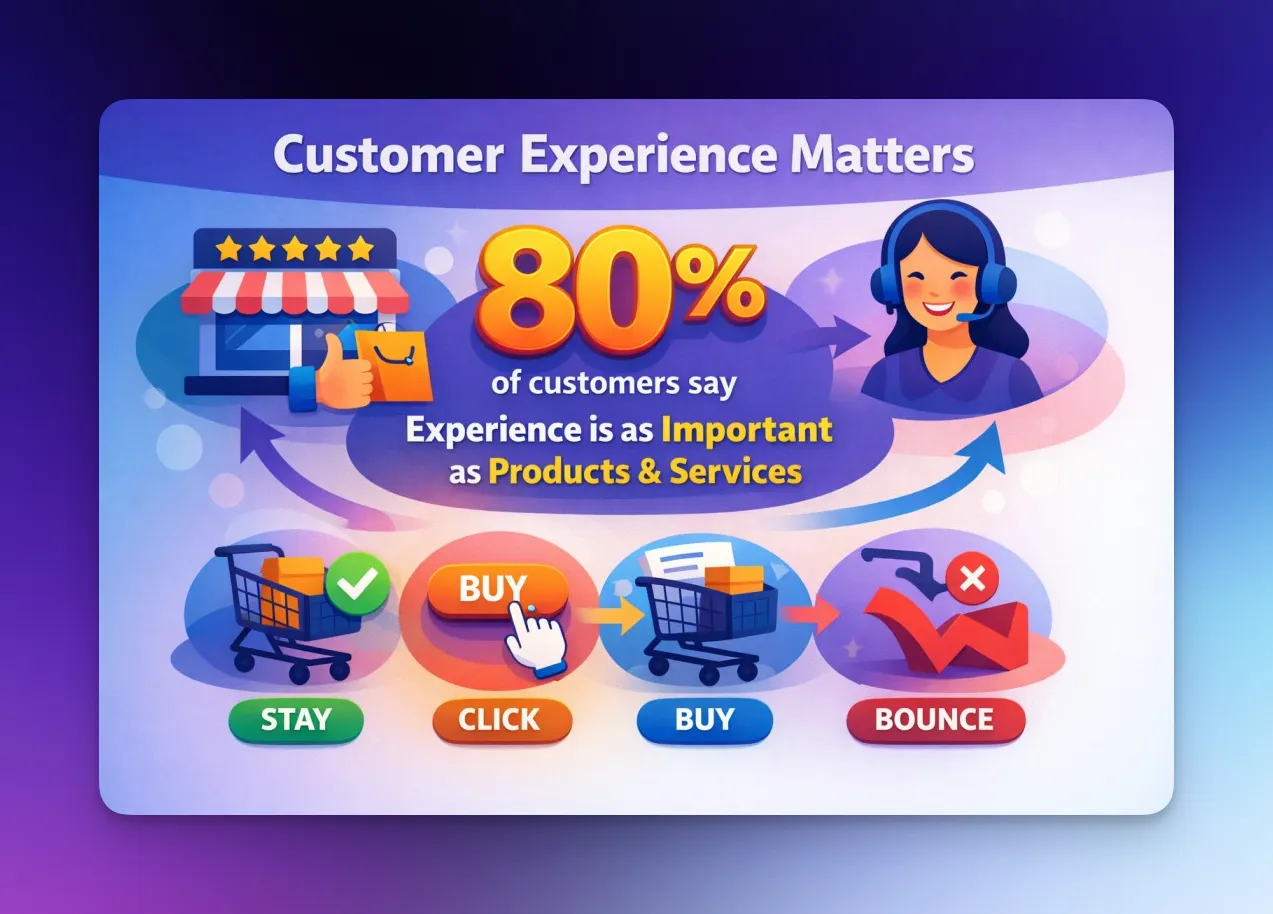
This matters because experience now carries real weight in buying decisions. Salesforce says 80% of customers consider the experience a company provides to be as important as its products and services. So even if your offer is strong, the way you deliver it still shapes whether people stay, click, buy, or bounce.
Why Relevance Matters More Than Volume
A lot of marketing still runs on volume.
More campaigns. More traffic. More sends. More impressions.
I get the instinct. It feels productive. But in my experience, more noise rarely fixes weak relevance.
That is one reason behavioral marketing strategies work so well. They are built around intent. And intent is usually more valuable than raw reach.
Here’s how I think about it:
| If you focus on... | You usually get... | The problem |
|---|---|---|
| Volume | More people seeing your message | Many of them do not care yet |
| Behavior | More relevant timing and targeting | You need better segmentation |
| Relevance + timing | Higher quality engagement | It takes more thought, but pays off |
That last column is the real tradeoff. A strong behavioral marketing strategy takes more care than a one-size-fits-all campaign, but it usually gives you better conversations with the right people.
How Behavior-based Marketing Improves Customer Experience
This is the part people sometimes overlook.
Behavioral marketing examples often get framed around conversions, sales, and revenue. Fair enough. Those things matter. But before any of that, behavioral marketing improves the customer experience by making interactions feel less random.
For example:
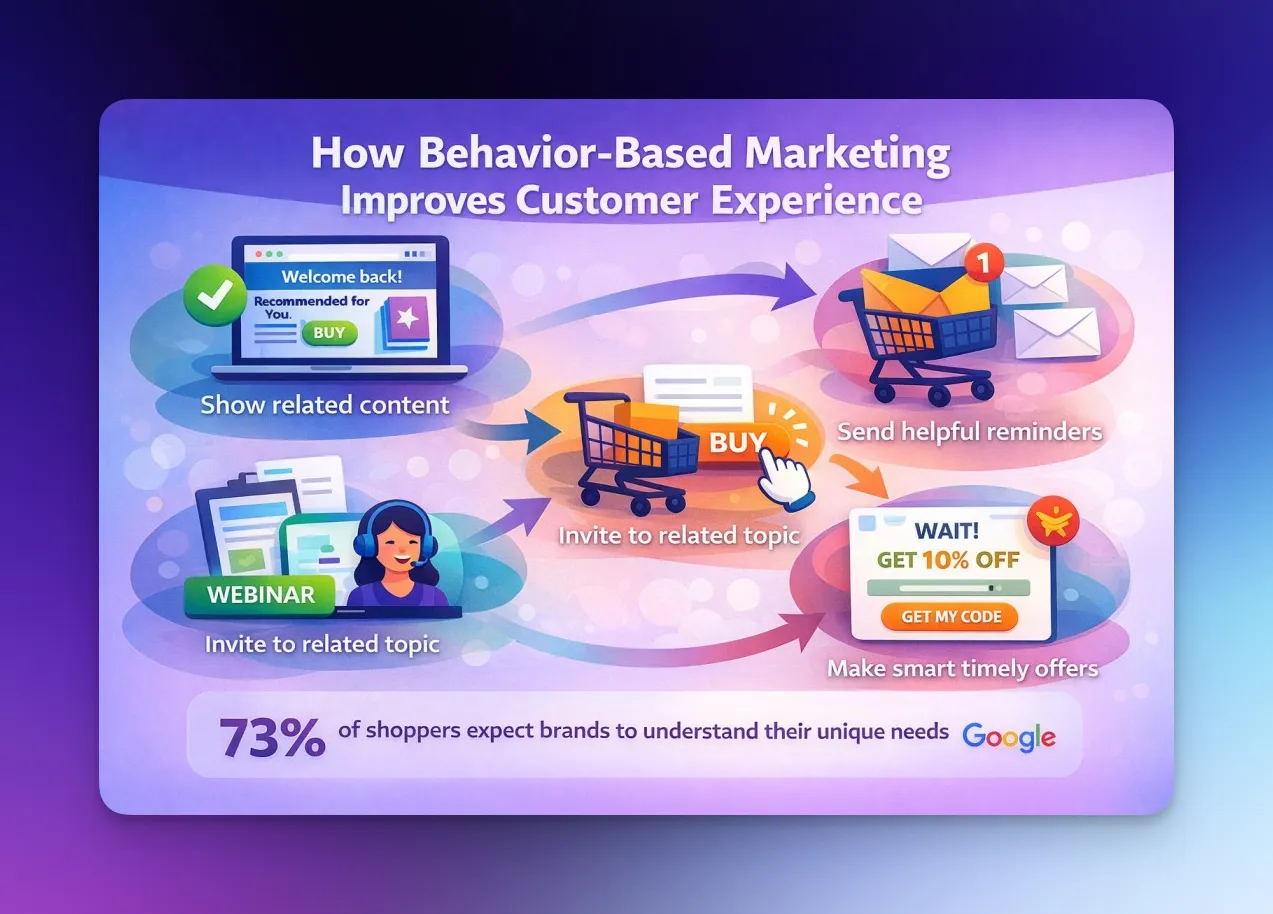
- a returning visitor sees content related to the category they explored before
- a shopper who abandoned checkout gets a reminder instead of a completely unrelated email
- a reader who downloaded one guide gets invited to a webinar on the same topic
- a visitor showing exit intent sees a useful offer, not an irrelevant popup
Small moments, but they add up.
And when they do, the brand feels sharper. More attentive. Less generic.
That also matches what broader customer research keeps showing. Google’s Think with Google has noted rising expectations around personalization, including a finding that 73% of shoppers expect brands to understand their unique needs and expectations. That tells me people are not just tolerating relevance anymore, they are expecting it.
This matters for performance too: I do not think behavioral marketing importance should be reduced to “it boosts conversions,” but yes, performance is part of the story.
Here’s why:
- relevant messages usually get more attention
- timely offers reduce wasted impressions
- action-based segmentation helps you avoid sending the wrong thing
- personalized follow-ups can recover visitors who were already close to converting
And in ecommerce especially, this matters a lot. Baymard’s documented average cart abandonment rate is 70.22%, which means a huge share of buying journeys already start with clear intent and still go unfinished. That is exactly where behavioral marketing strategies such as cart recovery emails, exit-intent offers, and reminder campaigns can make a difference.
How Behavioral Marketing Works
This is where behavioral marketing starts to feel less like a concept and more like a system you can actually use.
At a simple level, it works like this: a person does something, you interpret that behavior, and then you respond with a message, offer, or experience that fits the moment. That is the heart of any good behavioral marketing strategy. And because customer expectations around relevance and personalization are high, this kind of response-based marketing matters more than ever. McKinsey reports that 71% of consumers expect personalized interactions, while 76% get frustrated when they do not get them.
Collecting Behavioral Signals
The first step in behavioral marketing is paying attention.
You collect signals that show interest, hesitation, curiosity, or intent. These do not have to be complicated. In many cases, the most useful signals are the ones already sitting in your site, email platform, ecommerce dashboard, or CRM.
Some of the most common behavioral signals include:
- product page views
- category clicks
- add-to-cart actions
- checkout starts
- repeat visits
- email opens and clicks
- downloads, signups, or form completions
- time spent on a page
- exit intent or bounce patterns
I always tell people this part is less about collecting more data and more about collecting the right data. A shopper who adds an item to cart and leaves is giving you a much clearer signal than someone who randomly landed on your homepage for six seconds. Given that Baymard currently puts average documented cart abandonment at 70.22%, those behavior signals are too valuable to ignore.
Segmenting Users Based on Actions
Once you have the signals, the next step is grouping people by what they did.
This is where a behavioral marketing strategy becomes more precise. Instead of sending one generic campaign to everyone, you create smaller segments based on actions and intent.
For example:
| User behavior | Possible segment | Smart next step |
|---|---|---|
| Viewed the pricing page twice | High-intent visitor | Show a stronger CTA or offer a demo |
| Added to cart but did not buy | Cart abandoner | Send a reminder email or exit offer |
| Clicked product emails repeatedly | Engaged subscriber | Recommend related products |
| Downloaded a guide | Educational lead | Send a follow-up resource or webinar invite |
| Returned to the same category | Interested browser | Personalize onsite content for that category |
This is one of my favorite parts of behavioral marketing strategies, because it helps you stop treating all traffic the same. A first-time visitor and a returning, high-intent shopper are not in the same moment, so they should not get the same message. That kind of relevance matters because experience now plays a major role in purchase decisions. Salesforce says 80% of customers view the experience a company provides as just as important as its products and services.
Delivering More Relevant Messages and Offers
After tracking and segmenting comes the response.
This is the part most people picture when they think about behavioral marketing examples. You use what the customer did to decide what happens next.
That response might be:
- an abandoned cart email
- a product recommendation block
- a popup triggered by exit intent
- a discount shown only to returning visitors
- a retargeting ad based on product interest
- a homepage banner that changes by audience behavior
What makes these messages work is not just personalization. It is timing.
I think that is the detail people sometimes miss. A message can be technically personalized and still feel flat if it arrives at the wrong moment. But when the timing matches the behavior, it feels natural. Helpful, even. That is one reason the behavioral marketing importance keeps growing. Google has reported that 73% of shoppers expect brands to understand their unique needs and expectations, which tells me relevance is no longer a bonus feature. It is part of the baseline experience.
The Three-part Flow I Usually Use
When I break behavioral marketing down for teams, I usually simplify it into this three-step model:
- Observe what the user does
- Interpret what that behavior probably means
- Respond with the most relevant next move
That is it.
Of course, the deeper version can involve marketing automation tools, scoring models, channel orchestration, and advanced segmentation. But the basic logic stays the same. Good behavioral marketing strategies are built on noticing intent and reacting with context.
A Quick Example
Let’s say someone visits a skincare site.
They:
- read a blog post about dry skin
- browse moisturizers
- click one product twice
- add it to cart
- leave without buying
A weak marketing response would be sending that person the brand’s general weekly newsletter.
A better behavioral marketing example would be this:
- show an exit-intent offer before they leave
- send a cart reminder email later that day
- follow up with a product education email if they still do not buy
- retarget them with the exact product they viewed
That is how a behavioral marketing strategy works in real life. Not by being flashy, but by being context-aware.
I think it works because it respects the customer’s actual journey.
You are not forcing a message into the wrong moment. You are reacting to the clues the customer already gave you. That tends to create better timing, better relevance, and better chances of conversion. And when around seven in ten carts are abandoned on average, even small improvements in how you respond to intent can make a measurable difference.
Key Data and Signals Used in Behavioral Marketing
If behavioral marketing works because it responds to real actions, then this section is about the raw material behind it.
In other words, what exactly are we paying attention to?
The short answer: behavior.
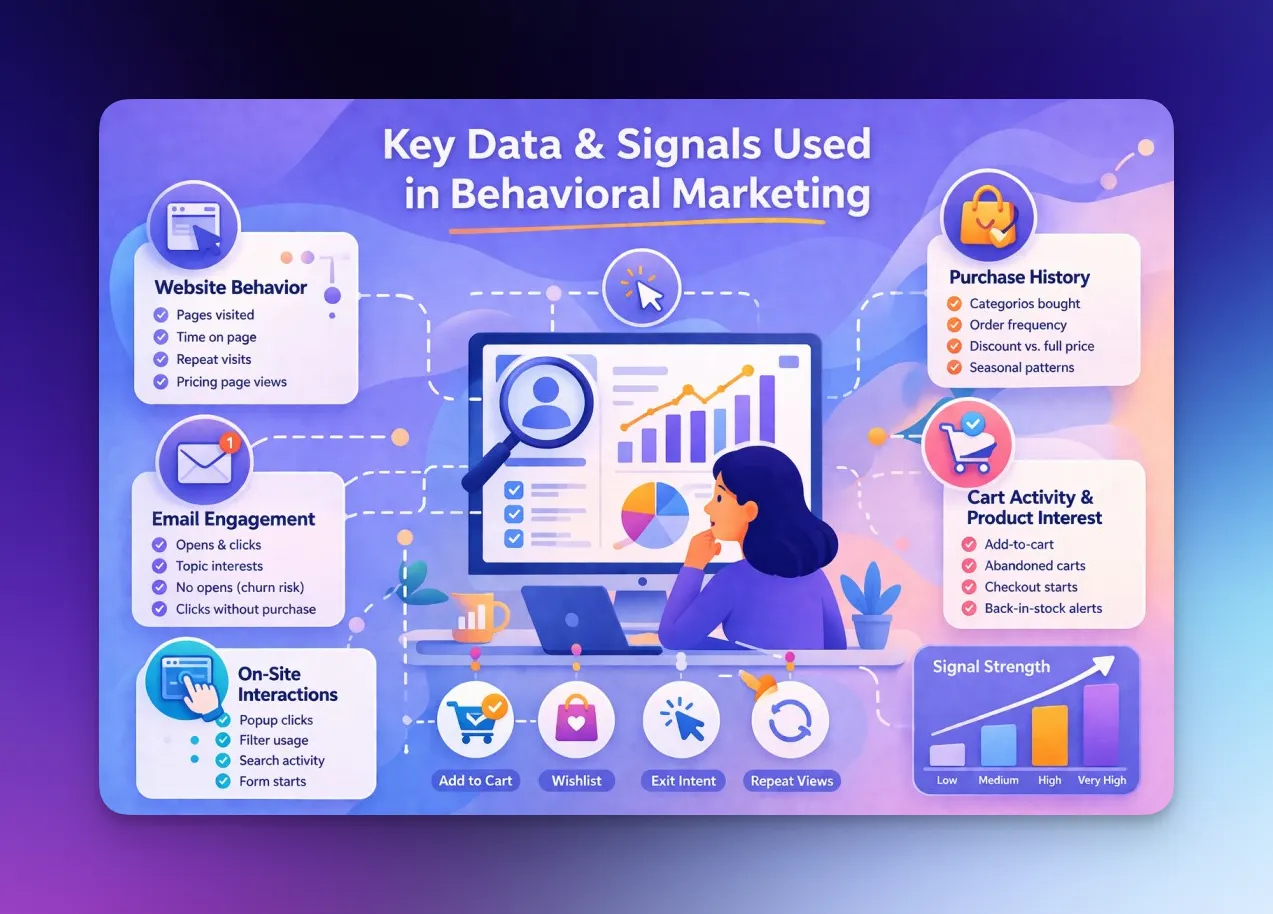
Website Behavior
This is usually the first place I look.
Your website is full of clues. Every visit, click, return session, and page path tells you something about intent. Some visitors are casually exploring. Others are practically raising their hands.
Here are a few website behavior signals I pay attention to most:
- pages visited
- time on page
- scroll depth
- repeat visits
- click paths
- pricing page visits
- visits to high-intent pages like product, demo, or checkout pages
- exit behavior
A visitor who reads one blog post and leaves is different from someone who visits your pricing page twice in two days. That second person is telling you a lot more with their behavior.
This is exactly why behavioral marketing importance keeps growing. People expect brands to respond with more relevance, and they notice when messaging ignores obvious context. McKinsey reports that 71% of consumers expect personalized interactions, and 76% get frustrated when they do not get them.
Purchase History
Purchase history is one of the strongest behavioral signals you can use.
Why? Because buying behavior tends to reveal preferences more clearly than almost anything else.
If someone has bought:
- from the same category more than once
- only discounted items
- high-ticket products
- seasonal products
- replenishable items on a regular cycle
...that gives you useful direction for your next message.
A returning customer who buys skincare every six weeks should not get the same campaign as a first-time visitor who has never purchased. A shopper who only buys during promotions may respond better to value-driven messaging than premium positioning. These details shape a smarter behavioral marketing strategy.
I always like this kind of data because it is grounded. It comes from action, not guesswork.
Email Engagement
Email behavior is another big one, and honestly, people often overlook how revealing it is.
When someone opens every email but never clicks, that means something. When they click product links but ignore educational content, that means something too. When they stop opening completely, that definitely means something.
Email engagement data can include:
| Signal | What it may suggest |
|---|---|
| Frequent opens | Ongoing interest in the brand |
| Repeated clicks on one topic | Clear content or product interest |
| No opens for weeks | Low engagement or message fatigue |
| Clicks without purchase | Interest with hesitation |
| Unsubscribe after promo-heavy sends | Poor relevance or too much pressure |
This kind of behavior is useful because it helps you stop treating your list like one giant blob. And once you start segmenting based on actions, your behavioral marketing strategies usually get much sharper.
Cart Activity and Product Interest
If I had to choose one category of signals that screams intent, it would probably be this one.
Cart actions are powerful because they sit so close to conversion. Someone who adds a product to cart, starts checkout, or returns to the same item multiple times is already giving you a strong behavioral signal. Baymard Institute’s 2026 roundup puts the average documented online shopping cart abandonment rate at 70.22%. That is a huge reason behavioral marketing examples like cart recovery emails and exit-intent offers are so common.
Signals in this category can include:
- add-to-cart events
- removed-from-cart events
- checkout starts
- abandoned carts
- repeat product views
- wishlist activity
- back-in-stock requests
These are not subtle signals. They are some of the clearest inputs in behavioral marketing.
And when brands respond well here, it often feels helpful rather than intrusive. A reminder about the exact item someone almost bought makes sense. A completely unrelated promo email does not.
On-site Interactions and Session Patterns
This is the category that often makes the difference between decent targeting and great timing.
On-site interactions include the little behaviors people show while they are actively browsing, such as:
- clicking a popup CTA
- dismissing an offer
- using site search
- filtering products
- interacting with a quiz
- starting a form but not finishing it
- returning after an earlier session
These signals can help you understand how someone is moving, not just where they landed.
For example:
- Someone using filters repeatedly may be trying to narrow options and needs clarity.
- Someone opening a size guide may be interested but hesitant.
- Someone who closes one popup and clicks another might not dislike offers, they may just dislike that offer.
That is where a good behavioral marketing strategy becomes more thoughtful. It does not just react to events. It tries to understand the moment behind them.
Not All Signals Matter Equally
This is something I’ve learned the hard way: more data does not automatically mean better marketing.
Some signals are weak. Some are noisy. Some look important but do not really tell you much on their own.
Here is how I usually think about signal strength:
| Signal type | Strength | Why it matters |
|---|---|---|
| Homepage visit | Low | Broad interest, low intent |
| Blog post read | Medium | Topic interest, early stage |
| Pricing page visit | High | Stronger commercial intent |
| Add to cart | Very high | Clear product intent |
| Repeat purchase | Very high | Proven customer value and preference |
This matters because one of the easiest mistakes in behavioral marketing is overreacting to weak signals and underusing strong ones.
The goal is not surveillance, it is relevance
I think this point matters enough to say clearly.
The goal of behavioral marketing is not to track everything just because you can. It is to use meaningful signals to create better experiences. That distinction matters, especially now that customers are more aware of how brands collect and use data.
Done well, behavior-based marketing feels timely. Done badly, it feels creepy.
That is why I prefer starting with a simple question:
What customer actions actually help me serve this person better?
If you can answer that well, the rest of the strategy gets much easier.
Where to start
If you are building your first behavioral marketing strategy, I would not begin with everything. I would begin with the signals closest to intent:
- product views
- pricing page visits
- cart activity
- repeat visits
- email clicks
Those five alone can support a lot of useful behavioral marketing examples without making your setup too messy.
And that, to me, is the sweet spot. Clear signals. Clear response. Better timing.
Behavioral Marketing Strategies You Can Start Using
In my experience, this is where many teams either overcomplicate everything or stay too generic for too long. They build huge flows before proving the basics, or they collect useful behavior data and then do almost nothing with it.
You do not need twenty automations on day one.
You need a few smart ones that make sense.
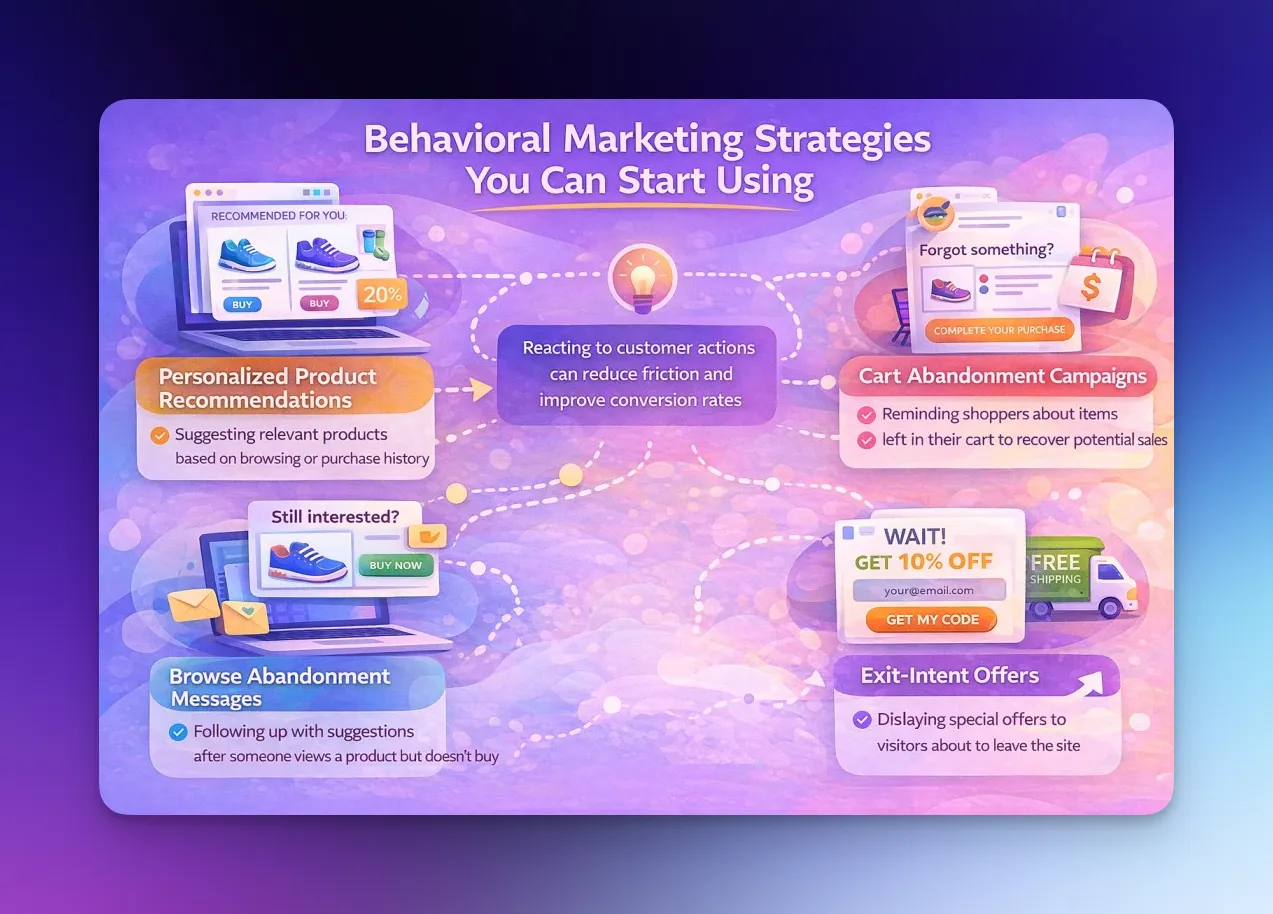
Personalized Product Recommendations
This is one of the most common behavioral marketing examples, and for good reason. It works because it responds to visible interest.
If someone keeps viewing running shoes, I would not send them a generic bestseller email. I would show them:
- related running shoes
- top-rated products in that category
- matching accessories
- recently viewed items
- similar products in a different price range
That is a simple but powerful behavioral marketing strategy. You are using behavior to reduce friction. Instead of making the customer search again, you are helping them continue from where they left off.
Here’s a simple way to think about it:
| Customer behavior | Recommended response |
|---|---|
| Viewed one product multiple times | Show that product again with supporting proof |
| Browsed a category | Recommend bestsellers from that category |
| Purchased once | Recommend complementary products |
| Returned to the same collection | Highlight similar or trending items there |
When these recommendations are done well, they feel helpful. When they are random, they feel lazy. That difference matters a lot in behavioral marketing.
Cart Abandonment Campaigns
If someone adds a product to cart and leaves, that is not a dead end. It is a signal.
And honestly, it is one of the clearest signals you can get.
That is why cart abandonment is one of the first behavioral marketing strategies I usually mention. The customer already showed interest. Your job is not to start the conversation from scratch. It is to pick it back up.
A flow to reduce cart abandonment can include:
- a reminder email
- an SMS follow-up
- a timed discount
- social proof for the abandoned product
- a “still thinking about it?” message
- a gentle urgency cue
The key is tone. I would not jump straight into panic-mode discounting every time. Sometimes the user just got distracted. Sometimes they need reassurance, not a coupon.
A good cart recovery message often answers one of these quiet objections:
- “Do I really need this?”
- “Can I trust this site?”
- “Should I wait?”
- “Is this the best option?”
- “Was checkout too annoying?”
That is why strong behavioral marketing examples usually feel contextual. They do not just remind. They help.
Browse Abandonment Messages
This one is close to cart abandonment, but a little softer.
Browse abandonment means someone looked at a product or category, maybe even more than once, but never added anything to the cart. That does not mean they were not interested. It usually means they were curious, but not ready yet.
This is a great place for a lower-pressure behavioral marketing strategy.
For example, you might send:
- a follow-up email featuring the viewed product
- a “you may also like” message
- educational content related to the product
- a customer review roundup
- a comparison guide
I like browse abandonment because it lets you stay relevant without rushing the user. It is one of those behavioral marketing strategies that can quietly improve conversions without feeling overly aggressive.
Exit-intent Offers
I have always liked exit-intent campaigns when they are used with restraint.
They are a classic behavioral marketing example because they respond to a very specific behavior: someone is about to leave.
That does not mean every exit-intent popup should scream “WAIT! 20% OFF!” in all caps. Please no. 😅
Sometimes the better move is:
- offering free shipping
- collecting an email with a small incentive
- showing a product recommendation
- surfacing a FAQ or trust message
- offering help for a likely hesitation point
The best exit-intent experiences depend on the page and the user’s behavior.
For example:
| Situation | Better exit-intent response |
|---|---|
| Leaving a product page | Show a product-related offer or review snippet |
| Leaving cart or checkout | Offer reassurance, shipping info, or recovery incentive |
| Leaving a blog post | Offer a related guide or newsletter signup |
| Leaving a pricing page | Highlight value, demo option, or comparison content |
That is what makes this a smart behavioral marketing strategy instead of a random interruption. It is tied to context.
Use Behavior-based Popups to Act on Intent in Real Time
One practical way to apply behavioral marketing is through behavior-based popups and onsite messages. For example, I might show a discount popup when a visitor shows exit intent, display a signup form after someone scrolls through a blog post, or surface a targeted offer when a shopper returns to the same product page more than once. This is exactly where a tool like Popupsmart can fit in. It lets brands turn real user behavior into more relevant popups, forms, and onsite campaigns without making the experience feel random or overly aggressive. In other words, it can support a smarter behavioral marketing strategy by helping you respond to intent while the visitor is still on the page.
Why this spot works best:
- it feels contextual, not forced
- Popupsmart is mentioned as a useful example, not a sales pitch
- it supports the keyword naturally
- it fits your existing examples around exit-intent and onsite behavior
Email Segmentation Based on User Actions
This is one of the simplest upgrades you can make, and it often has a big impact.
Instead of sending the same email campaign to your entire list, you group subscribers by what they actually did.
That could mean segmenting by:
- pages visited
- products viewed
- purchase frequency
- content downloaded
- email clicks
- inactivity
- previous offers claimed
I think this is one of the clearest expressions of behavioral marketing importance. Because once you start segmenting based on action, your emails stop feeling like generic broadcasts and start feeling more like relevant follow-ups.
A few examples:
- Users who clicked product A get a follow-up about product A
- Users who bought recently get onboarding or cross-sell content
- Users who stopped engaging get a re-engagement sequence
- Users who downloaded a guide get educational emails before a sales push
This kind of segmentation does not need to be flashy. It just needs to make sense.
Dynamic Website Content
This strategy is a little more advanced, but still very practical.
Dynamic website content means changing parts of the site based on what the visitor has done before. This can be incredibly effective in behavioral marketing because it brings relevance directly into the browsing experience.
That could look like:
- showing different homepage banners to new vs returning visitors
- highlighting recently viewed products
- changing CTAs based on funnel stage
- surfacing category-specific content
- hiding beginner messaging for repeat visitors
- personalizing offers by behavior segment
I like this approach because it makes the website itself feel more responsive. Not just the emails after the visit, but the visit too.
And in a strong behavioral marketing strategy, that matters. The customer journey is not one channel. It is all connected.
Start With the Strategies Closest to Intent
If I were building from scratch, I would not try to launch every tactic at once.
I would start with the behavioral marketing strategies that are closest to conversion intent:
- cart abandonment campaigns
- browse abandonment emails
- product recommendations
- email segmentation by behavior
- exit-intent offers
Why these first?
Because they connect clearly to visible actions. They are easier to measure. And they often produce the fastest learning.
My advice before using any strategy:
Before you launch anything, ask yourself this:
What behavior happened, and what is the most helpful next step for this person?
That question keeps your behavioral marketing strategy grounded.
Not louder. Not more automated. Just smarter.
And honestly, that is usually what works best.
Behavioral Marketing Examples Across Different Channels
I think behavioral marketing examples become much easier to understand when you stop talking about theory and start looking at brands people already know.
Because the truth is, some of the best behavioral marketing strategies are hiding in plain sight. They do not always announce themselves as “behavioral marketing.” They just feel relevant. Timely. Personal. And that is exactly the point.
Below are a few real-world examples that show how a strong behavioral marketing strategy can work across streaming, ecommerce, audio, and loyalty-based customer experiences.
1) Netflix Uses Viewing Behavior to Shape Recommendations

Netflix is one of the clearest examples of behavioral marketing built around ongoing user behavior.
Its recommendation system responds to what people watch, what they finish, what they skip, and what they actively signal they want more of. Netflix has said its recommendation approach is built around members’ personal tastes, and it has also explained that features like Profiles help give each person more personalized suggestions. On top of that, Netflix’s Thumbs Up / Thumbs Down feedback system is designed to improve future recommendations based on explicit user preference signals, and the company later added Double Thumbs Up as an even stronger signal that a member wants to see more of a certain type of content.
What makes this such a strong behavioral marketing example is that Netflix is not relying on a broad persona like “people aged 25 to 34 who like drama.” It is reacting to actual behavior:
- what you watched recently
- what you finished
- what you ignored
- what you rated positively
- what profile-specific tastes look like over time
That is a smart behavioral marketing strategy because it keeps the experience moving forward based on signals the user already gave.
2) Amazon Turns Browsing and Purchase Activity into Product Recommendations
Amazon is another classic behavioral marketing example, especially when it comes to recommendations.
The company has published extensively about its recommender systems and how they help generate personalized suggestions across Amazon experiences. Amazon Science notes that its systems offer personalized suggestions, learn from interactions, and propose appropriate actions across customer touchpoints. Amazon researchers have also published on personalized complementary product recommendation, which focuses on suggesting products that fit both the user’s preferences and the items they are already considering.
This is a great example of behavioral marketing importance in ecommerce, because Amazon can respond to signals like:
- search behavior
- clicks
- browsing history
- purchase history
- products frequently viewed together
- products that fit a shopper’s likely preferences
In practice, that leads to some of the most familiar behavioral marketing strategies online:
| Customer behavior | Amazon-style response |
|---|---|
| Viewed a product multiple times | Recommend the same product or similar ones |
| Bought an item | Suggest complementary products |
| Browsed a category | Surface related items in that category |
| Engaged with specific product types | Personalize future recommendations around those interests |
What I like here is that Amazon’s behavioral marketing strategy is not built around one interaction. It compounds over time. Every click sharpens the next recommendation.
3) Spotify Uses Listening Habits to Personalize Discovery
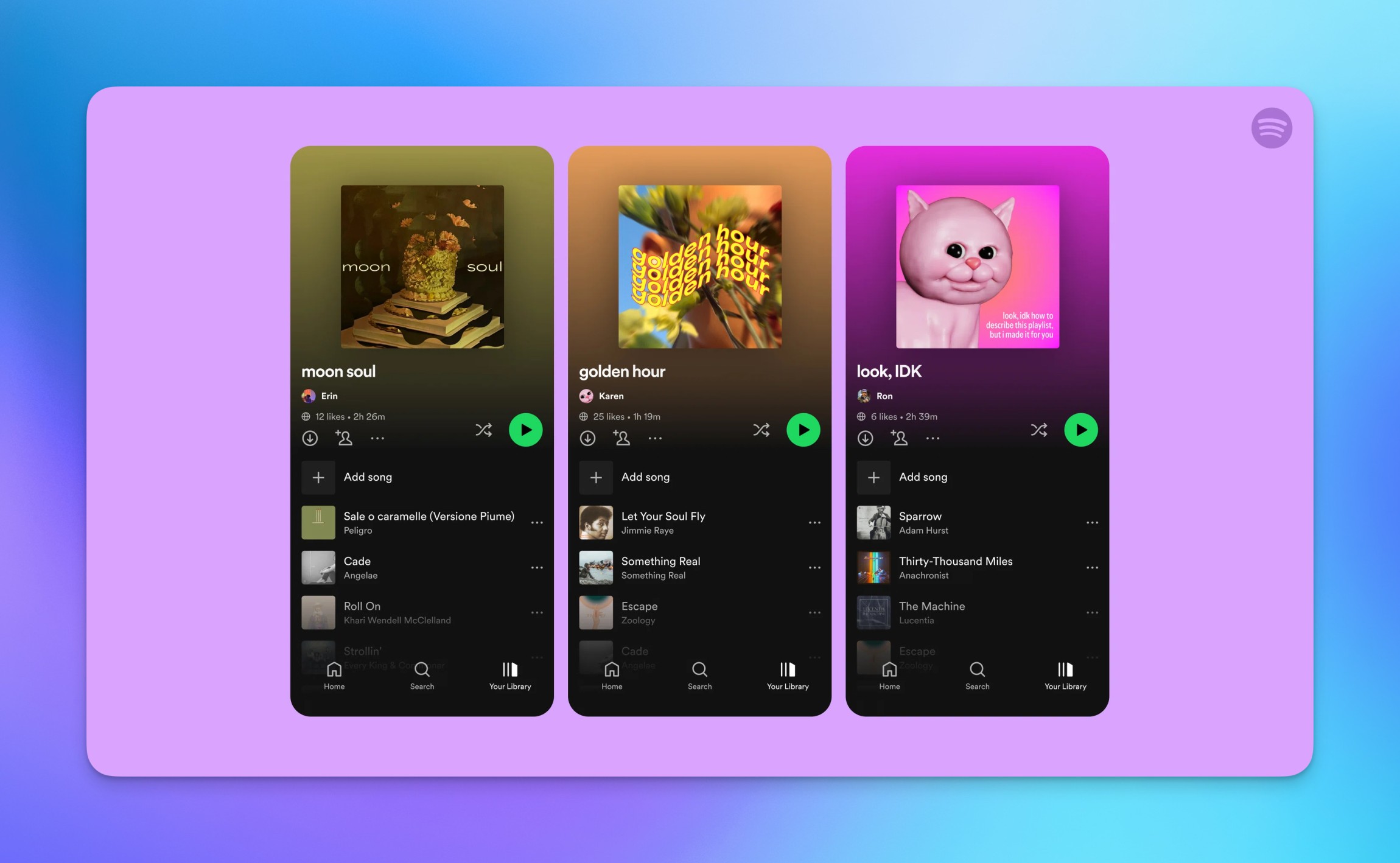
Spotify is one of my favorite behavioral marketing examples because it makes personalization feel playful instead of mechanical.
The company has repeatedly described products like Discover Weekly as personalized listening experiences, and Spotify’s newsroom explains that Discover Weekly becomes more personalized the more a user listens and engages. More recently, Spotify said Discover Weekly had reached 100 billion+ tracks streamed and described it as the platform’s first personalized playlist, one that helped shape later features like Release Radar, Blend, daylist, DJ, and AI Playlist. Spotify has also explained that personalization is about tailoring the content you receive based on the audio you love.
Spotify Wrapped is another strong behavioral marketing example. It turns a year of listening behavior into a personal story users actually want to share. Spotify’s newsroom describes Wrapped as a personalized experience built around the listener’s own year in music and podcasts.
The underlying behavioral marketing strategy is simple and powerful:
- observe listening history
- identify patterns and preferences
- turn those patterns into personalized recommendations or recap content
- give users something relevant enough to keep using and sharing
That is one reason Spotify feels like such a good lesson in behavioral marketing. It proves that personalization does not always have to look like a coupon or a recovery email. Sometimes it looks like a discovery that feels surprisingly personal.
4) Starbucks Uses Loyalty Behavior to Deliver Personalized Offers
Starbucks shows how behavioral marketing strategies can work inside a loyalty ecosystem.
The company has said its rewards experiences include personalized offers, and in 2026 Starbucks announced a reimagined Starbucks Rewards structure that includes personalized offers, early access, and more personalized engagement for members. Starbucks’ FAQ for the refreshed rewards program also highlights personalized offers and games as part of the member experience.
This is a strong behavioral marketing example because the personalization is tied to real customer behavior inside the app and rewards journey, such as:
- membership activity
- purchase frequency
- offer engagement
- app usage
- reward participation
What Starbucks does well here is connect behavior with retention. The message is not just “buy coffee.” It is closer to, “based on how you already interact with us, here is an offer or perk that feels more relevant to you.”
That is a useful reminder that behavioral marketing importance is not just about acquisition. It is also about loyalty, repeat visits, and ongoing engagement.
What All of These Behavioral Marketing Examples Have in Common
Even though Netflix, Amazon, Spotify, and Starbucks operate in very different spaces, their behavioral marketing strategy follows the same basic pattern:
- collect meaningful user behavior
- interpret that behavior as a signal of preference or intent
- respond with something more relevant
That response can be:
- a recommendation
- a personalized playlist
- a loyalty offer
- a different homepage experience
- a suggestion based on purchase behavior
- a prompt shaped by engagement history
And honestly, that is why I think these are such strong examples. They do not just personalize for the sake of it. They personalize based on something the user actually did.
My Takeaway from These Brands
If I had to pull one lesson from all of these examples, it would be this:
Great behavioral marketing does not start with “What do we want to send?” It starts with “What has the customer already told us through their behavior?”
That mindset changes everything.
Because once you start there, your marketing gets less generic, your timing gets better, and your customer experience starts making a lot more sense.
Final Thoughts on Behavioral Marketing
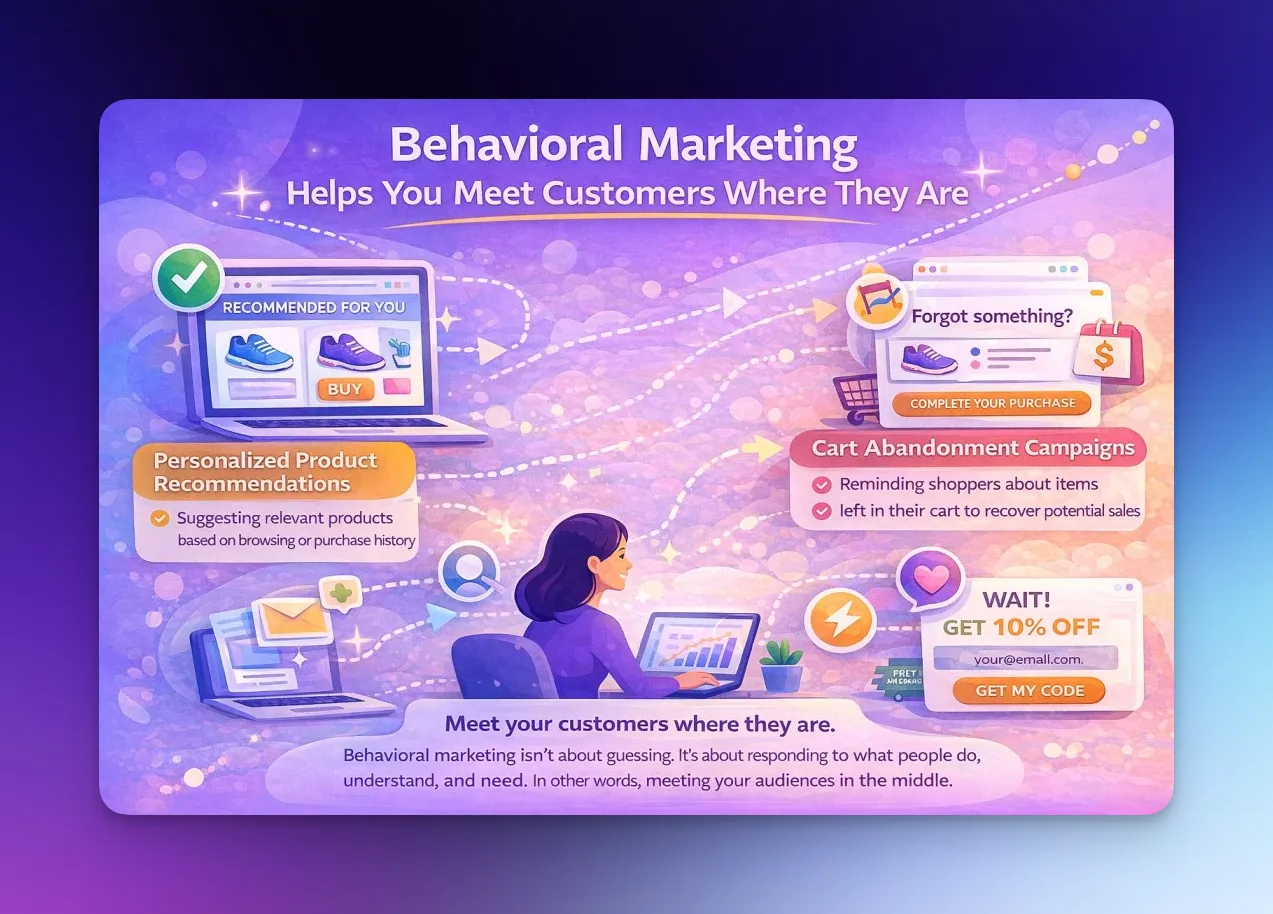
To me, behavioral marketing works because it makes marketing feel more relevant.
Instead of guessing what people want, you respond to what they actually do, what they click, what they revisit, what they ignore, and where they drop off. That is what makes a good behavioral marketing strategy more useful than a generic campaign.
The real behavioral marketing importance is not just better conversions. It is better timing, better context, and a better customer experience overall. And the best part is, you do not need to overbuild it. A few smart signals, a few thoughtful responses, and a handful of strong behavioral marketing strategies can already go a long way.
That is also what makes the best behavioral marketing examples stand out. They do not feel random. They feel timely.
If you want to make your marketing feel more personal, more effective, and a lot less guessy, now is a good time to start building a smarter behavioral marketing strategy around the signals your audience is already giving you.
Frequently Asked Questions
Why is behavioral marketing important?
The behavioral marketing importance comes down to relevance. It helps brands send better-timed messages, improve customer experience, and create campaigns that feel more useful instead of generic. In my experience, that usually leads to stronger engagement and better conversion opportunities too.
What are some common behavioral marketing strategies?
Some of the most common behavioral marketing strategies include abandoned cart emails, browse abandonment flows, personalized product recommendations, retargeting ads, exit-intent popups, and email segmentation based on user actions. A good behavioral marketing strategy starts with meaningful signals and responds with the most relevant next step.
What are a few real behavioral marketing examples?
Some strong behavioral marketing examples include Netflix recommending shows based on viewing habits, Amazon suggesting products based on browsing and purchase behavior, Spotify personalizing music discovery through listening activity, and Starbucks offering rewards and promotions based on customer engagement and loyalty behavior.
Is behavioral marketing only for ecommerce brands?
No, behavioral marketing is not limited to ecommerce. SaaS companies, media platforms, subscription businesses, and service brands can all use behavioral signals to improve communication. Whether someone downloads a guide, visits a pricing page, watches a demo, or opens a product email, those actions can shape a smarter behavioral marketing strategy.
How would you rate your experience with this article? 😊