 ChatGPT
 Perplexity
 Claude
 Grok
Grok Google AI Mode
Lead magnet ideas are free resources, tools, or incentives you offer in exchange for a visitor's contact information, sorted here by funnel stage. Top-of-funnel magnets like ebooks and checklists attract cold traffic, middle-funnel magnets like case studies and demos build trust, and bottom-funnel magnets like coupons and trials drive the final conversion. The right mix moves leads from awareness to purchase.
I've spent enough time building popup campaigns to know that the offer matters more than the design. You can have a beautiful form, but if the thing behind it isn't worth an email address, nobody fills it out. So this guide is built around 40+ lead magnet ideas, grouped by where your prospect sits in the buying journey, plus the practical parts most posts skip: how to build one, how to promote it, and how to tell if it's working.
What Is a Lead Magnet?
A lead magnet is a free resource or incentive a business gives potential customers in exchange for their contact information, usually an email address or phone number. It's the trade at the heart of email list building: value for permission to keep talking.
Say you run an online store selling organic skincare. To capture contact details, you could offer a free skincare guide as a lead magnet. The guide covers tips for healthy skin and explains why organic ingredients matter. To download it, a visitor hands over their email. From there, you send regular emails with skincare advice, new releases, and offers, which keeps your brand top of mind and builds a relationship.
Over time, some of those subscribers buy. Because you've already earned a bit of trust through the guide, they're more likely to choose you over a brand they've never heard of. That's the whole mechanism: a small free thing now, a paying customer later.
This isn't a niche tactic, either. According to Email Vendor Selection, 90.7% of marketers use their websites to generate leads and sales, and lead magnets are the most direct way a website does that job.
What Are the Benefits of Using Lead Magnets in 2026?
Lead magnets give you a permission-based way to grow an audience you actually own. Unlike paid ads or social reach, an email list isn't subject to an algorithm change or a rising cost-per-click. Here's what a solid lead magnet program does for a B2B SaaS or e-commerce brand right now.
• It builds a list you control: Social platforms can throttle your reach overnight. An email list is a direct line to people who asked to hear from you, which makes it your most stable acquisition channel.
• It qualifies leads before sales ever calls: The lead magnet someone chooses tells you something. A person who downloads a pricing comparison is closer to buying than someone who grabbed a top-of-funnel ebook. You can segment and prioritize from the first click.
• It lowers your effective cost per lead: According to Digital Applied, citing HubSpot's State of Marketing 2026 report, the median B2B cost-per-lead climbed to $213, and the gap between the top and bottom quartile widened to 4.7x. A reusable lead magnet keeps generating leads long after you've made it, which is what pulls you toward that cheaper quartile.
• It establishes expertise: A genuinely useful whitepaper or template does more for your credibility than any sales pitch. It shows, instead of tells.
• It feeds your nurture engine: Capturing the email is step one. Once someone's on the list, you can run welcome sequences, share product updates, and stay relevant until they're ready to buy.
One caveat worth saying out loud: a lead magnet that overpromises and underdelivers does more harm than no lead magnet at all. The goal isn't just to capture an email. It's to capture one and keep the trust that came with it.
40+ Lead Magnet Ideas to Attract and Nurture Leads
Below are 40+ lead magnet ideas you can put to work, organized into three categories: top-of-funnel, middle-of-funnel, and bottom-of-funnel. This grouping helps you match each offer to the stage your prospect is in, so you're not pitching a demo to someone who just learned your brand exists.
Some lead magnets fit more than one stage depending on how you use them. The point is variety: offer different magnets at different stages so you can keep moving leads down the funnel instead of stalling them.
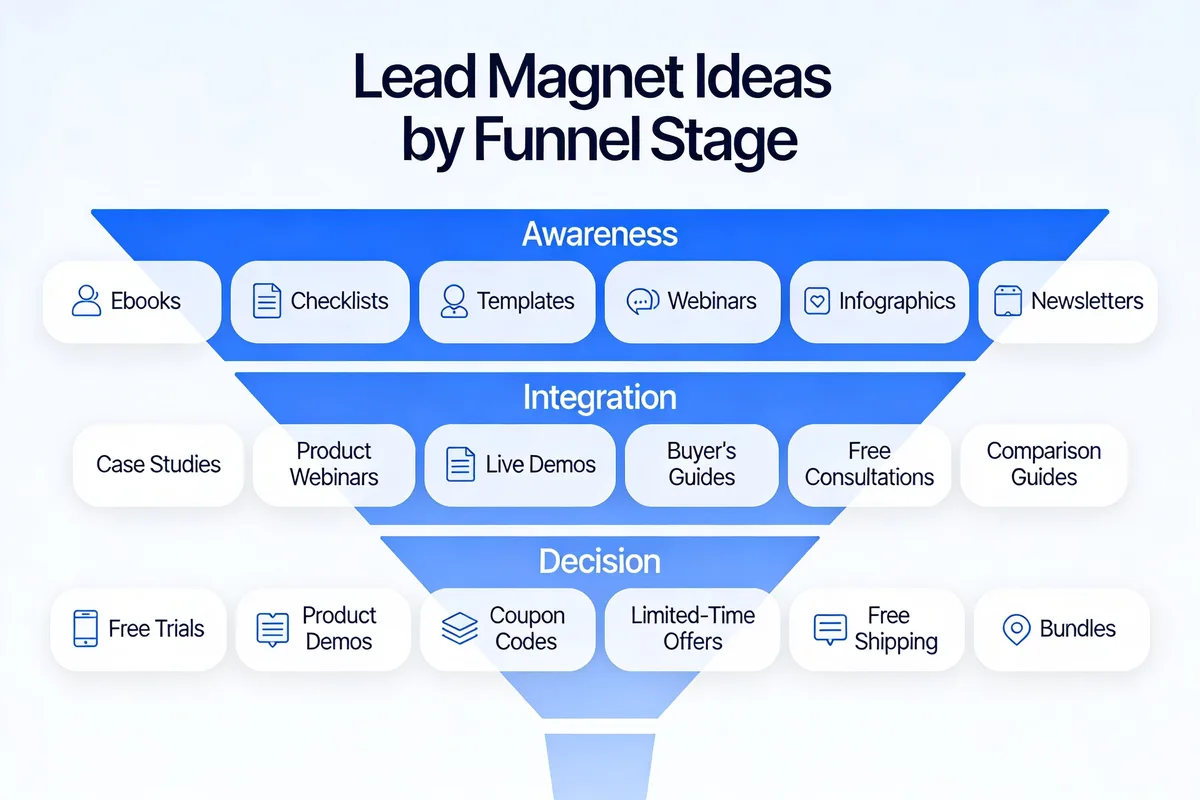
Lead magnet ideas by funnel stage
Top-of-Funnel Lead Magnet Ideas
Top-of-funnel magnets target cold traffic, people who just discovered you and aren't thinking about buying yet. The job here is to deliver quick, broad value and earn the email. Keep friction low and the payoff obvious.
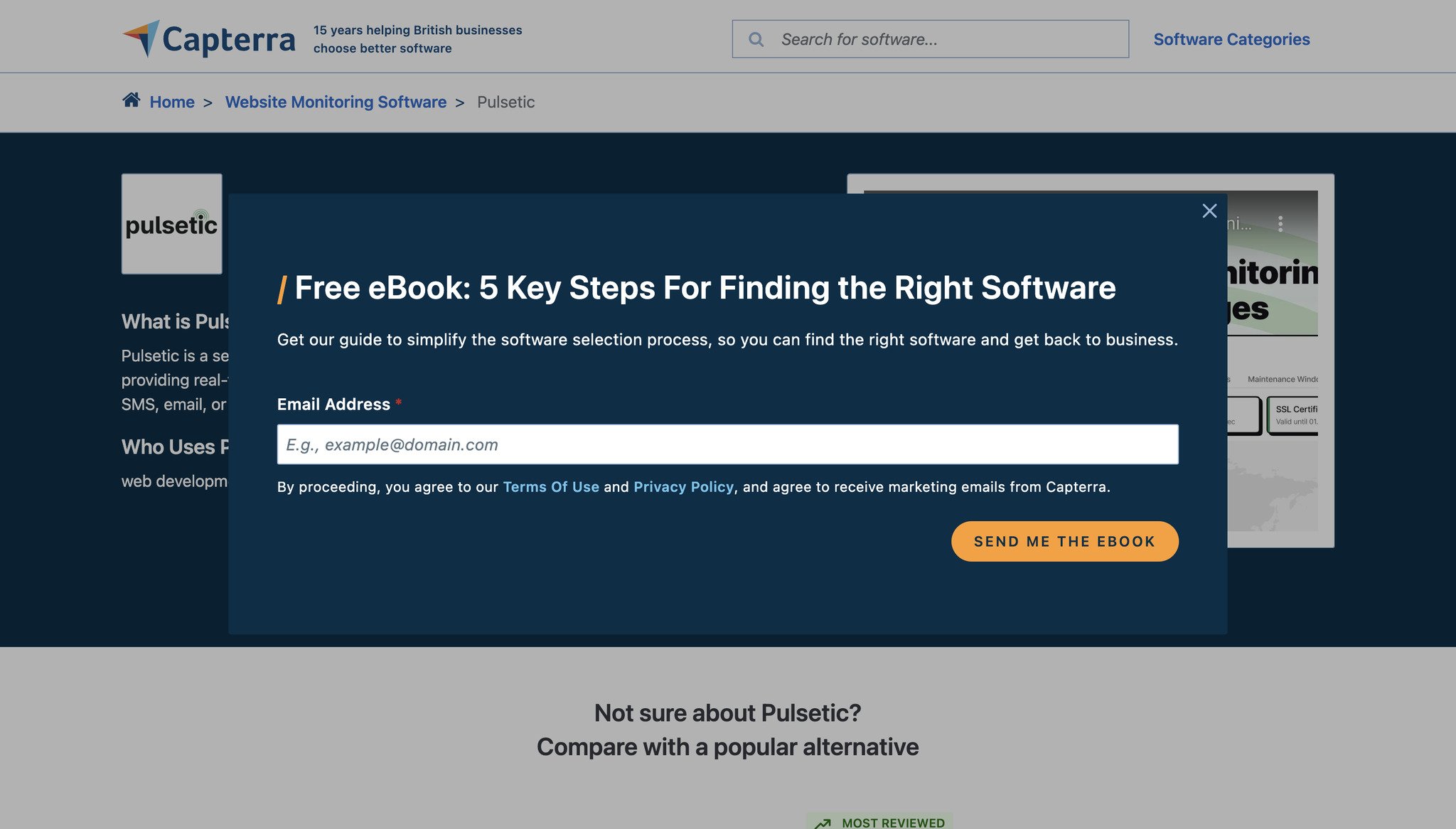
1. Ebooks: Ebooks are long-form pieces, usually 20-50 pages, that give a thorough guide on a topic your audience cares about. They work well at the top of the funnel because they pack a lot of value into one download. According to My Codeless Website, citing the Email Stats Center, ebooks are the most popular lead magnet type, used by 27.7% of marketers. Use one when you have real depth to share on a subject your audience is actively researching.
2. Whitepapers: Detailed reports or analyses of a specific issue, usually 6-8 pages, covering industry trends, research, statistics, and best practices. Use a whitepaper when you want to establish thought leadership and pull in serious, research-minded prospects who'll later generate leads through follow-up.
3. Infographics: Visual representations of data or information that are easy to understand and share. Use one when you have complex information that lands harder as a picture than as text, and you want something people will pass around.
4. Checklists: Simple lists of tasks someone needs to complete to hit a specific goal. They give actionable advice and help your audience organize and prioritize. Easy to create, they work as a content upgrade on a blog post or as a standalone offer. Use a checklist when your audience wants a quick win they can act on today.
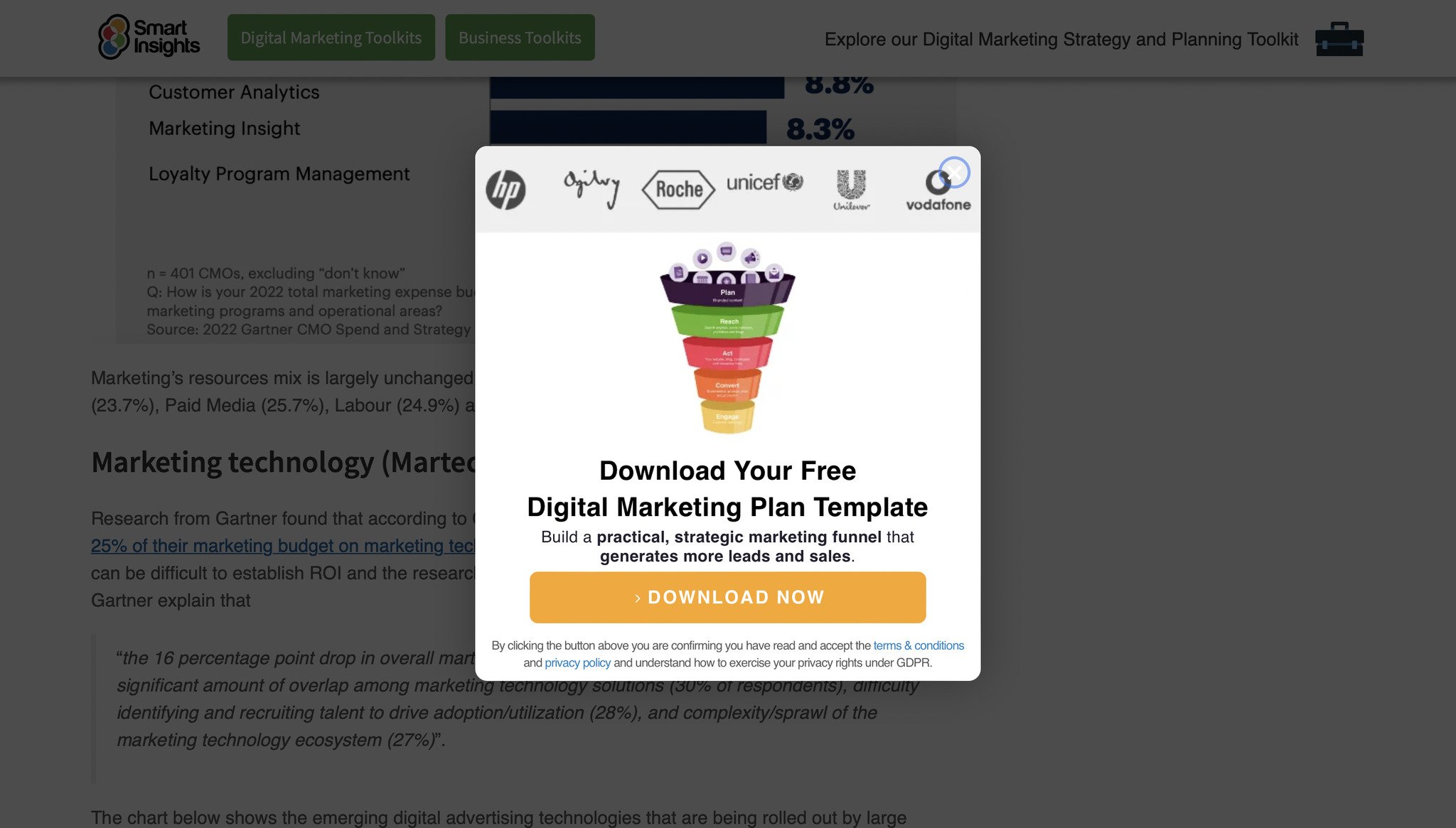
5. Templates: Pre-made designs or formats your audience can use to save time, whether for social graphics, email newsletters, blog posts, or presentations. Use a template when your audience faces a repeatable task and would rather start from a head start than a blank page.
6. Resource Lists: Curated lists of tools, websites, or resources your audience finds useful, like the best tools for social media marketing or top sites for industry news. Use one when you can save your audience the work of vetting options themselves.
7. Quizzes: Interactive tools that let your audience test their knowledge or personality on a topic. They engage people and help you collect data you can use to personalize later marketing. Use a quiz when you want engagement plus segmentation data in a single interaction.
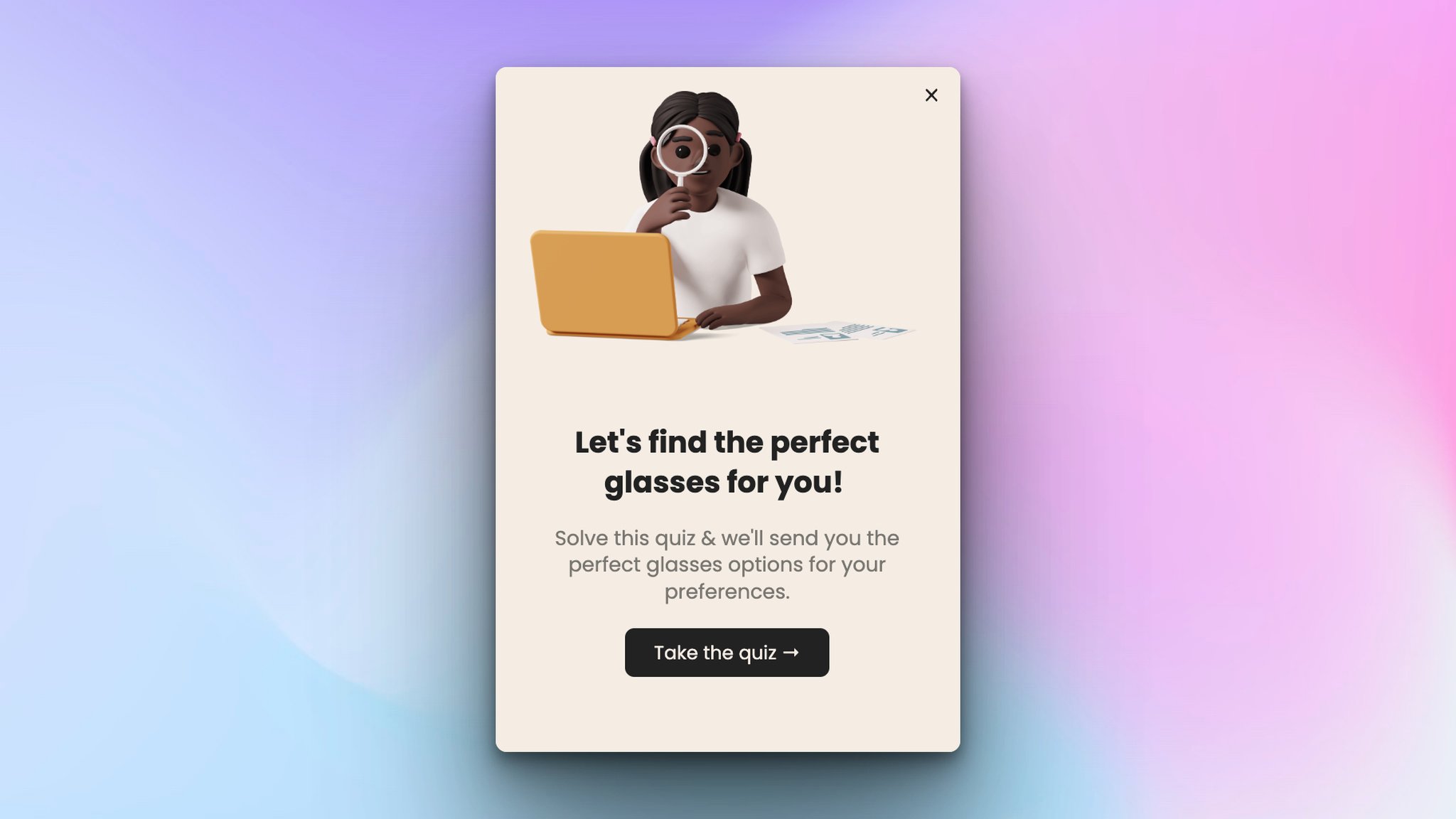
8. Surveys: Questionnaires your audience fills out to share feedback, opinions, or data. Use a survey when you want to collect valuable data that improves your product or sharpens your marketing, and you're fine trading a small incentive for honest input.
9. Webinars: Live or recorded online presentations, workshops, or seminars on a specific topic. Use a webinar when your subject benefits from real-time explanation or Q&A, and you want to educate your audience about what you offer.
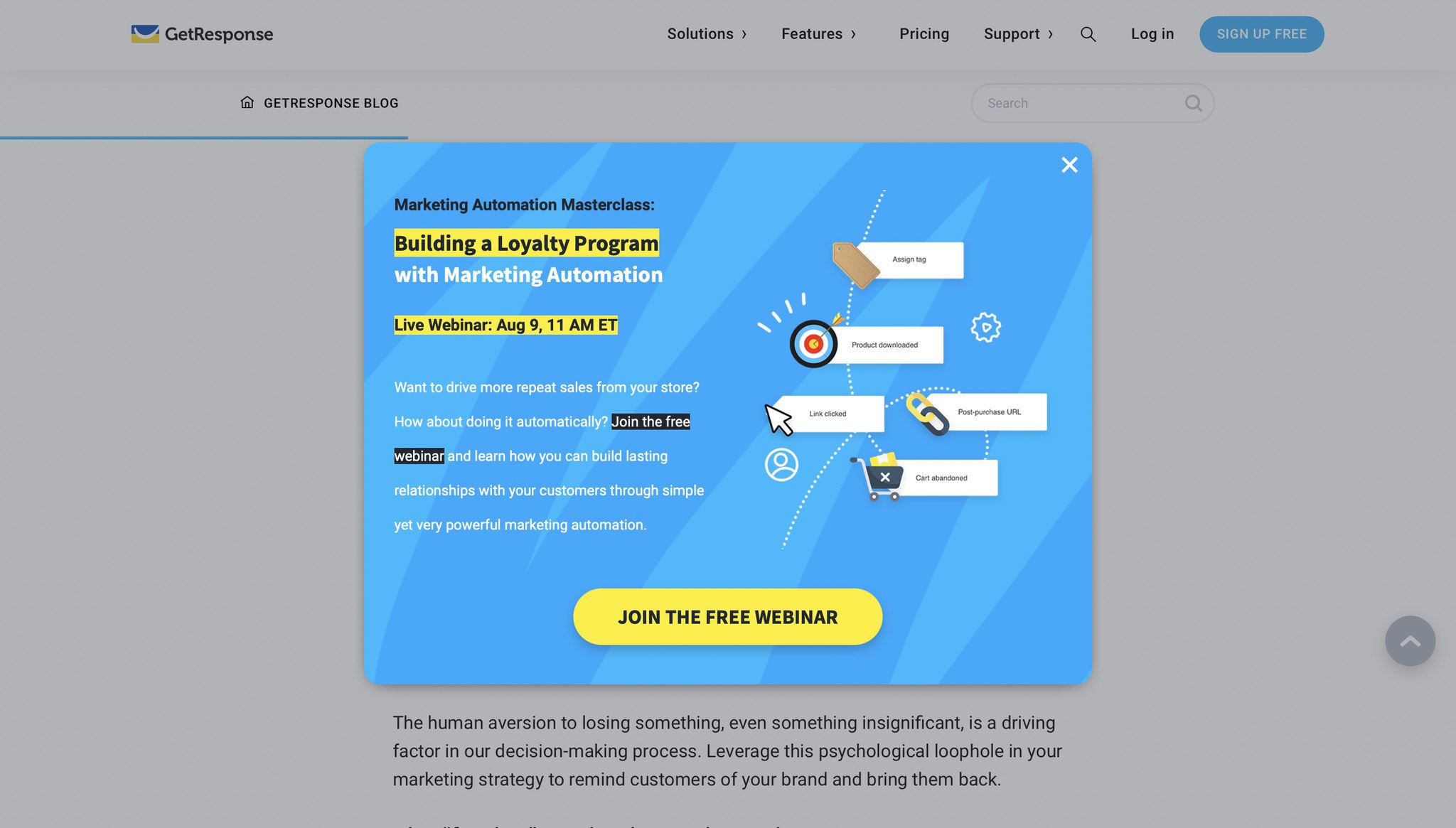
10. Video Courses: In-depth video tutorials or lessons on a topic or skill your audience wants to learn. Use a video course when the skill you're teaching is hard to convey in writing and your audience prefers to watch.
11. Free Trials: A no-commitment way for potential customers to experience your product before they buy. Use a free trial when your product's value is obvious once someone actually uses it, which is most SaaS tools.
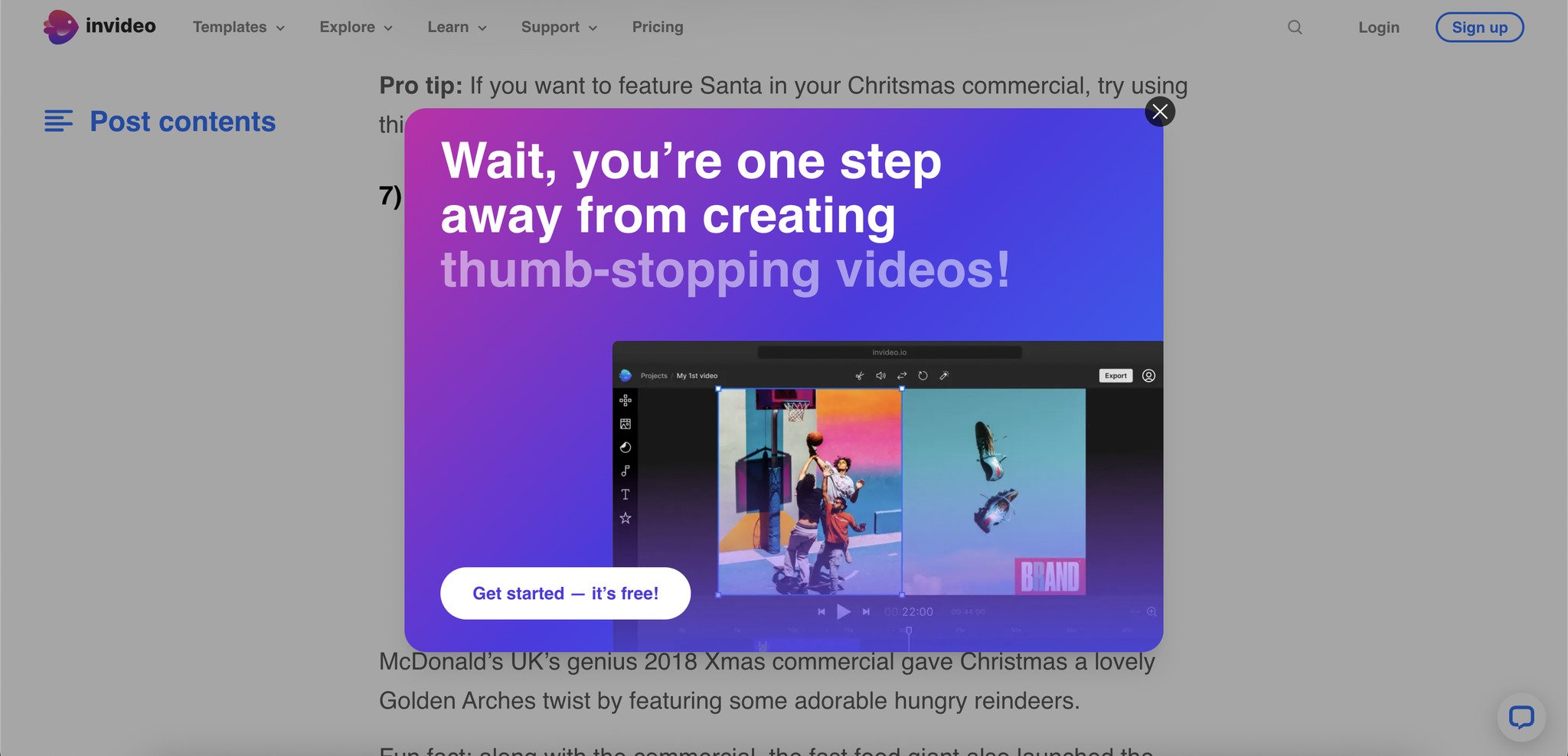
12. Samples: Like free trials, but for physical products, a free sample lets people try before they buy. Use samples when you sell something tangible and the experience of the product sells it better than a description.
13. Interactive Tools: Calculators, assessments, or graders that get people engaged in a low-pressure way. Use an interactive tool when you can give an instant, personalized result that makes your brand feel useful from the first click.
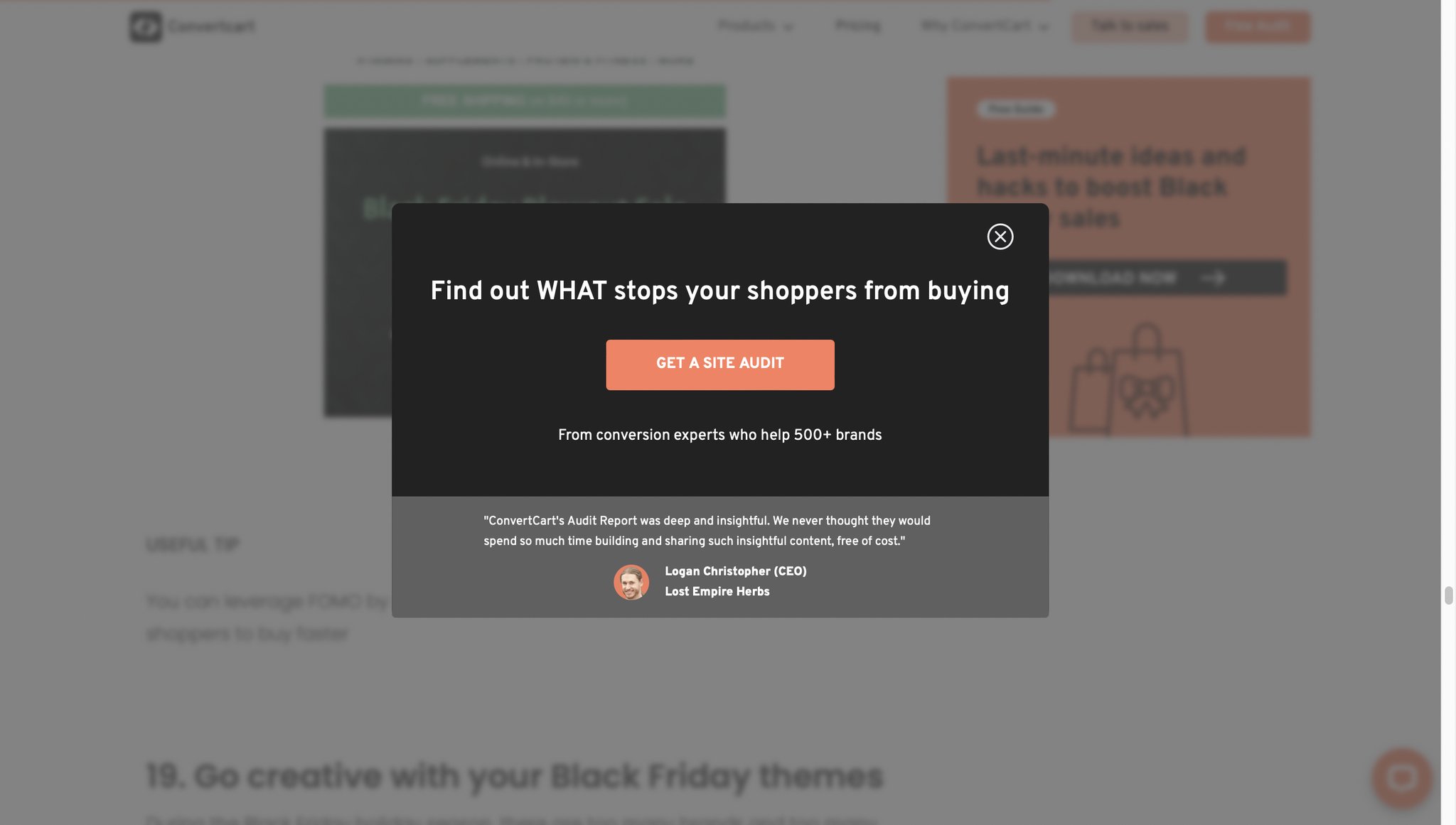
14. Educational Content: Guides, tutorials, and how-to videos that position your brand as an expert. Use educational content when you want to provide standalone value and build authority before anyone considers buying.
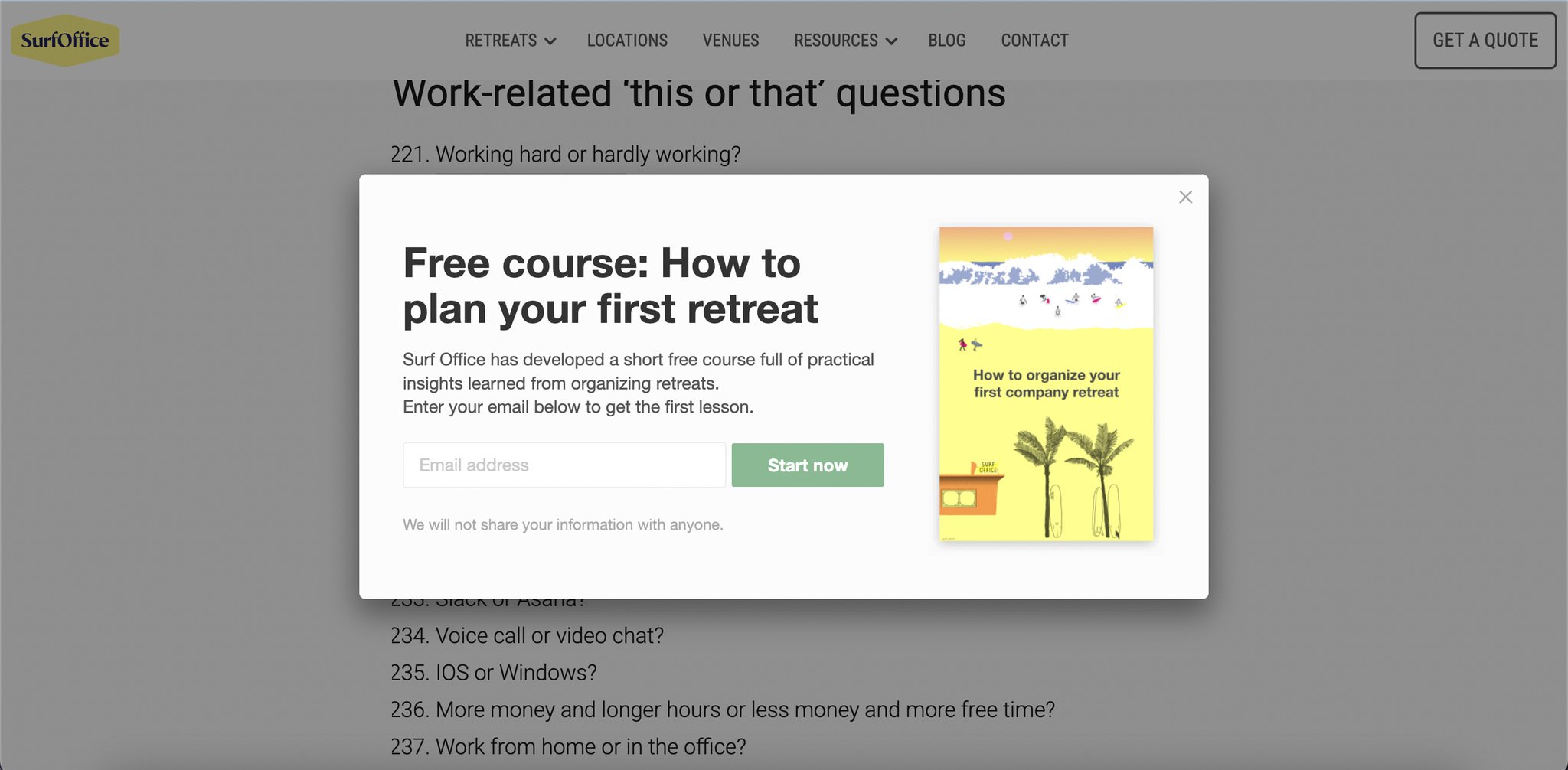
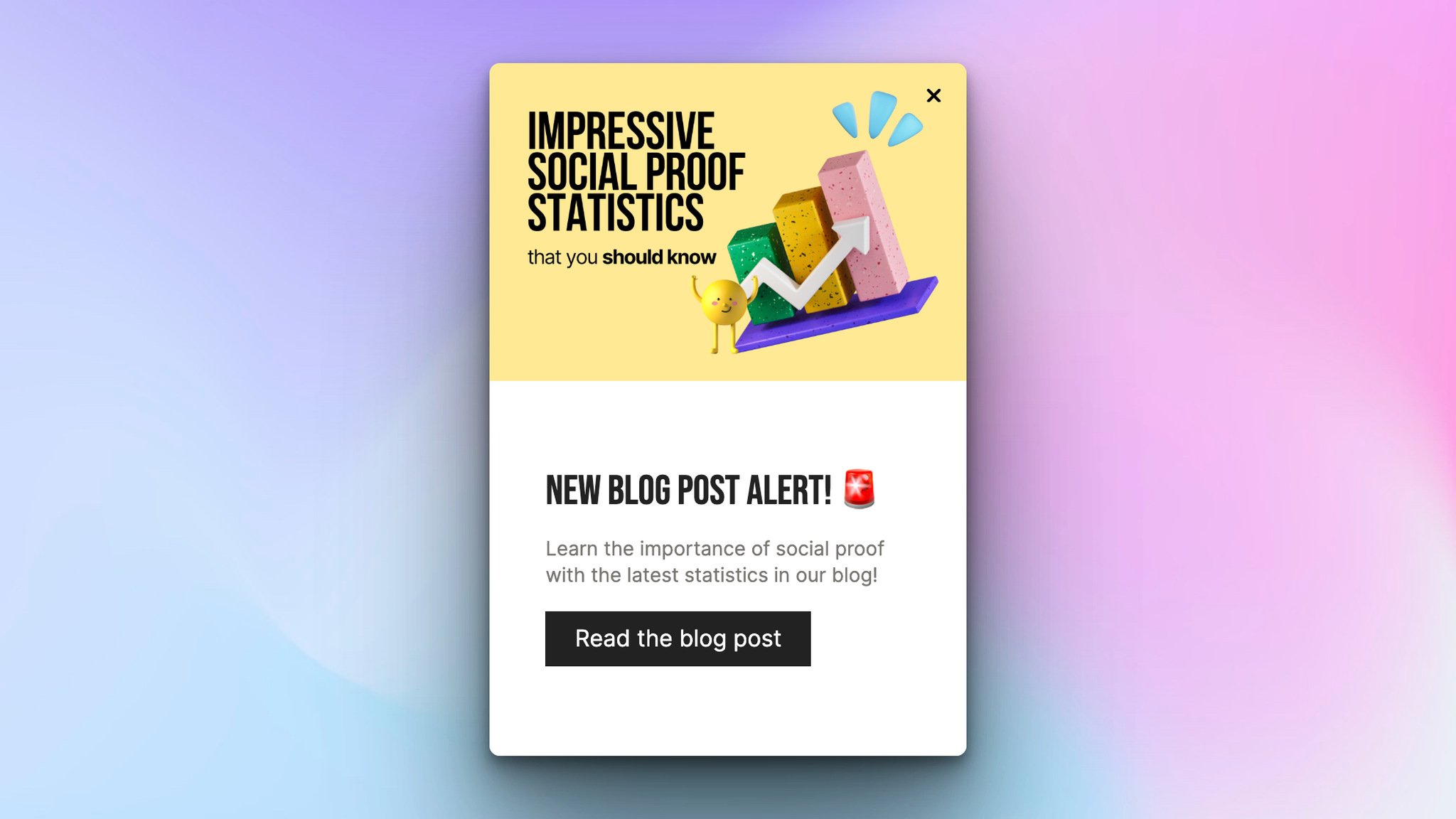
15. Blog Posts: Informative, useful blog content attracts visitors and gives them a taste of your expertise. Use a gated or upgrade-style blog offer when a post is performing well and you want to convert that traffic into subscribers.
16. Podcasts: A podcast builds trust slowly and steadily. Each episode positions you as an expert, and you can offer listeners incentives, like exclusive bonuses for joining your email list. Use a podcast when you can commit to consistency and your audience likes to learn on the go.
17. Newsletters: A regular newsletter keeps you in touch with potential customers and delivers content, promotions, and brand updates over time. Use a newsletter when you can publish consistently valuable content and want an ongoing relationship rather than a one-off download.
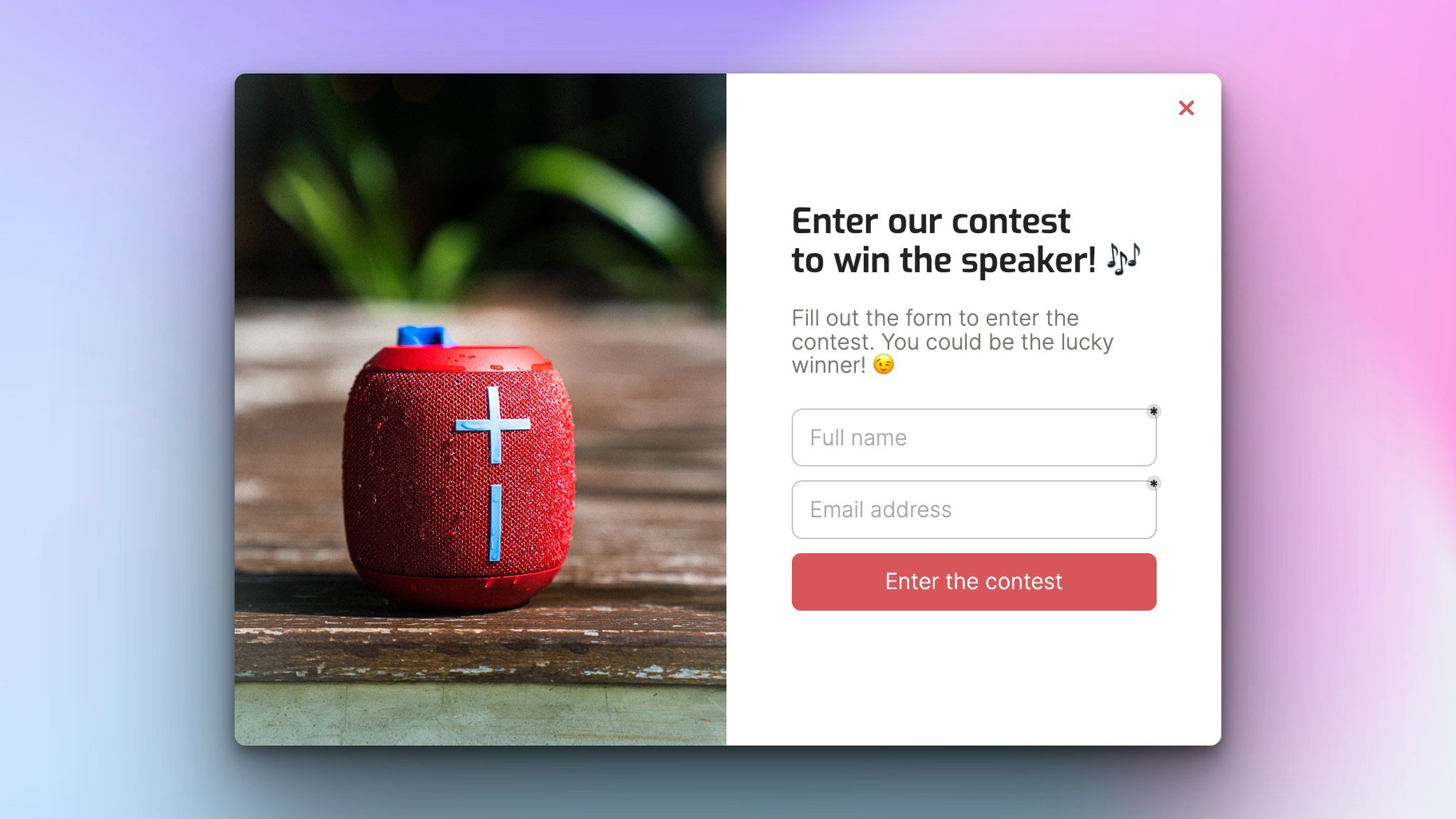
18. Contests: A contest gets people excited about your brand and helps you collect leads. Use a contest when you want a burst of attention and signups, and you have a prize your target audience genuinely wants.
19. Social Media Ads: Paid social ads grab attention and make people curious about your brand. Pair them with an incentive, like an exclusive discount or freebie, to turn clicks into leads. Use ads when you need to reach beyond your organic audience and can afford to test creative.
20. Giveaways: Offering a prize in exchange for email signups or social follows attracts potential customers and builds your audience fast. Use a giveaway when audience growth is the priority and you can pick a prize that filters for the right people, not just freebie hunters.
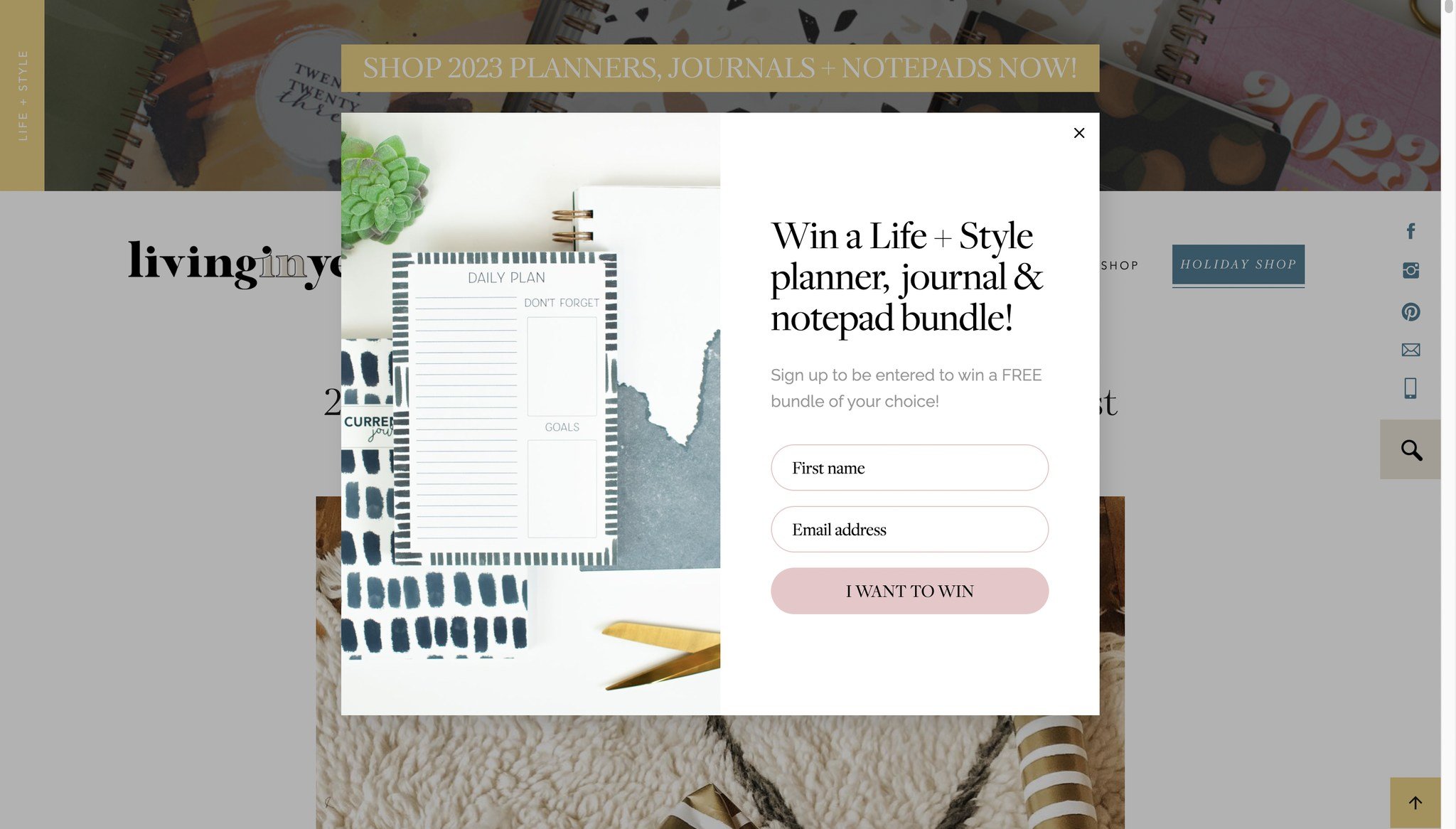
Middle-of-Funnel Lead Magnet Ideas
Middle-of-funnel magnets target people who know they have a problem and are weighing solutions, including yours. The job here is to build trust and prove value. These offers can ask for a bit more commitment because the prospect is more invested.
21. Case Studies: Case studies featuring successful customers show the value of your product through real results. They demonstrate tangible benefits, build trust, and give prospects practical lessons they can apply. Use a case study when a prospect is comparing options and needs proof, not promises.
22. Product Webinars: A webinar focused on your product offers valuable information, demonstrates benefits, and captures contact details from genuinely interested prospects. Use a product webinar when people understand their problem and want to see exactly how your tool solves it.
23. Live Demos: An interactive, real-time look at your product in action, like a movie trailer for what you sell. Live demos build trust, show value, and let you address pain points directly. Use a live demo when your product is complex enough that a guided walkthrough beats a self-serve trial.
24. Consultations: A consultation with your experts helps prospects understand how your product fits their specific needs. Use a consultation when your solution requires tailoring and a conversation moves the deal further than a download ever could.
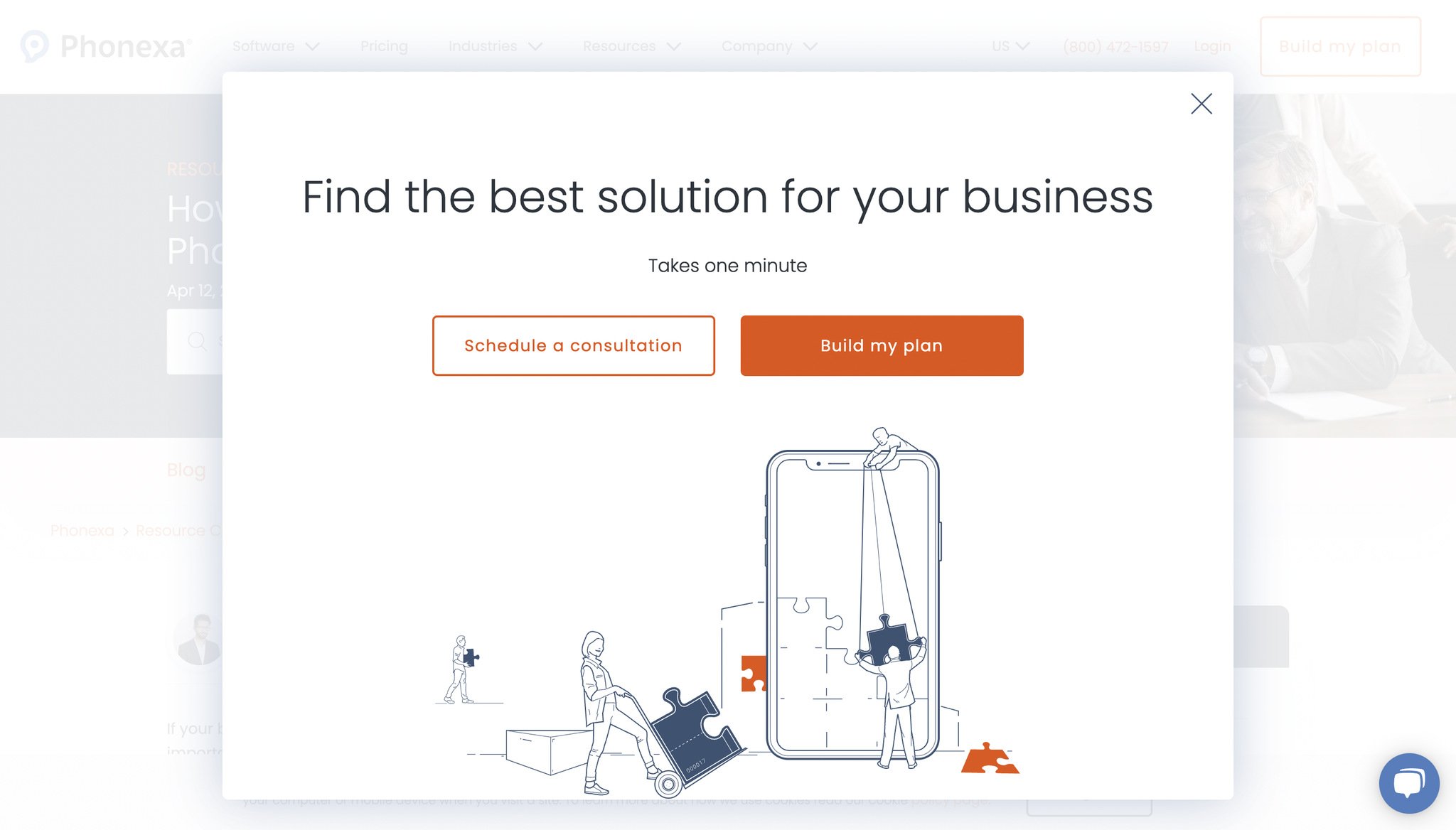
25. Free Consultation Calls: A free call builds rapport and gives prospects personalized advice. Use a consultation call when one-to-one attention is what tips an interested lead toward a decision.
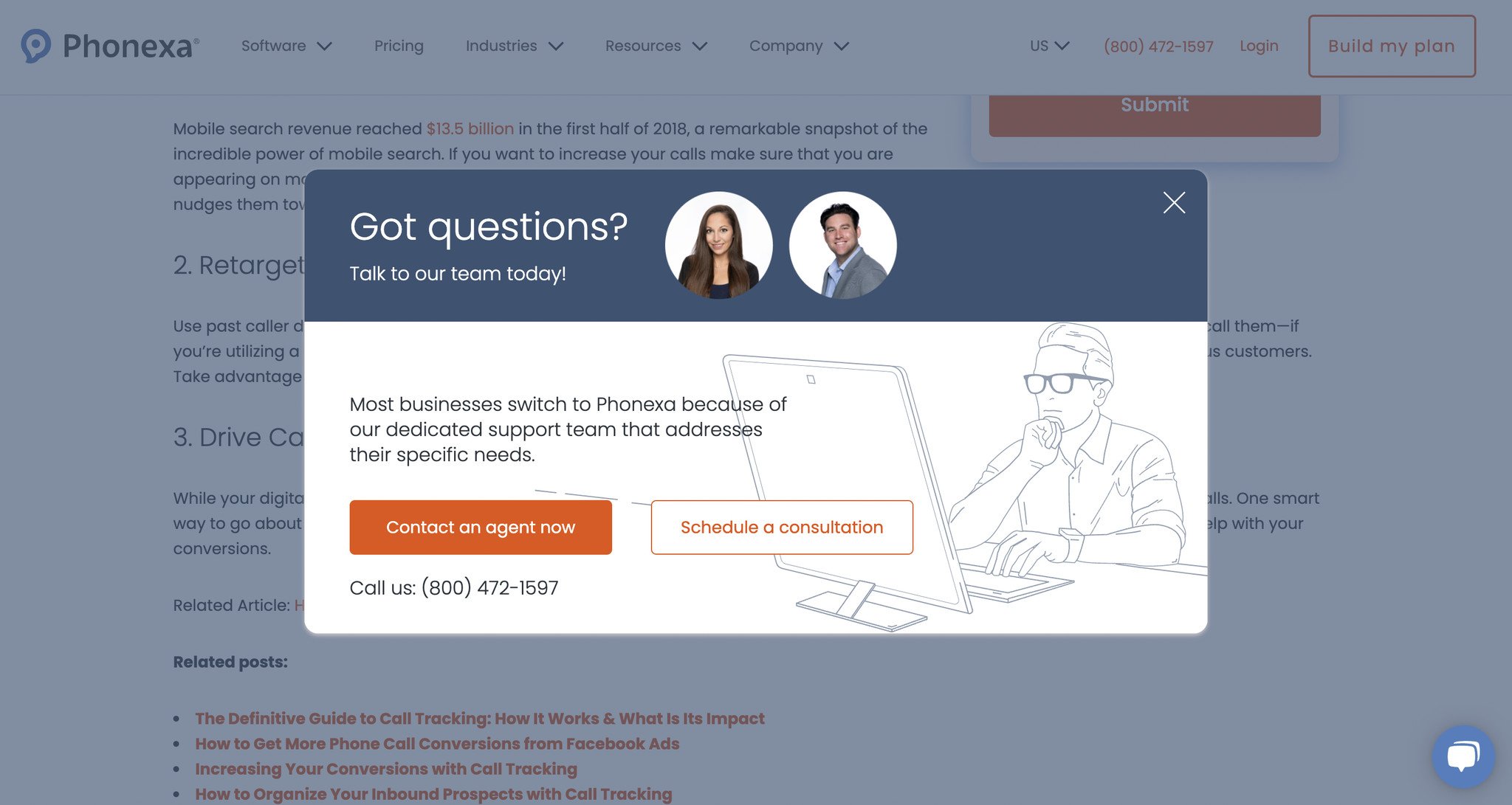
26. Free Quotes: A free quote or estimate helps prospects understand the cost of your product or service so they can make an informed decision. Use a free quote when pricing depends on the customer's situation and uncertainty about cost is the main thing holding them back.
27. Product Catalogs: A catalog or brochure helps prospects explore your full range of offerings. Use a catalog when you have a broad product line and people need a clear overview before they narrow down.
28. Product Samples: Offering a sample lets prospects try your product before committing, which builds a positive impression and raises the odds of a future purchase. Use product samples when trial use is the strongest argument you have.
29. Buyer's Guides: A buyer's guide outlines the features and benefits of your product so prospects can make informed decisions based on their needs. Use one when your category is confusing and a clear, honest guide makes you the trusted source.
30. Customer Reviews: Reviews and testimonials establish credibility and demonstrate the value of your product. Use a review-driven magnet when social proof is what an on-the-fence prospect needs to hear.

31. Social Media Contests: A contest on social platforms boosts brand visibility, expands your audience, and generates leads through an engaging, participatory experience. Use a social media contest when you want middle-funnel engagement plus reach into your followers' networks.
32. Expert Interviews: Interviews with industry experts demonstrate your brand's authority and give prospects valuable insights. Use expert interviews when borrowed credibility from a respected name strengthens trust in your offering.
33. Customized Product Recommendations: Personalized recommendations tailored to a prospect's specific needs build trust and raise the likelihood of a purchase. Use them when your range is large enough that guidance genuinely helps, and you have the data to personalize well.
Bottom-of-Funnel Lead Magnet Ideas
Bottom-of-funnel magnets target people who are ready to buy and just need a final nudge. The job here is to remove the last bit of friction or risk. These offers tend to be incentive-driven: discounts, guarantees, and urgency.
34. Product Demos: A demo lets prospects see firsthand how your product works and what it does for them, which eases concerns and builds confidence in the purchase decision. Use a product demo when a near-ready buyer has one or two remaining doubts.
35. Comparison Guides: A comparison guide helps prospects evaluate your product against competitors so they can make an informed decision. Use one when buyers are actively comparing and you'd rather frame that comparison yourself than leave it to chance.
36. Free Shipping: Free shipping, whether time-limited or on orders over a threshold, reduces a barrier to entry and increases perceived value. Use free shipping when shipping cost is the friction point stopping a checkout.
37. Loyalty Programs: Rewarding loyal customers with exclusive discounts or perks increases customer retention and encourages repeat business. Use a loyalty program when you want to turn first-time buyers into repeat ones.
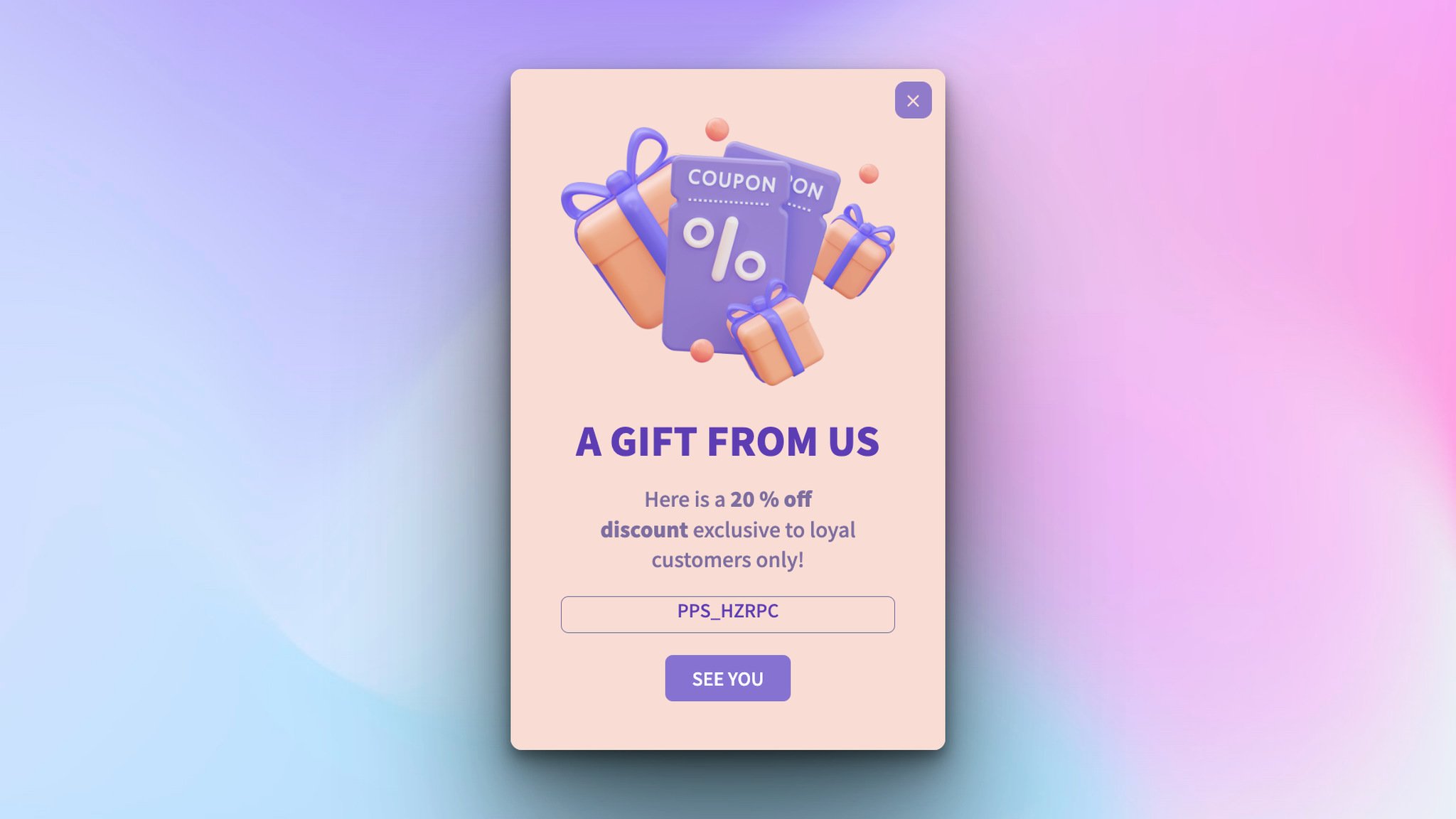
38. Coupon Codes: Exclusive discounts via coupon codes drive purchases and let you track which campaigns actually work. Use coupon codes when a price incentive closes the sale and you want measurable attribution.
39. Free Upgrades: Offering a free upgrade to a higher-priced product or service is a strong incentive to choose you over a competitor. Use a free upgrade when added value, rather than a discount, is the better lever for your margins.
40. Limited-Time Offers: Time-limited discounts or promotions create urgency that motivates prospects to complete the purchase now instead of later. Use limited-time offers when a deadline is what converts a maybe into a yes.
41. Bundles: A bundle packages multiple products or services together at a discounted price. Bundling items together gives customers a complete solution and a sense of savings. Use a bundle when combining offers raises average order value and feels like a better deal to the buyer.
42. BOGO Deals: Buy-one-get-one offers attract customers with double the value for the price of one, and you capture contact info in the process. Use BOGO deals when you want to move volume and the math still works for you.
43. Product Trials: A product trial introduces what you offer directly, and done well, it converts prospects into leads and even brand advocates after they use it. Use a product trial at the bottom of the funnel when hands-on experience is the final proof a buyer needs.
44. Free Returns: Free returns let customers shop with confidence, knowing they can return a purchase at no extra cost if it isn't right. It reduces risk and signals that you stand behind your product. Use free returns when purchase anxiety is the last obstacle.
45. Abandoned Cart Emails: Abandoned cart emails capture an email when someone leaves items behind, then send timely, personalized reminders. Showing the abandoned items with images, descriptions, and prices refreshes the shopper's memory and raises the chance they come back to finish. Use these when you have meaningful cart abandonment and a reason to win those shoppers back.
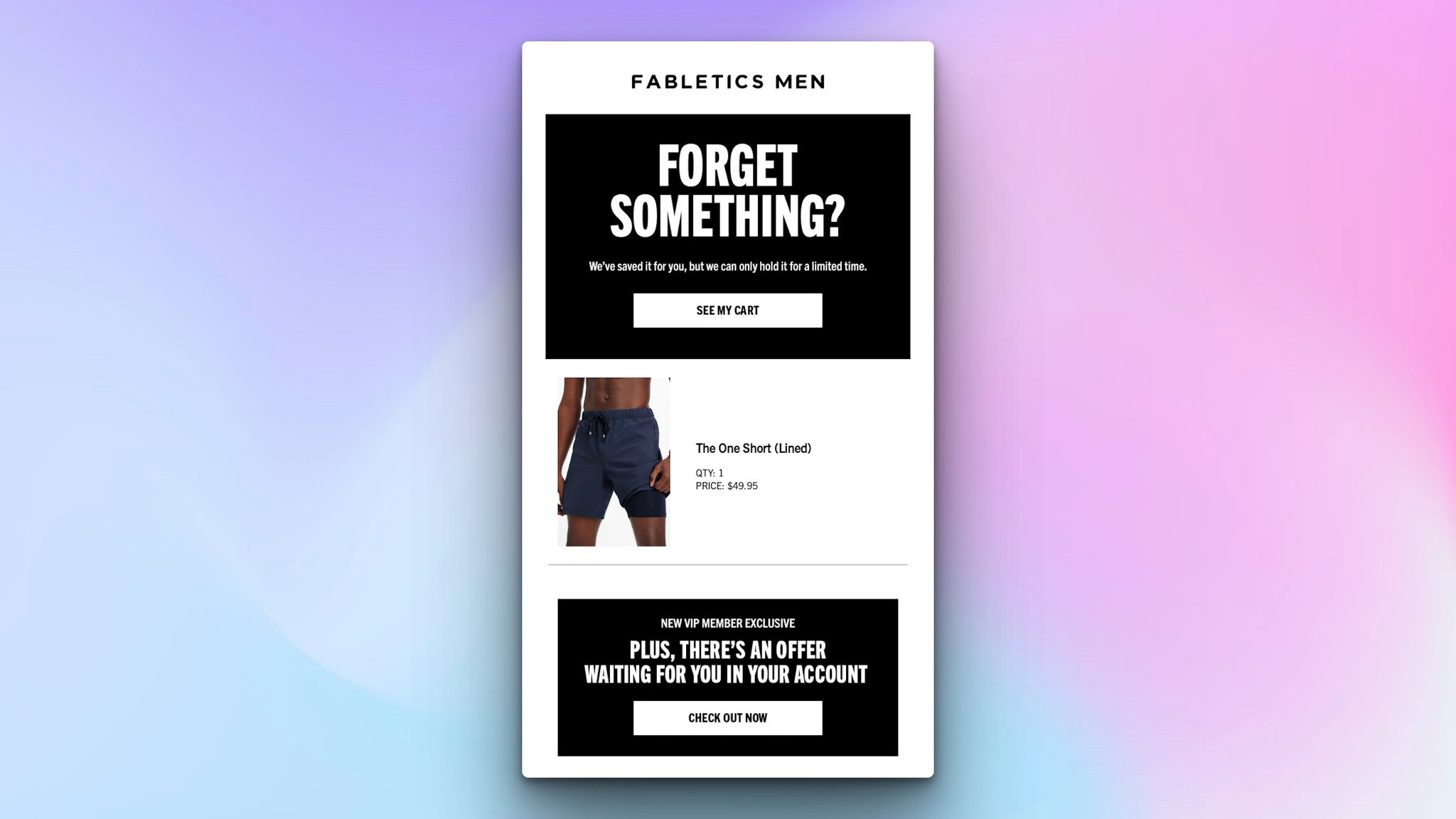
46. Re-engagement Emails: When you have subscribers who've gone quiet, re-engagement emails reignite interest with something valuable and enticing, a lead magnet that gives them a reason to come back. Use re-engagement emails when a chunk of your list has stopped opening and you want to win them back before you lose them.
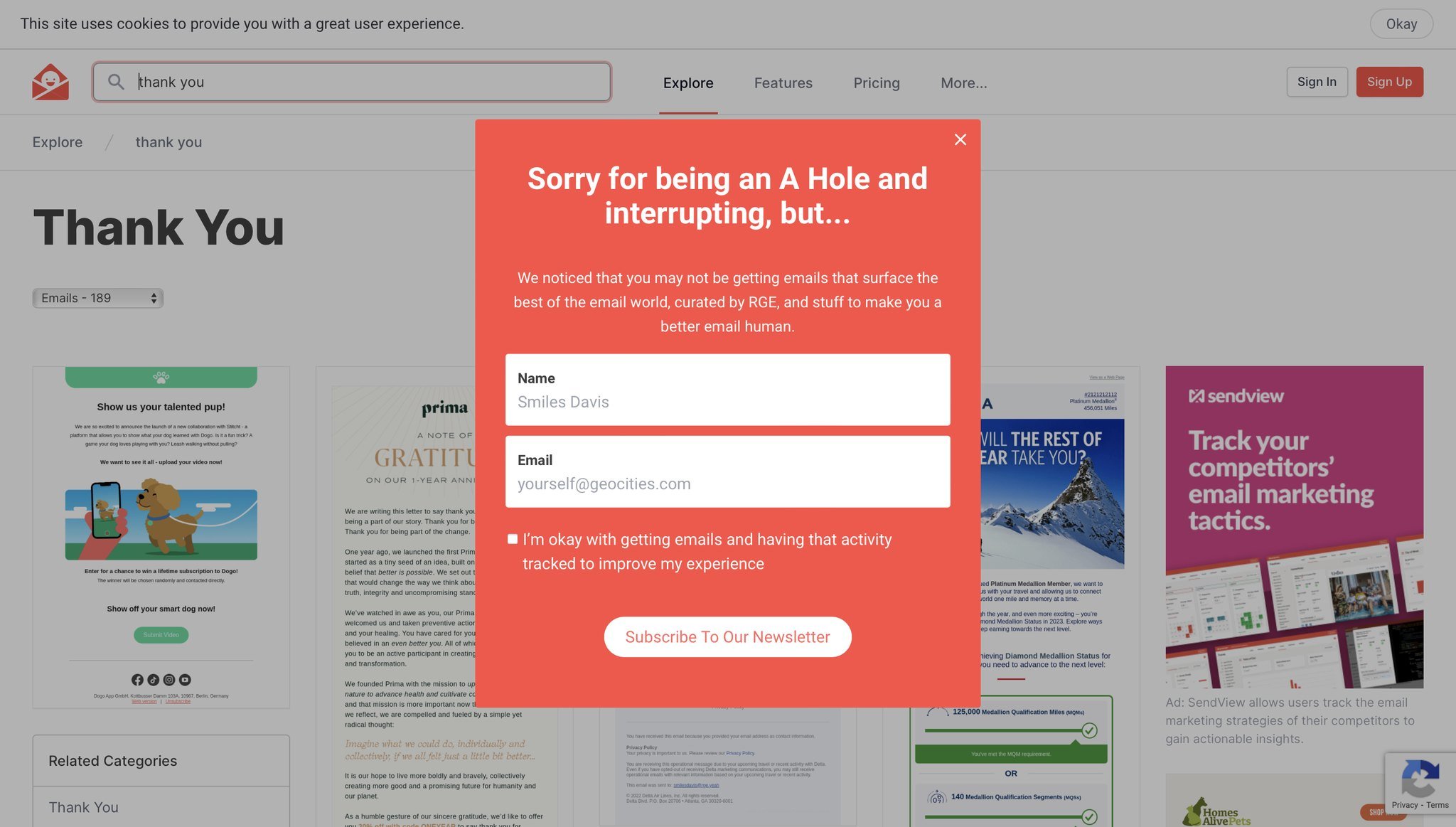
47. Thank You Pages: Instead of a generic "thank you" after a form fill or purchase, use the thank you page to offer something extra, a free resource, exclusive content, or a bonus discount. To unlock it, visitors provide their contact info, so you generate a lead while rewarding them. Use this when you already have someone's attention at a high-intent moment.
48. Upsell Offers: An upsell offer is a tempting upgrade or add-on that complements a recent purchase, paired with an extra incentive like a freebie or exclusive content. To access the bonus, the customer provides their contact info, turning the upsell into a lead magnet. Use upsell offers when you can add genuine value to what someone just bought.
How Do You Create Effective Lead Magnets?
You create an effective lead magnet by solving one specific problem for one specific audience, fast. The most common failure isn't bad design, it's a vague offer that tries to help everyone and ends up helping no one. A poorly crafted lead magnet won't attract anyone, and you'll have wasted the effort.
Here's how to build one that actually works to build a strong email list:
1. Know your audience: Before you create anything, research your target audience's interests, pain points, and needs. This is what lets you make something that resonates instead of something generic.
2. Solve one specific problem: Your lead magnet should fix a single, clear problem your audience faces. Narrow beats broad. "Cold email templates for SaaS founders" outperforms "marketing tips" every time.
3. Keep it quick to consume: Your lead magnet should be easy to digest. A checklist someone finishes in five minutes often beats a 40-page guide they never open. According to Flipbooker, citing GetResponse research, 58.6% of marketers report that short-form written content like checklists and templates outperforms long-form guides.
4. Use high-quality visuals: Strong images, charts, and graphs make your lead magnet more engaging and easier to remember. Presentation signals that the content is worth someone's time.
5. Deliver real value: The offer has to be worth an email address. That means exclusive content, a real discount, a free trial, or a tool that does actual work for the user.
Three factors to weigh as you build: relevance (it should align with your business and overall marketing strategy), format (pick the one that matches your audience's preferences and the content you're delivering), and branding (carry your brand elements through for consistency).
The biggest lever here is relevance, not design. A content upgrade tied to the exact post a reader is already on will almost always outperform a generic newsletter signup, because it matches a specific, relevant resource to the moment of intent. Match the offer to the moment and the numbers move.
What Are the Best Practices for Promoting Lead Magnets?
The best practice for promoting a lead magnet is to put it in front of the right visitor at the right moment, then test relentlessly. A great lead magnet that nobody sees generates zero leads, so promotion isn't optional, it's half the work. Given that, according to ProveSrc, 79% of marketing leads fail to convert without proper follow-up, getting both the capture and the follow-up right is what separates a list from a result.
Here's how to promote effectively:
• Use popups: A well-targeted popup highlights your offer at the moment a visitor is most likely to act. This is where a tool like Popupsmart fits naturally, since a lead magnet needs a capture mechanism to deliver it. You can target popups by page, behavior, exit intent, or new versus returning visitors, so the offer matches the context. Having a range of templates also helps you find a design that matches your brand, and your first popup campaign is free. For inspiration on what works, our email capture popup examples for Shopify walk through high-converting designs.
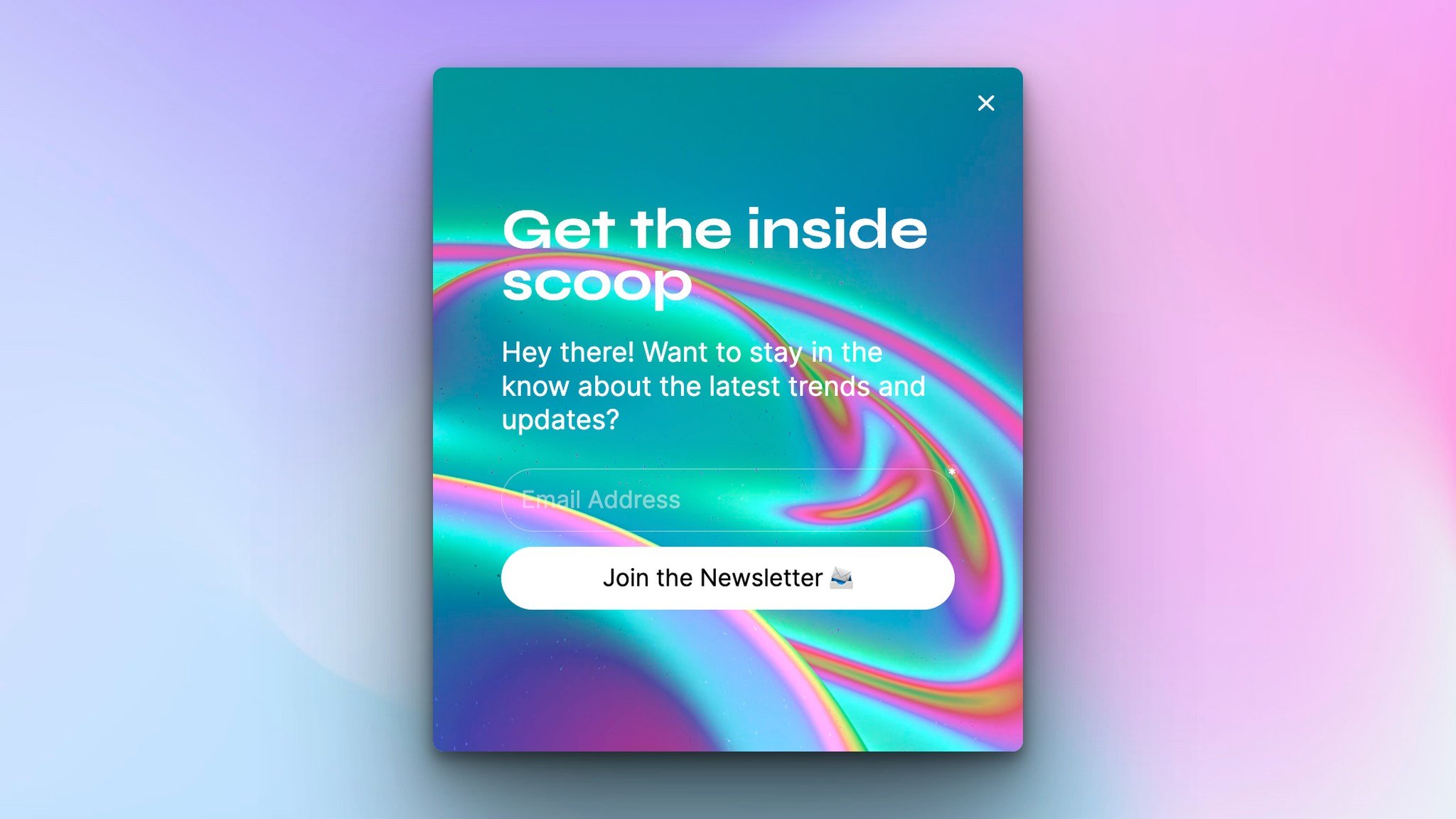
• Put your website to work: Promote your lead magnet on your homepage, landing pages, and blog posts with clear calls-to-action that tell visitors what to do. A dedicated opt-in page also helps, and our roundup of opt-in page examples shows the layouts that convert best. A welcome popup is another strong placement for first-time visitors.
• Use email marketing: Promote your lead magnet to existing subscribers with compelling subject lines and clear CTAs. It's one of many email list building methods that compound over time.
• Utilize social media: Share your lead magnet on LinkedIn, Facebook, and other platforms where your audience spends time. Link to your landing page or create posts that highlight the specific benefit.
• Partner with influencers: Collaborate with credible voices in your industry to put your lead magnet in front of their followers. This extends reach and borrows trust.
• Run paid ads: Use Google, Meta, or LinkedIn ads to target specific demographics and increase visibility, especially when your organic reach is limited.
• A/B test everything: Test headlines, offers, popup timing, and CTA copy. Small changes in framing often produce outsized changes in conversion rate, and you won't know which until you test.
If you only do two things from this list, make them a targeted popup and consistent follow-up. The capture and the nurture are where most lead magnet programs either work or quietly fail.
How Do You Measure Lead Magnet Success?
You measure lead magnet success by tracking conversion rate, lead quality, and downstream revenue, not just download counts. A lead magnet with 5,000 downloads and zero customers is a content project, not a marketing one. The metrics below tell you whether your offer is actually pulling its weight.
• Conversion rate: The percentage of people who see your offer and submit their info. This is your headline metric for the offer itself. For context on what "good" looks like, our breakdown of what is a good landing page conversion rate gives realistic benchmarks by goal.
• Lead quality: Are the leads a fit for your product? Track the share that match your ideal customer profile. A magnet that attracts the wrong audience inflates your list and your costs without helping revenue.
• Cost per lead: Total promotion spend divided by leads generated. Watch this against the broader market, where the gap between efficient and inefficient programs keeps widening. The whole point of a reusable lead magnet is to drive this number down over time.
• MQL-to-SQL conversion rate: How many marketing-qualified leads become sales-qualified. This is getting harder across the board. According to Digital Applied, citing Forrester and Demand Gen Report data, MQL-to-SQL conversion rates compressed from 13% in 2024 to 9.8% in 2026, which makes lead quality more important than lead volume.
• Email engagement: Open rates, click rates, and reply rates on the nurture sequence that follows the download. Engagement here predicts whether the lead converts later.
• Revenue attributed: The actual revenue traced back to leads from a specific magnet. This is the metric that settles every debate about which lead magnet to keep, kill, or scale.
Set up tracking before you launch, not after. Tag each lead magnet's source, watch the funnel from download to deal, and review monthly. The lead magnet ideas that earn revenue stay; the ones that only earn downloads get cut.
Pick Your First Lead Magnet and Ship It
You don't need all 48 of these lead magnet ideas. You need one good one, matched to the right funnel stage, promoted well.
If I had to recommend a starting point: build a top-of-funnel checklist or template first, because it's quick to make and quick to consume. Pair it with a middle-funnel case study once you have results worth sharing. Add a bottom-funnel offer like a free trial or coupon last, since by then you'll have list data telling you who's close to buying.
The thread through all 48 ideas is the same. A lead magnet only works if it solves a real problem and reaches the right person at the right moment. The offer earns the email; a targeted popup and consistent follow-up turn that email into a customer. Pick one idea from the list above, build it this week, and put it behind a popup. The leads come from doing the work, not from reading about it.
Frequently Asked Questions
How do I create a lead magnet?
Start by researching your audience's biggest pain point, then build a focused resource that solves that one problem. Keep it quick to consume, use clean visuals, and make sure the value is worth an email address. Pick a format that matches your audience, a checklist, template, or guide, and carry your branding through it. Then promote it with a targeted popup and a follow-up sequence.
What makes a good lead magnet?
A good lead magnet provides immediate, specific value and solves a real problem for a clearly defined audience. It should be easy to consume, professionally presented, and genuinely worth the exchange. The strongest ones also align with your product, so the people who download them are the same people who'd benefit from buying. Specificity beats breadth every time.
Are lead magnets always free?
Lead magnets are typically free offers given in exchange for contact information, since offering something at no cost is the most effective way to attract leads. That said, some businesses use low-cost tripwires, like a small paid trial or a discounted starter product, which still function as lead magnets because they're designed to bring in new customers. The price is usually zero, but it doesn't have to be.
How do lead magnets help in B2B SaaS growth?
For B2B SaaS, lead magnets feed the top of a longer sales cycle. They capture interest early, let you segment leads by the resource they chose, and give your nurture sequences something to work with while a prospect evaluates options. Given that 87% of B2B marketers successfully use content marketing to generate leads, according to Email Vendor Selection, a well-built lead magnet program is one of the most reliable growth engines a SaaS company has.
Check These Out!
• 10 Best SMS Popup Tips & Examples to Capture Quality Leads
• What is a Quality Lead? 6 Ways to Boost Your Lead Quality