ChatGPT
 Perplexity
 Claude
 Grok
Grok Google AI Mode
What you'll need to launch an affiliate email marketing:
• An email service provider that permits affiliate links (MailChimp, AWeber, Drip, or GetResponse)
• At least one active affiliate partnership with trackable links
• A subscriber list of 100+ contacts (smaller lists work, but results scale with size)
• Time estimate: 4-6 hours for initial setup, 2-3 hours per week ongoing
• Skill level: Beginner-friendly
What Is an Affiliate Email Marketing Campaign?
An affiliate email marketing campaign is a series of emails that include trackable affiliate links. When subscribers click those links and buy something, you earn a commission from the merchant.
In traditional affiliate marketing, you embed affiliate links in blog posts and wait for organic traffic. Wirecutter does this well, weaving product recommendations directly into their reviews:
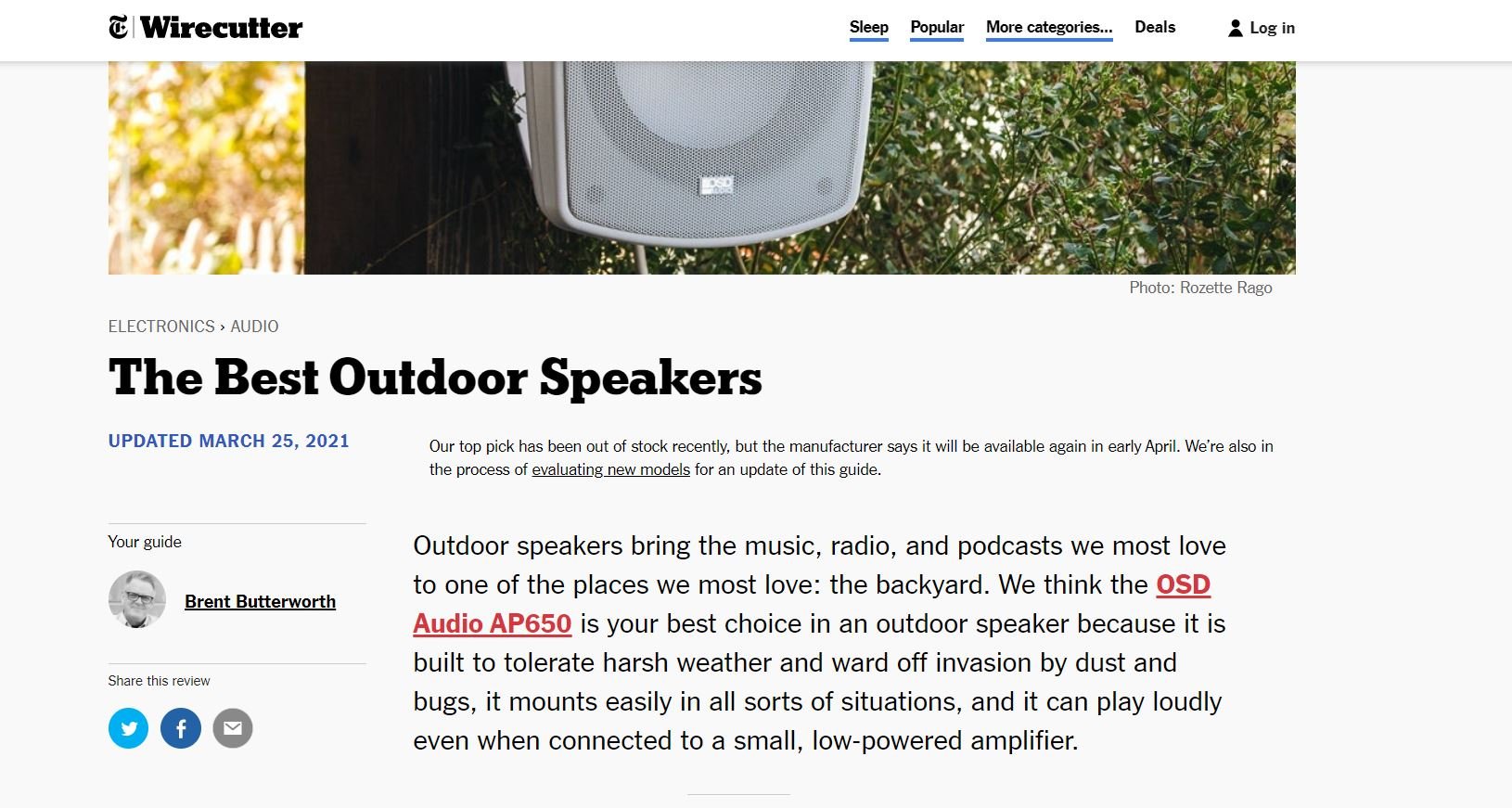
Wirecutter promotes affiliate links within editorial blog content.
With email, you skip the waiting. Instead of relying on search traffic, you send affiliate links straight to people who already trust you enough to open your messages.
Here's what that looks like in practice:
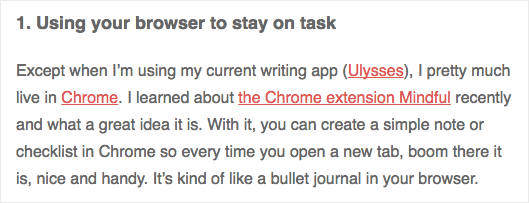
Affiliate links for the Ulysses writing app and Mindful Chrome extension placed naturally in an email.
The affiliate links in the example above promote the Ulysses writing app and a Chrome extension called Mindful. If a reader clicks and purchases, the email author earns a small commission. Send that email to 5,000 subscribers and even a 2% click-through rate means 100 potential buyers per send.
One thing to keep in mind: even though the goal is affiliate revenue, this is still an email marketing campaign. The same rules apply. You need a strategy, a content plan, and a reason for people to keep opening your emails. Affiliate links without value behind them just get you unsubscribes.
Why Use Email for Affiliate Marketing in 2026?
Email outperforms most affiliate channels for one reason: you own the relationship. Social media algorithms change, SEO rankings fluctuate, but your email list stays yours. According to wecantrack, about 22.8% of affiliate marketers already use email as their leading traffic source.
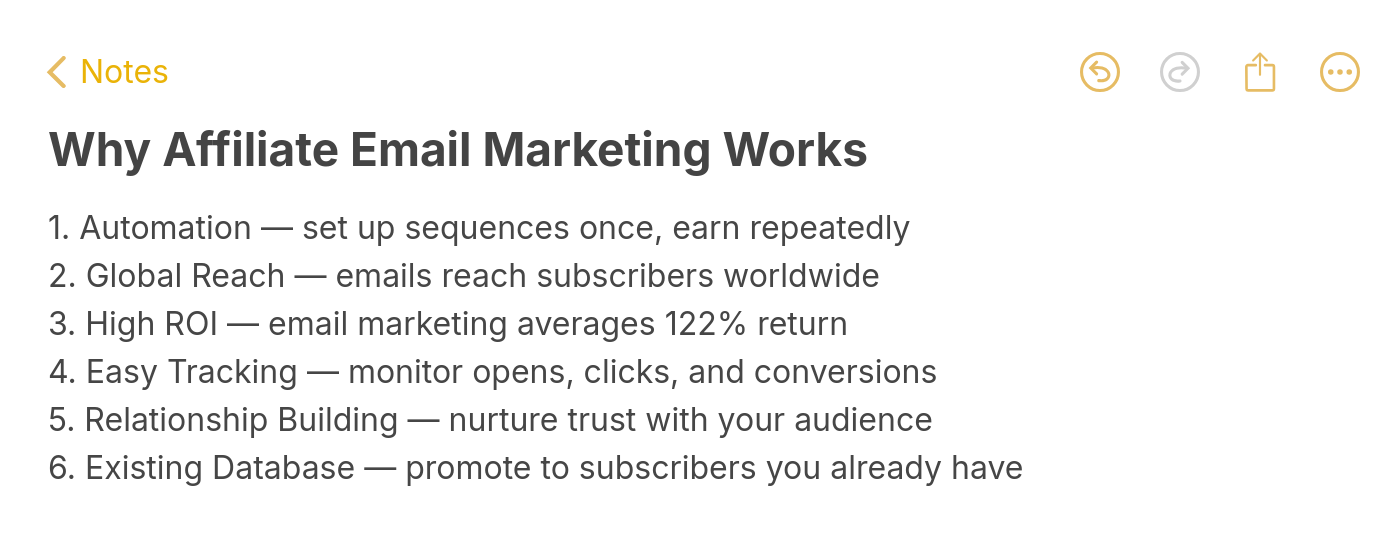
Here's why that number keeps growing:
• The ROI is hard to beat. Email marketing consistently returns $36-$42 for every $1 spent, even as paid advertising costs climb.
• Automation does the heavy lifting. Set up a sequence once and it runs on autopilot for months. New subscribers enter the funnel and receive your affiliate recommendations without you touching a thing.
• You reach people globally, instantly. No ad targeting restrictions, no geo-blocking. If someone signed up, they get your email.
• Tracking is granular. Open rates, click-through rates, revenue per click. You know exactly which emails and which links are making money.
• Trust compounds over time. Every valuable email you send strengthens the relationship. When you do recommend a product, people actually listen.
The affiliate industry itself is booming. According to FirstPromoter, the global affiliate market is projected to grow from $27.8 billion in 2024 to $48 billion by 2027. Email is one of the most efficient ways to capture your share of that growth.
How to Launch an Affiliate Email Marketing Campaign (Step-by-Step)
Starting an affiliate email marketing campaign involves nine steps, from picking the right email provider to re-engaging inactive subscribers. Before we go through each one, here's the full picture:
Quick overview of the process:
1. Choose an email provider that allows affiliate links
2. Select the right affiliate products to promote
3. Personalize your emails for higher open rates
4. Weave affiliate links into your email sequences
5. Track campaign performance and optimize
6. Take advantage of holiday and seasonal campaigns
7. Make value your top priority in every send
8. Re-engage inactive subscribers
9. Use social proof and real data to build trust
Step 1: Choose an Email Provider That Allows Affiliate Links
Not every email service provider (ESP) lets you include affiliate links. Many protect their deliverability reputation by restricting or outright banning them. If you set up your entire campaign on a platform that doesn't allow affiliate content, you risk account suspension after weeks of work.
Here's how to verify before you commit:
1. Check the provider's Terms of Service for language about "affiliate," "third-party promotions," or "commercial links"
2. Search their help documentation for "affiliate links" or "affiliate marketing"
3. Contact support directly and ask whether affiliate links are permitted in broadcast and automated emails
4. Test with a small send before building your full sequence
Four providers that explicitly support affiliate email marketing:
A. MailChimp
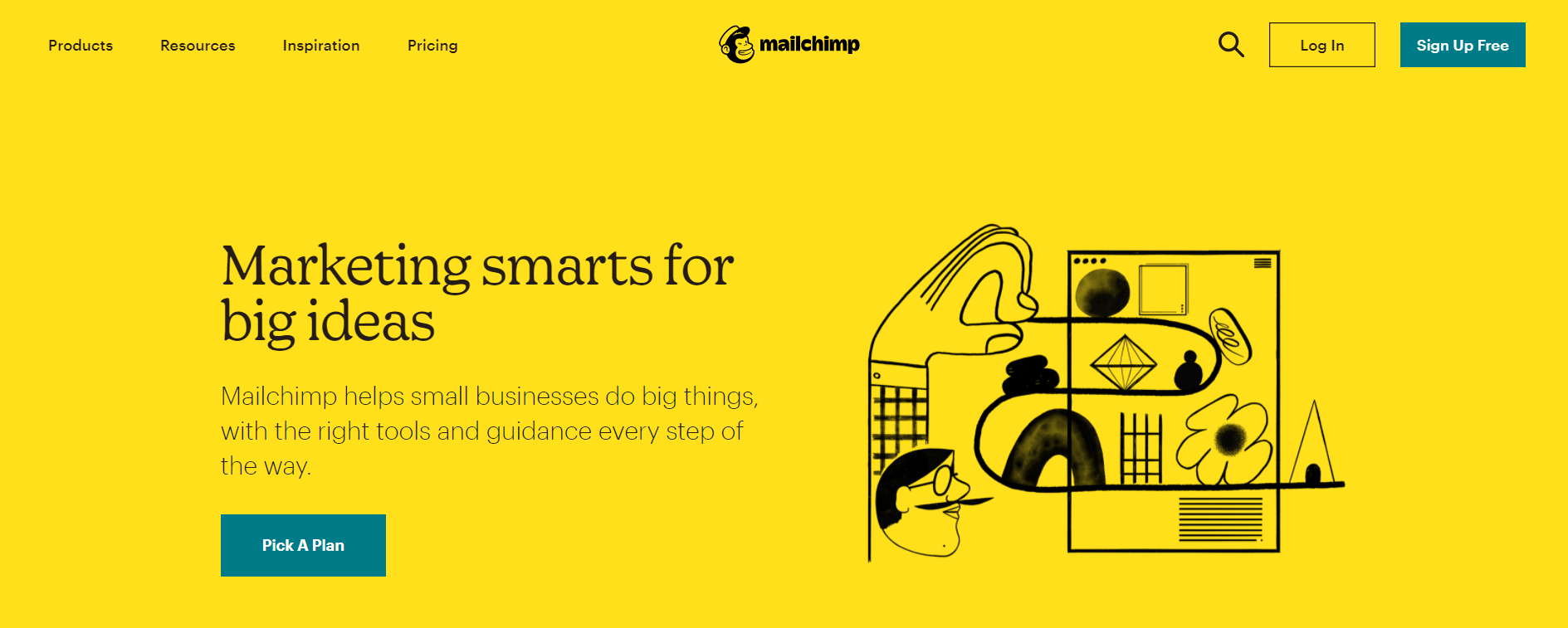
MailChimp supports affiliate links with built-in analytics and segmentation.
MailChimp permits affiliate links and provides the tooling to run them effectively: custom autoresponders, Google Analytics integration, subscriber segmentation, and pre-built email templates. Their free tier covers up to 500 contacts, making it a solid starting point for beginners.
B. Drip
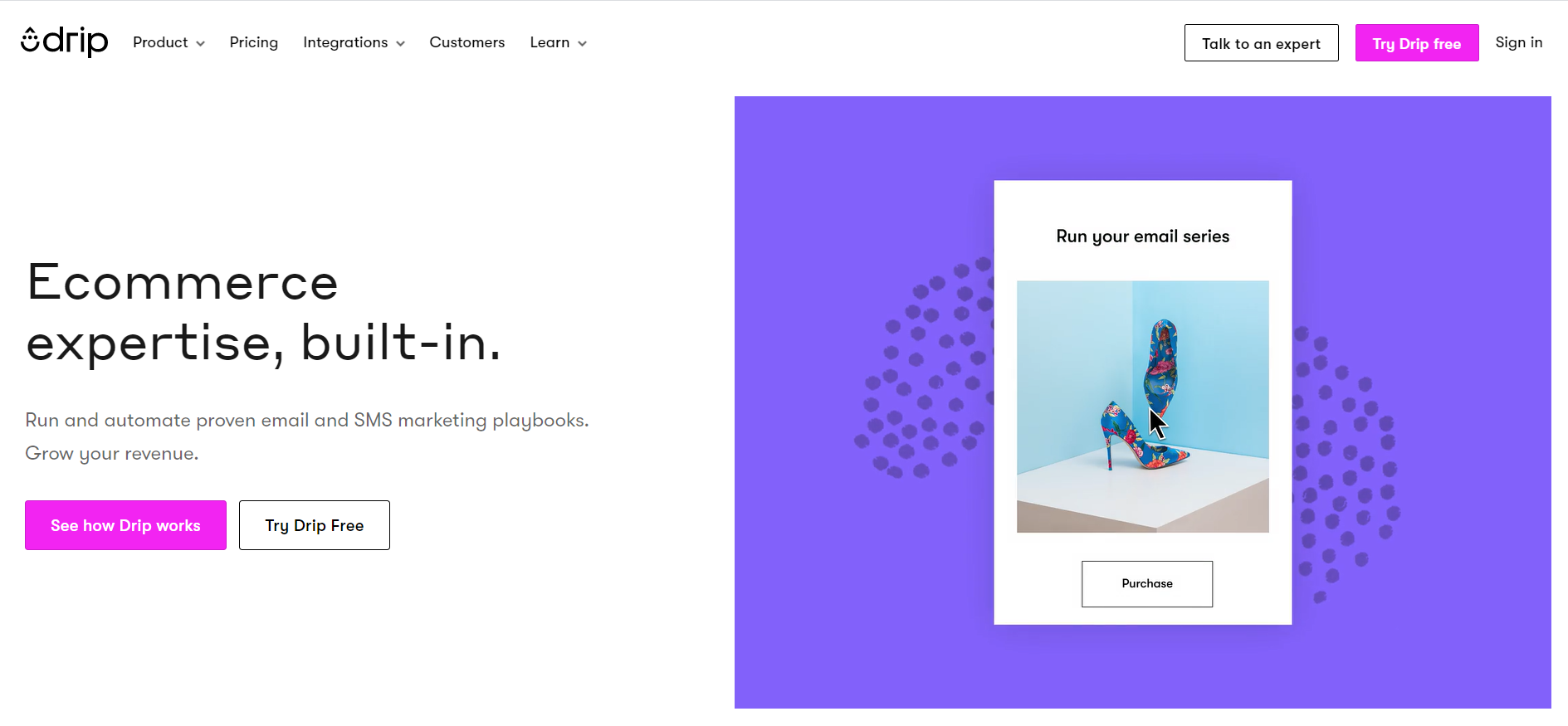
Drip's Product Recommendations feature works well for affiliate promotions.
Drip is a CRM with strong email capabilities. Its "Product Recommendations" feature pairs naturally with affiliate campaigns. Drip confirms affiliate links are allowed, but your emails can't be primarily promotional. Contact their support to confirm compliance before sending at scale.
C. AWeber
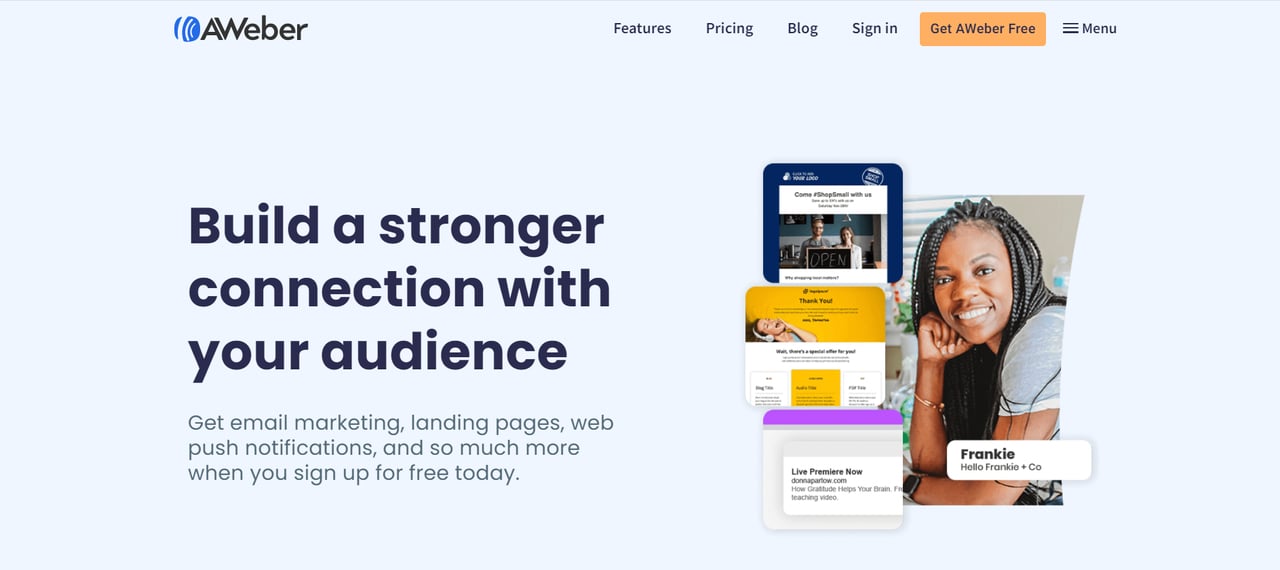
AWeber is beginner-friendly and explicitly supports affiliate marketing.
AWeber openly supports affiliate marketers. Features that matter for affiliate campaigns: subscriber segmentation, autoresponder follow-ups, and embeddable signup forms. Their interface is simpler than MailChimp's, which is a plus if you're launching your first campaign.
D. GetResponse
GetResponse allows affiliate links and adds useful extras: autoresponders, advanced analytics for tracking leads per campaign, and customizable templates. They also run their own affiliate program if you want a meta-play.
You'll know you picked right when: Your first test email with an affiliate link lands in the inbox (not spam) and your account isn't flagged.
Watch out for:
• Skipping the TOS check: Some providers update their policies quarterly. A platform that allowed affiliate links last year might not today. Always verify before migrating your list.
• Using link shorteners: URL shorteners like Bitly trigger spam filters. Use the direct affiliate link or your ESP's built-in link tracking.
Pro tip: I've tested affiliate campaigns across all four of these platforms over the past several years. AWeber has the most relaxed affiliate policy. If you're just starting out and worried about restrictions, start there.
Step 2: Select the Right Affiliate Products to Promote
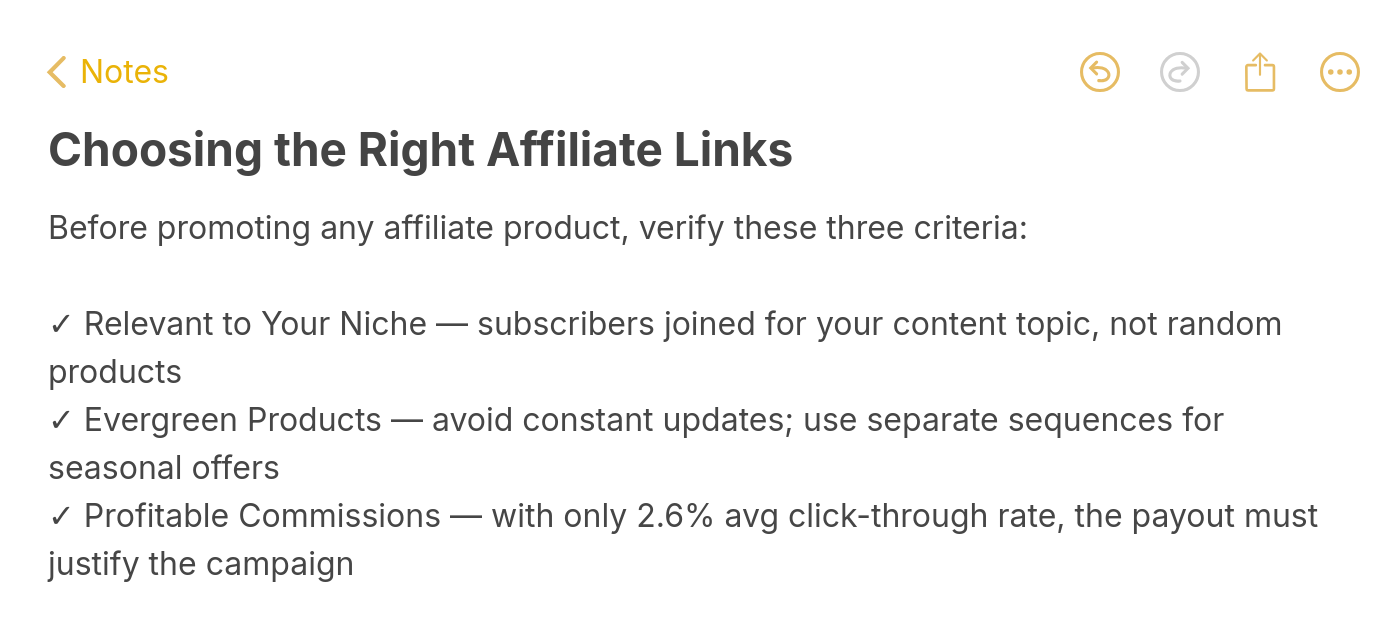
Choosing the wrong products to promote wastes your subscribers' trust and your time. Every affiliate link you include should pass three filters before it goes into any email.
Filter 1: Relevance to your niche
People subscribed because they care about your topic. Promoting unrelated products burns that trust fast. If you run an email list about cooking, recommending a high-quality knife makes sense. Recommending sneakers? That's an unsubscribe waiting to happen.
Filter 2: Evergreen demand
Products with year-round demand let you build automated sequences that work for months without updates. Seasonal products (holiday gifts, back-to-school deals) require separate, time-limited campaigns. Don't mix them into your evergreen sequence, or you'll end up promoting Christmas gifts in March.
Filter 3: Commission value
Consider the math. According to Campaign Monitor, the average email click-through rate is 2.6% across industries. If you send to 1,000 subscribers and 26 people click, the commission per sale needs to justify the campaign effort.
For reference, here are Amazon's current commission rates:
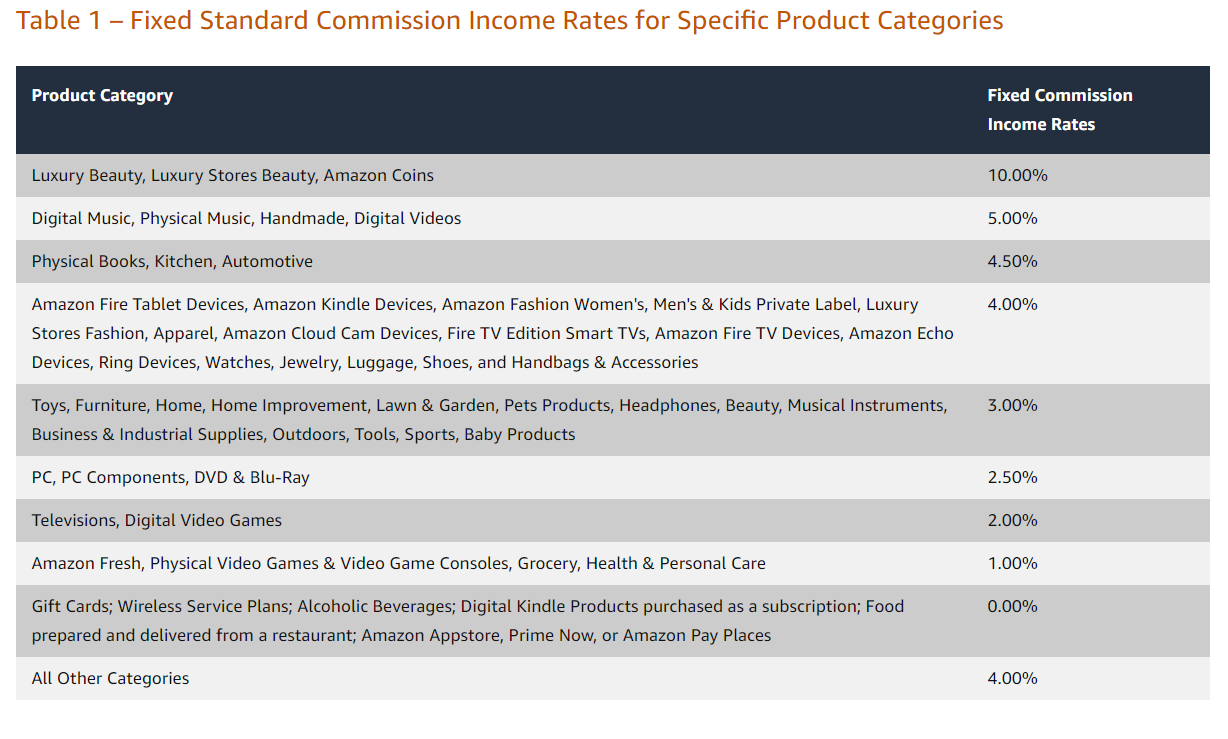
Source: Amazon Associates
Amazon's rates range from 1% to 20% depending on the category. A $50 product at 4% earns you $2 per sale. You'd need 50 sales a month to hit $100. Compare that to SaaS affiliate programs where recurring commissions of 20-30% on $50+/month subscriptions add up much faster.
You'll know you picked well when: Your affiliate products align with topics you already email about, and the commission math makes the campaign worth running.
Watch out for:
• Promoting too many products at once: Stick to 2-3 products per campaign. More than that dilutes your recommendations and makes you look like a catalog, not a trusted source.
• Ignoring cookie duration: Some affiliate programs only credit sales within 24 hours. Others give you 30-90 days. Longer cookie windows dramatically improve your revenue from the same traffic.
Step 3: Personalize Your Emails for Higher Open Rates
Personalization goes beyond adding someone's first name to the subject line (though that helps). It means making each subscriber feel like the email was written for them specifically.
According to HubSpot's 2025 State of Marketing Report, segmented email campaigns generate 30% more opens and 50% more click-throughs than non-segmented sends. For affiliate campaigns, that translates directly into more commission revenue.
Here's how to personalize effectively:
1. Segment by interest. If someone clicked on productivity tool content before, they're more likely to buy a productivity tool you recommend. Most ESPs let you tag subscribers based on link clicks and email engagement.
2. Use dynamic subject lines. Include the subscriber's name or reference their past behavior. "Sarah, this writing tool saved me 5 hours last week" outperforms "Check out this writing tool" every time.
3. Match the send time to the subscriber. AWeber and MailChimp both offer time-zone-based sending. Your 9 AM email should arrive at 9 AM for every subscriber, not just your time zone.
4. Write like a person, not a brand. Your affiliate email should read like a recommendation from a friend. No corporate templates. No heavy formatting. Plain text with a conversational tone consistently outperforms polished HTML layouts for affiliate content.
Need help crafting subject lines that actually get opened? Here's a detailed guide on attention-grabbing, catchy subject lines.
You'll know it's working when: Your open rates climb above 25% and click-through rates break past the 2.6% industry average.
Watch out for:
• Over-personalizing with data you shouldn't have: Mentioning purchase history or browsing behavior in emails can feel invasive if the subscriber didn't explicitly opt into that tracking. Stick to email engagement data.
• Personalization tokens on empty fields: If a subscriber didn't provide their name, "Hey {first_name}" looks terrible. Always set fallback text like "Hey there."
Step 4: Weave Affiliate Links Into Your Email Sequences
Your email sequence shouldn't be one long affiliate pitch. The goal is to build a content-first sequence where affiliate links appear naturally, at moments when the recommendation genuinely helps the reader.
Here's what a balanced sequence looks like:
| Email # | Type | Affiliate Link? | Purpose |
|---|---|---|---|
| 1 | Welcome | No | Set expectations, deliver promised lead magnet |
| 2 | Value | No | Teach something useful, build trust |
| 3 | Value + soft mention | Yes (1 link) | Share a tip and naturally reference a tool you use |
| 4 | Value | No | Case study, reader question, or story |
| 5 | Recommendation | Yes (1-2 links) | Dedicated product review or comparison |
| 6 | Value | No | Industry insight or original data |
| 7 | Recommendation | Yes (1-2 links) | Limited-time offer or seasonal deal |
The ratio matters. For every promotional email, send at least two or three value-only emails. This keeps your email marketing performance healthy and your unsubscribe rates low.
Three rules to follow:
• Deliver the value you promised. People signed up for a reason. If your lead magnet was "10 productivity hacks," your emails should deliver on that promise before selling anything.
• Embed links in context. "I wrote this week's newsletter using Ulysses, and the distraction-free mode helped me finish in half the time. Here's the tool if you want to try it." That's natural. A standalone "BUY THIS NOW" button is not.
• Keep a consistent schedule. Whether it's weekly or biweekly, stick to it. Irregular sending trains subscribers to ignore you.
As you grow your email list, new subscribers enter the sequence automatically. That means your affiliate emails generate passive revenue as long as your list keeps growing.
You'll know it's working when: Your click-through rates on affiliate emails stay within 80% of your non-affiliate email click rates. A steep drop means you're being too promotional.
Watch out for:
• Making every email about products: ESP algorithms track engagement. If your promotional emails consistently underperform your content emails, the provider may throttle your deliverability across all sends.
• Using the same affiliate link placement in every email: Vary where links appear: sometimes in the first paragraph, sometimes mid-email, sometimes at the end as a P.S. Predictable placement trains readers to skip it.
Step 5: Track Campaign Performance and Optimize
Launching the sequence is only half the job. The other half is measuring what works, cutting what doesn't, and iterating. According to Yahoo Finance, 92% of marketers globally view affiliate marketing as effective, but that effectiveness depends entirely on ongoing optimization.
Track these metrics for every affiliate email:
| Metric | What It Tells You | Benchmark |
|---|---|---|
| Open Rate | Subject line and sender reputation | 20-30% (varies by industry) |
| Click-Through Rate (CTR) | Email content and link placement quality | 2-5% for affiliate emails |
| Conversion Rate | Product-market fit and landing page quality | 1-3% of clicks |
| Revenue Per Email (RPE) | Overall campaign profitability | $0.05-$0.25 per subscriber |
| Unsubscribe Rate | Content-promotion balance | Below 0.5% per send |
Here's how to set up tracking:
1. Tag each affiliate link with UTM parameters so you can attribute sales to specific emails in Google Analytics
2. Create subscriber segments based on engagement: active (opened in last 30 days), warm (opened in 30-90 days), cold (no opens in 90+ days)
3. Run A/B tests on subject lines, send times, and link placement. Change one variable at a time
4. Review your email marketing KPIs weekly for the first month, then biweekly once patterns stabilize
You'll know it's working when: You can identify your top-performing emails and replicate their structure. Your revenue per email should trend upward over the first 90 days.
Watch out for:
• Tracking clicks but not conversions: A high CTR with zero sales means the product or landing page is the problem, not your email. Check the merchant's conversion rate before blaming your copy.
• Ignoring unsubscribes after promotional sends: If your unsubscribe rate spikes after affiliate emails, you're pushing too hard. Scale back the frequency or improve the value-to-promotion ratio.
Step 6: Take Advantage of Holiday and Seasonal Campaigns
Holiday seasons create natural buying intent. Black Friday, Cyber Monday, back-to-school, New Year's planning. People are already researching products. Your affiliate recommendations just need to reach them at the right moment.
But seasonal campaigns need a different approach than your evergreen sequence:
1. Build a separate email sequence for each season. Don't inject holiday deals into your regular automation. Create a standalone 3-5 email mini-campaign with a clear start and end date.
2. Start early. Send your first seasonal email 2-3 weeks before the event. Most buyers research before the peak shopping days.
3. Create urgency with real deadlines. "This deal expires Friday at midnight" works. "Limited time offer!" without a date doesn't.
4. Deactivate the campaign after the season ends. Nothing damages credibility faster than a "Black Friday deal" email arriving in January because you forgot to turn off the automation.
You'll know it's working when: Your seasonal campaigns generate 2-3x the revenue of your regular affiliate emails during the campaign window.
Watch out for:
• Overwhelming your list during peak seasons: Everyone increases send frequency around holidays. If you go from weekly to daily, expect higher unsubscribes. Limit seasonal sends to 2-3 extra emails per week max.
• Promoting deals that aren't actually good: Subscribers remember when you recommended a "50% off" deal that was actually a marked-up price. Verify the discount is real before promoting it.
Pro tip: The highest-converting seasonal emails I've sent aren't the ones with the biggest discounts. They're the ones sent on the Tuesday after Black Friday, when most marketers have gone quiet. Fewer competing emails in the inbox means higher open rates and less decision fatigue for the reader.
Step 7: Make Value Your Top Priority in Every Send
Revenue follows value. Not the other way around. According to FirstPromoter, over 80% of brands use affiliate marketing to drive leads and sales, which means your subscribers receive affiliate pitches from multiple sources. The ones they actually click come from senders who've earned their attention through consistently useful content.
What "value" looks like in affiliate emails:
• Teach something the reader can apply today. A quick tip, a workflow shortcut, a template. Something they can use whether or not they buy anything.
• Share your actual results with the product. "I used [tool] to cut my email design time from 2 hours to 30 minutes. Here's exactly how I set it up." Specifics build trust.
• Include multimedia content. Short tutorial videos, before/after screenshots, or a podcast clip discussing the product give readers multiple ways to engage with your recommendation.
• Acknowledge tradeoffs honestly. "This tool is excellent for teams under 10 people, but the pricing jumps significantly at the enterprise tier" is more trustworthy than a blanket endorsement.
Think of it this way: if you removed every affiliate link from the email, would a subscriber still be glad they opened it? If the answer is no, rewrite it.
You'll know it's working when: Subscribers reply to your emails with questions, thank-you notes, or their own results from following your recommendations.
Watch out for:
• Confusing "value" with "length": A 200-word email with one actionable tip is more valuable than a 2,000-word email stuffed with filler. Respect your reader's time.
• Relying only on text: If your niche is visual (design, e-commerce, cooking), text-only emails miss an opportunity. Include screenshots, GIFs, or short video clips where appropriate.
Step 8: Re-Engage Inactive Subscribers
Inactive subscribers drag down your open rates, hurt your sender reputation, and skew your campaign data. But some of those people still want to hear from you. They just need a nudge.
Here's a re-engagement sequence that works:
1. Define "inactive." In your ESP, create a segment for subscribers who haven't opened or clicked any email in 60-90 days.
2. Send a "still interested?" email. Subject line: "Should I keep sending you these?" or "I noticed you've been quiet." Direct and honest works better than clever.
3. Offer a reason to stay. Share your best-performing content from the last quarter. If someone missed your top emails, this might be what pulls them back in.
4. Set a deadline. "If I don't hear from you by [date], I'll remove you from the list to keep things clean." This creates urgency without being aggressive.
5. Actually remove non-responders. After 2-3 re-engagement emails with no response, remove them. A smaller, engaged list outperforms a large, dead one every time.
You can automate these follow-ups with tools like SureTriggers, which connects to most ESPs and triggers re-engagement sequences based on subscriber inactivity.
You'll know it's working when: 10-20% of your inactive segment re-engages, and your overall list engagement metrics improve after cleaning the non-responders.
Watch out for:
• Re-engaging too aggressively: Three re-engagement emails over 2-3 weeks is enough. Sending daily "come back!" emails to people who aren't opening anything just accelerates spam complaints.
• Never cleaning your list: Keeping 5,000 inactive subscribers inflates your total count but ruins your deliverability. ISPs like Gmail and Outlook track engagement rates at the sender level. Low engagement on your inactive segment affects inbox placement for your active subscribers too.
Pro tip: Before removing inactive subscribers, I send one final email with the subject line "This is goodbye (unless you click here)." The click rate on that email is usually 5-8%, which is higher than my average. Some people just need the fear of losing access to actually pay attention.
Step 9: Use Social Proof and Real Data to Build Trust
Affiliate recommendations backed by evidence convert better than opinions alone. Social proof removes doubt and gives the reader permission to buy.
Types of social proof that work in affiliate emails:
• Customer testimonials. Real quotes from people who use the product. If the affiliate program provides case studies or testimonials, use them.
• Your own results. "After switching to [tool], our team's response time dropped from 4 hours to 45 minutes." Specific, measurable outcomes beat vague praise.
• Third-party ratings. "Rated 4.7/5 on G2 with 2,000+ reviews" adds credibility you can't create on your own.
• Industry data. According to Fintel Connect, U.S. affiliate investment reached $13.62 billion in 2024, a 49.8% increase since 2021. Sharing market context makes your product recommendation feel like part of a larger trend, not a random pitch.
One tactic that combines social proof with value: include a mini case study in your email. Walk through how someone (or you) solved a specific problem using the affiliate product. Keep it to 150-200 words with concrete numbers.
You'll know it's working when: Emails that include social proof elements show measurably higher click-through rates than those without.
Watch out for:
• Fabricating testimonials: Fake reviews violate FTC guidelines and destroy trust permanently. Only use real, verifiable quotes.
• Overloading one email with proof: One strong testimonial or data point per email is enough. Stacking five testimonials in a single email reads as desperation, not confidence.
Pro tip: I ask affiliate managers for anonymized conversion data: "What's the average conversion rate for email-referred traffic?" Most are happy to share because it helps both sides. Including real conversion data in your email ("This product converts at 8% for email traffic, which is 3x the industry average") gives subscribers a concrete reason to click.
What Results to Expect From Your Affiliate Email Campaign
Set realistic expectations. Affiliate email marketing builds momentum over time; it's not an overnight revenue channel.
First 30 days: Focus on setting up your sequence, testing email deliverability, and establishing your baseline metrics. Revenue will be minimal. That's normal.
Days 30-90: You should see patterns forming. Which emails get the highest open rates? Which affiliate links get clicked most? Use this data to refine your sequence. Expect $50-$500/month depending on list size and niche.
Days 90-180: With consistent optimization, your revenue per subscriber should climb. A well-maintained list of 5,000 engaged subscribers promoting relevant products can generate $500-$2,000/month in affiliate commissions.
6+ months: If you've been growing your list and refining your emails, affiliate income becomes increasingly passive. New subscribers enter your optimized sequence automatically. According to Post Affiliate Pro, the global affiliate marketing market is projected to exceed $20 billion in 2026, so the opportunity continues expanding.
Track these success indicators: steady or growing open rates above 20%, affiliate email CTR above 2%, positive revenue per subscriber trend month-over-month, and unsubscribe rates below 0.5% per send.
Grow Your Email List to Scale Affiliate Revenue
Every step above assumes you have subscribers. The bigger your list, the more your affiliate campaigns earn. And the fastest way to grow an email list on your website is with targeted signup forms and popups.
With Popupsmart's email popups, you can create newsletter signup forms in minutes. No coding required. Target the right visitors at the right moment based on scroll depth, exit intent, or time on page, and automatically send new subscribers into your ESP for the affiliate sequence to take over.
Popupsmart integrates with all major email providers including MailChimp, AWeber, Drip, and GetResponse, so your new leads flow directly into your affiliate automation.
Start Your Affiliate Email Campaign Today
The steps are straightforward: pick an ESP that allows affiliate links, choose products your audience actually cares about, build a sequence that leads with value, and track everything. The hard part isn't the strategy. It's showing up consistently and resisting the urge to over-promote.
Your first action step: if you don't have an email list yet, start building one today. If you already have a list, audit your current emails and identify two natural spots where an affiliate recommendation would genuinely help your readers. That's your starting point.
Want to accelerate your list growth? Try Popupsmart to create targeted email capture popups that turn website visitors into subscribers, and feed them directly into your affiliate email sequence.
Frequently Asked Questions
Can I use email marketing for affiliate marketing?
Yes, but your email service provider must explicitly allow affiliate links. Providers like MailChimp, AWeber, Drip, and GetResponse all permit them. Always check the Terms of Service before building your campaign, because some providers (like Sendinblue) restrict or ban affiliate content. The key is balancing valuable content with promotional emails so your deliverability stays healthy.
How do I avoid spam filters with affiliate emails?
Use your ESP's native link tracking instead of third-party shorteners. Avoid spam trigger words in subject lines ("FREE," "ACT NOW," "LIMITED TIME" in all caps). Maintain a clean list by removing inactive subscribers every quarter. Keep your text-to-link ratio reasonable: no more than 2-3 affiliate links per email. And always include a visible unsubscribe link, which is required by CAN-SPAM and GDPR anyway.
How long does it take to make money from affiliate emails?
Most affiliate email campaigns take 60-90 days to generate meaningful revenue. The first month is primarily setup, testing, and baseline measurement. By month three, you should see consistent commissions if your list is engaged and your product selections are relevant. Campaigns with 1,000+ active subscribers and strong niche alignment can reach $500-$2,000/month within 6 months.
What are the best practices for affiliate email campaigns?
Segment your list by interest and engagement level. Use personalization beyond first names (reference past behavior, purchase history). According to FirstPromoter, affiliate marketing is growing at 18.6% per year through 2032, so the opportunity is only increasing. Test your emails on mobile before sending since 62% of affiliate-driven visits come from mobile devices. And always prioritize content quality over send frequency.
Related reading:
• 21 Best Email Marketing Automation Software
• How to Market Digital Products (12 Ways to Sell and Promote)