


Most ranking pages quote a popup vendor's figure for how much more lightboxes convert. Across the popups we power, between January 2024 and September 2026, we measured the layout instead, which our benchmark files under "center modal" popups.
The gap is statistically reliable; the method is in the 2026 popup conversion benchmark.
How does a lightbox popup work?
Visitors cannot interact with the webpage content until they close the lightbox popup or take the desired action. Lightbox popups often include a call to action (CTA) button to ask visitors to take action.
The action can be signing up to an email list, providing information, claiming a coupon code, going to the page of a particular product, content, or service, downloading something, etc. The box usually sits in the center; move it to a corner and drop the overlay, and it becomes a slide-in.
Developers also use "lightbox" for image viewers such as Lightbox2, a jQuery script billed as "the original lightbox script". A lightbox popup puts an offer in that frame.
Why Use Lightbox Popups
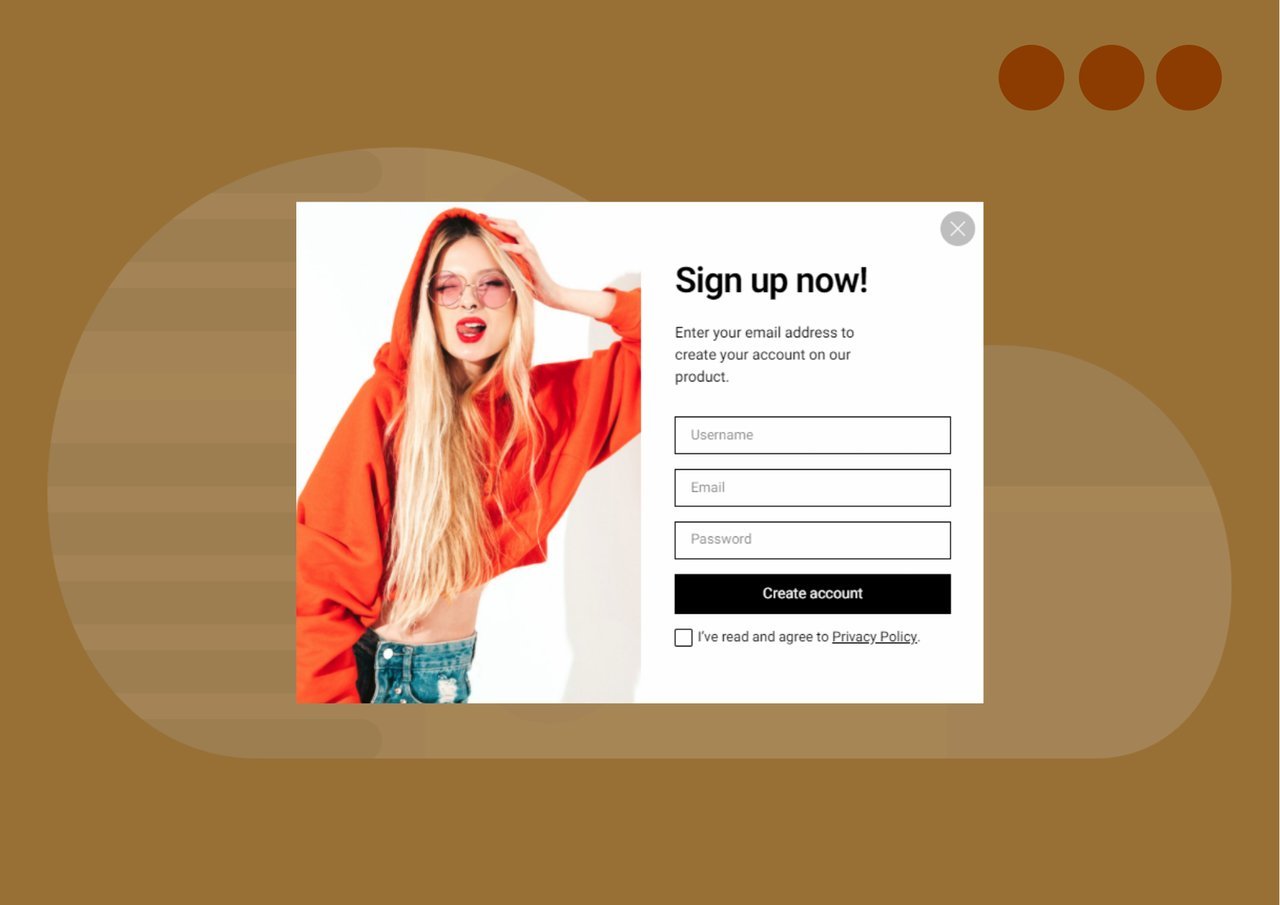
Lightbox popups are quite effective and beneficial for website owners and marketers for several reasons. For more designs, see these popup overlay examples that convert.
No Distractions
Lightbox popups darken all the other webpage content and distractions and grab visitors’ attention altogether.
Easier to Close
If visitors are not interested in the offer on the lightbox popup, they can easily close them by simply clicking the close button or anywhere outside the popup, or completing the desired action.
Interest-Based Offer & Right Triggers
Smart popup builders like Popupsmart allow users to target the right visitors at the right time with advanced targeting options. From exit-intent to cookie-based targeting, site owners can display the most relevant popups according to user intent and interest.
Captures Abandoning Visitors
Exit intent is a popular popup trigger, though our benchmark found no statistically reliable advantage for it. Exit-intent popups appear when a visitor attempts to leave a webpage and aim to convert them with the right offers and incentives. Using this trigger with lightbox helps site owners to reach abandoning visitors.
When should you use a lightbox instead of another popup type?
I use a lightbox for one offer I want every visitor to read, and a slide-in when the page's content is the reason they came.
| Format | Where it sits | Use it for |
|---|---|---|
| Lightbox popup | Center, page dimmed | One offer every visitor should read |
| Slide-in or sidebar popup | Corner or side; page stays usable | Pages where the content comes first |
| Floating bar | Top or bottom edge | Short notices: free shipping, a sale, a deadline |
| Full-screen popup | Whole screen | Welcome mats and age checks; the most intrusive |
Our benchmark publishes rates only for center modals and corner/slide-in boxes; full-screen popups and floating (sticky) bars have too few lead-collecting campaigns to call.
Popupsmart builds all four formats, and its popup templates are organized by campaign goal.
What to Consider When Using Lightbox Popups
Lightbox popups are indeed useful for raising conversion rates. However, just like other popup types, such as sidebar popup and full-screen popup, lightboxes should be created considering several factors.
User Experience (UX)
Users are in the center of conversions. That is why you need to pay attention to the UX when creating a popup. Lightbox popups should not be like annoying ads. If your popup is annoying like the traditional popup types, they hurt the UX and do more harm than good.
- Make your campaign useful to the visitors.
- Use a modern design for your popups.
You can find ready-made modern popup templates on Popupsmart’s showcase and builder.
- Make sure your popup design matches your website design.
Clear CTA
Try to stick to a single, clear CTA to direct visitors and clearly point out what you want them to do.
Closing Button in Sight
When closing buttons are too small or hard to find, visitors may leave a website for good. Therefore, the closing button on lightbox popups needs to be visible. Visitors use it: 40.5% of popup displays end with the visitor closing the popup (all displays pooled, February 2025 to September 2026, since close tracking began). I give the close button the same contrast I give the CTA.
Keyboard and screen reader access
A lightbox is a modal dialog, and the WAI-ARIA dialog (modal) pattern sets out how one behaves:
- Focus moves into the dialog when it opens, and Tab stays inside it.
- Escape closes it, and focus returns to the element that opened it or to a logical place.
- A visible close button sits in its tab order.
Coding it yourself? The HTML <dialog> element opened with showModal() makes the page behind it inert and closes on Esc (MDN's dialog reference); our modal popup tutorial covers Bootstrap, jQuery and CSS.
Relevancy & Targeting
In order to achieve the most conversions, you should show lightbox popups based on the user intent and interest. You can use Popupsmart’s advanced audience targeting options to that end.
Can a lightbox popup hurt your Google rankings?
It can, most clearly on mobile, if it covers the content as soon as a visitor arrives from search. Google's 2016 announcement on mobile interstitials said pages showing "a popup that covers the main content" right after a visitor arrives from the search results "may not rank as highly". Its guidance on intrusive interstitials and dialogs still recommends small banners instead, and exempts legally required ones such as age checks.
That's no reason to drop mobile popups: on mobile the median popup converts 1.02% vs 0.57% on desktop. I keep a mobile lightbox off the first screen a visitor sees from search and let a scroll-depth or time-on-page trigger open it later.
Create a lightbox popup for free with Popupsmart now.