
How to Do a Giveaway on Shopify in 2026 (6 Steps)

 ChatGPT
 Perplexity
 Claude
 Grok
Grok Google AI Mode
Guide to running a strategic Shopify giveaway: define goals, choose a relevant prize, set clear legal rules, pick tools (Gleam, ViralSweep, Social Boost), build a simple landing page, promote across channels, then monitor, measure, and follow up to boost ROI.
Table of contents (18)
To do a giveaway on Shopify, define your campaign goal, pick a prize your audience actually wants, write contest rules that keep you legally protected, set up a giveaway app like Gleam or ViralSweep, promote across email and social channels, then measure results and follow up with participants. Most stores see a 20-30% email list bump from a single well-run campaign.
What you'll need to do a giveaway on Shopify:
• An active Shopify store with at least one published product
• A giveaway app (Gleam, ViralSweep, or Social Boost — free trials available)
• A prize worth $25-$500 depending on your margins
• Time estimate: 2-4 hours for setup, 7-14 days to run the campaign
• Skill level: Beginner-friendly
Quick overview of the process:
1. Define your goals: Decide whether you're after email subscribers, social followers, product awareness, or direct sales
2. Select your prize: Pick something your target customers genuinely want, tied to your product catalog
3. Set rules and legal guidelines: Draft official rules covering eligibility, entry methods, and winner selection
4. Choose your giveaway tools: Install and configure a Shopify-compatible giveaway app
5. Promote across channels: Push the campaign through email, social media, on-site popups, and paid ads
6. Measure and follow up: Track entries, pick a winner, and convert participants into repeat customers
What Is a Giveaway on Shopify?
A Shopify giveaway is a promotional campaign where your store offers a prize to participants who complete specific actions such as following your Instagram, subscribing to your email list, sharing a post, or making a purchase. The format can range from simple "enter your email to win" sweepstakes to multi-step contests that drive engagement across several channels at once.
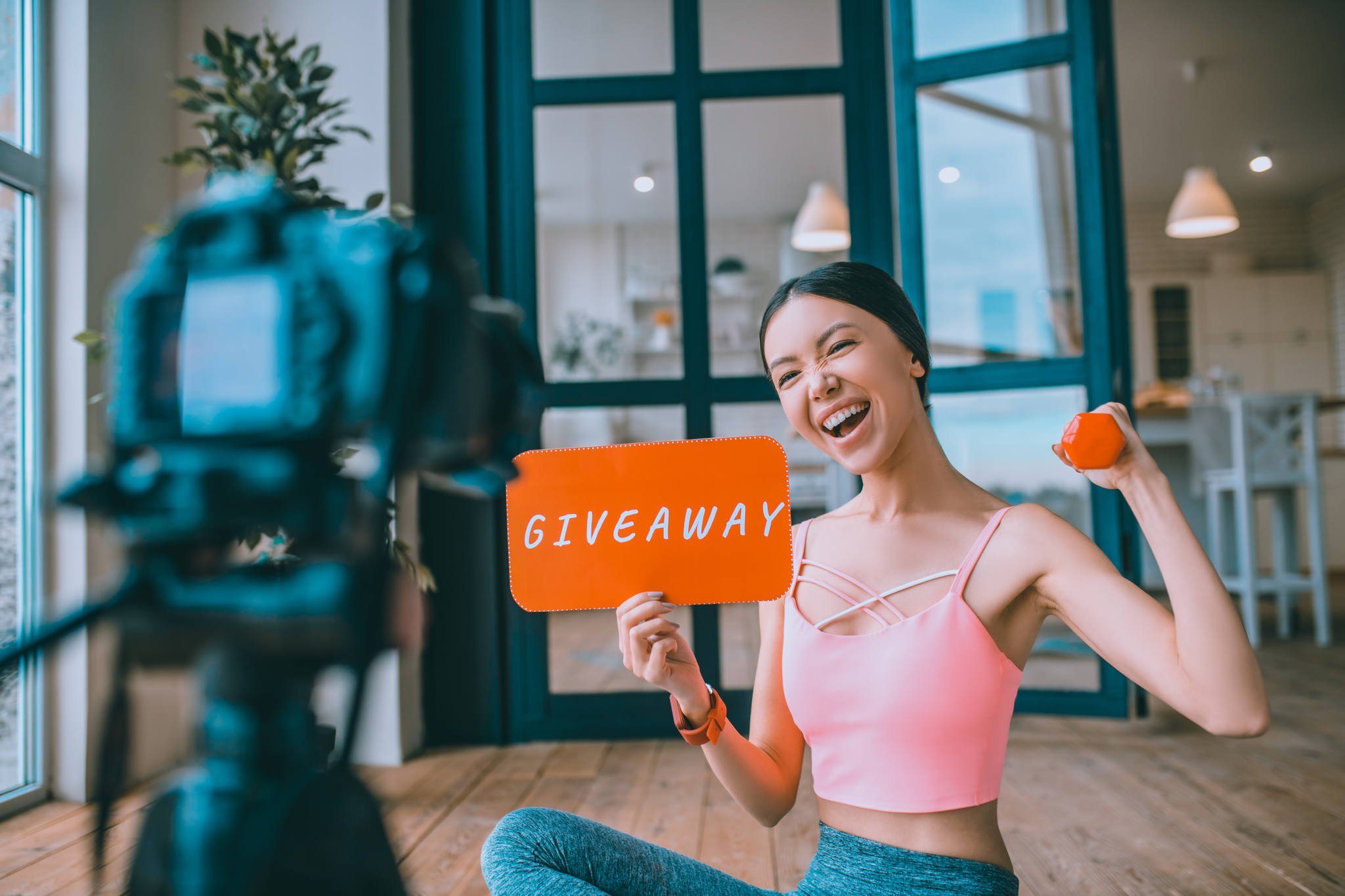
Giveaways work across niches, from fitness to fashion to food brands.
Common giveaway formats for Shopify stores include:
• Product giveaways: Give away your own products to attract buyers who already like what you sell
• Gift card giveaways: Let winners choose their own prize from your store (great for gift card marketing strategies)
• Bundle giveaways: Combine multiple products into a high-value package that feels exclusive
• Partner giveaways: Team up with a complementary brand to split costs and cross-pollinate audiences
• Purchase-to-enter giveaways: Require a minimum purchase, turning the giveaway into a direct revenue driver
The key difference between a giveaway and a random discount code? Giveaways create urgency and social proof simultaneously. A 15% coupon sits in someone's inbox until it expires. A giveaway with a visible entry count and countdown timer gets shared, talked about, and acted on.
Why Run a Giveaway on Your Shopify Store in 2026?
Giveaways remain one of the lowest-cost, highest-return Shopify marketing strategies available to store owners. The math is straightforward: you spend the wholesale cost of one product (or a gift card) and potentially gain hundreds or thousands of new email subscribers, social followers, and warm leads.
Here's why 2026 is a particularly good year to run a Shopify giveaway:
Customer acquisition costs keep climbing. According to Shopify's own data on acquisition costs, paid ad CPAs have risen steadily since 2020. Giveaways offer an organic acquisition channel that doesn't depend on ad spend.
Email and SMS lists are your owned audience. With Google phasing out third-party cookies and iOS privacy changes limiting ad targeting, building a first-party email list through giveaways gives you a direct line to customers that no algorithm can take away.
Social proof drives conversions. A giveaway that generates 2,000+ entries and visible social sharing creates momentum. New visitors see an active, engaged community around your brand, which builds trust faster than any product description can.
I've seen stores go from 500 to 3,000 email subscribers in 10 days with a single giveaway that cost under $150 in product. That same list, nurtured with a basic welcome sequence, typically generates 5-8x the prize value in sales within 90 days.
Step 1: Define Your Giveaway Goals and Objectives
Every successful Shopify giveaway starts with a clear goal. Without one, you'll end up with a pile of email addresses from people who wanted free stuff but have zero interest in buying from you. Your goal shapes everything: the prize, the entry methods, the promotion channels, and how you measure success.
Start by picking ONE primary objective from this list:
1. Grow your email list: Require email entry as the main action. Target 500-2,000 new subscribers per campaign depending on your current list size.
2. Increase social media followers: Make "follow us on Instagram/TikTok" a required entry step. Expect 10-25% of entrants to follow.
3. Launch a new product: Use the giveaway to build awareness and waitlist signups before a product drop.
4. Drive direct sales: Require a minimum purchase to enter, or use the giveaway as a lead-in to a flash sale.
5. Collect user-generated content: Ask participants to share photos or videos with your product for a chance to win.
Once you've picked your primary goal, set specific numbers. "Grow my email list" isn't a goal. "Add 1,000 new email subscribers in 14 days at under $0.15 per subscriber" is a goal. Write down your target metric, your budget, and your timeline before touching anything else.
You'll know you've done this right when: You can fill in this sentence without pausing: "This giveaway will [specific metric] by [amount] within [timeframe] at a cost of [budget]."
Watch out for:
• Chasing vanity metrics: 10,000 entries sounds impressive, but if your prize attracts people outside your target market (like giving away an iPad instead of your own product), those entries won't convert into customers.
• Setting too many goals at once: If you require email signup AND Instagram follow AND tagging three friends AND sharing a post, your completion rate tanks. According to Baymard Institute's research on form abandonment, every additional form field or step reduces completion by 10-15%. Stick to one required action and make the rest optional bonus entries.
Pro tip: After examining giveaway campaigns for dozens of Shopify merchants, the ones that perform best almost always tie the giveaway to a specific event such as a product launch, a holiday, a milestone (like hitting 10K followers). The event gives you a natural deadline and a story to tell in your promotions, which drives 2-3x more entries than an "evergreen" giveaway with no context.
Step 2: Select the Perfect Prize for Your Audience
Your prize determines who enters your giveaway. This sounds obvious, but it's where most Shopify store owners go wrong. The prize isn't about maximum dollar value. It's about maximum relevance to the customers you want to attract.
Here's the framework you can use to choose a giveaway prize:
1. Pick from your own catalog first. Your best-selling product or a curated bundle of 3-5 items works better than a generic gift card. People who enter to win YOUR product are already interested in YOUR brand.
2. Set the prize value between $50 and $500. Under $50 doesn't generate enough excitement. Over $500 attracts too many "freebie hunters" who'll never buy. The sweet spot depends on your average order value, aim for 2-3x your AOV.
3. Consider a tiered prize structure. One grand prize plus 5-10 runner-up prizes (discount codes, small products) keeps more participants engaged and gives you more follow-up opportunities.
4. Partner with a complementary brand. A skincare store partnering with a wellness brand to create a self-care bundle doubles the prize value and exposes both brands to each other's audience.
Be transparent about everything. List the exact retail value, any shipping restrictions, and whether the winner can choose colors/sizes. According to the FTC's guidelines on contests and sweepstakes, you must clearly disclose the approximate retail value of all prizes.
You'll know you've picked the right prize when: At least 70% of people who enter your giveaway match your target customer profile (check this by comparing entry demographics against your existing customer data in Shopify Analytics).
Watch out for:
• Generic prizes that attract the wrong crowd: iPads, AirPods, and Amazon gift cards attract everyone — including people who'll never visit your store again. I made this mistake early on with a client's giveaway. We got 5,000 entries for an iPad giveaway but only 12 sales in the following month. When we switched to a $200 product bundle, we got 1,800 entries but 140 sales.
• Forgetting to factor in fulfillment costs: If you're shipping internationally, customs and shipping can add 30-50% to your prize cost. Specify eligible countries upfront or offer digital alternatives (store credit, Shopify gift cards) for international winners.
Pro tip: Look at your Shopify Analytics under Products > Viewed most. The product with the highest view-to-cart ratio (lots of views, fewer adds-to-cart) is often the best giveaway prize. People clearly want it but hesitate on price. Giving it away generates entries from your warmest audience, and many runners-up will buy it at a discount in your follow-up email.
Step 3: Set Clear Rules and Legal Guidelines
Giveaway rules aren't just legal boilerplate, they protect you from disputes, disqualification headaches, and potential fines. Every U.S. state and most countries have specific laws governing contests, sweepstakes, and promotions. Skipping this step can result in penalties or having your giveaway shut down.
Your official rules document should cover these elements at minimum:
1. Eligibility requirements: Age minimum (usually 18+), geographic restrictions, and whether employees or their families can enter.
2. Entry period: Exact start and end dates with timezone specified (e.g., "March 15 at 12:00 AM EST through March 29 at 11:59 PM EST").
3. Entry methods: Every way someone can enter and how many entries each method earns.
4. Winner selection: Random drawing, judged contest, or another method. If random, specify the tool you'll use (Random.org, built-in app randomizer).
5. Prize description: Exact items, approximate retail value, and any restrictions (non-transferable, no cash alternative).
6. Winner notification: How and when winners will be contacted, and how long they have to respond before a new winner is drawn.
7. Privacy disclosure: What data you collect and how you'll use it.
For U.S.-based stores, review the FTC's endorsement and disclosure guidelines if your giveaway involves influencer partnerships or social sharing. States like New York, Florida, and Rhode Island have registration requirements for contests with prizes above certain values — New York requires registration for prizes over $5,000.
If you operate in the EU, you'll need to comply with GDPR data protection requirements for collecting participant emails and personal data.
You'll know your rules are solid when: A participant can read them and answer every question they'd have such as "Can I enter twice?", "When do I find out if I won?", "What happens to my email after the contest?" without contacting you.
Watch out for:
• Calling it a "lottery" or requiring purchase to enter: In most U.S. jurisdictions, a promotion that requires payment and awards prizes by chance is an illegal lottery. If you want a purchase-to-enter giveaway, you must offer a free "alternate method of entry" (AMOE). This typically means allowing people to enter by mailing a postcard or filling out a form without buying anything.
• Not specifying a "no purchase necessary" disclaimer: Even if your giveaway is free to enter, you need this language explicitly stated. The FTC requires it, and platforms like Instagram and Facebook have their own promotion guidelines that mandate it.
Pro tip: Don't write your rules from scratch. Use the official rules template from your giveaway app (Gleam and ViralSweep both generate them automatically), then have a lawyer review it once. That one-time legal review ($200-$500) covers you for every future giveaway with the same structure. I've seen stores get their Instagram accounts temporarily restricted for running non-compliant promotions, the legal review pays for itself the first time.
Step 4: Choose Tools and Apps for Your Shopify Giveaway
The right giveaway app handles entry collection, fraud detection, winner selection, and integrations with your email marketing platform. You shouldn't be managing entries in a spreadsheet or picking winners by scrolling through Instagram comments. Here are the three apps you can use on Shopify stores.
Gleam Competitions
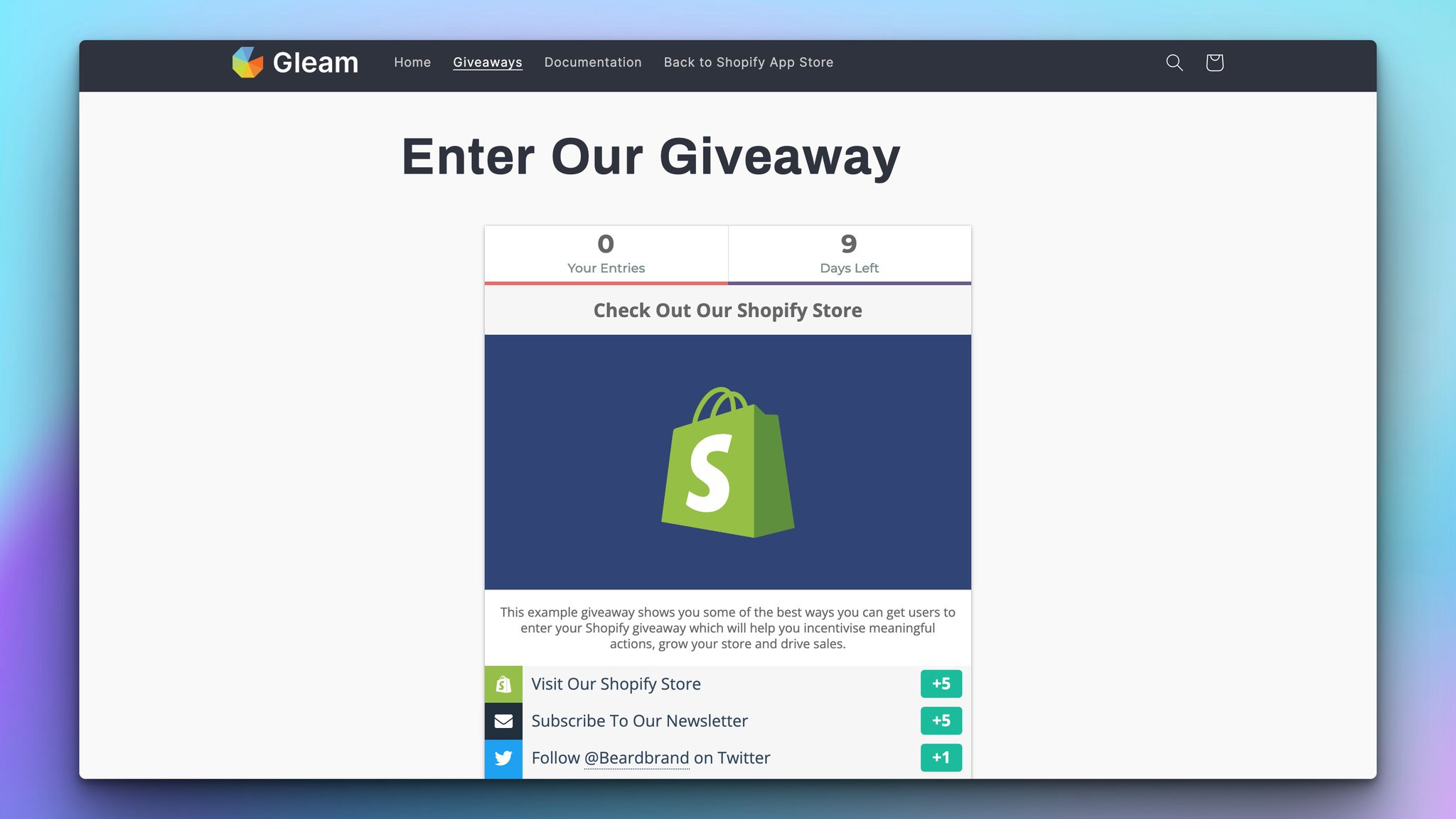
Gleam's entry widget supports 30+ entry methods including Shopify-specific actions.
Gleam is the most flexible option. It supports over 30 entry methods, integrates directly with Shopify for purchase-based entries, and has built-in viral sharing features. The free plan works for basic campaigns, but you'll need the Business plan ($97/month) for custom landing pages and advanced analytics. Gleam also generates automatic terms and conditions based on your configuration.
ViralSweep
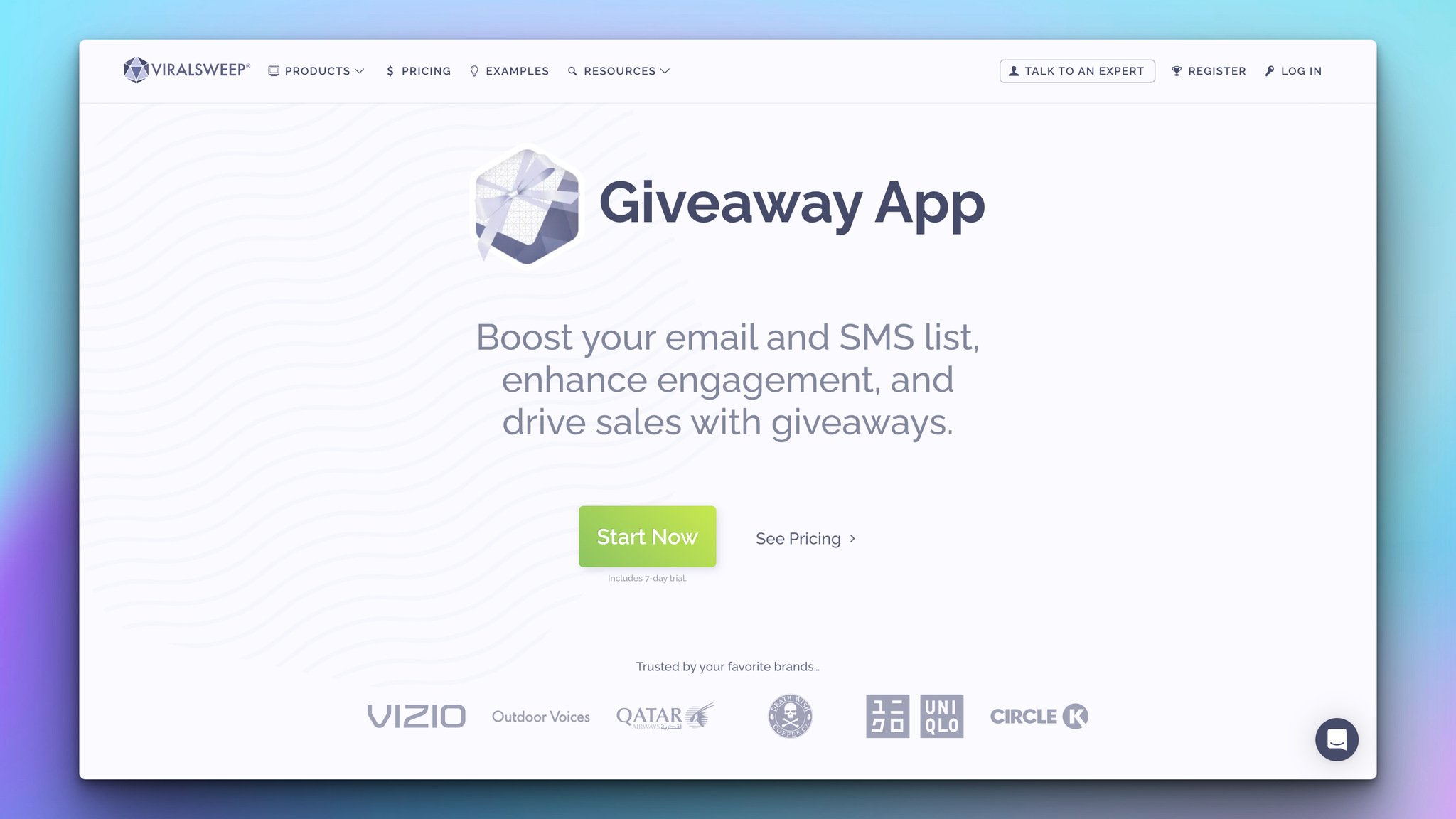
ViralSweep handles sweepstakes, contests, and instant-win campaigns.
ViralSweep specializes in sweepstakes and instant-win promotions. It connects with Shopify, Klaviyo, Mailchimp, and most major email platforms. The standout feature is its built-in fraud detection that flags duplicate entries and suspicious accounts. Plans start at $49/month after a 7-day free trial.
Social Boost
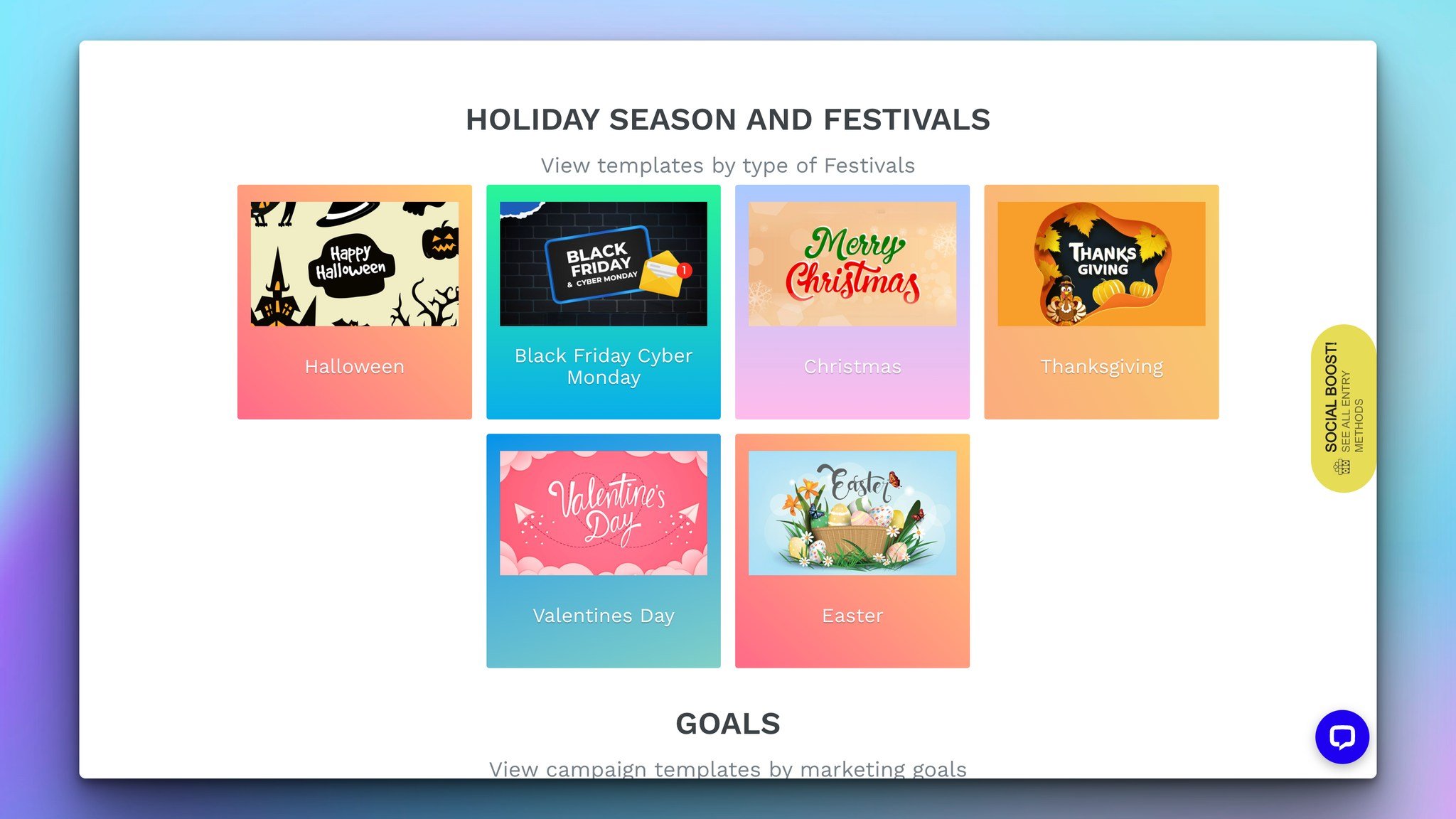
Social Boost offers ready-made templates for seasonal campaigns.
Social Boost shines for seasonal campaigns. It comes with pre-built templates for Black Friday, Valentine's Day, back-to-school, and other holidays. You can reward participants for purchases, email signups, social follows, and referrals. Pricing starts at $10/month, making it the most budget-friendly option for smaller stores.
Beyond dedicated giveaway apps, consider using a Shopify popup app to capture entries directly on your store. A well-timed popup announcing your giveaway can convert 3-5% of your site visitors into participants without sending them to a separate landing page. You can install popup builder app like Popupsmart on Shopify.
You'll know you've picked the right tool when: It connects to your email marketing platform, supports the entry methods your goal requires, and takes under 30 minutes to configure.
Watch out for:
• Overcomplicating the entry flow: Some apps let you add 15+ entry methods. Don't. Every additional step increases drop-off.
• Skipping email integration: If your giveaway entries don't automatically flow into your email platform (Klaviyo, Mailchimp, Omnisend), you'll lose momentum. The follow-up sequence needs to start within hours of entry, not days later after you manually export a CSV.
Pro tip: Set up a dedicated email tag or segment for giveaway entrants before you launch. In Klaviyo, create a "Giveaway - [Campaign Name]" tag. This lets you build a specific post-giveaway nurture sequence separate from your regular welcome flow, and you can track exactly how much revenue that giveaway cohort generates over 30, 60, and 90 days.
Step 5: Promote Your Giveaway Across Channels
A giveaway nobody knows about is just a product you gave away for free. Promotion is where most Shopify giveaway campaigns either take off or fizzle. You need to hit multiple channels within the first 48 hours to create momentum, because giveaway entries follow a power curve, most come in the first two days and the last two days.
Here's a promotion plan that works:
Email your existing list first. Your current subscribers are your warmest audience. Send a dedicated giveaway announcement (not buried in a newsletter) with a clear subject line: "Win a [Prize] — Enter Our [Season/Event] Giveaway." According to Campaign Monitor's email benchmarks, dedicated promotional emails get 2-3x higher click rates than newsletters.
Post on social media with a sharing incentive. Create platform-specific content. On Instagram, use a carousel post showing the prize from multiple angles. On TikTok, film a quick unboxing of the prize package. Give bonus entries for sharing or tagging friends, this is what makes giveaways go viral.
Use on-site popups to capture visitor entries. This is where having a popup builder pays off. Set up a giveaway announcement popup that triggers after a visitor has been on your site for 15 seconds or show exit intent popup on your Shopify store. Don't show it to everyone immediately, target visitors who've viewed at least 2 pages, which signals genuine interest.
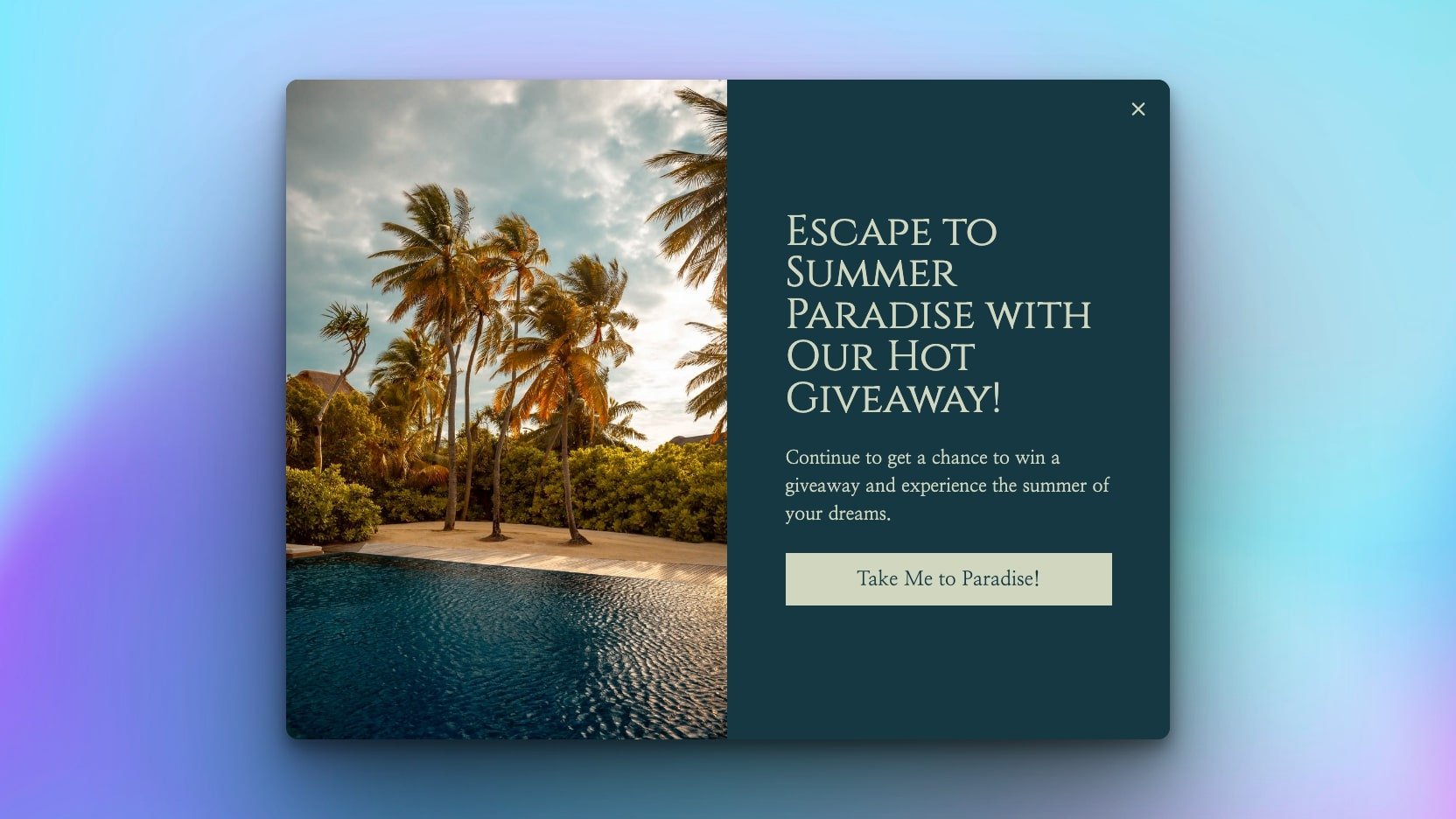
A giveaway popup on your Shopify store captures entries from visitors already browsing your products.
Check out Popupsmart's popup template library for ready-made giveaway designs you can customize and launch in under 5 minutes.
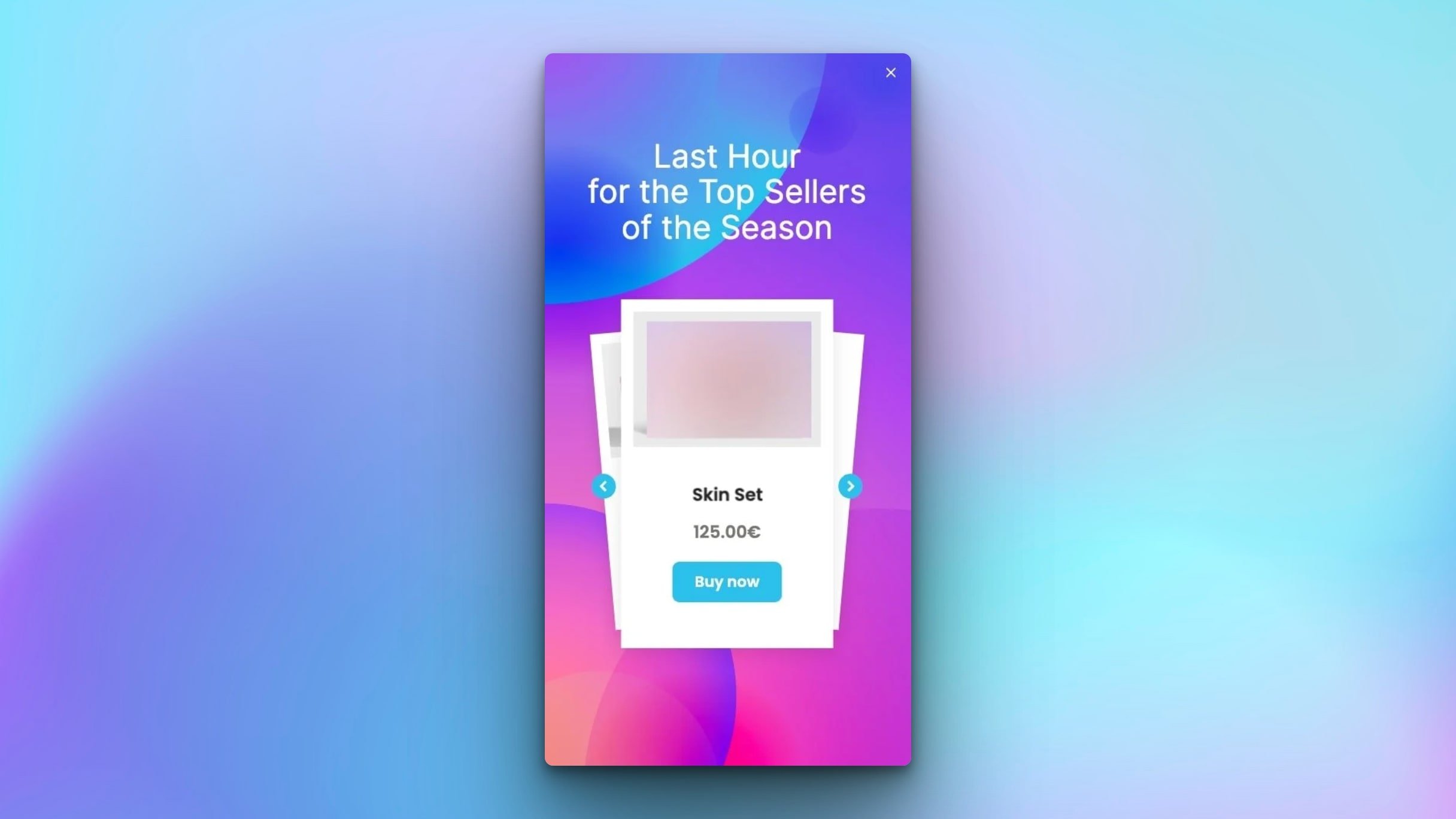
Popupsmart's Shopify-specific elements let you showcase product collections directly inside your popup.
Build a dedicated landing page. Your giveaway deserves its own page with a single focus: getting entries. Remove navigation, keep the copy short, and put the entry form above the fold.
Here are three landing page examples that nail the format:
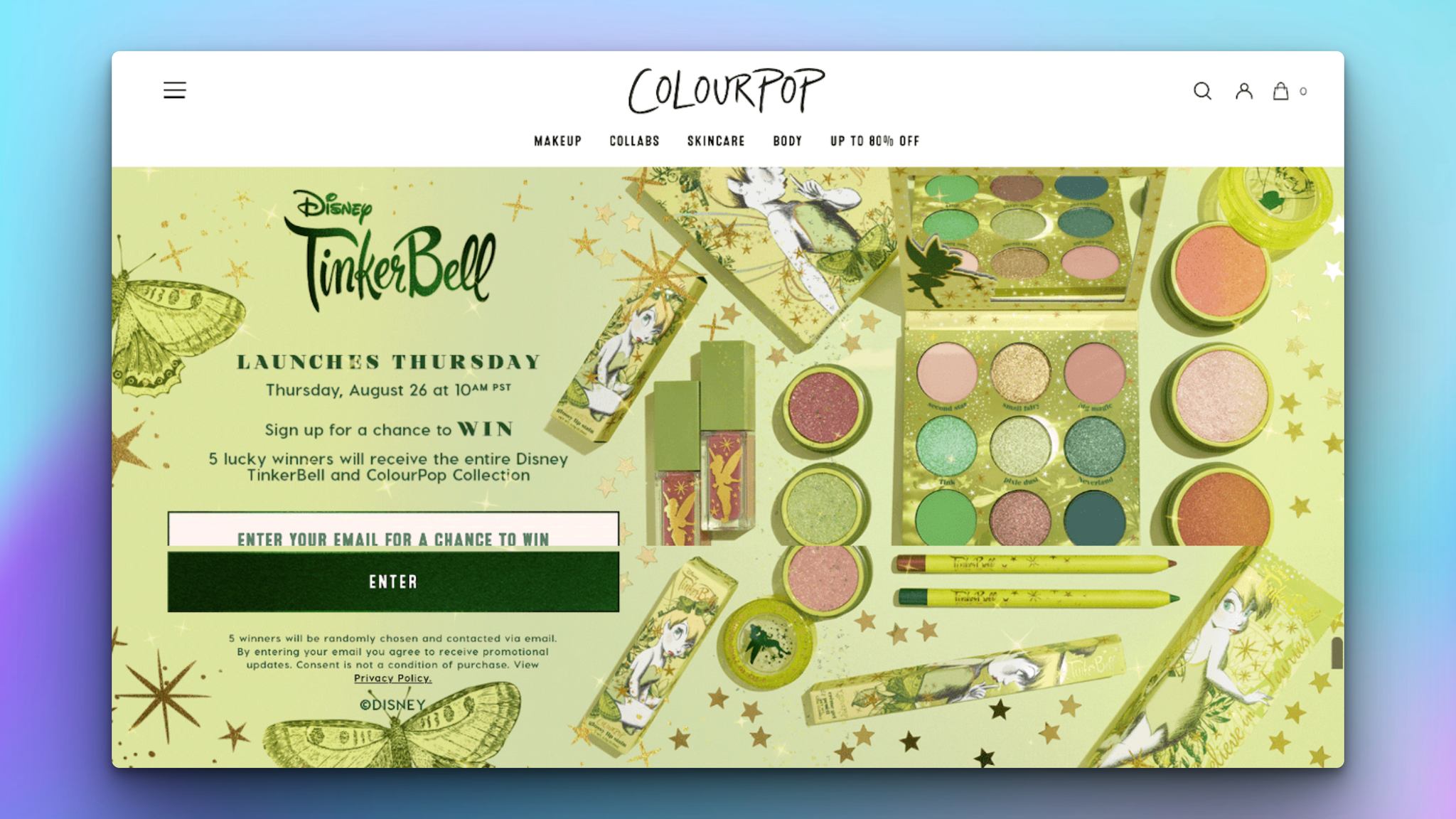
Colourpop's landing page matches the prize visuals to the page design.
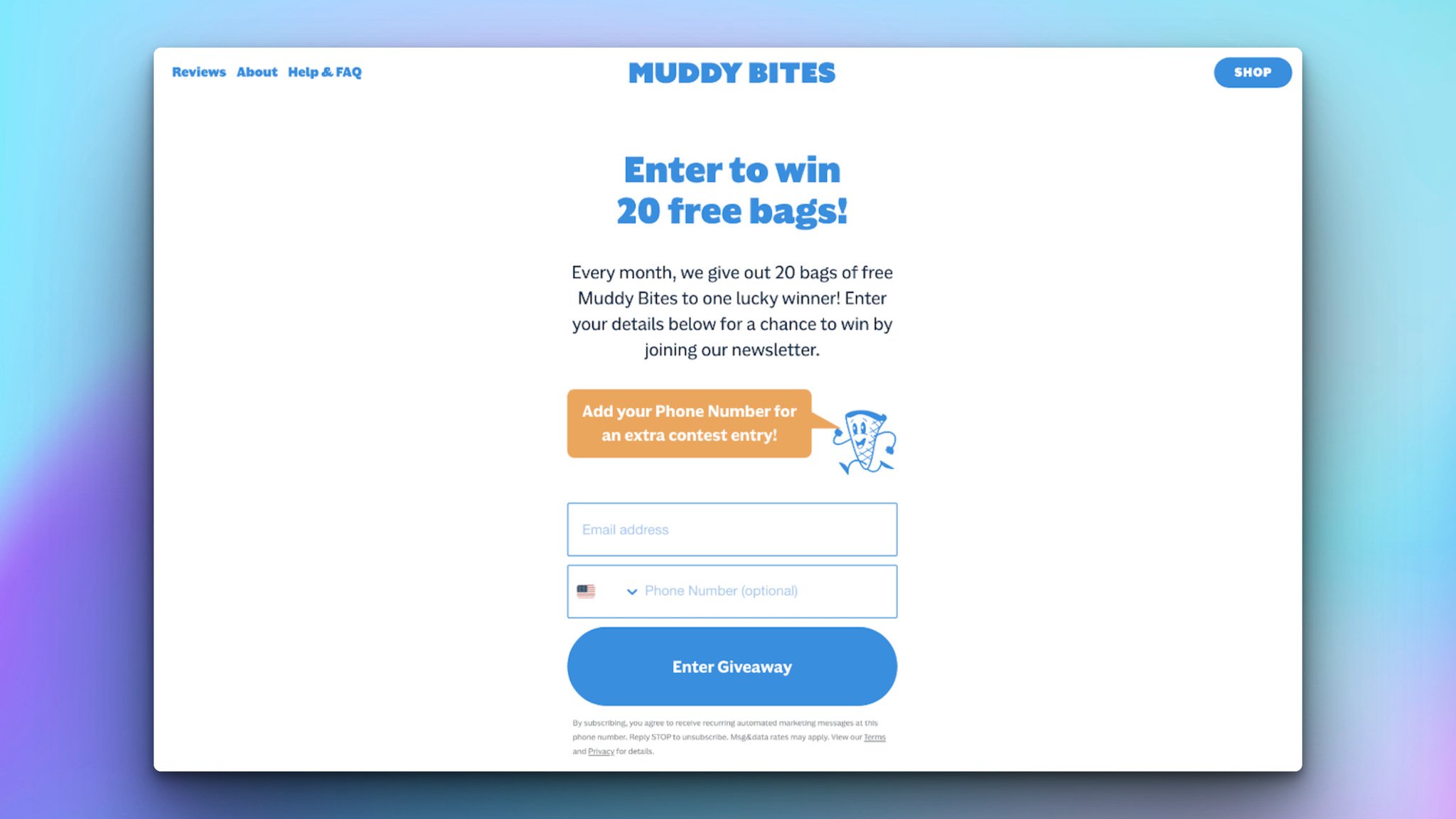
Muddy Bites keeps the entry form short and adds a bonus entry for phone number.
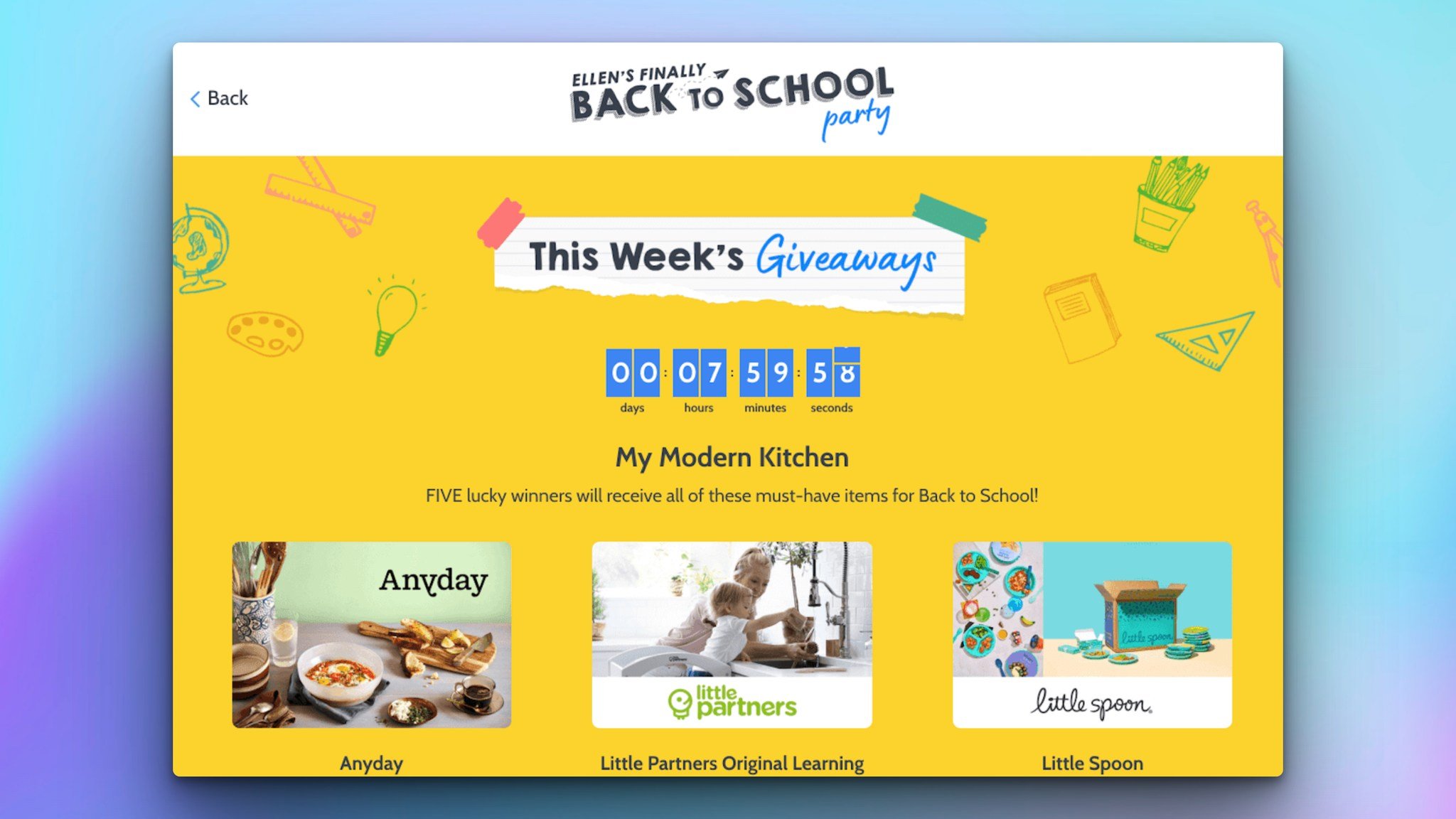
This landing page displays prize items clearly.
You'll know your promotion is working when: You see at least 100 entries in the first 24 hours (for stores with 5,000+ monthly visitors) and your entry rate accelerates on days 2-3 as social sharing kicks in.
Watch out for:
• Relying on a single channel: I've seen stores put all their promotion into Instagram Stories and get 200 entries. The same giveaway with email + Instagram + on-site popup + one Facebook post pulled 1,400 entries. Diversify from day one.
• Not sending a reminder email: Send a "48 hours left" reminder to your list. This second email typically generates 30-40% as many entries as the initial announcement. Many people meant to enter but forgot.
Pro tip: Schedule your giveaway launch for Tuesday or Wednesday morning. Weekday launches get more first-day entries than weekend launches. People are in "work mode" and more likely to check email and browse social media during breaks. Save your reminder emails for Sunday evening when people are planning their week ahead.
Step 6: Measure Success and Follow Up
The giveaway ending isn't the finish line. It's actually the starting point for converting participants into customers. Your follow-up strategy in the 7-14 days after the giveaway closes determines whether those entries become revenue or just sit in your database.
Track these metrics during and after your campaign:
1. Total entries and unique participants: Some apps count bonus entries separately. Know your actual unique participant count.
2. Cost per lead: Divide your total cost (prize value + app subscription + any ad spend) by the number of new email subscribers acquired.
3. Conversion rate from participant to customer: Track this at 30, 60, and 90 days post-giveaway using UTM tags and your email platform's revenue attribution.
4. Social metrics: New followers, shares, and engagement rate during the campaign period versus your baseline.
5. Email list quality: Monitor unsubscribe rates and engagement (open rate, click rate) of giveaway subscribers versus your organic list. If giveaway subscribers have 2x higher unsubscribe rates, your prize is attracting the wrong audience.
For the follow-up sequence, here's what works:
Day 0 (giveaway ends): Announce the winner publicly. Send a consolation email to all participants with a time-limited discount code (10-15% off, valid for 72 hours). This "sorry you didn't win" email routinely converts at 5-10% — the highest conversion rate of any email in the sequence.
Days 3-5: Share user-generated content or social proof from the giveaway. Show the winner's reaction, share entry counts, and build community around the campaign.
Days 7-10: Add giveaway participants to your regular email flow, but segment them separately so you can track their behavior. Consider them warm leads for increasing Shopify sales.
Day 14: Send a "last chance" reminder if they haven't purchased, with a slightly better offer or free shipping.
Use your Shopify Analytics dashboard to track these participants as a cohort. Navigate to Analytics > Reports > Sales by traffic source and filter by the UTM parameters you used in your giveaway emails to see exactly how much revenue the campaign generated.
You'll know your giveaway was successful when: Your cost per lead is under $1.00, at least 8-12% of participants buy something within 90 days, and your email list growth from the campaign exceeds your monthly organic growth by 3-5x.
Watch out for:
• Not cleaning your list after the giveaway: Some entries will be fake emails, typos, or disposable addresses. Run your new subscribers through a verification tool (ZeroBounce, NeverBounce) before adding them to your main list. Sending to invalid addresses tanks your deliverability, which hurts engagement for your entire list.
• Waiting too long to follow up: If participants don't hear from you within 24 hours of the giveaway ending, they've already forgotten about your store. The consolation discount email should go out the same day the winner is announced. Every day you wait, conversion rates drop by roughly 10-15%.
Pro tip: Build a "Giveaway ROI" spreadsheet that tracks each campaign's total cost, entries, new subscribers, and revenue generated at 30/60/90 days. After three giveaways, you'll have enough data to predict ROI before you launch. The stores I work with that do this consistently end up running monthly or quarterly giveaways because the numbers justify it every time. That kind of customer loyalty program thinking turns one-off promotions into a repeatable growth engine.
Turn Your Giveaway Into a Repeatable Growth Channel
Running a giveaway on Shopify isn't complicated, but doing it well requires planning beyond "pick a prize and post about it." The stores that get the best results treat giveaways as a structured marketing channel — they define goals first, choose prizes that filter for their ideal customer, stay legally compliant, and most importantly, they follow up aggressively after the contest ends.
Start with one campaign. Track everything. Refine your approach based on what the data tells you. By your third giveaway, you'll have a repeatable playbook that reliably converts entries into revenue.
Ready to capture more giveaway entries from your store visitors? Create your free Popupsmart popup campaign and start converting browsers into giveaway participants today.
Frequently Asked Questions
What are the best apps for Shopify giveaways?
The three most reliable Shopify giveaway apps are Gleam (best for advanced campaigns with many entry methods), ViralSweep (best for fraud detection and sweepstakes compliance), and Social Boost (best budget option with seasonal templates). All three integrate directly with Shopify and major email marketing platforms. Your choice depends on budget and how many entry methods you need. For capturing entries on your store itself, pair any giveaway app with a popup tool like Popupsmart.
Are there legal requirements for Shopify contests?
Yes. In the United States, giveaways must include "no purchase necessary" language, clearly disclose prize values, specify eligibility and entry rules, and follow state-specific registration requirements (New York, Florida, and Rhode Island have additional rules for high-value prizes). If you collect emails from EU participants, GDPR applies. Most giveaway apps generate basic terms and conditions automatically, but I'd recommend having a lawyer review your rules at least once, especially for prizes over $500.
What prizes work best for Shopify giveaways?
Prizes from your own product catalog work best because they attract people who actually want what you sell. A $100-$200 product bundle typically outperforms a $300 generic item (like electronics) in terms of post-giveaway conversion rates. Gift cards to your own store are a solid second choice since winners will browse your full catalog. Partner bundles with complementary brands can double your prize value while splitting costs.
How to promote a Shopify giveaway effectively?
Promote across at least three channels: a dedicated email blast to your existing list, social media posts with sharing incentives, and on-site popups for store visitors. Launch on a Tuesday or Wednesday for maximum first-day entries. Send a reminder email 48 hours before the giveaway ends. If budget allows, run targeted ads on Facebook or Instagram to reach lookalike audiences based on your existing customer list. The first 48 hours determine your campaign's trajectory, so front-load your promotion.
How to measure ROI from a Shopify giveaway?
Calculate ROI by tracking total campaign cost (prize + app fees + any ad spend) against revenue generated by giveaway participants over 90 days. Use UTM parameters in your giveaway email templates to attribute sales to the campaign. Also measure cost per lead (total cost divided by new email subscribers) and participant-to-customer conversion rate. A healthy giveaway should achieve under $1.00 cost per lead and at least 8-12% conversion to purchase within 90 days.
How would you rate your experience with this article? 😊