ChatGPT
 Perplexity
 Claude
 Grok
Grok Google AI Mode
Popups have always been a bit controversial. Some people love them for driving leads; others hate them because they've been used poorly. AI popup tools are changing how they get built. The flashy overlay is giving way to something driven by data, a popup that can improve a visitor's experience. And in 2026 a few of these tools can build and publish a campaign from a chat request.
When I first started experimenting with AI-powered popups, I wasn't convinced. Do I need artificial intelligence for something as "simple" as a popup? But as I dug in, I saw that these tools can personalize messaging, help predict the best timing, and even write copy or generate visuals for me. That's a big step up from old-school rule-based popups, as long as you know which kind of AI you're buying.
Below is what I've learned about AI popup tools: what they are, where they help, and how to use them well. I also compare Popupsmart, OptiMonk, Claspo, Alia, Justuno, Wisepops, Privy and Hello Bar on what the AI in each one does. If you only want to build one popup from a prompt, Popupsmart's AI Popup Builder page walks through that step by step.
Quick Summary by Popupsmart
AI popup tools promise personalized, data-driven popups, but "AI" means something different in each one. With Popupsmart, you can create an AI-powered popup in minutes: enter a prompt, and the AI Popup Builder drafts the headline, image and call to action, with a first draft in under 30 seconds by our own estimate. I also cover how features like Smart Mode, A/B testing, and behavioral targeting help optimize conversions, and how the Popupsmart AI agent builds and publishes a whole campaign from a chat. Along the way, I'll compare Popupsmart with other tools like OptiMonk, Claspo, Alia, Justuno, Wisepops, Privy and Hello Bar. By the end, you'll know how to pick the right AI popup solution: which kind of AI you need, and which tools have it.
What Are AI Popup Tools and How Do They Work?
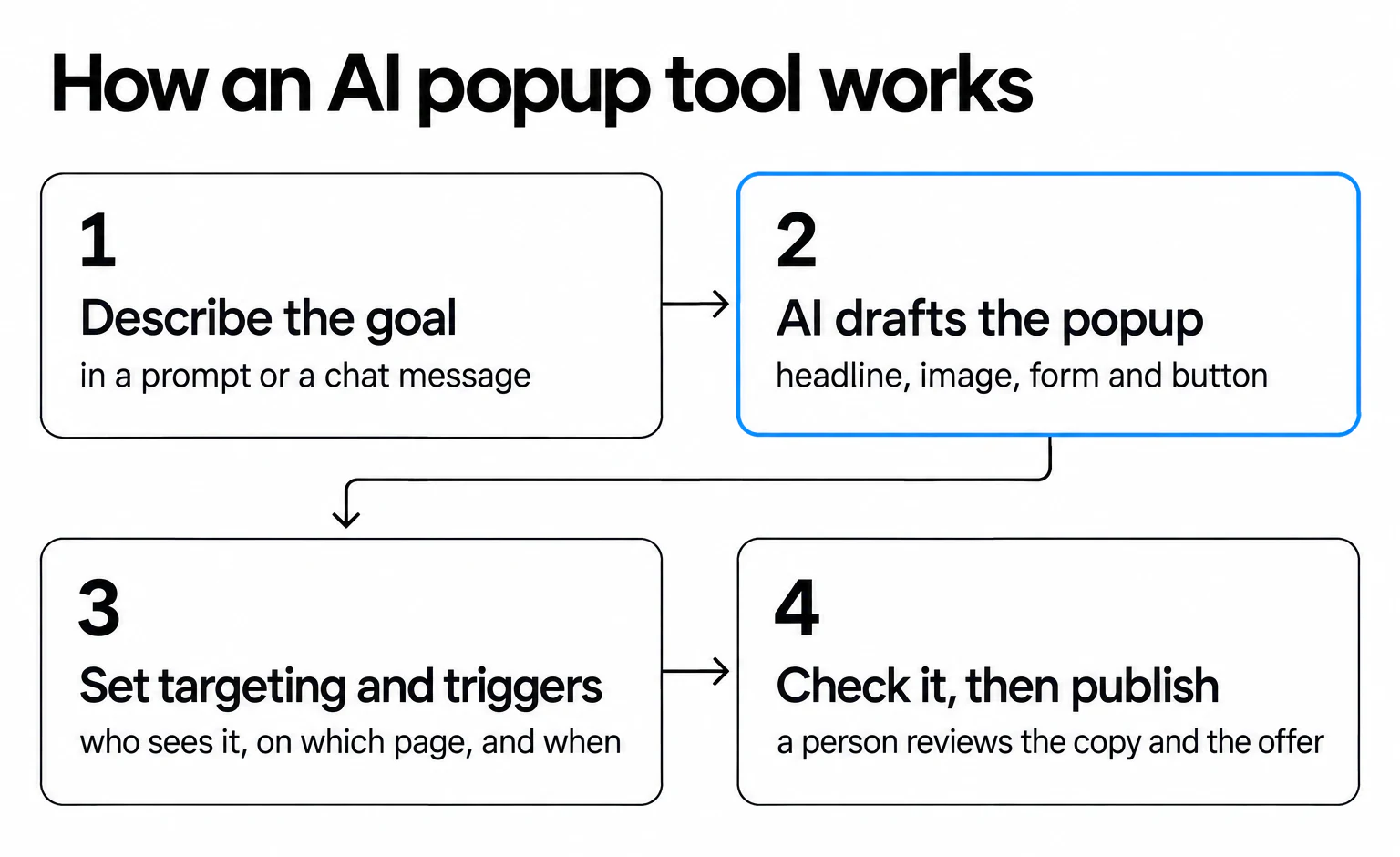
When I first heard the phrase AI popup tools, I took it for another marketing buzzword. It turned out to mean something concrete: popup builders enhanced with artificial intelligence, which do more than sit on your site waiting to annoy people. The workflow in the figure is the same in most of them: you describe the goal in a prompt or a chat message, the AI drafts the popup (headline, image, form and button), you set the targeting and triggers, and you check it before you publish.
(A quick note on the search term: this post is about marketing popups on your own website, not the AI assistant popups that appear inside apps like design tools or search engines.)
How do AI-powered popups differ from rule-based popups?
Traditional popups usually rely on rigid triggers: show after 5 seconds, show on exit intent, or show on mobile only. Those rules work, but they aren't "smart." AI-powered popups analyze data points like:
- visitor scroll depth,
- time spent on page,
- referral source,
- previous interactions,
- even cart behavior in eCommerce.
So the popup can help decide when to appear and which message fits the visitor, instead of you writing every rule by hand. It doesn't remove the rules: most tools still let you set exit intent, delays and page targeting yourself, and some AI targeting (Popupsmart's Smart Mode among them) learns from a month of your manual targeting first.
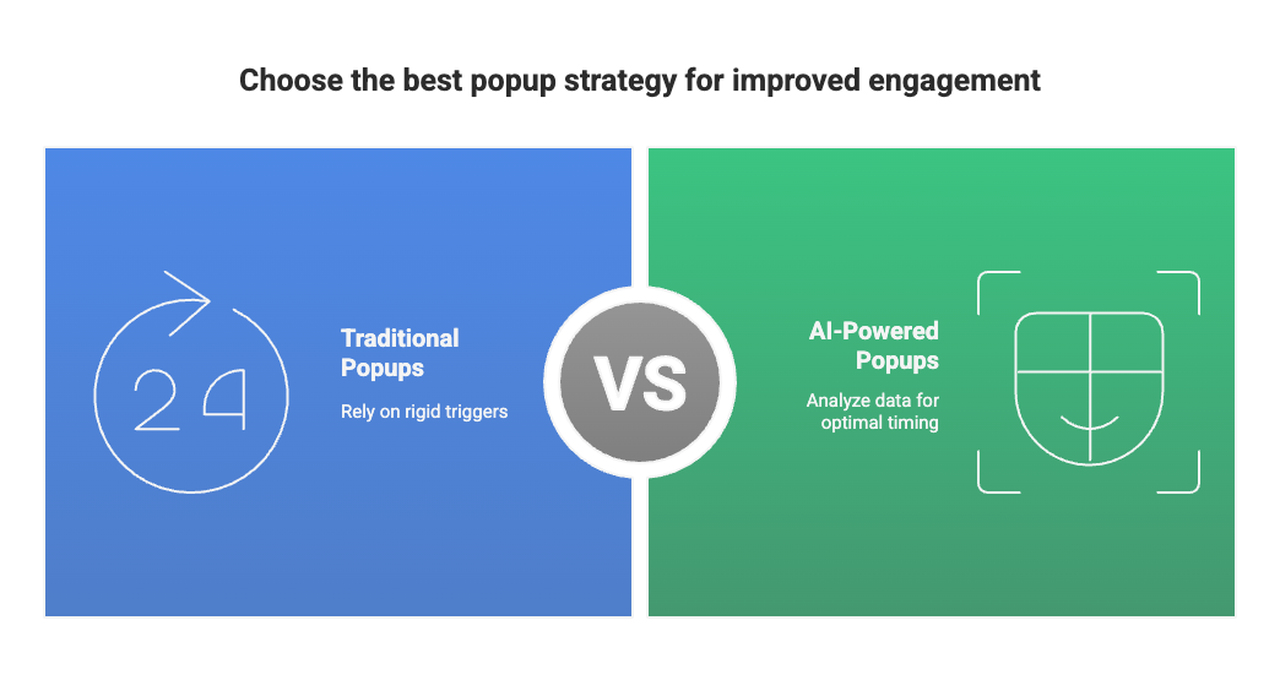
AI-enabled testing of popup timing, messaging and design is becoming normal rather than novel. Timing alone isn't where our data finds the biggest gaps, though, as the next section shows.
Which data signals power AI-driven personalization on-site?
In my opinion, it comes down to two things: personalization and efficiency. Businesses don't want to spend their time managing dozens of popup rules. Visitors don't want irrelevant offers. AI can help with both.
For example, if a new visitor comes to your homepage, the popup might highlight a welcome discount. But if a returning customer is about to abandon their cart, the AI might switch to a free shipping reminder instead. It happens automatically, and I think that's why so many companies are moving toward AI website engagement. The signals behind those choices are the same ones you can target by hand: who the visitor is, where they came from and which page they're on.
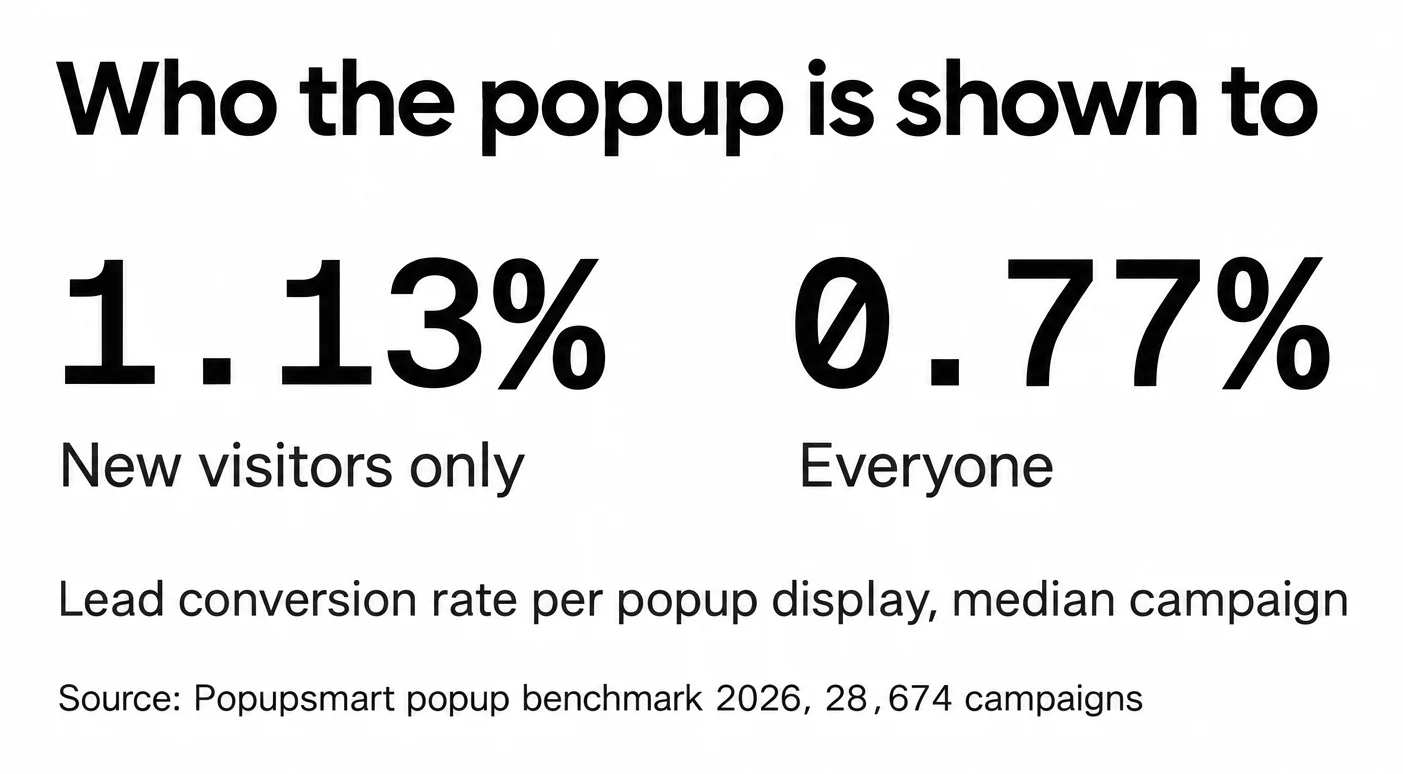
Our 2026 benchmark shows how much those signals matter. Across the popups we power, popups targeted at new visitors only convert 1.13% vs 0.77% for popups shown to everyone. Visitors arriving from an email or SMS campaign convert on popups at 1.81% vs 0.74% for visitors from organic search. And popups set up with three targeting rules convert 1.09% vs 0.71% for popups with none or one (median campaign): a correlation, since marketers who target carefully may also write better offers.
What kinds of AI do popup tools offer?
When you read vendor pages, "AI" covers four different jobs. It helps to sort them before comparing tools:
- Drafting: the tool writes the headline and body, picks or generates an image, and adds a call to action from a prompt. Popupsmart's AI Popup Builder and OptiMonk's chat builder do this.
- Targeting and timing: a model chooses who sees the popup or when it fires. Popupsmart's Smart Mode, Justuno's AI Smart Timing, Alia's Smart Triggering and Wisepops' behavioral AI targeting are examples.
- Testing and optimization: the AI sets up A/B tests, promotes the winning version or summarizes results. Claspo, Alia and Wisepops list this.
- Agents: an AI agent builds the campaign for you, inside the app or through an MCP server your own agent can use. This is the newest category, and the tools differ most here.
How Do AI Popup Tools Improve Conversions Across the Funnel?
I've learned that AI popup tools can impact every stage of the funnel, from awareness to conversion. But only if you point the AI at the decisions that move results.
Why does conversion optimization with AI reduce bounce and abandonment?
Think about the moment when someone is about to leave your site. A traditional popup might randomly throw in a discount, but an AI-driven one looks at the visitor's intent. Are they scrolling quickly? Have they added items to the cart but hesitated at checkout? AI reads these signals and shows a relevant offer, which is how cart-aware popups help you get fewer abandoned carts.
Where the popup appears matters more than the exact second it fires. Popups on cart and checkout pages convert 4.57% vs 1.07% on the home page (median campaign); blog pages convert 0.23%. On timing, our benchmark is more cautious than most vendor pages:
- Popups that wait before appearing convert 0.83% vs 0.61% for popups shown the instant the page loads (median campaign); the direction holds in every year of data but the difference is not statistically reliable, so treat it as a lean, not a rule.
- Exit intent shows no statistically reliable advantage: popups on the most sensitive exit-intent setting converted 1.10% vs 0.78% without exit intent (median campaign), a gap that could be chance. We looked at this in detail in whether exit-intent popups work.
How do AI marketing tools connect to email, CRM, and analytics stacks?
I also like how AI popup tools connect to the rest of your marketing stack. A popup is often the first point of contact: someone drops their email, phone number, or even a product preference. With AI, that data doesn't sit idle.
With integrations into email providers, CRMs, and analytics platforms, AI can enrich your data and personalize follow-up campaigns. For example, if a visitor signs up through a popup that promises "eco-friendly tips," your CRM can tag them as sustainability-focused. Later, your email marketing can send them tailored offers. Popupsmart lists 19 integration destinations in its help center, and it collects phone numbers and SMS consent for tools like Klaviyo, Mailchimp and HubSpot; the SMS itself is sent by your SMS tool.
In my view, that's the most useful part. Besides getting the conversion, the popup feeds better data to the rest of your marketing.
How Popupsmart's AI builds and publishes a popup
Popupsmart gives you three ways to use its AI. The AI agent and the MCP server and CLI are on every plan, the free one included, and the AI Popup Builder is part of the product, not a separate add-on. The full walkthrough of the first one, with example prompts, is on the AI Popup Builder page.
With the AI Popup Builder
Step 1: Start the AI Popup Builder
Go to the AI Popup Builder page → click "Create your AI popup", or start a campaign from the AI Popup Builder inside Popupsmart. No coding is required, just log in or sign up.
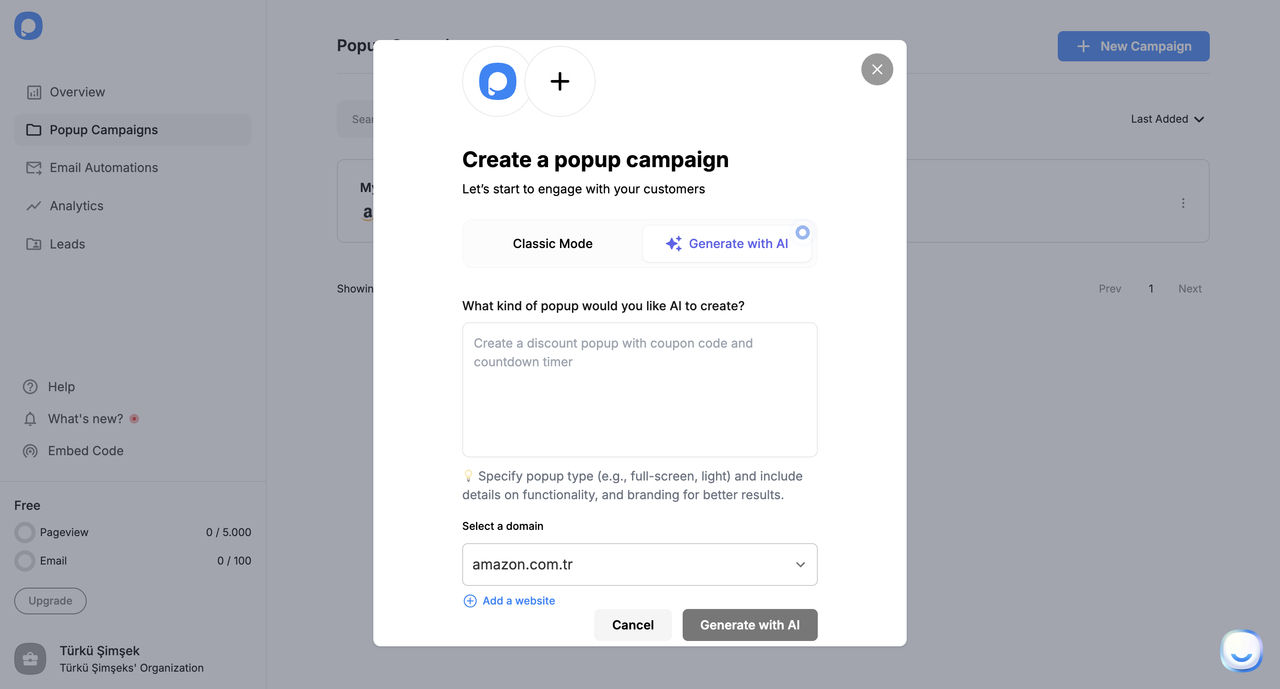
Step 2: Generate Your Popup with AI
Type a single prompt (e.g., "Collect emails with 10% discount, show on exit intent"). Popupsmart's AI builds a ready-to-use popup with layout, copy, and visuals, the first draft in under 30 seconds by our own estimate.
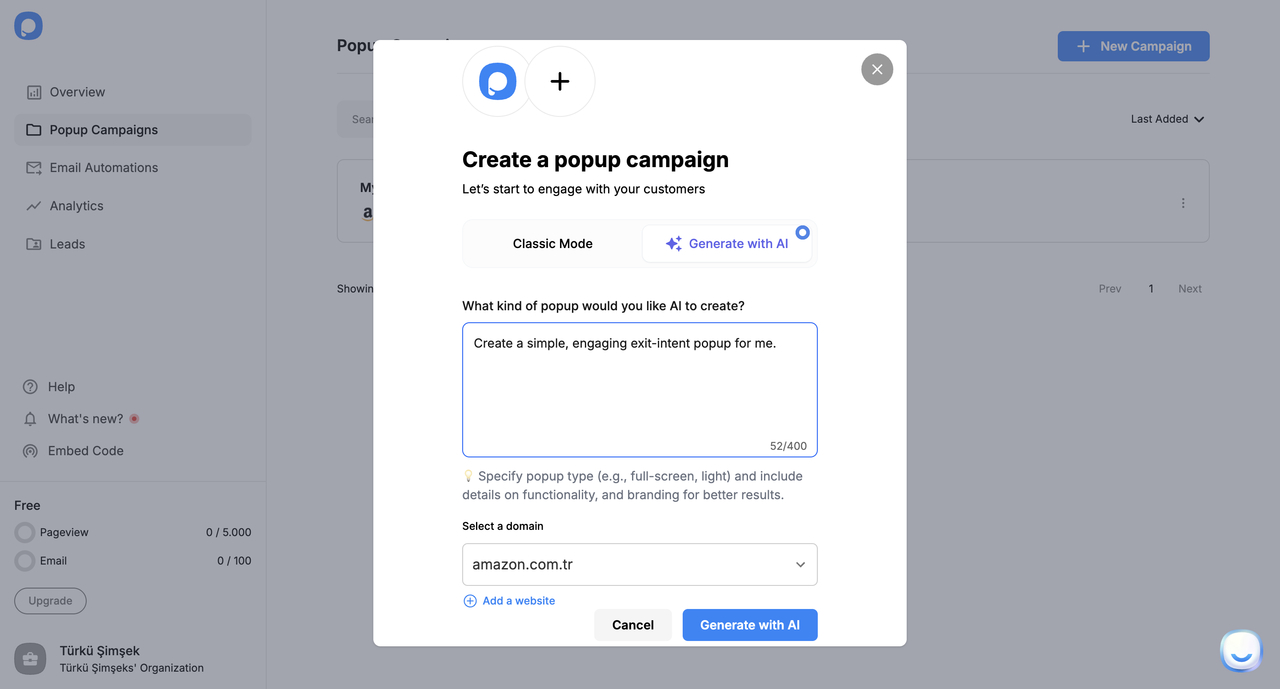
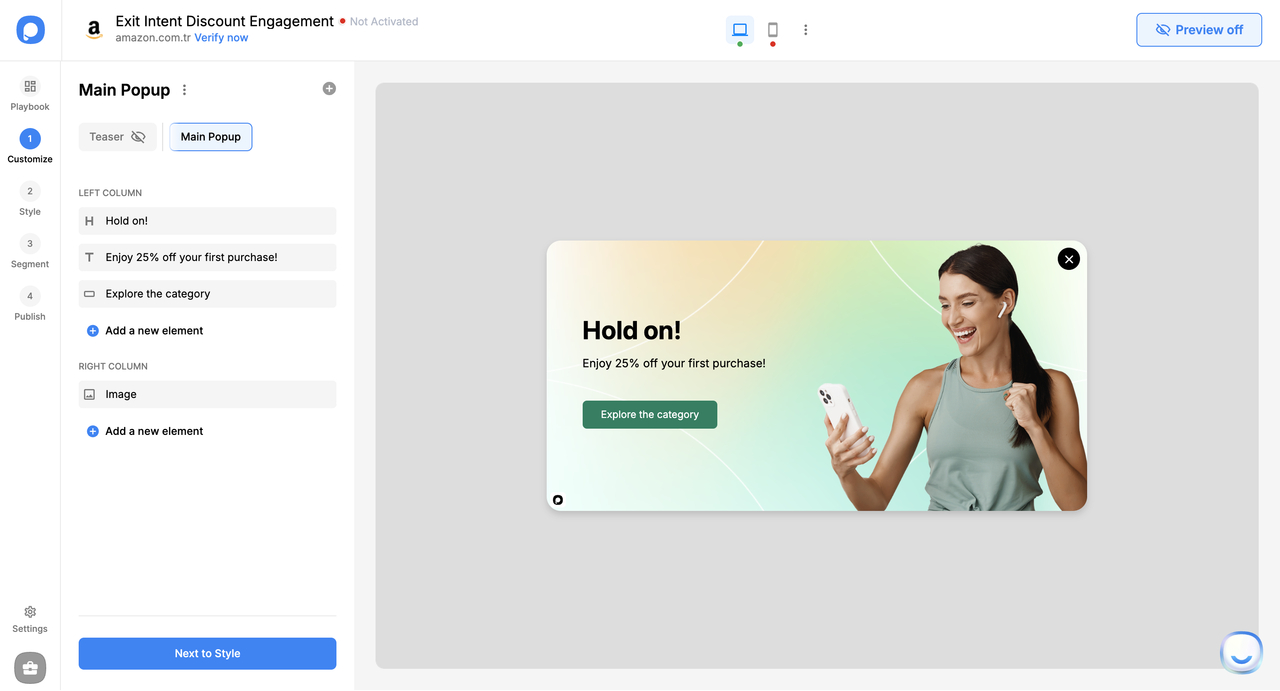
Step 3: Customize Content & Design
Refine the headline, text, and images using AI suggestions: click Generate AI Suggestions for new headlines and body lines. Adjust layout, colors, and add form fields if needed. You can even use AI to generate visuals: type a new visual prompt in Generate Image with AI if the picture is wrong.
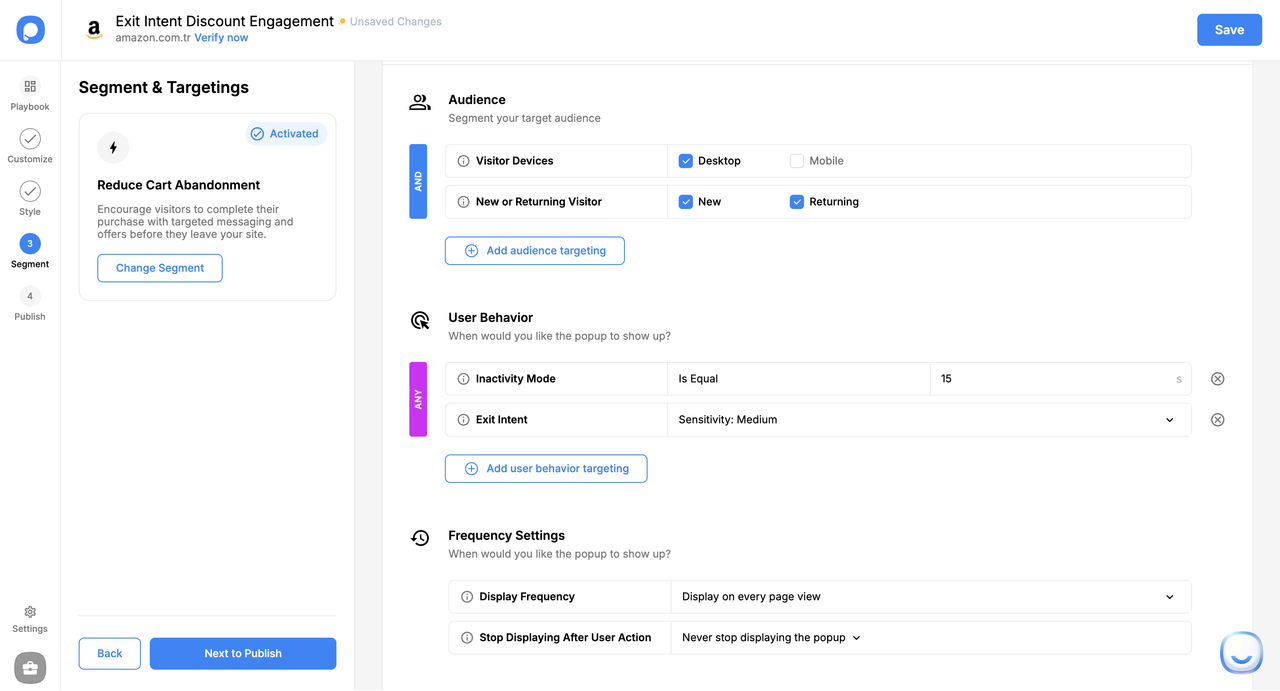
Step 4: Set Targeting & Display Rules
Choose Smart Mode Targeting (on paid plans, AI optimizes who sees your popup after it has learned from at least a month of manual targeting) or set manual rules like traffic source, device, page URL, or exit intent. That way the popup reaches the right visitor at the right time. Every targeting rule is on every plan.
Step 5: Publish & Track Results
Click Publish, and your popup goes live. Use the dashboard to monitor conversions, run A/B tests (from the Advanced plan), and adjust the campaign based on the results.
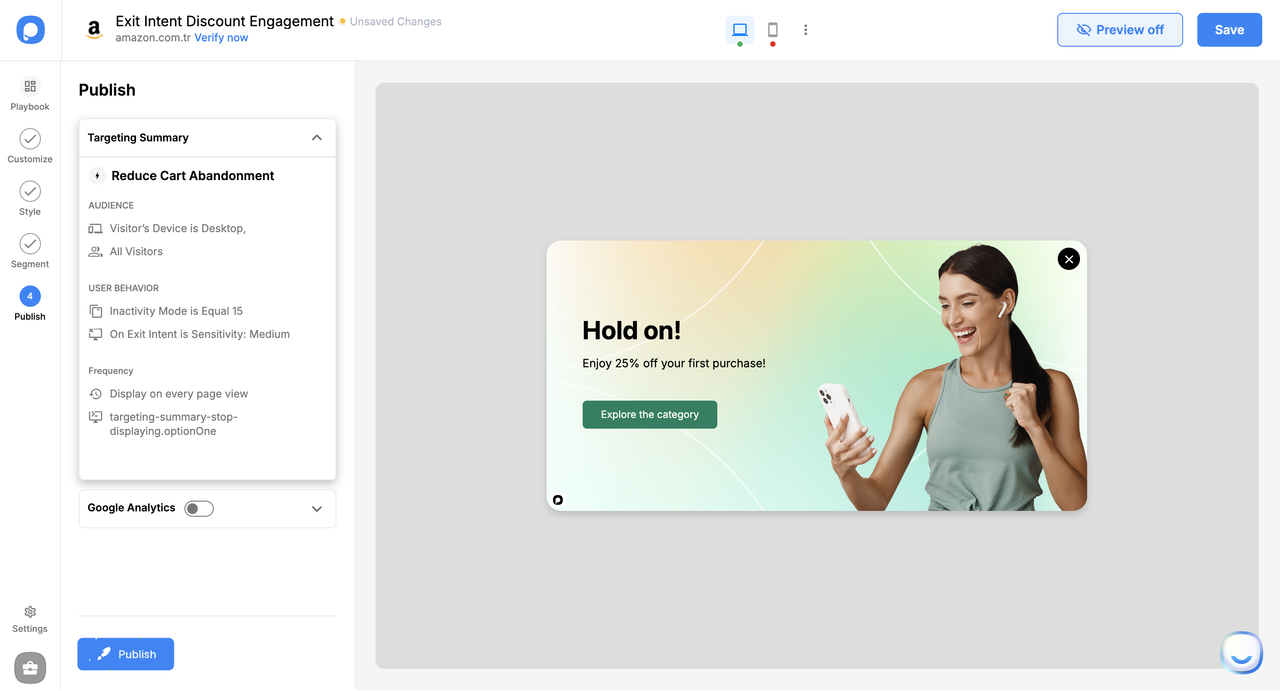
With the Popupsmart AI agent
Inside the app, you can ask for the campaign instead of building it. The Popupsmart AI agent takes a chat request and builds the whole campaign (template, targeting and triggers, integrations), then publishes it. It works on your instructions; Popupsmart doesn't run campaigns for you.
With your own AI agent over MCP or the CLI
If you already work with an AI agent (any MCP client, or any agent that can run a terminal command), the Popupsmart MCP server and CLI give it everything the app does: it can generate a popup from a template, set targeting and triggers, connect integrations and publish. By our own estimate, an agent publishes a campaign this way in under a minute, a new account included. A person building in the app takes under 5 minutes for most campaigns.
Which AI popup tools should you consider in 2026?
When I started exploring AI popup tools, the market already felt crowded. Most vendors claim the "best" AI features. So instead of ranking tools on their claims, I read what each vendor's own pages list, and dated it. "Not listed" means the vendor's pages don't list the feature, not that it can't exist.
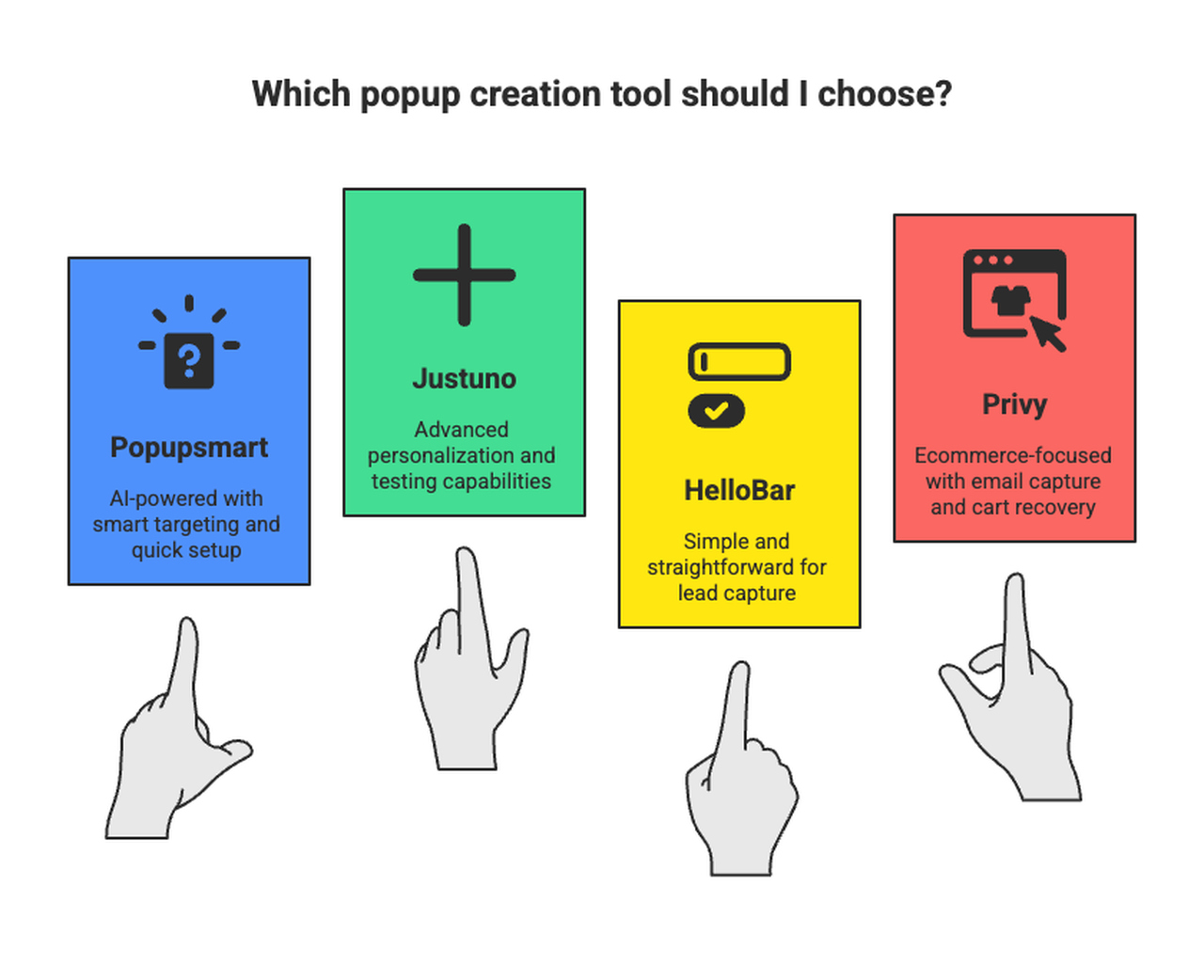
| Tool | Drafts a popup from a prompt | AI targeting or timing | AI testing or insights | AI agent in the app | MCP server or CLI for your agent | Free plan | Paid plans from |
|---|---|---|---|---|---|---|---|
| Popupsmart | Yes, AI Popup Builder | Smart Mode (paid plans) | Not listed | Yes, every plan | Both, every plan | Yes, 5,000 pageviews a month | $39/mo |
| OptiMonk | Yes, by chatting | Set by chatting | An agent recommends campaigns from your results | Yes | MCP server; no CLI listed | Yes, 10,000 pageviews a month | $19/mo |
| Claspo | AI assistant writes and translates copy | AI CRO agents (beta) | The agent sets up A/B tests and promotes the winner | Yes | Not listed | Yes, 3,000 pageviews a month | $39/mo |
| Alia | Not listed | Prism AI, Smart Triggering | Smart Testing, AI-generated reports | Lia edits a popup | Not listed | No, 14-day trial | $100/mo (Shopify only) |
| Justuno | Not listed | AI Smart Timing, AI product recommendations | Not listed | Not listed | Not listed | No, 14-day trial | $59/mo |
| Wisepops | Not listed | Behavioral AI targeting, AI product recommendations | AI Summary on every test, AI Insight | Not listed | Not listed | No, 14-day trial on Shopify | $299/mo on Shopify |
| Privy | Not listed | Not listed | Not listed | Not listed | Read-only MCP server, paid plans | No, 15-day trial | $24/mo popups only |
| Hello Bar | Not listed | Not listed | Not listed | Not listed | Not listed | Yes, 5,000 views in total | $29/mo billed annually |
AI features read from each vendor's own pages between 22 September and 1 October 2026; each entry below gives the date. Prices read from their pricing pages between 22 and 26 September 2026.
1. Popupsmart: best for teams without a developer who want an AI agent on every plan
Popupsmart is the popup builder for teams without developer time, and its AI covers drafting, targeting and agents.
- AI Popup Builder: a complete popup (headline, body, image and call to action) from one prompt, with AI suggestions to rewrite copy and Generate Image with AI to redo the picture.
- Smart Mode Targeting: on paid plans, it automatically selects the right audience after learning from at least a month of manual targeting.
- The Popupsmart AI agent: builds and publishes a whole campaign from a chat, on every plan.
- MCP server and CLI: your own AI agent can do everything the app does, integrations included, on every plan.
- Also: a flexible targeting dashboard for detailed customization, and quick setup from idea to live popup.
- Pricing: a free plan with 5,000 pageviews a month; paid plans from $39 a month.
- Rating: 4.5/5 on G2 (141 reviews) as of 6 September 2026.
- Not ideal for: A/B testing on the entry plan (it starts on Advanced), or AI product recommendations: Popupsmart shows products from a feed.
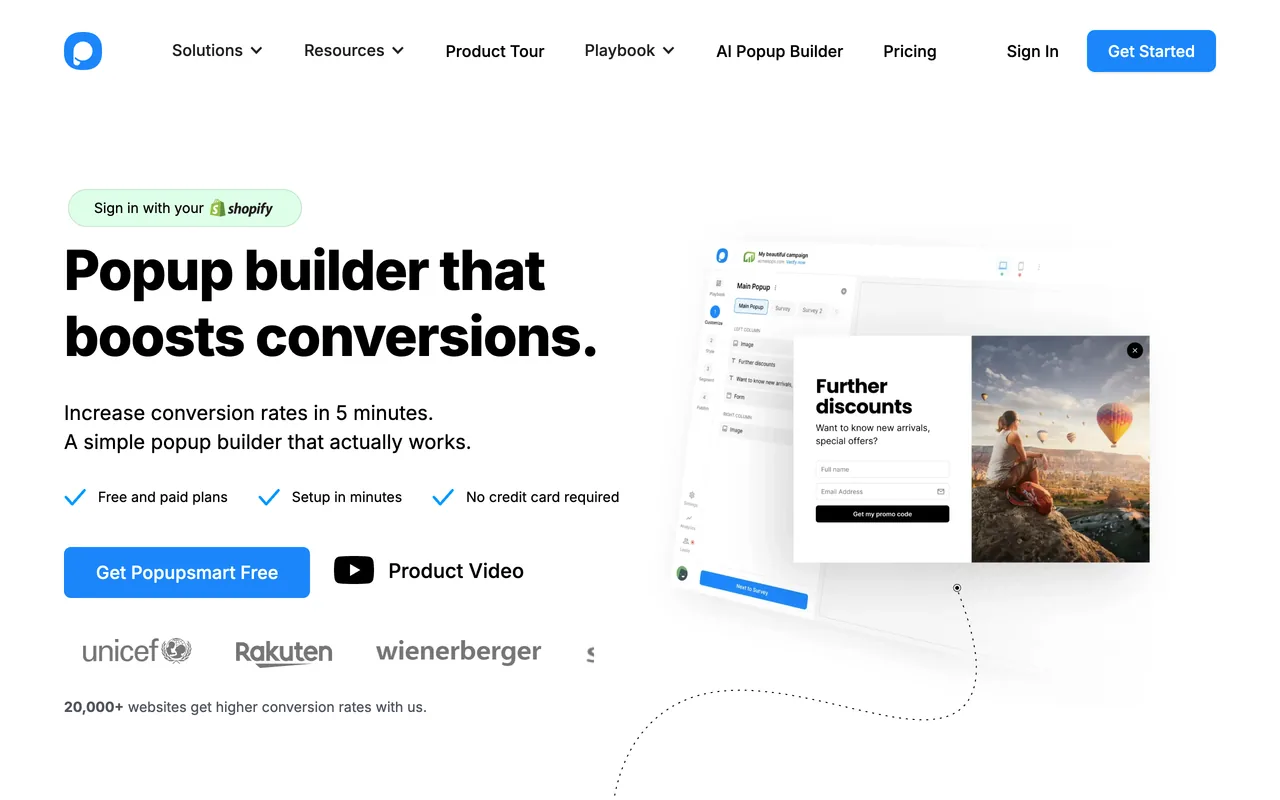
2. OptiMonk: best for a chat builder with a big free plan
OptiMonk's home page (read 1 October 2026) leads with an agentic popup builder: you create popups by chatting with AI, and its agent handles designing, building, targeting and publishing. A second agent analyzes your performance data and recommends new campaigns.
- MCP server: its documentation, updated 17 September 2026, lists 29 tools that create a campaign, design the popup, set triggers, targeting and frequency, and publish. None of them connects an integration, no CLI is listed, and the docs don't say which plans include it.
- Pricing: a free plan with 10,000 pageviews a month; paid plans from $19 a month (read 22 September 2026).
- Rating: 4.8/5 on G2 (159 reviews) as of 22 September 2026.
- Not ideal for: an agent that also connects your email tool through MCP.
- Compared in depth: Popupsmart vs OptiMonk · OptiMonk alternatives
3. Claspo: best for AI that runs tests, with specialists in the beta
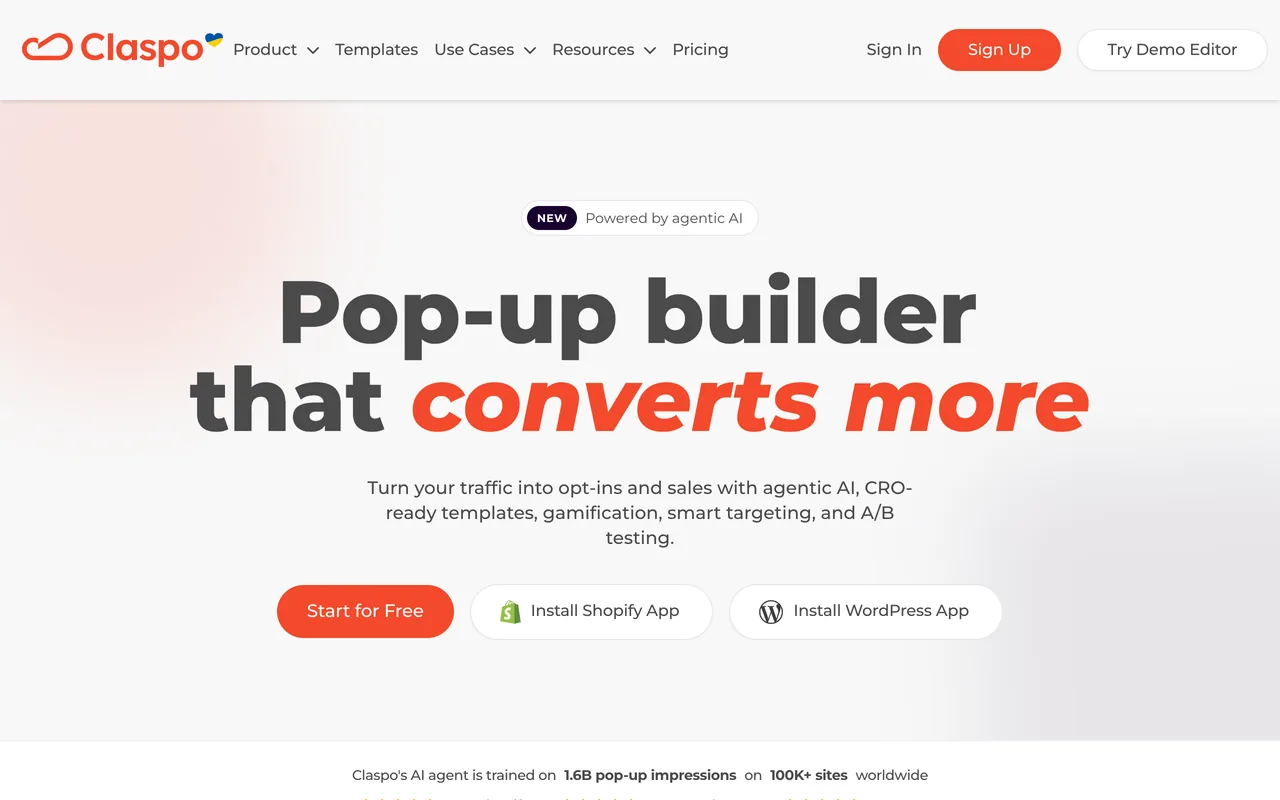
Claspo's home page (read 1 October 2026) describes an AI agent that analyzes your traffic, finds conversion gaps, builds and launches campaigns, sets up A/B tests and promotes the top-performing version. Its AI CRO Agency is labelled beta and built for online stores with steady traffic: three AI agents research the store, prepare campaigns and analyze tests, Claspo specialists work alongside them during the beta, and you approve every launch. Its AI assistant also rewrites copy, translates widgets and drafts test variants.
- MCP server or CLI: not listed.
- Pricing: a free plan with 3,000 pageviews a month; paid plans from $39 a month (read 23 September 2026). Beta terms for the CRO service are agreed on a call.
- Rating: 4.9/5 on G2 (81 reviews) as of 22 September 2026.
- Not ideal for: a team that wants its own AI agent to build campaigns from outside the app.
- Compared in depth: Popupsmart vs Claspo · Claspo alternatives
4. Alia: best for Shopify stores that want AI to test and trigger each popup
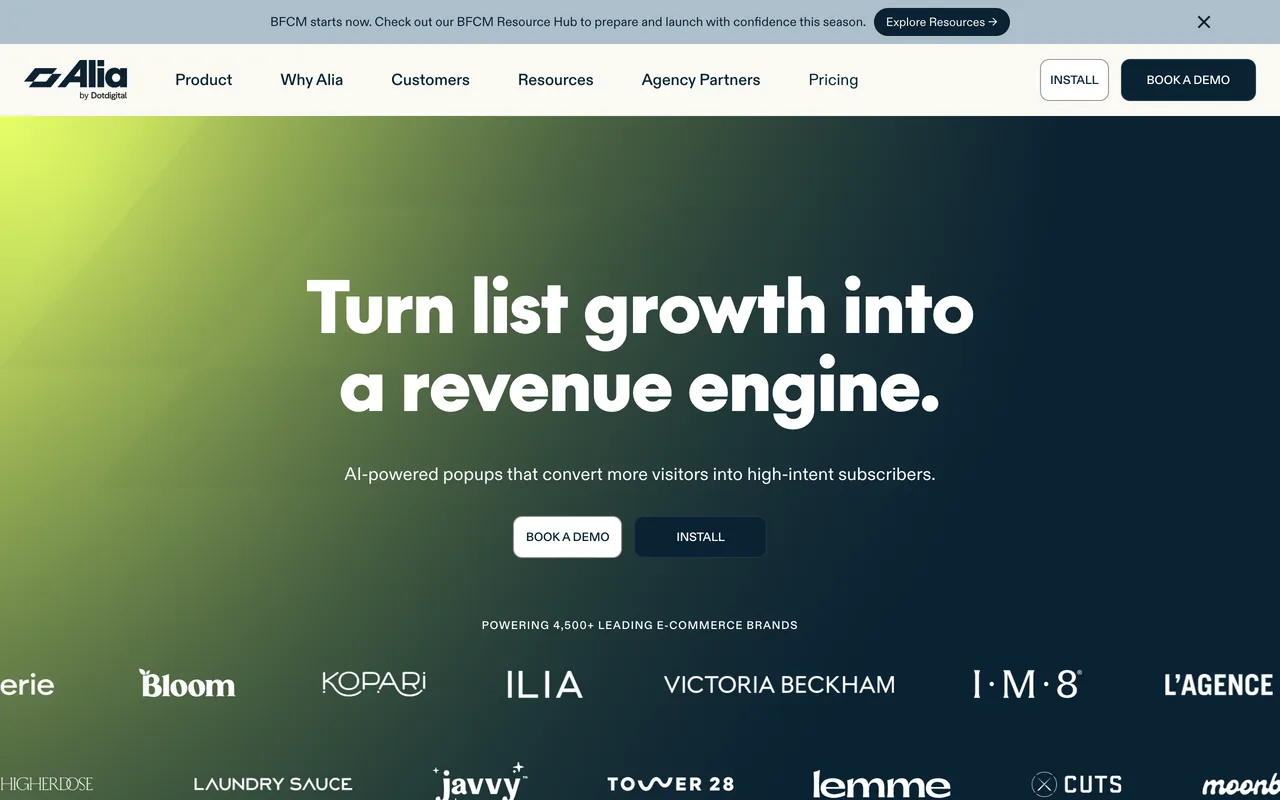
Alia works on Shopify only. Its home page (read 1 October 2026) lists Prism AI, which turns one popup into personalized experiences, Smart Testing, which tests and optimizes popups automatically, Smart Triggering, which re-triggers popups at the moment it picks, and AI-generated reports. On 27 September 2026 its site also listed Lia, an agent in the editor that edits a popup.
- MCP server or CLI: not listed; its API is read-only.
- Pricing: no free plan, a 14-day trial; from $100 a month (read 23 September 2026).
- Not ideal for: a site that isn't on Shopify, or a team that wants to start free.
- Compared in depth: Popupsmart vs Alia · Alia alternatives
5. Justuno: best for AI timing and product recommendations
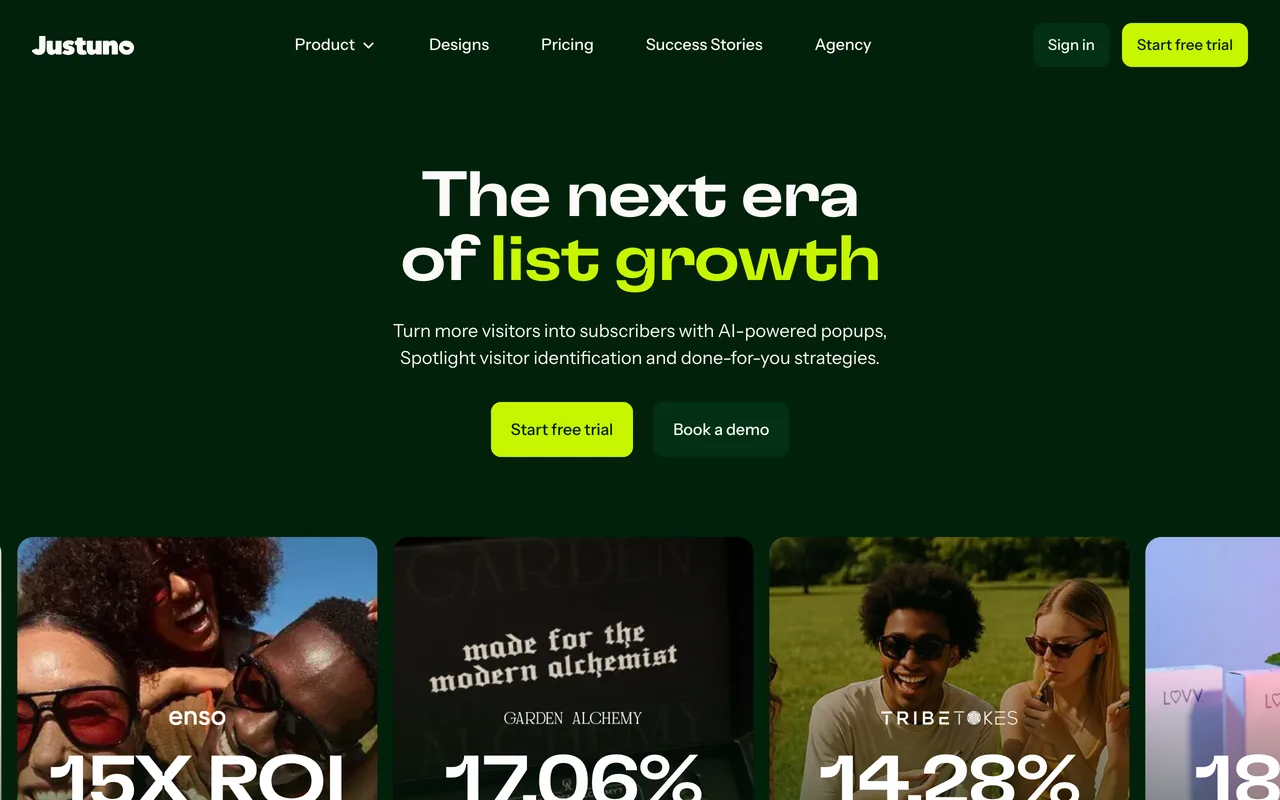
Justuno is a list-growth platform with advanced segmentation features, aimed at ecommerce brands. Its pricing page (read 22 September 2026) lists AI Smart Timing and AI product recommendations, custom and default, alongside multivariate testing and visitor profiles. Its home page (read 1 October 2026) describes AI popups that use real-time behavior to decide what shows, when, and to whom.
- AI agent, MCP server or CLI: not listed.
- Also: a wide range of design and display options; suitable for businesses with complex marketing needs.
- Pricing: no free plan, a 14-day trial; from $59 a month for up to 10,000 visitors.
- Rating: 4.3/5 on G2 (67 reviews) as of 22 September 2026.
- Not ideal for: a small team that wants a prompt builder or a free start.
- Compared in depth: Justuno alternatives
6. Wisepops: best for AI insights with a strategist doing the build
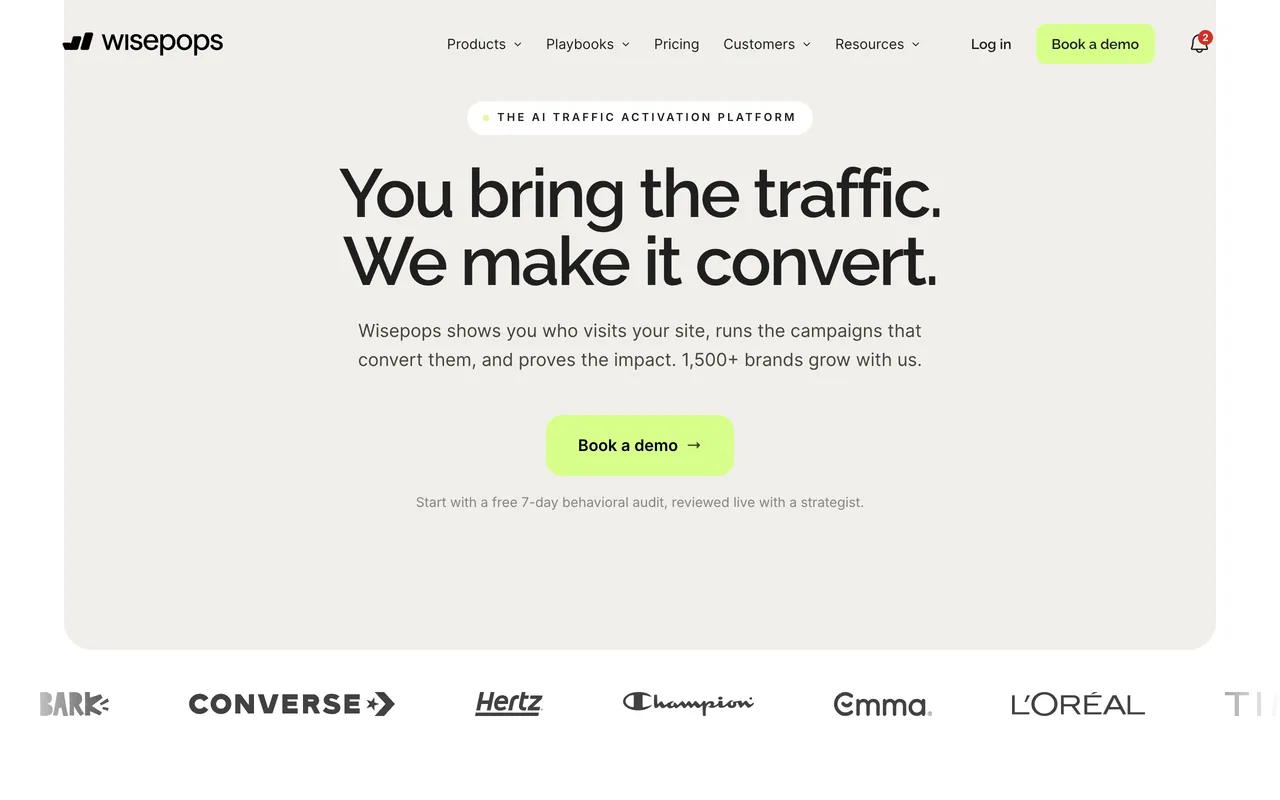
Wisepops' home page (read 1 October 2026) lists AI product recommendations, behavioral AI targeting that reads each visitor's intent, behavior, source and journey, AI Insight that flags revenue opportunities, and an AI Summary on every test. A strategist on its team builds the first campaigns.
- AI agent, MCP server or CLI: not listed on its pages.
- Pricing: no free plan; a 14-day trial and $299 a month on the Shopify App Store; elsewhere it quotes after a demo (read 26 September 2026).
- Rating: 4.5/5 on G2 (90 reviews) as of 26 September 2026.
- Not ideal for: a team that wants to build campaigns itself today on a small budget.
- Compared in depth: Popupsmart vs Wisepops · Wisepops alternatives
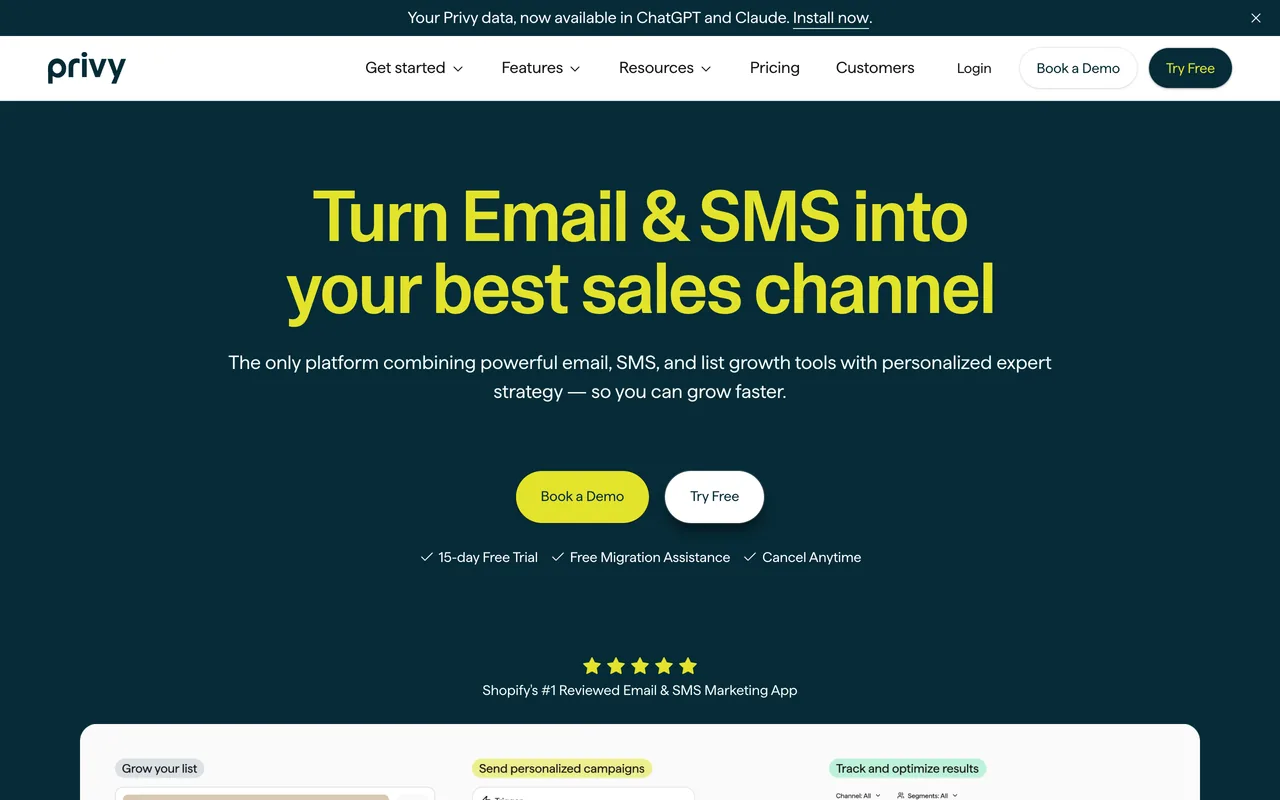
7. Privy: best for Shopify stores sending email and SMS from one app
Privy is designed primarily for ecommerce and Shopify stores, with strong features for email capture and cart abandonment recovery. It's an email and SMS platform with popups built in. Its pages (read 26 September 2026) list no AI builder or AI targeting. It has an official MCP server on paid plans, but its documentation (read 27 September 2026) says every tool on it is read-only: an agent can read your Privy data, not build or publish a campaign.
- Also: templates optimized for online retail, and a user-friendly interface tailored for store owners.
- Pricing: no free plan, a 15-day trial; popups only from $24 a month, email from $30 a month with popups included.
- Rating: 4.6/5 on G2 (122 reviews) as of 26 September 2026.
- Not ideal for: anyone choosing a tool for its AI.
- Compared in depth: Popupsmart vs Privy · Privy alternatives
8. Hello Bar: best for bars and simple popups, not for AI
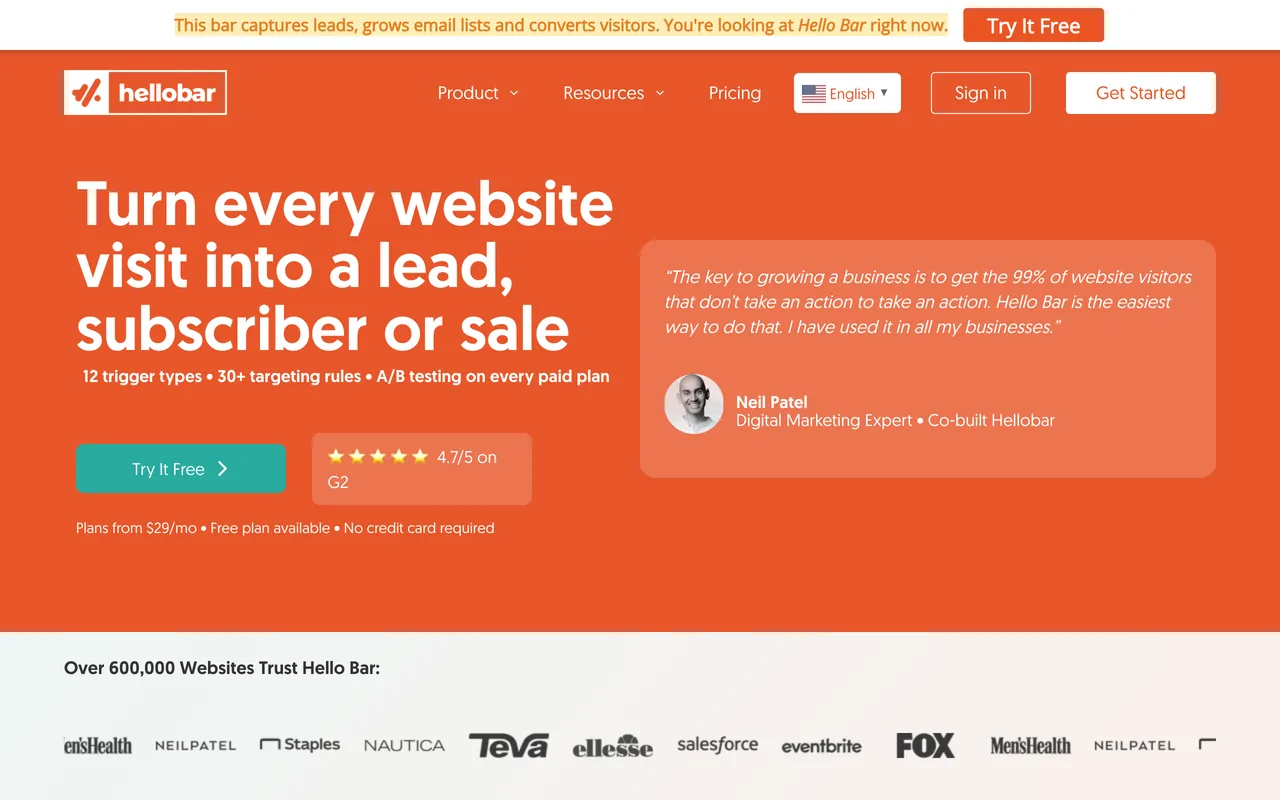
Hello Bar is a simple tool for creating notification bars and popups, focused on lead capture and basic audience engagement, with A/B testing on every paid plan. The only AI its pages list (read 1 October 2026) is the AI Summary widget: a row of buttons that sends your page to ChatGPT, Claude, Grok, Perplexity, Gemini or Google AI for a summary. Nothing in its popup building, targeting or testing is labelled AI.
- Also: an easy setup process with lightweight customization; well-known for its straightforward functionality.
- Pricing: a free plan with 5,000 views in total; paid plans from $29 a month billed annually (read 22 September 2026).
- Rating: 4.7/5 on G2 (25 reviews) as of 22 September 2026.
- Not ideal for: anyone who wants AI to draft or target popups.
- Compared in depth: Hello Bar alternatives
Why Should You Choose Popupsmart?
After looking at these options, my top recommendation is Popupsmart for most small teams, with two honest exceptions: OptiMonk if you want a bigger free plan and a chat builder, and Justuno or Wisepops if AI product recommendations are what you need. Here's why Popupsmart:
- An agent on every plan: the Popupsmart AI agent and the MCP server and CLI are on every plan, the free one included, and the AI Popup Builder is part of the product, not an add-on.
- Balance of automation and control: You can let the AI handle everything, or step in and fine-tune every detail. Not every tool gives you both.
- Your own agent gets the whole app: over MCP or the CLI it can connect integrations as well as publish, which OptiMonk's MCP tools don't list.
- Speed to launch: Going from idea to live popup takes minutes (under 5 for most campaigns), which suits teams that move fast.
For the full field of popup tools, AI or not, see our best popup software comparison, or browse the head-to-head comparisons.
How to Choose the Right AI Popup Tool for Your Business?
When I talk to marketers or founders about AI popup tools, the first question I usually get is: "Okay, but how do I know which one is right for me?" I get it. There are dozens of tools out there, and they all promise higher conversions, so I'd narrow it down with a few practical factors.
What features, integrations, and pricing models should I prioritize?
For me, the number one factor is ease of use. If a tool makes me spend hours on one popup, it's a deal-breaker. That's why I lean toward Popupsmart: it lets me launch campaigns in minutes without touching code. Then check which kind of AI you need: a drafting builder saves design time, AI targeting helps once you have traffic to learn from, and an agent saves the most time if you already work with one.
Second, I'd say check the integrations. If your popups can't talk to your email service provider, CRM, or analytics tools, then you're missing half the value. Check whether leads flow straight into your email automation, and whether phone numbers and SMS consent reach your SMS tool.
Finally, look at pricing models. Some tools lock their best features behind expensive enterprise plans, and they count traffic differently: pageviews, visitors or popup views. In my opinion, it's better to start with a tool that gives you AI capabilities upfront, without forcing you into a premium tier right away. You can compare Popupsmart's plans against the prices in the table above.
Should startups and enterprises evaluate differently?
Yes. For a small startup, the priority is usually speed and simplicity. They want to capture leads and validate ideas quickly, so a lightweight AI popup tool with a free plan fits.
A larger company worries about different things: scalability, compliance, and advanced segmentation. They want AI features, but they also need role-based access, integrations with enterprise CRMs, and detailed reporting.
So here's my take:
- If you're a startup or SMB, look for an AI popup tool that's plug-and-play, affordable, and easy to launch.
- If you're an enterprise, make sure the tool offers deeper integrations, data privacy options, and customizable workflows.
I think the "right" tool is the one whose AI makes your marketing easier, not the one with the longest list of AI claims.
What Best Practices Make AI-Powered Popups Helpful (Not Annoying)?
Popups get annoying fast when they're done wrong. I've seen plenty of websites throw a popup at visitors every five seconds, and it makes me leave. AI popups give us a chance to do it right. Here's what works best.
How do I use frequency capping, delays, and mobile-safe layouts?
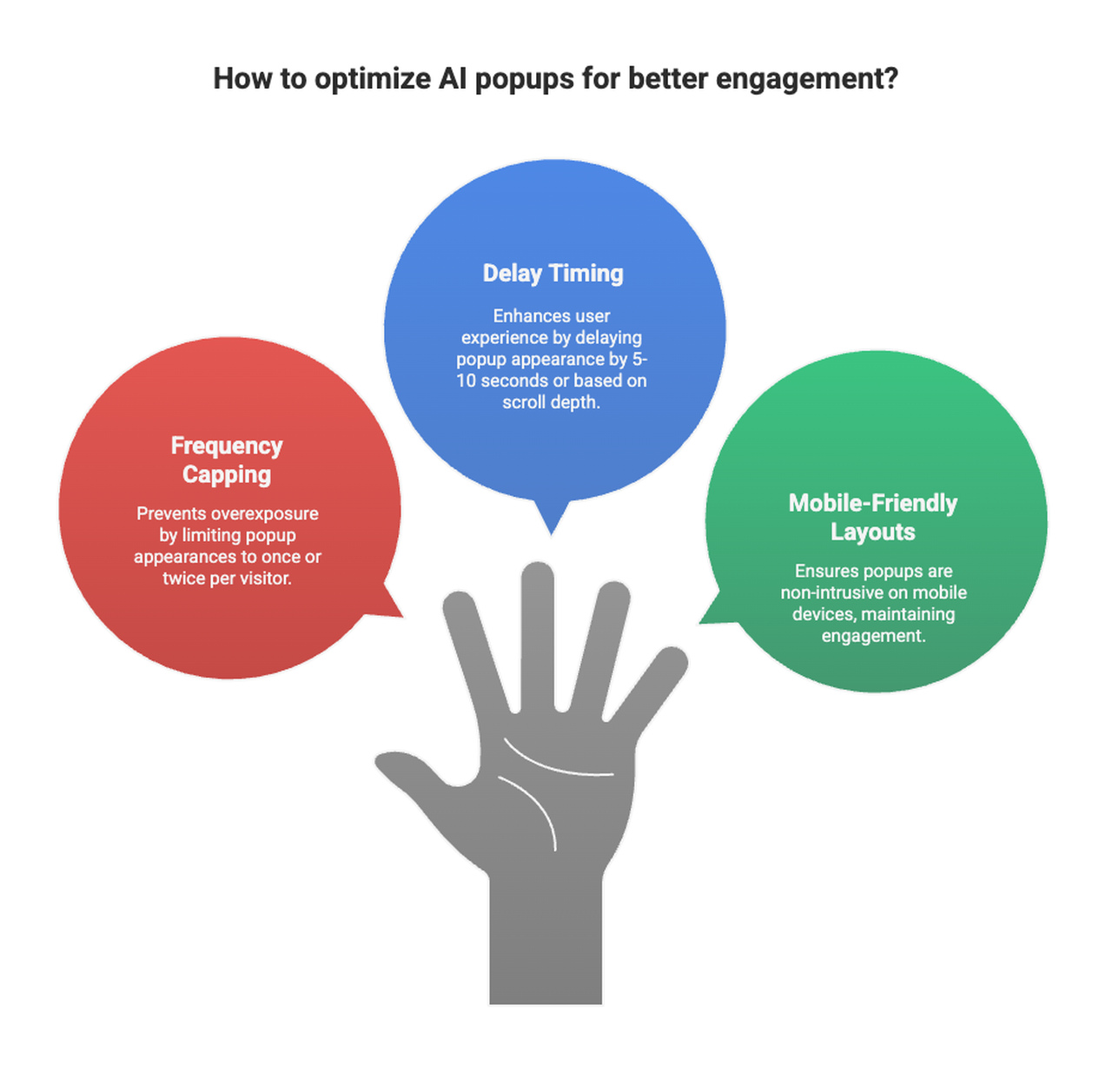
One of my first lessons was about timing. Just because AI can trigger popups doesn't mean it should hit every visitor immediately. I usually set:
- Frequency capping, so the same visitor doesn't see the popup more than once or twice.
- Delays: I like popups to appear after 5-10 seconds, or based on scroll depth, not immediately. How long matters less than you'd think: the exact delay length (0-5 seconds vs 21-60 seconds) makes no measurable difference to conversion.
- Mobile-friendly layouts, because nothing kills engagement faster than a popup that covers the whole screen on mobile. Mobile is worth the care: on mobile the median popup converts 1.02% vs 0.57% on desktop.
How do I craft value-focused offers and microcopy with AI assistance?
Another thing I've learned is that value matters more than cleverness. AI can generate multiple headlines and copy variations for you, but I always choose the ones that clearly explain the benefit. For example: "Get 10% off your first order" is better than a vague "Don't miss out!".
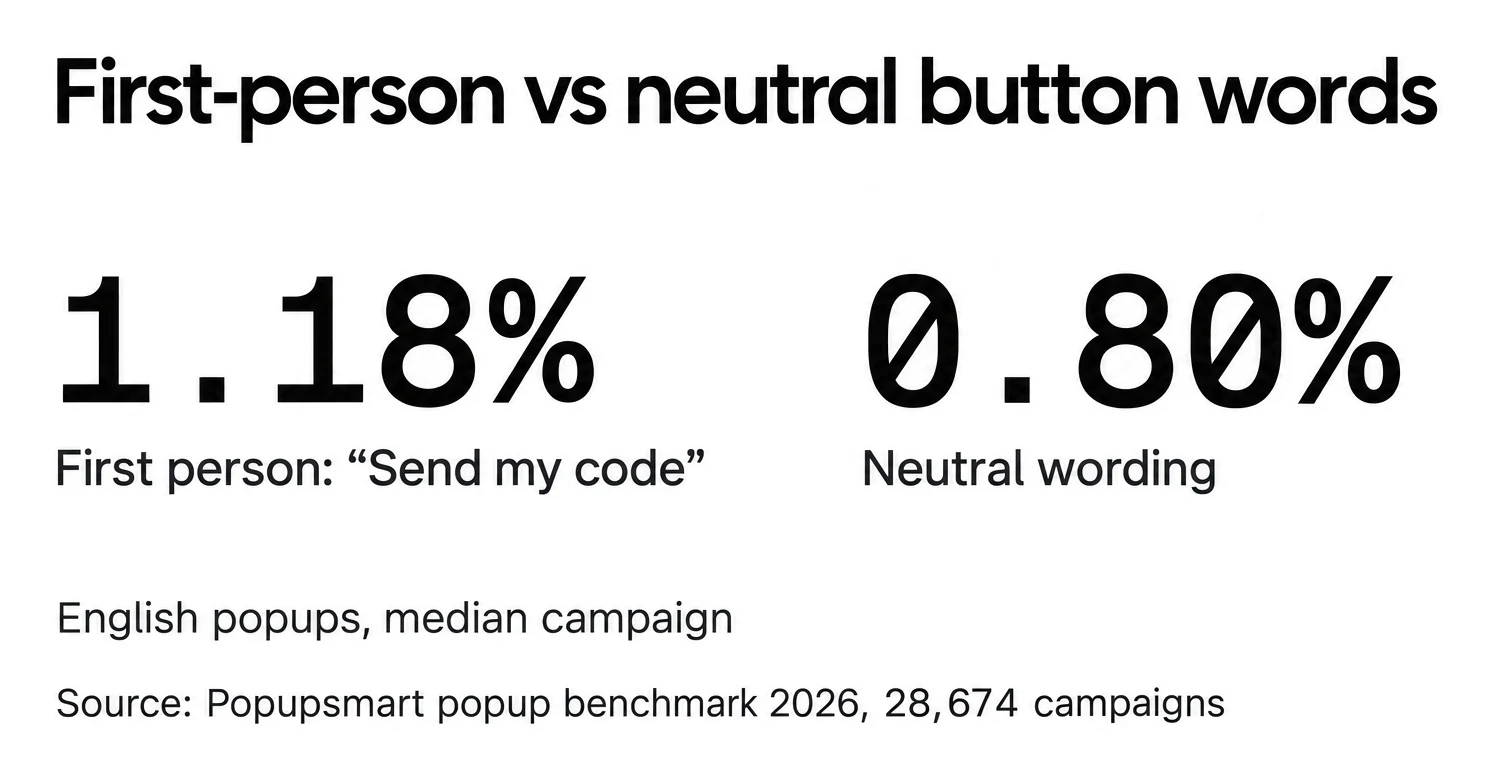
Tell the AI what to write on the button, too. First-person buttons ("Send my code") convert 1.18% vs 0.80% for neutral wording (English popups, median campaign). CTA buttons that promise value ("Get", "Claim", "Unlock") look stronger than "Subscribe" / "Join" buttons (1.06% vs 0.77%, English popups, median campaign), but the gap is not statistically reliable. More wording ideas are in our call-to-action examples.
I also use AI to create microcopy: tiny hints, tooltips, or urgency lines like "Only 3 left in stock", as long as they're true. These small touches can make a popup feel personalized instead of intrusive. Don't expect the urgency itself to do the work: button colour, dark vs light popup backgrounds, urgency words and question headlines show no measurable effect on conversion; the data are too noisy to rule out modest effects.
For me, the key takeaway is: AI should help the visitor, not just your metrics. A clear offer, a first-person button and a sensible audience do more than any clever line.
What Common Mistakes Should I Avoid with AI Popups?
I've tried my fair share of AI popups, and even experienced marketers make the same few mistakes with them.
Why do some AI experiences still underperform—and how do I fix them?
First, AI doesn't automatically guarantee results. A campaign that relies entirely on AI suggestions, without reviewing the copy or targeting, can go live with an offer that doesn't fit. AI is smart, but it still needs guidance. Always review generated headlines, offers, and images to make sure they align with your brand and audience.
Give AI targeting time, too. Smart Mode learns from at least a month of manual targeting before it picks the audience, so a slow first week isn't a verdict on the tool.
How do I diagnose targeting, timing, and creative mismatches?
Another common mistake is ignoring the analytics. Even AI popups need data feedback. If conversions are low, I check:
- Timing (is the popup showing too early or too late?)
- Audience segment (is it reaching the right people?)
- Creative (does the copy or offer resonate?)
I rely on iterative improvement. I tweak one variable at a time, run A/B tests for your popups, and let AI learn from those changes, judging each test on leads per display. For a baseline, the median popup that asks for an email or phone number converts 0.83% of its displays into leads; the top 25% reach 1.96% and the top 10% reach 3.87% (3,034 Popupsmart popups, January 2024 - September 2026).
Bottom line: don't set it and forget it. Treat AI popups as a partner, not a shortcut.
What's Next for AI Popup Tools?
AI popups have already gone from writing copy to building whole campaigns. I think the next few years will bring even more intelligent, predictive, and autonomous features.
Will on-site AI become autonomous and predictive by default?
Partly, and it has started. In 2026, OptiMonk, Claspo and Popupsmart already list AI agents that build campaigns, and Claspo's beta agents also run tests. I believe AI will soon decide what offer, message, or creative variant to show as well as when to show a popup. Picture a system that learns from every visitor interaction, predicts intent and changes the content in real time. That's where I see this heading. Even then, the agents in these tools act on your instructions: you set the goal and approve what goes live.
Key Takeaway: Gartner anticipates that by 2028, at least 15% of daily work decisions will be handled autonomously by agentic AI, rising from nearly zero in 2024.
For popups, and for on-site marketing more broadly, that would mean campaigns that adapt and act in real time without manual input.
How will privacy changes reshape AI website engagement?
Another big shift is privacy. With stricter regulations and the deprecation of third-party cookies, AI popup tools will need to rely more on first-party data and contextual signals: the page, the referral source, and what visitors tell you themselves in a form. The benchmark's language finding is a small example of a contextual signal: when a visitor's browser language matches the popup's language, the same popup converts better in most campaigns.
Smarter AI that respects user privacy is a combination I'm glad to see.
Overall, I think AI popup tools will become smarter, less intrusive, and more ethical. The good ones will be judged on what they give visitors, not on how many clicks they chase.
Conclusion: Here's My Take on AI Popup Tools
After a lot of time with AI popup tools, I don't see them as a marketing gimmick. They're a practical way to improve engagement, conversions, and personalization. But "AI" on a pricing page can mean four different things. Decide which one you need (drafting, targeting, testing or an agent), then check which tools list it and on which plan.
Balance matters most. AI can do a lot of the heavy lifting (generating copy, designing layouts, predicting the best moment to show a popup), but it still needs human guidance. Review the messaging, set your targeting thoughtfully, and make sure the offers provide real value to your visitors.
I've found Popupsmart to be the most practical solution for most small teams. Its combination of ease-of-use, Smart Mode targeting, AI copy generation, and visual suggestions makes it my pick, and its AI agent and its MCP server and CLI are on every plan. Competitors like OptiMonk, Claspo, Alia, Justuno and Wisepops have their strengths, set out above, and the right pick depends on the kind of AI you need.
AI popup tools are where on-site engagement is heading. Used thoughtfully, they get you more leads and a better, smarter experience for your visitors, which is what good marketing should do anyway. To try it on your own site, start with Popupsmart's AI Popup Builder.
Frequently Asked Questions (FAQs)
What is the difference between AI popups and regular rule-based popups?
In my experience, regular popups follow fixed rules, like showing after 5 seconds or on exit intent. AI popups, on the other hand, use a model for part of the job: drafting the copy and image from a prompt, choosing the audience or the moment, or, with an AI agent, building and publishing the whole campaign from a chat request. You still set the goal and approve what goes live.
Do AI popup tools work for small businesses and non-ecommerce sites?
Absolutely. Small businesses use AI popups to collect emails and phone numbers, promote content, or offer special deals. Even if you're not running an eCommerce store, AI tools can personalize messaging based on visitor behavior or referral source. Tools that work on any website, like Popupsmart, OptiMonk and Claspo, fit a blog, SaaS or service site as well as a store. Alia works only on Shopify, and several AI features, such as product recommendations, are built for online stores.
How much do AI-powered popups cost compared to traditional tools?
Pricing varies, but in my opinion, AI popup tools like Popupsmart are often affordable for SMBs and startups because they include multiple features in one platform; copy generation, targeting, and A/B testing, without needing separate software. Entry prices read from each vendor's pages in September 2026 range from free plans (Popupsmart, OptiMonk, Claspo and Hello Bar have one) to $299 a month for Wisepops on Shopify. Popupsmart's AI agent is on every plan, the free one included, and Smart Mode's AI targeting starts on the $39-a-month Basic plan.
Can AI popups integrate with email service providers and CRMs?
Yes, and this is where they really shine. The popup collects the email or phone number, and integrations automatically push leads from popups to your email lists or CRM, where the follow-up happens. Popupsmart connects to 19 destinations listed in its help center, including Klaviyo, Mailchimp and HubSpot, on every plan. It collects phone numbers and SMS consent for your SMS tool; it doesn't send SMS itself.
How do I measure the ROI of AI popup campaigns?
From my perspective, the easiest way is to track leads per popup display, average order value, and lead generation metrics, not clicks alone, then revenue from those leads in your email tool or store; the conversion rate you want is leads divided by displays. Most AI popup tools have built-in dashboards, and combining them with Google Analytics or your CRM gives a full picture of performance. For a baseline, the median Popupsmart popup that asks for an email or phone number converts 0.83% of its displays into leads, and the top 10% reach 3.87% (3,034 popups, January 2024 to September 2026).
Which popup tools have an AI agent that builds campaigns?
On their own pages in October 2026, Popupsmart, OptiMonk and Claspo list an AI agent in the app that builds campaigns. Claspo also runs a beta AI CRO service for online stores, with its specialists working alongside the agents. Alia lists Lia, an agent that edits a popup. Justuno, Wisepops, Privy and Hello Bar list no such agent.
Can my own AI agent build popups over MCP?
In Popupsmart, yes: its MCP server and CLI give your own AI agent everything the app does, from the template to targeting, integrations and publishing, on every plan. OptiMonk has an MCP server with 29 tools that create, target and publish campaigns, but none connects an integration. Privy's MCP server is read-only. The other tools list none.
Is Popupsmart's Smart Mode on the free plan?
No. Smart Mode, which uses AI to choose who sees a campaign, is on the paid plans, starting with Basic at $39 a month. It learns from at least a month of manual targeting before it picks the audience. The Popupsmart AI agent is on every plan, the free one included.