
How Do I Add a Shopify Newsletter Popup?

 ChatGPT
 Perplexity
 Claude
 Grok
Grok Google AI Mode
Shopify newsletter popups collect emails to share updates, offers, and product news, boosting conversions. It explains adding one via Popupsmart (install, choose template, customize, publish), lists 5 no-code tools, and shows 16 discount/FOMO-driven examples.
Table of contents (30)
Shopify Newsletter Popup can help you engage customers and drive conversions to capture attention.
You can directly interact with your visitors, improve the chance of converting them into subscribers, and amplify your email newsletter subscription rates.
Now, let’s take a look at the practical tools and striking examples that will steer you to creating exceptional newsletter popups for your Shopify store.
What is Shopify Newsletter Popup?
Since a newsletter is crucial, you must have many ways to do that.
Creating newsletter popups is very useful for reaching out to the audience. A Shopify newsletter popup is about updates and news about your company.
With these popups, you can make your customers aware of your services. Also, let them know about upcoming features and special offers with newsletters. By using Shopify newsletter popups, you can increase your conversion. 🚀
How to Add a Shopify Newsletter Popup with Popupsmart?
Adding a Shopify newsletter popup with Popupsmart is the easiest way to create a popup for your Shopify website.
Here, we’ll guide you through the process of having the most practical and effective Shopify newsletter popup!
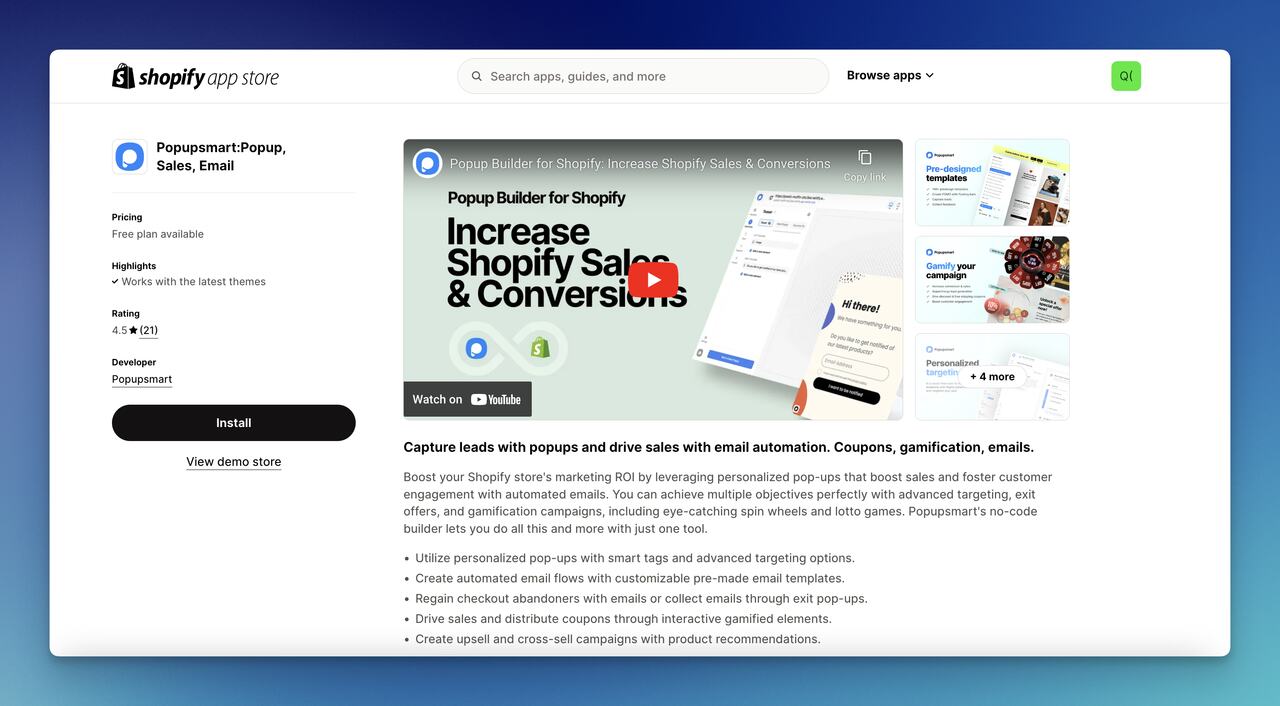
Step 1. Install the Popupsmart App: Search for Popupsmart in the Shopify App Store and install it. This will automatically connect your Shopify store without manual code embedding.
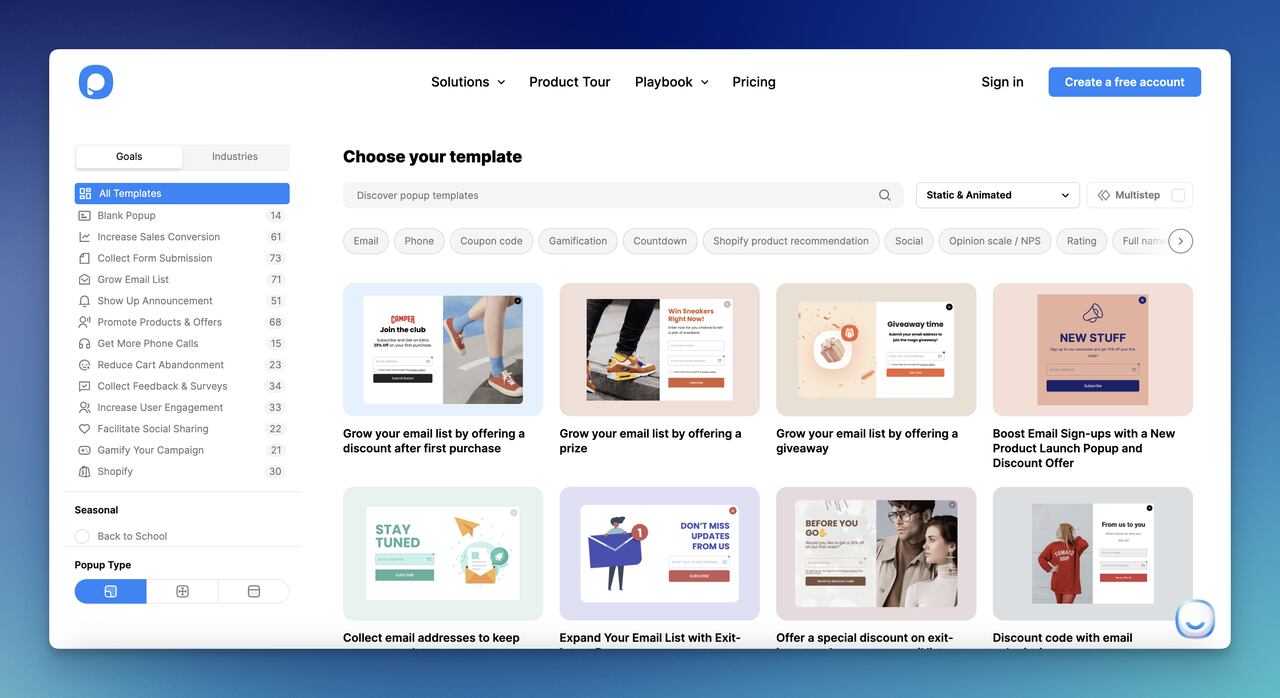
Step 2. Create Your First Popup: After installation, choose a pre-designed template that aligns with your goal, such as building your email list. On Popupsmart Playbook, you can choose your favorite newsletter popup for Shopify beforehand.
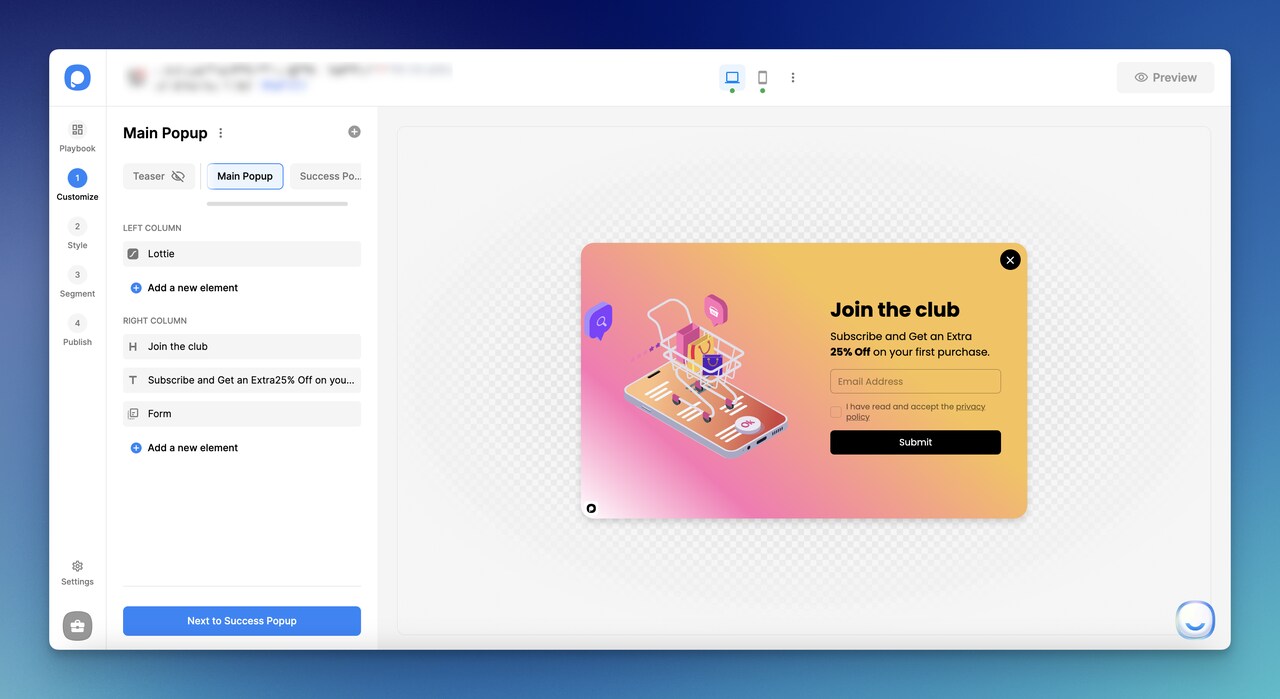
Step 3. Customize Your Popup: Modify the design, style, and targeting options to match your brand and engage specific visitors effectively. We suggest you use the form element to maximize the impact and collect email addresses.
Step 4. Publish and Enable: In your Shopify theme settings, enable the Popupsmart app, then click Publish to make the popup live on your site. Use Popupsmart Shopify App! That’s the whole process that you need to complete to have the best Shopify newsletter popup!
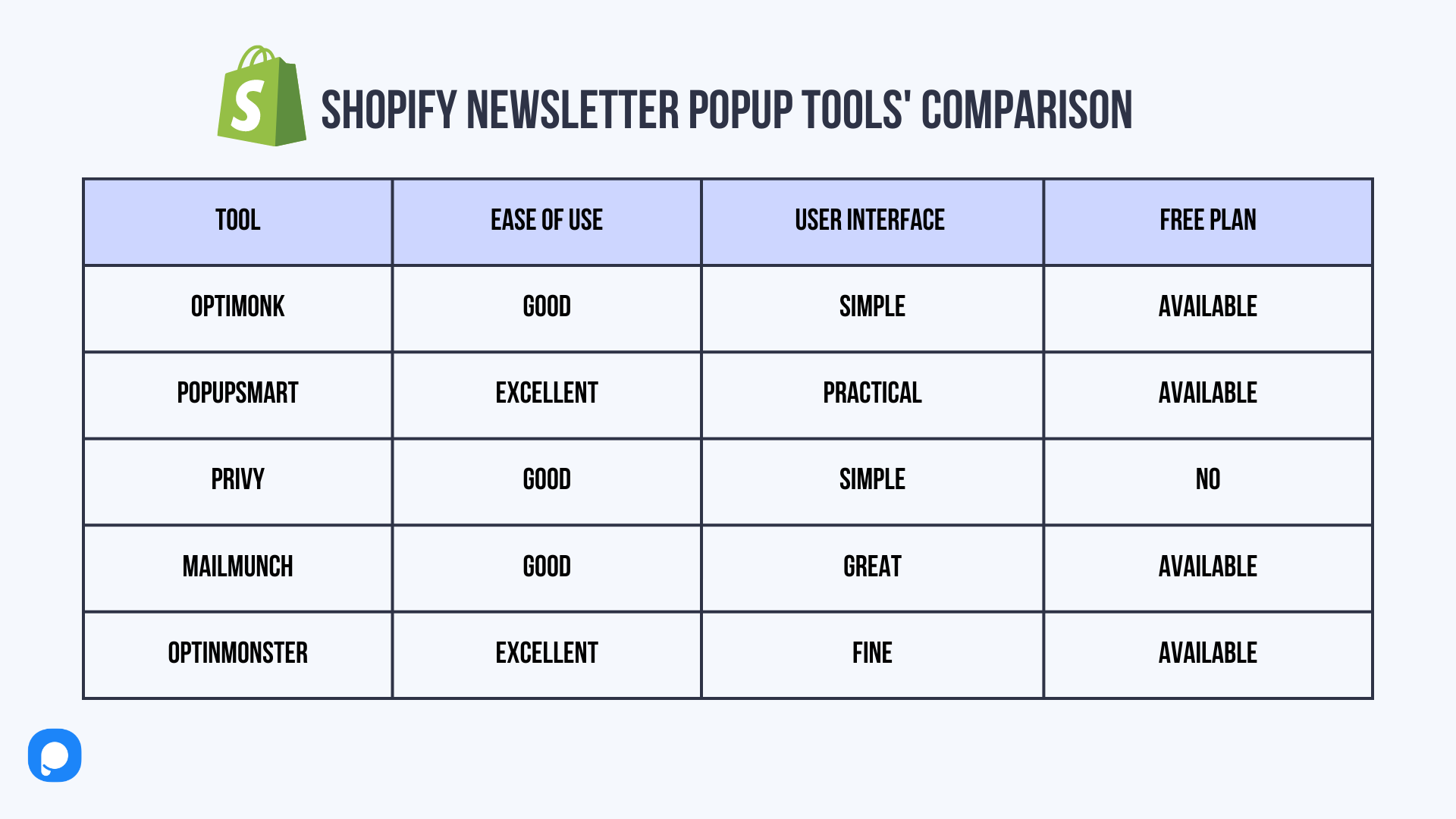
Top 5 Effective Tools to Use for Shopify Newsletter Popup
You can create a newsletter popup for your Shopify store with different coding languages such as PHP, React, and Vue. On the other hand, there are many no-code popup builders that you can create popups for Shopify practically.
No-code tools are great to create popup newsletters for your Shopify store. These tools can also integrate with mail marketing services and make email marketing even more effective!
When you create your popup with no-code popup tools, you can use your popup editor screens to customize it. Creating and customizing Shopify popups with Popupsmart is very easy and quick!
While designing your website’s newsletter popup, pay attention to your brand’s identity and create unique popups which tell a story.
Here we listed five popup tools that you can use to create popup newsletters. Since these are no-code popup tools, you can simply integrate them into your website by copying and pasting embed codes of popups.
Ready to use Shopify popup newsletter templates in these tools makes everything even easier! So let’s check them out.
1. Popupsmart: Simple Popup Builder
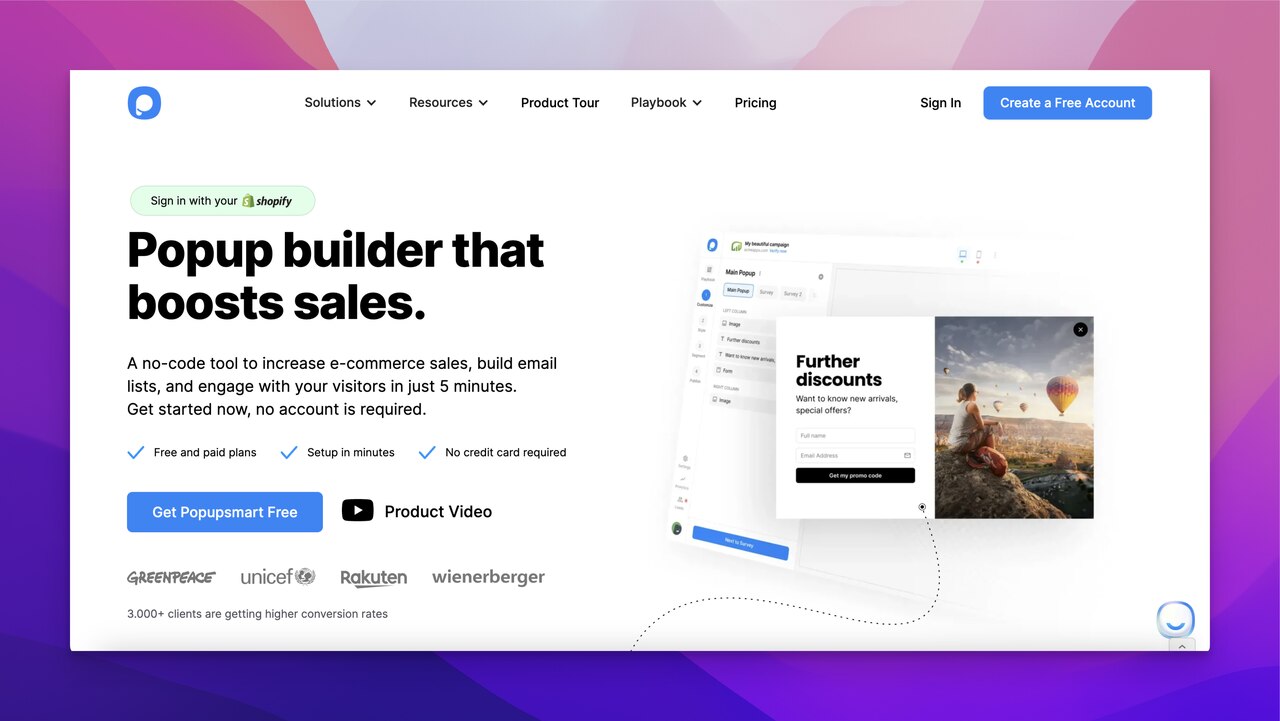
Popupsmart has many solutions to grow your email list as a no-code popup builder tool. You can create Shopify newsletter popups with Popupsmart and increase your conversion.
You can make people subscribe to your newsletter by promoting your newsletter content.
Pros:
- There are so many templates that you can personalize newsletter popups of your store.
- It seamlessly integrates with Mailchimp, Mailerlite, Sendinblue, Sendgrid, and much more!
- Thanks to smart tags and various targeting options, you can increase your Shopify store’s user engagement.
Cons:
- The free plan’s pageview number might not be sufficient for bigger companies.
Pricing: Free plan is available. The basic plan starts from $24 per month.
G2 Rating: 4.3/5
2. OptiMonk: Popup Builder
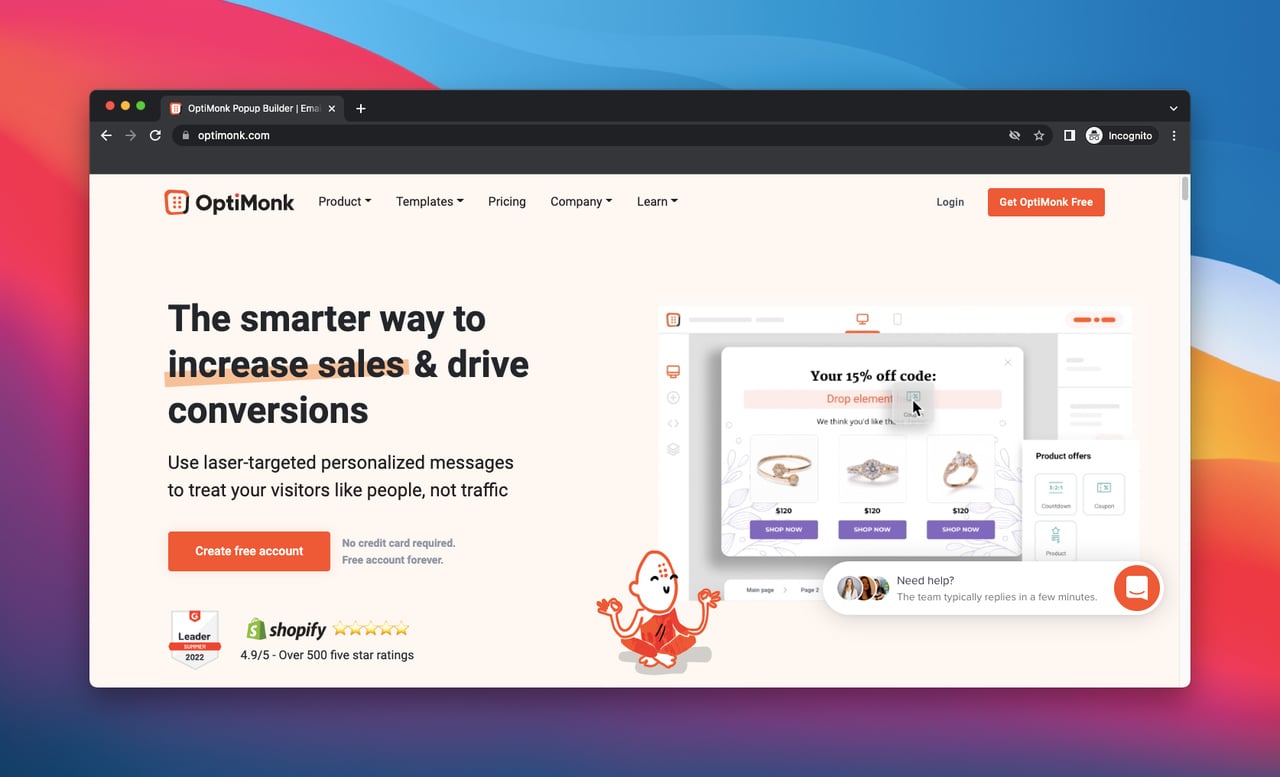
OptiMonk allows you to create popups for your Shopify store. With different popup layouts, you can personalize your popups according to your website. In addition, you can download the app from Shopify’s app store to form your newsletter popups.
Pros:
- It integrates with many platforms such as MailChimp, Active Campaign, HubSpot, and Omnisend.
- Behavioral targeting, audience segmentation, and personalization features can help you reach your target audience.
- A/B testing and analytics features can make your job much more manageable while forming a popup campaign.
Cons:
- There are some issues in HTML/CSS integration that need to be fixed.
- It would be better if there were tagging features so that you could add specific tags to campaigns.
Pricing: Free plan is available. The essential plan starts from $29 per month.
G2 Rating: 4.8/5
3. Privy: Popup, Email, SMS Tool
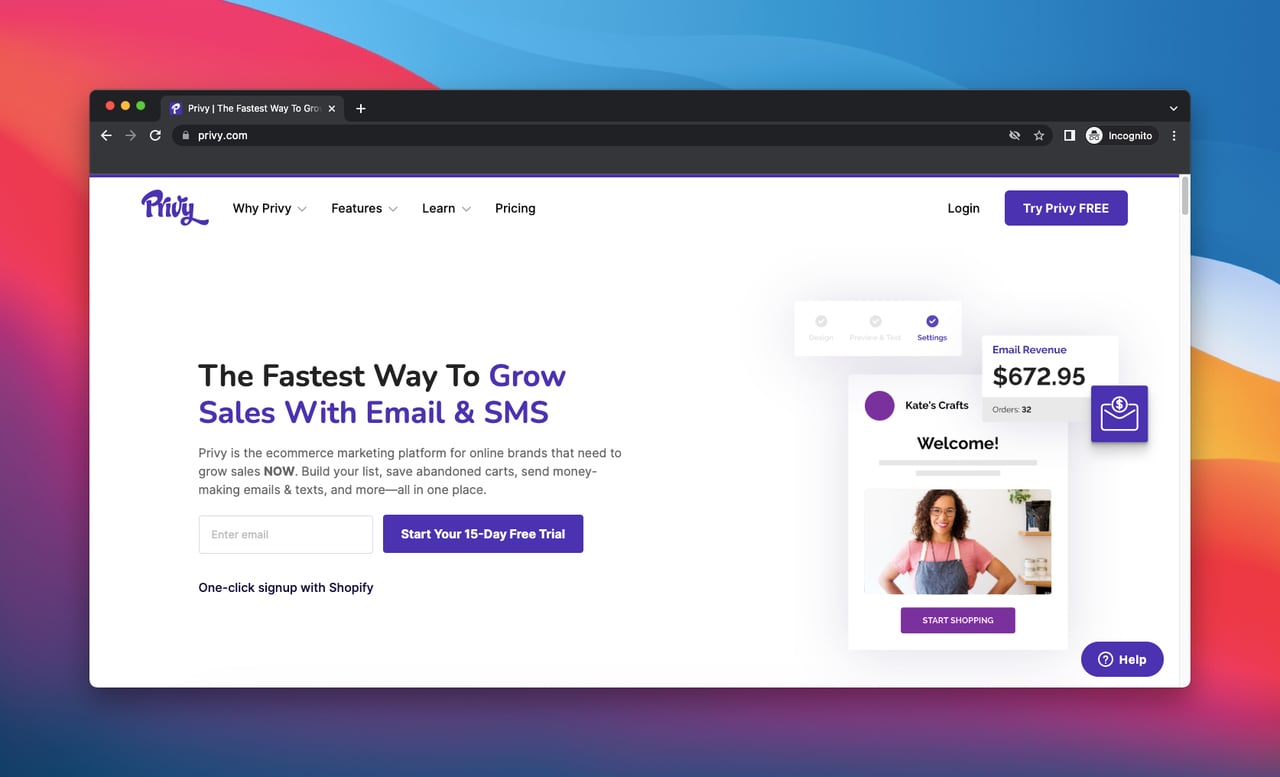
With Privy you can send newsletters and create newsletter popups for your Shopify store. It offers various solutions to grow your email list and recover cart abandonment.
Pros:
- You can create mobile-friendly popups and customize them freely.
- It allows you to monitor your campaigns’ results.
- It is available on Shopify’s app store. It integrates with Mailchimp, Klaviyo, and Bronto.
Cons:
- Newsletter popup templates need to be improved.
- Help documentation should be enriched since it can be confusing to create a popup campaign for beginners.
Pricing: Free plan is available with limited features. The starter plan starts from $15 per month.
G2 Rating: 4.6/5
Also, you can check out Privy alternative post on our website for further information.
4. Mailmunch: Lead Generation Tool
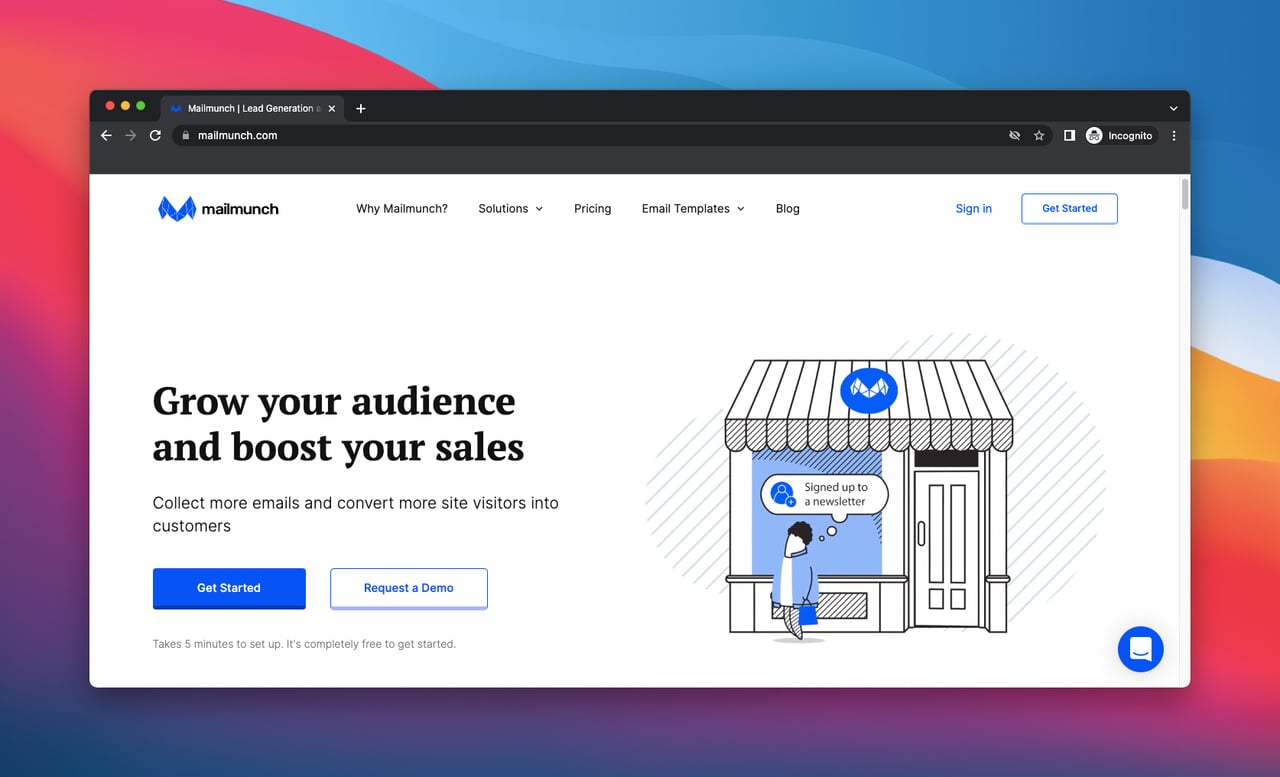
Mailmunch is another popup builder that you can use to create your newsletter popups. It is a mobile-optimized tool, so it enhances the user experience. No-code customization makes it easy to add popups to your Shopify store.
Pros:
- Thanks to pre-designed templates, you can create your popups easily.
- With targeting options and triggered campaigns, you can create conversion-ready popups for your store.
- It integrates with CRM tools and email marketing platforms seamlessly.
Cons:
- Free plan's popup templates need to be improved.
- It might slow down your website from time to time.
Pricing: Free plan with limited access is available. Starts from $13.99 per month.
G2 Rating: 4.5/5
See Mailmunch alternative content for comparison & comprehensive details of this tool as well.
5. Optinmonster: Popup Tool
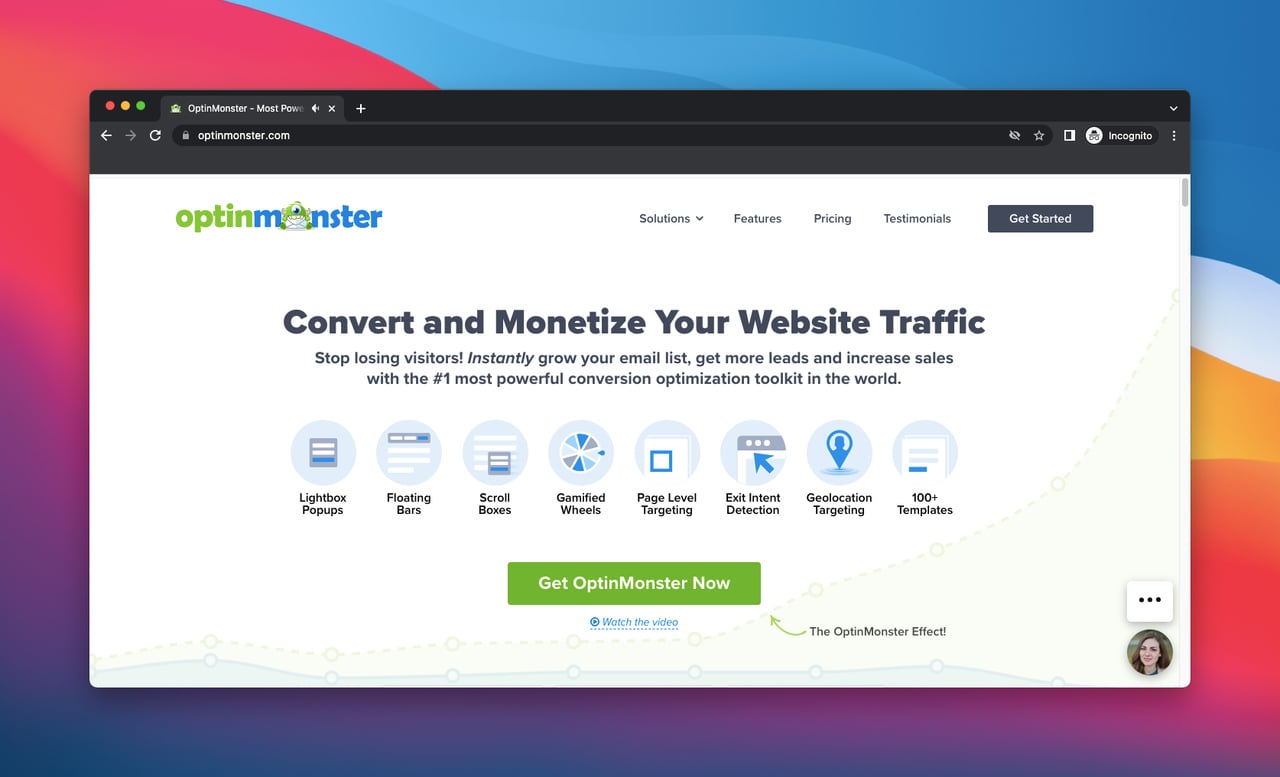
Optinmonster is a tool for e-commerce websites that allows you to create popups. With Optinmonster, adjusting targeting to reach out to customers more effectively is possible.
Pros:
- With more than 65 templates, you can design your newsletter popups easily.
- You can show personalized messages to your visitors to increase user engagement.
- It offers detailed conversion analytics so that you can analyze your popup campaigns.
Cons:
- Customization of popups needs to be improved since it is not that user-friendly.
- Visual editor and help documentation should be improved.
Pricing: Free plan is available. The basic plan starts from $14 per month.
G2 Rating: 4.4/5
Check out Optinmonster alternative content on our website for further details & comparison.
16 Shopify Newsletter Popup Examples to Increase Conversion
Options are endless when you want to create a Shopify newsletter popup! You can inspire from these Shopify popup newsletter examples while creating your own.
Find what works best for your brand and start expanding your newsletter subscriptions!
1. Boll and Branch
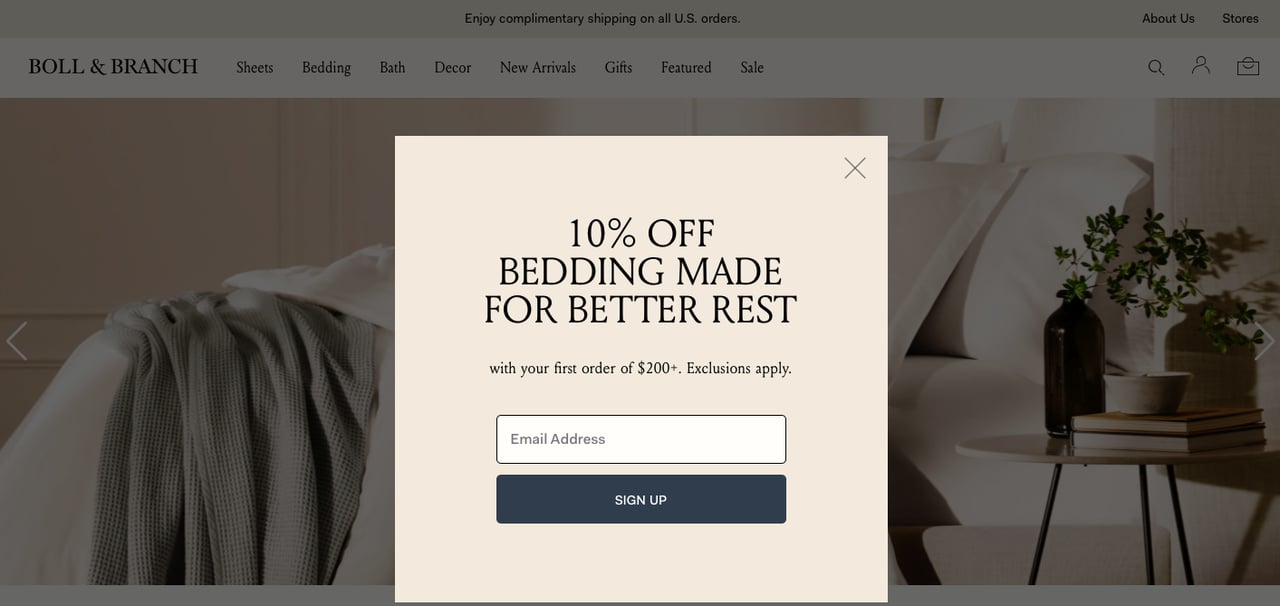
Being a home decor store, Boll & Branch offers 10% off for those who subscribe to their newsletter. With these kinds of Shopify popup discounts, you can promote your brand. It is a great way to grow your email list and increase conversions.
2. Fulton and Roark
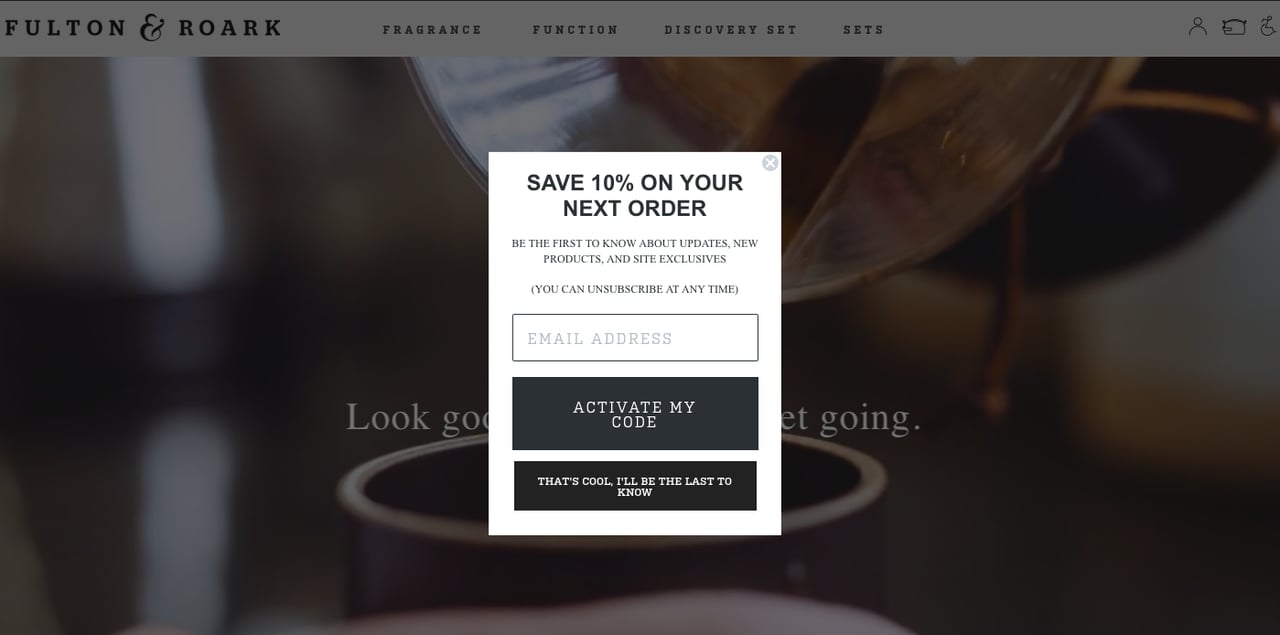
Fulton and Roark is a fragrance brand with a newsletter popup offering discounts for those who subscribe. It also indicates “be the first to know about updates,” which triggers FOMO.
There is also a part saying, “that’s cool, I’ll be the last to know,” to emphasize FOMO even more.
3. Pipcorn
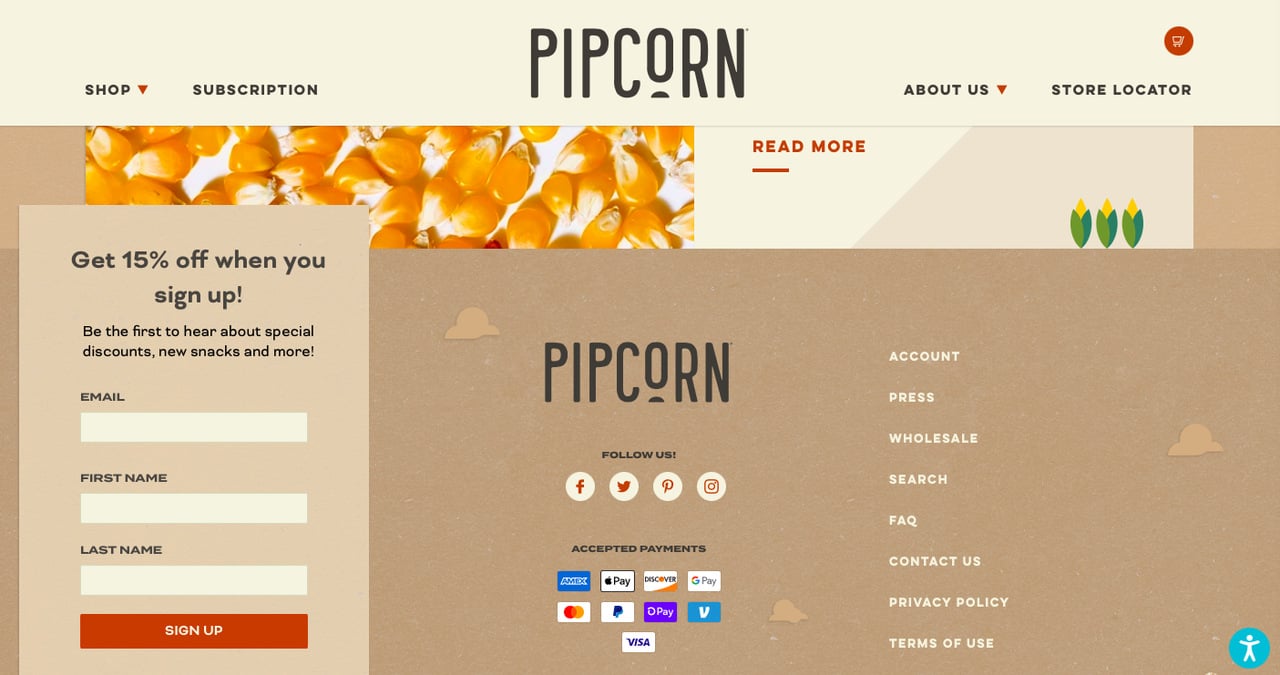
Pipcorn offers a 15% discount for those who subscribe to their newsletter. It also says more special offers and new snack updates for those who sign up.
Finishing with the word “more” also shows that this brand has so much to offer its newsletter members.
4. Gaiam
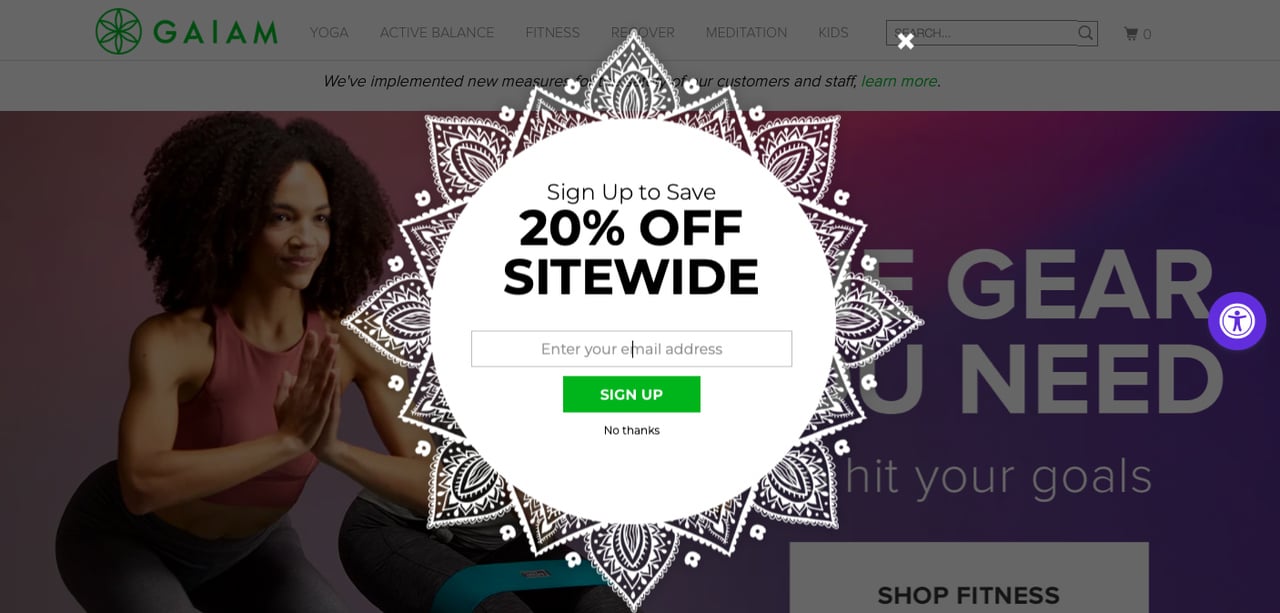
Gaiam is a yoga clothing brand that loves to encourage customers with special offers. Gaiam offers 20% off to email subscriptions. Newsletter popup’s unique and aesthetic design is also remarkable.
5. Kylie Cosmetics
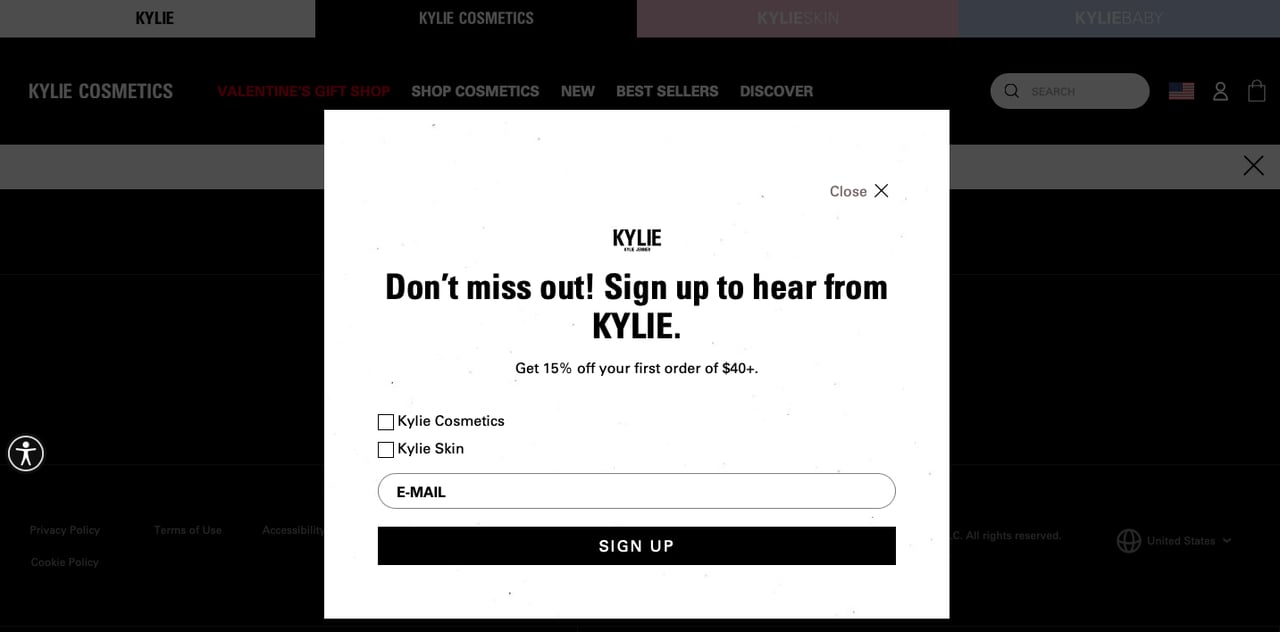
Kylie Cosmetics website offers a discount for those who share their email and emphasizes its importance by saying, “Don’t miss out!”
Such phrases are great to convince customers since it is related to FOMO. Also, this newsletter popup’s design is in accordance with the brand’s identity and style.
6. Zorrata
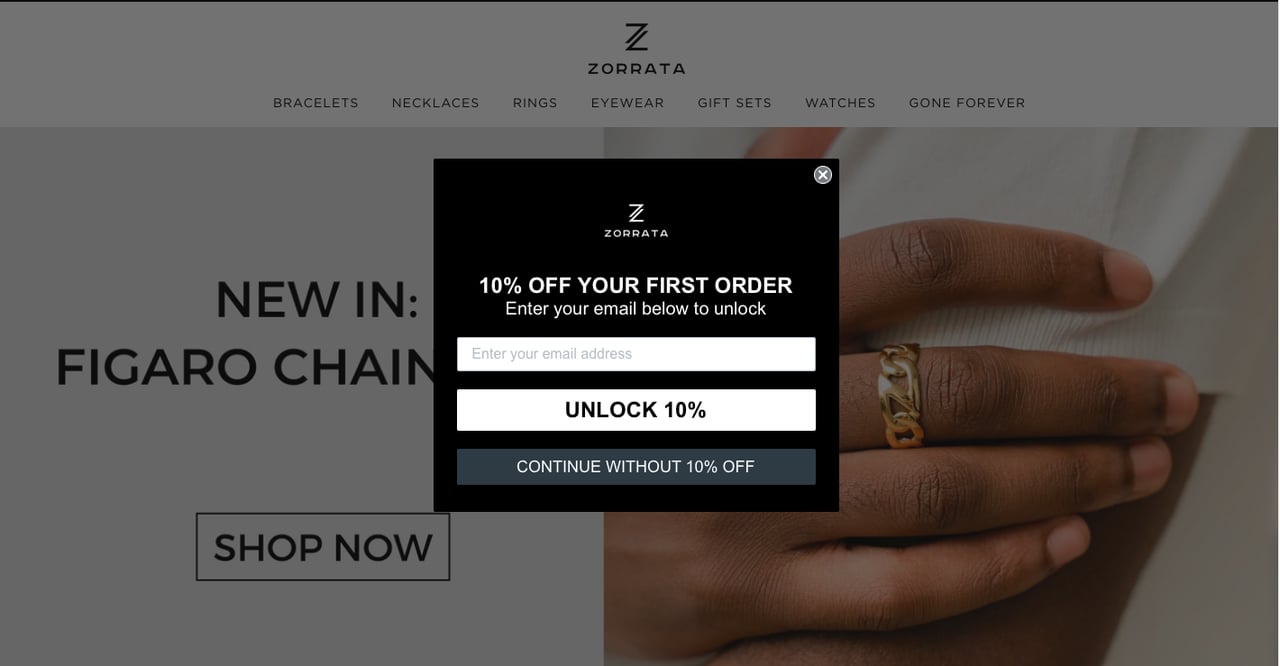
Jewelry brand Zorrata gives a 10% discount for its newsletter subscribers. This compatible and straightforward newsletter popup does not look disturbing, yet it is encouraging to subscribe.
7. Luvostore
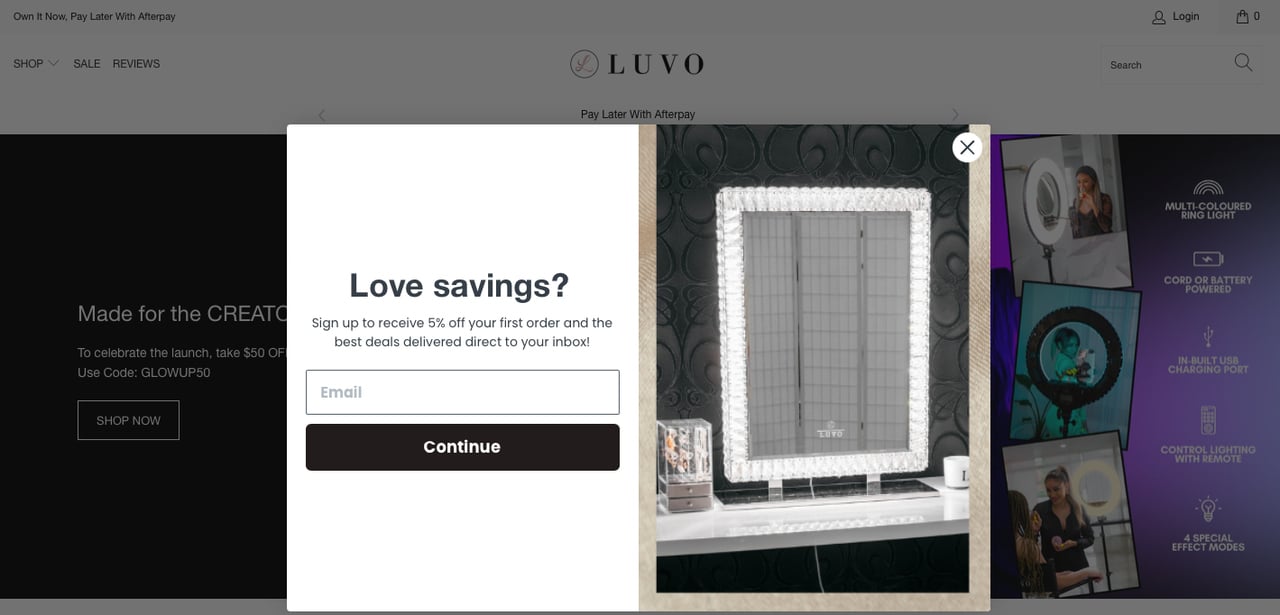
Luvostore starts with a question, “Love savings?” which is a simple but effective question. One can answer who does not love savings and subscribe to this company’s email list.
It also indicates that the best deals will be delivered in the future. The image section of this newsletter popup promotes the brand’s product which is a lighting accessory.
8. Packagefree Shop
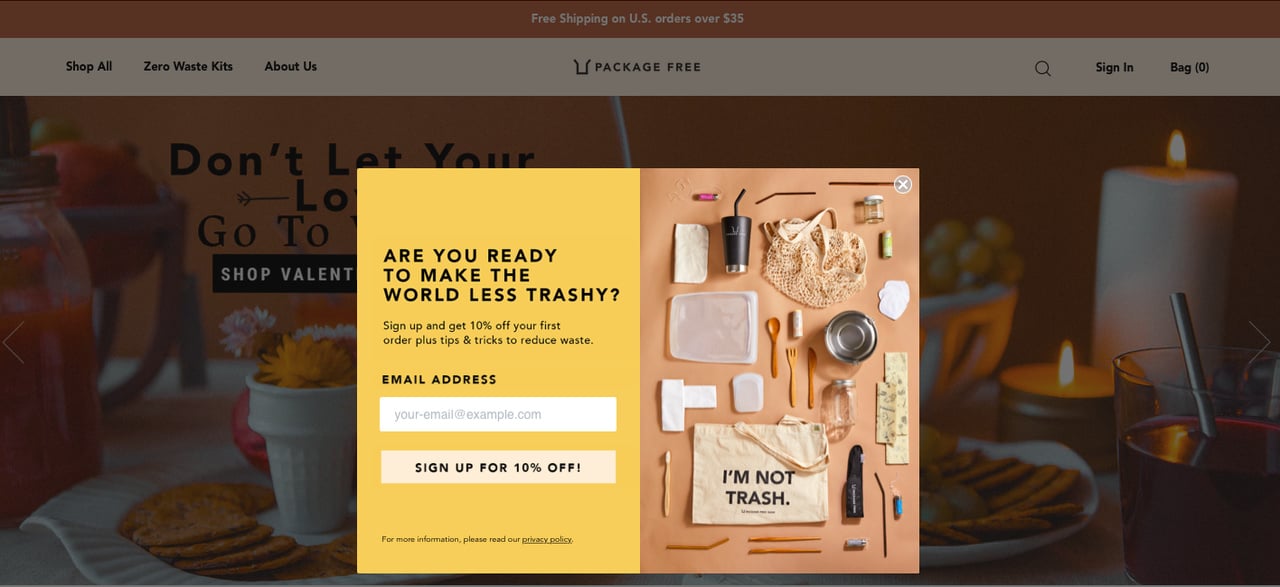
Package Free Shop starts with an environmentally friendly question. Package Free Shop’s popup is fitting to its audience since it is a zero-waste lifestyle company. Product images on the popup give the idea of the brand.
Also, it is said that tips and tricks for reducing waste will be delivered with newsletters. Therefore, one can decide to subscribe and buy products from this brand with this newsletter popup.
9. Meow Meow Tweet
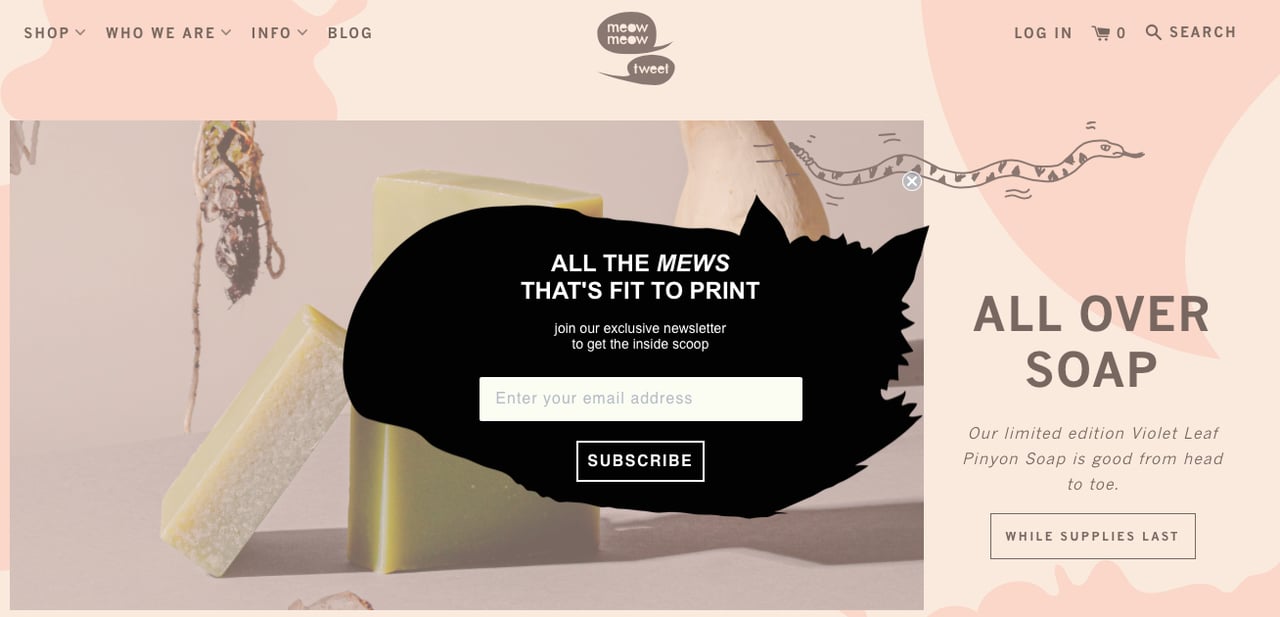
Considering that it is a vegan personal care brand, Meow Meow Tweet has a unique style and brand-related newsletter popup design.
Brand’s values and style can be seen at first with its popup when a person enters the website. It also says “our exclusive newsletter,” which can create a sense of specialty.
10. Bebemoss
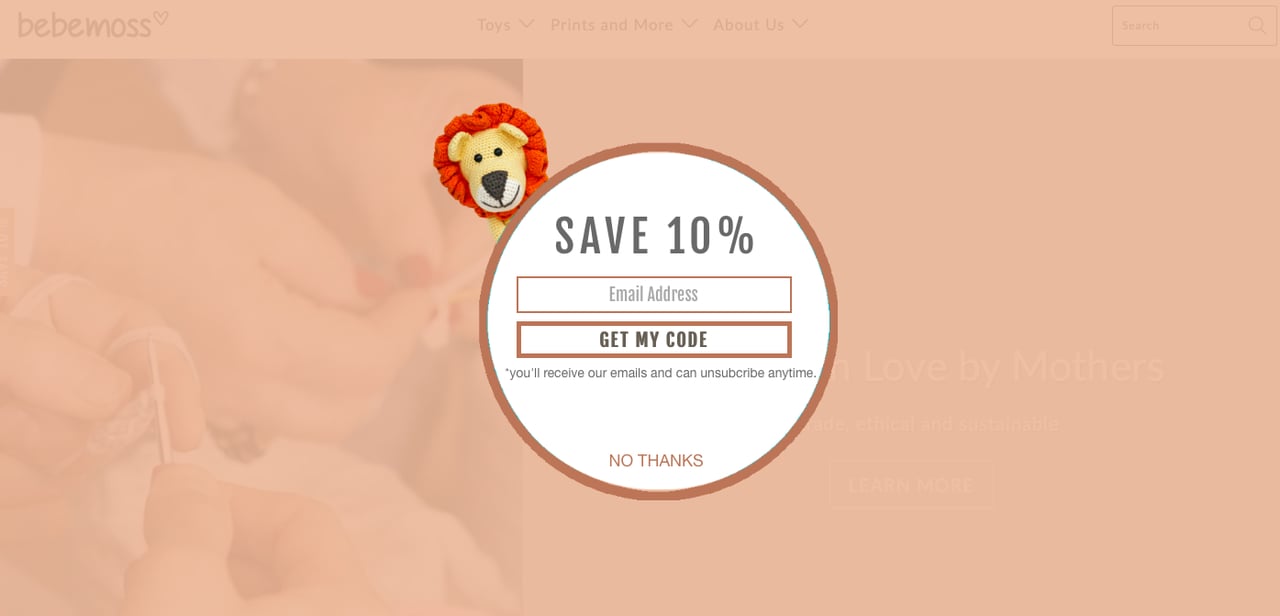
Being an animal toy company Bebemoss’ newsletter popup with a brand-fitting design offers 10% off as well. It also guarantees that subscribers can unsubscribe anytime they want.
11. Rothy’s
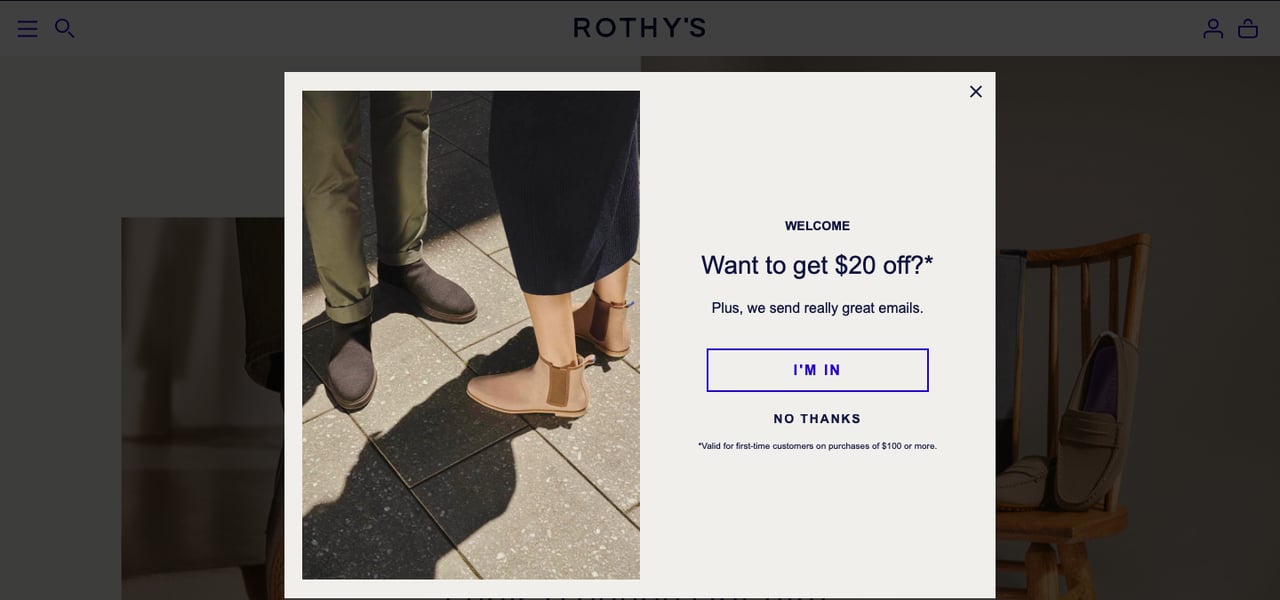
Rothy’s is a shoe and bag company that offers $20 off to its subscribers. Rothy’s shows its products in a popup newsletter, which can make people benefit from this offer.
The company also indicates that they send really great emails in its newsletter popup. Promissory phrases like this emphasize the importance of joining a company’s email list.
12. Artisaire
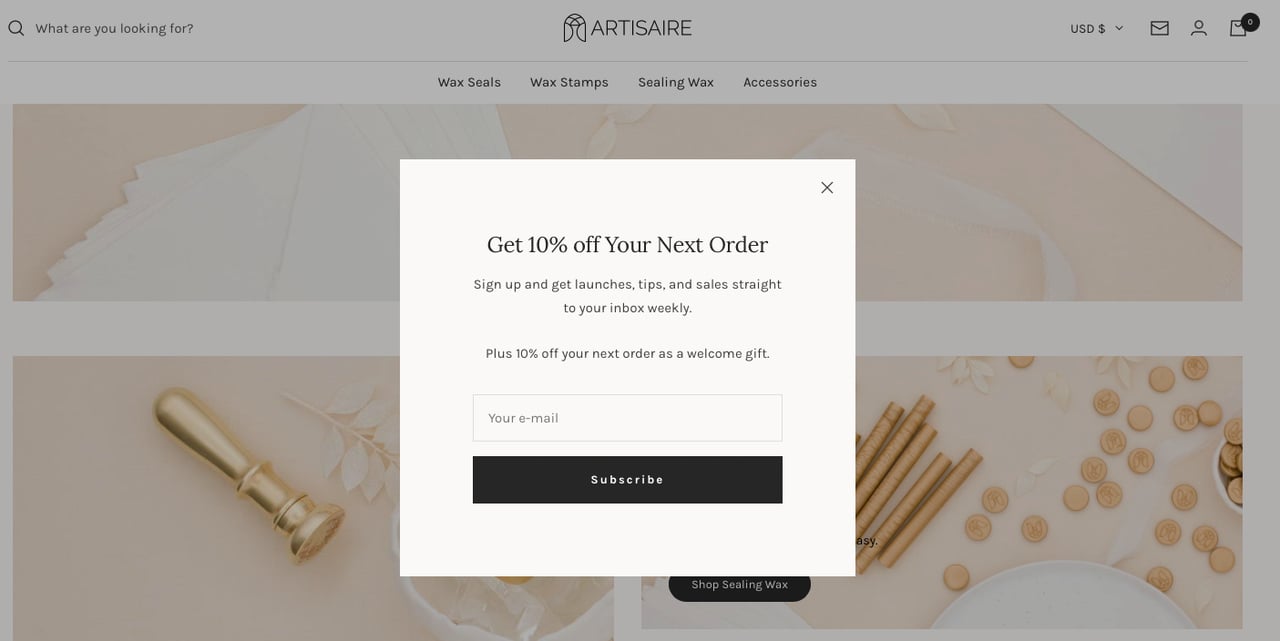
Artisaire plights on launches, tips, and sales to its newsletter subscribers with this popup. Also, it gives the opportunity of 10% off in the next order, which is great to keep loyal customers and grow the email list.
13. Besame Cosmetics
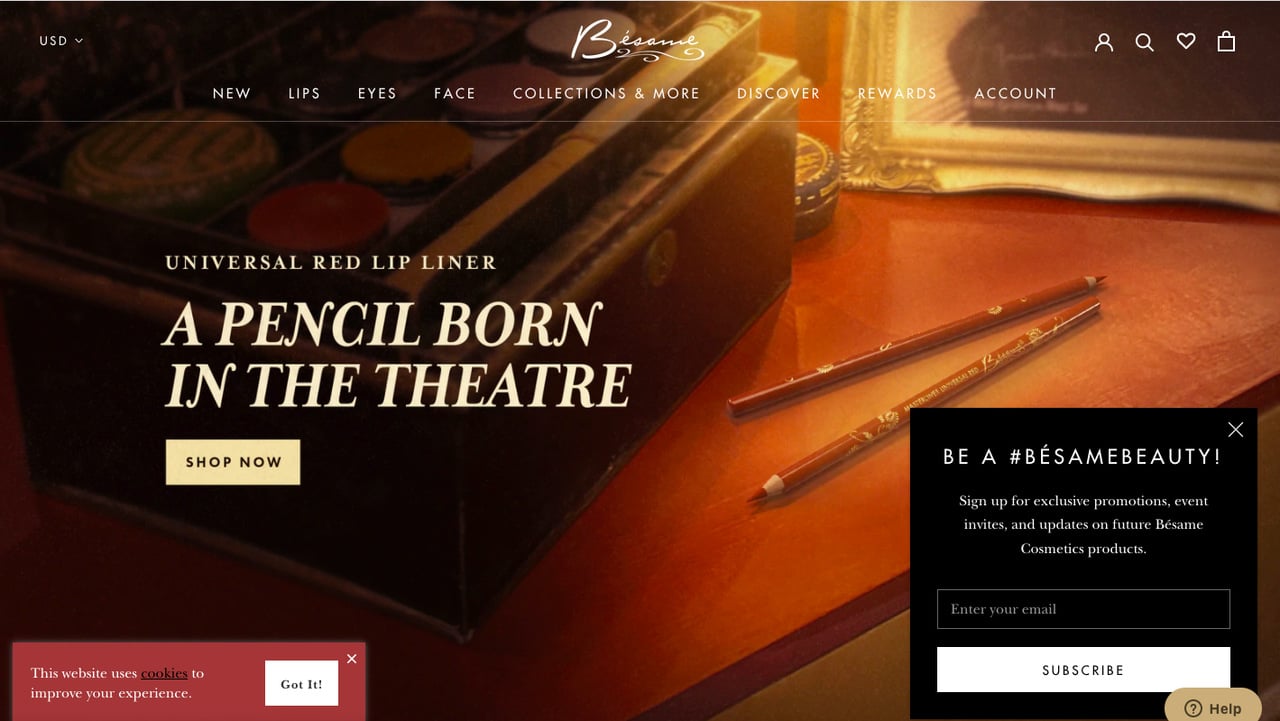
Besame Cosmetics offers exclusive promotions to its subscribers with its hashtag title. In addition, event invites and updates in newsletters are also mentioned in this popup, which creates a sense of community and specialty.
14. Satya
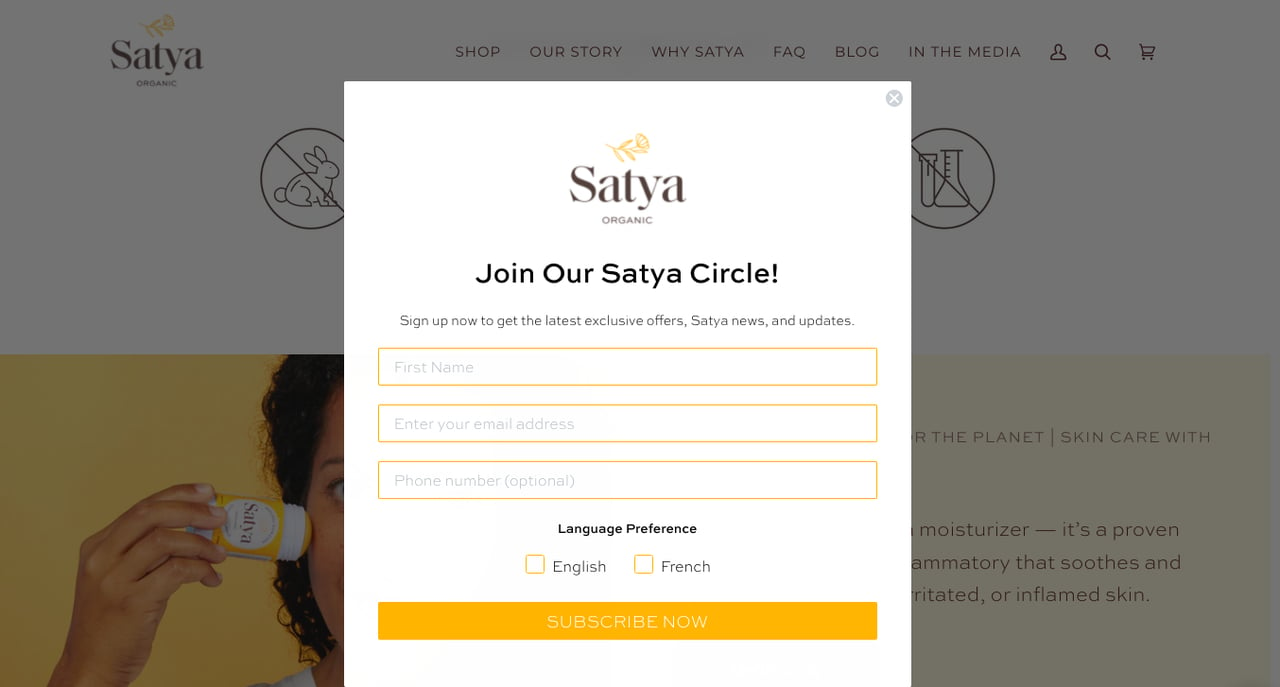
Being a skincare brand Satya creates a sense of community with its newsletter popup. Referring to exclusive offers and updates of the brand in newsletters seem promising and reassuring.
15. The Honey Pot
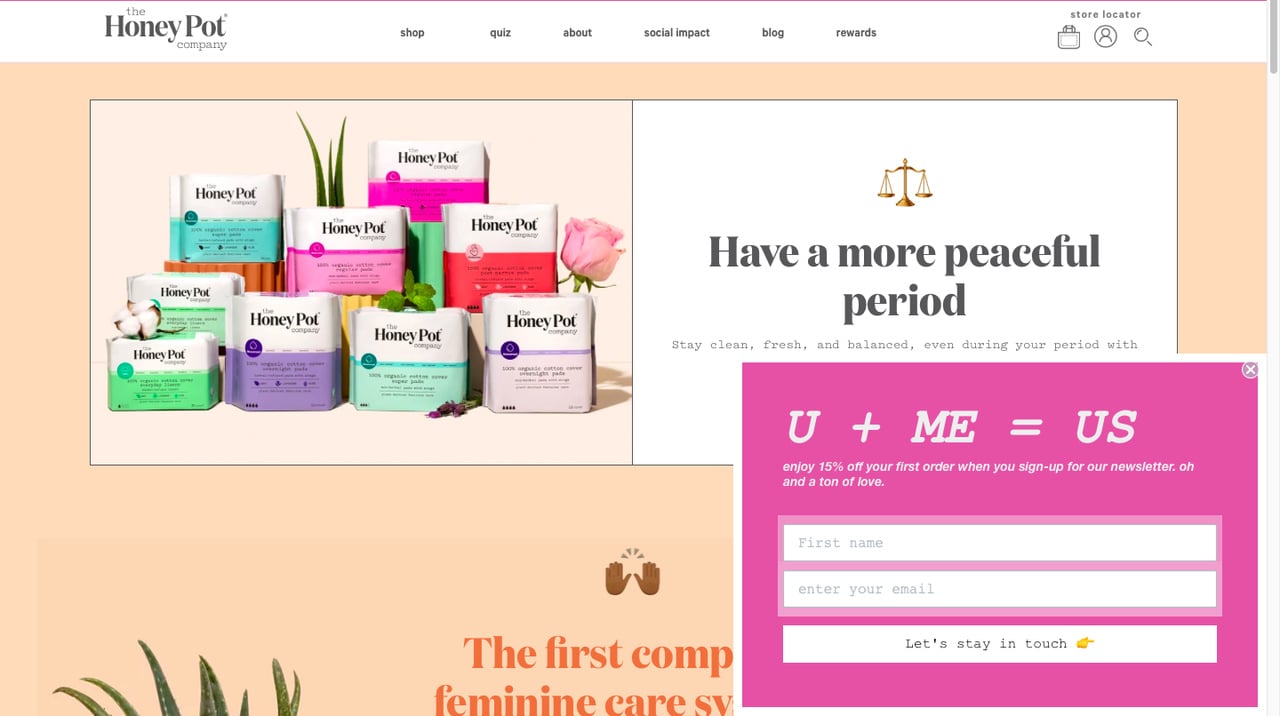
The Honey Pot uses sincere and welcoming language with its newsletter popup. It creates the mindset that it is a friendly and sincere place to subscribe to newsletters.
Offering 15% off alongside the “ton of love” can make customers feel special and loved.
16. Brightland
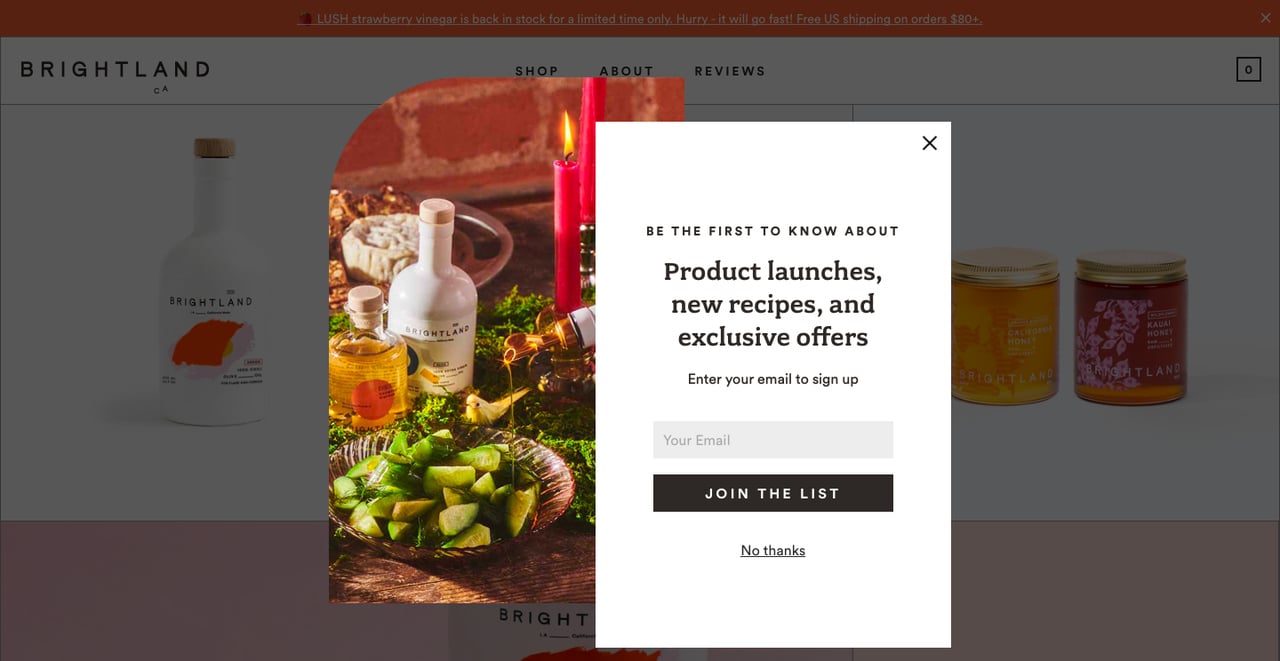
Brightland is an olive oil and vinegar company that offers product launches, recipes and offers for its newsletter subscribers.
It also says “be the first to know” to emphasize the FOMO concept. The design of the newsletter popup is eye-appealing and fits the brand’s personality.
Final Words
All in all, using Shopify newsletter popups is a proven strategy for boosting subscriptions and fostering conversions.
With the tools and examples shared, you're equipped to create compelling popups that can drive your store's success.
Frequently Asked Questions
What is Shopify Newsletter Popup?
Shopify newsletter popups encourage your visitors to sign up for your email newsletter. You can offer discount codes within Shopify newsletter popups. Also, giving helpful information and tips related to your products can be a great way to reach out to your target audience.
Is a Shopify Newsletter Popup Necessary?
Yes, if you want people to sign up for your newsletter, it is necessary! Shopify newsletter popups allow you to build your email list and effectively use email marketing. You can keep loyal customers and promote your new products with newsletters.
How Can I Create a Newsletter Popup for My Shopify Store?
Adding popup newsletters to your Shopify store is very easy, and it takes under 5 minutes to do that! In addition, you can use no-code popup tools to increase your website’s conversion rate. You can use the tools we have mentioned in this blog post to create remarkable Shopify newsletter popups!
Check out these blog posts too:
How would you rate your experience with this article? 😊