ChatGPT
 Perplexity
 Claude
 Grok
Grok Google AI Mode
Wheel popups are one of my favorite ways to turn passive visitors into active, excited participants on any e-commerce site. By blending gamification with high-value incentives, spin-to-win popups instantly add an element of fun to the customer journey, and that fun almost always translates into higher engagement. Whether it also translates into more leads is the question I answer with our own data below.
I’ve seen firsthand how a well-designed wheel popup can create a memorable brand moment that shoppers actually enjoy. The numbers behind that enjoyment are less flattering than the usual spin-to-win pitch suggests, so I’ve put them first.
Done right, they don’t feel like popups at all. They feel like a reward your visitors want to claim.
In this guide, I’ll walk you through what wheel popups are, what our 2026 data says they do and don't do, and how to design a conversion-optimized wheel popup that collects emails, lifts sales, and enhances user experience without being intrusive. You'll also find five wheel popup tools with dated prices, and the steps to add a spin the wheel popup to a Shopify store.
What is a Wheel Popup?
A wheel popup is a spin-to-win opt-in form: visitors enter an email or phone number, spin a prize wheel and win a discount code, voucher or prize. People also call it a popup wheel, a spin the wheel popup or a spin-to-win popup.
Ever landed on an e-commerce site and seen a colorful wheel inviting you to spin for a prize? That's a wheel popup in action.
Wheel popups or “gamified wheels” are the opt-in forms visitors can interactively engage with and win a discount code, voucher, or prize.
All they need to do is fill out the form asking for their data (Name, Email Address, Phone Number), spin the wheel, and win a prize.
A simple discount code in return for capturing contact information doesn’t work for all visitors. When it works, subscribers often don’t use the coupon code, and you’ll never see them again.
This is exactly why you need to use the concept of gamification in e-commerce digital marketing campaigns.
Gamification is the application of game elements to non-game activities.
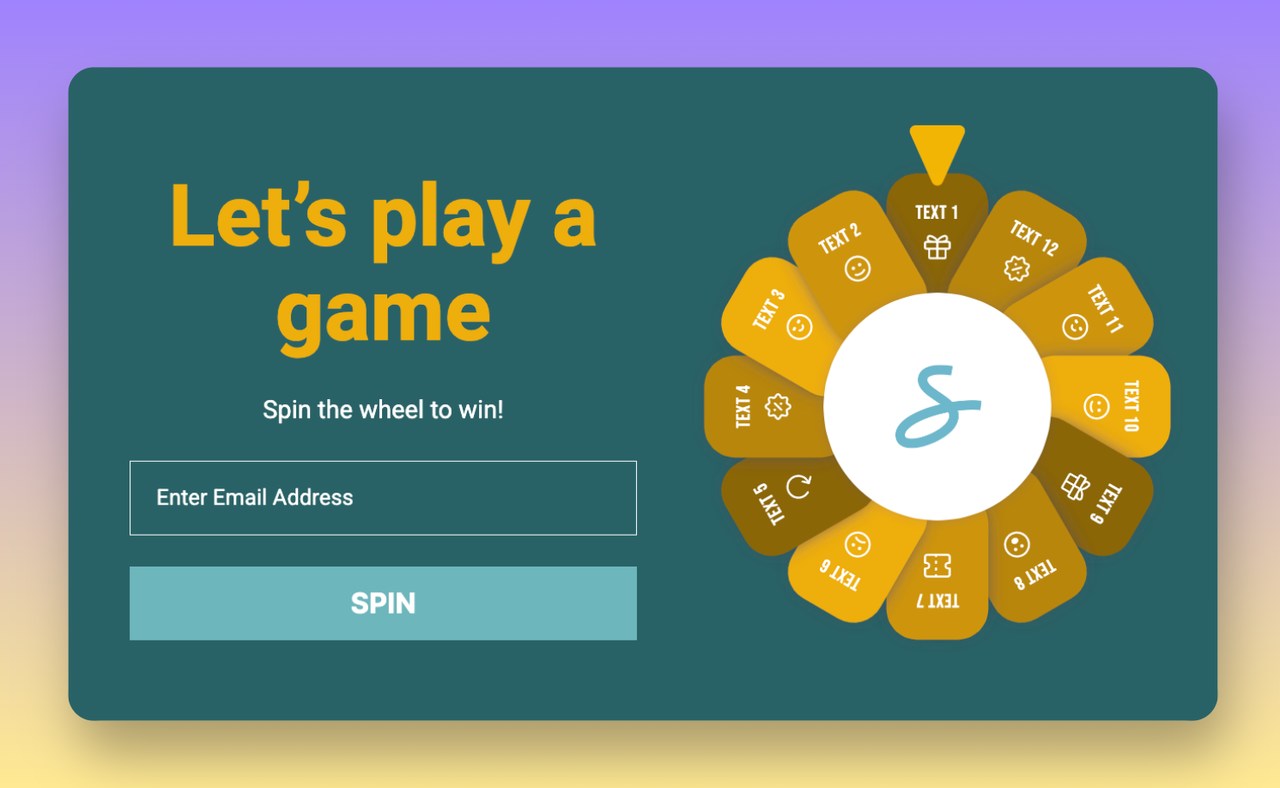
Traditional popups offering a simple discount can fall flat after the signup: some subscribers grab the code, unsubscribe, and vanish. But wheel popups add an element of excitement through prize draw systems and discount wheel mechanics. This gamified user experience keeps people clicking.
How much more clicking, and whether it turns into more leads, is what our 2026 data answers in the next section.
The secret behind the success of wheel popups is that it brings users fun and improves visitor engagement.
That's also how a wheel makes your popup campaign more memorable than your competitors' plain forms.
Do Wheel Popups Collect More Leads? What Our 2026 Data Shows
Not measurably. Wheel popups win the click, not the lead. Spin-to-win and other gamified popups get far more clicks (7.33% vs 1.87% of displays, median campaign; the spin itself counts as a click), but do not collect measurably more email or phone leads than plain signup popups.
Our 2026 benchmark covers 28,674 campaigns, 499.6 million popup displays and 1.84 million leads between January 2024 and September 2026. Each rate below is the median campaign among campaigns with at least 1,000 displays and 14 active days, and it divides by popup displays, not by visitors. A lead is a popup submission that contains an email address or phone number.
| What we compared (median campaign) | Result | What the rate divides |
|---|---|---|
| Clicks: spin-to-win and other gamified popups vs plain signup popups | 7.33% vs 1.87% | Clicks ÷ displays (the spin counts as a click) |
| Email or phone leads: gamified vs plain signup popups | Not measurably more | Leads ÷ displays |
| Signup popups with a discount code vs without one | 1.46% vs 0.75% | Leads ÷ displays |
| Popups stating 10% off vs popups stating no discount | 1.25% vs 0.67% | Leads ÷ displays |
| Bigger discounts: 20% off and 25–30% off, against 10% off at 1.25% | 0.91% and 1.33%, not measurably better; the samples are small (78 and 46 campaigns), so the data can't rule out a real difference either way | Leads ÷ displays |
| All 3,034 popups that ask for an email or phone number | Median 0.83%; top 25% reach 1.96%, top 10% reach 3.87% | Leads ÷ displays |
That runs against the headline figure in a spin-to-win guide that ranks for the same searches. Claspo, a popup vendor, says gamified popups reach 9.18% against 3.53% for standard signup forms across 779 million widget impressions, but its article doesn't say what it counts as a conversion. Our lead rate only counts submissions that carry an email address or phone number, so the two sets of numbers can't be compared.
I read our result this way: the wheel buys attention, and the offer inside it buys the lead. That doesn't make wheels a bad idea. It makes them a tool with a specific job.
When a Wheel Earns Its Place
- Engagement is the goal. A launch, a seasonal sale or a brand moment where you want people to interact, and a click is a result you'll count.
- You're giving a discount anyway. A wheel turns a coupon you'd hand out regardless into a reveal that feels like a win.
- List growth where the click is the goal. A campaign scored on interactions, such as a game that opens a second step or a quiz, benefits from the wheel's pull on clicks.
- Your brand has a playful voice. A wheel that looks like your store, not like a default template, is part of the experience rather than an interruption.
When a Plain Discount Popup Does the Same Job
- Your goal is email or phone leads. In our data the wheel didn't collect measurably more of them, while offering a discount code did lift signups. Our discount popup examples show that simpler format done well.
- You'd rather not manage odds and abuse. A plain popup has no prize table to tune and no spin to game.
- A modest offer already does the work. Stating 10% off beat stating no discount, and bigger discounts didn't convert measurably better, so start with a modest offer before you pay for a wheel full of big slices.
How to Create an Engaging Wheel Popup?
To create a popup campaign that engages users, you must first be familiar with popup best practices and then sharpen your creativity by mixing it up with a spin-to-win wheel element.
In my experience, the wheels that work feel like a natural extension of the brand. Mix in elements like interactive spins, and you'll see engagement soar, far beyond basic forms.
Here's an engaging example of a gamified popup in action:
Now, the following tips will help you use wheel popups optimally and improve your conversion rate and user experience.
1. Display Wheel Popups with Exit-Intent Trigger
A wheel that fires the instant a page loads asks for an email before the visitor knows your store. In our 2026 benchmark, popups that wait before appearing convert 0.83% vs 0.61% for popups shown the instant the page loads (median campaign); the direction holds in every year of data but the difference is not statistically reliable, so treat it as a lean, not a rule.
Exit-intent popups work logically. Hence, when you try to collect your website visitors' emails or try to sell your products before they actually get an idea about your brand, your engagement rate would be lower.
Displaying the wheel popup on exit-intent keeps it out of the way while visitors get to know your brand, so it never appears the moment someone lands.
Exit-intent triggers detect when someone's about to leave, then serve the popup. Use the trigger for that courtesy, not for a conversion lift: in our 2026 benchmark, exit intent shows no statistically reliable advantage; popups on the most sensitive exit-intent setting converted 1.10% vs 0.78% without exit intent (median campaign), a gap that could be chance.
Pair it with behavioral targeting to show the wheel only to high-intent users, like those who've viewed multiple product pages. That way, you're not interrupting casual browsers but engaging those ready for interactive popup marketing. For what our 2026 benchmark does and doesn't show about the trigger itself, read do exit-intent popups work.
2. Don't Use Default Wheel Popup Templates
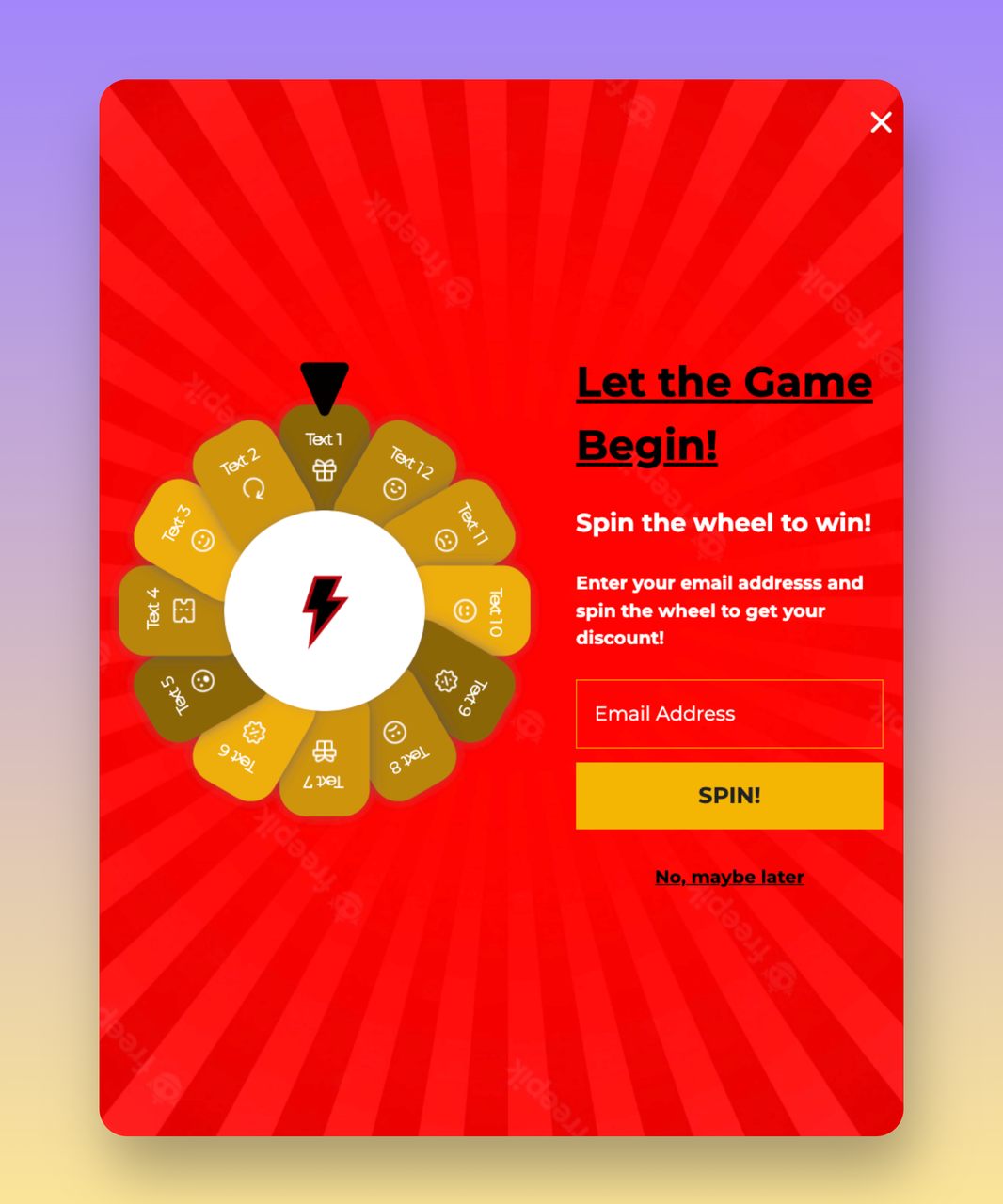
It is essential to design your own wheel popup, which will reflect on your brand image. Why? Because marketers widely adopt proven marketing tactics.
Website visitors are getting used to the default wheel popup templates of popular popup providers.
Therefore, unique designs will get more attention from the users.
And still, it is easy to make the customized wheel in your own style. Using an easy to use popup builder you can fully customize your campaign and add different elements to capture your target audience attention.
The best way to stand out is to mix your brands style with witty tone and add some gamification elements in the middle.
3. Avoid Subscribers Mainly Interested in Prizes
Watch your form data closely, because some people will just sign up for winning the prize.
These people may not open your newsletters and may even mark your email as spam.
You end up with lower email deliverability and a higher spam rate.
To avoid the pitfall, clean your email list regularly: apply the double opt-in method for email subscription and remove subscribers from your email list who did not open your emails a few times.
4. Use an Anti-Spam Protection Solution
Website visitors may try to cheat on spin-to-win popups easily. They can clear the browser cookies to spin again or hack the wheel code to land on the offering they want.
This may happen not due to your popup provider since all third-party codes carry the same vulnerability.
So, it's recommended to use a solution that includes anti-spam protection like reCAPTCHA.
Two settings close most of the remaining gap: one code per email address, and unique codes instead of one shared code anyone can pass around. Spin-a-Sale lists Automatic Unique Coupons and Duplicate Email Prevention on its Premium plan. In Popupsmart, the Coupon Code element's Dynamic unique coupons type creates a separate Shopify discount code for each visitor and returns the same code when the same email address submits again.
5. Create Urgency Using Countdown Timer
If you are thinking of using only a spin-to-win wheel popup as a reward, take it with a pinch of salt.
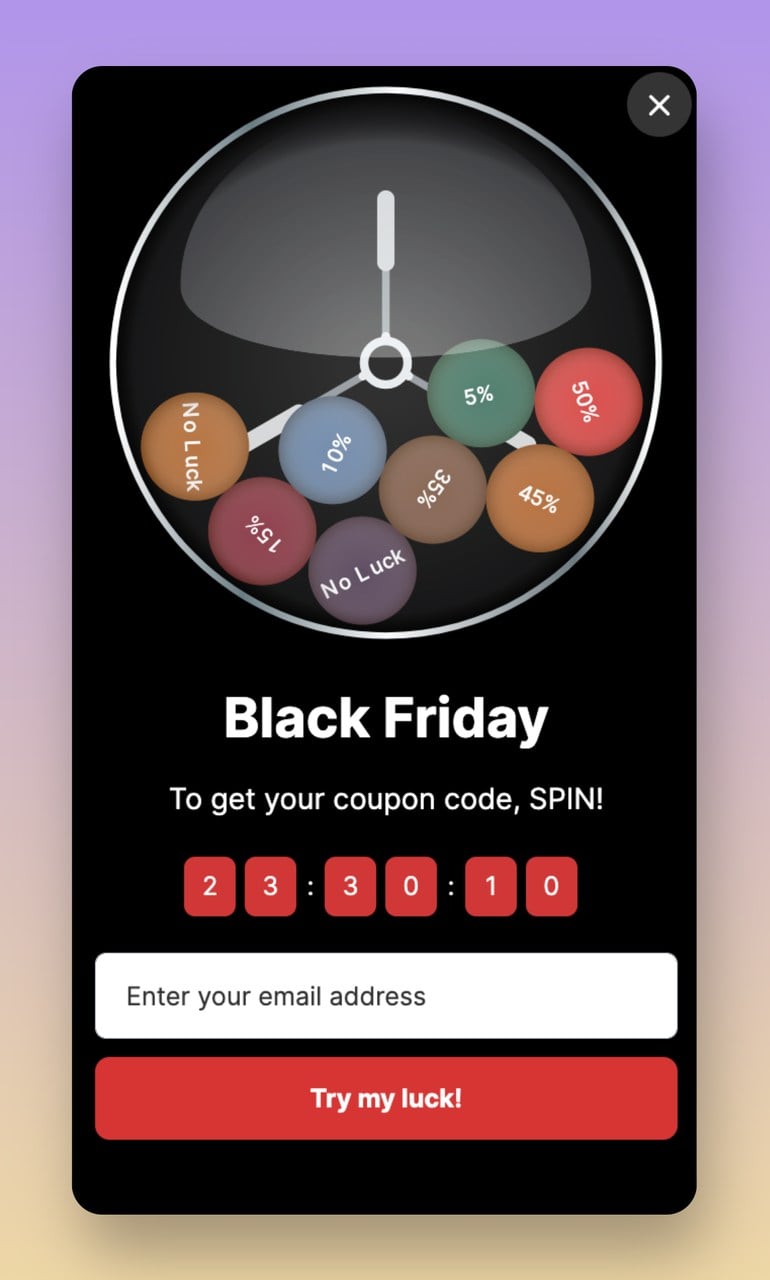
Don't make it only about the prize to win. If the offer really has an end date, create a sense of urgency around it so users know that if they don't act now they will lose this chance.
FOMO only works when the deadline is real. Use time-sensitive CTAs such as "only 24 hours left to get this offer" or "while supplies last." when they're true, or integrate a countdown timer popup with your wheel popup to show when the offer ends. Don't expect the urgent wording itself to lift conversion; our data can't show that it does.
6. Write the Button in the First Person
The button is the last thing a visitor reads before the spin, and its wording is one of the few copy choices our data can separate. First-person buttons ("Send my code") convert 1.18% vs 0.80% for neutral wording (English popups, median campaign).
Buttons that promise value ("Get", "Claim", "Unlock") look stronger than "Subscribe" / "Join" buttons (1.06% vs 0.77%, English popups, median campaign), but the gap is not statistically reliable. For a wheel, that points to a button such as "Spin my wheel" or "Claim my prize", and away from "Submit". Our call-to-action examples have more wording to borrow.
7. Keep the Form to One or Two Fields
Keep the form short. For plain signup popups, one or two fields convert 0.88% and 0.94%, against 0.56% for three fields (median campaign; spin-to-win and other gamified popups are counted separately). We haven't measured field count on wheels themselves, so treat it as a starting point to test, not a wheel rule.
In practice, ask for an email address, or a phone number if your SMS tool is where the list lives, and collect the rest later. Forms that ask for a phone number instead of an email look weakest in our data (0.46% vs 0.88% for email only), though that gap is not statistically reliable. Our lead generation form examples show short forms that still qualify the lead.
What are the Best Wheel Popup Providers?
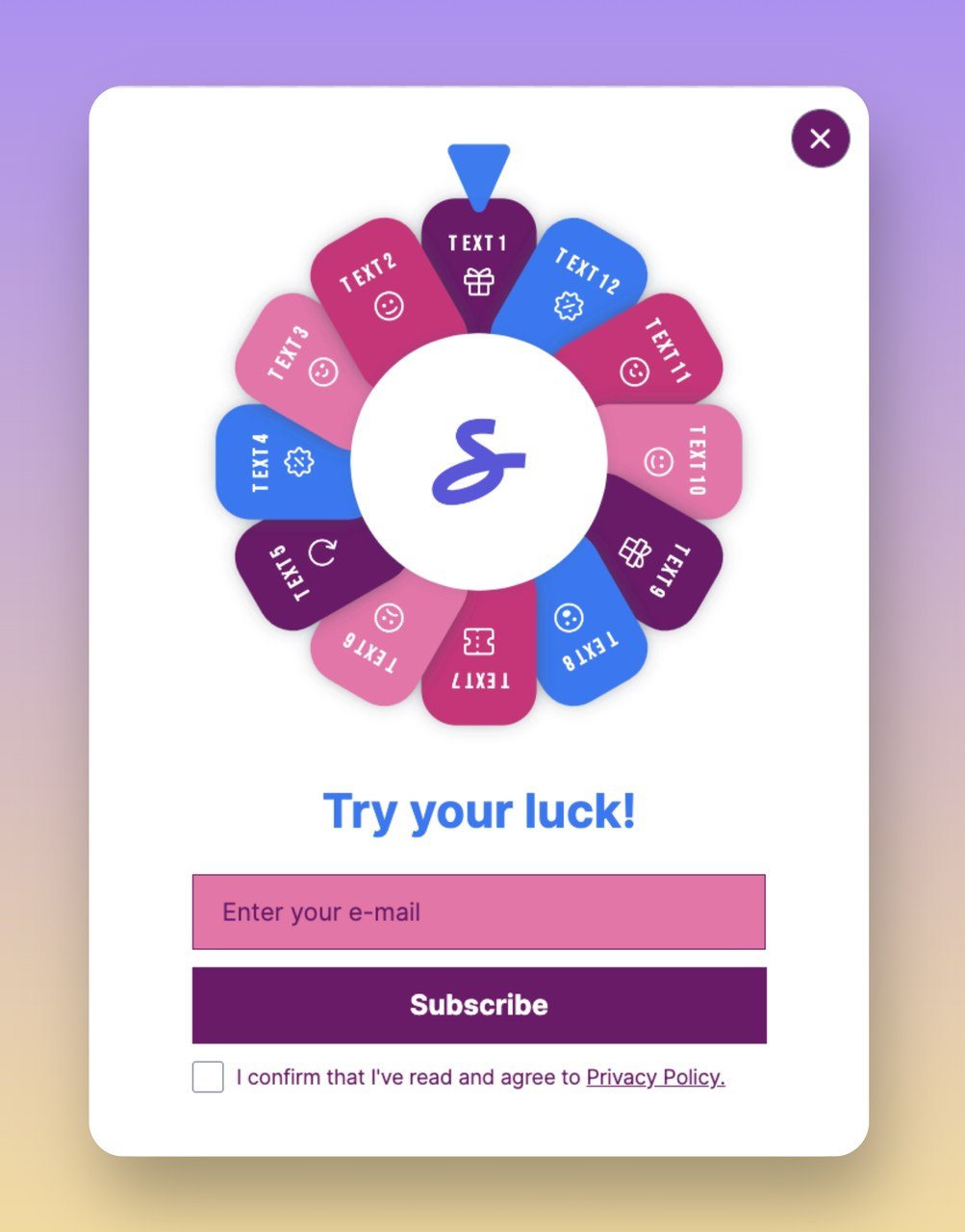
The five wheel popup tools compared here are Popupsmart (any website, Shopify app included), Wheelio and Spin-a-Sale (Shopify only), WP Optin Wheel (WordPress) and Wheel of Popups (any website, through an install code).
| Tool | Works on | Starting price | Free option | Best for |
|---|---|---|---|---|
| Popupsmart | Any website: Shopify, WordPress, Webflow, Wix or a custom site | $39/month | Free plan | Wheels next to your other popups, on any platform |
| Wheelio | Shopify | $14.92/month (up to 30,000 impressions) | 7-day free trial | Shopify stores that want wheels, scratch cards and slot machines |
| WP Optin Wheel | WordPress and WooCommerce | Pro from $59/year for one site, before tax | Free plugin on WordPress.org | WordPress sites on a small budget |
| Spin-a-Sale | Shopify | $9.99/month | 7-day free trial | Small Shopify stores |
| Wheel of Popups | Any website, through an install code | $19/month (5,000 pageviews, one promotion) | 10-day free trial | Wheels used beyond a website popup |
Prices, ratings and trials checked on 10 October 2026 on each Shopify App Store listing, WordPress.org and the Wheel of Popups pricing page; WP Optin Wheel Pro's price on 29 September 2026; Popupsmart prices from our pricing page.
1. Popupsmart
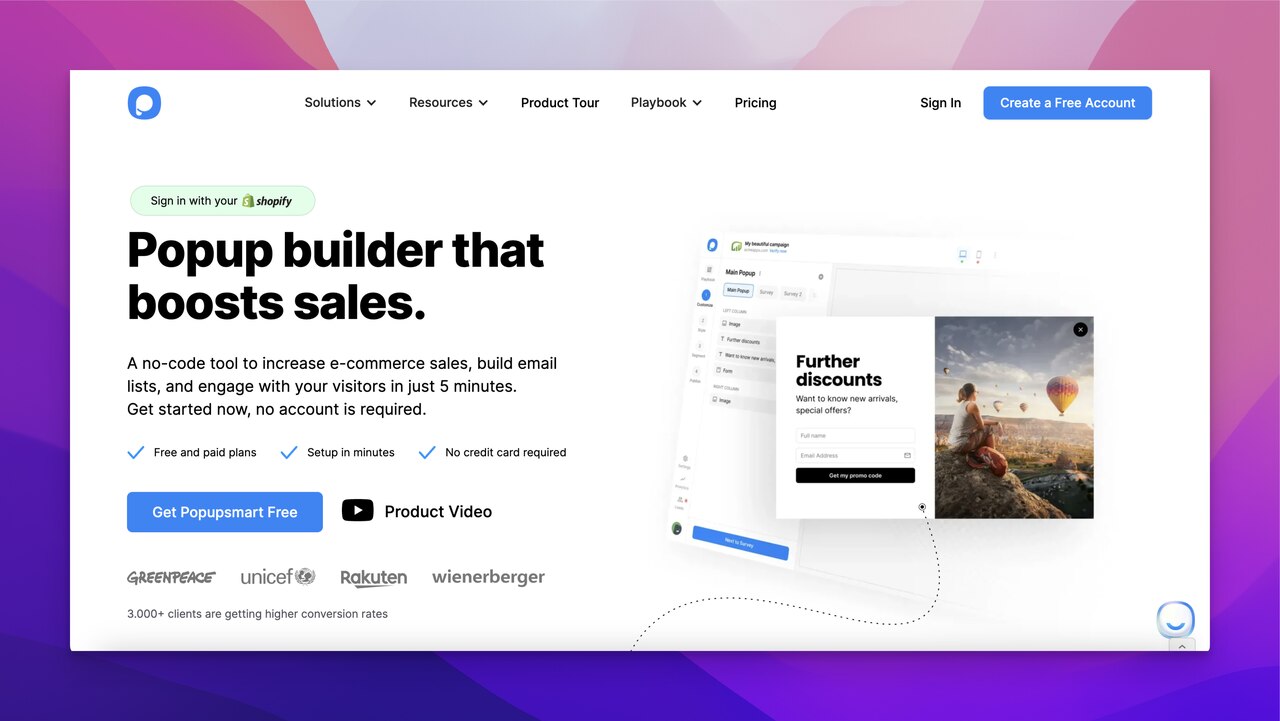
As the founder of Popupsmart, I've seen firsthand how our no-code builder simplifies creating gamified wheel popups. You customize everything from prizes to triggers without touching code. It's perfect for e-commerce gamification, letting you capture emails while adding fun to the shopping experience.
You can design an engaging wheel popup in no-time and collect users' data to refine your efforts.
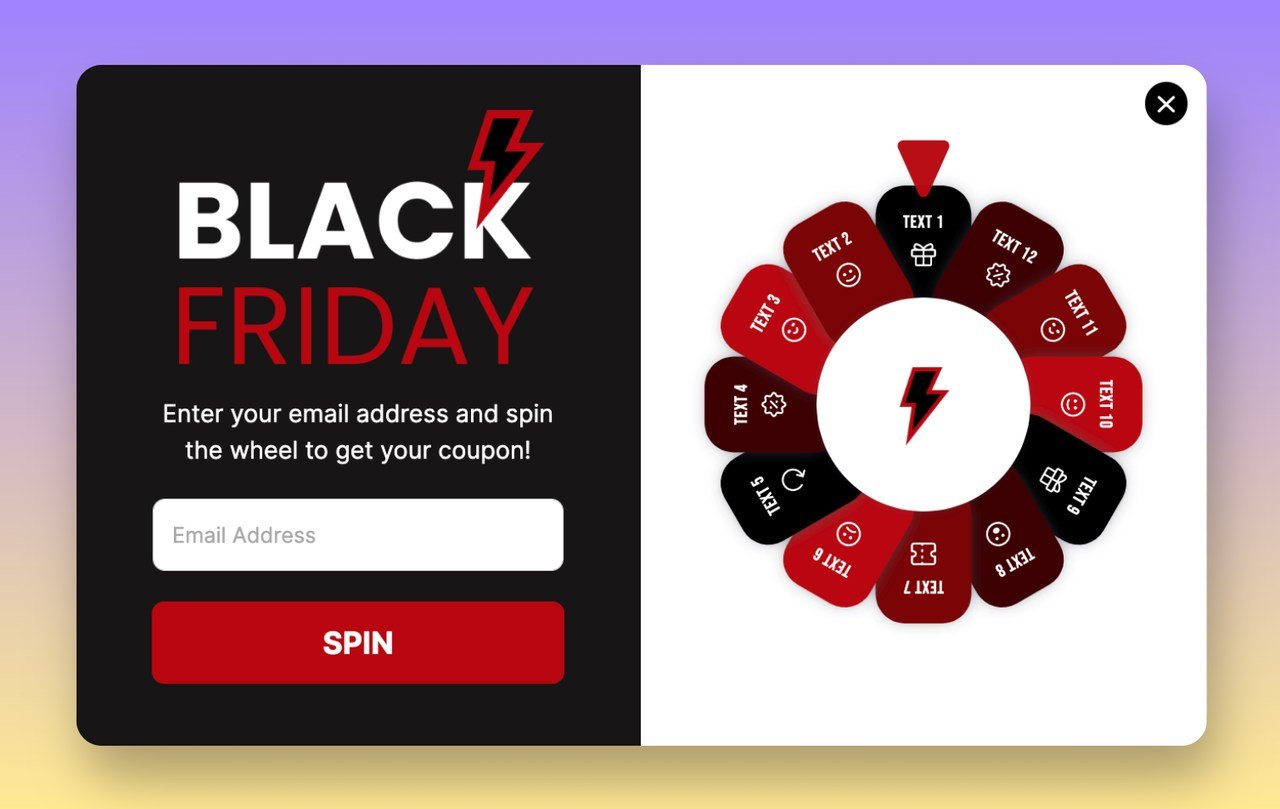
Using gamification even as small as a wheel popup for especial times like Black Friday & Cyber Monday can be an effective engagement strategy.
What sets it apart? Advanced targeting like behavioral targeting decides the moment a popup shows. Device matters too: on mobile the median popup converts 1.02% vs 0.57% on desktop in our 2026 benchmark, so check your wheel on a phone before you publish. Plus, Popupsmart sends leads to your email tool through its native integrations.
Pricing: Popupsmart has a free plan with 5K pageviews a month, and the pricing table lists gamification popups on every plan, the free plan included. Paid plans start at $39 a month, or $32.50 a month billed annually.
Best for:
Businesses wanting quick setup and data-driven tweaks.
Ready to try? Create your wheel popup today.
2. Wheelio
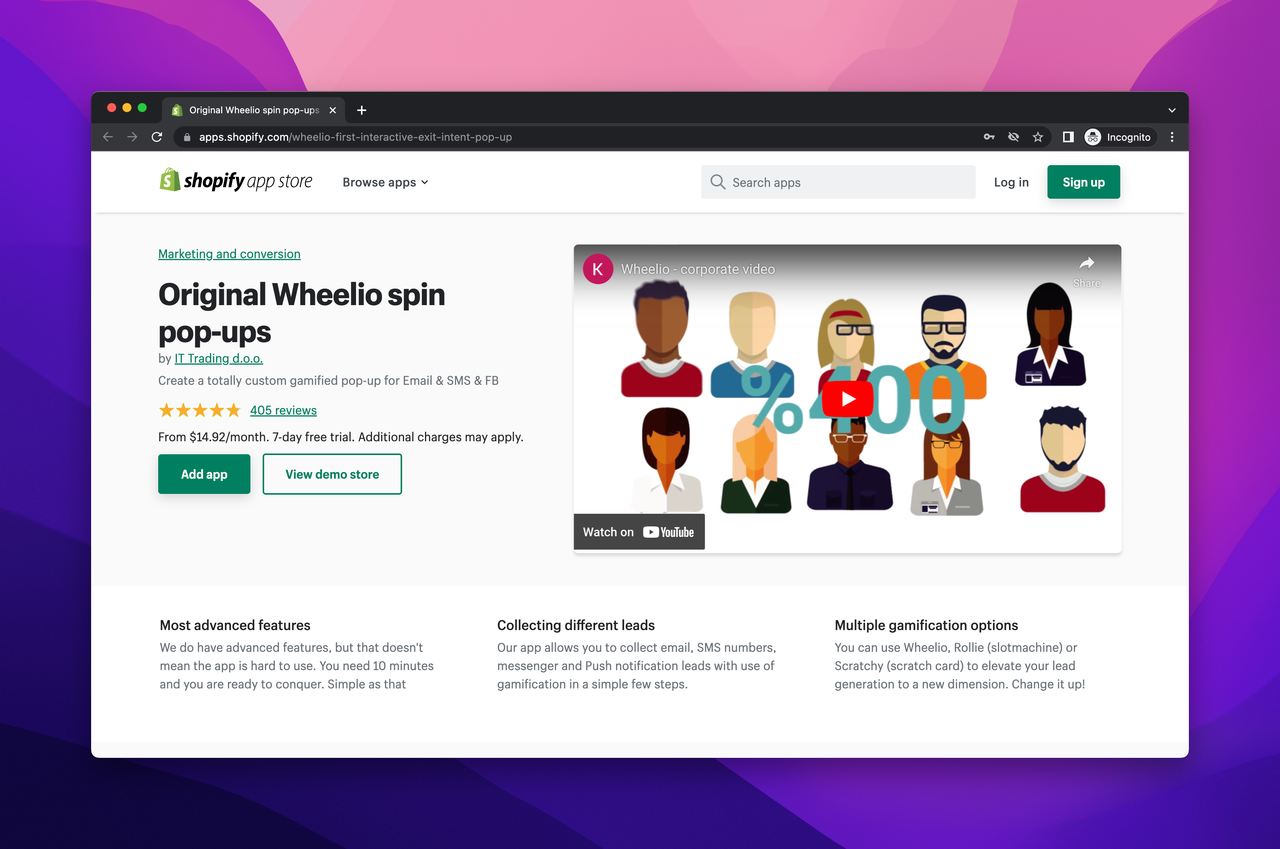
Using the Wheelio Shopify app (listed as Original Wheelio spin pop-ups), you can offer customers the chance to win discounts through spin wheels, scratch cards and slot machines, and collect email addresses and phone numbers for SMS.
All you need to do is customize the look and feel of the wheel to match your store’s branding, and set the discount amount and duration.
Pros:
Easy Shopify integration, three game formats, real-time stats for engagement metrics.
Cons:
Limited to Shopify users; no free plan.
Pricing: Basic is $14.92 a month for up to 30,000 impressions, with Level 1 to Level 3 tiers at $29.92, $54.92 and $109.92; every plan has a 7-day free trial. Rated 4.7 from 248 reviews on the Shopify App Store (10 October 2026).
Best for:
Shopify stores that want more than one game format.
Check out Wheelio user reviews for more insights.
3. WP Optin Wheel
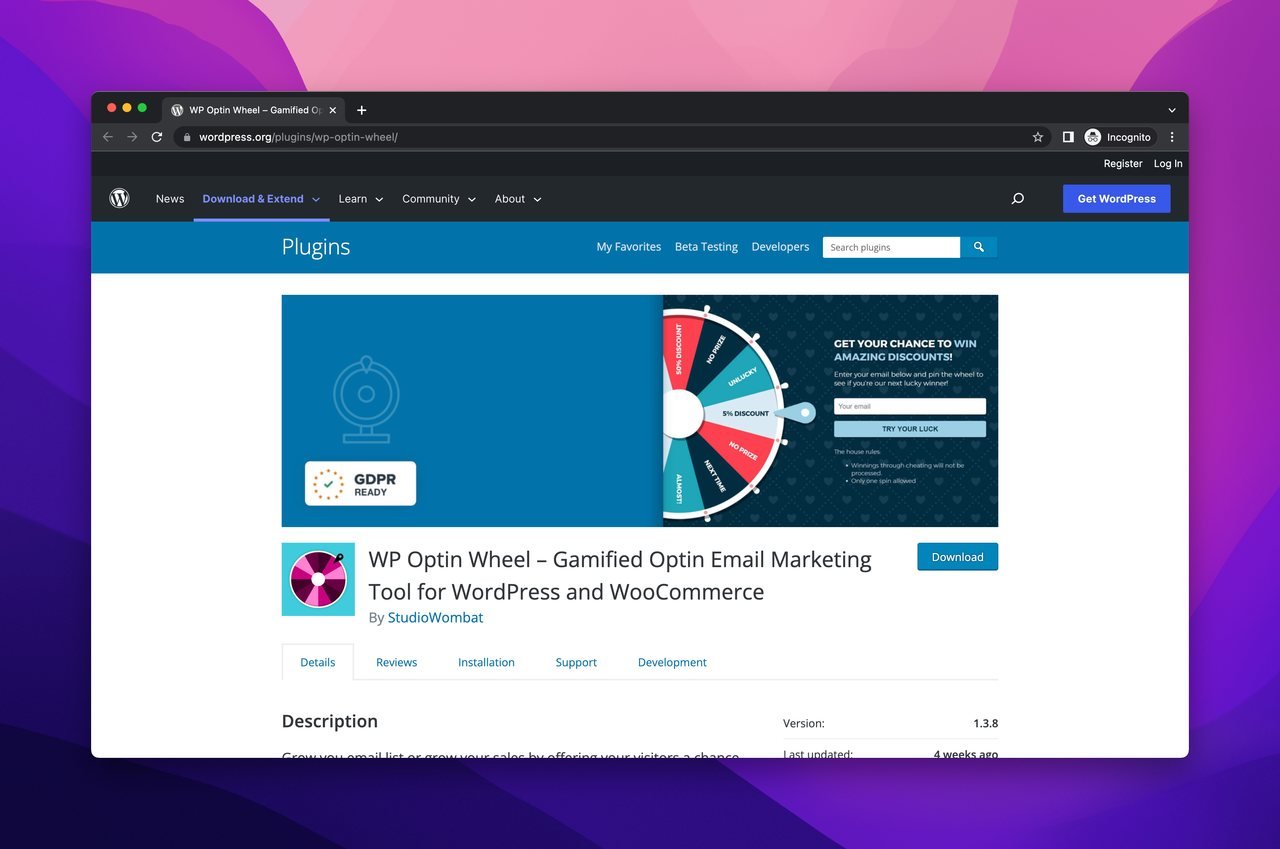
WP Optin Wheel is a WordPress plugin that can also help you to gamify your website and grow your email list easier.
The tool offers all of your website visitors a chance to win a prize, a coupon, or other discounts that they can apply toward your services and products with a spin-to-win wheel popup.
Pros:
Free core version, easy prize setup, WooCommerce compatibility for e-commerce engagement.
Cons:
Premium add-ons needed for full features: exit intent and automatic WooCommerce coupons are in the Pro version. The free plugin's last update (version 1.5.2) was about ten months before our 10 October 2026 check.
Pricing: The core plugin is free (1,000+ active installs, rated 4.9 from 81 ratings on WordPress.org, 10 October 2026). WP Optin Wheel Pro, sold by its developer Studio Wombat, costs $59 a year for one site, $99 for three and $199 for 20, or $169, $269 and $399 once for a lifetime licence (before tax, checked 29 September 2026).
Best for:
WordPress bloggers or small shops needing simple gamified user experiences.
Read the WP Optin Wheel reviews on WordPress.org before you install it.
4. Spin-a-Sale
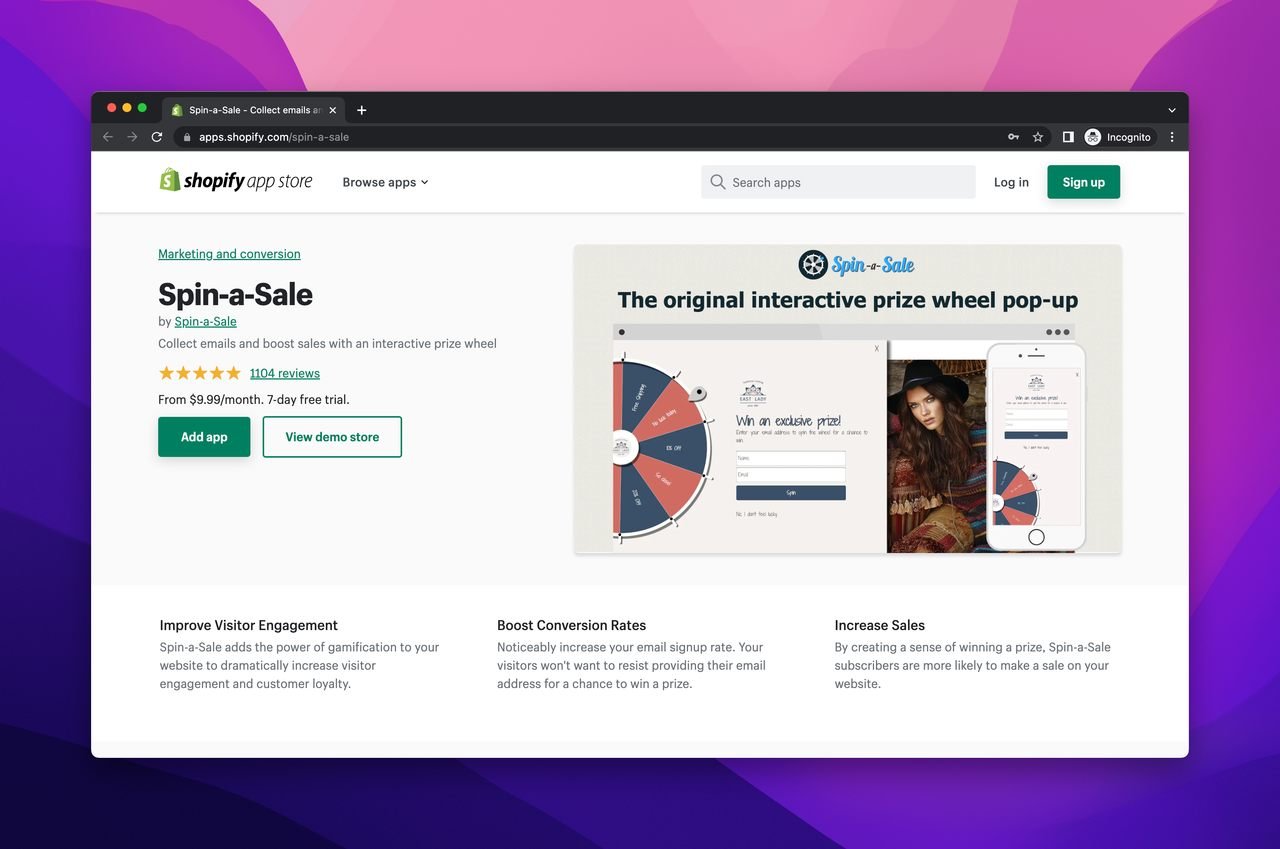
Spin-a-Sale is another great tool you can use for your Shopify store that helps you use gamification and wheel popups to increase visitor engagement and customer loyalty.
By creating a sense of winning a prize, users are more motivated to take action.
Pros:
Fun animations, email list building, integration with major ESPs.
Cons:
Shopify only; limited customization depth.
Pricing: Pro is $9.99 a month and Premium $24.99 a month, both with a 7-day free trial. Rated 4.8 from 131 reviews on the Shopify App Store (10 October 2026).
Best for:
Mid-sized Shopify operations seeking interactive marketing tools.
5. Wheel of Popups
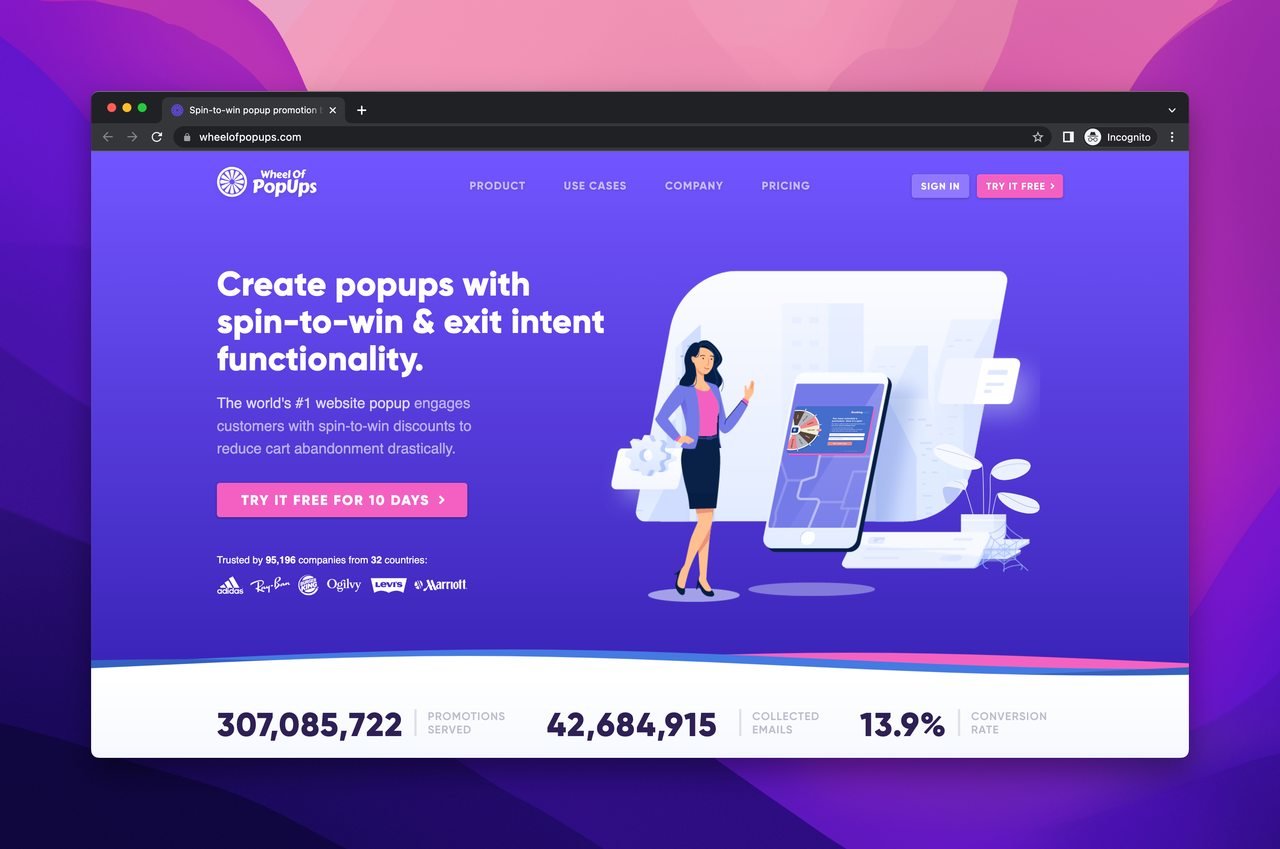
Another tool built around wheel popups is Wheel of Popups, a product at wheelofpopups.com. If you searched for "wheel of popups" looking for that app, this is the entry you want; the rest of this guide is about the wheel popup format in general.
This tool allows you to tailor your marketing to e-commerce or service websites, social media promotions, or email, enabling you to use it on trade shows or embed it into existing campaigns. It isn't an app on the Shopify App Store: on Shopify, you paste its install code into your theme, and it lists WordPress, Wix, WooCommerce, Squarespace and Webflow among the platforms it works with.
Pros:
Multi-platform support, embed options, adjustable prize odds, customizable for viral marketing campaigns.
Cons:
No free plan after the 10-day trial, and the monthly prices are shown as discounts from higher list prices.
Pricing: Basic is $19 a month (5,000 pageviews, one promotion), Startup $49, Business $149 and Enterprise $249, with about 20% off when you prepay a year. The pricing page shows these as reductions from $29, $89, $229 and $499. The 10-day free trial needs no card (checked 10 October 2026).
Best for:
Diverse businesses needing adaptable wheel popups beyond e-commerce.
How to add a spin the wheel popup to Shopify
To add a spin the wheel popup to Shopify, install a popup app with a wheel from the Shopify App Store, pick its spin-to-win template, set the prizes and their discount codes, choose who sees it and publish. An app needs no theme code. A tool without a Shopify app, such as Wheel of Popups, asks you to paste its install code into your theme instead.
These are the steps in Popupsmart's Shopify app, as its help center describes them (March 2026):
-
Install the app. Add Popupsmart from the Shopify App Store and approve the permissions. The app creates your Popupsmart account and imports your store's fonts and colors.
-
Pick the spin-to-win goal. Click Create first campaign, choose the goal Gamify User Experience, then the use case Spin to win popup.
-
Set the slices. In the wheel's game settings, give each slice a label, a weighting factor (its odds) and a discount code. The code can be a discount that already exists in Shopify, or one you create in Shopify from the popup editor.
-
Choose who sees it. The Segment step offers Smart Mode and goal-based presets; the Advanced Editor adds exit intent, device, traffic source, new or returning visitor and frequency rules. In our 2026 benchmark, popups targeted at new visitors only convert 1.13% vs 0.77% for popups shown to everyone. That figure covers all popups, not wheels alone.
-
Publish, then test on a phone. Click Publish, spin the wheel once on your phone and check that the code applies at checkout before you send traffic to it.
Wheelio and Spin-a-Sale, compared above, install from the App Store the same way and run only on Shopify. If a wheel isn't the right game for your store, our guide to lottery popups on Shopify covers another gamified format, and our comparison of Shopify popup apps covers the wider app market.
Create a Wheel Popup with Popupsmart
The effectiveness of spin-to-win popups depends on the nature of your e-commerce campaign and the target audience.
Still, they are a great and inexpensive way to promote an incentive, engage your users, and potentially drive sales. If your goal is leads rather than engagement, build the plain discount version too and compare the two on leads per display.
Most people like to win. Why not give shoppers a reason to experience something memorable with your store?
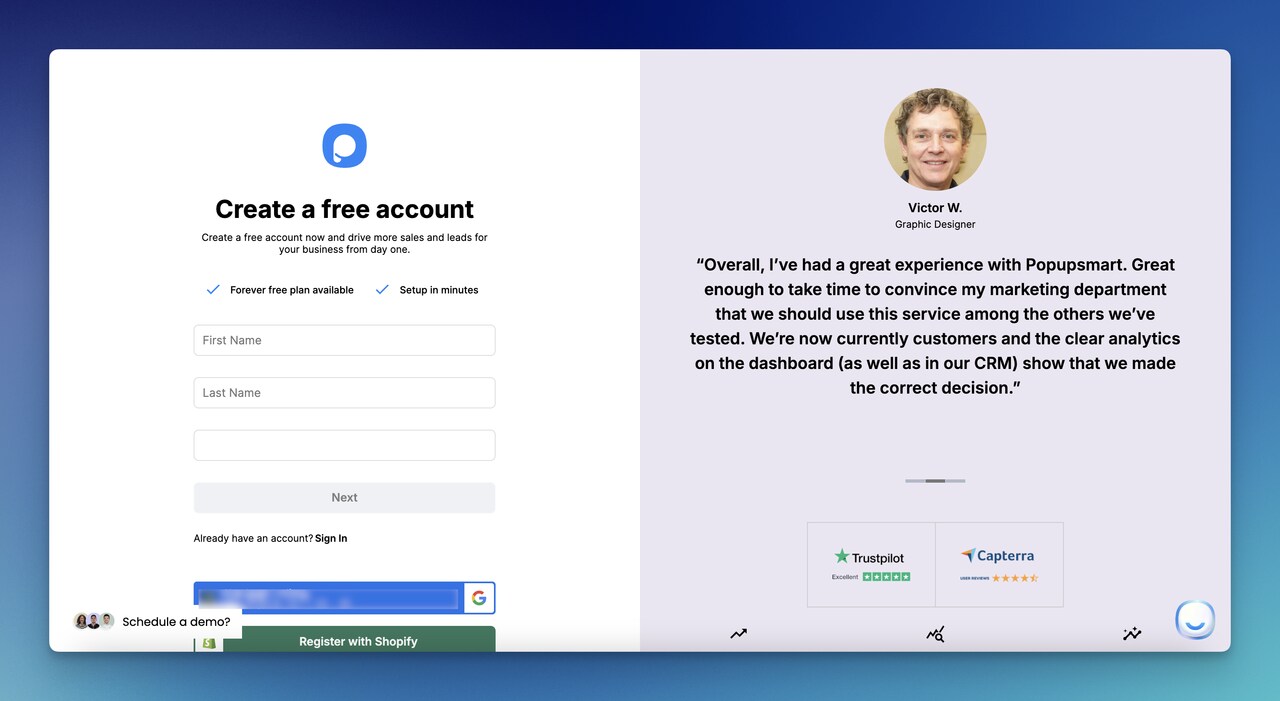
Step 1- Create Your Account on Popupsmart for Free.
Step 2- Create a New Campaign for Wheel Popups.
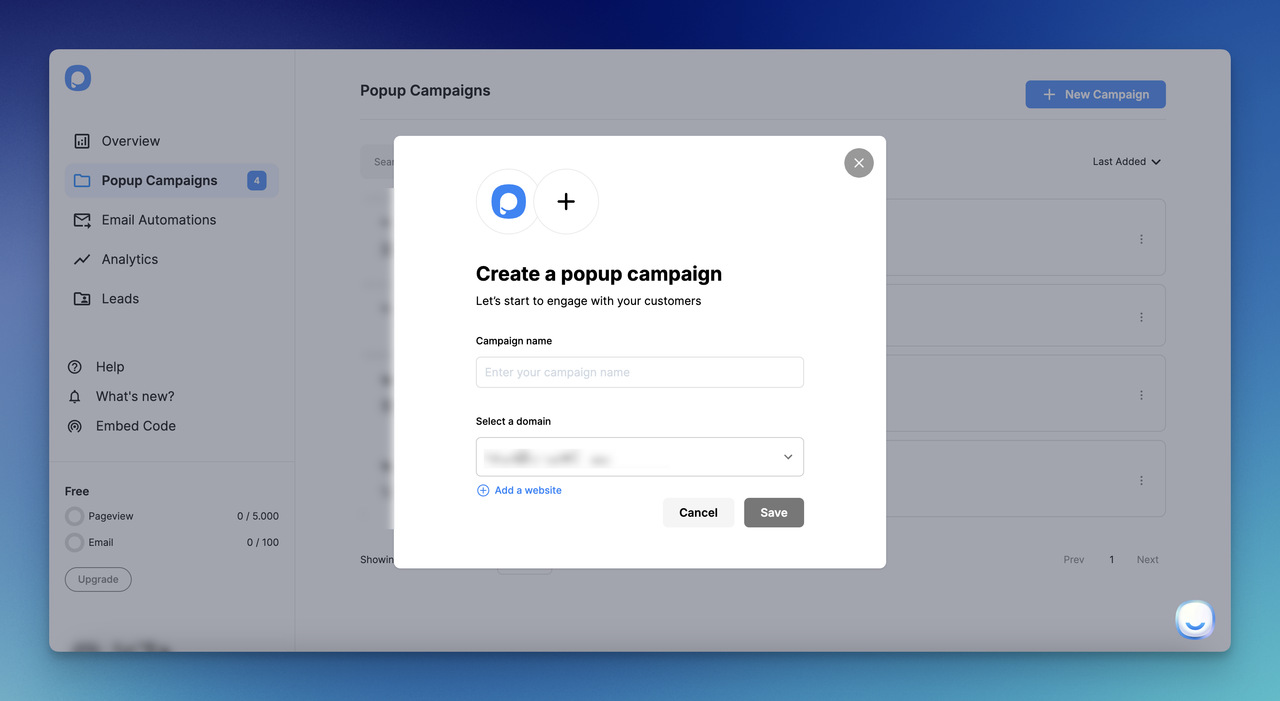
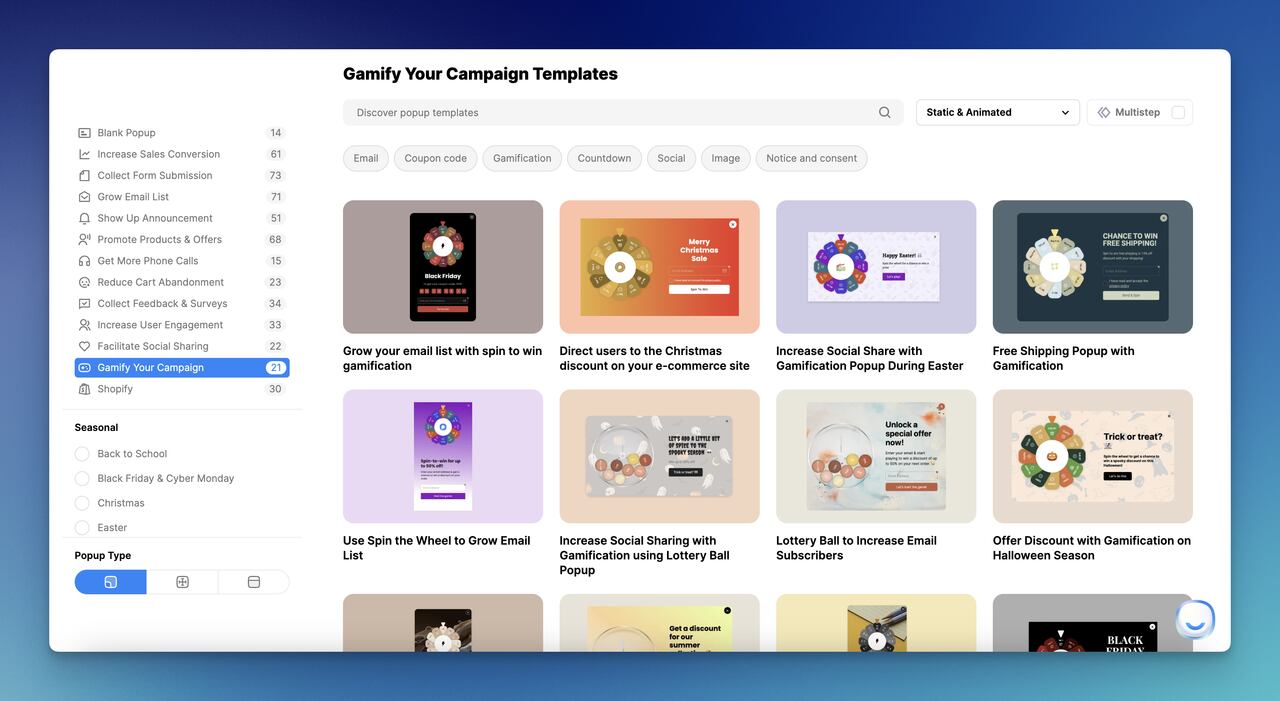
Step 3- Choose among the Wheel Popup Templates or Customize the Blank One.
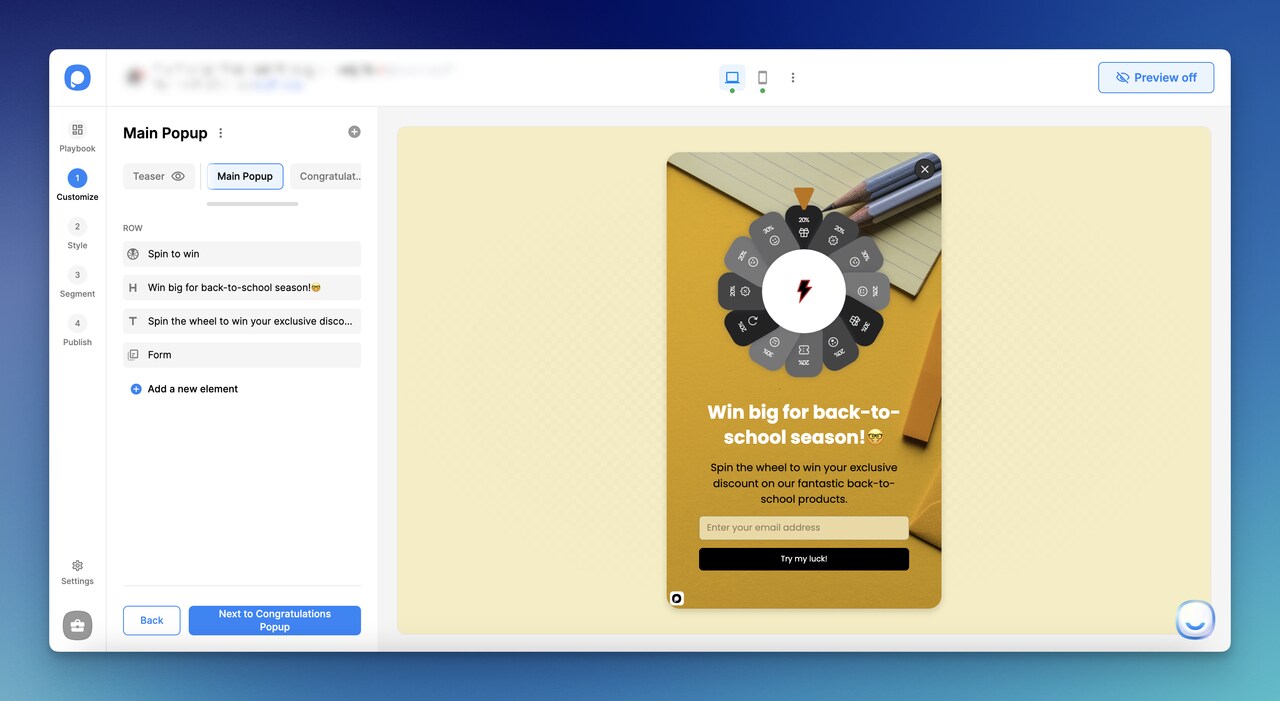
Step 4- Design Your Wheel Popup As You Like.
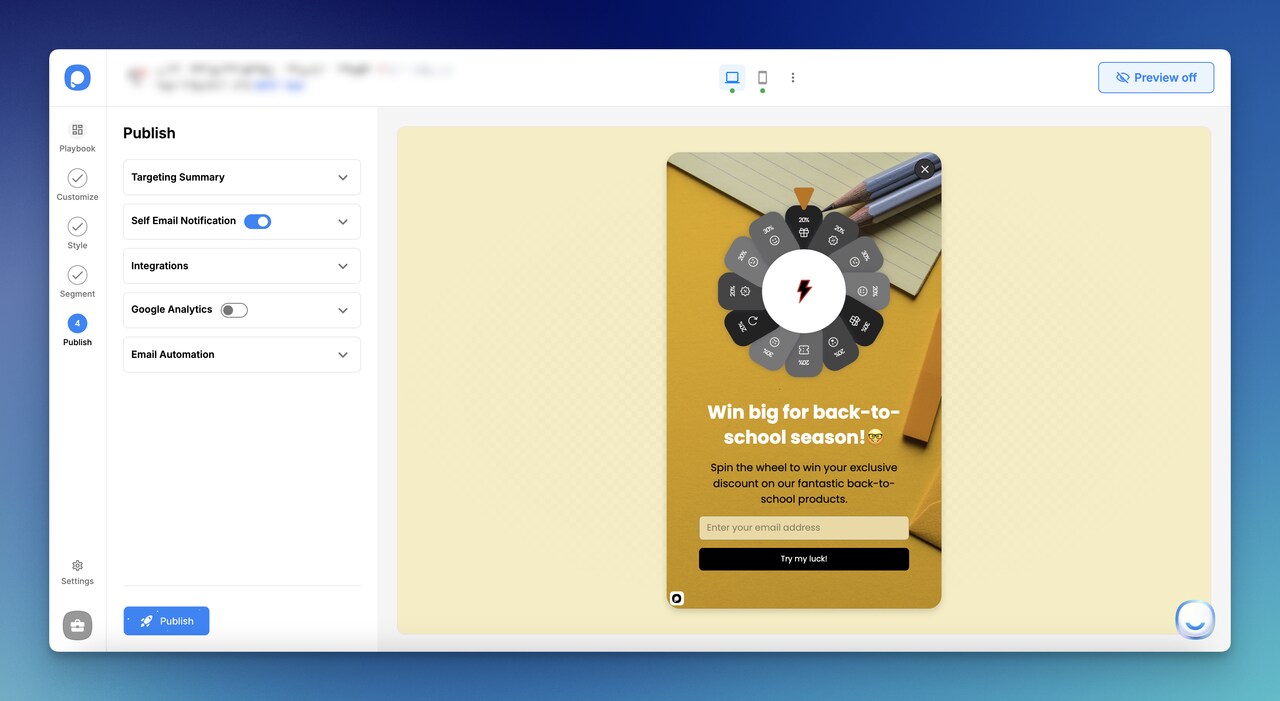
Step 5- Publish Your Wheel Popup.
What This Means for Your Store: Use the Wheel for Attention, the Offer for Leads
Wheel popups raise engagement: in our 2026 benchmark, gamified popups got far more clicks than plain signup popups, partly because the spin itself counts as a click. Our data says they are not, on their own, a way to collect more leads.
Across the popups we power, adding gamification turns passive visitors into clicking participants, and that part of the story holds up. Unlike traditional popups, wheel popups create a sense of reward, making the interaction feel exciting rather than intrusive.
The key to making them work? Timing, relevance and the offer. Personalized offers and mobile-responsive design matter, and in our data the offer and the button wording are what moved signups. And as always, A/B testing should guide your decisions: test the wheel against a plain discount popup and judge it on leads per display.
Avoid low-value prizes and focus on collecting meaningful lead data. When you balance strategy with a touch of fun, a wheel popup earns its place as the attention-getter, and the offer inside it does the lead collecting.
Frequently Asked Questions
1. Do Spin-to-Win Popups Collect More Emails Than a Regular Signup Popup?
Not measurably, in Popupsmart's data. Across popups run between January 2024 and September 2026, spin-to-win and other gamified popups got far more clicks than plain signup popups, partly because the spin itself counts as a click, but they did not collect measurably more email or phone leads. Offering a discount code is what lifted signups.
2. What Prizes Work Best in a Spin-to-Win Wheel Popup?
The most effective prizes tend to be meaningful but sustainable, such as percentage discounts, free shipping, or gift-with-purchase rewards. These incentives motivate users without hurting your margins and create a stronger sense of excitement. In Popupsmart's 2026 benchmark, popups stating 10% off converted better than popups stating no discount, and bigger discounts did not convert measurably better, although the larger-discount samples are small.
3. How do I add a spin the wheel popup to Shopify?
Install a popup app with a wheel from the Shopify App Store, such as Popupsmart, Wheelio or Spin-a-Sale, and pick its spin-to-win template. Set each slice's prize and discount code, choose who sees the wheel, publish, then spin once on your phone to check that the code works at checkout. An app needs no theme code; a tool without a Shopify app needs its install code pasted into your theme.
4. Is there a free spin the wheel popup?
Yes. Popupsmart's free plan includes gamification popups, the spin-to-win wheel among them, with 5K pageviews a month, and the core WP Optin Wheel plugin is free on WordPress.org. Wheelio and Spin-a-Sale on Shopify have 7-day free trials rather than free plans, and Wheel of Popups has a 10-day free trial. Plans were checked on 10 October 2026.
5. Is Wheel of Popups the Same as a Wheel Popup?
No. A wheel popup, or spin-to-win popup, is the format. Wheel of Popups is one product that builds them, at wheelofpopups.com. It is reviewed in the tool list in this article next to Popupsmart, Wheelio, WP Optin Wheel and Spin-a-Sale.
6. How Should I Measure a Wheel Popup's Results?
Count leads that contain an email address or phone number and divide them by popup displays, then compare that rate with a plain signup popup on the same pages. Click rate flatters a wheel, because every spin counts as a click.
You May Also Like: