
16 Best Website Analytics Tools to Use in 2026

 ChatGPT
 Perplexity
 Claude
 Grok
Grok Google AI Mode
Web analytics tools track and analyze website traffic and user behavior (e.g., clicks, heatmaps, retention, demographics) to optimize performance. The text lists 16 top tools for 2025 with pros/cons, pricing, and ratings, including Matomo, Google Analytics, Hotjar, Mixpanel, and others.
Table of contents (22)
Analyzing your website is a crucial step that you should not ignore. If you analyze your website regularly, you can know which parts need to be improved accordingly.
There are plenty of website analytics tools that can help you improve your website in terms of traffic, conversion, user experience with some fantastic features.
Thanks to these analytics, optimizing your visitors' journey for better becomes possible.
Here's the list of the top 16 website analytics tools with their pros and cons, pricing details and features. It will help you decide when choosing a website analytics tool for your site.
What is a Web Analytics Tool?
Analytics are the backbone of any successful online marketing campaign. All the content and ads in the world won't do you any good if you're not tracking how your site performs.
Website analytics tools are used to track and analyze user behavior on your website. There are many paid and free website analytics tools available in the market.
By using web analytics tools, you can analyze:
- The traffic your website gets.
- Effects of your CTA phrases.
- Click, mouse movement behaviors of your visitors.
- Whether or not your visitors come back to your website.
- Customer profile and where they come from.
These analytics are handy if you want to optimize your website for your target audience and get ahead of your competitors.
That's why we compiled a bunch of different website analytics tools. So choose which one is best for your business and start using them to analyze!
16 Best Website Analytics Tools
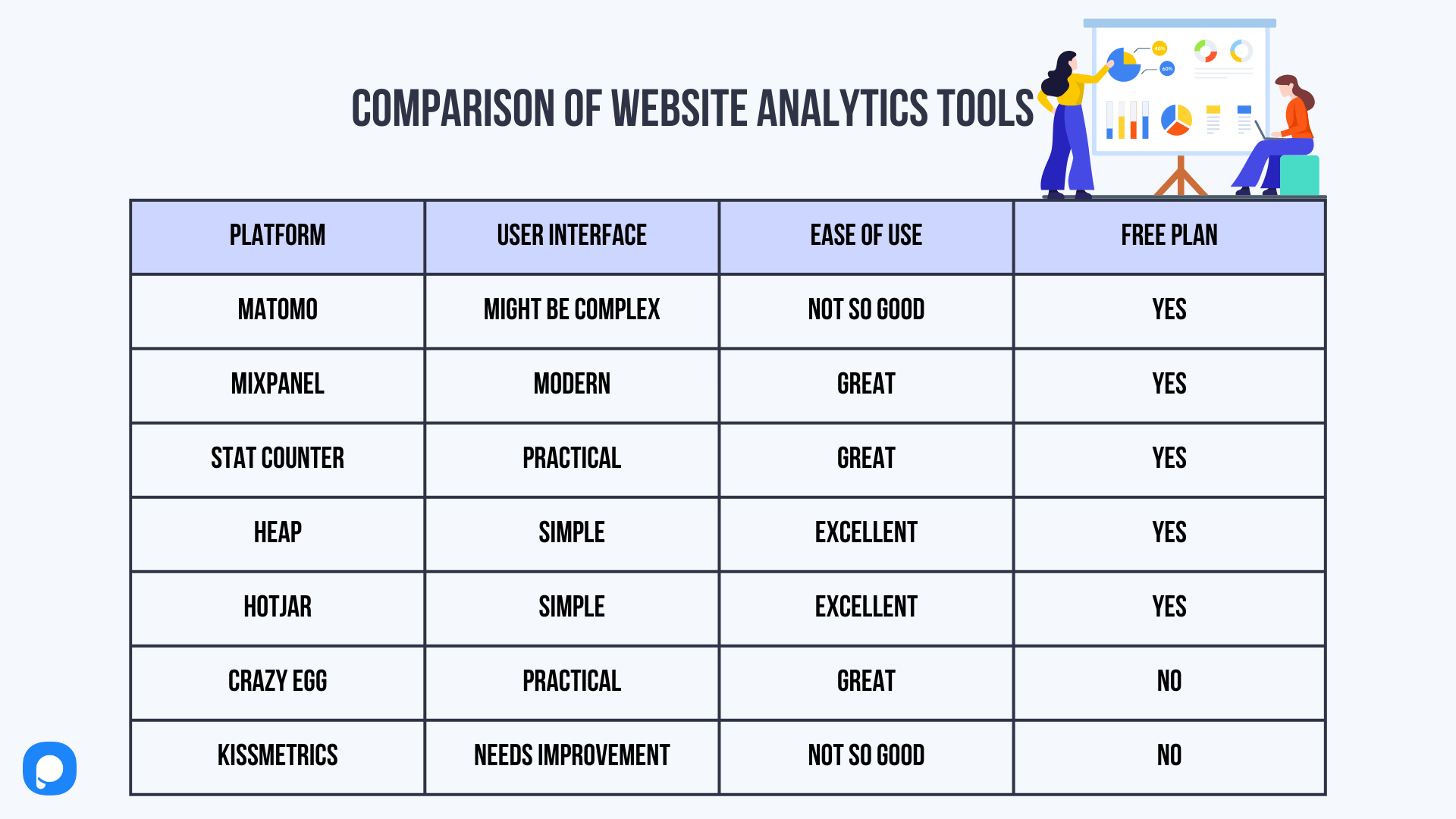
We have compiled the 16 best website analytics tools you can use in 2025 to better your website. After elaborative research, we gathered their pros and cons, pricing details and ratings.
These web analytics tools have pros and cons, so you can decide which one is right for your business properly.
1. Matomo
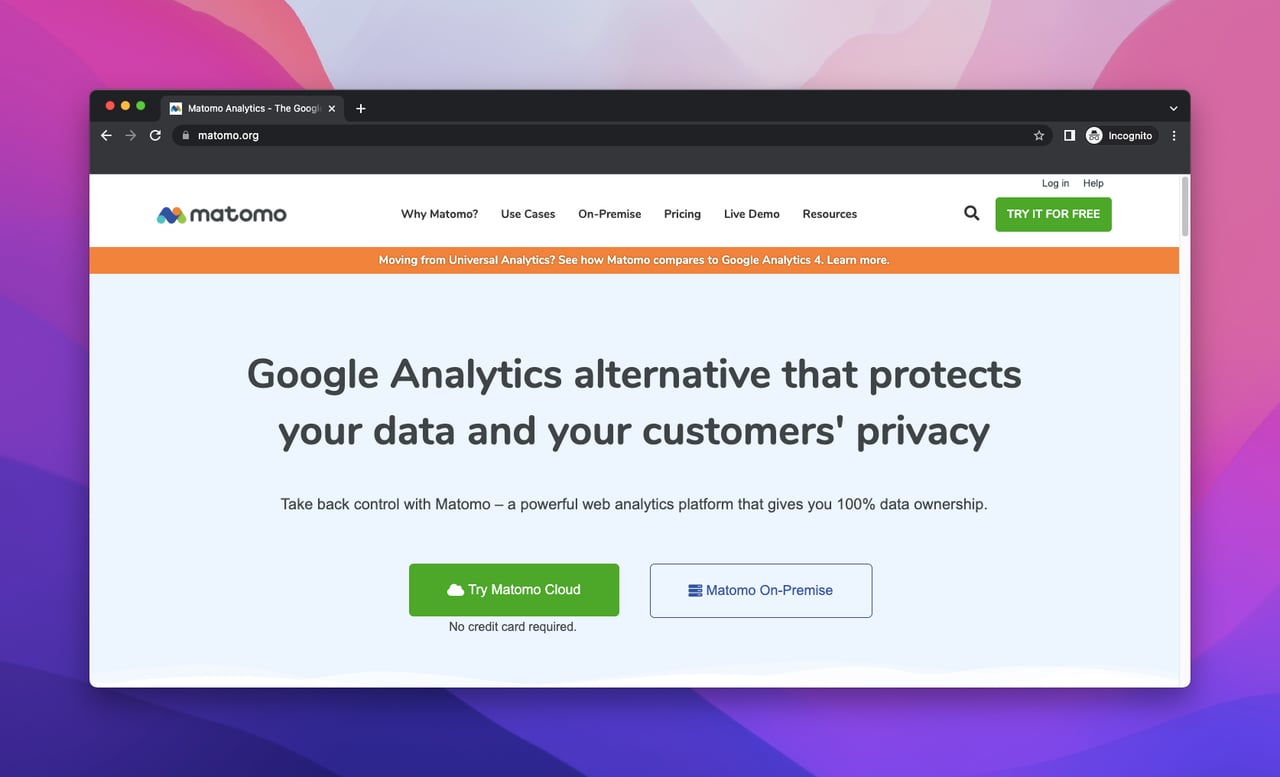
Matomo is an open-source website analytics platform that gives importance to users' privacy. It protects your customers' privacy and analyzes their behavior as well.
Pros:
- It values privacy protection.
- Offers %100 data ownership to its users.
- Cloud and on-premise hosting options give users flexibility.
- Shows real-time updates and activities, which is crucial for analyzing the behavior of visitors.
Cons:
- The UI might be complex at first if you are new to website analytics tools.
- Events you looked for before might not be deleted and can look a bit complicated.
Pricing: Free plan is available with limited access. It starts from $19 per month.
G2 Rating: 4.2/5
2. Google Analytics
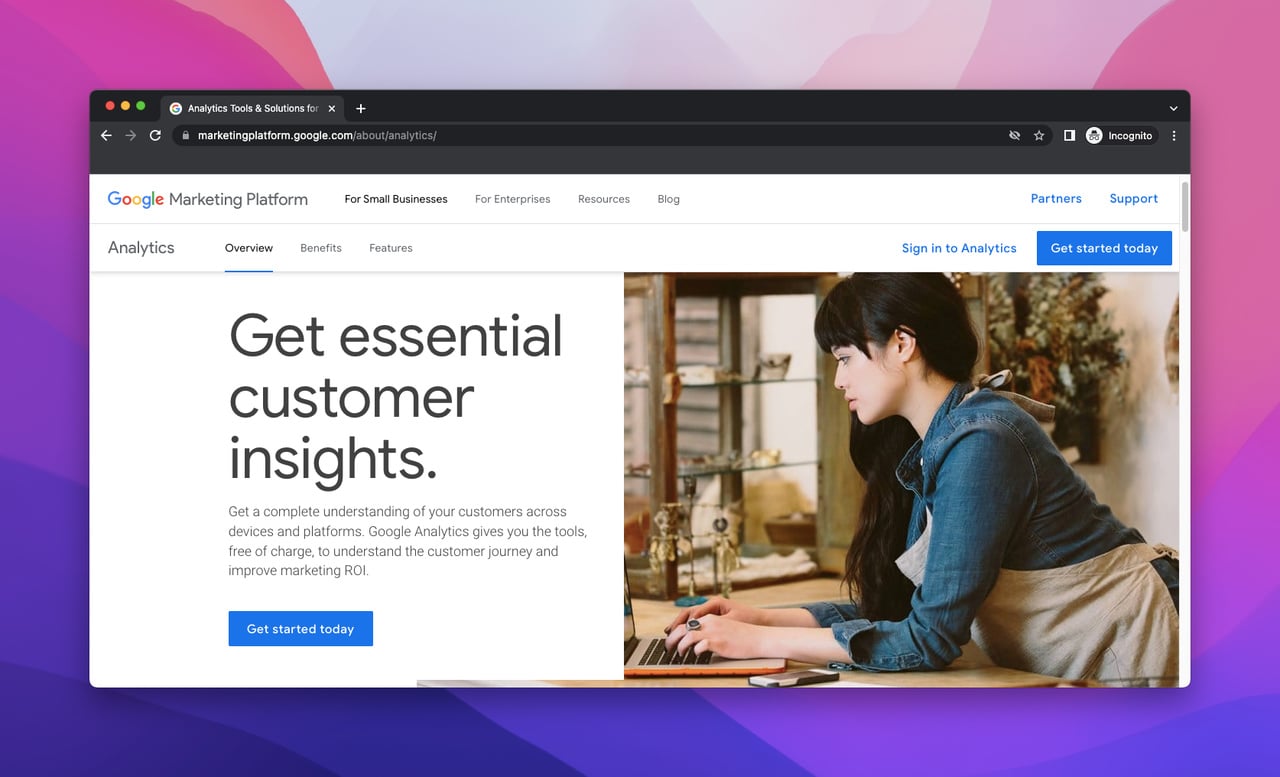
Google Analytics is one of the most popular web analytics tools. It allows you to analyze your website's activity and your audience's engagement.
Pros:
- It shows user insights in detail.
- You can analyze your content and product performances.
- Demographic details of visitors can be beneficial for improving your website accordingly.
Cons:
- Google Analytics is not GDPR compliant.
- Constant updates might make users confused at first.
- The UI may seem complex for beginners.
Pricing: Free.
G2 Rating: 4.5/5
Check G2 reviews for Google Analytics.
3. Tiny Analytics
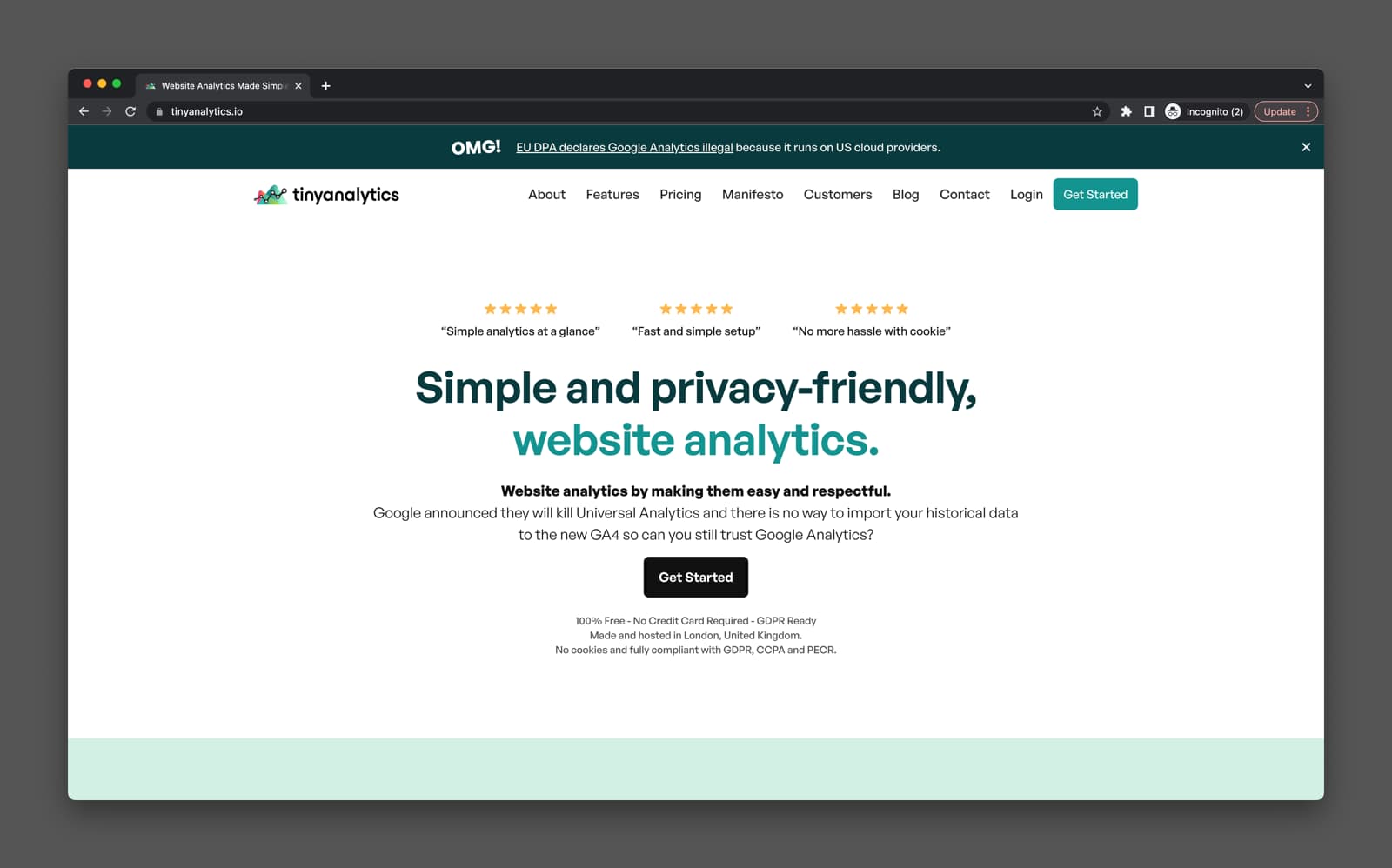
Tiny Analytics is a website analytics tool that helps you to improve your website with their analysis. The heat mapping feature makes it possible to display where your visitors are and their activities.
Pros:
- It has an A/B testing feature.
- Mobile device analysis feature is helpful to learn about the mobile experience of your website.
- Setting up heat mapping and analyzing is very easy to use for beginners.
Cons:
- Heat mapping has limited visualizations.
Pricing: Starts from free for 100.000 page-views.
G2 Rating: 4.2/5
4. Mixpanel
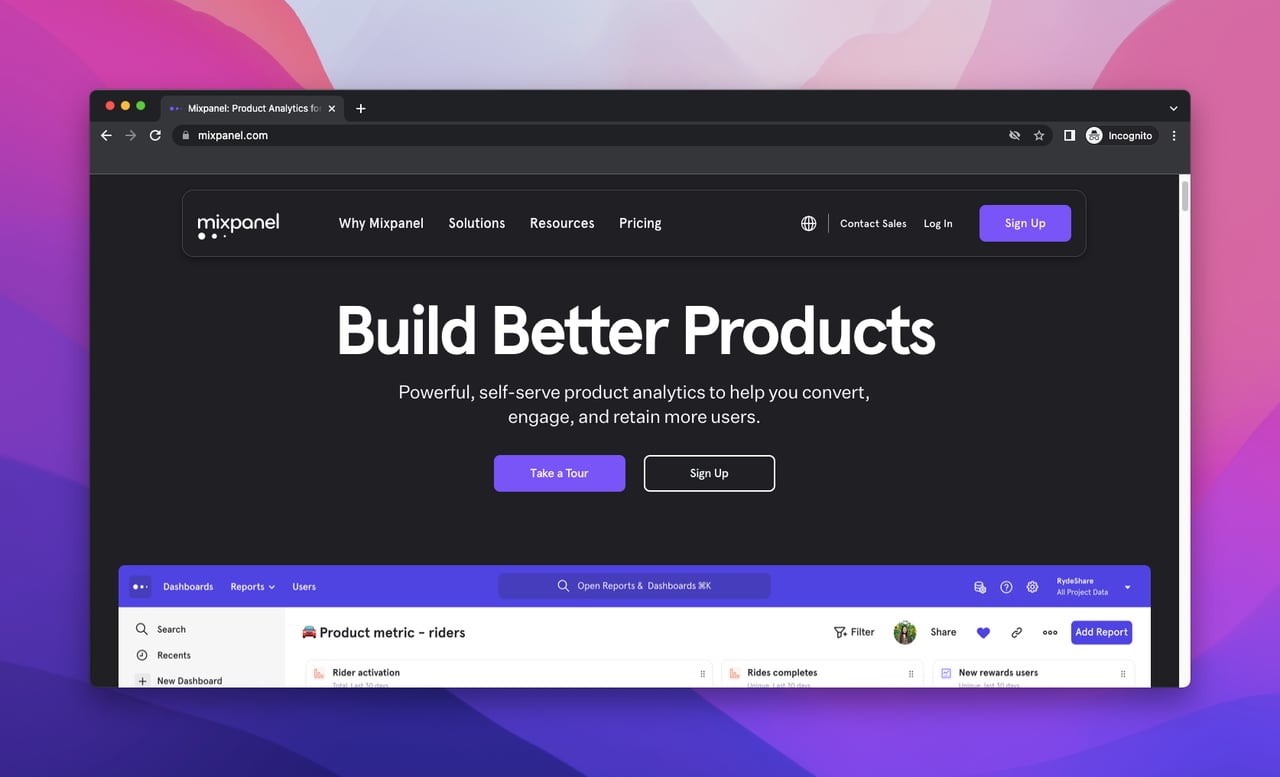
By using Mixpanel, you can analyze how people behave on your website. Since it gives real-time data, it is possible to know what your visitors are doing and how you can improve your website accordingly.
Pros:
- It has custom event and standard event tracking options.
- Real-time reporting can be evaluated as feedback from your visitors so you can make necessary improvements.
- It has a modern and easy-to-use user interface.
Cons:
- User-based pricing might not be ideal for everyone.
Pricing: Free plan is available with limited features. The growth plan starts from $25 per month.
G2 Rating: 4.5/5
5. HubSpot's Marketing Analytics & Dashboard Software
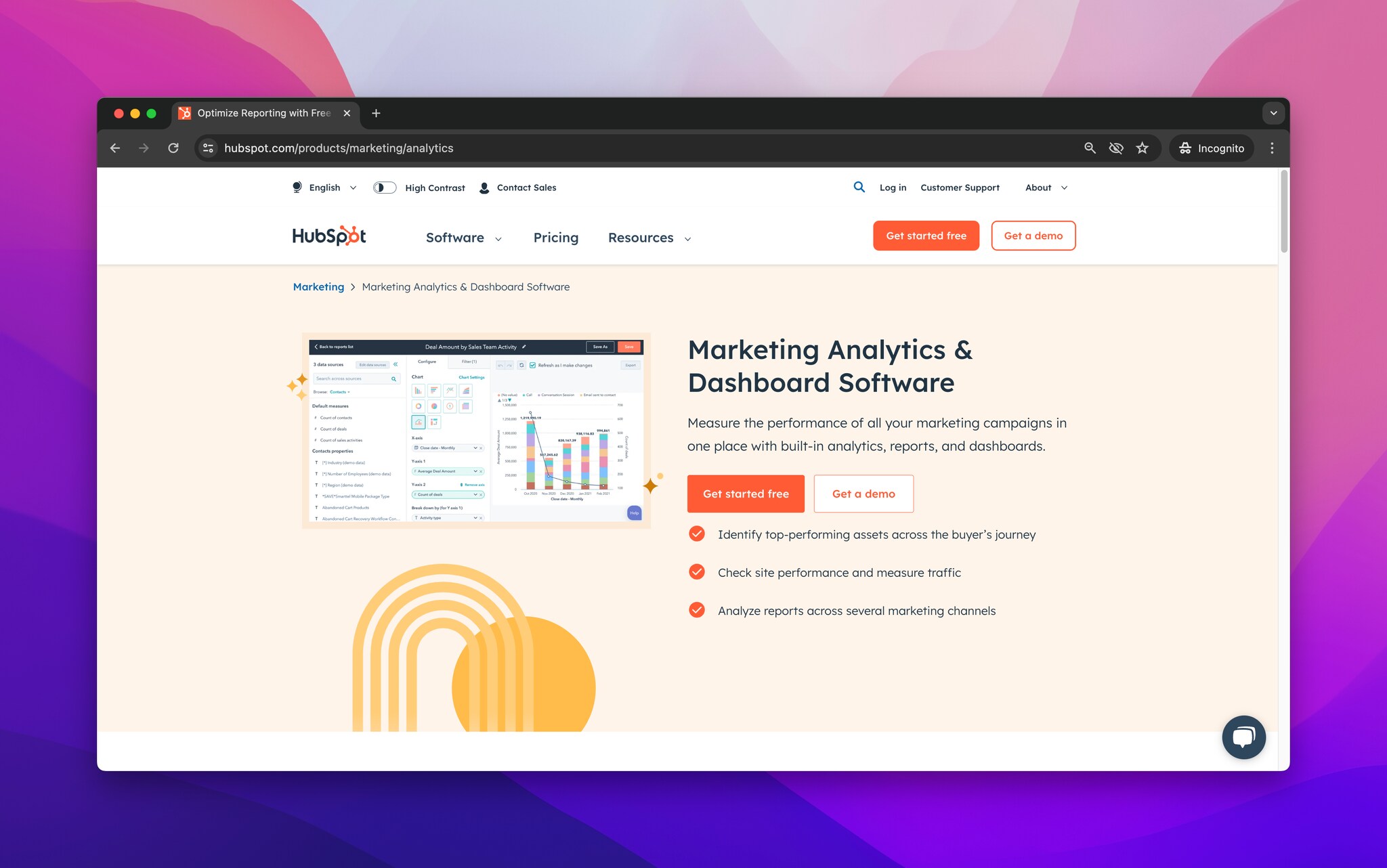
HubSpot's Marketing Analytics and Dashboard Software gives businesses powerful insights and tools to track, analyze, and optimize their marketing efforts.
With user-friendly, customizable dashboards and comprehensive real-time reporting capabilities, businesses can make data-driven decisions to drive growth and achieve their marketing objectives.
Pros:
- Comprehensive data tracking, all in one centralized dashboard
- Attribution reporting to gain insight into the effectiveness of your marketing channels and campaigns
- Integration capabilities with other HubSpot tools and third-party platforms
- Actionable insights and recommendations and insights based on data analysis
Cons:
- Learning curve
- Limited customization
- Advanced features may be lacking
Pricing: The Marketing Analytics and Dashboard Software is included in the Marketing Hub subscription.
Pricing varies based on the selected plan and the size of your marketing team. Additional features and capabilities may be available with higher-tier plans.
6. SimilarWeb
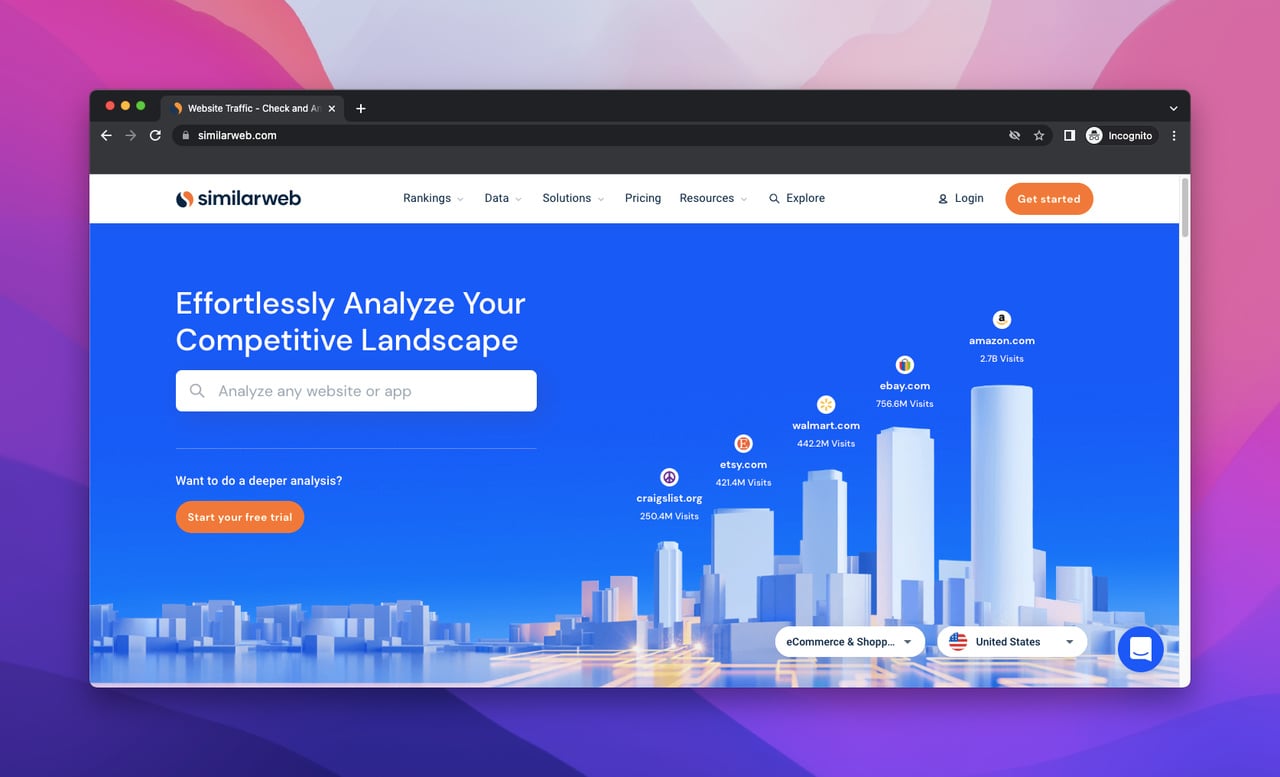
SimilarWeb allows you to analyze your website's traffic and revenue. You can check your competitor's statistics and decide how to optimize your website for your target audience.
Pros:
- Has a user-friendly, customizable dashboard.
- It allows you to monitor your competitors' statistics as well.
- Shows organic keywords, paid searches and increase or decrease in numbers.
Cons:
- Data might be limited to desktop only.
- It does not show sub-domains and specific parts of a website.
Pricing: Free trial is available. You need to contact sales for the premium plan's pricing details.
G2 Rating: 4.4/5
Explore G2 reviews for SimilarWeb.
7. Hotjar
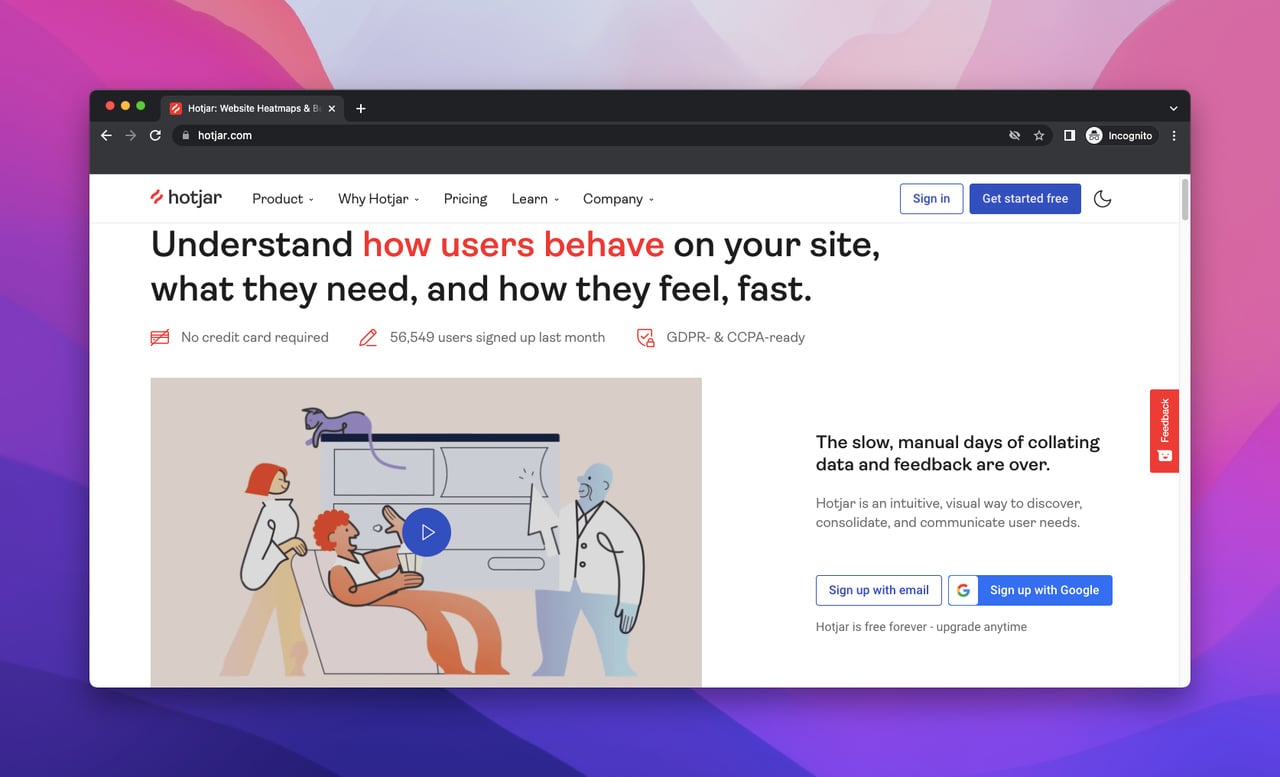
Hotjar shows you real-time data of your visitors' behaviors. It provides comprehensive reporting with heat maps and data segmentation. Also, you can have knowledge of user behavior with click tracking and mouse movement details.
Pros:
- Allows you to see where your visitors click, scroll and move. You can analyze the effects of your content and CTA phrases.
- It has multi-device support.
- Reporting feature is detailed with session replays and data segmentation features.
Cons:
- The heatmap feature needs to be improved.
- Monitoring history data might be complex and limited.
Pricing: Has a free-forever plan with limited access. Other plans start from $31 per month.
G2 Rating: 4.4/5
Explore Hotjar reviews on G2.
8. Woopra
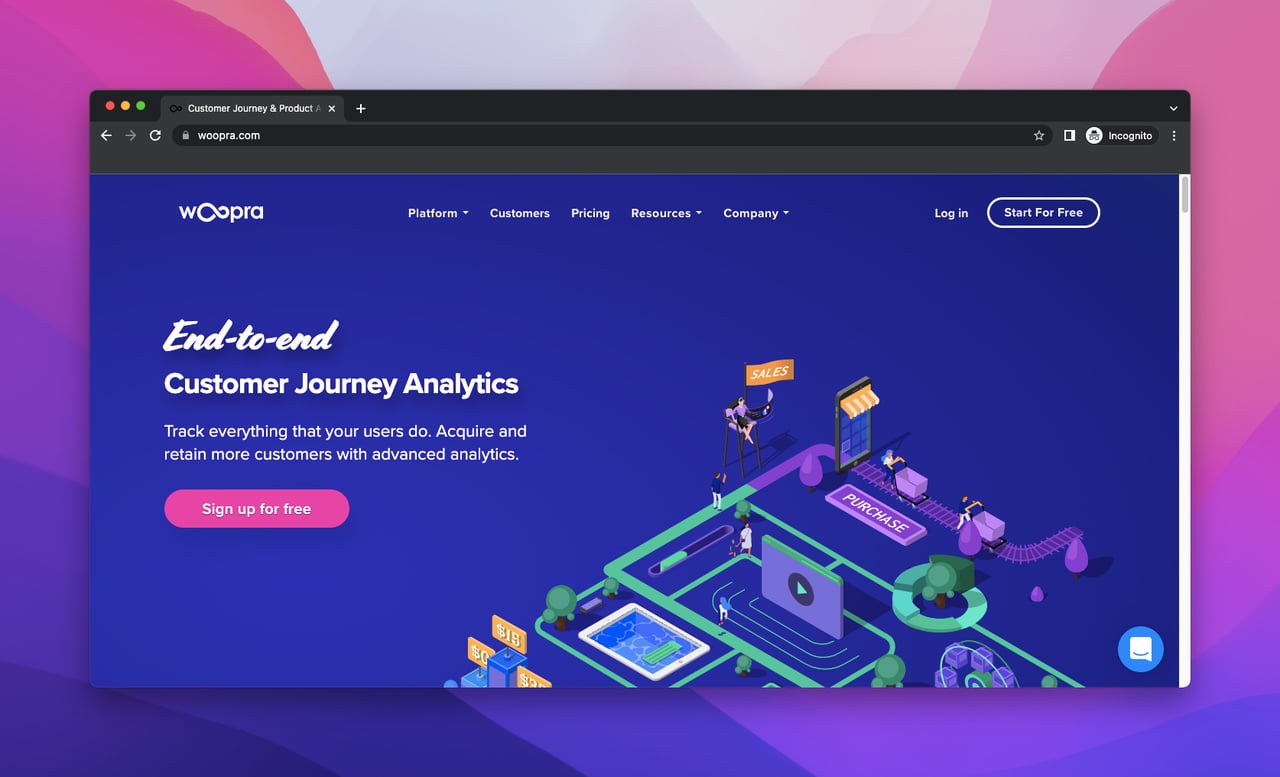
Woopra accompanies you while analyzing your visitors' journey on your website. You can examine the effectiveness of your campaign, which content gets the most views and so many details of visitor behaviors.
Pros:
- It is possible to see whether or not users return after using your product or services with detailed retention reports.
- It shows trend reports and gives you the idea of which path you should take.
- Provides real-time reporting.
Cons:
- It takes time to set it up. It might be hard to use at first for beginners.
- Pricing is a bit expensive.
Pricing: Has a free plan with limited features. Startup plan is $349 per month. Pro plan is $999 per month.
G2 Rating: 4.4/5
9. Adobe Analytics
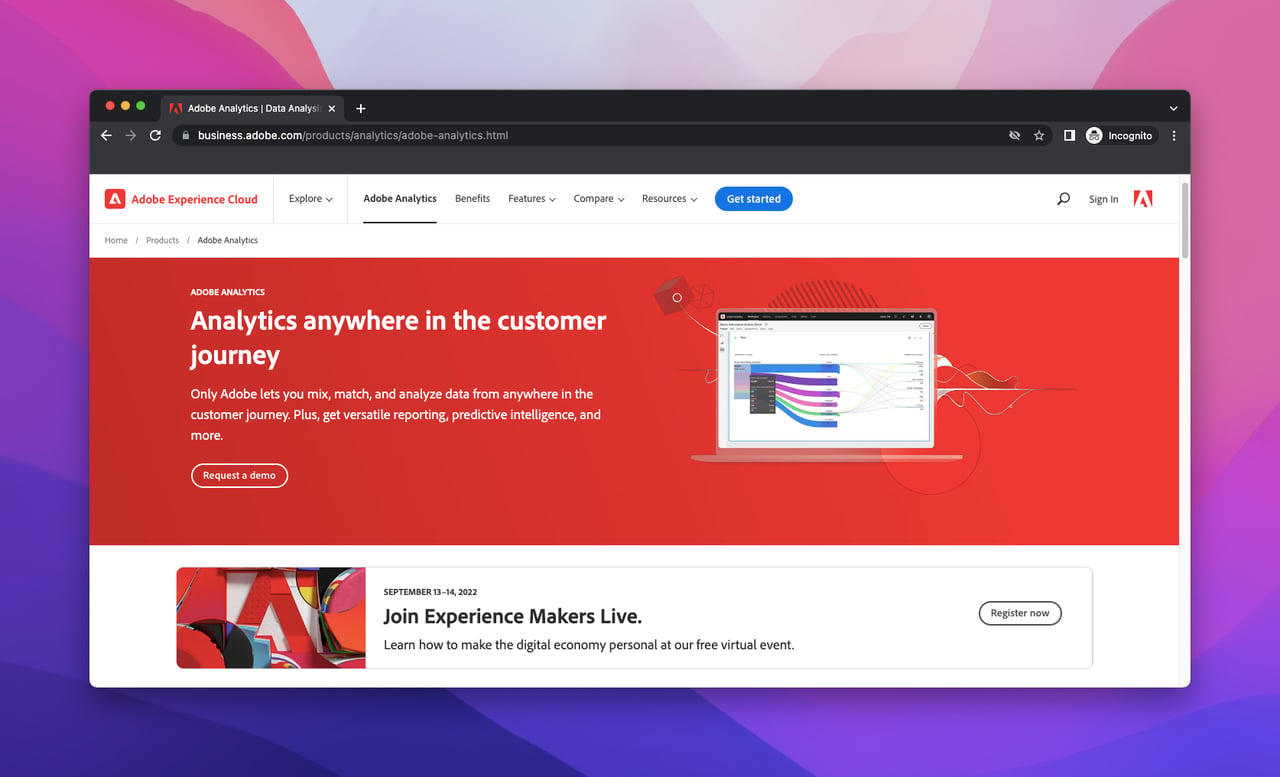
Adobe Analytics gives business owners real-time reports to improve their website. Analyses data according to Adobe clouds and offers comprehensive information.
Pros:
- You can track your campaigns' details and optimize your website.
- It is customizable if you want to focus on specific data.
- Provides flexibility in the integration process.
Cons:
- It might be challenging to set up and use for beginners.
- Customer support and documentation need to be improved.
Pricing: Contact sales for pricing details.
G2 Rating: 4.1/5
Read Adobe Analytics reviews on G2.
10. Statcounter
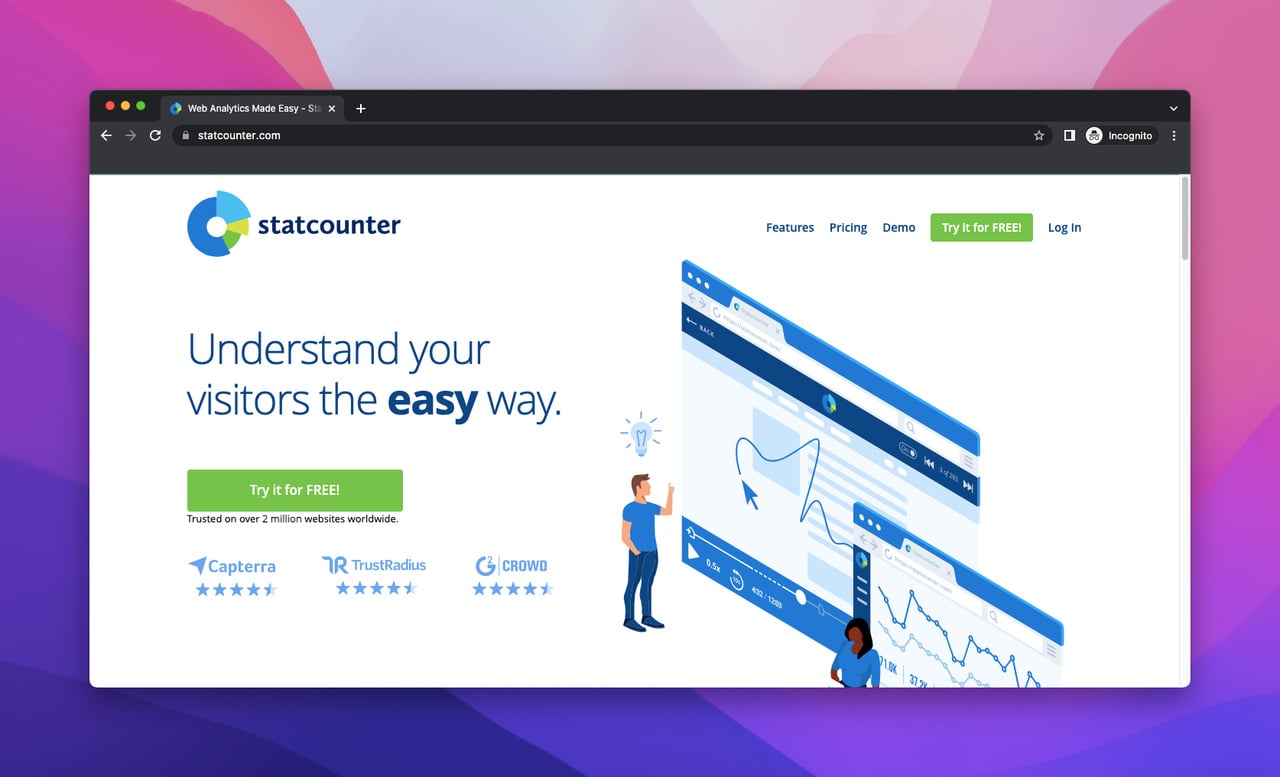
Statcounter offers real-time website analytics and statistics. Using this tool, you can analyze your visitors' sessions and behaviors.
Pros:
- Gives custom reports with detailed information.
- The UI is straightforward and practical to use for starters.
- Shows elaborative traffic details.
Cons:
- Free plan is limited.
- Does not have a lot of integration options.
- Some data may not be exact.
Pricing: Has a free plan. It starts from $16 per month.
G2 Rating: 4.3/5
Check Statcounter reviews on G2.
11. Amplitude
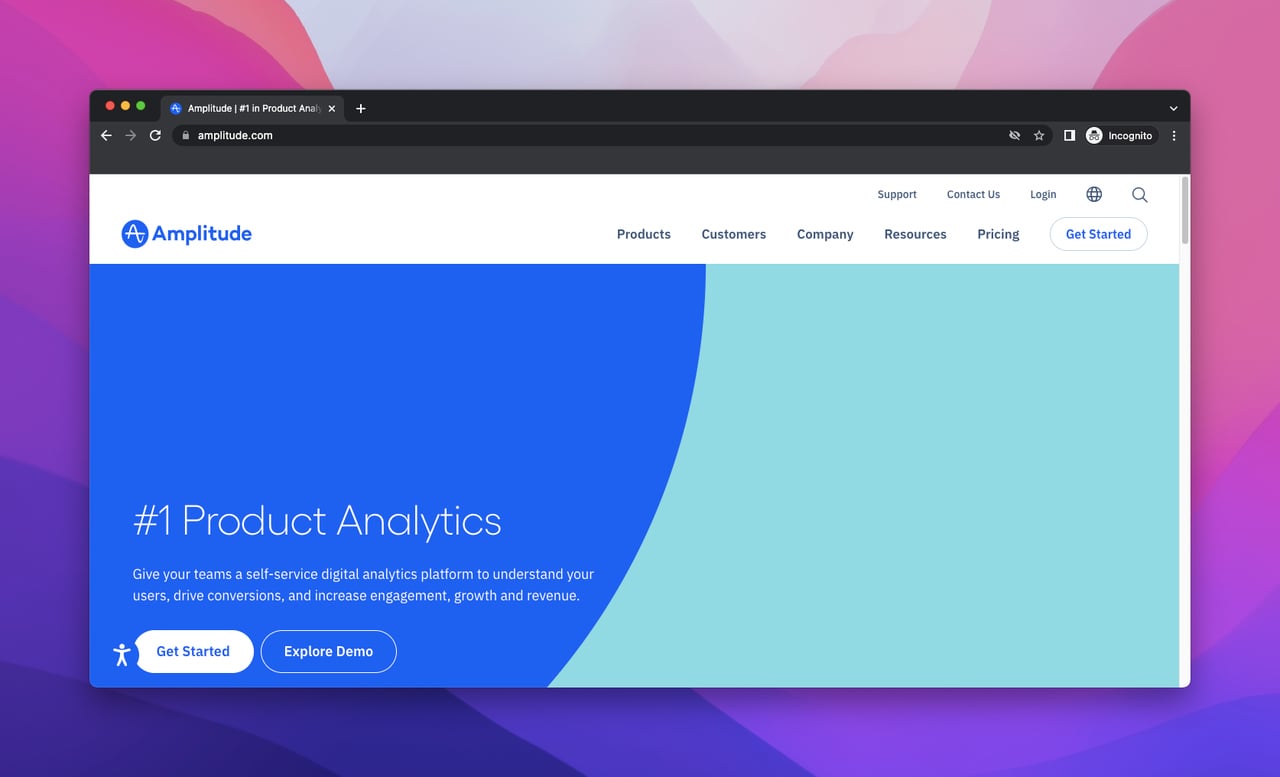
Amplitude 's analytics feature helps you understand your visitors. By tracking and analyzing their engagement and behavior, you can improve your website for your target audience.
Pros:
- You can explore behavioral data by analyzing your most-used features and customer profile.
- Gives real-time analytics with cross-platform tracking.
- Emphasizes trending data of the time.
- Funnel analysis, user-level and account-level analysis features are beneficial.
Cons:
- Onboarding process needs to be improved.
- A bit complex at the beginning and the documentations are deficient.
Pricing: Contact sales for pricing details.
G2 Rating: 4.5/5
Read more reviews about Amplitude on G2.
12. Heap
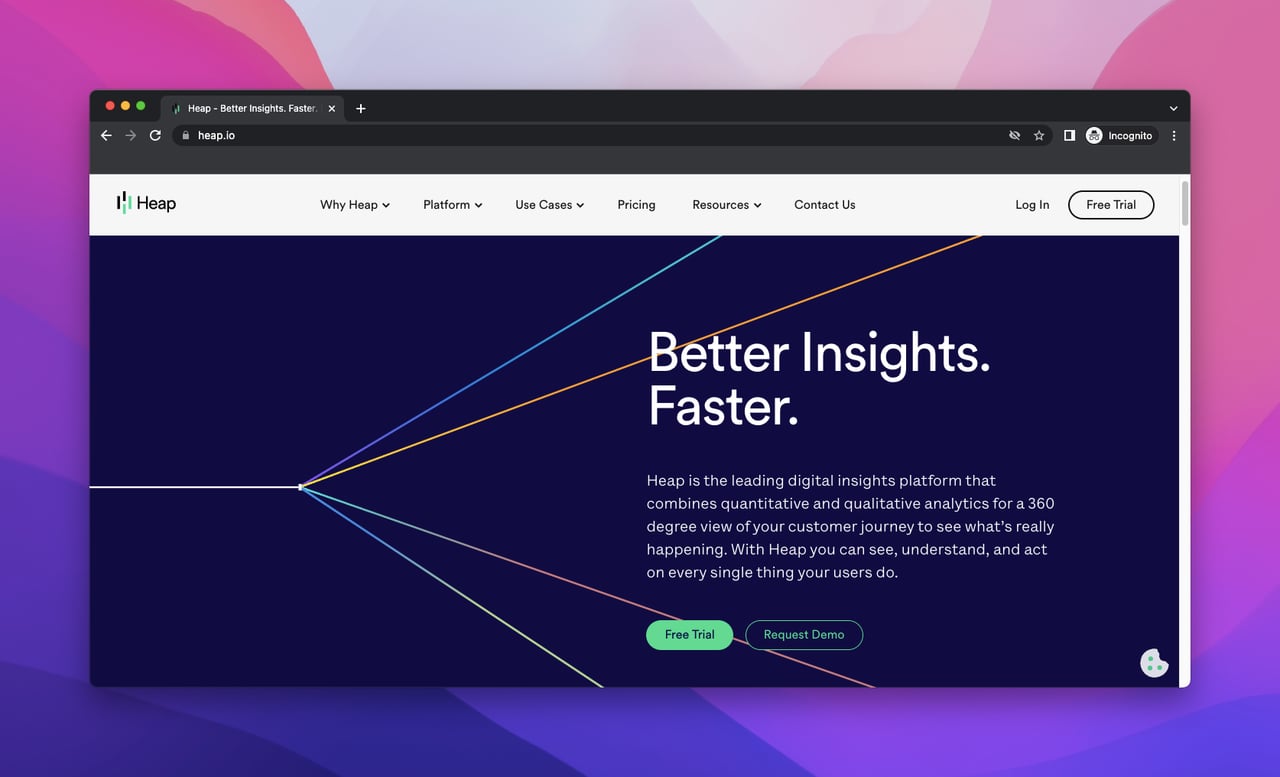
Heap helps you see your visitors' struggles. In order to improve your visitors' experience on your website, you can track their behaviors and take necessary actions.
Pros:
- Provides real-time data with in-depth information.
- It is easy to set up and use with a simple UI.
- It is possible to measure your A/B test's effectiveness on your visitors' experience.
Cons:
- Customizations on the dashboard are limited.
- Setting up specific events and segments may take some time.
Pricing: Free plan is available with limited access. For pricing of other plans, contact sales.
G2 Rating: 4.3/5
Explore Heap reviews on G2.
13. Visual Website Optimizer (VWO)
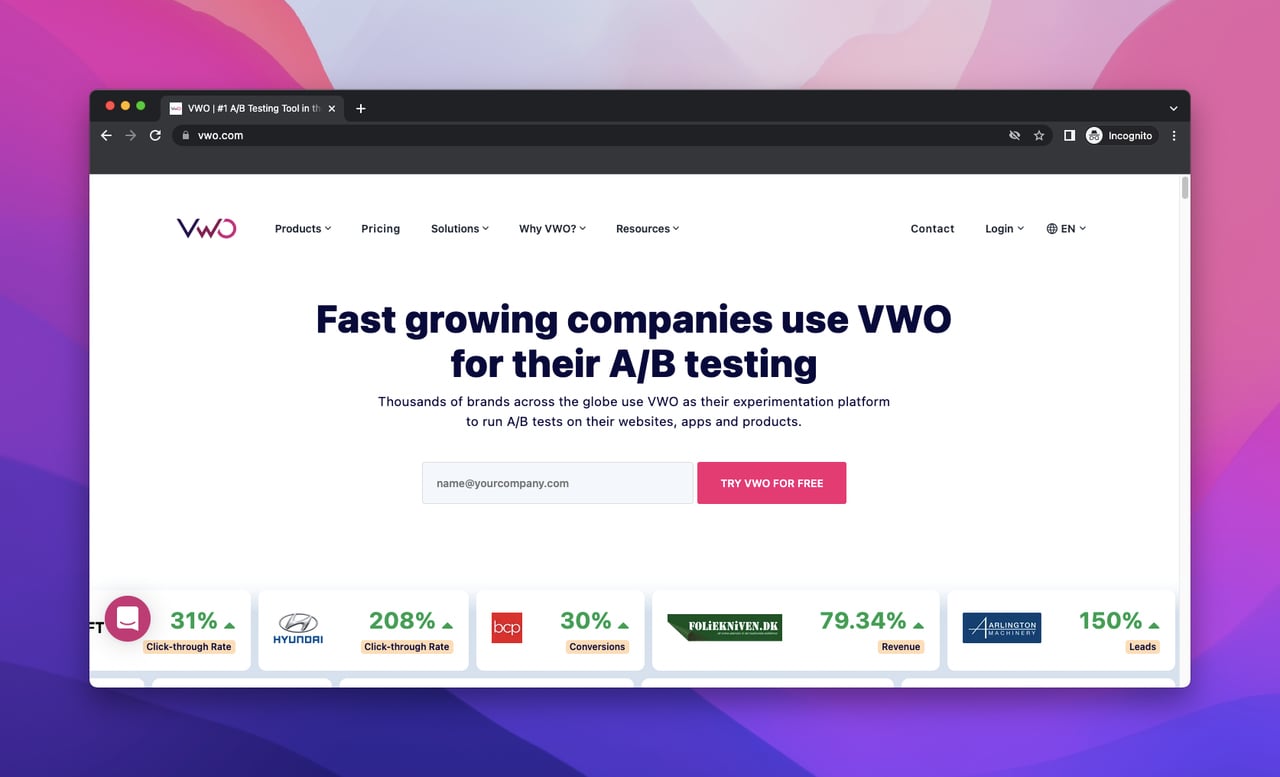
VWO is a conversion optimization service that helps you see visitors' activities. By doing the necessary analysis and tests, you can increase revenue and decrease the cart abandonment rate of your website.
Pros:
- You can do your website's A/B testing easily.
- It can run multiple tests.
- Flexibility on different tasks is functional.
Cons:
- Loading the site may take some time.
- Some tests need advanced implementation and can be hard to use.
Pricing: Has different plans for business models and needs. You need to contact sales for pricing details.
G2 Rating: 4.2/5
14. Kissmetrics
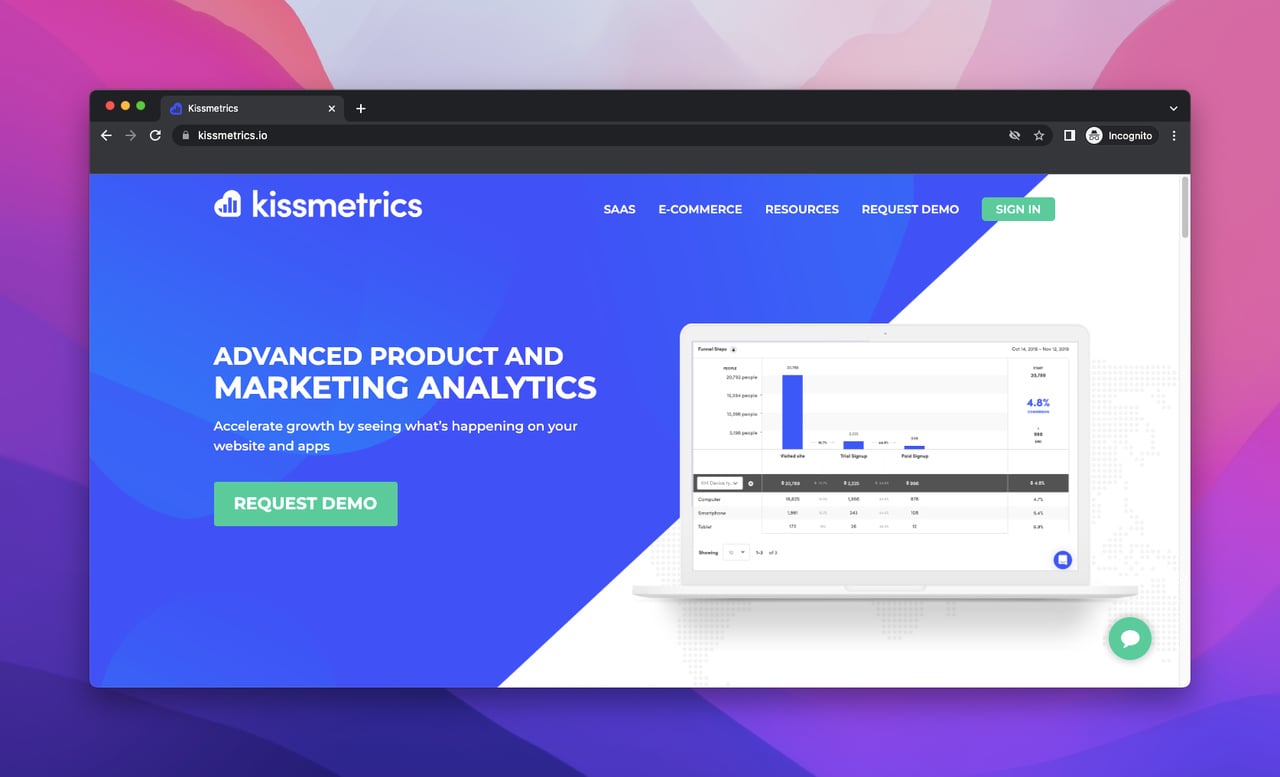
Kissmetrics is a website analytics tool that helps businesses optimize certain parts of their sites. Apart from its analytics feature, Kissmetrics has email campaign automation and segmentation features as well.
Pros:
- Integrates with Shopify easily.
- Gives real-time reporting to its user so as to keep them up-to-date.
- You can see the checkout funnel and lifetime value by category.
Cons:
- It might be a bit hard to use in the beginning if you are new to using analytics tools.
- The UI needs to be improved and documentation should be more understandable.
Pricing: Contact sales for pricing information.
G2 Rating: 4/5
See Kissmetrics reviews on G2.
15. Indicative
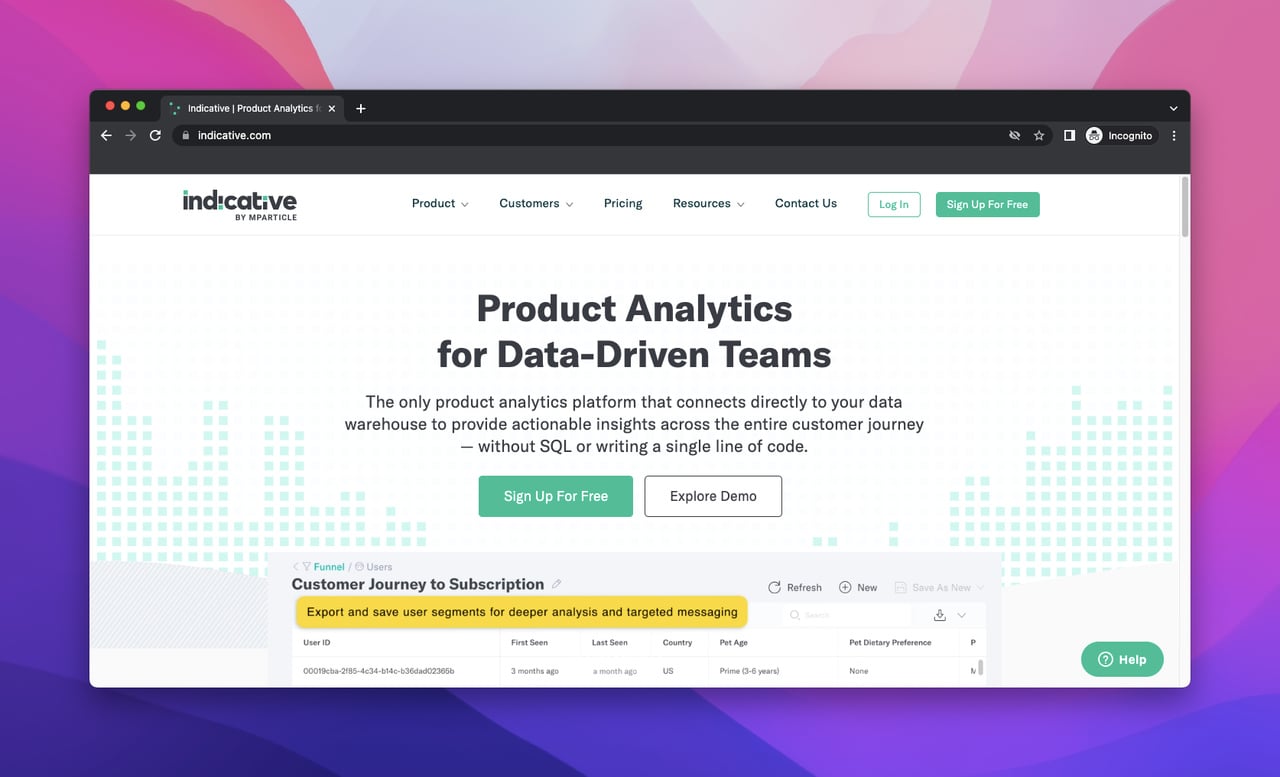
Indicative gives cohort analysis and people insights so that websites can better their elements. It also provides segmentation that personalizes each visitor's experiences.
Pros:
- You can better understand your customers' journey by looking at their certain behaviors.
- Integrates with other related platforms properly.
- You can implement it quickly with Google Tag Manager.
- Gives multi-product analytics and user-level insights.
Cons:
- Font size can be increased since some parts of the data become a bit hard to read.
- The user segmentation and customization options can be improved.
Pricing: Has a free plan that provides basic features with limited access. The growth plan starts from $249 per month.
G2 Rating: 4.4/5
Read Indicative reviews on G2.
16. Chartbeat
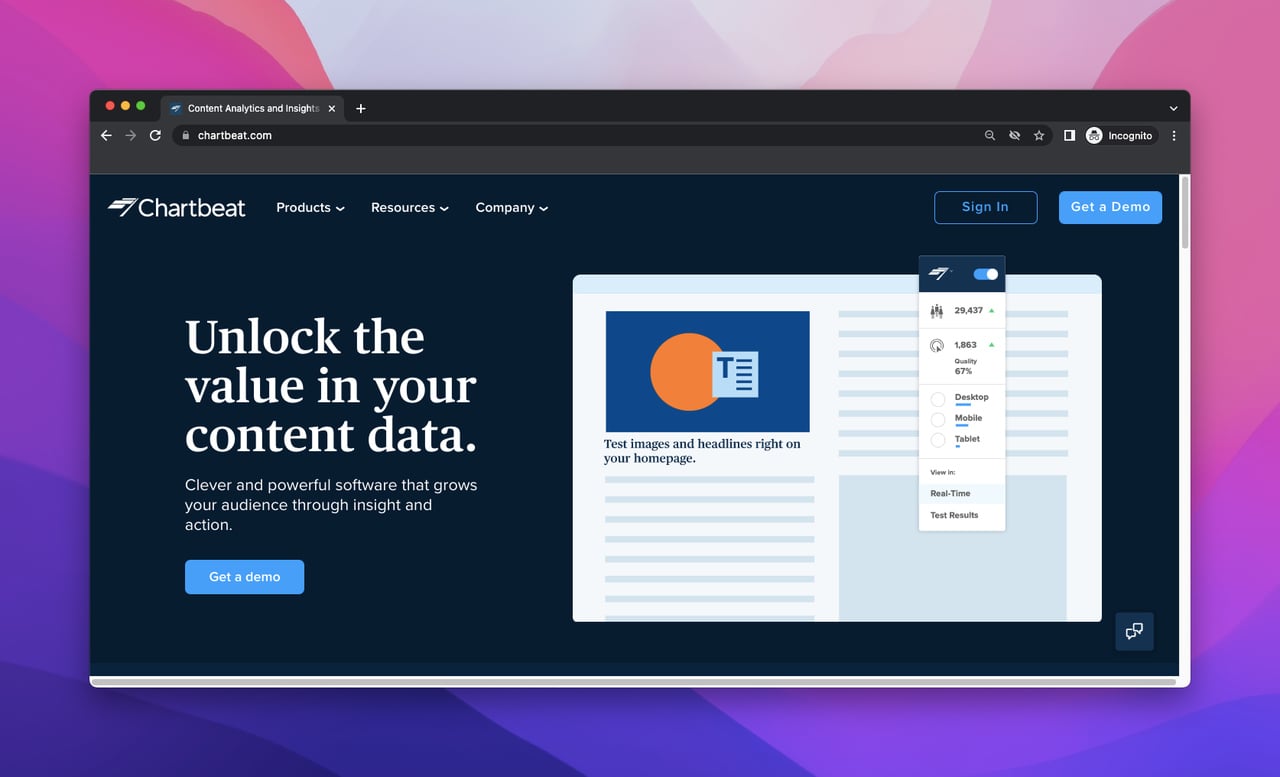
Chartbeat gives comprehensive analysis and reports of contents in a website. By using this tool, you can reach out to real-time data of your visitors and analyze their certain behaviors.
Pros:
- You can measure the impacts of headlines.
- It shows what people are looking for on your website specifically.
Cons:
- Might be hard to adapt at first for beginners. Documentation and guides need to be improved for newcomers.
- Historical statistics are limited.
Pricing: Has customizable pricing plans. Contact sales for pricing information.
G2 Rating: 4.4/5
Explore Chartbeat reviews on G2.
In Conclusion
That is all for website analytics tools! By using these tools, you can see the performance of your website and get a better insight into your website’s specific analytics. In that way, you can take necessary actions considering the analytics you get.
Only that way can you make your visitors happy and increase your user engagement, sales conversions, and website traffic!
We hope you loved reading about this topic that can improve your website. Share your thoughts & comments in the comment section below! 🤓
Frequently Asked Questions
Why Use Web Analytics Tools?
Website analytics tools are helpful because you can get informed about your visitors. These analytics show where your visitors came from how much time they spent on specific pages of your site. Thanks to these details, you can understand which content is popular.
In addition, web analytics tools give you ideas about which parts should be changed and improved.
Which Web Analytics Tools are the Best?
According to their user-friendly interface and easy to use design, these web analytics tools are among the best tools you can use:
- Matomo
- Mixpanel
- Hotjar
- Woopra
These tools have a higher G2 rating based on user reviews than the other tools we have listed. Also, it is possible to analyze customer behavior by using these given web analytics tools.
On the other hand, it depends on your business expectations to decide which one is better for you for sure. There might be specific features and services you are looking for. You can check the tools we prepared for you and start using one of them!
Feel free to explore these blog posts:
- 14 Best Google Analytics Alternatives (Privacy-Friendly Ones)
- 17 Best Customer Acquisition Tools You Need to Use in 2025
How would you rate your experience with this article? 😊