ChatGPT
 Perplexity
 Claude
 Grok
Grok Google AI Mode
The best product headline examples combine specific benefits, emotional triggers, and clear calls to action to turn browsers into buyers. I selected these 12 from cosmetics, food, fashion, and tech brands for copy originality and visual impact. Each breakdown below explains what works, why it works, and how you can adapt it. Most screenshots date from 2022, when this post first ran, so we rechecked the brands' live sites in October 2026 and note under most examples what the page shows now.
What Makes a Strong Product Headline?
A product headline is the short, prominent text on a product page or landing page that communicates a product's core benefit and convinces visitors to keep reading. It isn't a tagline either: a website tagline is the short line that sums up the whole brand, usually beside the logo or in the homepage hero, while a product headline sells one product on one page. A strong headline does three things at once: grabs attention, sets expectations, and moves people toward a purchase decision.
I chose the 12 on three criteria:
• Copy originality: The headline uses a technique most brands in its category don't (wordplay, sensory language, scarcity framing)
• Visual integration: The headline works with the surrounding imagery rather than sitting on top of a generic background
• Reproducibility: A marketer with a standard landing page builder could recreate the approach in under 30 minutes
Quick Look at All 12 Product Headline Examples
| # | Brand | Industry | Why It Works |
|---|---|---|---|
| 1 | NYX Cosmetics | Beauty | Pop-culture collaboration as headline hook |
| 2 | Revlon | Beauty | Category-specific wordplay for each product line |
| 3 | Lotus Bakeries | Food | Brand story over brand name |
| 4 | Pernod Ricard | Beverages | Heritage and origin as trust signals |
| 5 | Everlane | Fashion | Minimalist copy matching brand values |
| 6 | Apple | Tech | Curiosity gap with ultra-short copy |
| 7 | Polaroid | Photography | Exclusivity without a CTA |
| 8 | Mucinex | Healthcare | Character-driven storytelling |
| 9 | Dickinson's | Skincare | Ingredient-forward headline with animated proof |
| 10 | Lancome | Luxury Beauty | Contrasting tones across product tiers |
| 11 | Nine West | Fashion | Seasonal urgency paired with action verbs |
| 12 | Follow Your Heart | Vegan Food | Mission-driven copy with recipe CTA |
1. NYX Cosmetics: Pop-Culture Collaboration as a Headline Hook
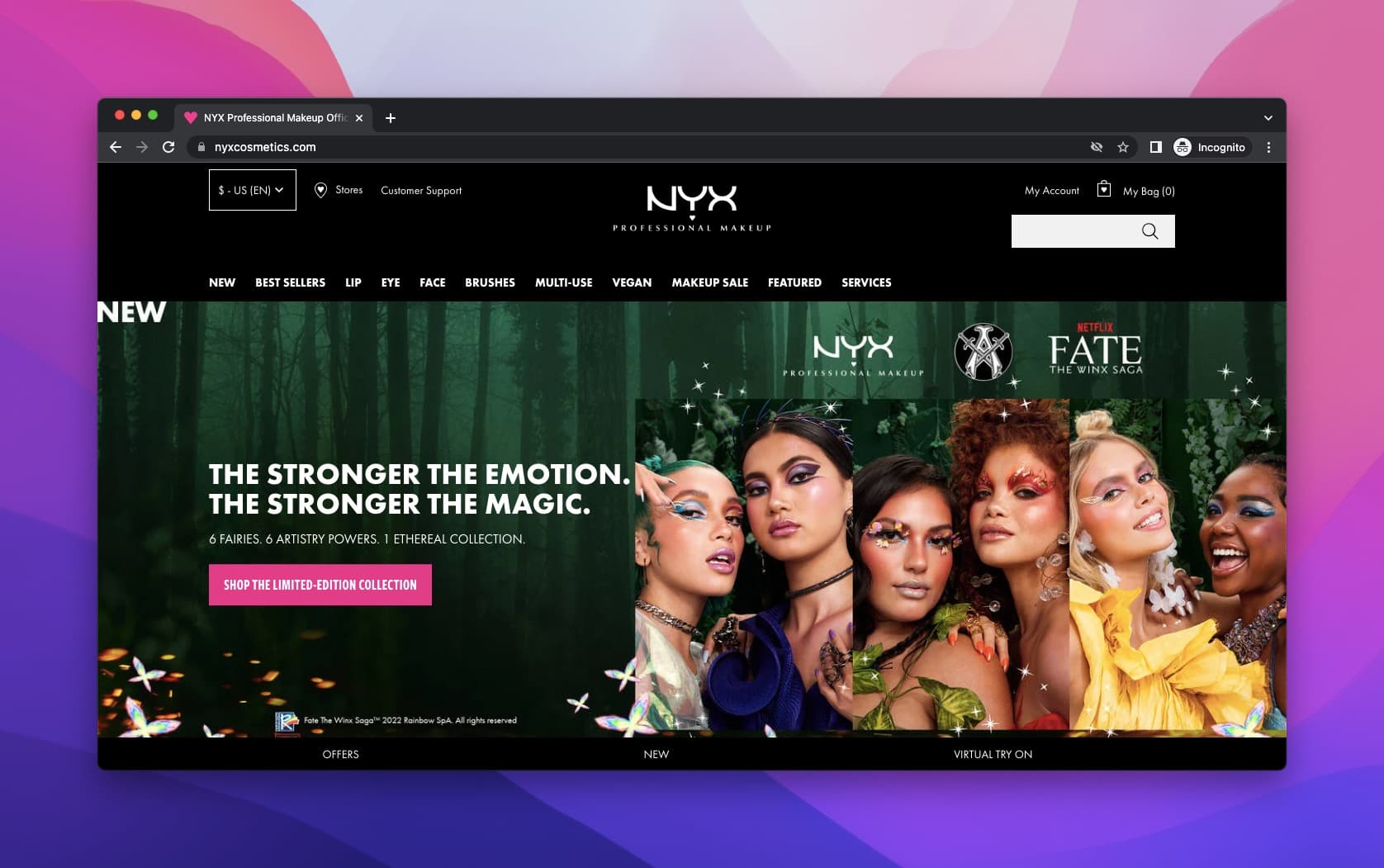
NYX x Fate: The Winx Saga collaboration hero section (screenshot from 2022)
What works: NYX, a subsidiary of L'Oreal, tied its headline to the Netflix show Fate: The Winx Saga, borrowing the show's existing audience. The headline references the magical theme of the series rather than leading with product specs. Six models wearing bold, colorful looks fill the hero image, giving visitors an immediate visual reason to scroll. The description below the title keeps it short and benefit-driven, referencing the "newness" of the collection.
Why it works: Co-branding headlines tap into an existing fan base's emotional attachment. Instead of competing for attention from scratch, NYX rides the recognition of a show that already had a fan base. This is the halo effect in action: positive feelings about the show transfer to the product line.
NYX still builds collections this way. In March 2025 it released a limited-edition makeup collection tied to A Minecraft Movie, packed in square, block-shaped cases (YPulse, March 2025).
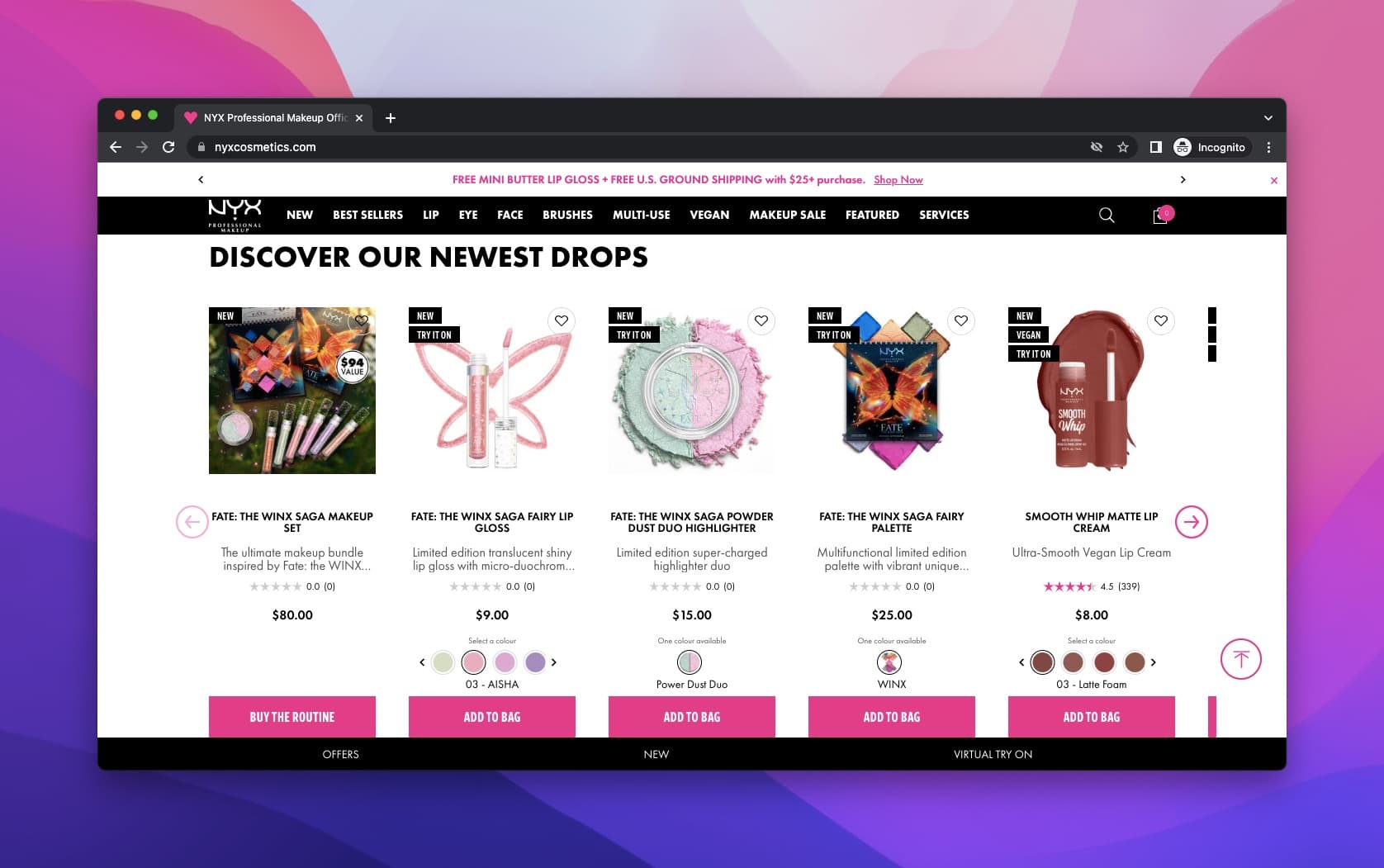
NYX product grid with individual headlines (screenshot from 2022)
Below the hero, each product carries its own micro-headline. Some are longer and deliberately tease details, creating a curiosity gap. Every product card includes a CTA button, which keeps the purchase path visible at all times.
Key takeaway: Tie your product headline to a cultural moment or brand collaboration your audience already cares about. It borrows trust and attention you don't have to build from zero.
2. Revlon: Category-Specific Wordplay
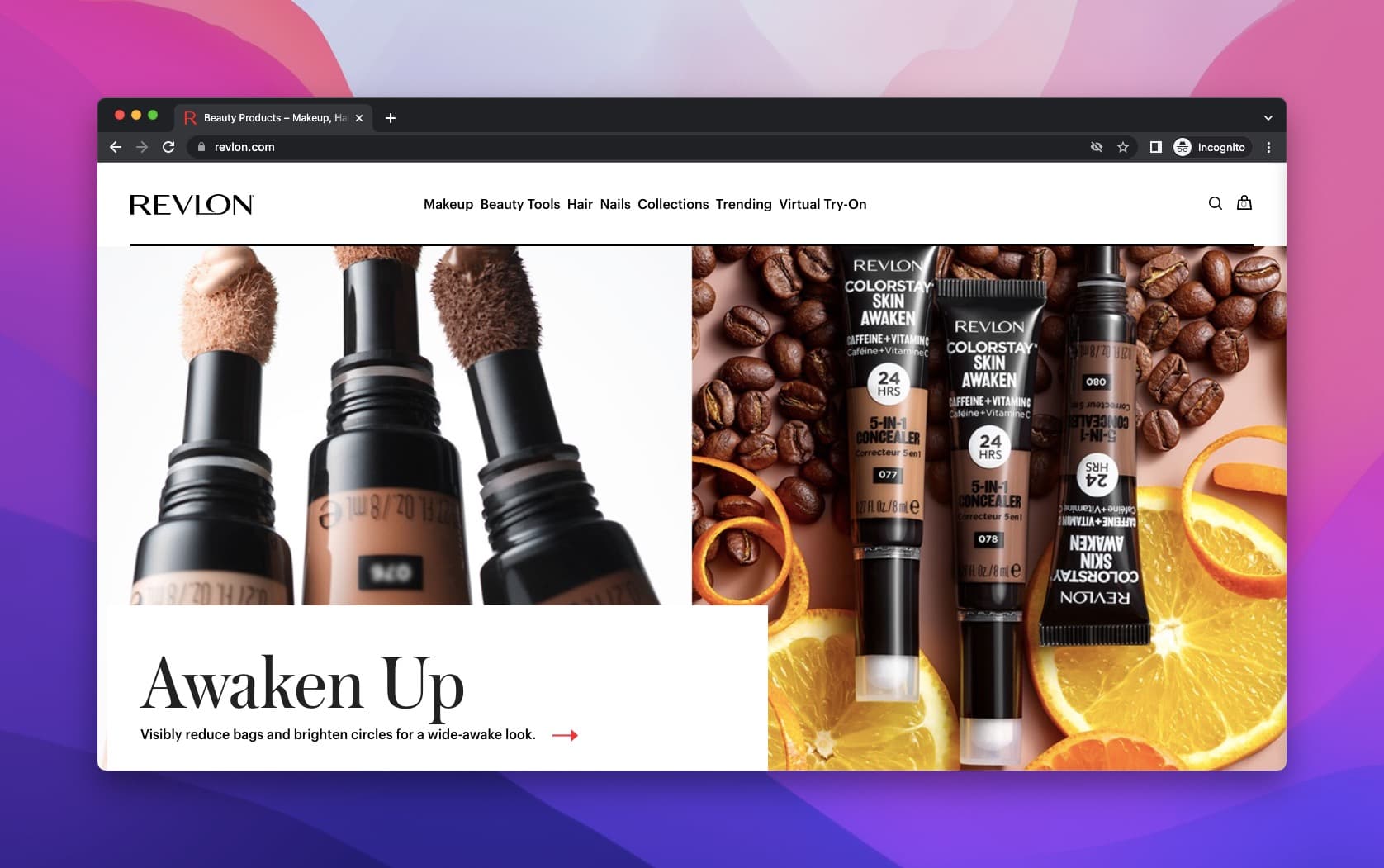
Revlon concealer: "Awaken Up" headline (screenshot from 2022)
What works: Revlon doesn't use one generic tagline across all products. Each category gets its own wordplay headline matched to the product's purpose. Concealers get "Awaken Up" (a play on "wake up" tied to the concealing function), while lip crayons get "Wanna Play?" to emphasize color variety and fun. This approach treats every product line as its own mini-campaign.
Why it works: Category-specific headlines signal to visitors that they've landed on a page built for them, not a generic catalog. A tailored headline gives the visitor a reason to keep scrolling instead of heading back to search.
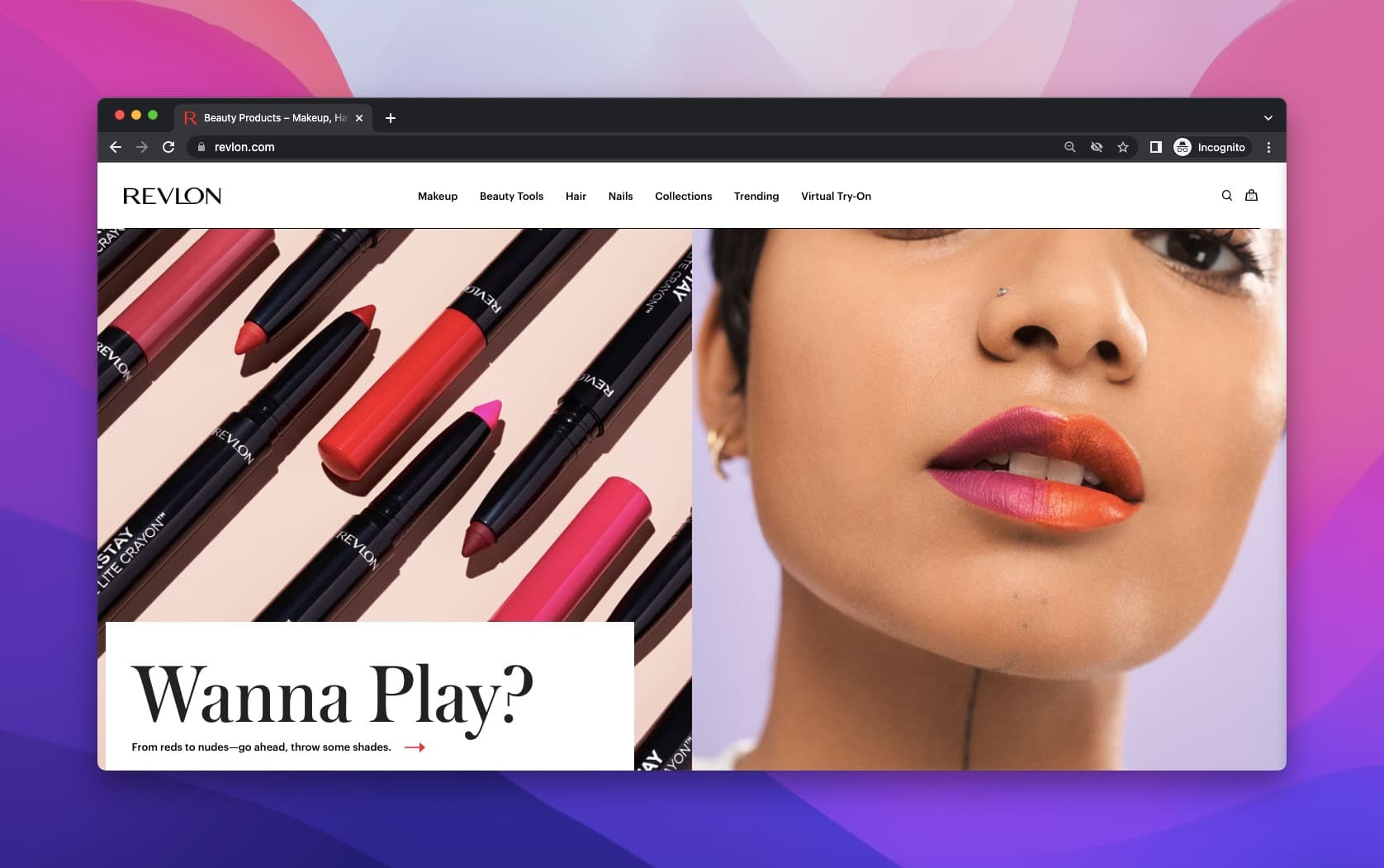
Revlon lip crayons: "Wanna Play?" headline (screenshot from 2022)
The full-width product image behind the "Wanna Play?" headline makes the colors impossible to miss. Revlon pairs the visual punch with playful copy, so the headline and image reinforce each other instead of competing for attention.
Revlon's homepage still works this way in October 2026. The seasonal hero reads "Fall Into Rich Color", and the slides behind it give single shades their own lines, such as "Rich in Raisin" and "Bold in Berry".
Key takeaway: Write a different headline for each product category. A one-size-fits-all tagline tells visitors you didn't think about their specific need.
3. Lotus Bakeries: Brand Story Over Brand Name
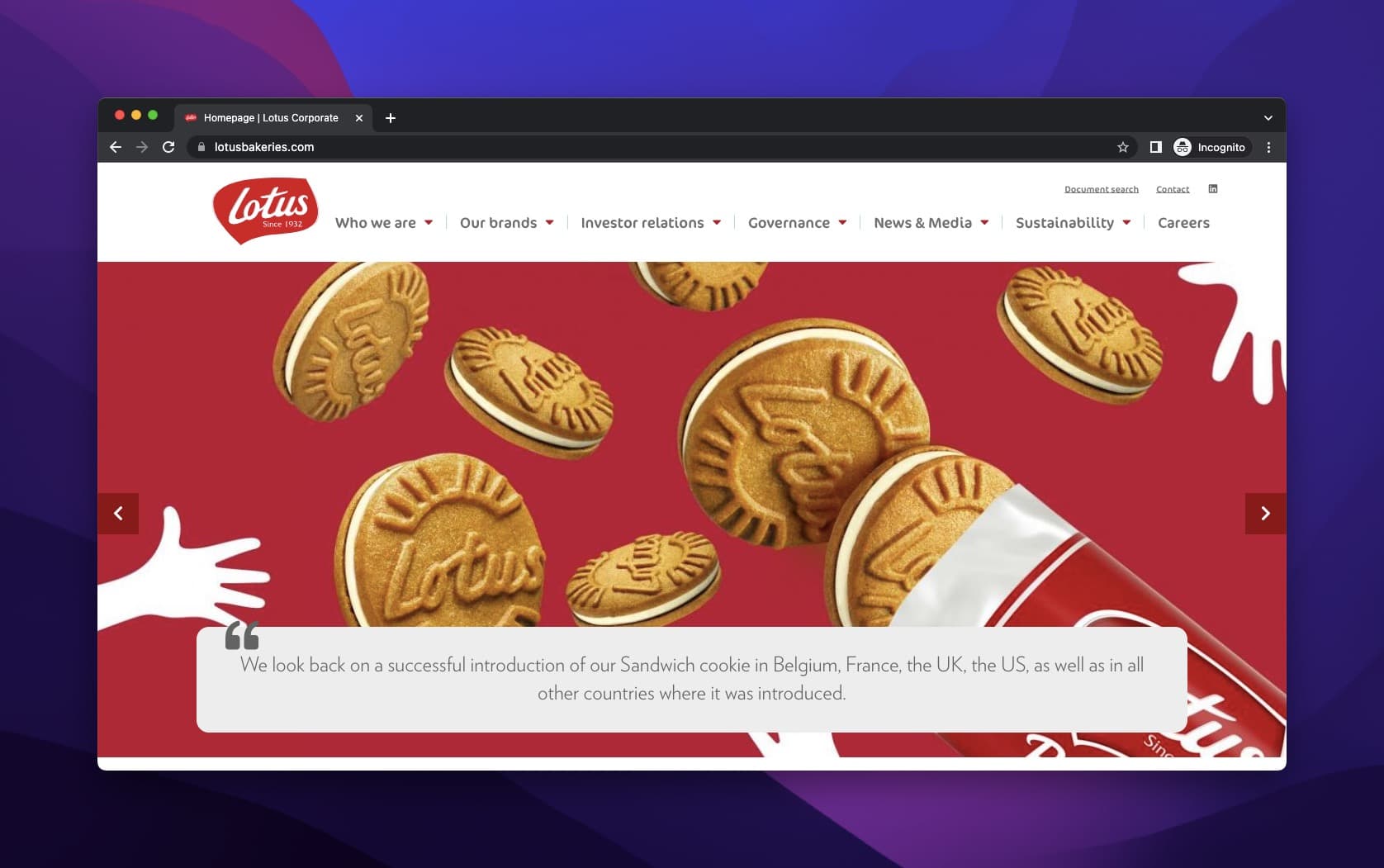
Lotus Bakeries' brand-first product page (screenshot from 2022)
What works: Lotus Bakeries, a Belgian company producing biscuits since 1932, doesn't lead with its name. The product headline focuses on the story behind the biscuits: the heritage, the red brand color, and the craft. Visitors absorb the brand identity through visual and narrative cues rather than a stamped logo. The imagery is dense with biscuits, reinforcing what the company does without saying it outright.
Why it works: Brands with high name recognition can afford to let the product speak. Lotus treats its homepage like a gallery, not a catalog. This works because established brands face a different challenge than newcomers: they don't need to introduce themselves, they need to remind you why you already trust them. The technique is unique selling proposition reinforcement through visual consistency.
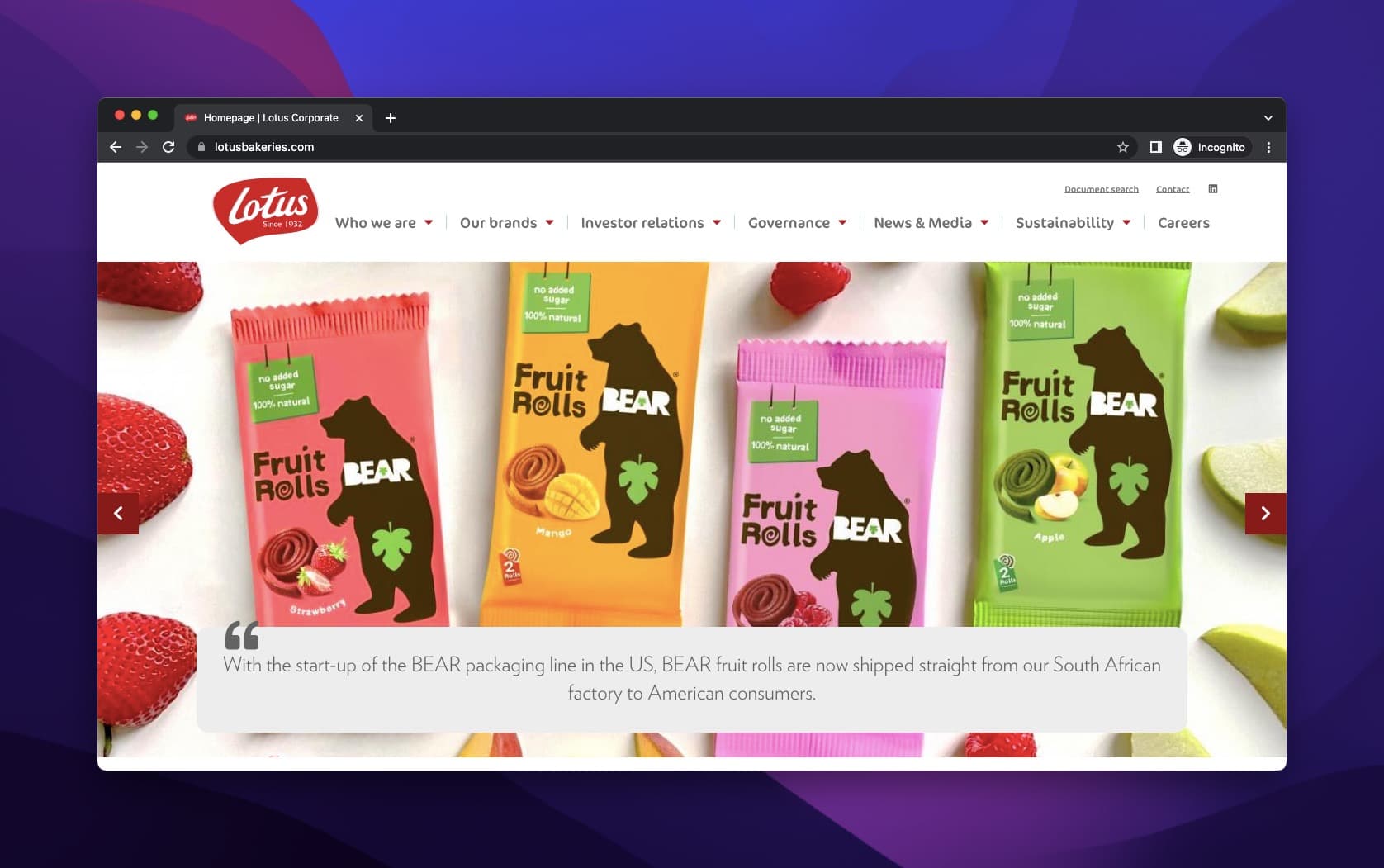
Lotus new product launch with minimal text (screenshot from 2022)
For new product launches, Lotus keeps the headline to a simple explanation without even naming the product line. The large product image takes over, and the text is a supporting detail. The October 2026 homepage keeps the approach: its slider is all product photography, opening on a red Biscoff shot, and leaves the brand names to the packaging.
Key takeaway: If your audience already knows your brand, lead with your story and let visuals carry the product name. Save the hard sell for less recognized product lines.
4. Pernod Ricard: Heritage as a Trust Signal
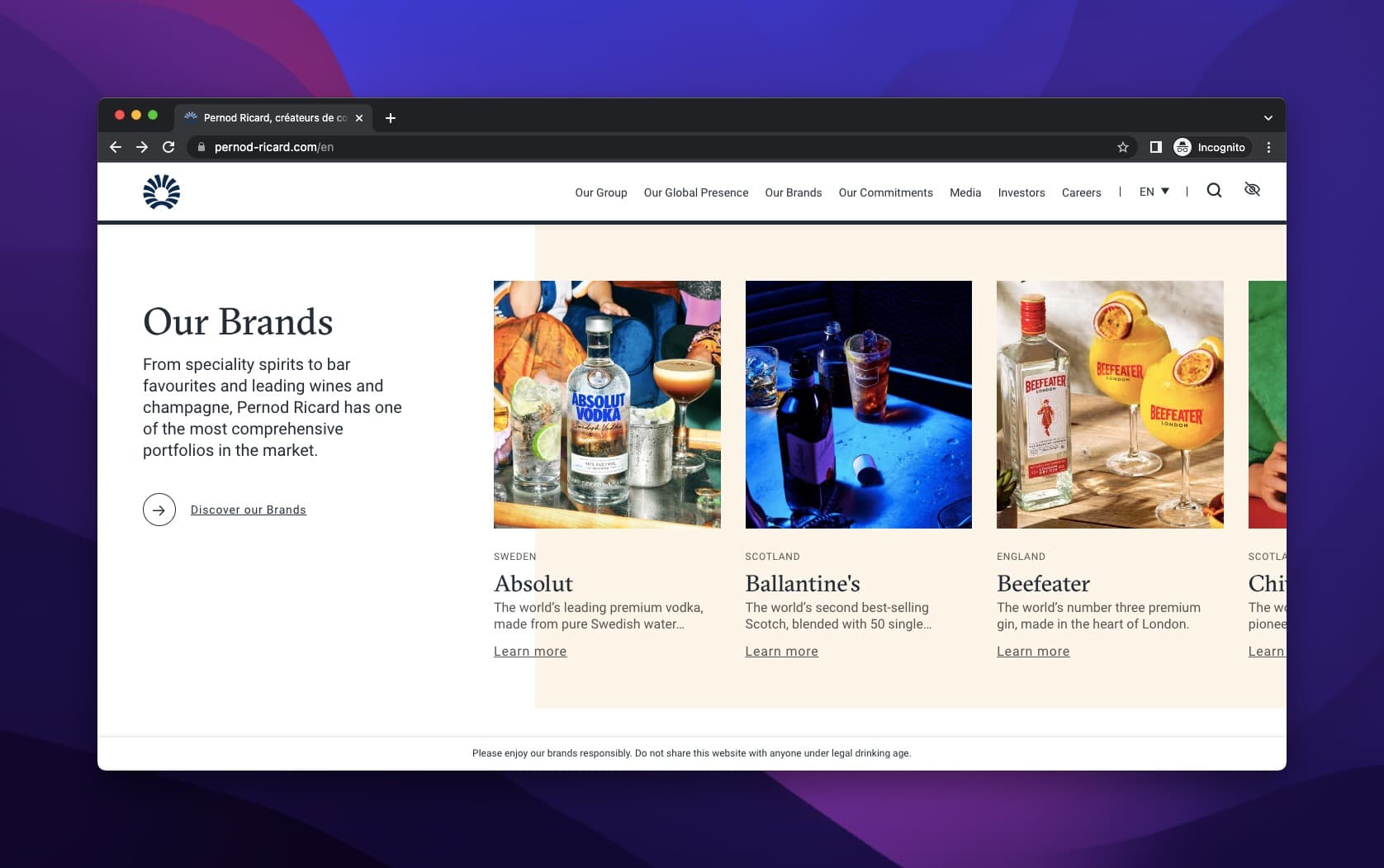
Pernod Ricard's "Our Brands" portfolio page (screenshot from 2022)
What works: Pernod Ricard, a French beverage company known for its anise-flavored spirits, uses the headline "Our Brands" as an umbrella and lets each product carry its own name, image, and short description. Every product gets a "Learn More" CTA that leads to a dedicated page. This two-tier approach separates the portfolio overview from deep-dive product storytelling.
Why it works: Portfolio-style product headlines reduce decision fatigue. Instead of forcing visitors to choose from a giant list, Pernod Ricard gives each brand its own space and lets curiosity drive the click. The "Learn More" CTA is low-commitment, which matters for high-consideration purchases like premium spirits.
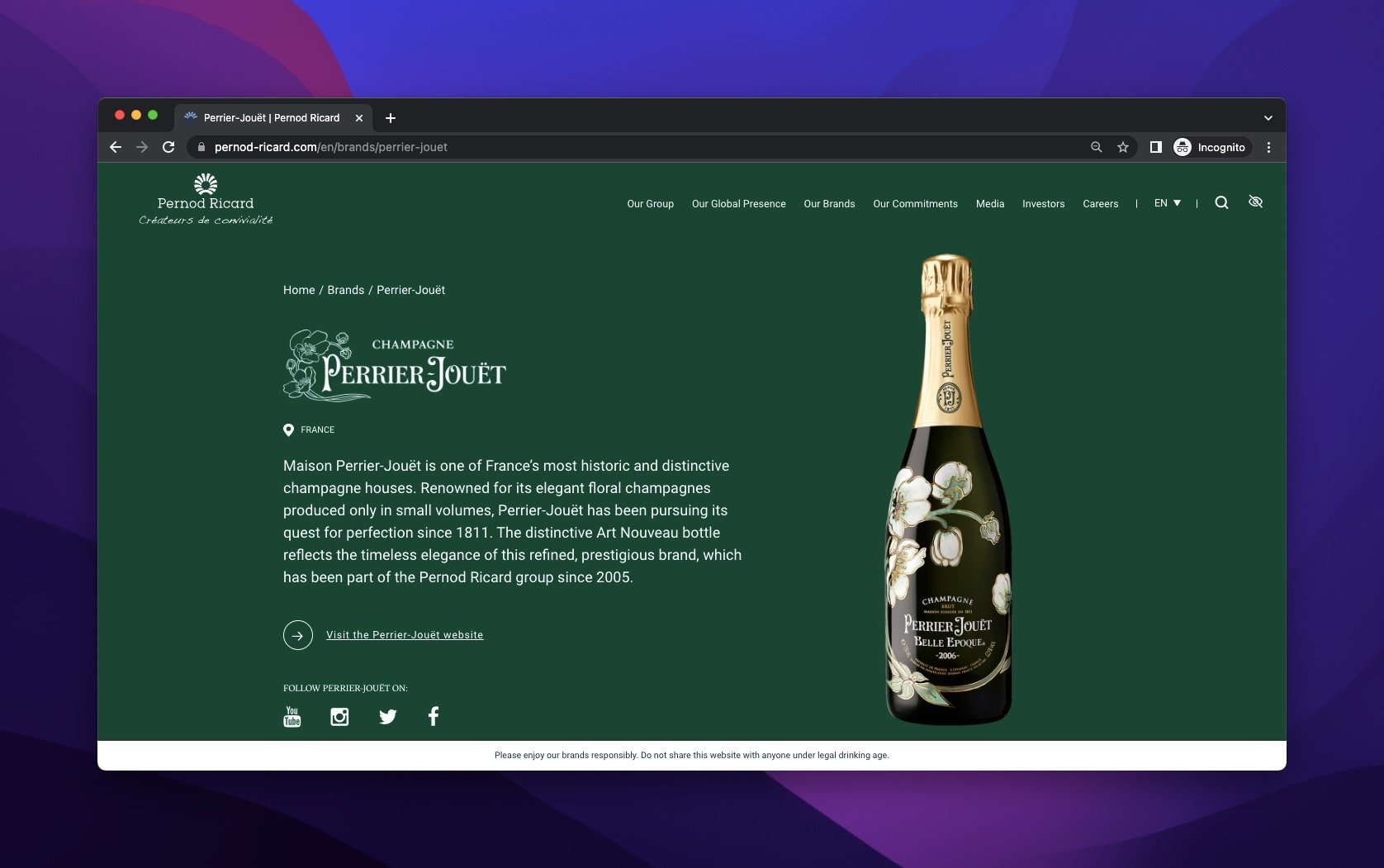
Perrier-Jouet's individual product page with origin story (screenshot from 2022)
On individual product pages, Pernod Ricard includes the product's original location and founding date. These heritage details function as trust signals (think of them as social proof from history). The dedicated CTA directs visitors to the product's own website for purchase. In October 2026 the brands page still opens under the "Our Brands" headline, now followed by a "House of Brands" section.
Key takeaway: For brands with multiple product lines, create a portfolio headline that gives each product breathing room. Then use dedicated pages with heritage details to build trust for high-consideration purchases.
5. Everlane: Minimalist Copy That Matches Brand Values
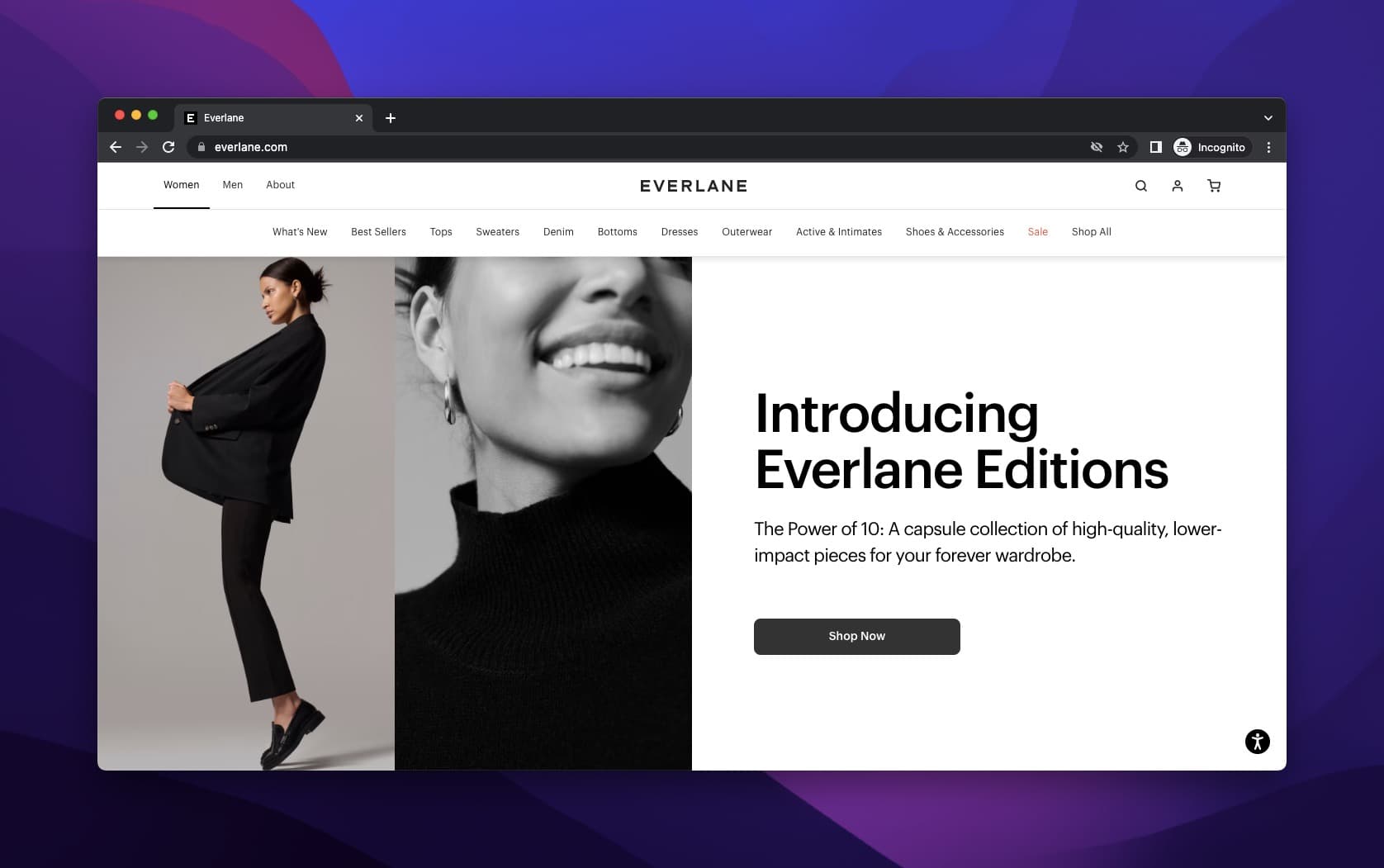
Everlane's new edition announcement (screenshot from 2022)
What works: Everlane, a fashion brand built on ethical transparency, uses its product headline to announce new editions with minimal words. The black-and-white palette matches the brand's clean aesthetic. The headline is assertive: it tells you exactly what's new, why it matters, and where to go next. No fluff, no decorative adjectives.
Why it works: When your brand promise is radical transparency, your headline copy needs to feel transparent too. Long, flowery descriptions would undermine the brand positioning. Everlane's spare approach creates a Gestalt effect where whitespace carries as much meaning as the text. The copy-to-image ratio heavily favors the image, which is the right call for fashion where visual appeal drives decisions.
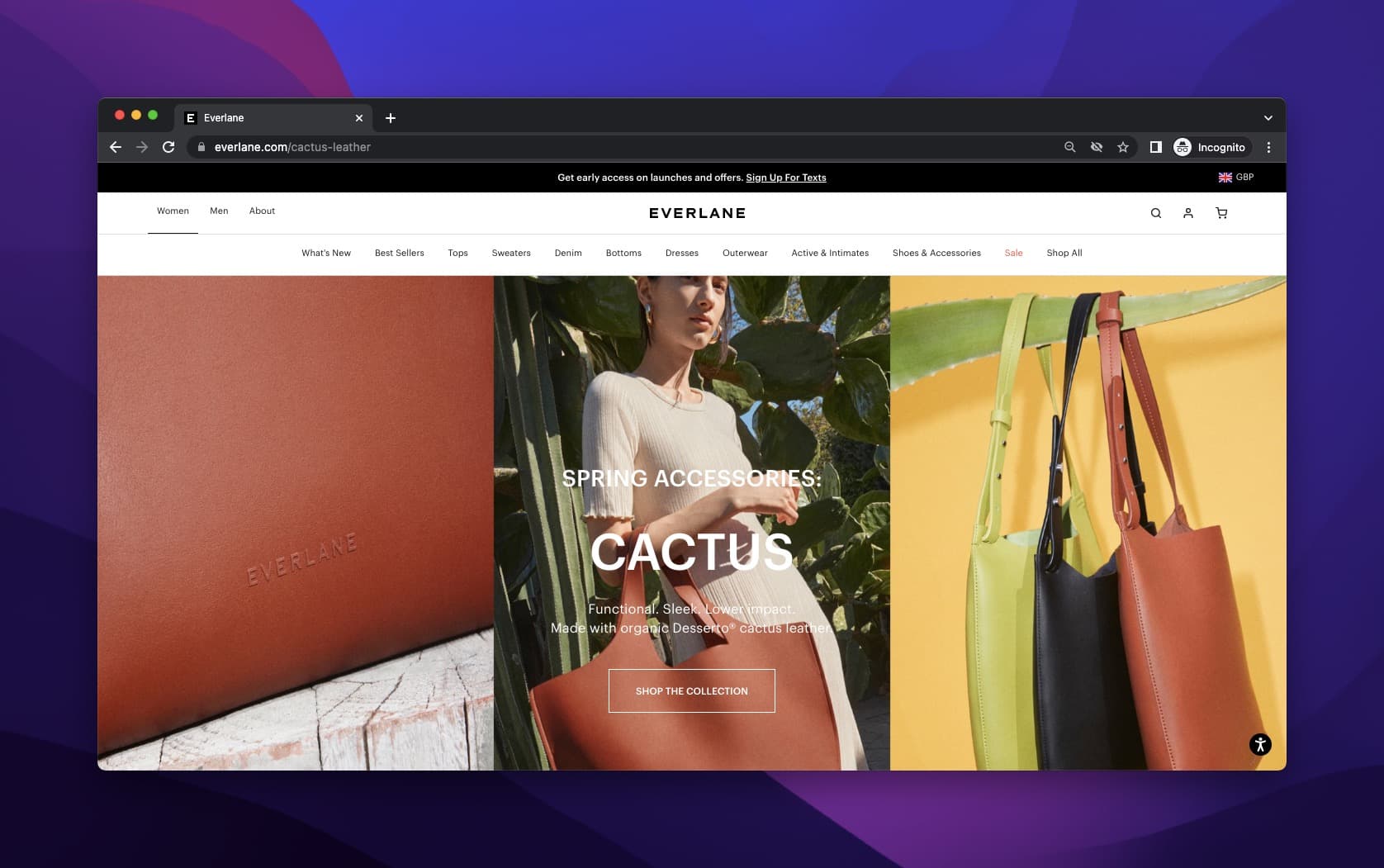
Everlane Cactus collection with image-forward layout (screenshot from 2022)
In the Cactus spring series, Everlane pushes the image even further into the background, layering product headline text at the forefront. Despite the readability trade-off, it works because all three conversion elements are present: product name, benefit description, and a CTA button.
By October 2026 the homepage hero had turned into a sale banner ("30% Off Sitewide", "The biggest sale of the season."), but the copy below it is still short and values-led, with lines such as "Better Isn't Made Fast".
Key takeaway: Match your headline's tone and length to your brand's values. If you sell simplicity, your headline should be simple. If you sell luxury, your headline should feel premium.
6. Apple: The Curiosity Gap with Ultra-Short Copy
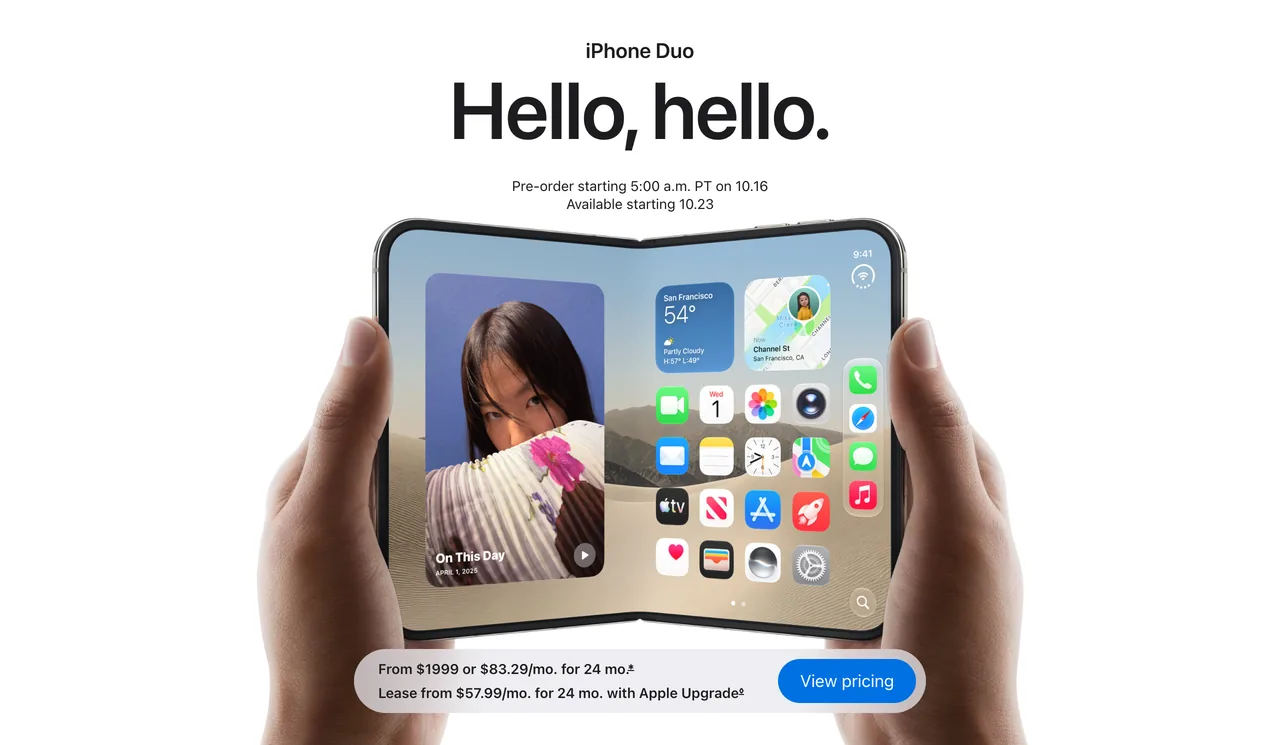
What works: Apple describes a new iPhone with fewer than ten words. On the iPhone Duo page, the headline is "Hello, hello.", and the only lines under it are the pre-order and availability dates. No feature list, no spec sheet, no comparison chart. The headline does one thing: make you curious enough to scroll. The plain background isolates the product and the text, so nothing competes with them. Apple's pre-order announcements add artificial scarcity (limited availability, specific launch dates), which turns the headline into a countdown.
Why it works: Apple benefits from decades of brand equity. Most visitors already know what an iPhone does. The headline doesn't need to educate; it needs to create desire. This is the Zeigarnik effect: incomplete information creates psychological tension that drives people to seek closure (by scrolling, clicking, or pre-ordering). Few brands can pull this off because few have Apple's recognition.
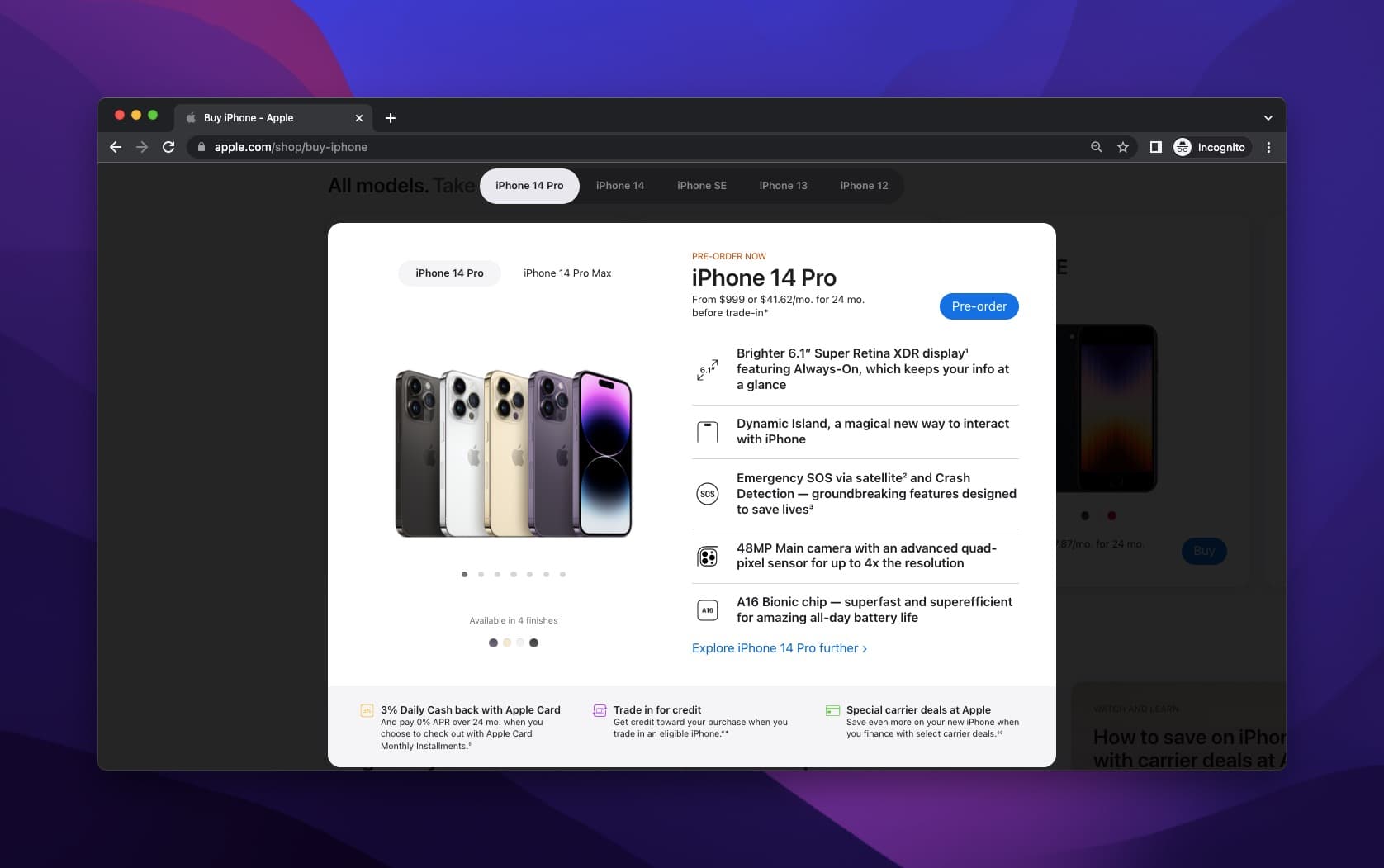
Apple pre-order page with specs as micro-headlines (iPhone 14 Pro, screenshot from 2022)
The pre-order page flips the script. Here, Apple provides a full product headline: colors, sizes, price, payment options, and features. The contrast between the teaser headline and the detail-packed pre-order page creates a satisfying reveal that keeps visitors engaged through the full funnel.
Key takeaway: If your brand has high recognition, say less in your headline. Let curiosity do the selling. If you're a newer brand, you can't afford this approach. Lead with benefits instead.
7. Polaroid: Exclusivity Without a CTA
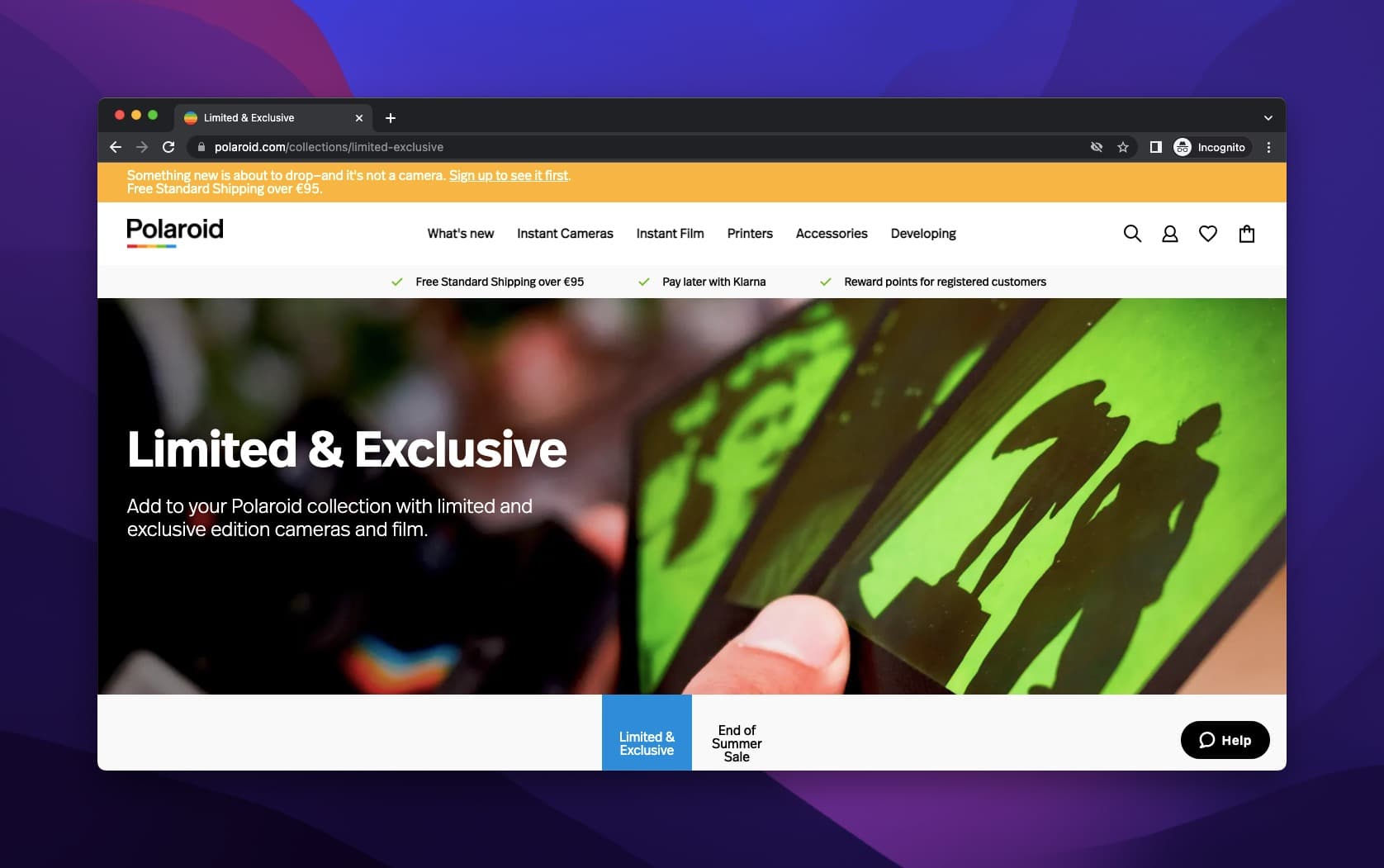
Polaroid's limited edition product page (screenshot from 2022)
What works: Polaroid's limited edition page breaks a standard e-commerce rule: there's no CTA in the hero section. The headline and description focus entirely on the product's exclusivity and the craft behind the film. The hero image is a hand holding the film, which puts the product in a personal, tactile context. The "Add to Cart" buttons only appear further down the page, next to individual products with prices.
Why it works: By withholding the CTA, Polaroid creates a content-first experience that feels more like editorial than e-commerce. This works for niche audiences who already know what they want. Photography enthusiasts don't need to be sold on Polaroid film; they need to be shown which edition is available. The delayed CTA turns the page into a discovery experience rather than a checkout flow.
Polaroid still opens special editions this way. Its Polaroid x Pokémon page (October 2026) starts with a full-width photo and no words at all; the "Capture it all!" headline and its Shop now button come only after it.
Key takeaway: For niche products with a passionate audience, try removing the CTA from your hero section. Let the product story build desire before you ask for the sale.
8. Mucinex: Character-Driven Storytelling
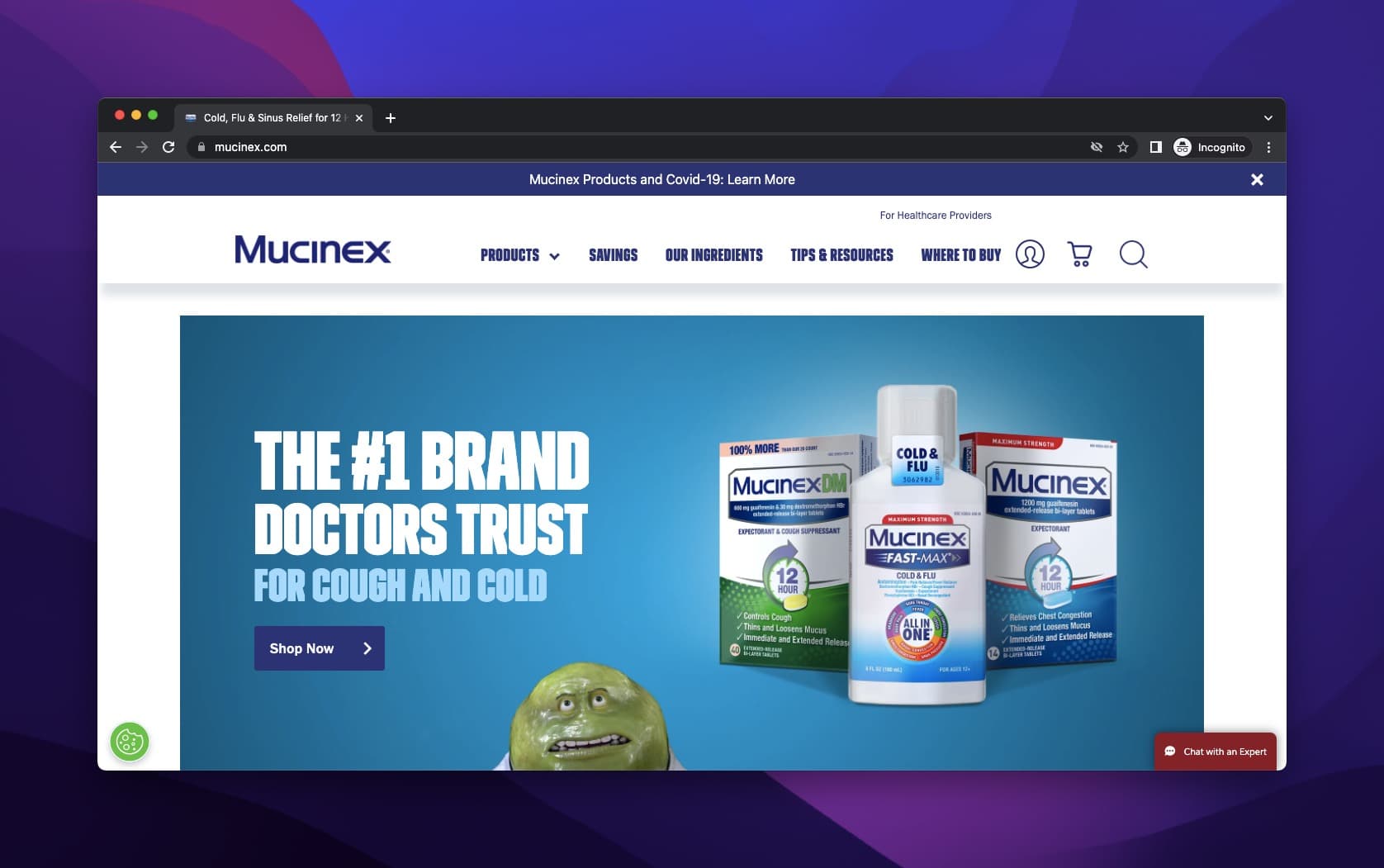
Mucinex's character-driven product page (screenshot from 2022)
What works: Mucinex created a branded mascot (the green mucus character) that personifies the problem the product solves. The product headline leans into this character-driven approach, using animated figures to communicate that colds and congestion are more disruptive than people think. Doctor endorsements sit below the headline, providing credibility. A CTA button directs visitors to specific product pages.
Why it works: Character mascots create brand recall that text alone can't match. You probably can't recall a single cold medicine headline, but there's a fair chance you remember the Mucinex character. This approach shifts the headline's job from "describe the product" to "make the problem feel real and relatable." The doctor reviews underneath add the clinical trust signal that balances the playful mascot.
Mucinex's homepage has since moved on. In October 2026 it leads with a plain promise, "You've got symptoms. We've got relief.", with no mascot or doctor quotes in the hero, and Mr. Mucus has a page of his own elsewhere on the site.
Key takeaway: If your product solves an unpleasant problem, consider personifying the problem in your headline imagery. Pair it with professional endorsements so the humor doesn't undermine credibility.
9. Dickinson's: Ingredient-Forward Copy with Animated Proof
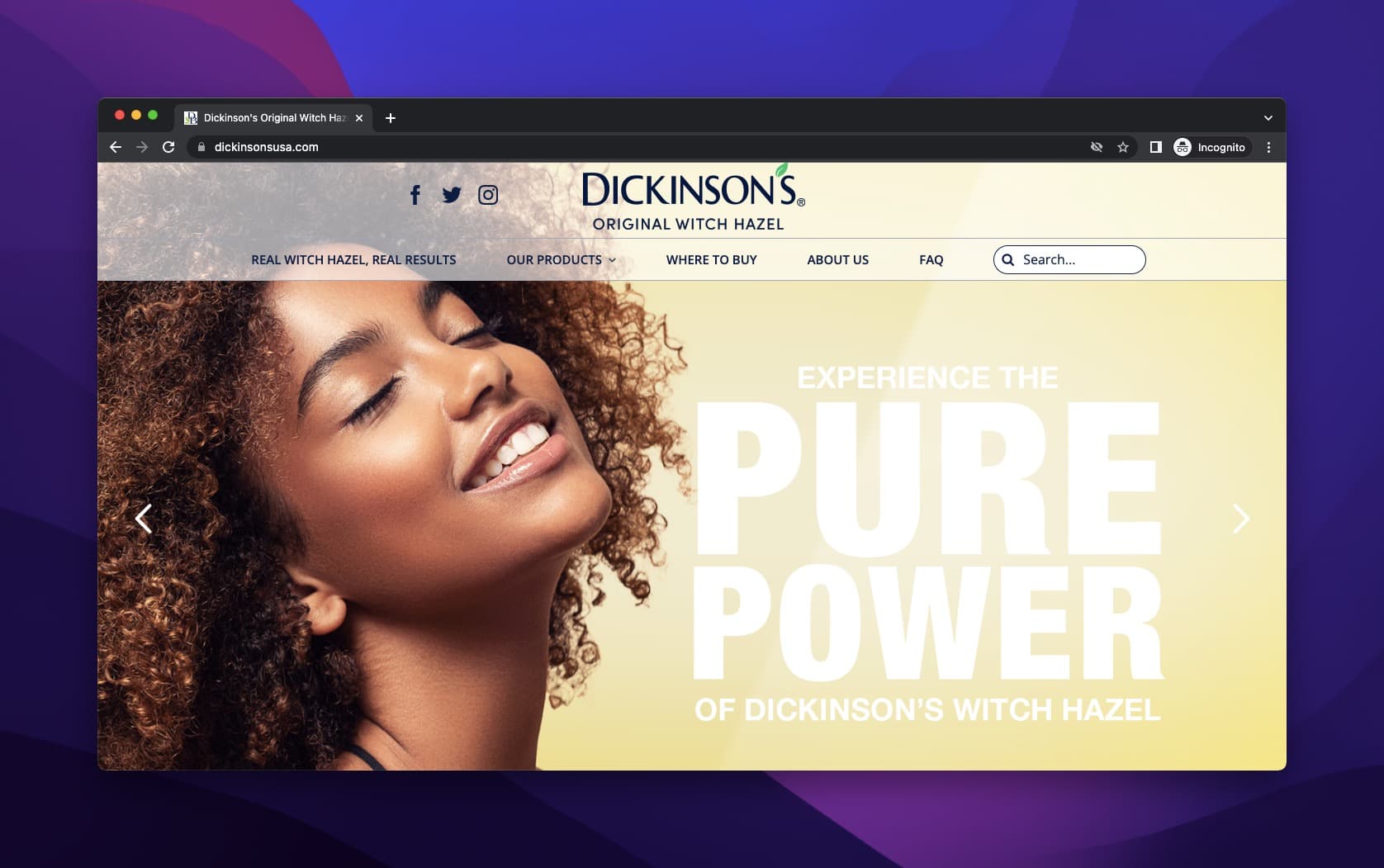
Dickinson's "Pure Solution" hero section (screenshot from 2022)
What works: Dickinson's welcomes visitors with a large-format slogan centered on purity, which is one of the brand's core promises. The yellow background and large typography make the headline impossible to miss. The model's relaxed, natural expression reinforces the "pure and simple" messaging without feeling staged.
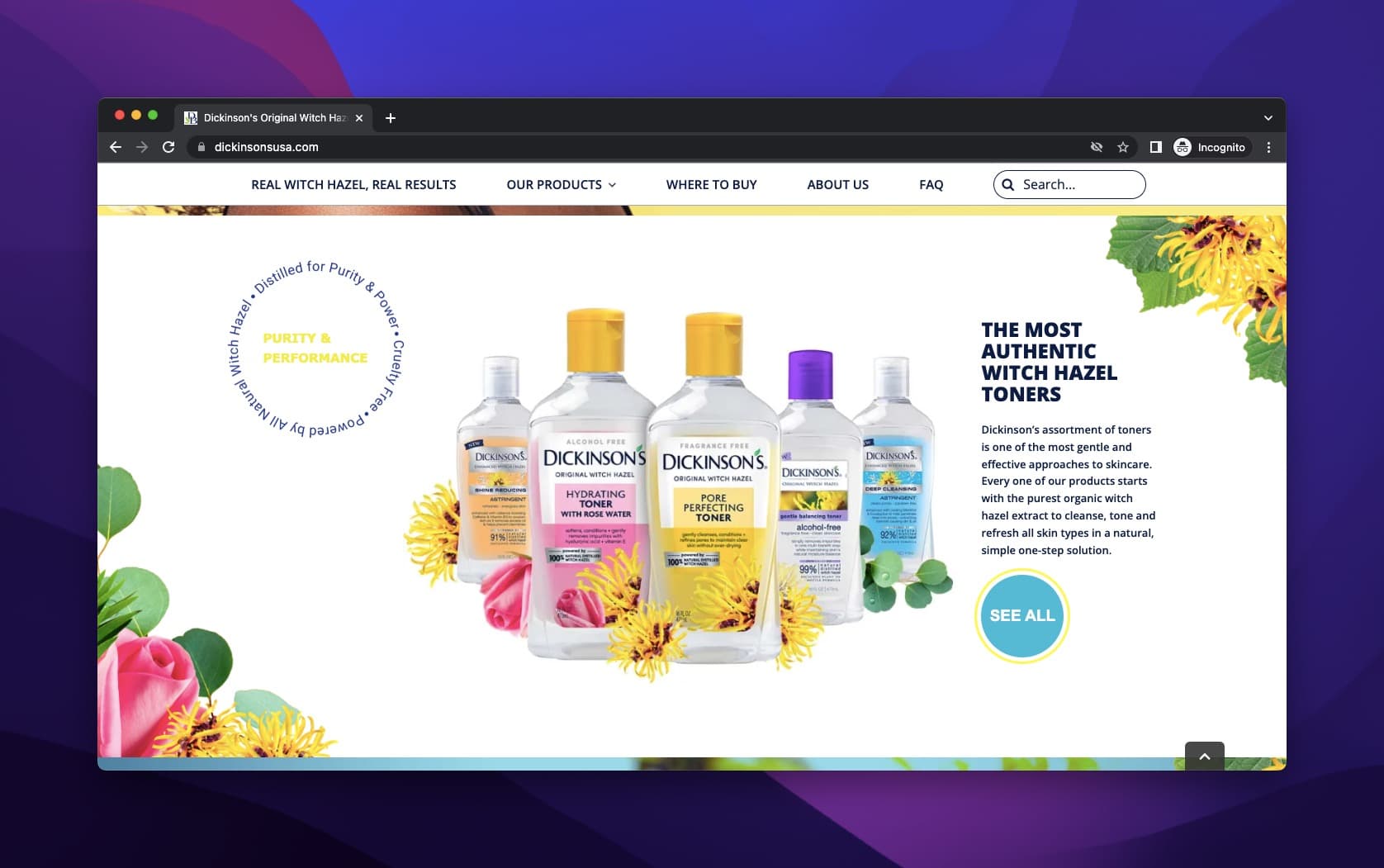
Dickinson's witch hazel toners with animated ingredient highlight (screenshot from 2022)
Why it works: Below the hero, the toner products display alongside an animated, spinning circle that highlights the key features of witch hazel. This animation does what a static bullet list can't: it draws the eye repeatedly and creates a sense of motion on an otherwise static page. The ingredient-forward approach works especially well in skincare, where buyers care deeply about what's in the product. The CTA sits next to the product display for anyone ready to buy.
Key takeaway: Lead with your hero ingredient if your product category is ingredient-driven (skincare, food, supplements). Pair it with an animated or interactive element to keep the feature list from feeling flat.
10. Lancome: Contrasting Tones Across Product Tiers
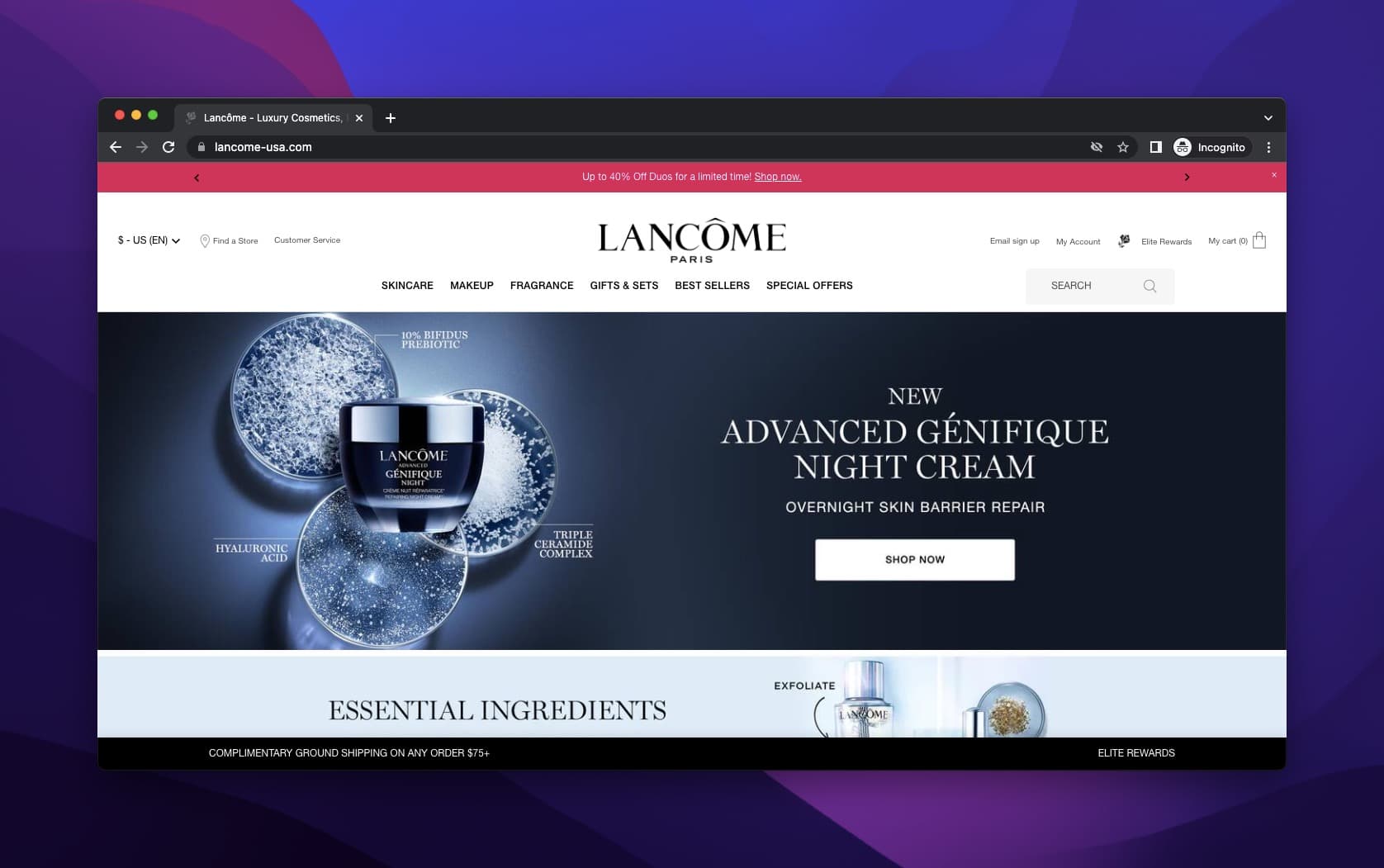
Lancome above-the-fold: dark, elevated tone (screenshot from 2022)
What works: Lancome, a L'Oreal brand, uses two different visual tones on the same page. The above-the-fold section features a dark background with refined typography and a single product hero. Further down, the page switches to a gold, luminous background with bolder copy. The headline text matches each visual mood: restrained and premium up top, aspirational and intense at the bottom.
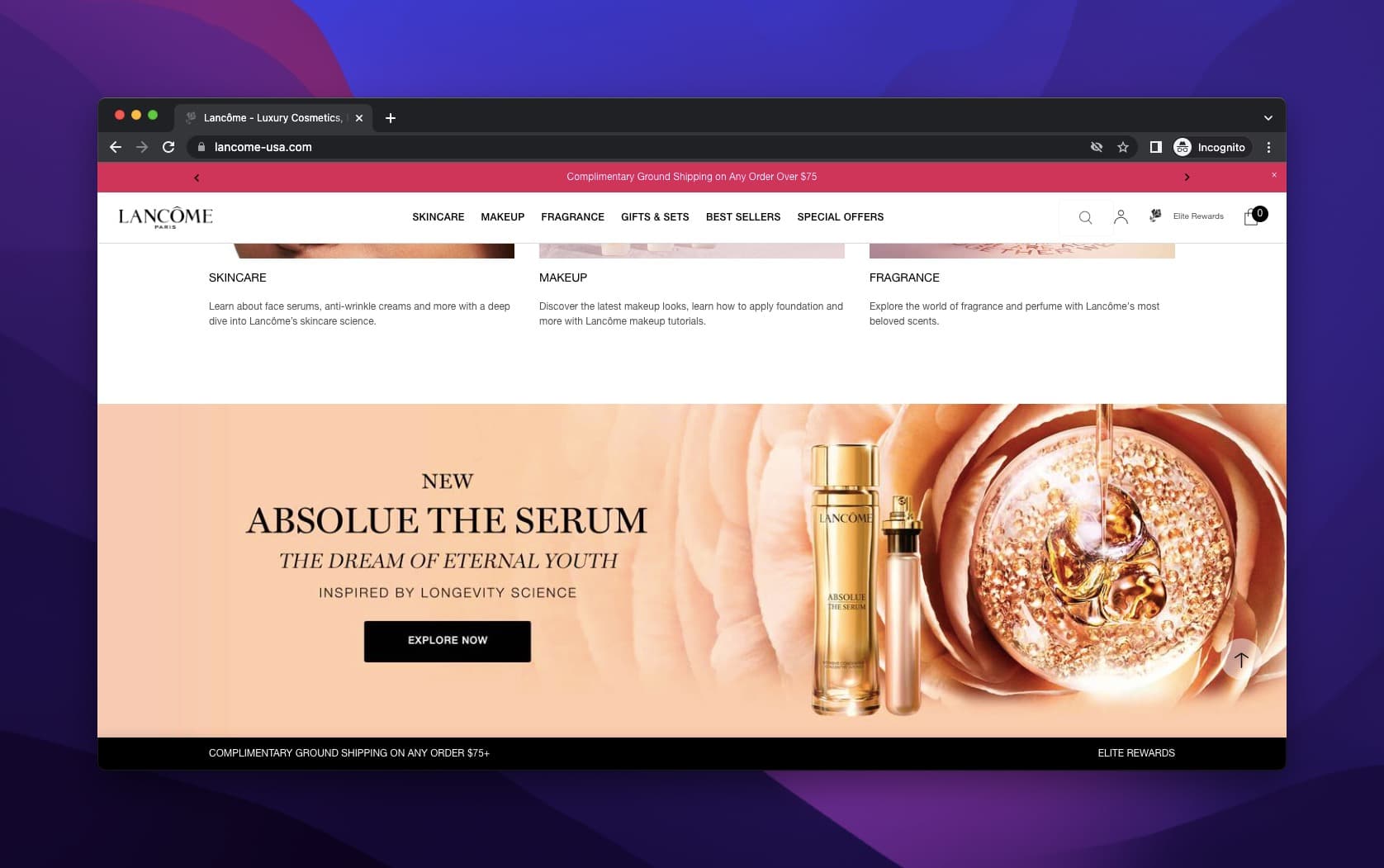
Lancome's gold-toned secondary product section (screenshot from 2022)
Why it works: Visual contrast within a single page prevents "banner blindness," the phenomenon where visitors stop seeing elements that look the same. By shifting from dark to gold, Lancome resets the visitor's attention and creates two distinct moments of engagement. The headline copy follows the visual shift: the dark section promises clinical results, while the gold section promises luxury and transformation. This dual-tone approach works for brands with products spanning different price or benefit tiers.
Key takeaway: If you sell products at different price tiers, use contrasting visual tones and headline copy for each tier. A single aesthetic gets ignored after the first scroll.
11. Nine West: Seasonal Urgency with Action Verbs
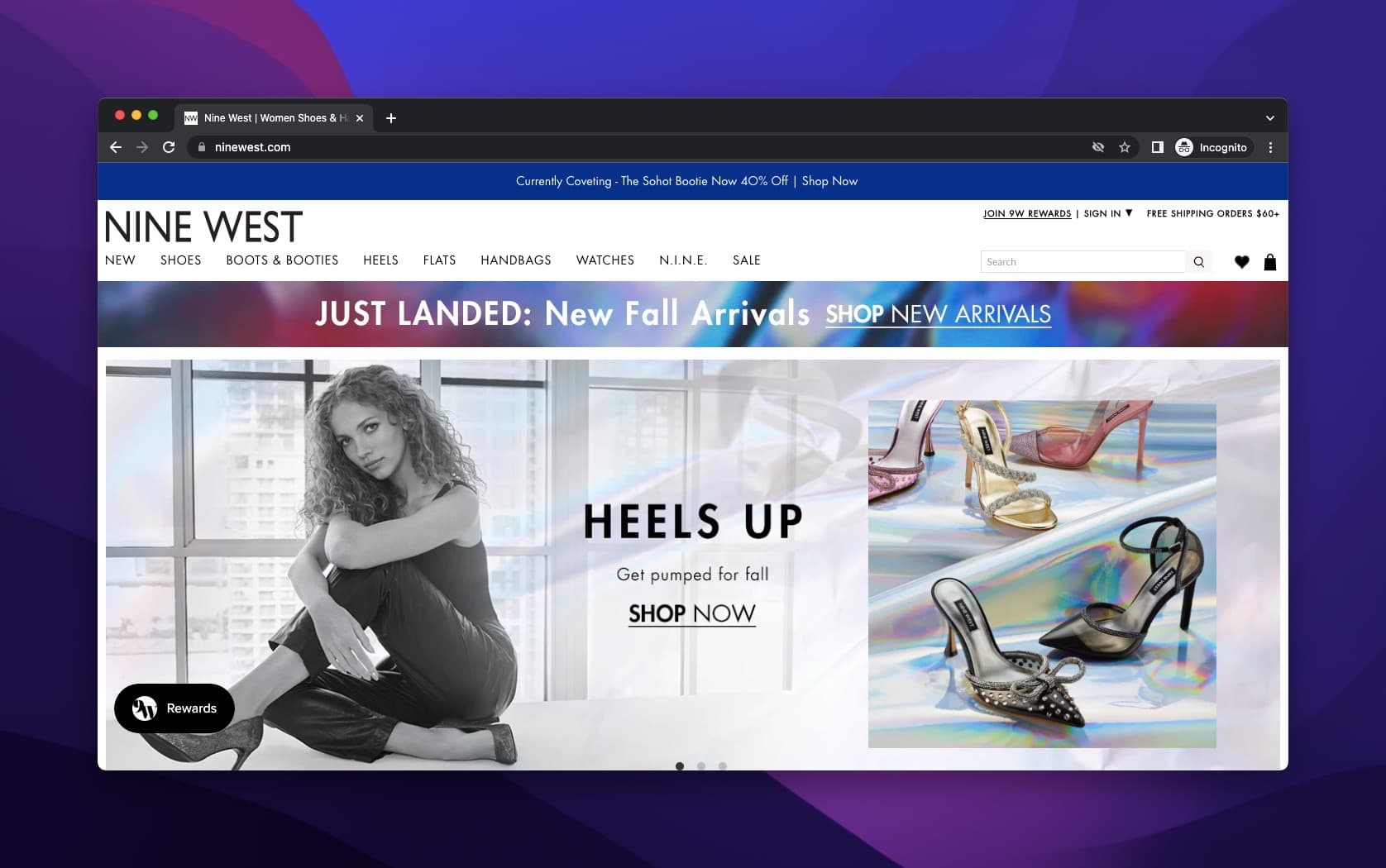
Nine West "Heels Up" campaign (screenshot from 2022)
What works: Nine West's product headline for its heels collection uses a two-word action phrase: "Heels Up." It's direct, category-specific, and functions as both a product description and a command. The model image demonstrates the product in use, which makes the headline feel less like marketing and more like a suggestion from a friend. The CTA "Shop Now" sits in a contrasting color.
Why it works: Action verbs give a headline a sense of movement and possibility that a passive description lacks. "Heels Up" doesn't describe a shoe. It describes an experience. For seasonal campaigns, this matters: seasonal urgency works best when paired with copy that makes the season feel exciting rather than expiring.
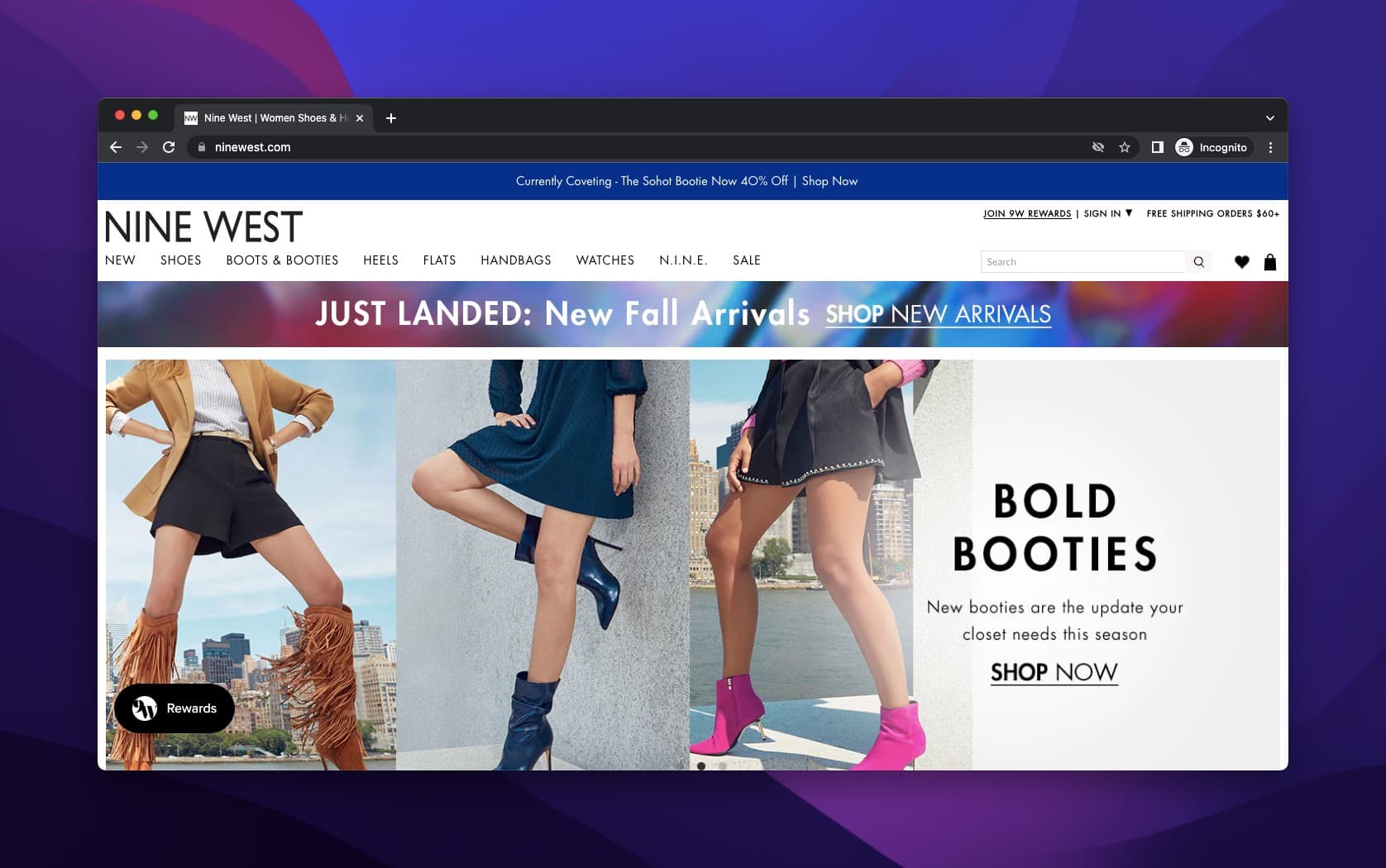
Nine West "Bold Booties" fall campaign (screenshot from 2022)
The fall boots campaign follows the same pattern: "Bold Booties" combines an adjective with the product name, creating a mini-brand within the broader collection. Nine West's consistent use of "Shop Now" as the CTA across both campaigns shows that consistency in CTAs can work when the headline itself does the differentiating. The October 2026 homepage keeps the pattern with lines like "The Season of Slouch", "Every Boot. Every Mood." and "We Know Pumps", each sitting over a Shop button.
Key takeaway: Use two-word action phrases as product headlines for seasonal collections. They're easy to remember, fast to scan, and they double as hashtags for social promotion.
12. Follow Your Heart: Mission-Driven Copy with a Recipe CTA
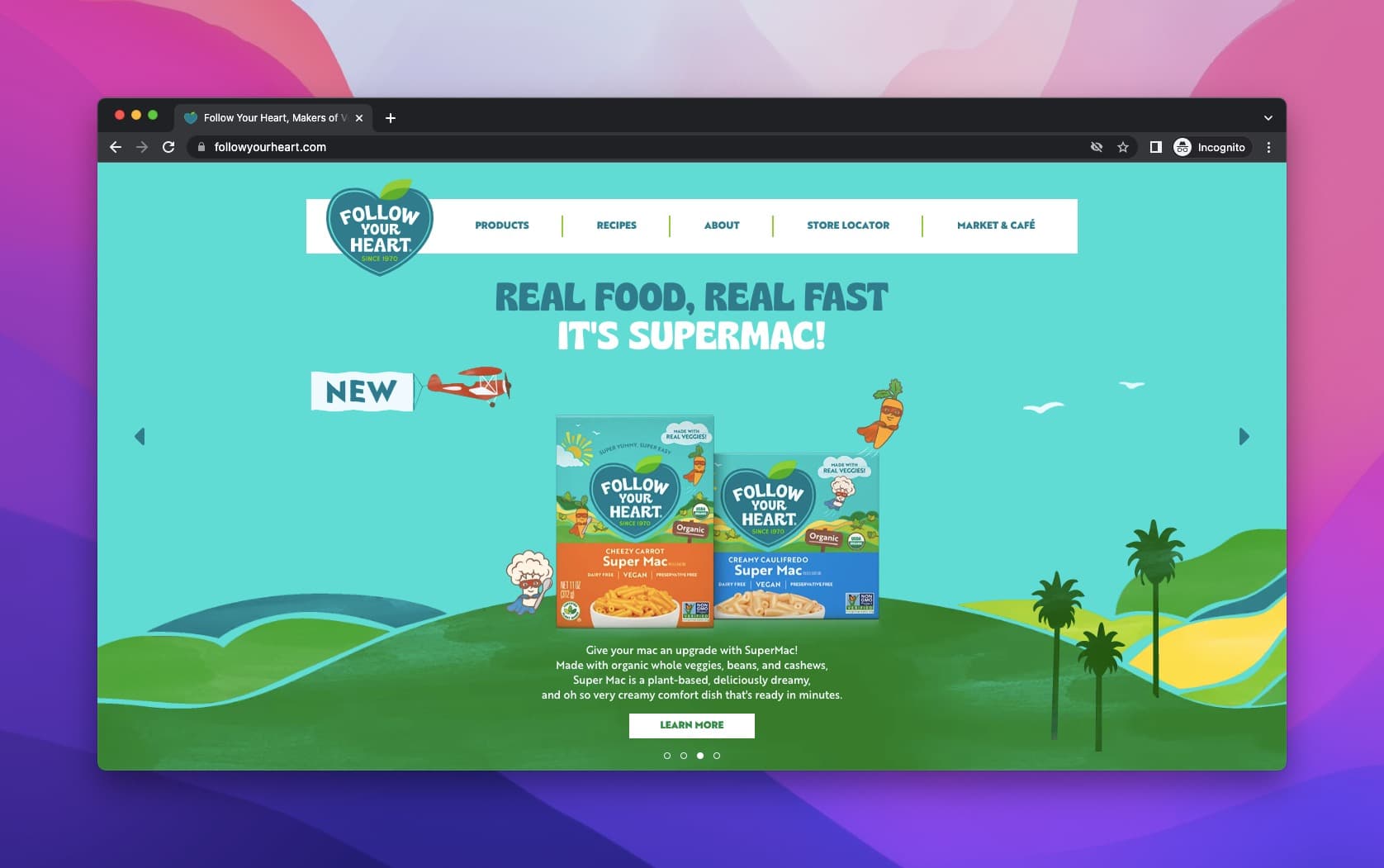
Follow Your Heart's Supermac launch (screenshot from 2022)
What works: Follow Your Heart, a vegan food brand committed to sustainability, opens with a motto: "Real Food, Real Fast. It's Supermac!" The headline introduces an upgraded version of an existing product, framing it as both fast and real (addressing the common criticism that vegan food is either slow to prepare or heavily processed). The animated art style matches the brand's green-oriented identity, with nature-inspired illustrations surrounding the product.
Why it works: Mission-driven headlines work with values-aligned audiences because they signal "you're in the right place" before describing the product. Follow Your Heart doesn't lead with taste or price. It leads with identity. The CTA sits right below the product description, where a visitor's interest peaks.
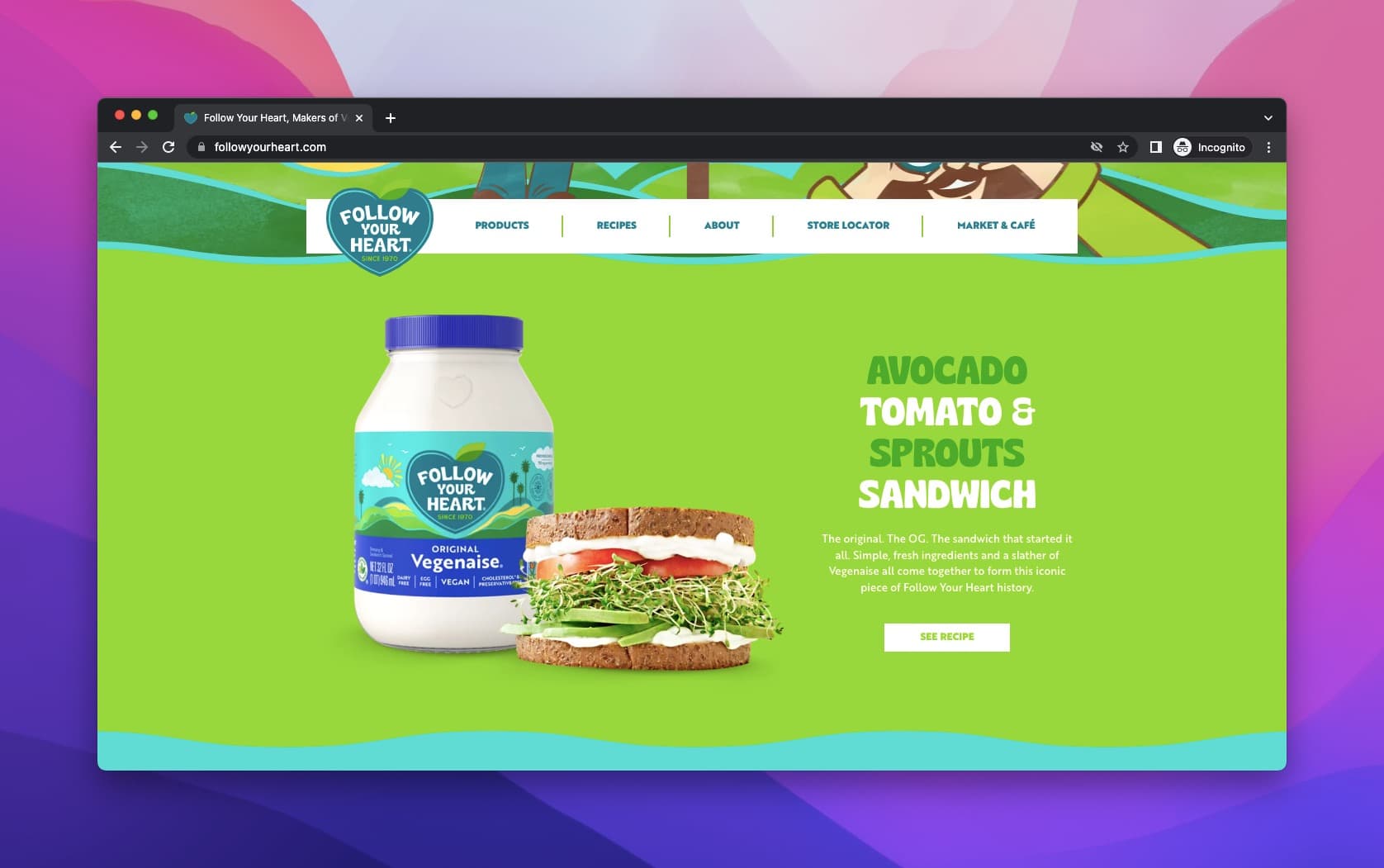
Follow Your Heart product with recipe-based CTA (screenshot from 2022)
Further down, the brand shows where the product can be used and provides a recipe CTA instead of a direct purchase button. This is smart for food products: recipes are shareable content that extend the product's reach beyond the product page. The animated, green-oriented illustrations create a consistent world that feels genuine to the brand's sustainability mission.
Supermac has since left the homepage, but in October 2026 Follow Your Heart still leads with a values line, "Better Does Exist", and still sends visitors to recipes, with a "See Recipe" button under each dish.
Key takeaway: If your product serves a values-driven audience (vegan, eco-friendly, ethical), lead your headline with your mission, not your features. Then use a content-based CTA (recipe, guide, tutorial) to extend engagement beyond the purchase.
Product headline vs product description: what each one does
A product headline and a product description do different jobs on the same page. The headline is one short line that makes a shopper want to know more. The product description (on marketplaces often called an item description) sits below it and answers the questions that come next: what the product is made of, how it works, what sizes it comes in and why it's worth the price.
| Product headline | Product description | |
|---|---|---|
| Job | Earn the next few seconds of attention | Answer the questions a buyer has before paying |
| Length | Often under 8 words | A short paragraph or more, plus specs |
| Where it sits | Top of the page, next to the main image | Under the headline, near the price and the add-to-cart button |
| What it says | One benefit or one idea | Materials, features, sizes, care, use cases |
Here is the same split for three made-up products, a food item, a skincare product and a piece of clothing, so you can see where each line belongs:
| Product | Product headline | Product description (opening lines) |
|---|---|---|
| Granola | "Breakfast that stays crunchy" | "Oats, almonds and a little maple, baked in small batches so the clusters hold up in cold milk. No added oils." |
| Face serum | "Calm skin by morning" | "A niacinamide and centella serum for redness-prone skin. Two drops at night after cleansing; fragrance-free and fine under makeup." |
| Rain jacket | "Dry in a downpour, light in a bag" | "Seam-sealed recycled nylon with a stowable hood and pit zips. It packs into its own pocket, so it rides in any tote." |
Read each row left to right and the split is plain: the headline makes one promise, and the description backs it with the details a buyer checks before adding to cart. Where space is tight, as on a collection page or a featured products row, the headline has to work without its description, so it carries the benefit and the product name does the rest.
If you need a first draft of the description, Popupsmart's free AI Product Description Generator writes one from a product photo, a few details and the tone you pick. Edit that draft so its first line backs up the promise your headline makes.
How to Improve a Product Headline
If your current product headline isn't converting, these seven strategies can fix it. Each one is drawn from the patterns that made the 12 examples above work.
1. Lead with the benefit, not the product name
Unless you have Apple-level brand recognition, your visitors care about what the product does for them, not what it's called. Flip the order: benefit first, product name second.
2. Cut it to under 8 words
The strongest headlines on this list ("Heels Up," "Awaken Up," "Wanna Play?") are all under 8 words. Short headlines are scannable on mobile, fit inside social share previews, and force you to prioritize the single most compelling idea.
3. Add sensory or emotional language
Dickinson's "pure solution" and Revlon's "Wanna Play?" work because they trigger a physical or emotional response. Swap abstract adjectives ("great," "innovative") for words your audience can feel.
4. Write different headlines for different product categories
Revlon writes category-specific headlines instead of using one tagline across everything. If you sell multiple products, each one deserves a headline that speaks to its specific buyer's pain point.
5. Test a curiosity gap
Apple's ultra-short approach creates intrigue by withholding information. Try a headline that hints at the result without explaining the mechanism. "The lipstick that stays" beats "Long-lasting matte lipstick formula" because it makes the reader want to learn more.
6. Pair the headline with a CTA
NYX, Nine West, and Mucinex all pair their headline with a visible CTA button. Polaroid deliberately skipped the CTA for editorial reasons, but most brands skip it by accident. Unless you have a strategic reason, put a CTA within the hero section. You can even use FOMO-driven messaging in the CTA to increase urgency.
7. A/B test against your current version
Write two new versions with different approaches from this list (a benefit-first line and a curiosity gap, say) and test them against your existing headline. Even a 5% improvement in click-through compounds across every visitor who lands on that page. Start with the highest-traffic product page and work down from there.
The same rules carry over when a product headline sits in a popup, such as a launch popup that features one product or a discount offer on a product page. One habit doesn't: in Popupsmart's 2026 popup benchmark, question headlines show no measurable effect on conversion; the data are too noisy to rule out modest effects. So don't count on a question mark to lift a popup. Test the wording of the offer instead, the same way you'd approach A/B testing popups.
Common Product Headline Mistakes and How to Fix Them
Six mistakes show up again and again on weak product pages:
1. Leading with the brand name instead of the benefit
Unless you're Apple, your brand name doesn't create desire. Lead with what the product does for the buyer.
2. Writing one headline for all product categories
Revlon's category-specific approach works better than a single tagline because different products attract different buyers.
3. Making the headline too long
The strongest headlines in this list are under 8 words. "Heels Up," "Awaken Up," "Wanna Play?" None of them need a sentence to communicate.
4. Forgetting the CTA
Polaroid deliberately skipped the CTA for strategic reasons (niche audience, editorial feel). Most brands skip it by accident. Unless you have a specific reason, include a CTA within the hero section.
5. Ignoring seasonal relevance
Nine West's "Bold Booties" only works because it's timed to fall. Product headlines that ignore the season miss an emotional connection point. Plan seasonal headline rotations in advance.
6. Using generic stock imagery with the headline
Every strong example on this list pairs the headline with a custom or branded image. Generic stock photos create a disconnect between the headline promise and the visual delivery.
Conclusion: Patterns That Separate Good Product Headlines from Great Ones
Three patterns stood out across these 12 product headline examples:
The best headlines match the brand's personality, not just the product category. NYX sounds playful. Apple sounds mysterious. Lancome sounds premium. Follow Your Heart sounds principled. None of them sound generic, and none of them sound like each other. Your headline should be identifiable as yours even without the logo.
Every strong headline pairs with a purpose-built image. Not a single example on this list uses a generic stock photo. Revlon's lip crayon image explodes with color. Apple's plain background isolates the product. Mucinex's mascot personifies the problem. The image isn't decoration. It's the second half of the headline.
The CTA completes the headline's promise. Nine West says "Heels Up" and follows with "Shop Now." Follow Your Heart promises real food and follows with a recipe. The CTA shouldn't feel like a separate element. It should feel like the obvious next step after reading the headline.
If you're building product pages, use these patterns as your starting checklist. Pick one brand from this list that matches your positioning, study its approach, and adapt it. Nothing here needs reinventing. The work is in applying it well.
FAQ About Product Headline Examples
What is a headline for a product?
A product headline is the primary text on a product page or landing page that communicates the product's main benefit and compels visitors to take action. It sits above the fold and typically includes a short, attention-grabbing statement paired with a supporting description and a CTA. Strong product headlines don't just name the product; they sell the outcome the buyer cares about.
What is the difference between a product headline and a product description?
A product headline is one short line, often under 8 words, that makes a shopper want to read on. The product description sits below it and does the explaining: materials, features, sizes, care and why the product is worth the price. The headline makes one promise; the description backs it up with the details a buyer checks before adding to cart.
How do you write a catchy product headline?
Start with your buyer's biggest pain point, not your product's features. Use one of five common formulas: number + adjective + keyword, action verb + pain point, benefit + "without" + objection, a curiosity question, or superlative + specific claim. Keep it under 60 characters, test two variations against each other, and pair the headline with an image that reinforces (not repeats) the message. Revlon's "Awaken Up" and Nine West's "Heels Up" show how much two words can carry.
What makes a product headline effective?
Three elements separate effective product headlines from forgettable ones. First, specificity: "Awaken Up" tells you more than "Great Concealer." Second, visual-copy alignment: the headline and the image should tell the same story (Mucinex's character and Lancome's dual-tone pages are good models). Third, a clear next step: whether it's a CTA button, a recipe link, or a scroll prompt, visitors need to know what to do after reading the headline.
How do you adapt product headlines for different industries?
The adaptation comes down to what each industry's buyers value most. Beauty buyers respond to ingredient names and sensory language (Dickinson's "pure solution"). Tech buyers respond to curiosity and status (Apple's minimal approach). Food buyers respond to mission alignment (Follow Your Heart's values-first copy). Fashion buyers respond to seasonal urgency and action verbs (Nine West's "Heels Up"). Identify your industry's primary purchase driver and build the headline around that driver, not around your product specs.
What are common mistakes in product headline writing?
The six most common mistakes are leading with the brand name instead of a benefit, using one headline for all product categories, writing headlines longer than 8 words without a strategic reason, forgetting the CTA in the hero section, ignoring seasonal relevance, and pairing the headline with generic stock images. Each one breaks the connection between the visitor's intent and the page's promise.
Product headline examples are only one of the steps to attract visitors, so check out our other blog posts!