
15 Best Multi-Vendor Marketplace Platforms for E-Commerce in 2026

 ChatGPT
 Perplexity
 Claude
 Grok
Grok Google AI Mode
Multi-vendor marketplace platforms let multiple sellers list on one site (e.g., Amazon/Etsy), offering built-in traffic, trust, tools, and scalability with lower setup costs. It compares 15 platforms and key selection tips.
Table of contents (30)
Choosing the right marketplace platform is critical for businesses selling online.
In this article, you’ll find a curated list of 15 excellent multi-vendor marketplace platforms. Take some time to explore them and identify the one that best fits your online business.

What Is a Multi-Vendor Marketplace Platform?
A multi-vendor marketplace platform is an eCommerce solution that allows multiple sellers to showcase their products or services on a single platform.
It’s especially useful if you want to expand your business online without having to manage all the complexities of running your own website.
Here’s a closer look at how these platforms work and why they can be a game-changer for your business:
• One platform, many sellers: Think of it like an online shopping mall where each seller has their own virtual store. Instead of building your eCommerce website from scratch, you can simply register as a seller on a ready-to-use marketplace platform.
• Examples: Popular multi-vendor platforms include Amazon, Etsy, and eBay, where various sellers offer products across different categories. Customers can browse multiple stores, compare products, and complete their purchases—all in one place.
Why Should You Sell on Multi-Vendor Online Marketplaces?
| Reason | Main Benefits |
|---|---|
| Reach a Wider Customer Base | Instant access to traffic, SEO advantages |
| Low Setup and Maintenance Costs | No need to build a website, Cost-effective fees |
| Built-in Marketing and Advertising Opportunities | Marketplace advertising, Promotion options |
| Competitive Advantage Through Customer Trust | Trusted platforms, Customer reviews |
| Comprehensive Sales Tools | Integrated payment gateways, Order and inventory management, Shipping support |
| Scalability | Easy expansion, Opportunity for international sales |
1. Reach a Wider Customer Base
Instant access to traffic: By joining a well-known marketplace, you can instantly tap into its existing pool of potential buyers. For example, if you sell handmade jewelry, listing your products on Etsy allows you to benefit from its existing customer base without needing to build your own audience from scratch. SEO advantages:** Most marketplaces invest heavily in search engine optimization (SEO), meaning your products are more likely to appear in Google search results. Compared to setting up your own e-commerce website from the ground up, this gives your business more visibility.
2. Lower Setup & Maintenance Costs
No need to build or maintain a website: One of the biggest advantages is that you don’t have to worry about web development, hosting, or ongoing technical maintenance. The platform handles all of this for you. Cost-effective fees:** Most platforms charge listing or transaction fees (e.g., Amazon seller fees or eBay listing fees), but these are generally far more affordable than managing your own e-commerce site (including hosting, security, development, etc.).
3. Built-in Marketing & Advertising Opportunities
Marketplace marketing: Major multi-vendor platforms invest in marketing efforts to drive traffic to their site. This means your products are likely to be featured in their promotional campaigns without additional cost, giving you greater visibility. Advertising options:** Many platforms like Amazon offer sponsored listing options that allow your product to appear at the top of search results, helping you gain a competitive edge.
4. Competitive Advantage Through Customer Trust
Trusted platforms: Customers tend to trust established platforms more than standalone websites. For example, shoppers may rely on Amazon’s return policies or eBay’s buyer protection, making it easier for them to purchase your products confidently. Customer reviews:** Most platforms include built-in review systems, allowing satisfied customers to leave feedback. This helps build your credibility and increases your chances of making more sales.
5. Comprehensive Sales Tools
Integrated payment gateways: These platforms usually offer secure built-in payment solutions (e.g., PayPal, Stripe), saving you from setting up custom payment processing. Order & inventory management: Most platforms provide dashboards where you can monitor sales, track orders, and manage inventory in one place. Shipping support:** Some platforms, such as Amazon, provide logistics and fulfillment services. With Amazon FBA (Fulfillment by Amazon), they handle storage, packaging, and shipping, allowing you to focus on growing your business.
6. Scalability
Easy expansion: As your business grows, multi-vendor platforms allow you to add more products, expand to new markets, or sell internationally without changing your infrastructure. For example, by updating your shipping options on eBay, you can easily start selling in multiple countries.
Start Selling Today: The 15 Best Multi-Vendor Marketplace Platforms for Your Online Store
| Platform | Best For | Starting Price |
|---|---|---|
| Dokan | Small businesses looking for an affordable and easy marketplace solution. | Free plan |
| Yo!Kart | Full customization and control with its own hosting platform. | $499 |
| CedCommerce | Seamless integration with existing Magento, Shopify, or WooCommerce setups. | Varies by integration |
| Arcadier | Fast setup with a simple, scalable SaaS solution. | $99/month |
| Multi-Vendor by Webkul | Marketplaces focusing on customization with flexible integrations. | Plugin-based pricing |
| CS-Cart Multi-Vendor | Multi-language and multi-currency support for global marketplaces. | $75/month |
| Sharetribe | No-code, quick setup for service or rental marketplaces. | $79/month |
| Shuup | Modular, scalable solutions with strong SEO and seller tools. | $299/month |
| Kreezalid | Subscription-based marketplaces with simple customization. | $299/month |
| X-Cart Marketplace | Open-source flexibility with a wide range of plugins. | $199/month |
| Spree | Developers needing an API-focused, customizable platform. | Custom pricing |
| Yo!Rent | Rental-focused marketplaces with real-time booking management. | Custom pricing |
| Marketplacer | Large-scale SaaS marketplaces with global capabilities. | Custom pricing |
| Prestashop | Open-source customization with a broad plugin ecosystem. | Free (with paid plugins) |
| Mirakl Inc | Businesses needing a powerful, scalable SaaS marketplace platform. | Custom pricing |
After extensive research and comparison, we’ve curated the best multi-vendor marketplace platforms for you to explore.
Each platform offers unique features and advantages tailored to different business needs.
Take a closer look at each one to find the best fit for your online business.
1. Dokan
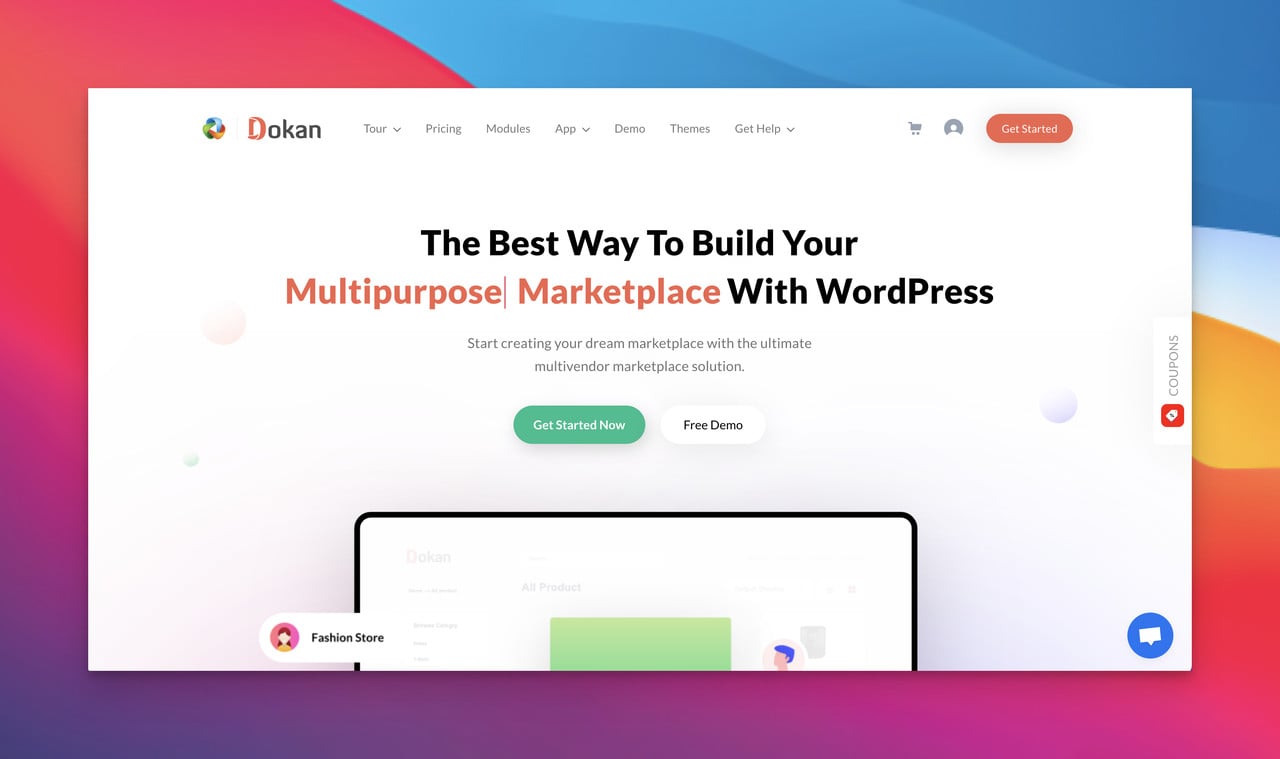
First on our list: Dokan. A multi-vendor marketplace software that lets you build online marketplaces like Amazon and eBay.
As a user-friendly platform, it offers a wide range of features that allow vendors to easily manage their stores. Whether you want to sell physical or digital products, Dokan supports you in every way.
Thanks to its intuitive interface, vendors can add products, manage orders, and handle shipping and payments effortlessly. Additionally, with its responsive design, customers can shop comfortably from any device.
Dokan Rating on G2: 🌟 4.6/5
Key Features: • Front-end product management • Multi-language support • Product reviews and rating • Advanced order management • Customizable storefront • Vendor withdrawal and account status
Pricing: Starting at $149/year, Dokan offers pricing plans to suit all budgets and scales as your business grows. The free plan includes core multi-vendor features, while the Basic, Professional, Business, and Enterprise plans provide more advanced options.
2. Yo!Kart
Here’s the translated section in direct copy format, ready to paste:
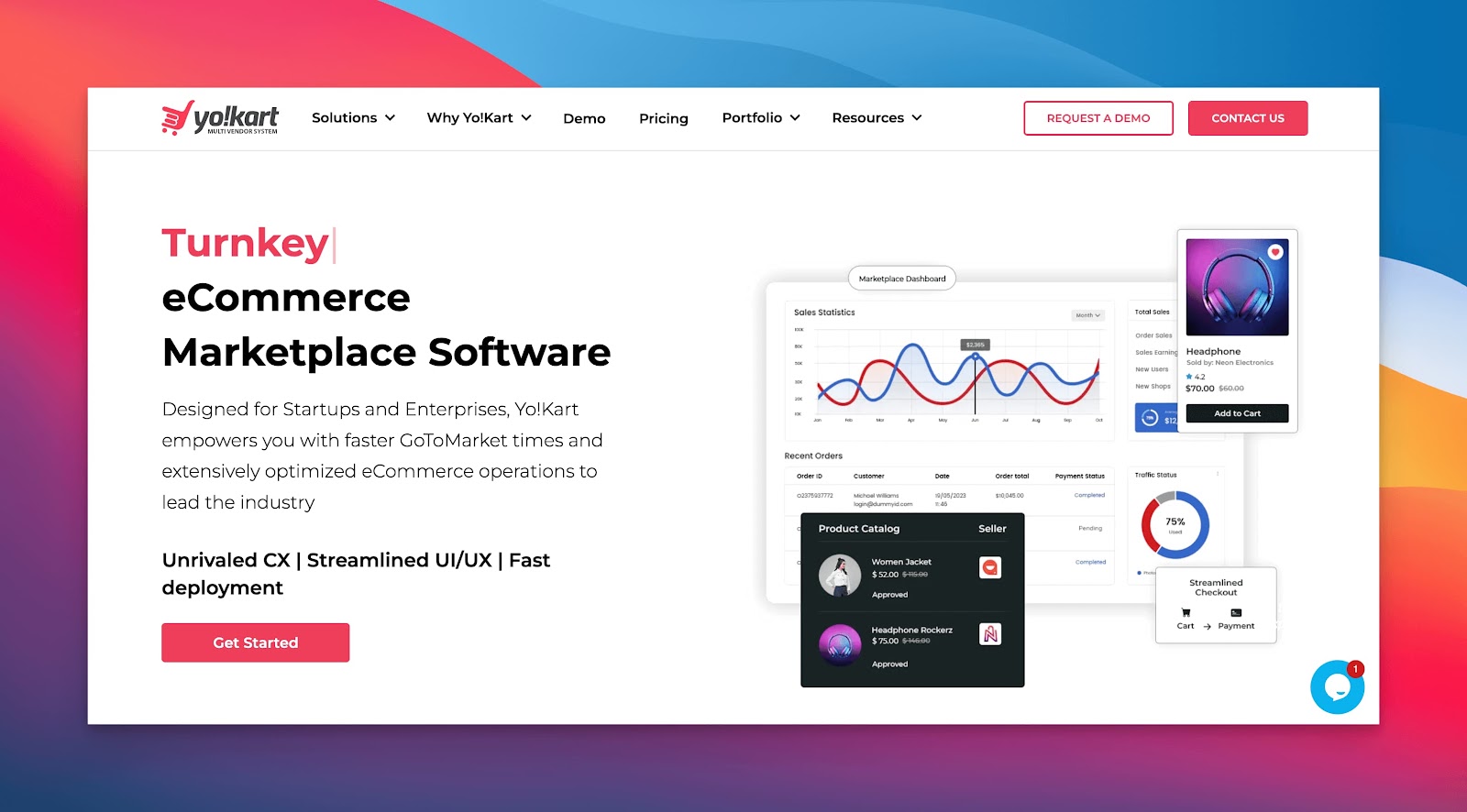
Yo!Kart is a powerful eCommerce solution that helps you build a multi-vendor marketplace. As a comprehensive platform, Yo!Kart provides businesses with full control and flexibility to create and manage their online marketplace.
Whether you're a startup or an established business, Yo!Kart enables you to launch your online marketplace easily and efficiently.
The platform allows vendors to create individualized storefronts and provides access to dedicated user panels such as Admin, customers, partners, and advertisers.
Yo!Kart Rating on G2: 🌟 4.6/5
Key Features: • Multi-vendor functionality • Customizable design and themes • Up to 1 year of free technical support • Advanced reporting and analytics • Flexible payment options • SEO-friendly architecture • Dedicated mobile app for buyers and sellers
Pricing: Yo!Kart offers various packages tailored to different business requirements such as B2B, B2C, and P2P. Pricing starts at $499. All packages include self-hosting, free setup, zero transaction fees, and full source code ownership.
3. CedCommerce
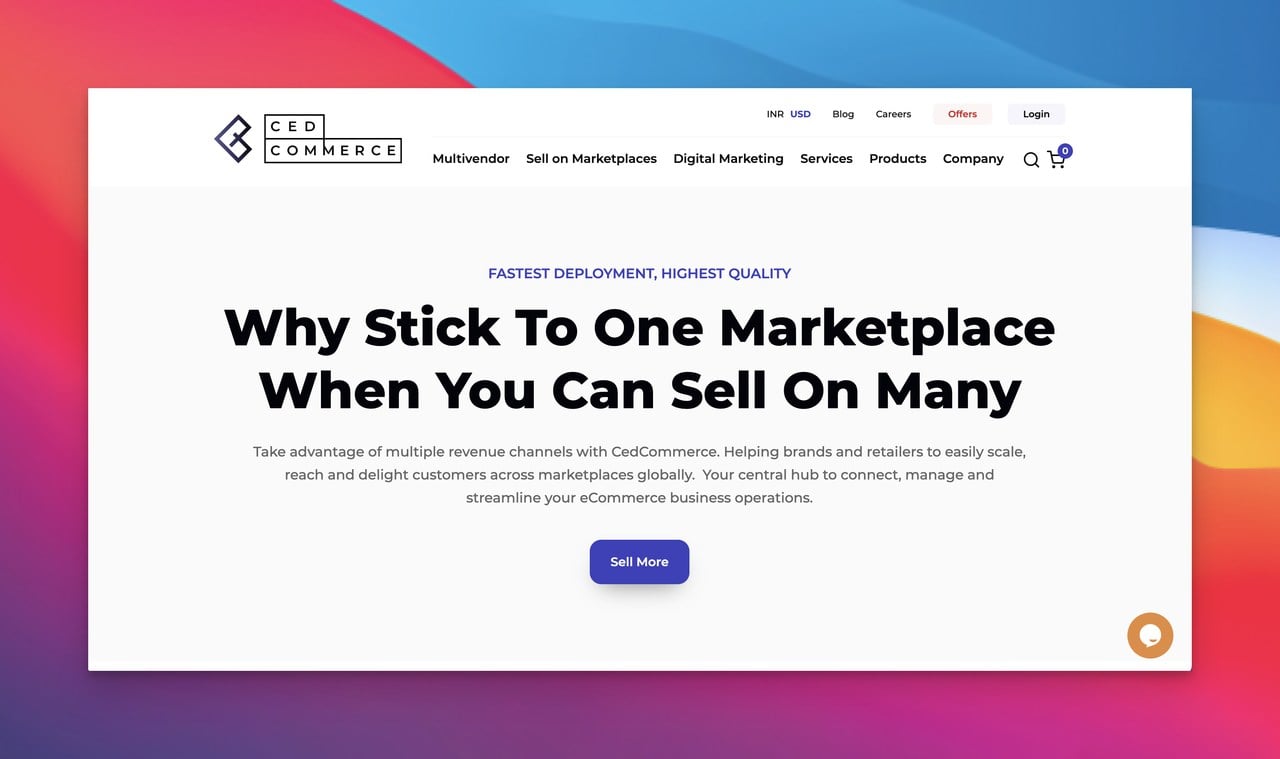
CedCommerce is a powerful tool designed to help online businesses grow by building multi-vendor marketplaces. With CedCommerce, users can easily manage multiple vendors and provide them with a platform to sell their products.
One of CedCommerce’s strongest advantages is its ability to integrate with various eCommerce platforms such as Magento, Shopify, and WooCommerce. This allows users to leverage their existing eCommerce setup and build a multi-vendor marketplace on top of it.
CedCommerce also offers customization options such as vendor registration processes, commission rates, shipping fees, and more.
CedCommerce Rating on G2: 🌟 4.6/5
Key Features: • Multi-vendor support • Advanced inventory management • Automated order processing • Secure payment gateways • Responsive design for both mobile and desktop • Integration with multiple shipping carriers
Pricing: CedCommerce offers various pricing plans for its multi-vendor marketplace solution depending on the integration you choose.
4. Arcadier
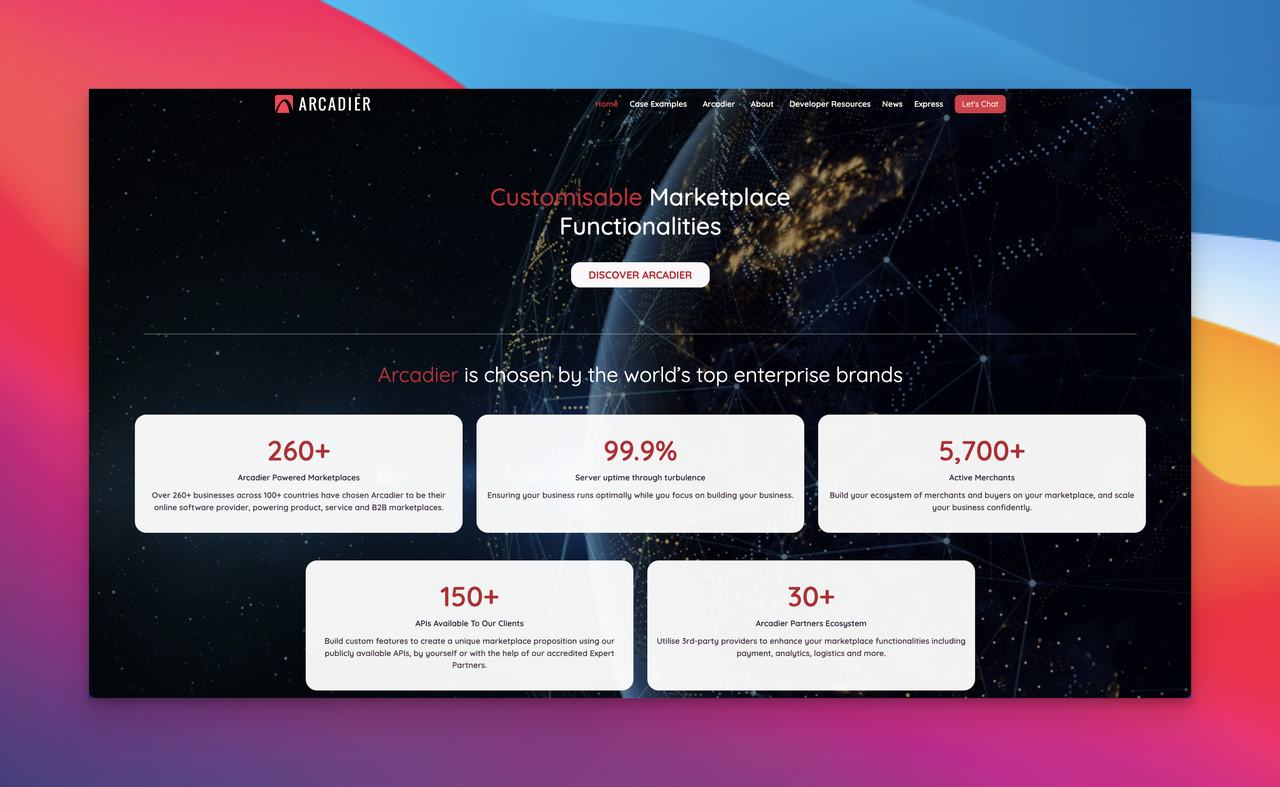
Arcadier is a powerful SaaS-based eCommerce tool that allows you to easily and efficiently create multi-vendor marketplace platforms. With its user-friendly interface and extensive customization options, users can set up their marketplaces in just a few simple steps.
Arcadier offers various features such as payment processing, shipping management, and social media integration to help users grow their marketplace. While vendors can set up their own stores with customizable branding and shipping options, buyers can easily search and purchase products from multiple sellers.
Arcadier Rating on G2: 🌟 4.3/5
Top Features: • Customizable storefronts for sellers • Multi-currency and multi-language support • Automated shipping and tax calculation • Integration with major payment gateways • Social media marketing tools • Powerful analytics and reporting capabilities
Pricing: Arcadier offers a 14-day free trial, and pricing starts at $99/month, with more advanced plans available depending on your needs.
5. Multi-Vendor by Webkul
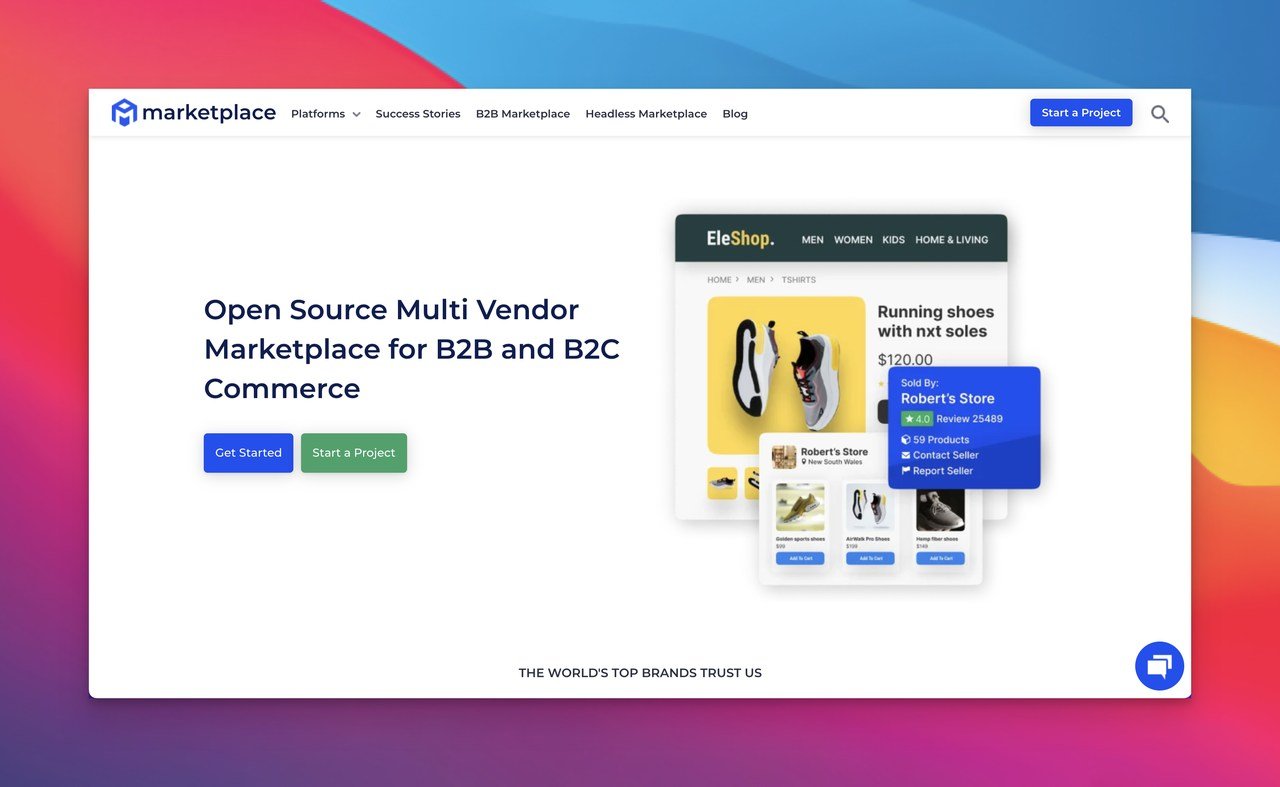
Multi-Vendor by Webkul is a marketplace extension that allows you to transform your existing eCommerce site into a fully functional multi-vendor platform. It is highly popular among businesses using platforms like Shopify, Magento, or WooCommerce thanks to its wide integration support.
With Webkul’s flexible structure, you can customize vendor management, commission models, shipping workflows, and storefront design. This solution is ideal for businesses that already have an online store and want to expand into marketplace operations.
Webkul Rating on G2: 🌟 4.6/5
Key Features: • Multi-vendor support with customizable permissions • Seamless integration with Shopify, Magento, WooCommerce and more • Flexible commission and payout settings • Vendor dashboard for order and inventory management • Review, rating, and seller verification options • Advanced customization through modular structure
Pricing: Webkul offers plugin-based pricing, meaning the cost depends on which eCommerce platform you're integrating with and which add-ons you choose.
6. CS-Cart Multi-Vendor
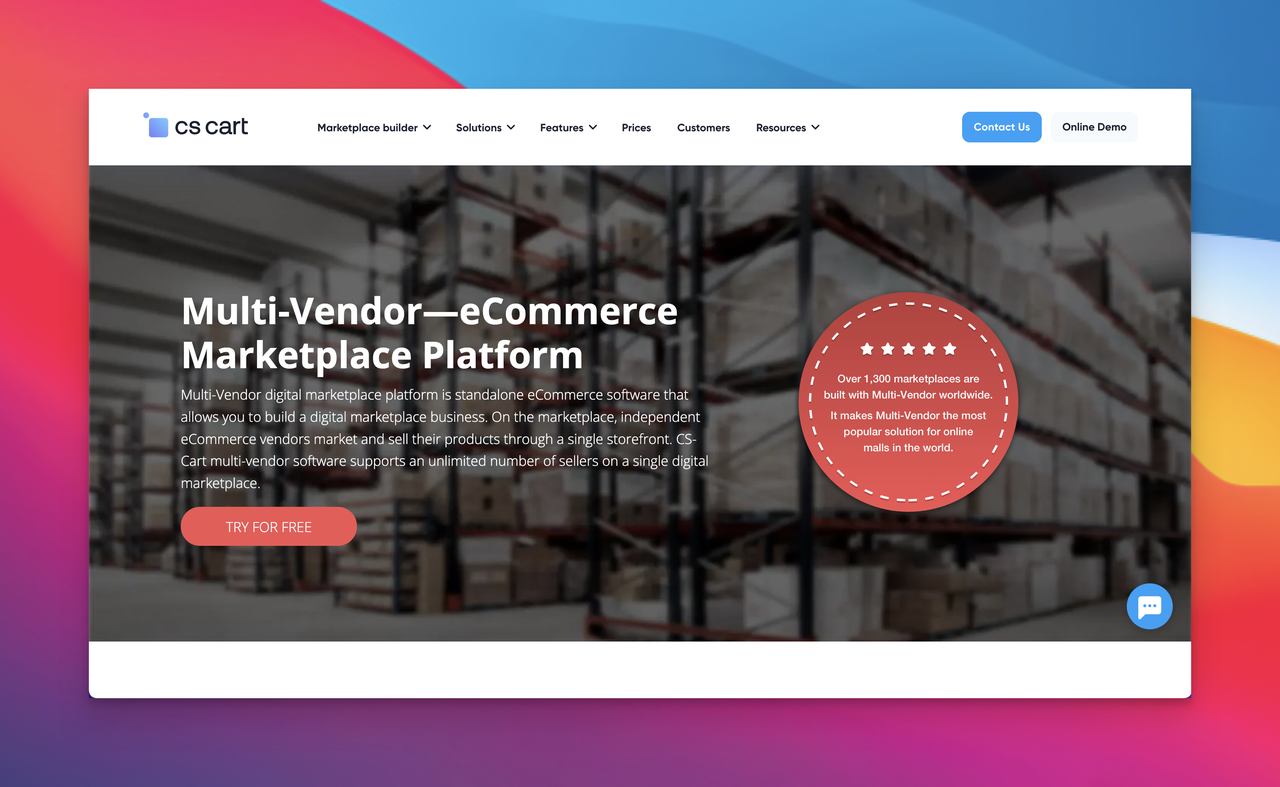
CS-Cart Multi-Vendor is a powerful eCommerce platform that enables the development of fully customizable online marketplaces. With support for 26 built-in languages and a wide range of capabilities, this all-in-one solution offers impressive flexibility, making it suitable for different industries and business needs.
Some of the standout features of CS-Cart Multi-Vendor include advanced order management, multiple payment options, and real-time shipping calculations. With its user-friendly interface and robust functionality, it's a compelling choice for businesses looking to build a successful multi-vendor marketplace.
CS-Cart Multi-Vendor Rating on Capterra: 🌟 4.7/5
Highlight Features: • Responsive design for seamless user experience across all devices • Built-in content editor for easy marketplace updates • Advanced search with 45 parameters to help users find products efficiently • In-depth analytics and detailed reporting to optimize marketplace performance • Admin access level controls for better management and permission handling
Pricing: CS-Cart Multi-Vendor’s no-code pricing starts from just $75/month, providing essential features to get started. The platform also offers cost-effective, built-in solutions starting from $1,240/year, making it an attractive option to launch your MVP marketplace while staying within budget.
7. Sharetribe
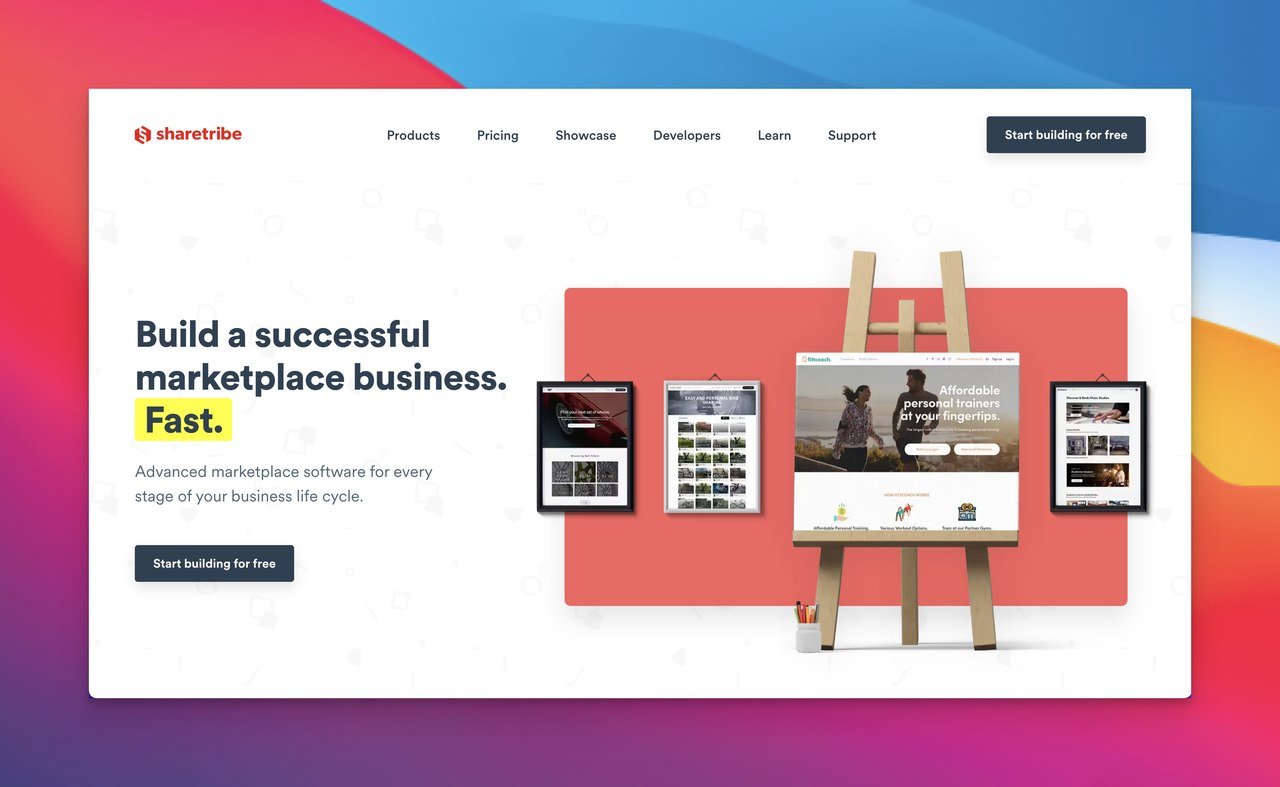
Sharetribe is a no-code platform designed to help entrepreneurs launch unique online marketplaces with minimal technical expertise. Whether you're creating a service-based, product-based, or rental marketplace, Sharetribe’s intuitive interface ensures a smooth launch process.
Similar to other tools on this list, the platform includes features such as customizable listings, integrated payment processing, and responsive design. Additionally, Sharetribe’s powerful API enables seamless integrations with external applications, ensuring a consistent user experience.
Sharetribe Rating on G2: 🌟 4.6/5
Key Features: • Create and launch your marketplace easily without technical knowledge • Customize your marketplace’s look and feel to match your brand identity • Payment integrations with popular gateways and secure transaction processing • Mobile optimization for smooth browsing across all devices • Efficient process for adding, editing, and managing listings and marketplace content
Pricing: Sharetribe’s Hobby plan starts at just $79/month, supporting up to 100 users with unlimited traffic, listings, and images. In addition, it offers three more advanced plans and a Flex option, tailored to match your brand’s unique requirements and budget.
8. Shuup
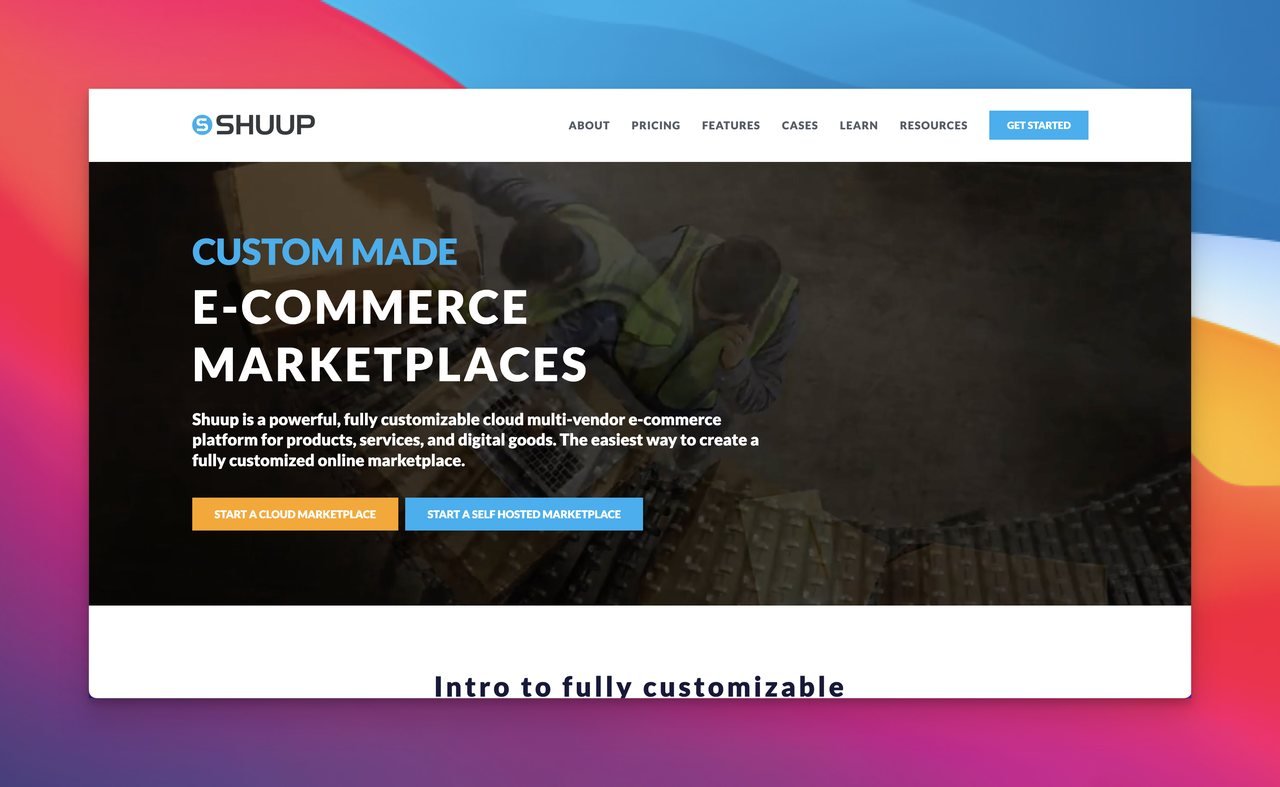
Shuup is an advanced multi-vendor marketplace platform that enables businesses to create and manage fully functional online marketplaces. Thanks to its modular architecture, Shuup offers extensive customization options, allowing you to tailor the marketplace to your specific needs and business goals.
With Shuup, you can easily manage tasks such as vendor onboarding, order processing, and product listings. Packed with features like multilingual support, SEO optimization, and built-in analytics, Shuup provides a comprehensive solution for businesses looking to build a strong online presence.
Shuup Rating on Capterra: 🌟 4/5
Key Features: • Multi-vendor support to onboard and manage multiple sellers with ease • Scalable architecture that grows with your business • Integrated payment gateways for secure and seamless transactions • Product catalog management for efficiently organizing and showcasing items • Advanced reporting tools to gain valuable insights into marketplace performance
Pricing: Shuup starts at $299/month, including access to all marketplace features and a 7-day free trial. The platform also offers Custom Development and Shuup NEXT Self-Hosted plans, allowing you to choose the best option based on your business needs and budget.
9. Kreezalid
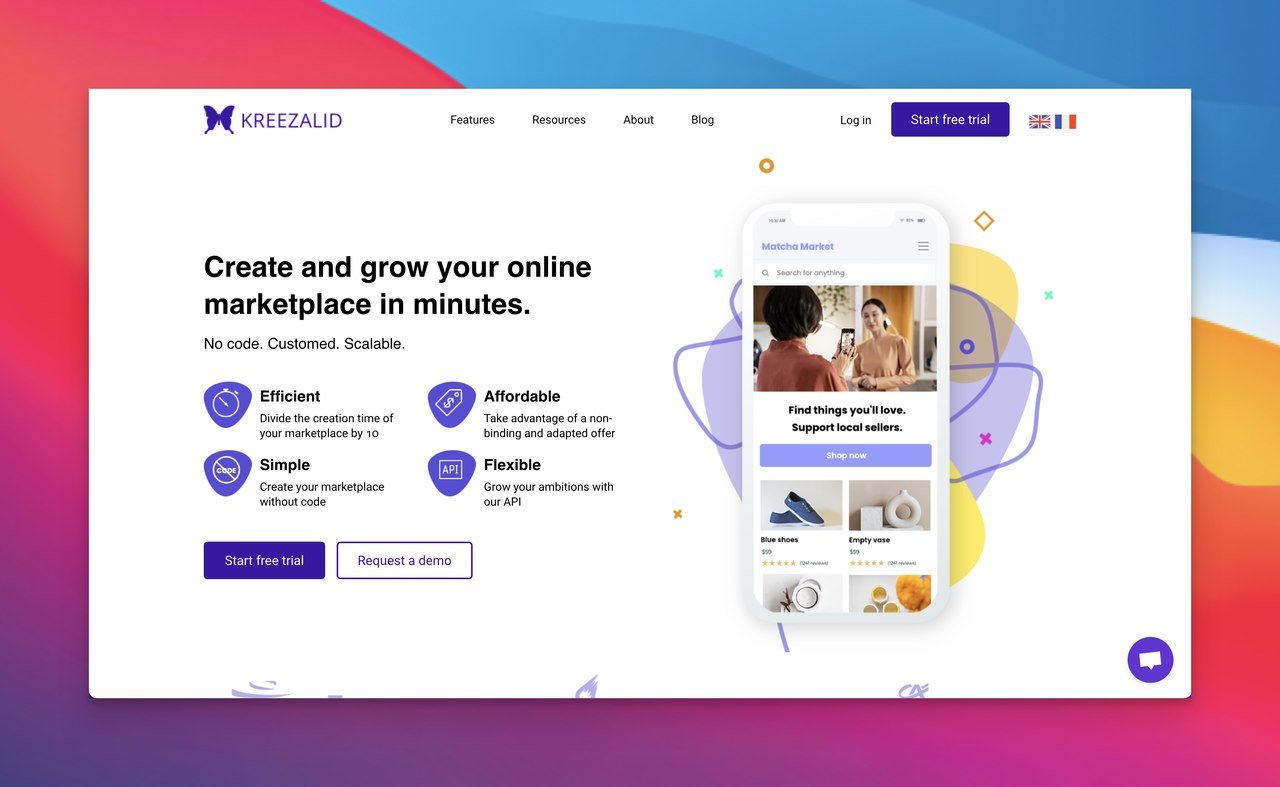
Kreezalid is another dynamic multi-vendor marketplace platform featured in our list. With its user-friendly interface and no-code approach, it’s an accessible option for entrepreneurs with limited technical expertise.
Kreezalid offers a variety of features such as customizable design templates, automated commission management, and built-in local SEO tools. Additionally, the platform supports seamless integrations with popular payment gateways and third-party services.
Kreezalid Rating on Capterra: 🌟 4.3/5
Key Features: • Flexible product approval system • Customizable templates to personalize your marketplace design • Integrated payment gateways for secure transactions • Subscription-based marketplace structure
Pricing: Kreezalid’s pricing starts at $299/month based on a subscription model. The platform also offers a 14-day free trial, allowing you to test its features before committing.
10. X-Cart Marketplace
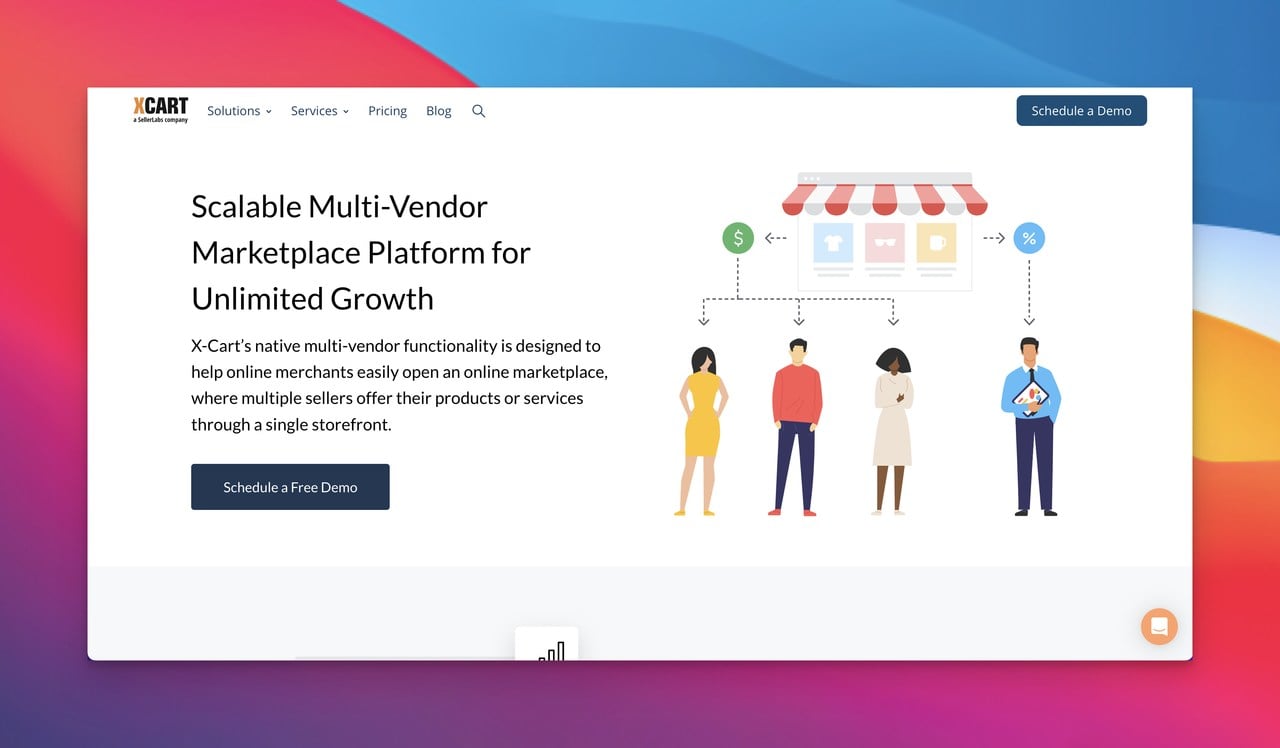
X-Cart Marketplace is a robust eCommerce solution that allows you to build fully customized online marketplaces for any business model. Thanks to its extensive add-on library and customizable templates, X-Cart Marketplace enables you to create an online store that is both visually appealing and highly functional.
The platform offers numerous features including inventory management, multiple shipping options, and integrated marketing tools. Additionally, with its open-source structure, X-Cart Marketplace provides remarkable flexibility and adaptability, making it a strong option to consider.
X-Cart Marketplace Rating on G2: 🌟 4.2/5
Key Features: • Dedicated vendor dashboard • Payment integrations with support for multiple payment methods • Advanced inventory management for easier product organization • Responsive design to ensure consistent browsing experience across devices
Pricing: X-Cart Marketplace offers flexible pricing starting at $199/month, including unlimited SKUs, customizable themes, and pre-built templates.
11. Spree
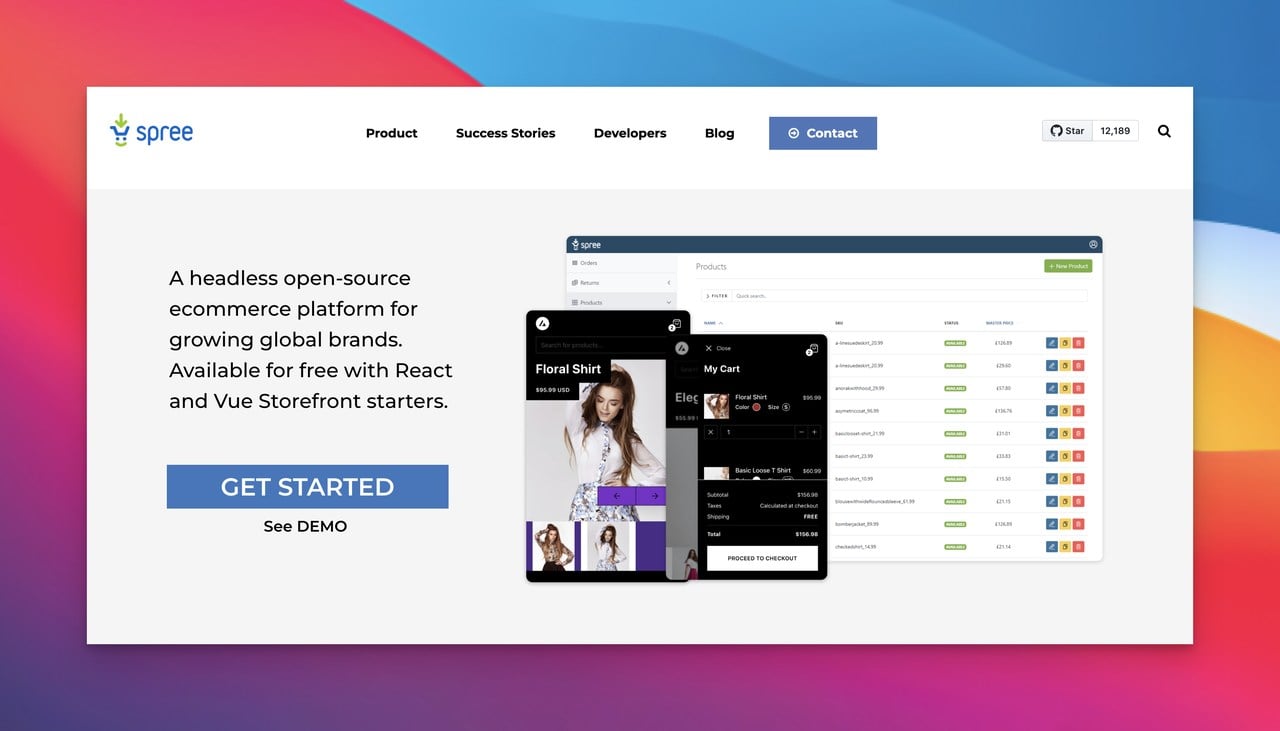
Spree is a flexible and open-source eCommerce platform worth considering if you’re looking to power your business and build sophisticated online marketplaces. Developed using Ruby on Rails, Spree is known for its high performance and seamless integrations with popular eCommerce tools.
It offers a wide range of features such as customizable storefronts, advanced analytics, and multiple payment gateway options.
Spree Rating on G2: 🌟 3.6/5
Key Features: • Open-source & modular structure allows customization and feature expansion • API-focused architecture enables smooth integration with other tools • Mobile-first approach optimized for mobile shopping experiences • Multi-store & multi-currency support for global expansion • Advanced promotion system to boost customer engagement and conversions
Pricing: Spree offers customized pricing for its multi-vendor marketplace platform. To explore further, you can request a demo with their sales team and discuss your specific needs and requirements.
12. Yo!Rent
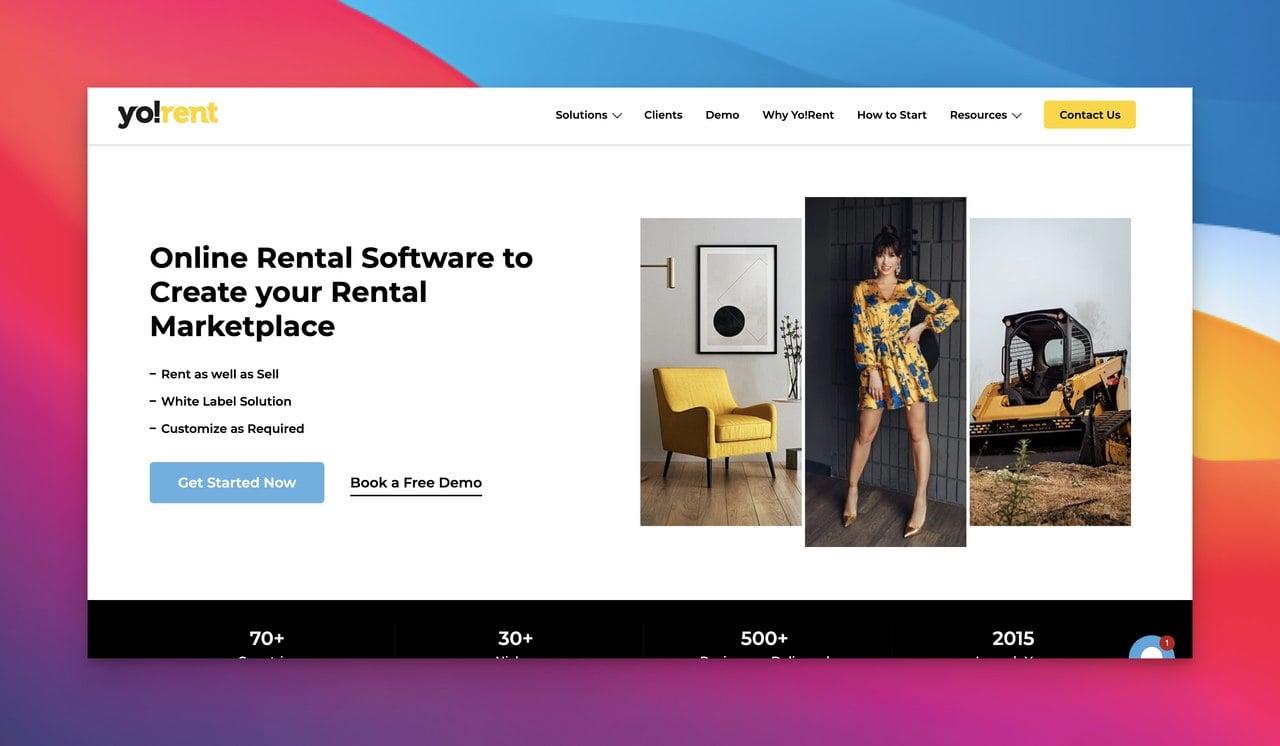
Yo!Rent is a robust rental marketplace platform that makes it easy for entrepreneurs to create and manage online rental stores. Designed specifically for the rental industry, Yo!Rent simplifies the process of managing rental bookings, payments, and inventory.
The platform includes powerful features such as real-time availability tracking, customizable pricing rules, and seamless integrations with popular payment gateways.
Yo!Rent Rating on G2: 🌟 4.6/5
Top Features: • Multi-vendor support to manage multiple sellers • Responsive design for a smooth and consistent user experience • Advanced search filters to help customers find products quickly • Smart review management to encourage user-generated content • Secure payment gateways for smooth and safe transactions
Pricing: To learn more about Yo!Rent’s pricing structure, you’re encouraged to request a demo. This allows you to speak directly with the Yo!Rent team and receive pricing details tailored to your needs.
13. Marketplacer
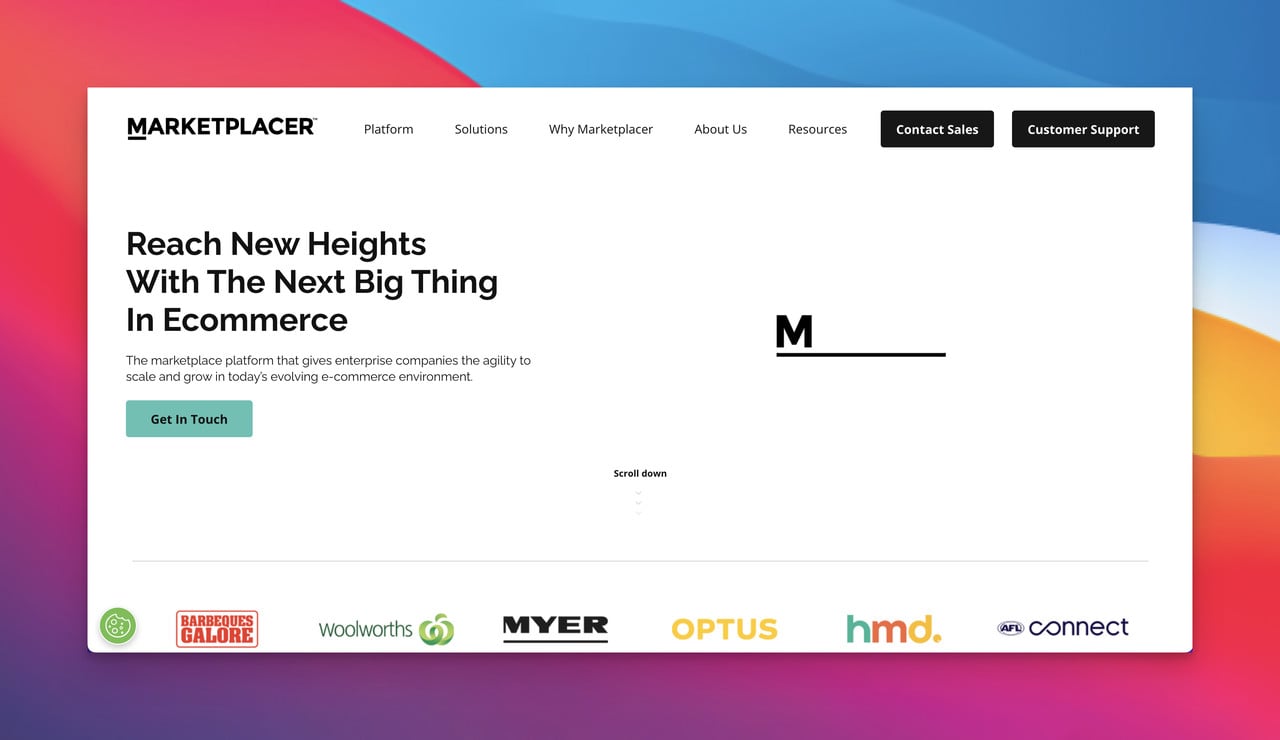
Marketplacer is an innovative e-commerce platform that simplifies the process of building and managing scalable online marketplaces. Serving a wide range of industries, Marketplacer offers features such as product and vendor management, flexible payment processing, and customizable storefronts.
With an easy-to-use interface and a powerful API, it integrates seamlessly with existing systems—delivering a smooth and consistent user experience.
Marketplacer Rating on Capterra: 🌟 4.9/5
Key Features: • Customizable storefront to match your brand identity • Mobile optimization for seamless browsing on any device • Payment integrations with popular gateways for secure transactions • Inventory management to simplify product listing and editing • Ratings and reviews to encourage social proof • Geolocation support to localize your marketplace for a global audience
Pricing: Marketplacer does not publicly disclose pricing details. To receive a tailored quote, you’ll need to request a demo with their sales team so they can assess your business needs and provide a customized offer.
14. Prestashop
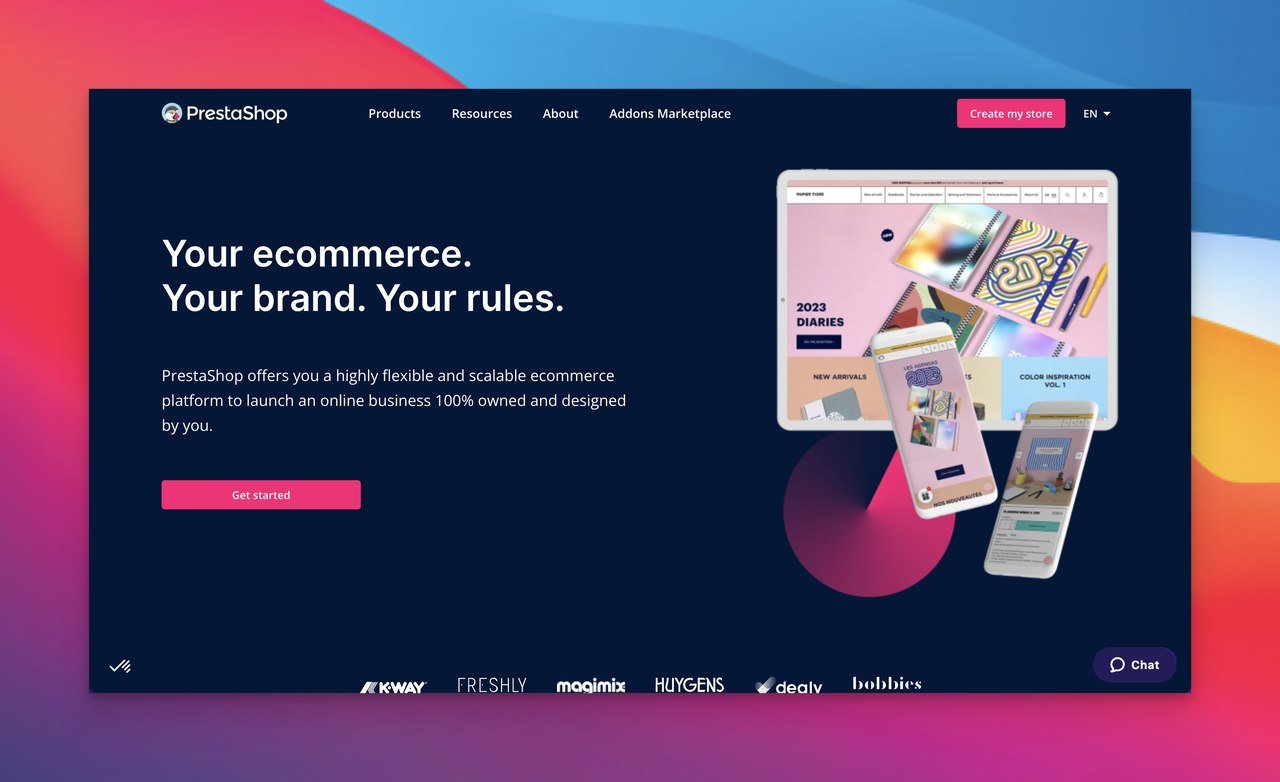
Prestashop is a popular open-source eCommerce platform that allows businesses to build feature-rich online stores with minimal effort. With a wide range of built-in functionalities and extensions, Prestashop offers high customization and scalability.
The platform includes capabilities such as inventory management, multilingual support, and integrated marketing tools. Its large developer community and comprehensive documentation make it an attractive choice for businesses seeking a flexible and well-supported marketplace solution.
Prestashop Rating on Capterra: 🌟 4.3/5
Key Features: • Open-source platform: Full flexibility and customization • Built-in features: Extensive out-of-the-box functionality • 5,000+ plugins: Enhance your online store with powerful extensions • SEO-friendly, multi-language & multi-currency support: Scale to global audiences
Pricing: Prestashop is a free and open-source eCommerce platform. Customization can be done using paid themes and modules. You may also incur additional costs for hosting, domain registration, and SSL certificates.
15. Mirakl Inc
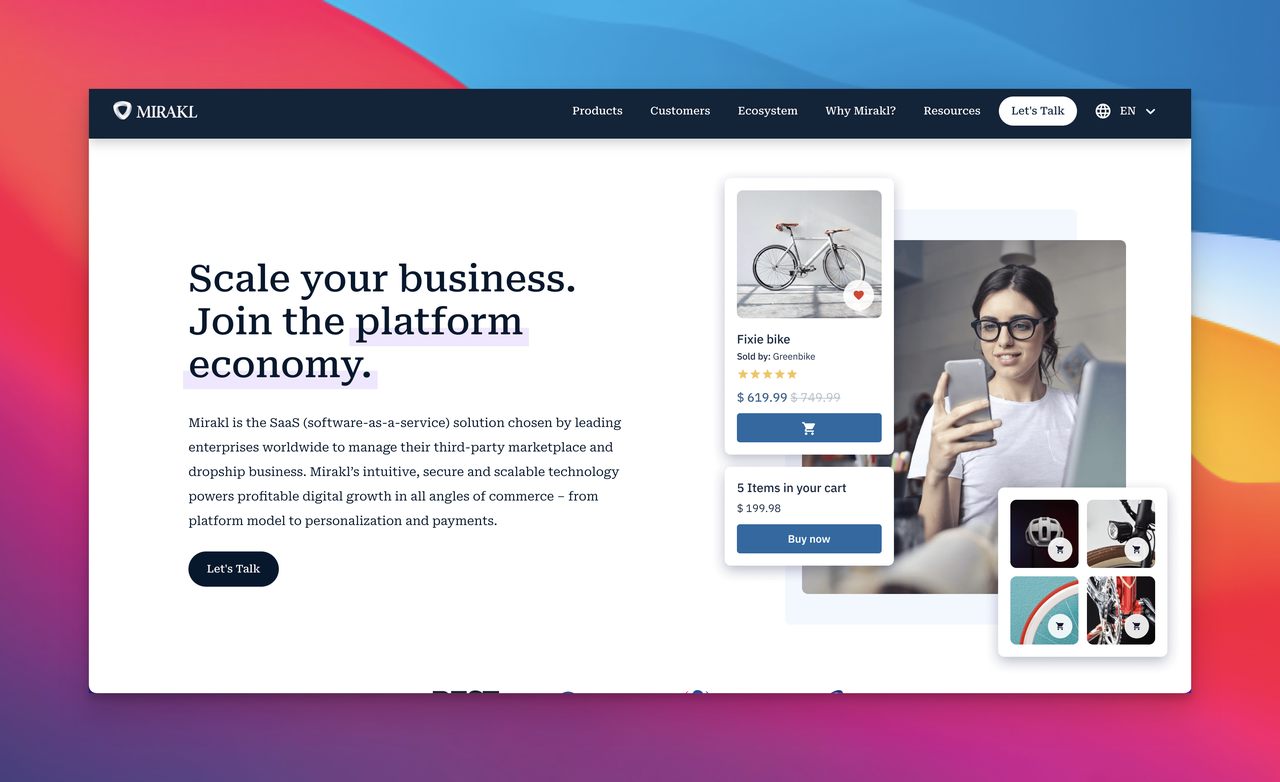
Finally, let’s take a look at Mirakl Inc, a leading company providing marketplace solutions designed to accelerate your eCommerce growth. Its robust platform enables organizations to easily launch and manage multi-vendor marketplaces, offering features like vendor onboarding, product catalog management, and order tracking.
Mirakl Inc’s cloud-based solution delivers high performance, reliability, and scalability for businesses of all sizes.
Mirakl Inc Rating on G2: 🌟 4.6/5
Key Features: • Scalable SaaS platform that adapts as your business grows • Supports both B2B and B2C segments for diverse market coverage • Powerful API for seamless integration with existing systems • Global reach with multi-currency and multi-language support • Comprehensive reporting and data-driven insights for optimization • Advanced catalog management to streamline product organization
Pricing: Mirakl Inc offers customized pricing for its marketplace platform. Pricing details are not publicly available—you’ll need to contact their sales team to discuss your requirements and receive a tailored quote.
Tips to Consider Before Choosing a Multi-Vendor Marketplace Platform
Choosing the right multi-vendor marketplace platform can be a game-changer for your eCommerce business. With so many options available, it’s crucial to keep these practical tips in mind to make the best decision:
➤ Know your niche: Understand your target market and the unique value proposition of your marketplace. Your niche will guide which features and functionalities you actually need.
➤ Ease of use: Prioritize user-friendly interfaces for both vendors and customers to ensure smooth interactions and a pleasant user experience.
➤ Customization capabilities: Choose a platform that offers robust customization options so you can tailor the look and feel to match your brand identity.
➤ Scalability: Make sure the platform can support growth in users, vendors, and products without sacrificing performance.
➤ Payment processing: Opt for a platform that supports multiple payment providers and currencies to serve a global audience.
➤ Security: Select a platform with strong security features and compliance with relevant regulations.
➤ Marketing tools: Look for built-in marketing tools such as SEO optimization, email campaigns, and social media integrations.
➤ Analytics and reporting: Data-driven insights are invaluable. Prefer platforms that offer comprehensive analytics and reporting to support better decision-making.
➤ Vendor management: Choose a platform that simplifies vendor onboarding, communication, and performance tracking.
➤ Customer support: Give priority to providers that offer responsive and reliable support to help you solve any issues quickly.
➤ Test drive first: Most providers offer demos or free trials. Take advantage of these to see whether the platform is truly a good fit for your business.
In conclusion, the key to finding the ideal multi-vendor marketplace platform lies in understanding your unique needs and evaluating different options based on these criteria. With a thoughtful approach and thorough research, you’ll be well on your way to building a successful and thriving online marketplace.
Frequently Asked Questions
1. What Are Some Popular Multi-Vendor Marketplace Platforms?
Popular multi-vendor marketplace platforms include Shopify, WooCommerce, CS-Cart Multi-Vendor, Magento, and Sharetribe, each offering unique features tailored to different business needs.
2. How Can I Choose the Right Multi-Vendor Marketplace Platform for My Business?
You can choose the most suitable multi-vendor marketplace platform by considering factors such as pricing, ease of use, scalability, customization options, and existing integrations.
3. Are Multi-Vendor Marketplace Platforms Suitable for Both Physical and Digital Products?
Yes, many multi-vendor marketplace platforms support the listing and sale of both physical and digital products, catering to various business models and industries.
4. How Much Does It Cost to Build a Multi-Vendor Marketplace?
You can start building a marketplace with basic features using free options like Dokan and Prestashop. For more comprehensive solutions, pricing starts at:
- CS-Cart Multi-Vendor: $75/month
- Sharetribe: $79/month
- Arcadier: $99/month
For more advanced customization and control:
- Yo!Kart: Starts at $499 (up to $6,249 for the GoCustom plan)
- Webkul: Add-on-based pricing
- Mirakl Inc: Fully customizable based on the marketplace size and requirements
You may also be interested in:
How would you rate your experience with this article? 😊