
123 Best Email Opening Lines & Sentences for Every Occasion


 ChatGPT
 Perplexity
 Claude
 Grok
Grok Google AI Mode
Guide to strong email openings: use the recipient’s name, match tone to context, spark curiosity or value, avoid clichés, and write in active voice; includes many sample opening lines for networking, follow-ups, partnerships, customer service, sales, and personal emails.
Table of contents (28)
Regardless of the email's purpose - be it professional networking, cold pitching, sales prospecting, or simply reaching out to a friend- email opening lines set the tone for the entire message.
The best email opening lines grab attention in a crowded inbox, set the right tone, and push the reader toward a reply. This collection of 123 email opening sentences covers professional, sales, networking, personal, and funny scenarios, each with real-world brand examples and actionable writing tips.
What Makes an Email Opening Line Effective?
According to Prospeo's research, the average office worker receives 121 emails a day. Your opening line is the one thing that separates a reply from the trash folder.
I've organized these 123 lines into categories so you can jump straight to what you need. But first, a quick look at what actually makes an opening line work.
Not all opening sentences are created equal. After reviewing hundreds of cold emails, marketing campaigns, and internal threads over the past three years, I've found patterns that consistently outperform generic openers.
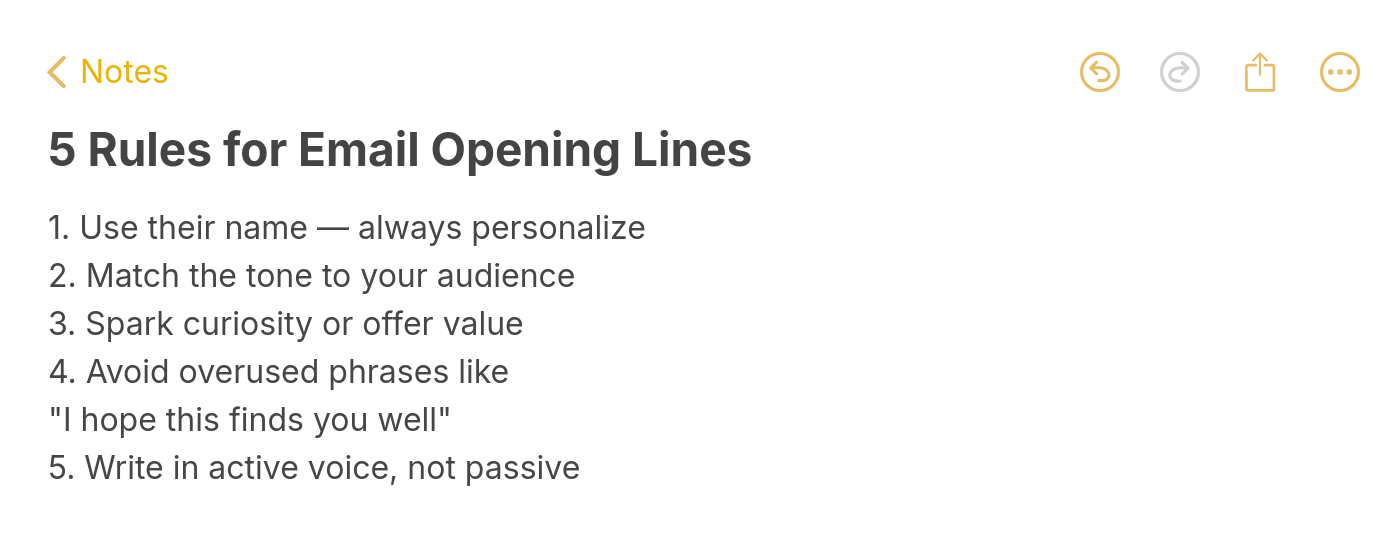
Five rules for stronger email openers
1. Use the recipient's name. According to Boomerang's analysis of 350,000+ emails, personalized greetings increase response rates by 53% compared to generic ones. "Hi Macy" beats "Hi there" every single time.
2. Match your tone to the relationship. A cold pitch to a VP and a check-in with a colleague require different registers. Mismatched formality is one of the fastest ways to lose a reader.
3. Lead with curiosity or value. Give the reader a reason to keep going. A question, a data point, or a specific compliment works better than "I hope this email finds you well."
4. Skip overused phrases. "Just checking in," "To whom it may concern," and "I'm writing to inform you" signal that you didn't spend time on the email. According to Listkit, 34% of recipients consider preview text almost as important as the subject line when deciding whether to open an email. That preview text is your opening line.
5. Write in active voice. "I'd love to invite you to our webinar" hits harder than "An invitation to our webinar is being extended to you." Active voice sounds confident and direct.
Overview of 123 Email Opening Lines by Category
| Category | Lines | Best For |
|---|---|---|
| Cold Email Networking | 11 | First-time outreach to strangers |
| Re-Engagement | 8 | Reconnecting after silence |
| Following Up | 19 | Continuing a conversation |
| Proposing a Collaboration | 6 | Partnership pitches |
| Partnership Follow-Up | 5 | After initial partnership talks |
| Customer Service Inquiries | 3 | Responding to questions |
| Customer Complaints | 3 | Handling negative feedback |
| New Product Launch | 12 | Announcing products or features |
| Re-engaging Past Customers | 7 | Winning back churned users |
| Cold Sales Emails | 10 | Prospecting potential clients |
| Casual Conversations | 7 | Friendly personal emails |
| Thank You Notes | 8 | Expressing gratitude |
| Announcements | 8 | Sharing personal news |
| Funny Emails | 7 | Adding humor to inboxes |
Pair your opening line with a strong subject line. We've also put together 152 professional email subject line examples that work well alongside the openers below.
Professional Email Opening Lines for Networking
Professional networking emails live or die in the first sentence. You're writing to someone who doesn't know you, so the opening line needs to prove you've done your homework. According to Instantly.ai's 2026 benchmarks, timeline-based hooks like "Saw your post about..." deliver 10.01% reply rates compared to 4.39% for problem-statement hooks. That's a 2.3x difference from changing just the opener.
Opening Lines for Cold Emails
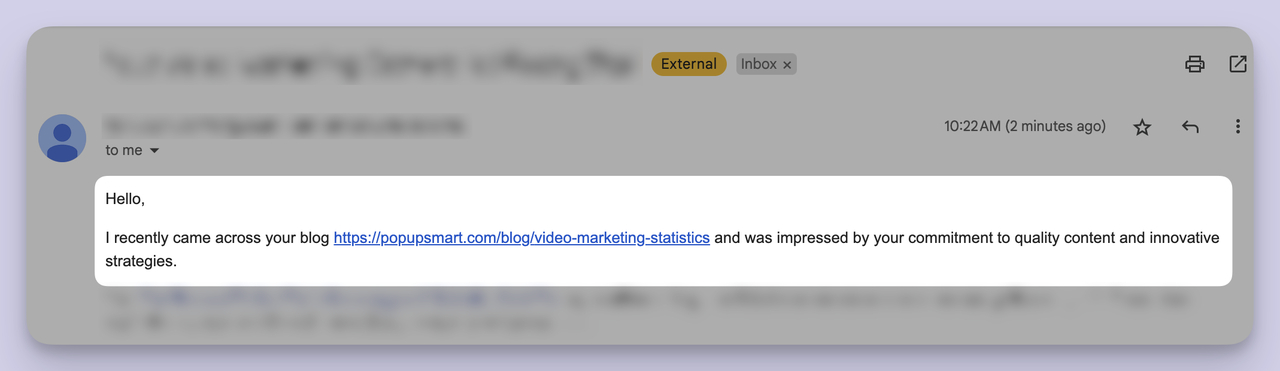
Cold emails have the lowest reply rates of any email type. Here's a real-world example that gets it right:
Cold email opening line example
What works: This email leads with a specific reference to the recipient's work rather than a generic compliment. It establishes relevance before asking for anything.
Here are 11 cold email opening lines you can adapt:
• Hi, [Name]. I've been following your impressive work in [topic] and felt compelled to reach out.
• Hello, [Name], I'd love to share ideas with you because I know you're an influential person in [field].
• Dear [Ms./Mr. Last Name], our mutual passion for [shared interest] caught my attention, and I believe a conversation between us could be mutually beneficial.
• Dear [Mr./Ms. Last Name], I've always admired your dedication to [shared interest]. Your perspective on this subject is highly valuable, and engaging in a dialogue could offer fresh approaches to our ongoing initiatives.
• Greetings, [Name]. Your recent efforts in [area of work] caught my attention, and I would like to take the time to discuss our common interests.
• Hello [Name], I recently came across your work in [topic] and would love the chance to discuss some shared interests.
• Good day, [Name]. Your innovative approach to [topic] sparked my interest, and I'm eager to hear more about your insights.
• Dear [Name], your recent contributions to [field] have been truly inspirational. I'm reaching out to explore potential connections between our work.
• Hello [Ms./Mr. Last Name], your vision for [shared interest] resonates with me deeply. I'm keen on discussing how we might collaborate to further these ideals.
• Greetings [Name], I was captivated by your presentation on [topic] at [event]. It would be an honor to exchange thoughts on this matter and learn more from your experiences.
• Greetings, [Name]. Since we haven't had a chance to speak, I felt that as colleagues in [field], it would be valuable for us to discuss [matter of shared interest].
Key takeaway: Reference something specific about the recipient's work. Generic "I admire your work" emails get ignored. Name the article, talk, project, or post that caught your eye.
Opening Lines for Re-Engagement
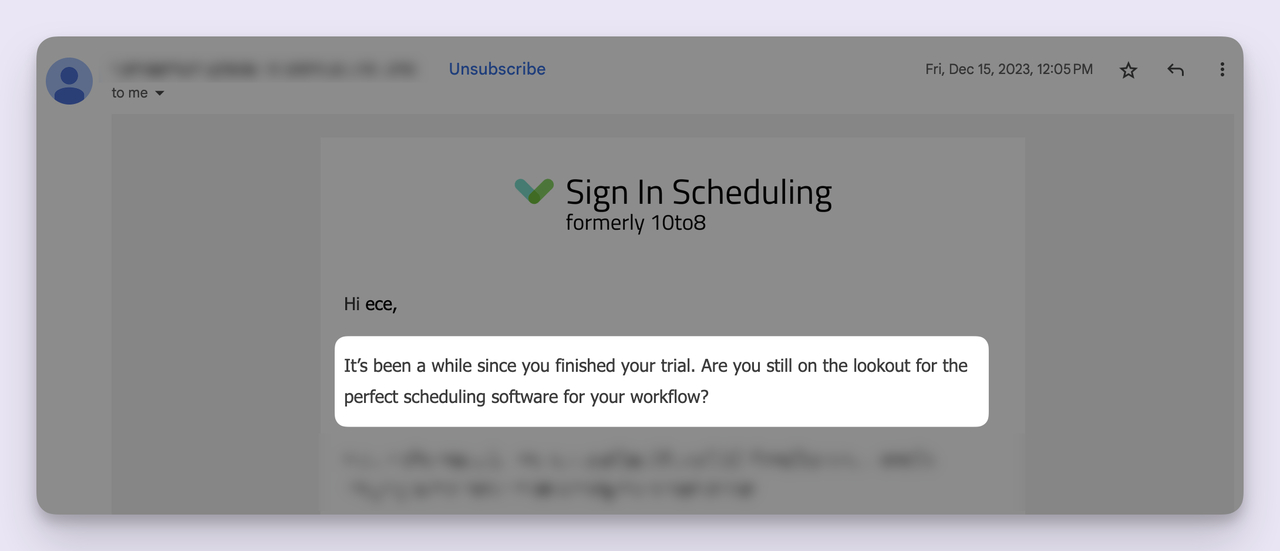
Re-engagement emails reconnect you with contacts who've gone quiet. The trick is giving them a reason to reply, not just reminding them you exist.
Re-engagement email opener
What works: This opener ties the reconnection to a shared experience rather than opening with "It's been a while." That shared reference gives the recipient an emotional hook to respond to.
• Hello, [Name]. It's been a while since our paths crossed at the [event]. I've been keen to catch up and hear about your latest projects.
• Greetings [Name], It's been quite some time since our last encounter at [event/place]. I'm eager to catch up and learn about the exciting developments in your recent work.
• Hello [Name], it has been a significant amount of time since we last connected, and I'm reaching out to reconnect and hear about your advancements in [field].
• Hi, [Name]. Remember our collaboration on the [project] a few years back? I'd love to reconnect and learn about what you've been working on lately.
• Dear [Mr./Ms. Last Name], I recently came across an article about [topic], and it reminded me of our discussions on [subject matter].
• Dear [Ms./Mr. Last Name], stumbling upon [topic/subject] recently brought our past conversations to mind. I'm keen to reconnect and learn about your latest pursuits in this field.
• Hello [Name], our collaboration on [project] left a lasting impression. I'm reaching out to see where your expertise has taken you in the meantime.
• Dear [Name], reflecting on our engaging exchange at [event/place] has prompted me to reach out. I'm interested in hearing how your journey has evolved since then.
Key takeaway: Anchor re-engagement emails to a specific shared memory: a project, event, or conversation. This shows you remember the relationship and aren't mass-emailing your contact list.
Opening Lines for Following Up
Follow-up emails are where deals close and conversations move forward. According to Prospeo, 58% of replies come from the first email in a sequence, so your follow-up opener needs to add new value rather than just nudge.
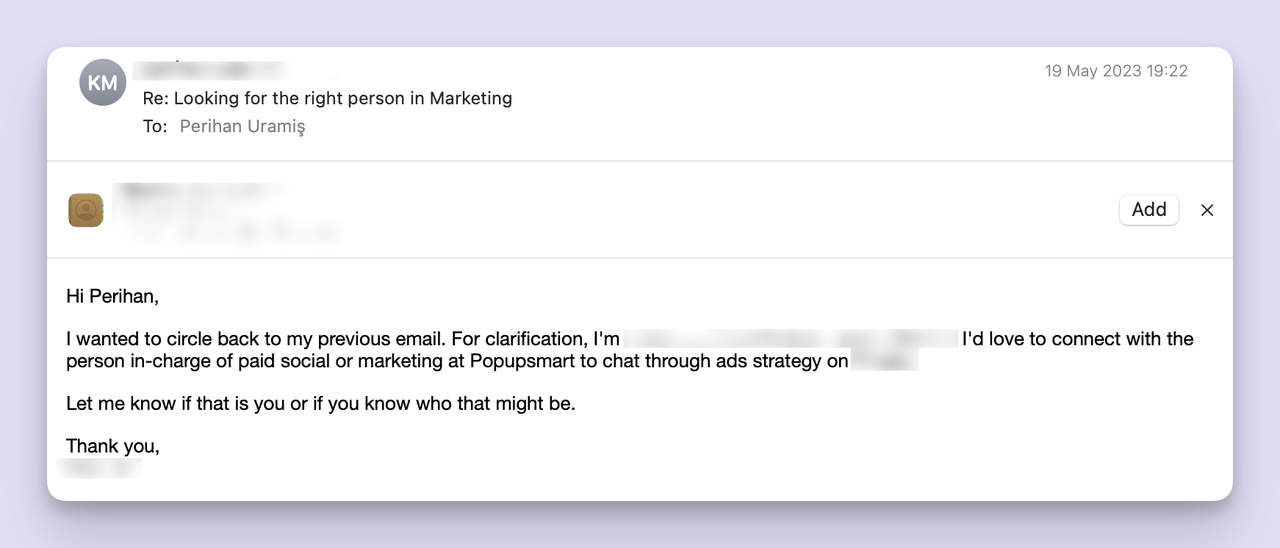
Follow-up email opening line
• Hello [Name], following up on our last conversation, I was wondering if you've had a chance to consider [topic/suggestion]?
• Hi [Name], I hope my last email didn't slip your attention. I'm looking forward to knowing your thoughts whenever convenient.
• Dear [Ms./Mr. Last Name], it was a pleasure meeting you at [event]. Your insights were incredibly enlightening, and I'd like to continue our conversation.
• Hi, [Name]. After our insightful chat at [event], I've been thinking about how our companies could work together on the initiative you mentioned.
• Dear [Name], following our last meeting, I've put some thought into [topic] and wanted to share some additional insights.
• Hi [Name], just touching base to see how things are progressing with [topic/project].
• Hello [Name], I understand that you're probably caught up with a lot. Just following up to see if you've had a chance to review our previous discussion.
• Good day, [Name]. Our discussion at [event] sparked several thoughts regarding potential connections between our projects. I'm eager to explore this further.
• Greetings, [Name]. The ideas exchanged during our recent meeting at [event] were quite stimulating. I see a lot of value in revisiting some of the points we touched on.
• Hello, [Name]. I understand you're very busy, but I wanted to follow up on our last conversation. Your feedback would be greatly appreciated when you have the time.
• Dear [Ms./Mr. Last Name], the perspective you shared at [event] offered a fresh viewpoint on [topic]. I believe there's much more for us to explore together.
• Hi [Name], I've been reflecting on our recent discussion about [topic] and wanted to follow up on some of the ideas we explored.
• Hello [Name], just checking in to see if there are any updates on [project/topic] since our last chat.
• Dear [Name], I believe my last email may have been lost in your busy schedule. Just bumping this up your list for when you can find the time.
• Hi [Name], just following up on our previous conversation, I was curious about any decisions made regarding [topic/project].
• Hello [Ms./Mr. Last Name], I'm keen to hear any new developments on [topic] we discussed last time.
• Hi [Name], I trust you're doing great. Wanted to touch base and see how things are going with [specific matter] we talked about.
• Dear [Name], it was great talking about [topic] with you. Have you had a chance to give it more thought?
• Hello, [Name]. Reflecting on our engaging conversation at [event], I wanted to explore the collaboration we discussed further.
Key takeaway: Each follow-up should bring something new: a thought, resource, or question. "Just checking in" without added value trains people to ignore your emails.
Need help writing follow-up email subject lines? We've compiled 60 examples that pair well with these openers.
Opening Lines for Collaboration and Partnerships
Partnership emails carry higher stakes than typical outreach. You're proposing a commitment, not just a conversation. The opening line needs to show you understand what both sides bring to the table.
Opening Lines for Proposing a Collaboration
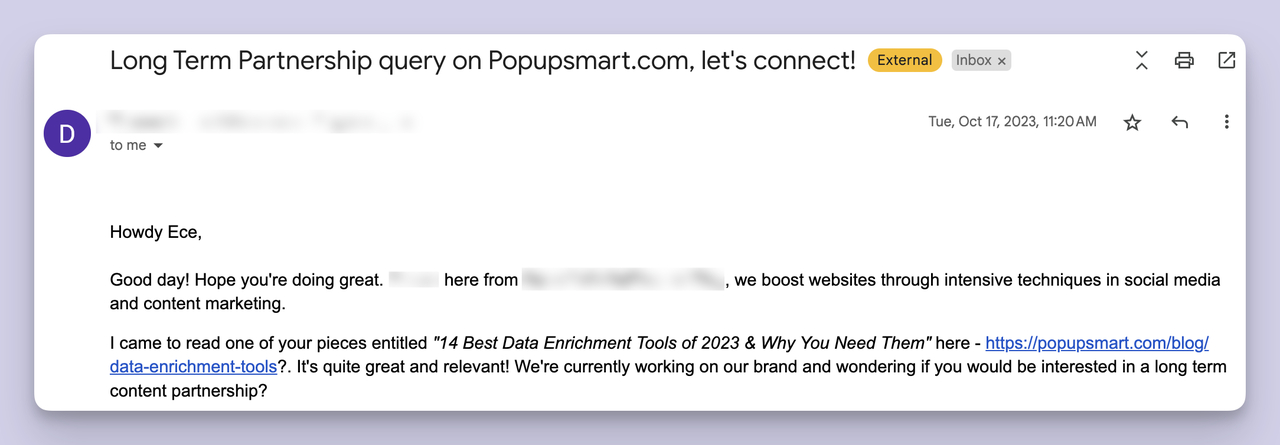
Collaboration proposal opener
What works: The sender names the specific field and references a concrete reason for reaching out rather than vague interest. This signals genuine research.
• Hello, [Name]. I've been admiring [Company/Individual]'s work in [field/industry] and see a fantastic opportunity for us to join forces on a project that could benefit both our entities.
• Dear [Ms./Mr. Last Name], your innovative approach to [specific area] resonates with our mission, and I believe a collaborative effort could lead to strong results.
• Hi, [Name]. After seeing your recent [project/initiative], I'm convinced that a partnership between [Your Company] and [Their Company] could create significant value.
• Greetings, [Name]. I am reaching out to explore potential partnership opportunities between [Your Company] and [Their Company], as I see great alignment in our goals and methodologies.
• Hello, [Name]. I represent [Your Company], and we seek partnerships aligning with our commitment to [specific goal/value]. Your work in [specific area] caught our eye as a perfect match.
• Dear [Ms./Mr. Last Name], considering your expertise in [specific area] and our solutions at [Your Company], I believe there's potential for a fruitful collaboration.
Opening Lines for Following Up on a Partnership Discussion
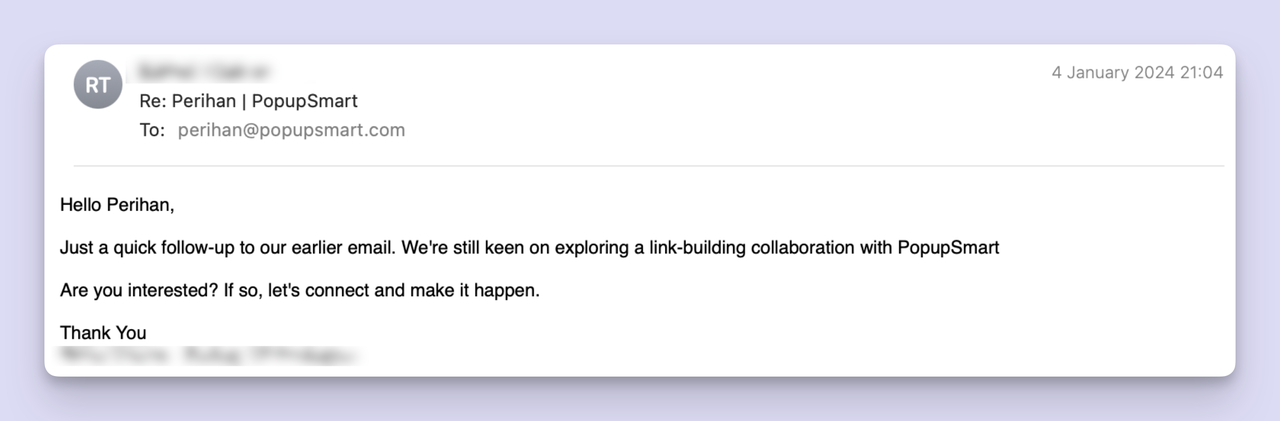
Partnership follow-up opener
• Hi, [Name]. Following our recent conversation about a possible partnership, I've put together some thoughts on how we can effectively combine our efforts for mutual benefit.
• Hello, [Ms./Mr. Last Name]. It was a pleasure discussing potential collaboration opportunities with you. I've been reflecting on our conversation and have some ideas to further our discussion.
• Dear [Name], I wanted to follow up on our last meeting, where we explored potential partnerships. I believe there are several areas where our combined expertise can lead to impactful outcomes.
• Greetings [Name], just checking in on our last discussion about a possible collaboration. I would appreciate your thoughts when it is convenient for you.
• Hi [Name], I'm reaching out again to follow up on the potential partnership we discussed. I'm excited about the prospects and would love to hear your feedback.
Key takeaway: Come to partnership follow-ups with a concrete proposal or idea, not just a "checking in." Attach a one-pager, outline mutual benefits, or suggest a specific next step.
Customer Service Email Opening Lines
Customer service emails need to acknowledge the person on the other end before solving the problem. Your opening line either de-escalates or inflames. There's no neutral ground.
Opening Lines for Responding to Customer Inquiries
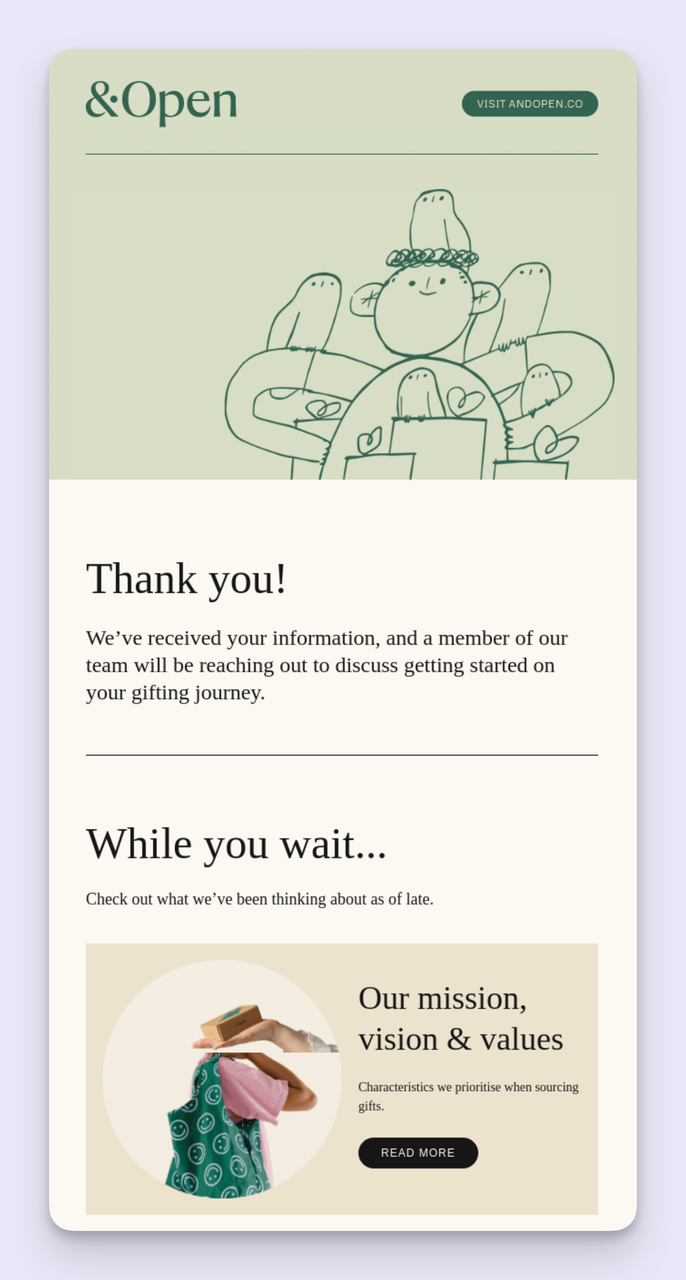
&Open customer inquiry response
What works: &Open's reply ("Thanks for saying hi") breaks from the typical corporate tone. It feels human and warm without sacrificing professionalism.
• Hello [Customer Name], thank you for reaching out with your question about [specific inquiry]. I'm here to provide all the information you need.
• Hi [Customer Name], I understand you need assistance with [specific inquiry]. Let me help clarify that for you.
• Dear [Customer Name], I appreciate your interest in [product/service]. I'm happy to answer any questions you might have.
Opening Lines for Addressing Customer Complaints
• Hello [Customer Name], I'm truly sorry to hear about the trouble you've experienced with [specific issue]. Let's work together to find a solution.
• Dear [Customer Name], I've received your complaint about [specific issue], and I want to assure you that addressing this is my top priority.
• Hi [Customer Name], thank you for bringing this issue to our attention. I understand how frustrating it must be, and I'm committed to making things right.
Key takeaway: For complaints, lead with acknowledgment, not defense. "I'm sorry about [specific issue]" beats "We're looking into it" because it shows you actually read what they wrote.
Sales and Marketing Email Opening Lines
Sales and marketing emails carry the heaviest commercial weight. Your opener decides whether a prospect reads your pitch or archives it. According to Listkit, the average cold email response rate sits between just 1% and 5%, so every word in your opening sentence matters.
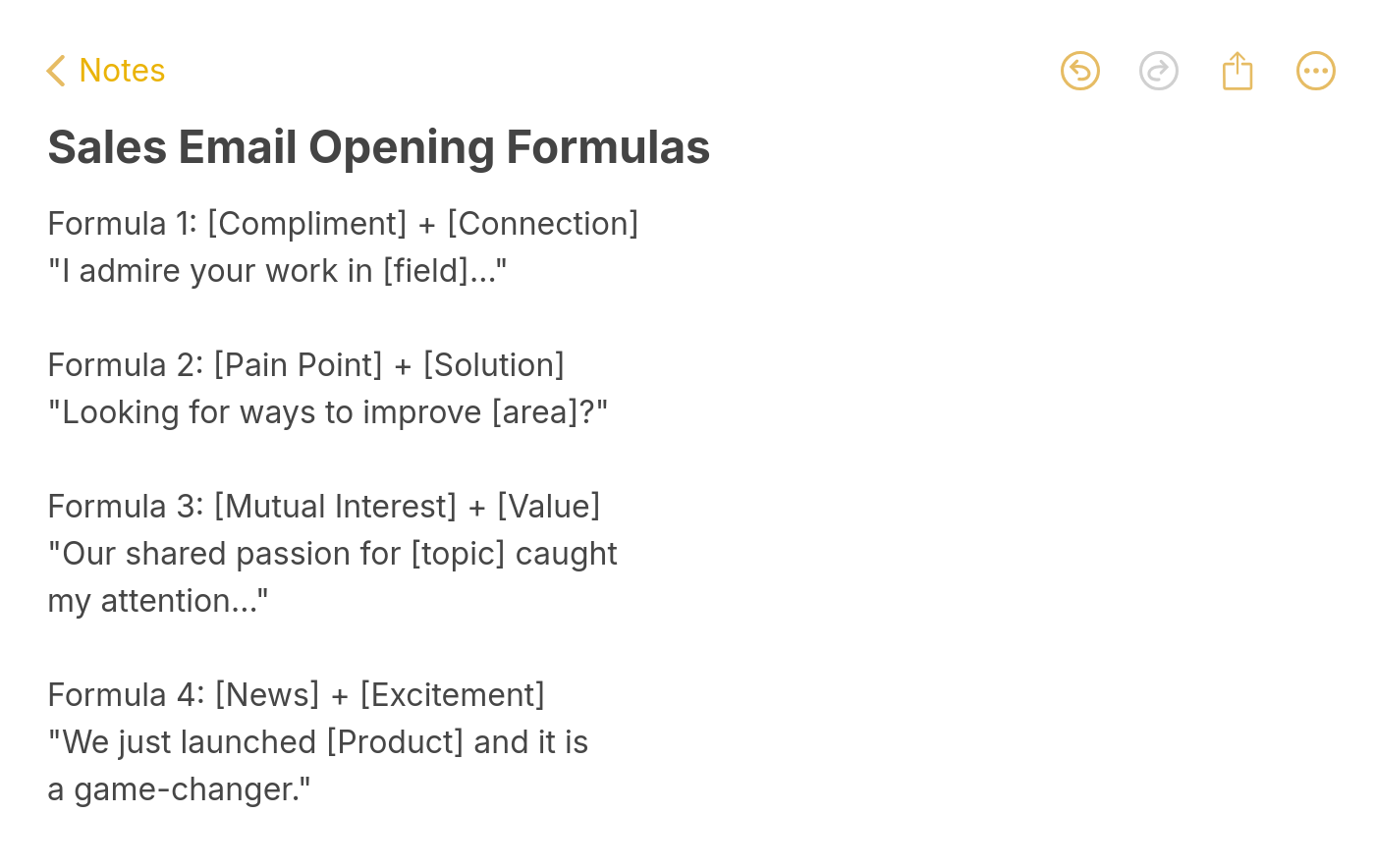
Four formulas that work for sales openers
Opening Lines for Introducing a New Product or Service
Product launch emails need energy without hype. Here are real examples from brands that got it right:
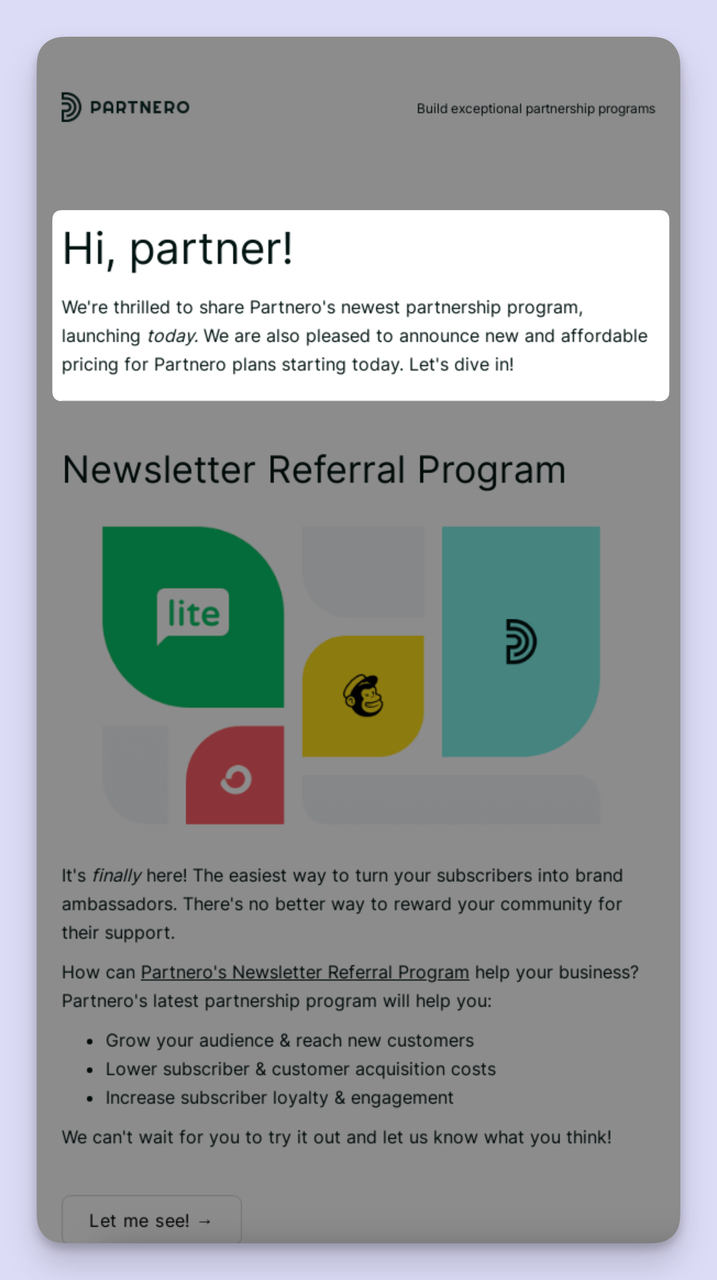
Partnero: "Launching Today: Partnero's Newsletter Referral Program!"
Partnero product launch email
What works: Partnero's opener names the product immediately and uses "Launching Today" to create urgency without fake scarcity. No fluff, just news.
• Hello [Name], we're thrilled to announce our latest innovation, [Product/Service], designed to help you with [specific benefit].
• Exciting update: We've just launched [Product/Service], and let's just say, it's going to change how you work.
• Drumroll, please... Introducing [Product/Service]! It's everything you've been waiting for.
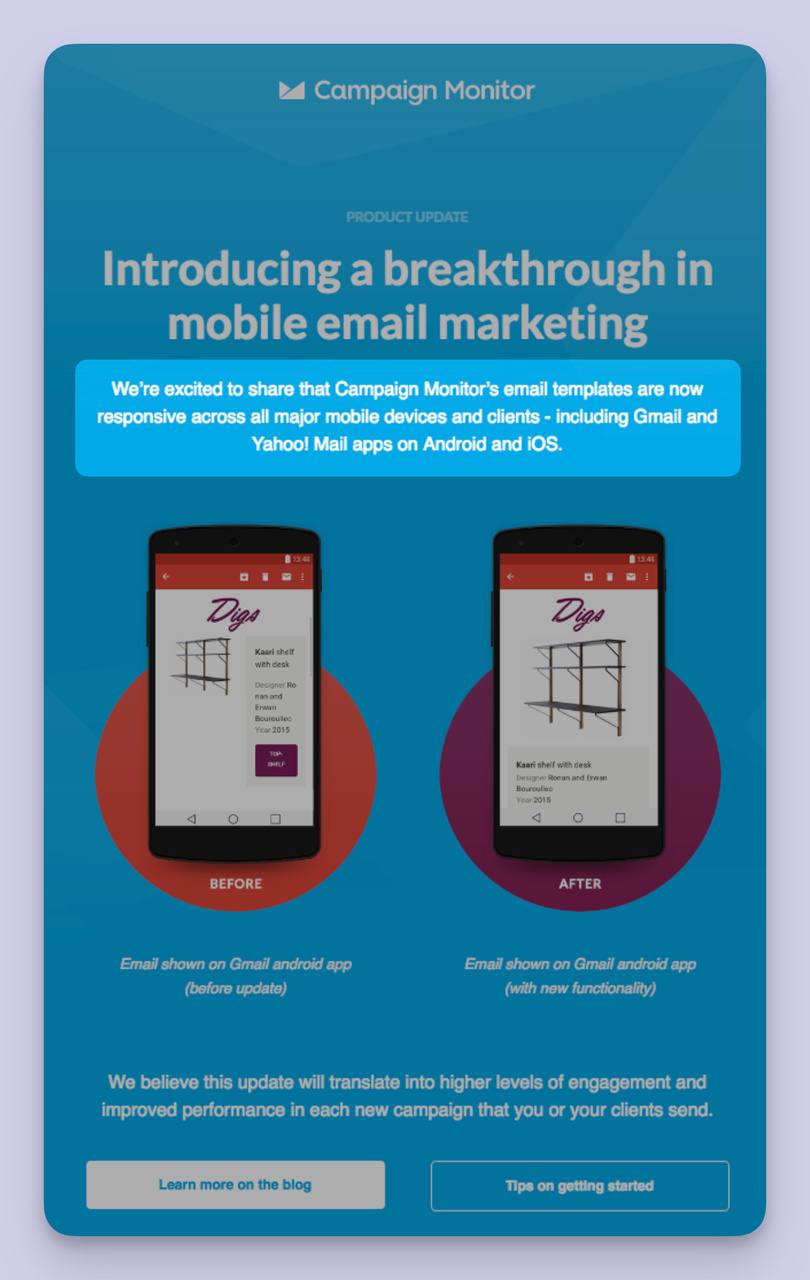
Campaign Monitor: "Introducing a breakthrough in mobile email marketing"
Campaign Monitor product announcement
• Just when you thought things couldn't get any better, we've gone and added some fresh new twists to [Product/Service]. Spoiler: You're going to love it.
• Dear [Name], I'm excited to give you a first look at our new [Product/Service], which we believe will change the way you [specific function or benefit].
• Hello [Name], guess what? We've just launched [Product/Service] that's about to make your life much easier. Curious?
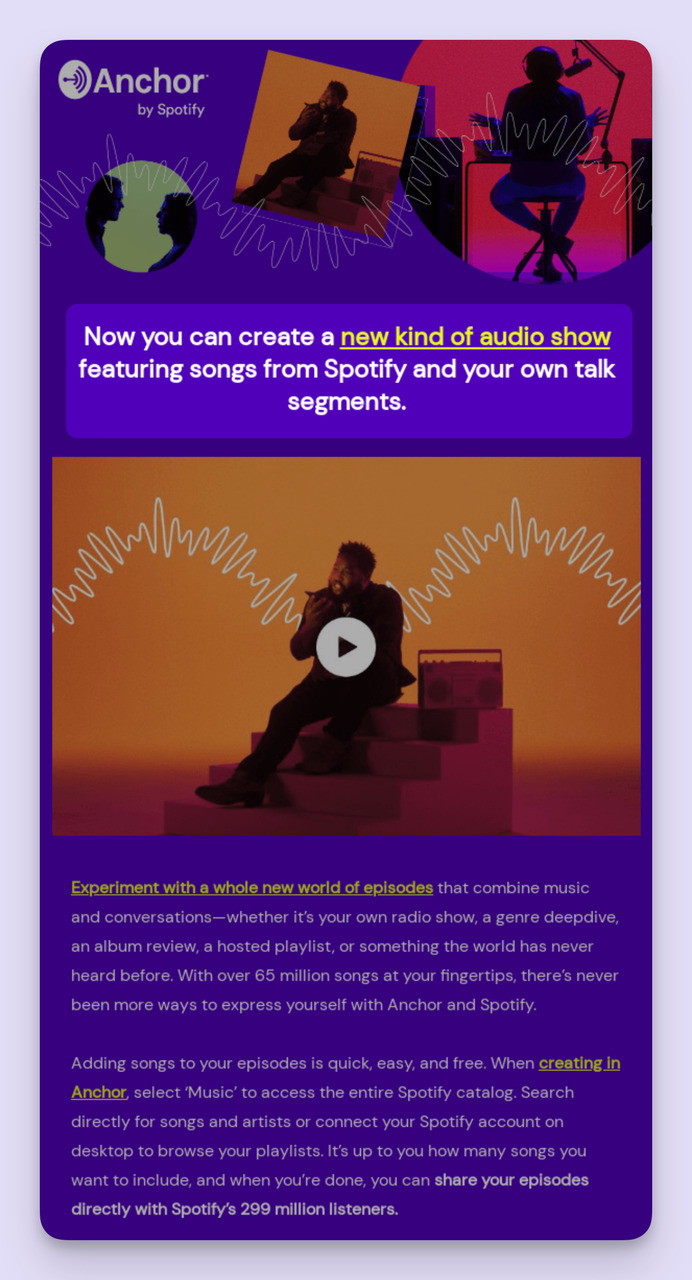
Anchor: "Introducing a new way to create, with all the music you love"
Anchor product launch email
• Big news: the wait is over. [Product/Service] has landed, and it's set to change the way you [main benefit]. Ready to get on board?
• Hey [Name], we believe in better, and our new [Product/Service] is here to prove it. Ready for a shift in [industry/field]?
• Hi [Name], we've just launched our new [Product/Service], and I immediately thought of how much value it could bring to your [business/life].
• Hello [Name], we've just unwrapped something special at [Company Name], our [Product/Service] that's set to change the game for [target audience or problem it solves].
Opening Lines for Re-engaging a Past Customer
Win-back emails target people who already know your product. That's an advantage, so use it. Reference their past experience instead of treating them like a new lead.
Miro: "Watch Now: Miro Product Keynote & Smart Meetings Beta Sign-up"
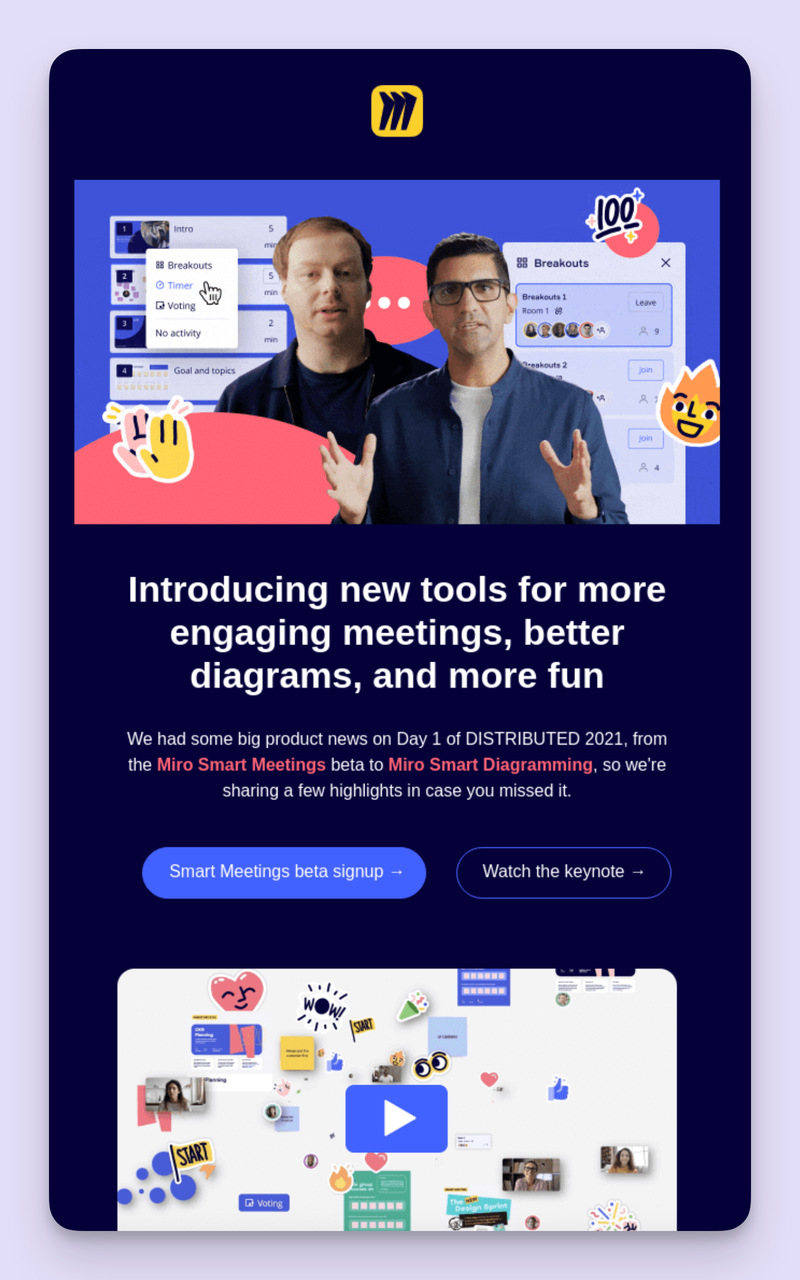
Miro customer re-engagement email
What works: Miro doesn't open with "We miss you." Instead, they lead with new product value (a keynote and beta access), giving the churned user a concrete reason to come back.
• Hello [Name], it's been a while since we last connected, and I wanted to update you on some exciting developments here at [Company Name] that you might find interesting.
• Dear [Name], as a valued past client, I thought you'd be interested in hearing about our latest [Product/Service/Update] designed with your needs in mind.
• Hi [Name], hope things are great with you! Wanted to drop you a note about our new [Product/Service/Update] that seems like it was made just for you.
• Hi [Name], long time no talk! We've been cooking up something new that I think could be a big win for you. Keen to catch up and fill you in.
• Hi [Name], I wanted to reach out and share some news about our [new product/service/offer] that I believe could significantly benefit your [business/life].
• Dear [Name], remember how [specific past project/solution] made a difference? We're back with something even more impactful.
• Hi [Name], we've missed the connection between our teams! I'm reaching out to spark that again with an opportunity I believe you'll be excited about.
Opening Lines for Cold Emails to Potential Clients
Cold sales emails need to prove relevance fast. According to Prospeo, 95% of cold emails fail to generate a reply, with the platform-wide average reply rate sitting at just 3.43%. Your opening sentence is the biggest variable you can control.
• Dear [Name], in my search for companies that stand out in [industry/field], I found [Their Company], and I believe our [Product/Service] aligns perfectly with your current needs.
• Hi [Name], your recent work on [area] got my attention. I believe we can add value. What do you think?
• Good morning [Name], are you looking for new ways to improve in [field]? I might have something for you.
• Greetings [Name], I saw your company's efforts in [issue/challenge] and think our [product/service] could help.
• Hello [Name], we've recently launched a new feature in [Product/Service] that I believe could add tremendous value to your current setup.
• Dear [Name], our team has been busy developing something special since we last spoke, and I'm excited to share it could be a turning point for your [business/life].
• Hi [Name], it's time to reignite our collaboration! I'm thrilled to discuss how our new [Product/Service] can help us achieve even greater results together.
• Dear [Name], reflecting on our past work together, I'm convinced our new [Product/Service] will help you tackle [current challenge] more effectively.
• Dear [Name], I've been an admirer of your approach to [specific aspect of their business] and couldn't resist the urge to introduce you to a [Product/Service] that's as forward-thinking as your company.
• Hi [Name], I'm reaching out because I believe our [Product/Service] has the potential to help [Their Company] overcome challenges related to [specific issue/challenge].
Key takeaway: Personalization goes beyond inserting a name. Reference a specific project, challenge, or result from the prospect's business. That extra 30 seconds of research can double your reply rate.
For more sales email inspiration, check out our 200+ B2B email subject lines for sales outreach.
Personal Email Opening Lines
Personal emails don't need strategies or conversion funnels. They need warmth. But that doesn't mean you can't be intentional about how you start them. A good personal opener sets the emotional tone for everything that follows.
Opening Lines for Casual Conversations
• Hello [Name], something I came across today reminded me of our interesting conversation. How are you doing?
• Hi [Name], just had a moment that reminded me of our last chat. How's everything with you?
• Hello [Name], was just thinking about our last conversation and wanted to catch up. How have you been?
• Hey [Name], a funny thing happened today that made me think of you. Hope all is well!
• Hello [Name], how are things on your end? I had an experience today that brought back memories of our discussions.
• Hi [Name], our last discussion popped into my head earlier and made me smile. What's new with you?
• Hey [Name], just saw something that got me thinking about our old talks. How's everything?
Key takeaway: Casual emails work best when they feel spontaneous. "Something reminded me of you" is one of the strongest openers because it's personal and doesn't demand a specific response.
Opening Lines for Thank You Notes
MacPaw: "Just a thank you note"
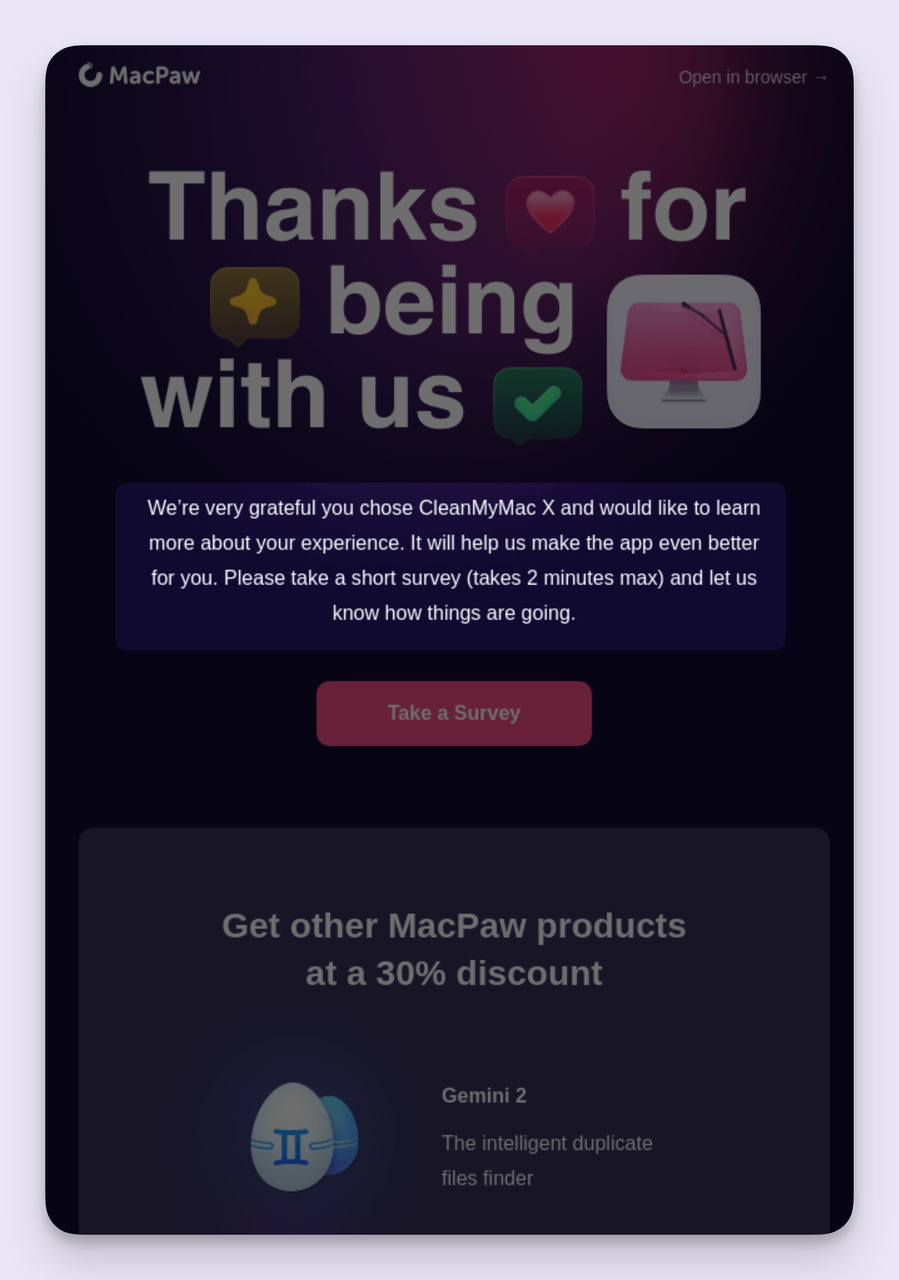
MacPaw thank-you email
What works: MacPaw's subject line doubles as the opening sentiment. No preamble, no corporate speak. Just direct gratitude, which is exactly what a thank-you note should deliver.
• Dear [Name], I really appreciate your help the other day. It made a big difference. Thank you.
• Hi [Name], just wanted to express my gratitude for what you did. It meant a lot to me.
• Hello [Name], your support has been invaluable. Thank you for being there.
• Dear [Name], I can't thank you enough for your generous assistance. It was a great help.
• Hi [Name], your thoughtfulness really stood out to me. Thank you for making a difference.
• Hello [Name], I can't express enough how grateful I am for your kindness. It has made a world of difference.
• Hi [Name], your recent help has meant a lot to me. I'm so grateful.
• Hello [Name], I am filled with gratitude by your wonderful gesture. It really helped me out.
If you're looking for full thank-you email templates, our post on 70 thank-you order messages covers e-commerce loyalty scenarios in detail.
Opening Lines for Announcements
Anchor: "Introducing our new look"
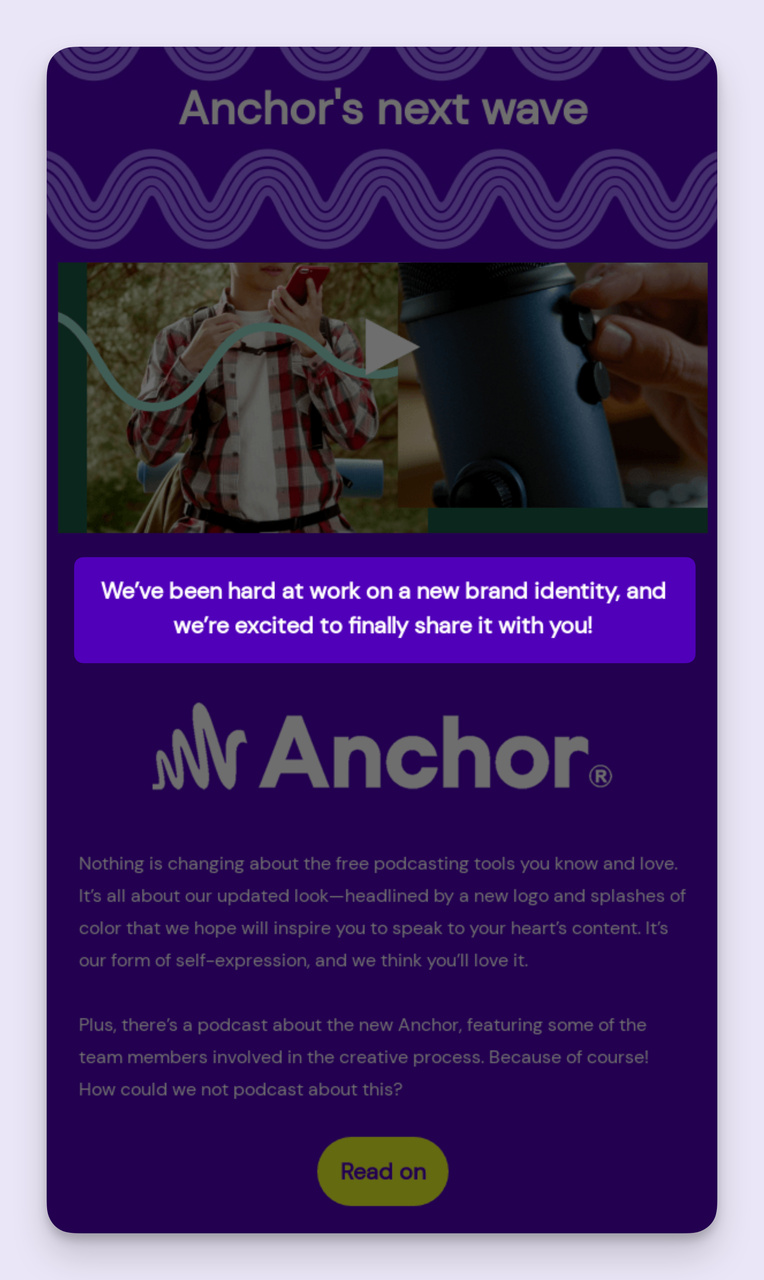
Anchor announcement email
What works: Anchor's five-word opener is direct and creates immediate curiosity. "New look" tells you exactly what changed without making you read three paragraphs to find out.
• Exciting news, [Name]! I have something wonderful to share that I think you'll enjoy.
• Dear [Name], I have some fantastic news to share that I'm excited about.
• Hello [Name], I'm delighted to announce something special that's been in the works.
• Hey [Name], I can't wait to tell you about this exciting update. I hope it brings you as much joy as it does to me.
• Hello [Name], I've got an amazing update to share that I believe you're going to love.
• Hi [Name], I am thrilled to report some wonderful news that excited me.
• Hello [Name], I've got some exciting information that I couldn't wait to share with you.
• Hey [Name], something awesome happened that I wanted to share. I know you will be as thrilled as I am.
Opening Lines for Funny Emails
Humor in email is a risk, but when it lands, it builds rapport faster than any formal opener. According to Prospeo, informal tone gets 78% more positive replies than stiff, corporate language.
Flock: "Smiles Davis, you're missing conversations"
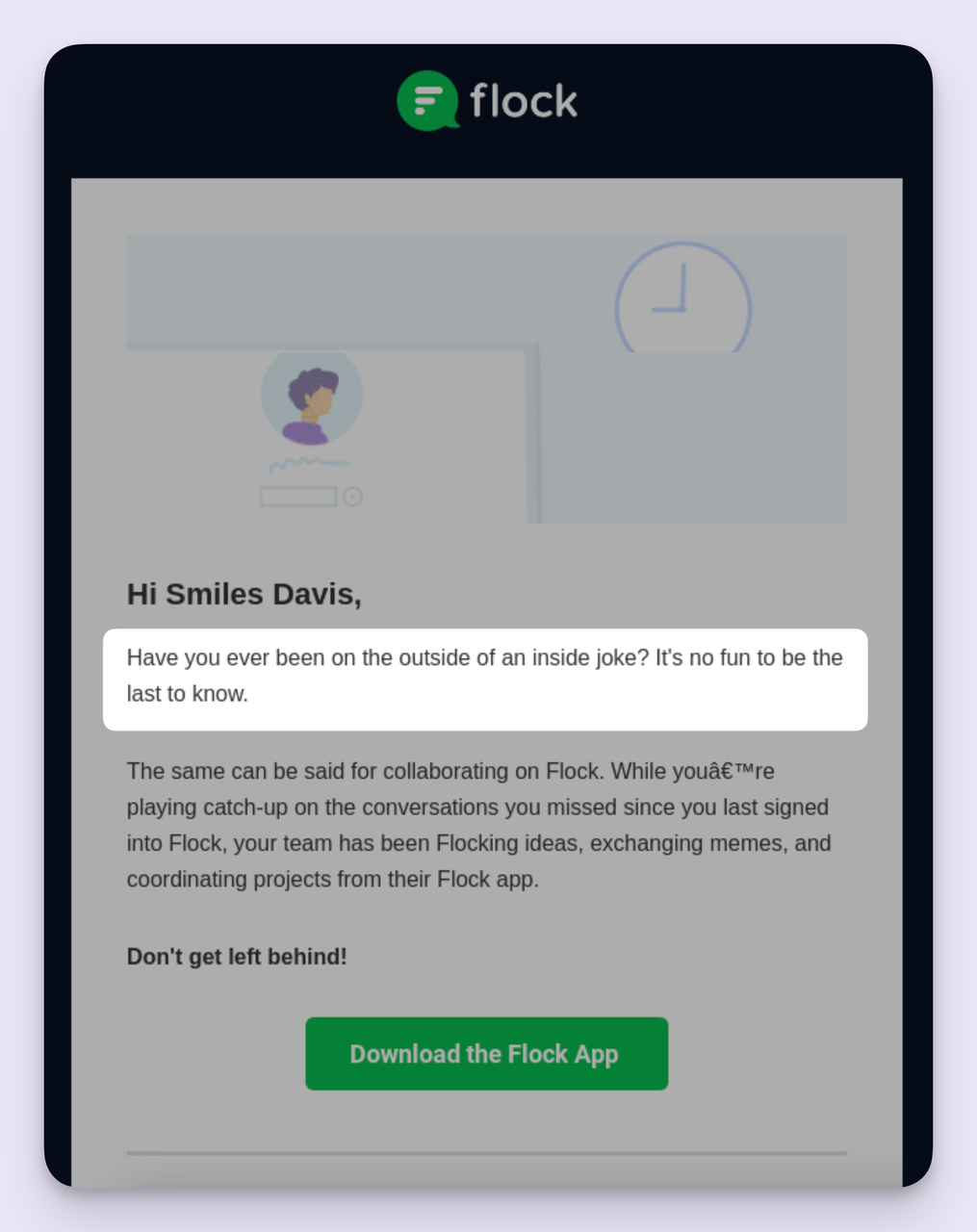
Flock humorous re-engagement email
What works: Flock uses playful guilt ("you're missing conversations") and a light name reference. It's funny without trying too hard, which is the hardest balance in email humor.
• Hi [Name], hope your coffee is strong and your Monday is short.
• Dear [Name], if you're reading this email, congratulations, you survived another day.
• Hello [Name], is this email part of your plans to take a break from the real world?
• Dear [Name], don't worry, this isn't another email asking if you'd like to unsubscribe. Or is it?
• Hi [Name], it's me again, just popping into your inbox to remind you that I exist.
• Howdy [Name], here's your daily dose of funny email. Side effects may include smiling.
• Hey there [Name], they say laughter is the best medicine, so consider this the highlight of your healthcare plan.
Key takeaway: Funny openers work best with audiences who already know you. Don't open a cold sales email with a joke unless your brand voice is built on humor.
Common Mistakes in Email Opening Lines (And How to Fix Them)
Writing a bad opening line isn't just ineffective. According to Prospeo's data citing Grammarly and Harris Poll research, poorly written emails cost businesses $1.2 trillion annually. Here are the most common mistakes I see in email audits:
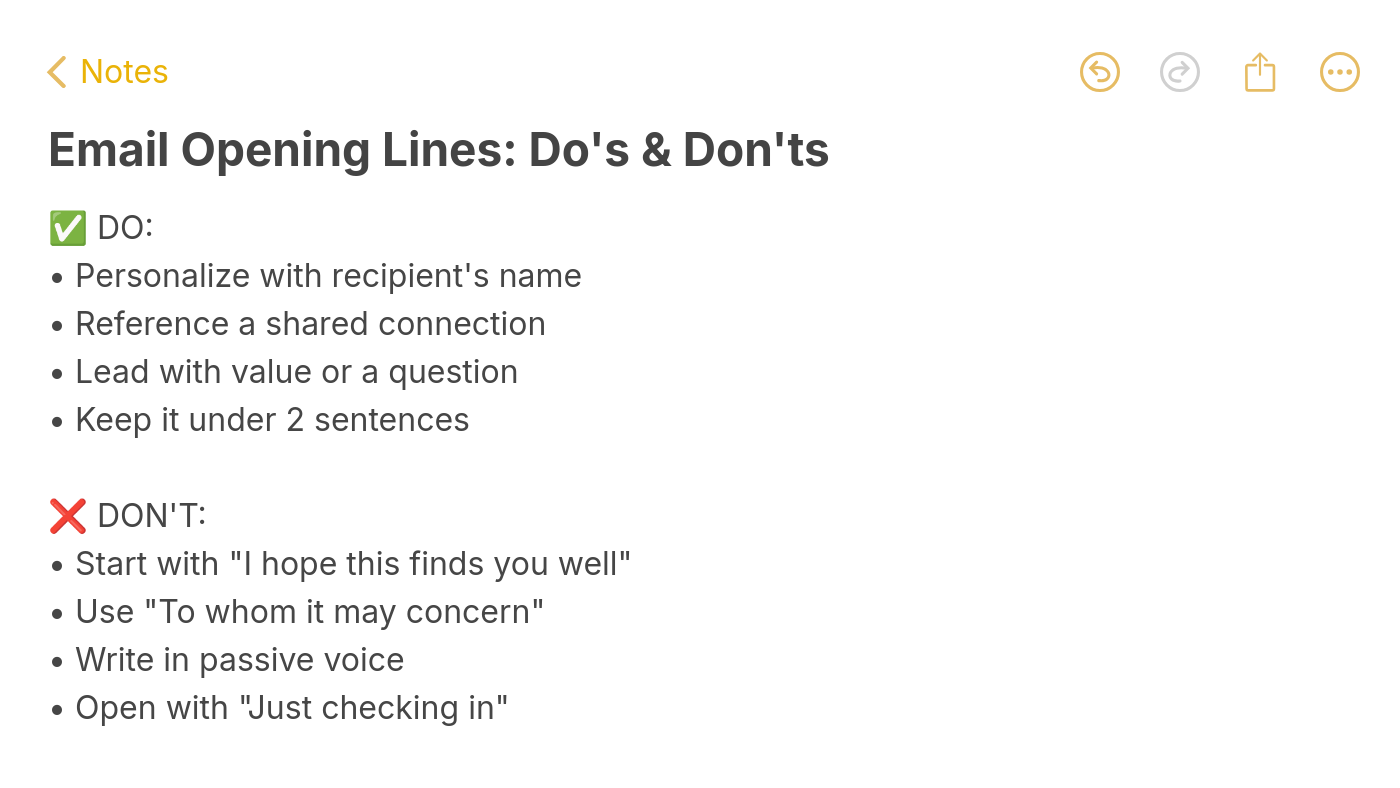
Email opening lines dos and don'ts
| Mistake | Why It Hurts | Better Alternative |
|---|---|---|
| "I hope this email finds you well" | Overused, signals template email | Reference something specific about the recipient |
| "Just checking in..." | No value, easy to ignore | Share a resource, idea, or question with your check-in |
| "To whom it may concern" | Feels impersonal and dated | Find the recipient's name (LinkedIn, company website) |
| Starting with passive voice | Sounds weak and indirect | Use active voice: "I want to share..." not "It is being shared..." |
| Writing a paragraph-long opener | Buries your point, loses attention | Keep your opening to 1-2 sentences maximum |
| Being too formal for the context | Creates distance with casual contacts | Match the tone to your relationship with the recipient |
One more thing worth noting: according to PGM Solutions, 47% of email recipients will open an email based on the subject line alone, and 69% will report spam based on it. Your subject line and opening line work as a team. If you're looking for catchy email subject line tips, we've got 19 proven strategies.
How to Match Your Email Opening to Audience and Context
The right opening line depends on three variables: who you're writing to, what you want, and how well you know them. Here's a quick decision framework:
| Scenario | Tone | Opening Strategy | Example Category Above |
|---|---|---|---|
| First contact with a senior executive | Professional, concise | Reference their work + state your ask | Cold Emails |
| Following up after a meeting | Warm, specific | Reference a specific discussion point | Following Up |
| Reconnecting with an old colleague | Friendly, nostalgic | Mention a shared memory | Re-Engagement |
| Pitching a new product | Energetic, value-driven | Lead with the benefit, not the feature | New Product Launch |
| Responding to a complaint | Empathetic, solution-focused | Acknowledge the problem immediately | Customer Complaints |
| Writing to a friend | Casual, spontaneous | Start with what reminded you of them | Casual Conversations |
According to Listkit, emails with personalized preview text see a 29.3% higher open rate compared to those without. That means tailoring your opener isn't optional. It's one of the highest-ROI changes you can make.
If you're running email campaigns at scale, you might also want to explore 130 FOMO subject line examples to pair urgency-driven subjects with your opening lines. And for reconnecting emails specifically, we have 50+ reconnecting email subject lines worth testing.
Write Better Email Opening Lines
You now have 123 email opening lines organized by situation, plus real-world examples from brands like Miro, MacPaw, Anchor, Partnero, Campaign Monitor, and Flock. The pattern across all of them is the same: be specific, be relevant, and respect the reader's time.
Here are the three principles that matter most:
1. Personalize beyond the name. Reference a project, article, event, or shared experience. This single change can more than double your reply rate.
2. Match tone to context. A cold sales email to a CEO and a check-in with a colleague require completely different registers. Use the decision table in the "Matching" section above to pick the right approach.
3. Cut the filler. "I hope this email finds you well" is the opening line equivalent of dead air. Every word should earn its place in those first 15 words.
If you're working on email campaigns and want to collect leads before sending, our email marketing guide walks through the full funnel from list building to engagement. review email subject lines for a complete email strategy.
Frequently Asked Questions
What Is a Good Opening Line for an Email?
A good email opening line addresses the recipient by name, matches the tone to your relationship, and gives them a reason to keep reading. Skip generic phrases like "I hope this email finds you well." Instead, try something specific: "Hi Molly, your talk at [event] on [topic] stuck with me, and I wanted to follow up on one point." Personalization and specificity are the two strongest signals that you're worth replying to.
What Are Some Unique Email Opening Sentences?
Unique email greetings stand out by referencing something specific. "I read your post on [topic] and disagreed with one point, which is why I'm writing" is far more memorable than any template. Other approaches: open with a relevant statistic, share a brief anecdote connected to your message, or ask a thought-provoking question that ties directly to what you're offering.
How to Make Email Openings More Engaging?
Three practical changes that improve email engagement immediately: First, replace "I" with "you" as the first word. Starting with the recipient's needs rather than yours increases reply rates. Second, add one specific detail that proves you researched the person. Third, keep your opening under 25 words. According to Robly, personalized subject lines generate 50% higher open rates, and that same personalization principle applies to your opening sentence.
How would you rate your experience with this article? 😊