

What This Blog Covers 🏁
In this blog, you’ll find:
- ✔️ A clear explanation of what geo-targeted popups are and how they work
- ✔️ Real-world use cases like country-based shipping, local pricing, and regional campaigns
- ✔️ Why geo-targeted popups outperform generic popups, with data-backed insights
- ✔️ Practical benefits for e-commerce and SaaS (conversion, engagement, UX clarity)
- ✔️ Best practices on copy, timing, targeting, mobile UX, and privacy
- ✔️ A comparison of geo-targeted vs generic popups
- ✔️ Implementation guidance with a simple, repeatable workflow
- ✔️ FAQs and actionable takeaways you can apply right away
By the end, you’ll know exactly when and how to use geo-targeted popups to create more relevant, context-aware on-site experiences.
📊 What Are Geo-Targeted Popups?
When we talk about geo-targeted popups, we’re referring to real website messages that automatically show different content depending on where a visitor is browsing from. In other words, instead of showing one generic popup to everyone, the message changes based on the user’s location data, such as country, region, or city.
Technically, this works by detecting a visitor’s IP address or geolocation data when they land on a site, and using that information to trigger a specific popup designed for that location. It’s the same principle behind how ads can be shown only to people in certain states or how search results tailor based on your city.

📍 What Makes Geo-Targeted Popups Different
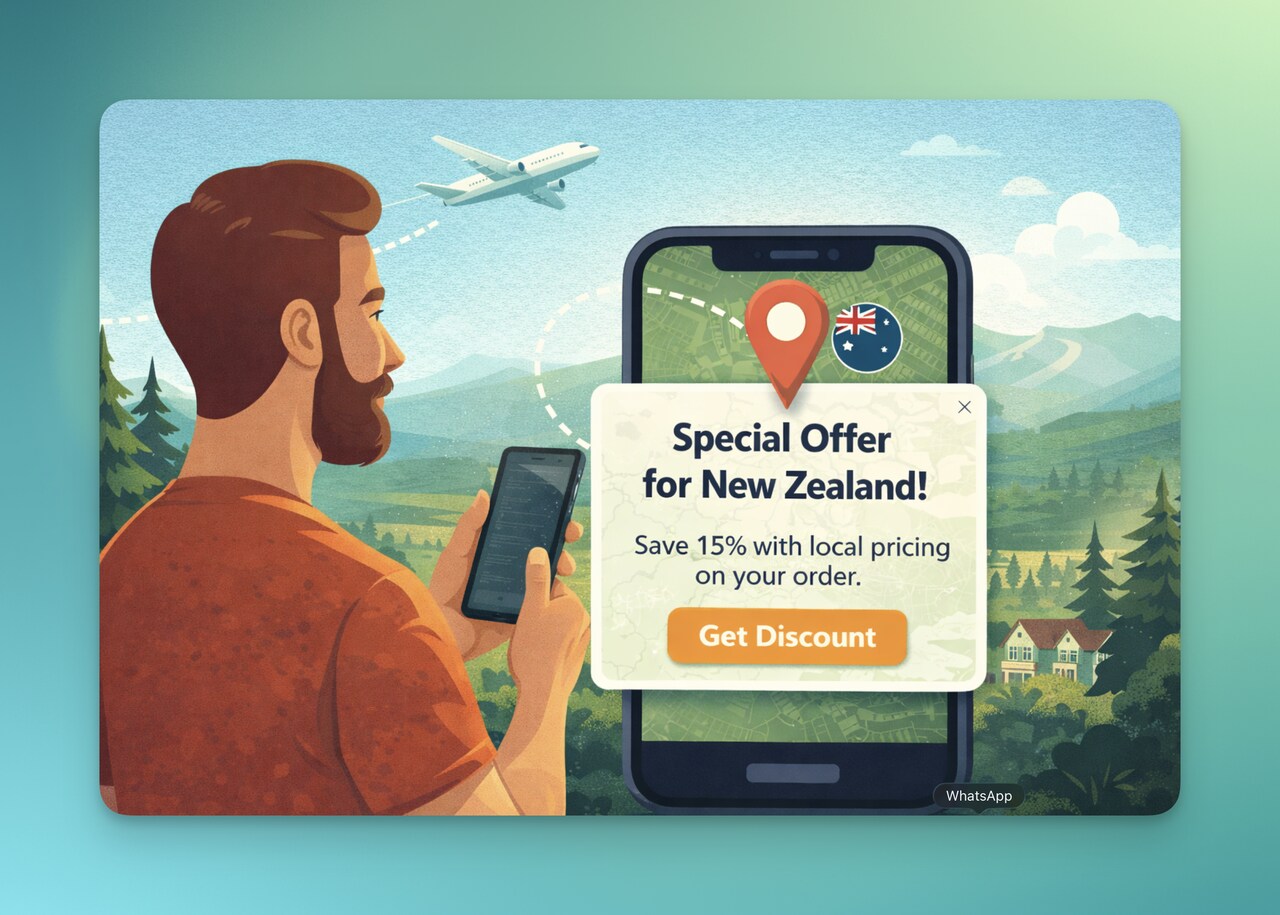
Unlike generic popups, geo-targeted popups recognize where visitors are located and show messaging that matches their local context, from shipping and currency to region-based promotions.
✨ Easy Examples of What They Do
- A visitor from Germany sees “Free shipping to Germany 🇩🇪!”
- Someone in California sees “Exclusive offer for California residents!”
- A user in Toronto gets “Prices in CAD + free shipping across Canada!”
These aren’t random ideas, they’re exactly how location-based targeting works in practice to make offers fit real visitors’ circumstances.
📈 Why Geo-Targeted Popups Work: Relevance, Context & Conversion
Geo-targeted popups work because they make the message feel relevant to the person seeing it, not generic or out of place. When a popup reflects a user’s country, currency, shipping reality, or regional conditions, it removes uncertainty and helps them decide faster.
💡 The Core Principle
👉 Location = Personalization trigger
According to CleverTap’s location-based marketing guide, users are more likely to engage with content that reflects their real-world context, especially when it reduces friction or answers location-specific concerns.
🎯 Why They Convert Better
✨ Simple Real-World Examples
- A visitor in Italy sees “Free shipping across Italy 🇮🇹”, not a global shipping notice
- A shopper in Canada sees “Prices shown in CAD + local returns”
- A user in the UAE sees “Delivery available across the UAE 🚚”
These messages work because they match real user conditions, not assumptions.
✅ The Short Version
Geo-targeted popups don’t just “personalize”, they remove uncertainty, add clarity, and create trust… which is exactly why they outperform generic popups.
Key Use Cases of Geo-Targeted Popups 🌍
Geo-targeted popups shine the most when they solve location-specific concerns or motivations. Here are the most impactful ways brands use them in real-world scenarios, supported with data and examples.
🛒 1) Country-Based Shipping & Delivery Messages
Many shoppers abandon carts because shipping or availability is unclear across regions. Location-aware popups help remove that uncertainty.
Real example scenarios
- “Free shipping across Germany 🇩🇪”
- “We ship to the UK, no extra import fees”
- “Fast delivery available in New York 🚚”
Why it works
Baymard Institute reports that 48% of shoppers abandon checkout due to extra costs like shipping or fees, and clarity upfront reduces drop-offs.
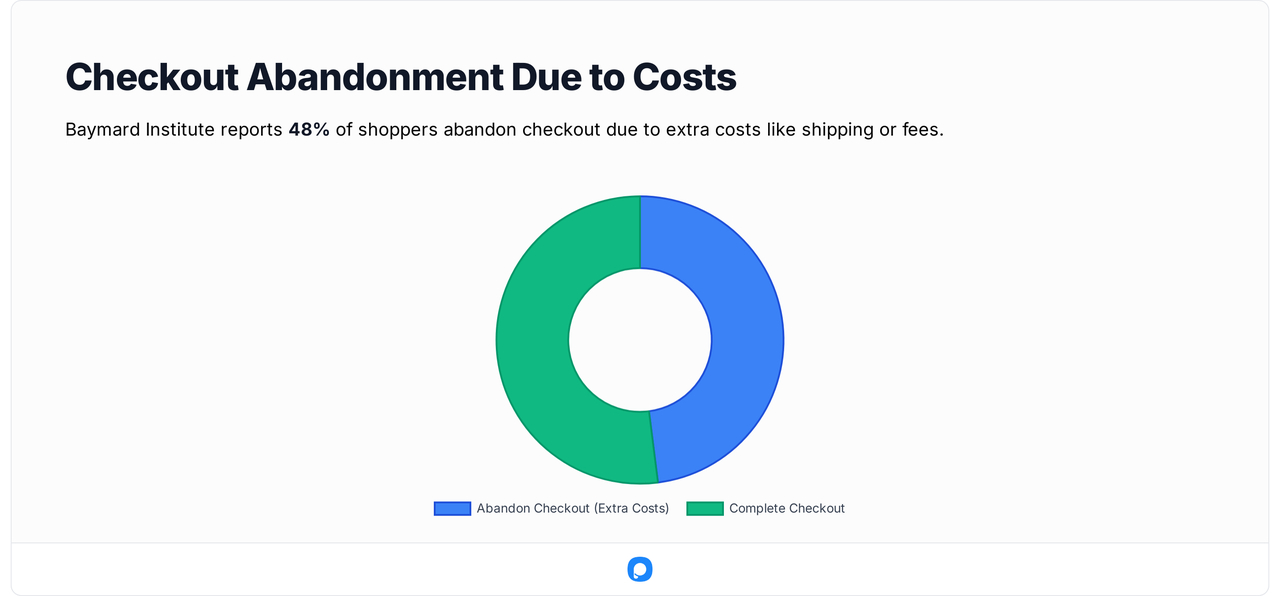
👉 A geo-targeted popup answers the question before hesitation happens.
💱 2) Local Currency & Pricing Reassurance
When visitors see unfamiliar currency, they hesitate, or leave.
Popup examples
- “Prices shown in CAD, pay in your local currency 🇨🇦”
- “EU-friendly pricing, VAT included”
- “Local checkout available in AUD”
According to Shopify, localized pricing improves conversion and reduces friction in international checkout experiences.
👉 Currency + pricing clarity = fewer surprises at checkout.
🎟 3) City- or Region-Specific Campaigns & Events
Great for retailers, local services, events, and multi-location brands.
Real example scenarios
- “Special offer for customers in Chicago 🎉”
- “In-store pickup available in Berlin”
- “Local spring sale, Istanbul region only 🌼”
Research shows that localized promotions increase engagement because users perceive them as personally relevant.
👉 Region-specific popups feel purposeful, not generic.
🌤 4) Seasonal or Weather-Based Targeting
Weather influences buying behavior more than most brands realize.
Example popup ideas
- “Cold week ahead in Oslo? Stay warm, 15% off jackets ❄️”
- “Hot days in Dubai, summer collection now live ☀️”
A study highlights that weather conditions significantly impact consumer purchasing decisions.
👉 Geo-targeted + weather-aware = hyper-relevant context.
🎯 Quick Summary
Benefits of Geo-Targeted Popups for E-Commerce & SaaS 📈
Geo-targeted popups don’t just “sound smart”, they directly influence how users behave on a website. When the message matches a visitor’s location, expectations, and checkout reality, engagement improves and friction drops.
🚀 Conversion & Engagement Impact
When offers feel relevant to the user’s situation, they’re more likely to take action.
What changes in practice
- Visitors get localized clarity instead of generic messaging
- Fewer doubts about shipping, currency, or availability
- Users feel the offer actually applies to them
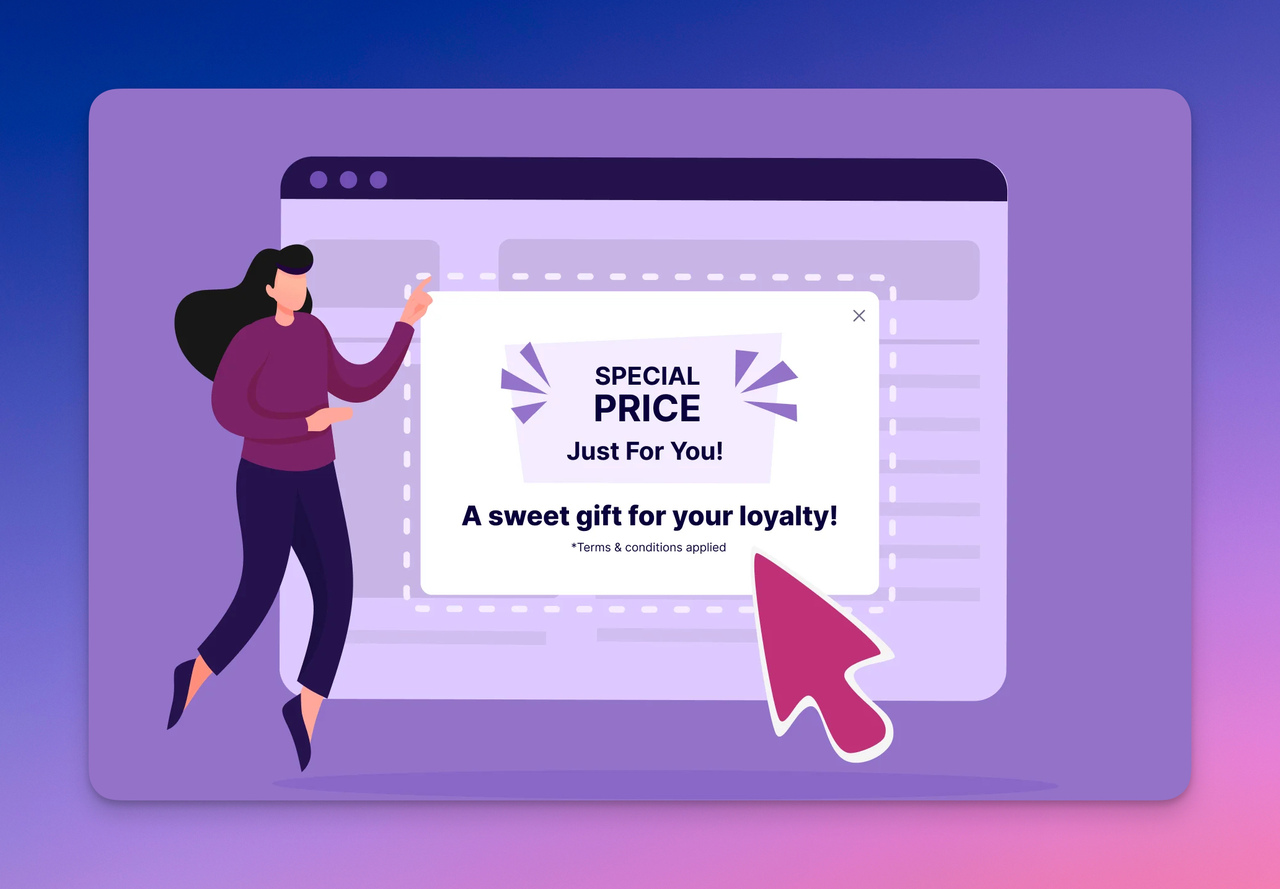
💡 Personalization (including geographic relevance) has been shown to increase conversion performance and engagement across digital experiences.
👉 When users see a popup that speaks to their location, they’re more willing to interact with it, because it feels applicable to them.
🧭 Bounce Rate & UX Improvements
A big reason users leave websites is uncertainty, especially around shipping, currency, or availability across regions.
Geo-targeted popups help by:
- Answering location-specific questions early
- Reducing confusion before checkout
- Preventing hesitation that leads to abandonment
Research from Baymard shows that unexpected costs and unclear conditions are major causes of cart abandonment, meaning that clearer context improves retention and user flow.
👉 When visitors receive instant, location-relevant reassurance, they’re less likely to bounce and more likely to continue.
Best Practices for Creating High-Converting Geo-Targeted Popups ✔️
These aren’t just design suggestions, they’re grounded in user-experience research and behavior-driven testing across personalization strategies.
✍️ 1) Keep the Message Simple & Context-Focused
- Speak to one clear location-based benefit
- Avoid cluttered or overly promotional copy
- Emphasize clarity first, incentive second
👉 If the user needs to “think,” the popup already lost impact.
⏳ 2) Trigger at the Right Moment, Not Randomly
Great timing examples:
- On product pages → show shipping availability by region
- During scroll / intent → highlight local currency or pricing info
- Before exit → clarify cross-border or domestic delivery options
👉 Geo + behavior = stronger relevance, higher conversion.
📍 3) Target Broadly Enough, But Avoid Over-Segmentation
- Country-level targeting works best for most cases
- City / micro-regions should be used only when meaningful
- Don’t create dozens of variations without purpose
Over-personalization can confuse users and complicate UX, especially when differences don’t matter.
👉 Personalize where it adds value , not everywhere.
📱 4) Optimize First for Mobile Users
Most popup interactions happen on mobile, which means:
- Larger tap areas
- Minimal text
- Lightweight visuals
- No overlapping UI elements
👉 If it isn’t mobile-friendly, it isn’t conversion-friendly.
🔒 5) Respect Privacy & Transparency
Good practice principles:
- Avoid implying precise location tracking
- Use broad phrasing (e.g., “We ship to your region”)
- Don’t misuse geolocation data beyond UX messaging
Trust-aligned, transparent design supports ethical personalization and user confidence.
👉 The goal is relevance, not surveillance.
Geo-Targeted Popups vs Generic Popups 🥊
How to Implement Geo-Targeted Popups Effectively (Practical Flow) ⚙️
Instead of treating geo-targeted popups like one-off campaigns, the best results come from using a simple, repeatable workflow, from targeting logic to testing and iteration.
Here’s a practical way to implement them step-by-step.
🧩 Step 1 — Define the Location Logic First (Not the Design)
Before writing copy or choosing visuals, decide what changes per location.
Good starting points:
- Country-based shipping / delivery messaging
- Local currency or tax clarification
- Region-specific availability or campaigns
- Cross-border reassurance (“Yes, we ship to your country”)
Research shows that clarity around logistics and availability reduces hesitation and abandonment during shopping journeys.
👉 Start with the problem the popup solves, then build the message around it.
🎛 Step 2 — Choose the Right Trigger & Page Context
Geo-targeted popups perform best when they appear at the moment the information becomes relevant, not randomly.
Recommended trigger patterns:
- Product pages → shipping or availability by region
- Cart / checkout → delivery, duties, currency reassurance
- Exit intent → cross-border shipping confirmation
- Homepage → localized welcome / regional info
Behavior-aligned triggers create higher response rates than time-based or generic triggers.
👉 Geo-targeting works best when it’s paired with intent-based timing.
🧪 Step 3 — A/B Test Localized vs Generic Messaging
Don’t assume, measure.
What to test:
- Local vs non-localized copy
- Country-specific vs global offer text
- Currency reassurance vs discount messaging
- Delivery clarity vs generic value copy
Industry research on experimentation shows that UX-level clarity changes often outperform pure incentive changes.
👉 Many teams discover that clarity beats discounts when location context matters.
🔄 Step 4 — Iterate Based on Region-Level Performance
Geo-targeted popups shouldn’t multiply endlessly, instead, expand them only where data proves impact.
Smart iteration approach:
- Start with 3–4 key regions
- Monitor conversion / engagement deltas
- Scale localization only where uplift is meaningful
- Sunset versions that add complexity without results
Over-personalization creates unnecessary cognitive load and operational overhead.
👉 Personalize strategically, not endlessly.
📊 Quick Implementation Flow
- Define the location-specific problem being solved
- Match the popup to page context + user intent
- Test localized vs generic messaging
- Scale only where results justify it
👉 Simple, controlled, measurable, not chaotic.
Conclusion: Why Geo-Targeted Popups Create Smarter, More Human On-Site Experiences
At the end of the day, geo-targeted popups aren’t just about segmentation or technical targeting; they’re about removing friction and speaking to people in context. When a visitor sees a message that matches their location, shipping reality, currency, or regional conditions, the experience feels clearer, more relevant, and more trustworthy than a one-size-fits-all popup ever could.
Across real use cases; from country-based shipping reassurance to localized pricing and region-specific campaigns , the value is always the same: less confusion, fewer abandoned sessions, and stronger engagement. And when they’re implemented thoughtfully, geo-targeted popups don’t feel intrusive, they feel like the website is simply answering the question a user already had in mind.
Good marketing doesn’t just push offers, it meets people where they are. Geo-targeted popups do exactly that.
Final Thought ✨
Personalization doesn’t always mean big, complex systems. Sometimes, it’s as simple, and as powerful, as saying the right thing to the right visitor in the right place.
And location is one of the most meaningful places to start.
🌍 Ready to Make Your Popups Location-Aware?
Try creating your first geo-targeted popup, test it, ship it, learn from it… and watch how much stronger your on-site experience becomes. 🚀
FAQs
1) What are geo-targeted popups?
Popups that change their message based on a visitor’s location (country, region, or city).
2) How do websites detect location?
Usually through IP-based geolocation — it identifies region, not exact address.
3) Do geo-targeted popups improve conversions?
Yes — clearer, location-relevant messaging reduces hesitation and increases engagement.
4) Are geo-targeted popups privacy-safe?
Yes, when used for UX purposes only and without collecting unnecessary personal data.
5) When should I use them?
When location affects experience — shipping, currency, taxes, availability, or local offers.


