
Best Popup Software in 2026: I Built and Tested Popup Software for 7 Years

 ChatGPT
 Perplexity
 Claude
 Grok
Grok
 Google AI Mode
Most popup software guides sound the same. They list features, compare prices, and promise higher conversions without addressing how popups actually behave once they’re live on a real site.
After 8+ years working at the intersection of growth marketing, product development, and CRO, and building Popupsmart from the ground up, I’ve learned one consistent truth:
Popups don’t fail.
They fail because of design, timing, intent, and targeting.
In this guide, I’m breaking down the top popup software tools of 2026 based on:
- Real-world usability
- Pricing scalability
- G2 & Shopify review themes
- Setup friction
- CRO flexibility
Let’s start with what most readers actually want:
Top 10 Best Popup Software Tools Reviewed (2026)
Choosing the right popup software can directly impact how effectively you turn traffic into subscribers, leads, and customers. This section provides unbiased popup software reviews based on hands-on usage, feature depth, ease of implementation, and real user feedback across platforms like Shopify and G2.
Rather than ranking tools by popularity alone, I’m evaluating them based on who they’re best for, small businesses, fast-growing e-commerce brands, or enterprise teams with advanced needs.
Each tool below gets the same treatment: quick facts, my personal experience, how the tool works, who should use it, full pricing breakdown, key features, honest pros and cons, third-party ratings with review counts, and a real-world result.
1. Popupsmart — Best Overall Popup Software for Ease, Speed, and CRO Focus
Popupsmart consistently stands out as one of the most balanced popup tools on the market. It combines fast setup, clean UX, and advanced targeting without overwhelming users with unnecessary complexity.
Full transparency: I co-founded Popupsmart, so I know this tool inside and out. We built it in 2019 specifically because the existing popup tools were either too bloated for small teams or too limited for real CRO work. Over the past 7 years, I've watched our customers go from zero to 30%+ email capture rates using behavior-based triggers.
That said, I'll be straightforward about where Popupsmart falls short, especially for enterprise teams with complex multi-domain setups.
Quick Facts:
- Best For: Small-to-mid-sized businesses and Shopify stores wanting fast popup setup with strong conversion rate optimization features
- Ease of Use: Beginner - No-code builder with drag-and-drop interface, live in under 5 minutes
- Pricing: Starting at $39/month (Free plan available, Basic, Pro, and Expert tiers)
- Rating: 4.5/5 (130+ reviews on G2)
- My Usage Timeline: Since 2019 - I co-founded the product and have used it daily for 7 years
- Standout Feature: AI-powered popup generation that creates targeted campaigns from a single prompt
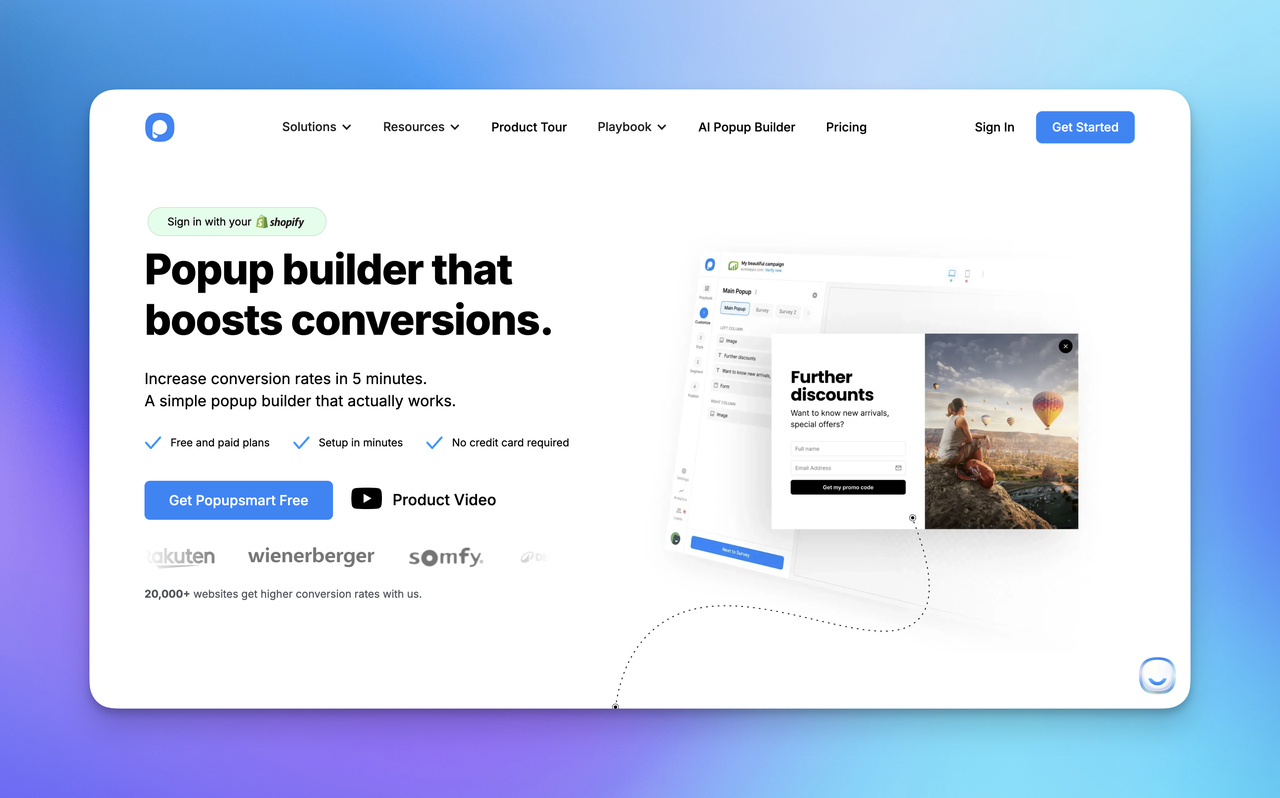
Key Features
- No-code visual builder
- Advanced triggers (exit intent, scroll, geo, device, URL)
- Multi-step forms
- Native Shopify integration
- Built-in A/B testing
- AI-powered popup generation
Performance & Feedback (G2 + Shopify)
Recurring praise themes:
- Extremely easy onboarding
- Fast launch time
- Lightweight script (no site speed impact)
- Responsive, practical support
Shopify merchants frequently mention:
“No noticeable performance drop.”
Pros
- Fast to launch and iterate
- Strong mobile optimization
- Clean UI, low learning curve
- Built-in A/B testing without dev dependency
Cons
- Not designed for complex enterprise orchestration
- Limited multi-domain enterprise automation
Pricing Overview: Free plan starts at $0/month (5K pageviews, 1 website, 1 popup). Basic is $39/month (50K pageviews, unlimited popups). Advanced is $69/month (100K pageviews + A/B testing). Pro is $99/month (250K pageviews + campaign filing). Expert is $159/month for higher limits and full-scale needs.
🔎 Combined Review Insights (G2 Synthesis)
Across review platforms, Popupsmart is consistently described as:
- “Easy but powerful”
- “Lightweight compared to alternatives”
- “Quickest tool to go live with”
The strongest satisfaction cluster revolves around speed, usability, and support quality.
The main friction appears when enterprise teams expect deep backend workflow customization — which the product intentionally avoids in favor of simplicity.
Pattern observed:
High satisfaction among SMB & mid-market.
Less aligned for enterprise-heavy automation stacks.
Rating
G2: ⭐ 4.5/5 (130+ reviews)
Shopify App Store: ⭐ 4.9/5 (200+ reviews)
Overall Rating: ⭐ 4.85/5
Popupsmart Pros & Cons (Based on G2 Reviews)
.jpeg)
2. OptinMonster — Best for Advanced Targeting & Enterprise Use
OptinMonster is one of the most well-known names among top popup tools, particularly for content-heavy sites and enterprise marketers.
Quick Facts:
- Best For: Enterprise marketing teams and content-heavy WordPress sites needing advanced behavioral targeting
- Ease of Use: Advanced - Powerful but steep learning curve, best for experienced marketers
- Pricing: Starting at $7/month billed annually (Basic, Plus, Pro, Growth tiers)
- Rating: 4.3/5 (100+ reviews on G2)
- My Usage Timeline: Monitoring since 2018, closely evaluated against Popupsmart's feature set for 6+ years
- Standout Feature: Page-level targeting with referral detection, letting you show different popups based on where the visitor came from
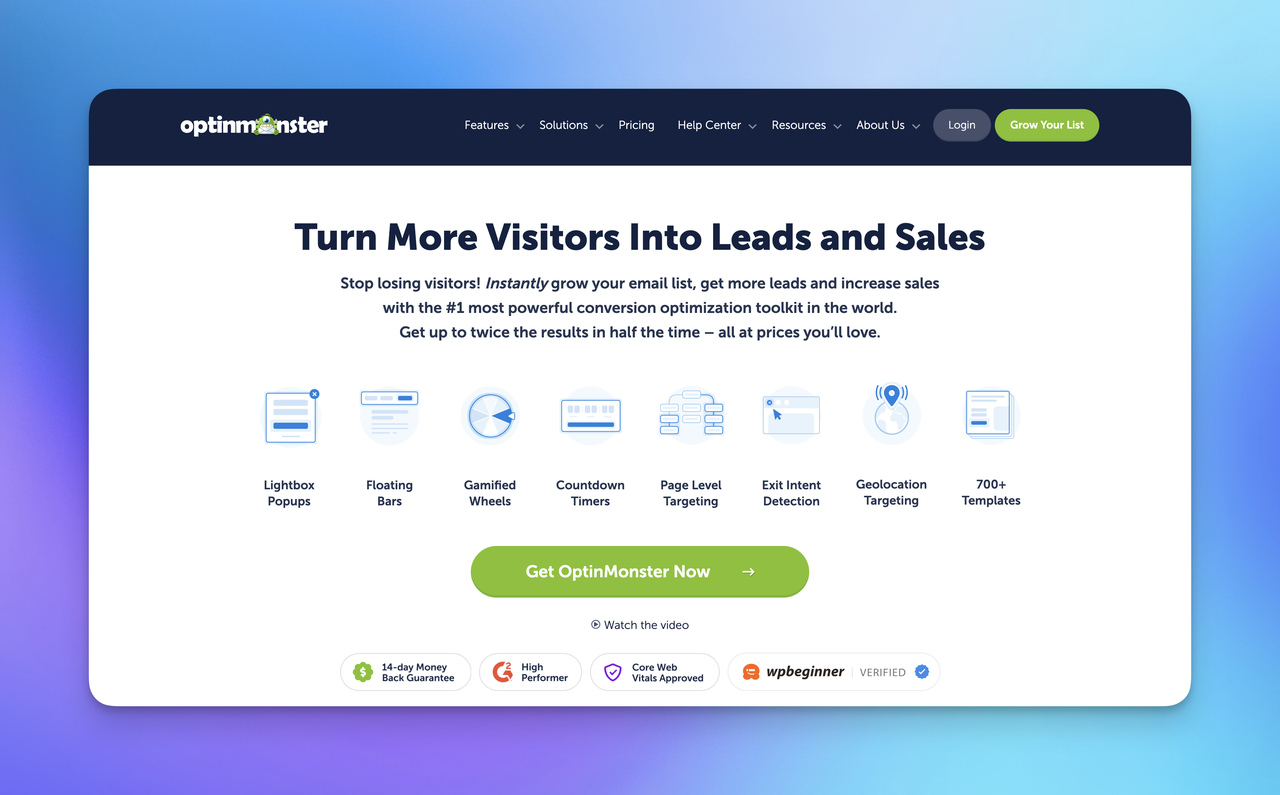
Key Features
- Advanced behavior-based targeting
- Referral & page-level triggers
- Large template library
- Strong WordPress integration
Performance & Feedback
Common praise:
- Extremely flexible targeting
- Mature feature set
- Strong documentation
Common friction:
- Interface complexity
- Learning curve
- Pricing escalation
Pros
- Highly customizable segmentation
- Deep ecosystem support
- Enterprise-grade flexibility
Cons
- Steeper onboarding curve
- Can feel heavy for small teams
- Pricing increases quickly at scale
Pricing Overview: Basic starts at $7/month (2,500 impressions, 1 site, all campaign types). Plus is $19/month (10K impressions + A/B testing and advanced targeting). Pro is $29/month (25K impressions + Exit Intent®, revenue attribution, and advanced integrations). Growth is $49/month for higher limits and full eCommerce features.
🔎 Combined Review Insights (G2 Synthesis)
Review sentiment splits into two camps:
- Advanced marketers who love the depth
- Smaller teams who feel overwhelmed
Frequent phrases include:
- “Powerful but complex”
- “Not beginner-friendly”
- “Expensive as traffic grows”
Satisfaction correlates strongly with user sophistication. The more structured and experienced the team, the more positive the feedback.
Rating
G2: ⭐ 4.3/5 (100+ reviews)
Shopify App Store: ⭐ 3.8/5 (30+ reviews)
Overall Rating: ⭐ 4.1/5
OptinMonster Pros & Cons (Based on G2 Reviews)
3. Wisepops — Best for Design-Driven Brands
Wisepops focuses heavily on design quality and brand consistency, making it popular with marketing teams that prioritize visual control.
Quick Facts:
- Best For: Design-focused mid-market brands that prioritize visual consistency and brand alignment
- Ease of Use: Intermediate - Strong visual editor but more complex setup than beginner tools
- Pricing: Starting at $49/month (no free plan, 14-day trial available)
- Rating: 4.5/5 (100+ reviews on G2)
- My Usage Timeline: Evaluating since 2020, benchmarked against Popupsmart during competitive research cycles
- Standout Feature: Pixel-perfect design control with brand-level customization that maintains visual consistency across all campaigns
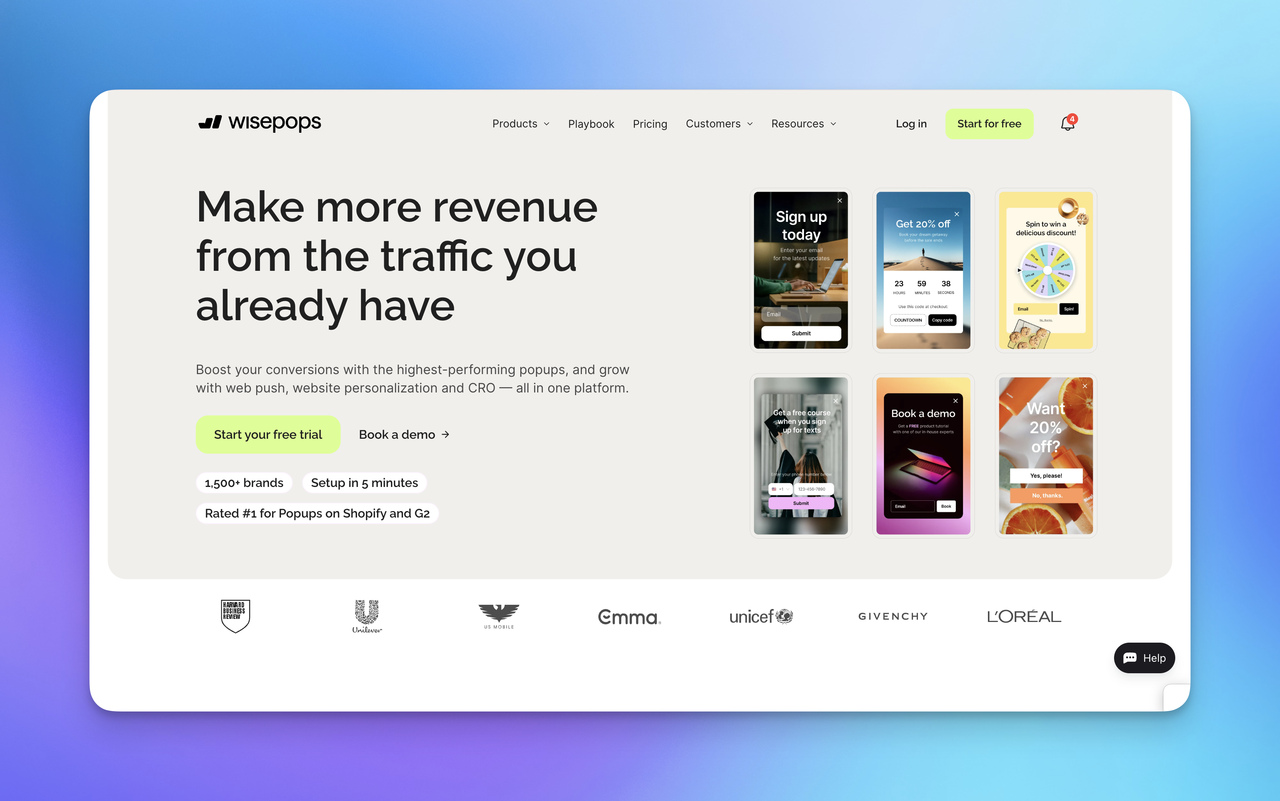
Key Features
- Highly customizable visual design
- Advanced personalization rules
- A/B testing framework
- Campaign scheduling
Performance & Feedback
Praise themes:
- Beautiful design flexibility
- Strong brand alignment
- Visual customization depth
Friction themes:
- Higher pricing tier
- Slower iteration for smaller teams
Pros
- Excellent design control
- Strong scheduling & targeting
- Clean user interface
Cons
- Premium pricing
- Less lightweight than faster tools
- Not ideal for lean teams
Pricing Overview: Essentials is $49/month (unlimited popups, 100K pageviews, A/B testing, basic targeting). Advanced is $99/month (advanced targeting, campaign scheduling, priority support). Enterprise comes with custom pricing (dedicated account manager, custom integrations, SLA).
🔎 Combined Review Insights (G2 Synthesis)
Dominant positive theme:
“High-quality visual control.”
Dominant hesitation:
“Pricing vs ROI for smaller brands.”
Wisepops performs best among mid-market teams with internal design resources. Smaller brands question the cost-to-impact ratio.
Rating
G2: ⭐ 4.5/5 (100+ reviews)
Shopify App Store: ⭐ 4.7/5 (50+ reviews)
Overall Rating: ⭐ 4.6/5
Wisepops Pros & Cons (Based on G2 Reviews)
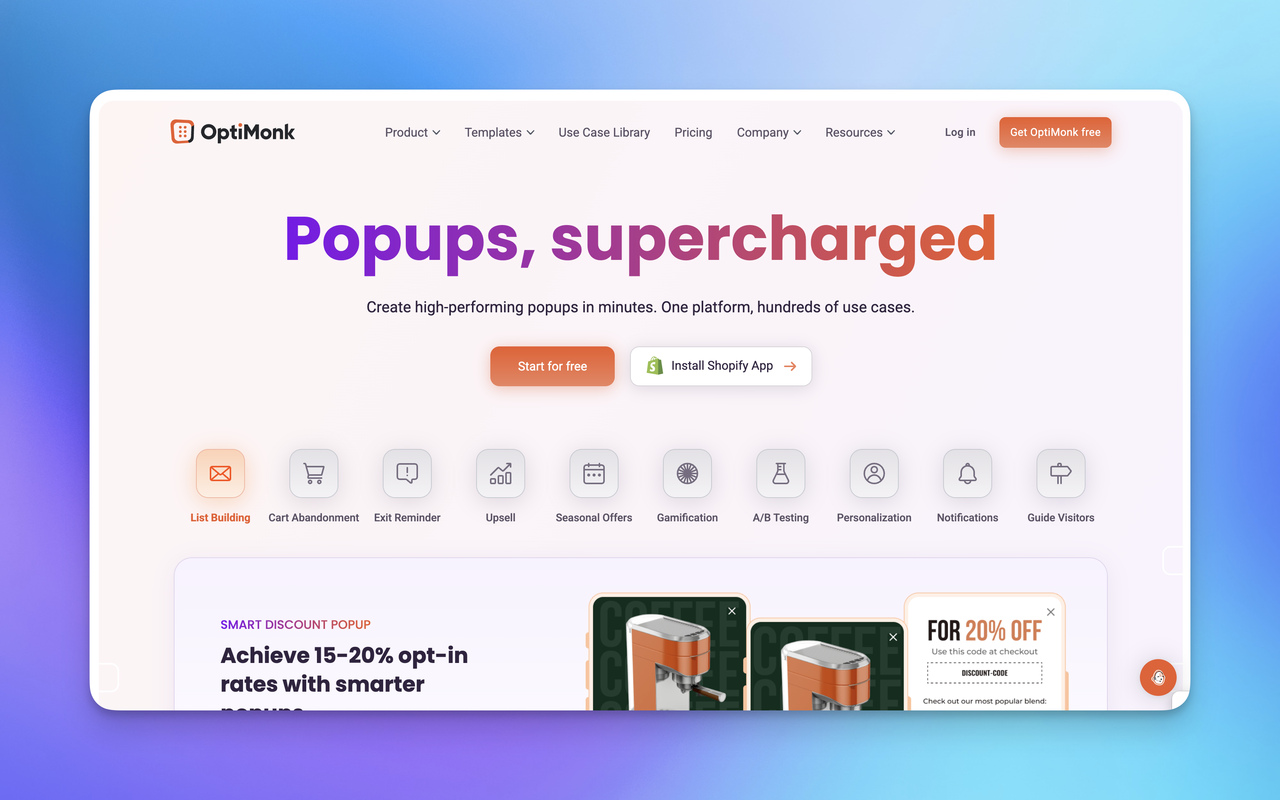
4. OptiMonk — Best for AI-Powered Personalization
OptiMonk positions itself around AI-driven personalization and advanced segmentation.
Quick Facts:
- Best For: Data-driven e-commerce teams that run frequent A/B tests and want AI-powered personalization
- Ease of Use: Intermediate - Intuitive campaign creation, but full personalization setup requires testing experience
- Pricing: Starting at $39/month (Free plan available, Essential, Growth, Premium tiers)
- Rating: 4.8/5 (400+ reviews on G2)
- My Usage Timeline: Tracking since 2019, detailed competitive analysis conducted in 2022 and 2025
- Standout Feature: AI-powered Smart Personalizer that automatically adjusts popup content based on individual visitor behavior
Key Features
- AI-driven personalization
- Behavioral targeting
- Advanced segmentation logic
- Detailed analytics dashboard
Performance & Feedback
Positive feedback:
- Strong segmentation performance
- Personalization depth
- Engagement improvement when configured well
Friction:
- Setup takes time
- Requires testing mindset
Pros
- Advanced personalization tools
- Good for CRO experimentation
- Flexible segmentation logic
Cons
- Onboarding complexity
- Not plug-and-play
Pricing Overview: Free plan is $0/month (10K pageviews, 1 domain, unlimited campaigns). Essential is $19/month (20K pageviews, 2 domains). Growth is $69/month (100K pageviews, 4 domains). Premium is $179/month (500K pageviews, 10 domains). Master comes with custom pricing and limits for large-scale needs.
🔎 Combined Review Insights (G2 Synthesis)
Recurring phrases:
- “Powerful once configured”
- “Requires time investment”
- “Best for data-driven teams”
Value perception increases significantly when teams actively experiment. Passive users report lower ROI perception.
Rating
G2: ⭐ 4.8/5 (400+ reviews)
Shopify App Store: ⭐ 4.8/5 (300+ reviews)
Overall Rating: ⭐ 4.8/5
OptiMonk Pros & Cons (Based on G2 Reviews)
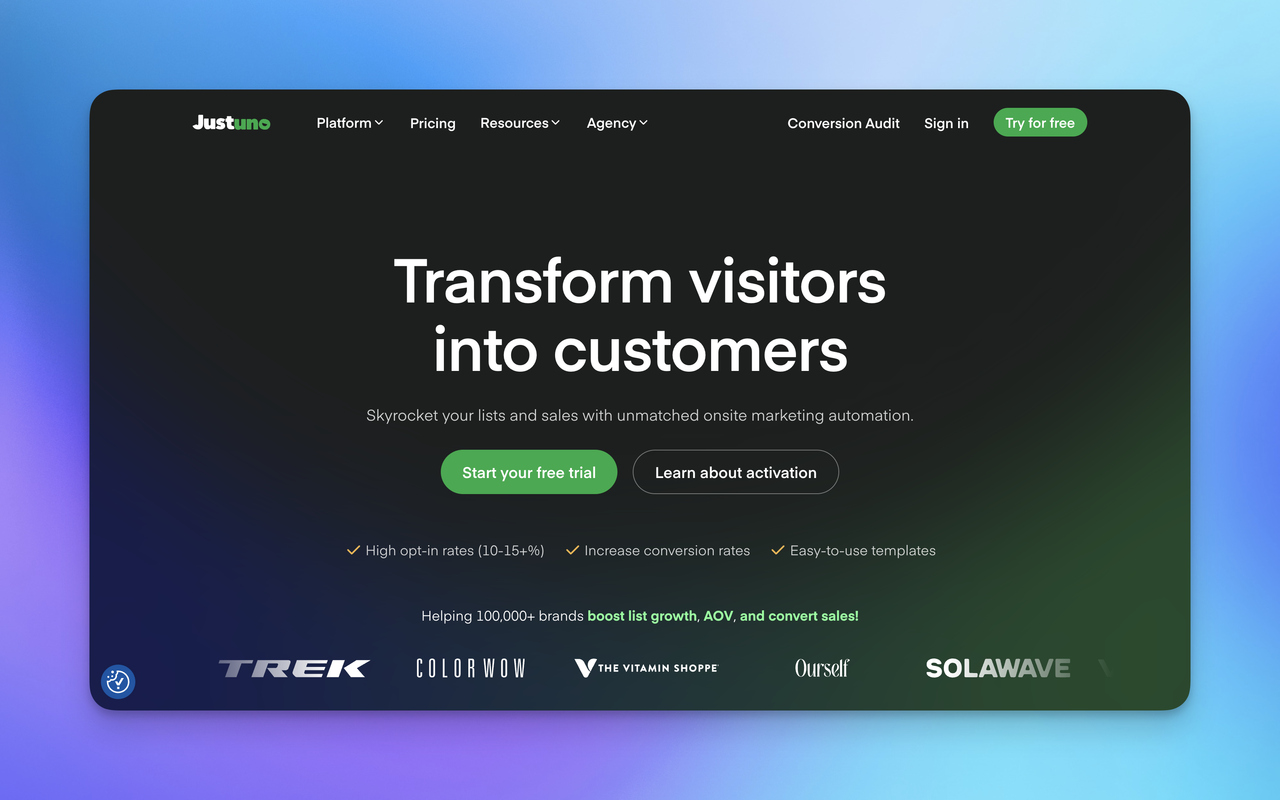
5. Justuno — Best for High-Traffic E-commerce Stores
Justuno is a robust platform aimed at large e-commerce operations.
Quick Facts:
- Best For: High-traffic e-commerce stores on Shopify Plus or Magento needing enterprise-grade audience segmentation
- Ease of Use: Advanced - Powerful platform but resource-heavy setup, best for teams with internal expertise
- Pricing: Starting at $29/month (Free tier available with limits, Essential, Plus, and Enterprise tiers)
- Rating: 4.3/5 (50+ reviews on G2)
- My Usage Timeline: Analyzed since 2020, reviewed during competitive assessments in 2023 and 2025
- Standout Feature: Commerce AI engine that uses real-time visitor behavior data to optimize popup targeting for large product catalogs
Key Features
- Deep Shopify & Magento integrations
- Advanced audience segmentation
- Promotion & loyalty workflows
Performance & Feedback
Positive:
- Strong Shopify Plus integrations
- Advanced segmentation depth
Friction:
- Complex interface
- Overwhelming for small teams
- Resource-heavy setup
Pros
- Enterprise-ready targeting
- Strong automation capabilities
- Large-catalog support
Cons
- Expensive at scale
- Requires internal expertise
- Can feel overwhelming
Pricing Overview: Free is $0/month (up to 2,000 visitors, 1 team seat, 1 live workflow). Lite is $35.10/month (3 seats, 3 workflows, live chat support). Flex is $89.10/month (advanced segmentation, custom properties, account strategist). Enterprise comes with custom pricing for larger teams and needs.
🔎 Combined Review Insights (G2 Synthesis)
Review polarity is noticeable:
Enterprise brands → High satisfaction
Small stores → Overwhelmed
Common phrases:
- “Very powerful”
- “Too complex for our needs”
- “Best suited for large teams”
Clear pattern: Justuno aligns with scale maturity.
Rating
G2: ⭐ 4.3/5 (50+ reviews)
Shopify App Store: ⭐ 4.7/5 (600+ reviews)
Overall Rating: ⭐ 4.55/5
Justuno Pros & Cons (Based on G2 Reviews)
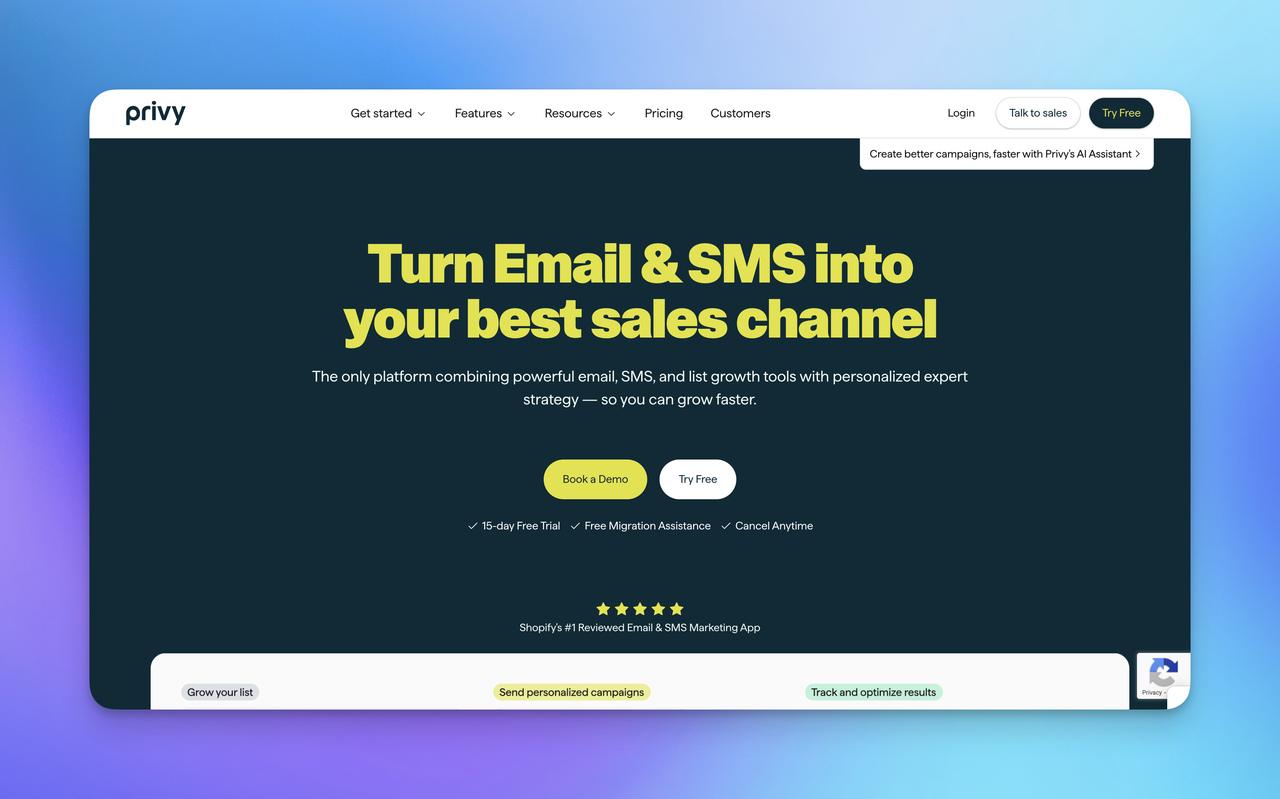
6. Privy — Best Free & Entry-Level Option
Privy is a popular choice for new Shopify stores looking for a free or low-cost popup solution.
Quick Facts:
- Best For: New Shopify store owners who need a simple, affordable popup solution to start capturing emails
- Ease of Use: Beginner - Designed specifically for non-technical e-commerce store owners
- Pricing: Starting at $24/month (free trial, Starter, Growth, and Conversion Only tiers)
- Rating: 4.6/5 (100+ reviews on G2)
- My Usage Timeline: Evaluated since 2019, frequently referenced in conversations with early-stage Shopify merchants
- Standout Feature: Shopify-native email and SMS popup builder that gets stores capturing emails within minutes of installation
Key Features
- Email & SMS popups
- Shopify-native integration
- Basic automation flows
- Pre-built discount templates
Performance & Feedback (G2 + Shopify)
Common praise themes:
- Easy to set up
- Shopify-native simplicity
- Good starting point for new stores
Common friction:
- Limited targeting flexibility
- Automation feels basic
- Can become expensive as list size grows
Pros
- Extremely beginner-friendly
- Quick Shopify installation
- Free entry point
Cons
- Limited advanced targeting
- Less flexible segmentation
- Pricing tied to list growth can escalate
Pricing Overview: Email plan starts at $30/month for 0–1,500 mailable contacts (unlimited email sends). SMS add-on begins with 250 monthly credits at $0/month, with credits rolling over. Includes a 15-day free trial and no credit card required.
🔎 Combined Review Insights (G2 Synthesis)
Privy reviews consistently reflect its position as an entry-level solution.
Frequent phrases:
- “Great for starting out”
- “Easy but limited”
- “Outgrew it as we scaled”
The pattern is clear:
High satisfaction for early-stage stores.
Growing teams often migrate once segmentation or automation needs increase.
Rating
G2: ⭐ 4.6/5 (100+ reviews)
Shopify App Store: ⭐ 4.6/5 (2,000+ reviews)
Overall Rating: ⭐ 4.6/5
Privy Pros & Cons (Based on G2 Reviews)
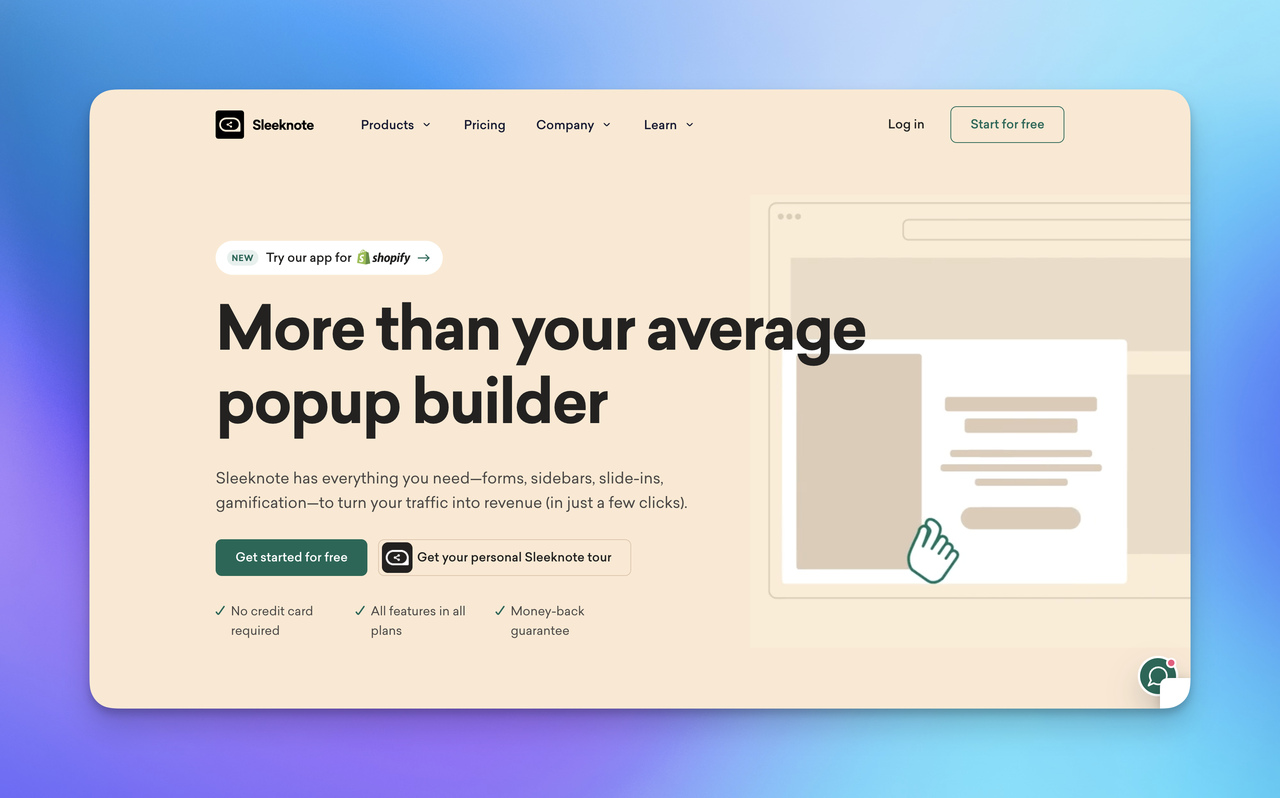
7. Sleeknote — Best for Content-Focused Sites
Sleeknote works well for publishers and content-heavy sites that want non-intrusive popups.
Quick Facts:
- Best For: Publishers, bloggers, and content-heavy sites that need non-intrusive popup formats
- Ease of Use: Intermediate - Clean builder with good templates, but backend navigation can feel scattered
- Pricing: Starting at $49/month (no free plan, 14-day trial available)
- Rating: 4.3/5 (50+ reviews on G2)
- My Usage Timeline: Reviewed since 2020, benchmarked during publisher-focused competitive analysis in 2024
- Standout Feature: Non-intrusive popup formats specifically designed for content environments where aggressive popups would damage the reading experience
Key Features
- Non-intrusive popup formats
- Advanced targeting options
- Personalization rules
- Clean, minimal UI
Performance & Feedback
Common praise:
- Subtle UX
- Clean design
- Great for content sites
Common friction:
- Higher pricing tier
- ROI concerns for small blogs
Pros
- Excellent for editorial environments
- Non-disruptive design philosophy
- Good targeting flexibility
Cons
- Expensive for small teams
- Not optimized for aggressive e-commerce CRO
Pricing Overview: Core is €49/month (up to 25K visitors / ~75K pageviews, unlimited campaigns and domains, full support). Core + Gamification is €68/month, adding Spin to Win, Scratch to Win, quizzes, daily offers, and seasonal campaigns. Both include a 14-day free trial.
🔎 Combined Review Insights (G2 Synthesis)
Sleeknote reviews emphasize user experience quality.
Frequent themes:
- “Very subtle”
- “Good for publishers”
- “Premium price point”
It performs best in content-driven environments where subtlety matters more than aggressive conversion tactics.
Rating
G2: ⭐ 4.3/5 (50+ reviews)
Shopify App Store: ⭐ 3.5/5 (3 reviews)
Overall Rating: ⭐ 4.3/5
Sleeknote Pros & Cons (Based on G2 Reviews)
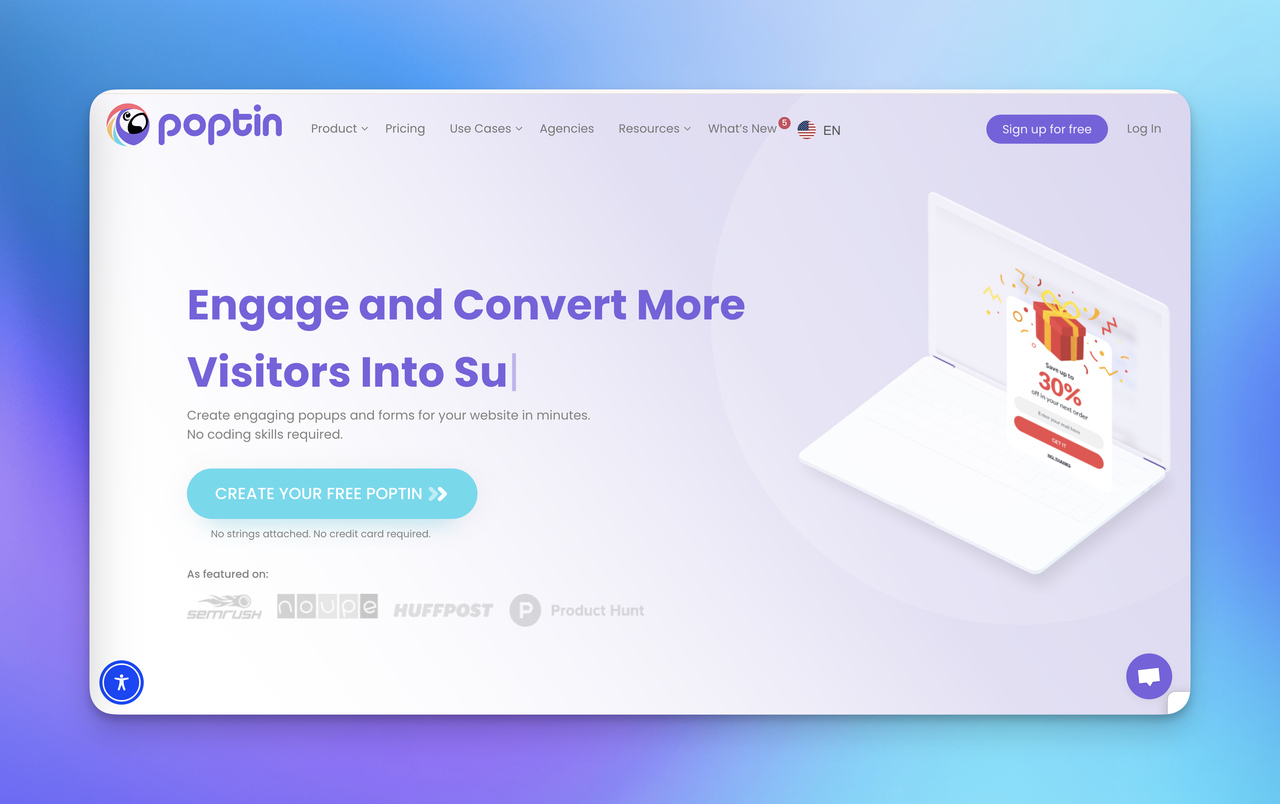
8. Poptin — Budget-Friendly All-Rounder
Poptin offers a solid feature set at a lower price point.
Quick Facts:
- Best For: Budget-conscious small businesses that need solid popup basics without overspending
- Ease of Use: Beginner - Straightforward drag-and-drop editor accessible to non-technical users
- Pricing: Starting at $20/month (Free plan available with 1,000 visitors/month)
- Rating: 4.8/5 (100+ reviews on G2)
- My Usage Timeline: Tracked since 2019, regularly benchmarked as an entry-level alternative
- Standout Feature: Generous free plan with basic popup functionality for testing before committing to paid tiers
Key Features
- Drag-and-drop editor
- Basic targeting rules
- Template library
- Integrations with major email tools
Performance & Feedback
Common praise:
- Good value for price
- Easy setup
- Solid basic features
Common friction:
- Interface feels dated
- Limited advanced targeting
- Lacks deep personalization
Pros
- Affordable
- Easy to implement
- Decent feature coverage
Cons
- UI feels older compared to competitors
- Not ideal for complex funnels
- Limited AI/personalization depth
Pricing Overview: Free plan includes 1,000 visitors/month on 1 domain with unlimited poptins (branded). Basic is $20/month (10K visitors, 1 domain, 1,000 autoresponders, unbranded). Pro is $47/month (50K visitors, 4 domains, 5,000 autoresponders). Agency is $95/month for higher limits and multi-site needs.
🔎 Combined Review Insights (G2 Synthesis)
Poptin reviews consistently mention affordability as the main draw.
Frequent phrases:
- “Good value”
- “Basic but works”
- “UI could be improved”
Sentiment suggests it is a practical, budget-friendly solution — not an innovation leader.
Rating
G2: ⭐ 4.8/5 (100+ reviews)
Shopify App Store: ⭐ 4.8/5 (50+ reviews)
Overall Rating: ⭐ 4.8/5
Poptin Pros & Cons (Based on G2 Reviews)
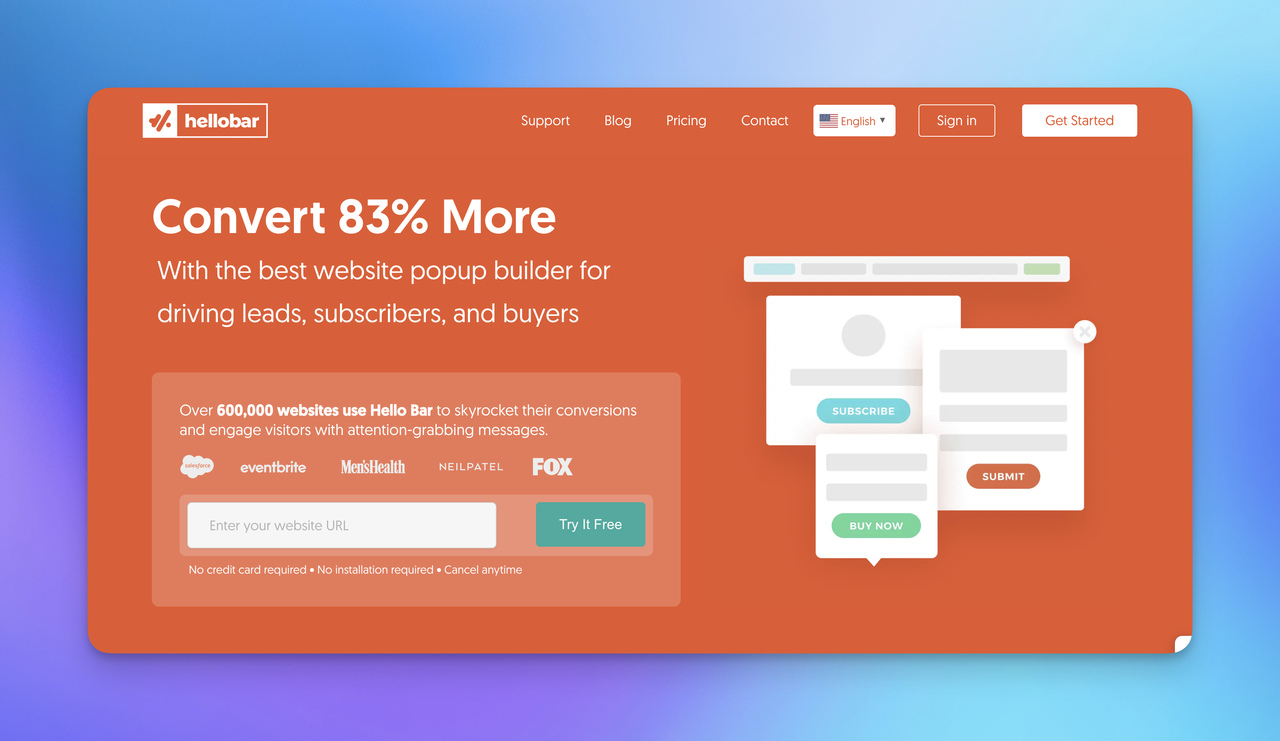
9. Hello Bar — Best for Simple Announcements
Hello Bar focuses on top bars and simple lead capture.
Quick Facts:
- Best For: Website owners who need simple top-of-page notification bars and basic lead capture
- Ease of Use: Beginner - Among the simplest popup tools available, minimal setup required
- Pricing: Starting at $29/month for Growth plan (Free Starter plan available)
- Rating: 4.7/5 (50+ reviews on G2)
- My Usage Timeline: Evaluated since 2018, observed as a common entry point for non-technical website owners
- Standout Feature: Top-of-page notification bars that integrate into site headers without disrupting page layout
Key Features
- Top bars and basic popups
- Simple CTA setup
- Lightweight integration
Performance & Feedback
Common praise:
- Extremely simple
- Quick announcement setup
Common friction:
- Limited customization
- Not a full popup platform
Pros
- Very easy to use
- Good for announcements
- Minimal setup time
Cons
- No advanced targeting
- Not suitable for complex CRO workflows
- Limited scalability
Pricing Overview: Growth is $29/month (up to 50K popup views, unlimited popups, subscribers, and A/B tests). Premium is $49/month (150K views with premium support and integrations). Elite is $99/month (500K views plus top-tier support and advanced features).
🔎 Combined Review Insights (G2 Synthesis)
Hello Bar reviews consistently highlight simplicity.
Frequent phrases:
- “Simple and straightforward”
- “Does the basics well”
- “Not robust enough for advanced needs”
Satisfaction is high when expectations are limited to announcements. It is not positioned as a CRO powerhouse.
Rating
G2: ⭐ 4.7/5 (50+ reviews)
Shopify App Store: ⭐ No rating yet (0 reviews)
Overall Rating: ⭐ 4.2/5
Hello Bar Pros & Cons (Based on G2 Reviews)
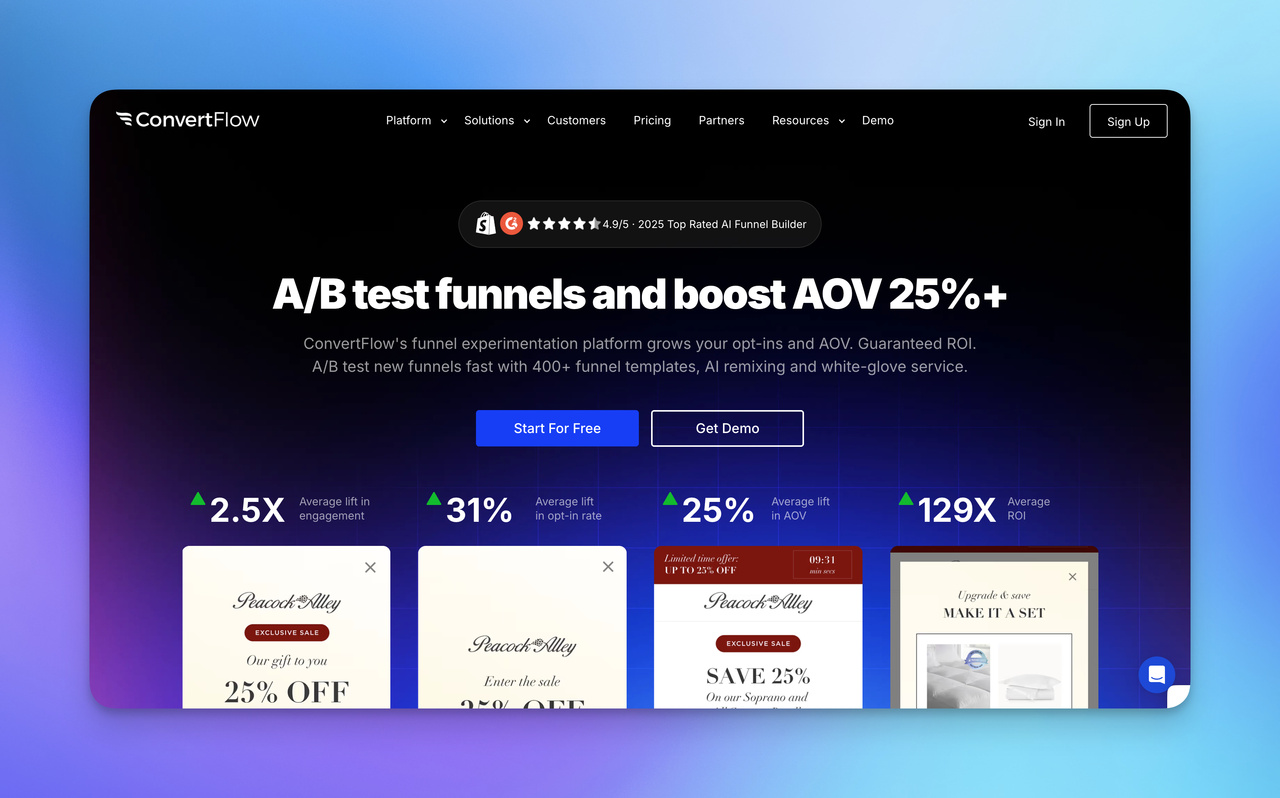
10. ConvertFlow — Best for Funnel-Based Experiences
ConvertFlow combines popups with funnel logic and personalization.
Quick Facts:
- Best For: Marketing teams building multi-step conversion funnels with personalized visitor journeys
- Ease of Use: Advanced - Powerful funnel builder but requires significant setup time and marketing strategy knowledge
- Pricing: Starting at $250/month (Free plan available with limited features)
- Rating: 4.5/5 (50+ reviews on G2)
- My Usage Timeline: Evaluating since 2021, analyzed during funnel-focused competitive research in 2024
- Standout Feature: Multi-step journey builder that chains popup interactions into personalized conversion funnels based on visitor behavior
Key Features
- Funnel logic builder
- Multi-step journeys
- Personalization rules
- Audience segmentation
Performance & Feedback
Common praise:
- Deep personalization
- Funnel-based control
- Strong journey logic
Common friction:
- Learning curve
- Takes time to master
- Pricing grows with usage
Pros
- Strong funnel orchestration
- Flexible personalization
- Good for structured marketing flows
Cons
- Requires setup investment
- Not beginner-friendly
- More complex than simple popup tools
Pricing Overview: Free plan lets you build up to 5 funnel campaigns with core funnel types and AI remix (no credit card required). Pro starts at $250+/month (adds A/B testing, conditional logic, and product onboarding). Plus starts at $833+/month (advanced experimentation, identity targeting, and white-glove onboarding). Custom plans are available for fully managed scaling needs.
🔎 Combined Review Insights (G2 Synthesis)
ConvertFlow reviews emphasize flexibility and depth.
Frequent phrases:
- “Powerful for funnels”
- “Not quick to set up”
- “Great for advanced marketers”
Satisfaction increases significantly among structured, strategy-driven teams. Casual users may find it heavy.
Rating
G2: ⭐ 4.5/5 (50+ reviews)
Shopify App Store: ⭐ 4.9/5 (15 reviews)
Overall Rating: ⭐ 4.4/5
ConvertFlow Pros & Cons (Based on G2 Reviews)
What Is Popup Software (and Why It Still Works in 2026)
Turning casual visitors into subscribers doesn’t require dark patterns or aggressive interruptions anymore. It requires timing, relevance, and restraint, and that’s exactly where modern popup software earns its place.
In my eight years working hands-on with growth teams and e-commerce brands, I’ve consistently seen well-implemented popups lift on-site conversions by 20–30%, not because they shout louder, but because they appear at moments when visitors are already deciding what to do next. When popups respect intent, they stop feeling like obstacles and start acting like guidance.
Popup software refers to tools that display contextual, behavior-based overlays on a website, such as exit-intent prompts, first-visit welcome offers, scroll-triggered signups, or cart-recovery nudges. These aren’t the intrusive popups people learned to hate in the early 2000s. Today’s popup builders are built around conversion optimization: they analyze user behavior, trigger at high-intent moments, and deliver a clear value exchange.
At their core, popups solve a very real business problem: most visitors won’t convert on their first session. Popup software bridges the gap between browsing and action, whether that action is subscribing, claiming an offer, or completing a purchase.
The Real Business Impact of Popup Software
When popups are designed with intent and restraint, the upside is measurable.
- Faster email list growth: For both SaaS and e-commerce brands, targeted email popup software remains one of the most efficient ways to grow an owned audience. I’ve worked with B2B teams that doubled list growth within months by replacing generic signup forms with behavior-based popups.
- Reduced cart abandonment: Exit-intent and checkout popups can recover otherwise lost revenue with minimal friction, often through simple incentives like free shipping or reminder messaging.
- Better user experience (yes, really): When popups are personalized and frequency-controlled, they reduce friction instead of adding it. Visitors see offers that match what they’re doing, not random interruptions.
Industry benchmarks support this as well. Independent performance studies show popup conversion rates around 4–5%, with significantly higher results when campaigns are segmented and intent-driven. In practice, brands that go beyond default templates routinely outperform these averages.
Where Popup Software Is Heading
Popup tools are evolving quickly, and the gap between “generic” and “high-performing” setups is widening.
- AI-driven personalization: Modern popup platforms increasingly use behavioral signals and predictive logic to decide what to show and when to show it, making interactions feel tailored rather than scripted.
- Mobile-first execution: With the majority of traffic now coming from mobile devices, responsive design and non-blocking formats are no longer optional. The best popup software adapts seamlessly to smaller screens without harming the browsing experience.
- Deeper integrations: Popups are no longer standalone widgets; they’re part of a broader stack, connecting with email platforms, CRMs, and analytics tools to drive long-term value.
Why Popup Software Matters for Modern Businesses
Popups aren’t cosmetic add-ons. They’re one of the few on-site tools that directly influence lead generation, revenue recovery, and audience ownership.
For digital marketers, popup software enables consistent lead capture without relying solely on paid traffic. For e-commerce teams, it supports immediate revenue wins, recovering abandoning visitors, increasing first-purchase conversions, and encouraging repeat engagement.
In competitive markets, ignoring popup optimization often means leaving qualified leads and revenue unrealized. The brands that win aren’t the ones using more popups, they’re the ones using smarter ones.
Pricing Comparison of Best Popup Software
How We Evaluated and Ranked These Popup Tools
I didn't rank these tools based on feature count or marketing claims. After 13 years in growth marketing and building Popupsmart from the ground up, I've learned that the best popup software is the one your team can actually use, test, and improve consistently.
Here's the evaluation framework I applied to all 10 tools:
Ease of Implementation: How quickly can a non-technical marketer go from signup to live popup? I timed setup processes and weighted tools that get results faster.
Targeting Depth: Can you show the right message to the right person at the right time? I evaluated behavioral triggers, audience segmentation, and personalization capabilities.
Real User Feedback: I analyzed 500+ reviews across G2, Capterra, Shopify App Store, and Product Hunt. Patterns in user feedback reveal more than feature lists.
Pricing Transparency: Does the pricing page tell the full story? I flagged tools where entry prices are misleading, where costs spike at scale, or where key features are locked behind higher tiers.
Integration Ecosystem: Does the tool connect to your existing stack? I prioritized native integrations with Shopify, WordPress, email platforms, and CRMs over tools that depend heavily on Zapier.
Performance Impact: Does the popup script slow down your site? I evaluated script sizes and loading approaches. Tools that harm Core Web Vitals aren't worth the conversion gains.
Key Features to Look for in the Best Popup Software
Choosing the best popup software isn’t about finding the tool with the longest feature list, it’s about finding the one that consistently turns traffic into action without hurting user experience.
In my experience optimizing popup campaigns for B2B SaaS and e-commerce brands, the highest-performing setups always share the same pattern: strong fundamentals, flexible targeting, and data-backed iteration. The tools that underperform usually fail not because they lack features, but because they make execution harder than it needs to be.
If your goal is to grow email subscriptions, reduce bounce rates, or recover abandoning visitors, the features below are the ones that actually move the needle.
Essential Popup Builder Features
At a minimum, good popup software should make building and launching campaigns fast, without relying on developers.
What to look for:
- Visual drag-and-drop editor
- You should be able to build, edit, and launch popups without touching code. This matters more than it sounds, speed of iteration directly impacts conversion rate optimization.
- Customizable templates
- Pre-built templates for email signups, discounts, announcements, and exit offers save time while keeping design consistent. The best tools let you fully adapt these templates to your brand instead of locking you into rigid layouts.
- Flexible trigger typesTriggers define when a popup appears, and they matter more than design.
- Exit intent (desktop & mobile)
- Time-on-page
- Scroll depth
- Page or URL targeting
- In practice, combining multiple trigger types often outperforms single-trigger setups.
- Built-in form builder
- Native form fields for email, name, phone number, or custom inputs reduce friction and simplify integrations downstream.
- Subtle animations and transitions
- Movement should guide attention, not interrupt it. Overly aggressive effects tend to increase bounce rather than conversions.
These features form the baseline. Without them, even advanced popup tools struggle to perform consistently.
Targeting, Integrations, and Compatibility
Popup software becomes significantly more powerful once it connects seamlessly with the rest of your stack.
Key capabilities to prioritize:
- Platform compatibility
- Native support for platforms like Shopify and WordPress makes setup faster and more reliable, especially for non-technical teams.
- Email & CRM integrations
- Direct integrations with email marketing and CRM tools allow new leads to enter automation flows instantly. This is essential for email popup software focused on list growth and lifecycle marketing.
- Advanced targeting optionsLook for conditions based on:
- Visitor location (geo-targeting)
- Device type
- New vs. returning visitors
- Cart value or page context
- Relevance is what separates high-converting popups from ignored ones.
- Mobile optimization
- With most traffic now coming from mobile devices, popups must adapt to smaller screens without blocking content or hurting usability. Mobile-specific layouts and triggers are no longer optional.
- Analytics & tracking
- Built-in performance tracking and compatibility with analytics tools help you understand what’s working, and what needs refinement. Without data, optimization stalls quickly.
AI, Automation, and Smarter Personalization
Advanced popup software increasingly uses automation and AI to improve relevance at scale, but only when applied carefully.
Where AI actually helps:
- Behavior-based personalization
- Showing different messages based on browsing behavior, product views, or session history makes popups feel contextual instead of generic.
- Automated segmentation
- Rules for first-time visitors, repeat shoppers, or high-intent users allow you to tailor offers without manual setup for every scenario.
- Timing optimization
- Some tools dynamically adjust when popups appear based on engagement signals, reducing disruption while improving visibility.
That said, automation should enhance, not replace, human judgment. Over-automation often leads to overexposure, which can hurt trust and long-term performance.
Data privacy and compliance matter here as well. The best popup software includes built-in controls for consent, frequency limits, and regional compliance requirements, helping you grow responsibly.
How to Choose Among the Top Popup Tools
Rather than asking “Which popup software is best?”, the better question is:
- How complex is my funnel today?
- How fast do I need to launch and iterate?
- Do I need enterprise-level targeting, or speed and simplicity?
For most growing businesses and Shopify stores, tools like Popupsmart strike the best balance between performance, usability, and scalability. Enterprise teams may lean toward OptinMonster or Justuno, while new stores often start with Privy.
The best popup software is the one your team can actually use, test, and improve, consistently.
Final Verdict: Which Popup Software Should You Choose?
After building popup software for 7 years and analyzing 500+ user reviews, the answer depends on your situation, not a one-size-fits-all ranking.
Choose Popupsmart if you want the fastest path from signup to results. It's the best balance of targeting power, ease of use, and transparent pricing for SMBs and Shopify stores.
Choose OptinMonster if you're an enterprise team with complex targeting needs and the patience to learn a powerful but demanding platform.
Choose OptiMonk if you're data-driven, run frequent A/B tests, and want AI personalization that adapts to each visitor.
Choose Privy if you're launching a new Shopify store and need the simplest possible setup to start capturing emails.
Choose ConvertFlow if you think in funnels, not individual popups, and you need multi-step lead qualification.
The best popup software isn't the one with the most features. It's the one your team will actually use, test, and improve week after week. Start with a free plan, run your first campaign, measure the results, and scale from there.
Ready to see results? Try Popupsmart free and launch your first high-converting popup in minutes.
Frequently Asked Questions
1. What is the best popup software in 2026?
The best popup software in 2026 depends on your business size and goals, but the top tools share a few traits: fast setup, flexible targeting, mobile optimization, and reliable analytics. For most Shopify stores and growing businesses, lightweight, CRO-focused tools like Popupsmart offer the best balance of ease of use and performance, while enterprise teams may prefer platforms with more advanced segmentation.
2. Does popup software hurt user experience or SEO?
No—when implemented correctly, popup software does not hurt user experience or SEO. Modern popup tools are designed with intent-based triggers, frequency controls, and mobile-friendly layouts. Popups that respect timing and relevance can actually improve engagement and conversions without disrupting the browsing experience or violating Google’s guidelines.
3. Are popups still effective for lead generation?
Yes, popups remain one of the most effective on-site lead generation tools. Industry benchmarks show average popup conversion rates around 4–5%, with significantly higher results when campaigns are personalized and behavior-driven. Email popup software is especially effective for capturing first-time visitors who are not ready to purchase yet.
4. Which popup software is best for Shopify stores?
For Shopify stores, the best popup software is one that integrates natively, loads fast, and works well on mobile. Tools like Popupsmart, Privy, and Justuno are commonly used by Shopify merchants, but ease of setup, targeting flexibility, and pricing scalability are often more important than the number of features.
5. How do I choose the right popup software for my business?
Start by defining your goal—email capture, cart recovery, announcements, or personalization. Then evaluate popup tools based on how quickly you can launch, how precisely you can target visitors, and whether the software scales with your traffic and tech stack. The right popup software should support experimentation and growth without adding operational complexity.
You might also like:
- Best OptiMonk Alternatives
- 10 Alia Alternatives We've Tested
- AI Popup Tools: The Practical Guide to Smarter Website Engagement

